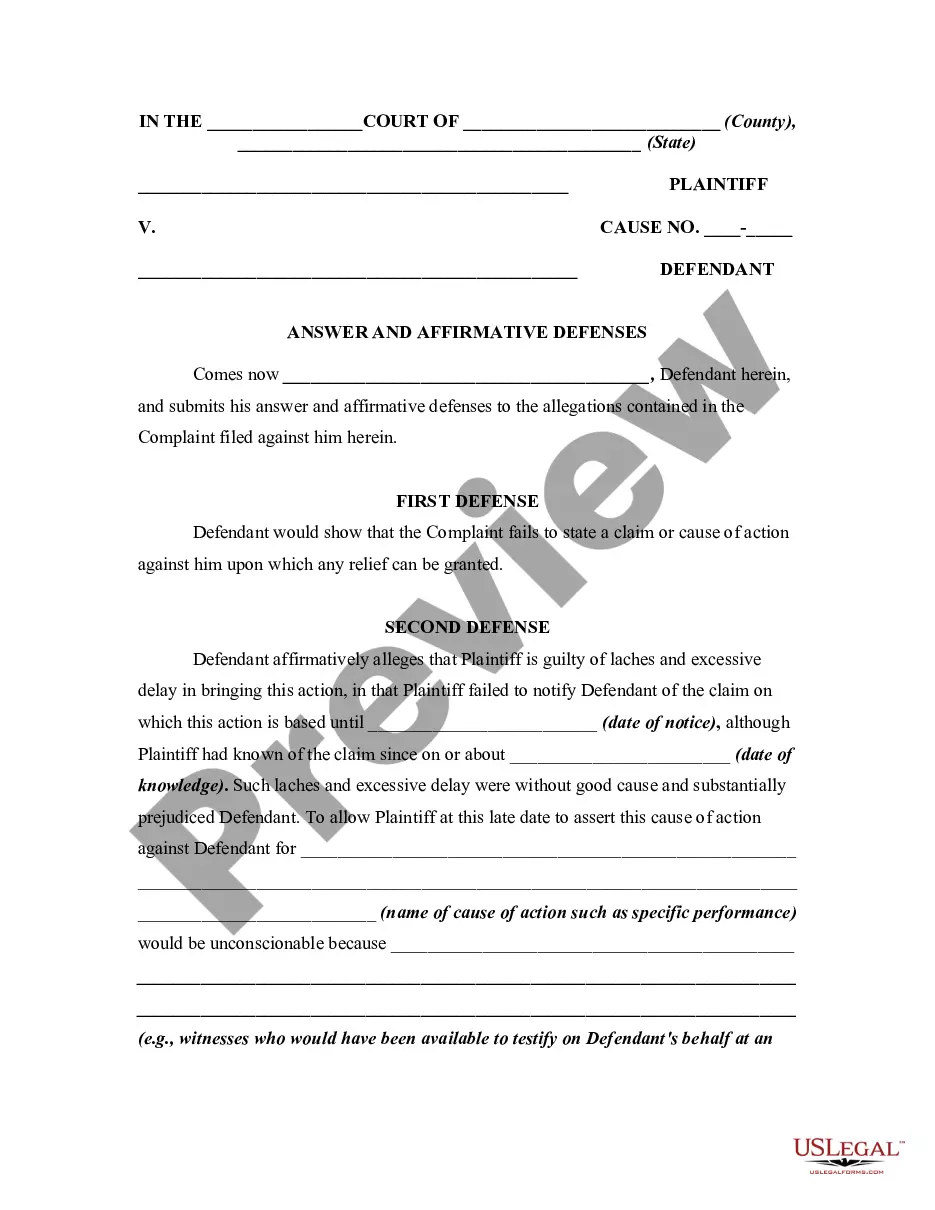
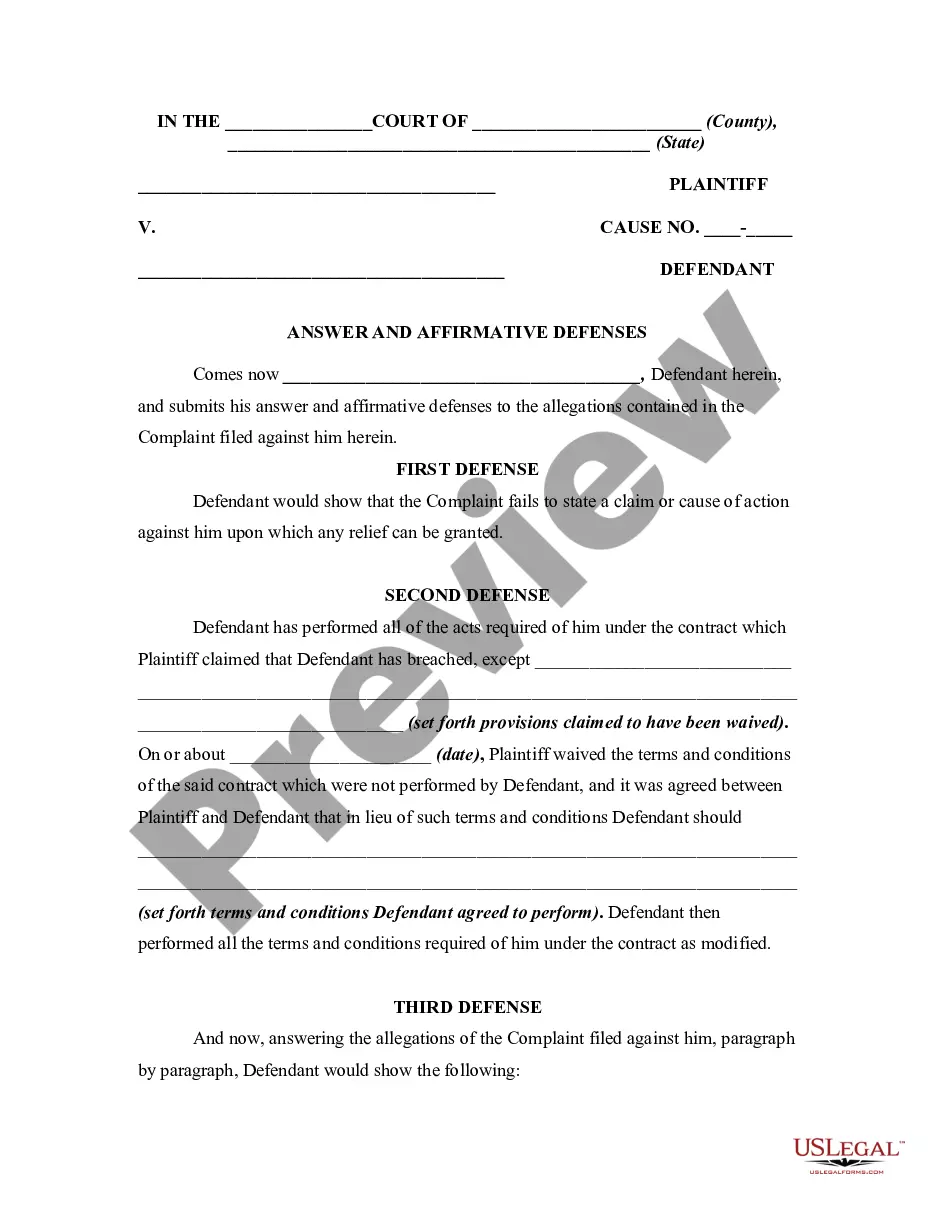
Afirmative Defense
Description

Get your form ready online
Our built-in tools help you complete, sign, share, and store your documents in one place.
Make edits, fill in missing information, and update formatting in US Legal Forms—just like you would in MS Word.
Download a copy, print it, send it by email, or mail it via USPS—whatever works best for your next step.
Sign and collect signatures with our SignNow integration. Send to multiple recipients, set reminders, and more. Go Premium to unlock E-Sign.
If this form requires notarization, complete it online through a secure video call—no need to meet a notary in person or wait for an appointment.
We protect your documents and personal data by following strict security and privacy standards.

Make edits, fill in missing information, and update formatting in US Legal Forms—just like you would in MS Word.

Download a copy, print it, send it by email, or mail it via USPS—whatever works best for your next step.

Sign and collect signatures with our SignNow integration. Send to multiple recipients, set reminders, and more. Go Premium to unlock E-Sign.

If this form requires notarization, complete it online through a secure video call—no need to meet a notary in person or wait for an appointment.

We protect your documents and personal data by following strict security and privacy standards.
Looking for another form?








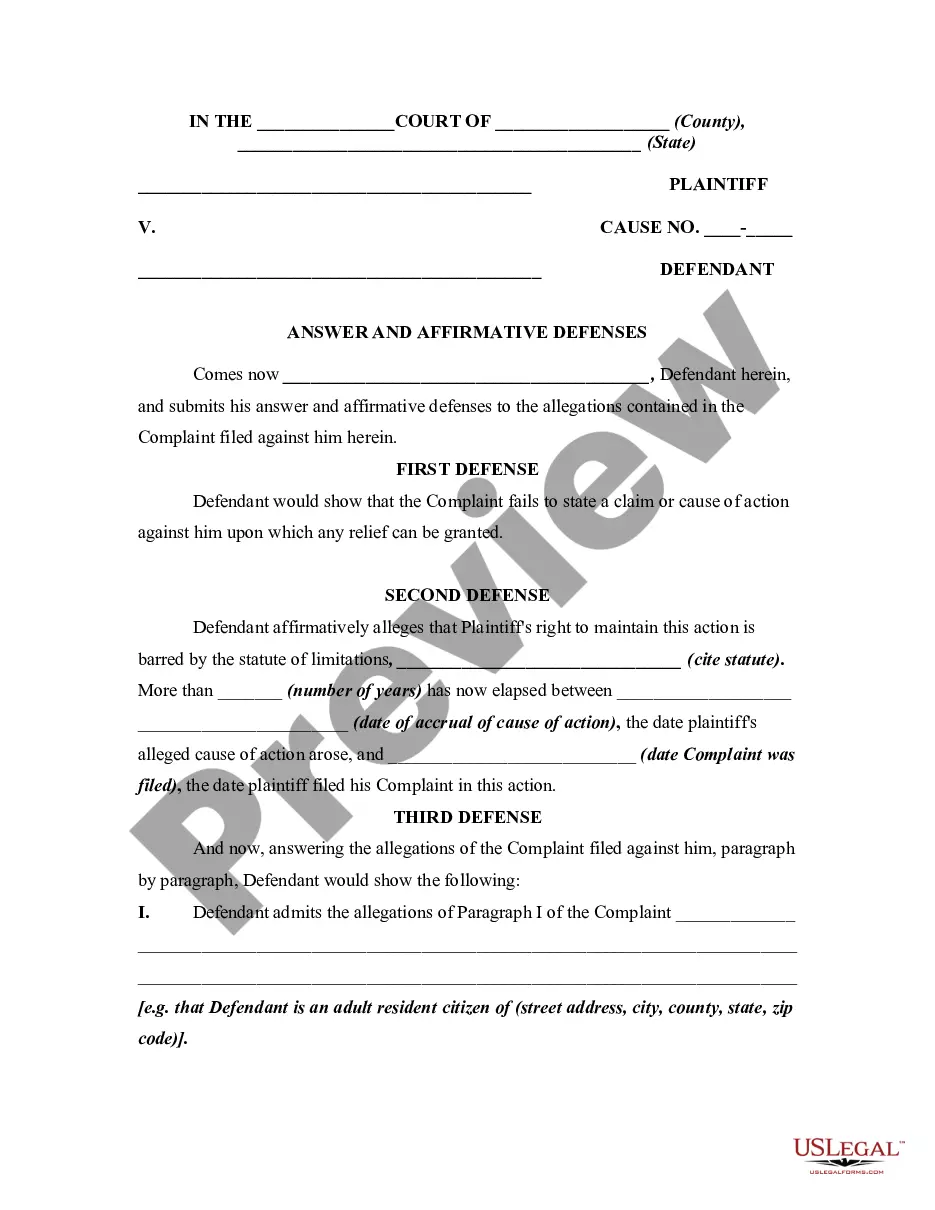
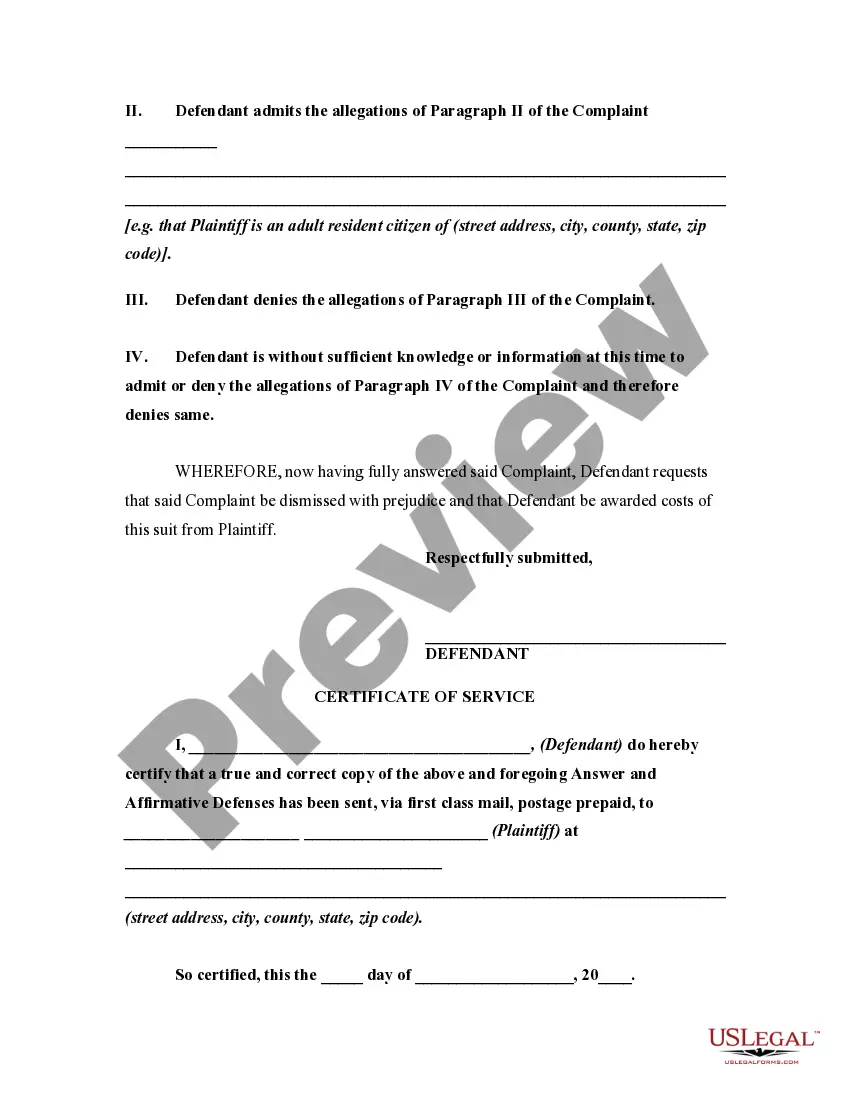
How to fill out Answer By Defendant In A Civil Lawsuit Alleging The Affirmative Defense Of The Cause Of Action Being Barred By The Appropriate Statute Of Limitations?
- If you are a returning user, log into your account to access and download your desired template by clicking the Download button. Verify that your subscription is active and renew it if necessary.
- For first-time users, start by checking the Preview mode and descriptions of available forms. Choose one that aligns with your legal requirements.
- If you need a different template, utilize the Search tab to find the appropriate form that fits your criteria.
- Proceed to purchase. Click the Buy Now button and select a subscription plan. You'll need to create an account to unlock full access to our resources.
- Complete the payment process by entering your credit card information or using PayPal.
- Download the form and save it to your device. You can also access it later through the My documents section in your profile.
US Legal Forms empowers users by offering a vast collection of legal documents, exceeding that of many competitors, that caters to a variety of legal needs.
Ensure your legal documents are accurate and compliant by leveraging US Legal Forms’ resources and expert assistance. Start your hassle-free document preparation today!
Form popularity
FAQ
An affirmative claim is a statement made in a legal context that asserts a right or demand for relief. For example, if a property owner sues a contractor for violating their agreement, the contractor might file an affirmative claim for unpaid work. This highlights the importance of understanding each party's position in a legal matter. Resources like US Legal Forms can provide the necessary forms and guidance for presenting your affirmative claim effectively.
An answer with affirmative defenses is a legal response to a complaint that acknowledges the allegations but introduces new information that can negate liability. For instance, if someone is sued for breach of contract, they might claim that the other party breached the contract first. This is an example of an affirmative defense because it shifts the focus of the case. Utilizing platforms like US Legal Forms can help you draft an effective answer with affirmative defenses tailored to your situation.
The statute of limitations affirmative defense asserts that a legal claim is barred because it was filed after the legal deadline. For example, if someone is sued for breach of contract after the statutory period has expired, they can argue this defense to dismiss the case. This principle serves to promote timely resolutions and protect defendants from facing old claims. Knowing about statutes of limitations can significantly impact your defense in legal matters.
The assumption of risk affirmative defense applies when a person knowingly engages in risky activities, thereby accepting the potential consequences. For instance, if someone willingly participates in a contact sport and sustains an injury, they may be unable to sue for damages due to the inherent risks involved. This defense emphasizes the idea that individuals bear responsibility for their voluntary participation in activities. Understanding this can be vital when evaluating liability.
There are various types of affirmative defenses, including those based on justification, excuse, and condonation. Justification defenses argue that the actions taken were reasonable under the circumstances, while excuse defenses assert that the defendant was not responsible due to certain factors. Condonation defenses claim that the plaintiff accepted the actions, which can limit their liability. Familiarizing yourself with these types can significantly enhance your defense strategy.
Legal defenses typically fall into four categories: affirmative defenses, procedural defenses, substantive defenses, and jurisdictional defenses. Affirmative defenses focus on the facts surrounding the case, while procedural defenses address issues with how the case was handled. Substantive defenses challenge the validity of the claim itself, and jurisdictional defenses question the authority of the court. By knowing these types, individuals can better prepare their legal strategies.
Affirmative defenses are legal arguments that, if proven, can negate liability in a lawsuit. The five common affirmative defenses include self-defense, necessity, consent, statute of limitations, and insanity. These defenses allow defendants to provide justification for their actions and avoid legal repercussions. Understanding these defenses is crucial for anyone involved in a legal matter.
To plead satisfaction as an affirmative defense, the defendant must show that they have fulfilled or satisfied the obligation in question, thereby negating the plaintiff's claims. This involves providing evidence that the terms of the agreement or duty have been met. It's important to structure this defense properly in legal documents. US Legal Forms can provide templates to help you articulate this defense clearly.
An affirmative defense claimed by the defendant asserts that, even if the plaintiff's claims are true, there is a valid justification for the defendant's actions. This might include defenses like consent or statute of limitations. Understanding the nature of these defenses is crucial for building a strong case. Consider exploring the resources on US Legal Forms for further guidance.
An example of an affirmative defense is self-defense, where the defendant claims they acted to protect themselves from harm. This defense admits that the defendant engaged in the act but insists they did so under justifiable circumstances. Other examples include duress or insanity. US Legal Forms can help you identify appropriate defenses based on your circumstances.