Affirmative Defense Force Majeure
Description
Get your form ready online
Our built-in tools help you complete, sign, share, and store your documents in one place.
Make edits, fill in missing information, and update formatting in US Legal Forms—just like you would in MS Word.
Download a copy, print it, send it by email, or mail it via USPS—whatever works best for your next step.
Sign and collect signatures with our SignNow integration. Send to multiple recipients, set reminders, and more. Go Premium to unlock E-Sign.
If this form requires notarization, complete it online through a secure video call—no need to meet a notary in person or wait for an appointment.
We protect your documents and personal data by following strict security and privacy standards.

Make edits, fill in missing information, and update formatting in US Legal Forms—just like you would in MS Word.

Download a copy, print it, send it by email, or mail it via USPS—whatever works best for your next step.

Sign and collect signatures with our SignNow integration. Send to multiple recipients, set reminders, and more. Go Premium to unlock E-Sign.

If this form requires notarization, complete it online through a secure video call—no need to meet a notary in person or wait for an appointment.

We protect your documents and personal data by following strict security and privacy standards.
Looking for another form?


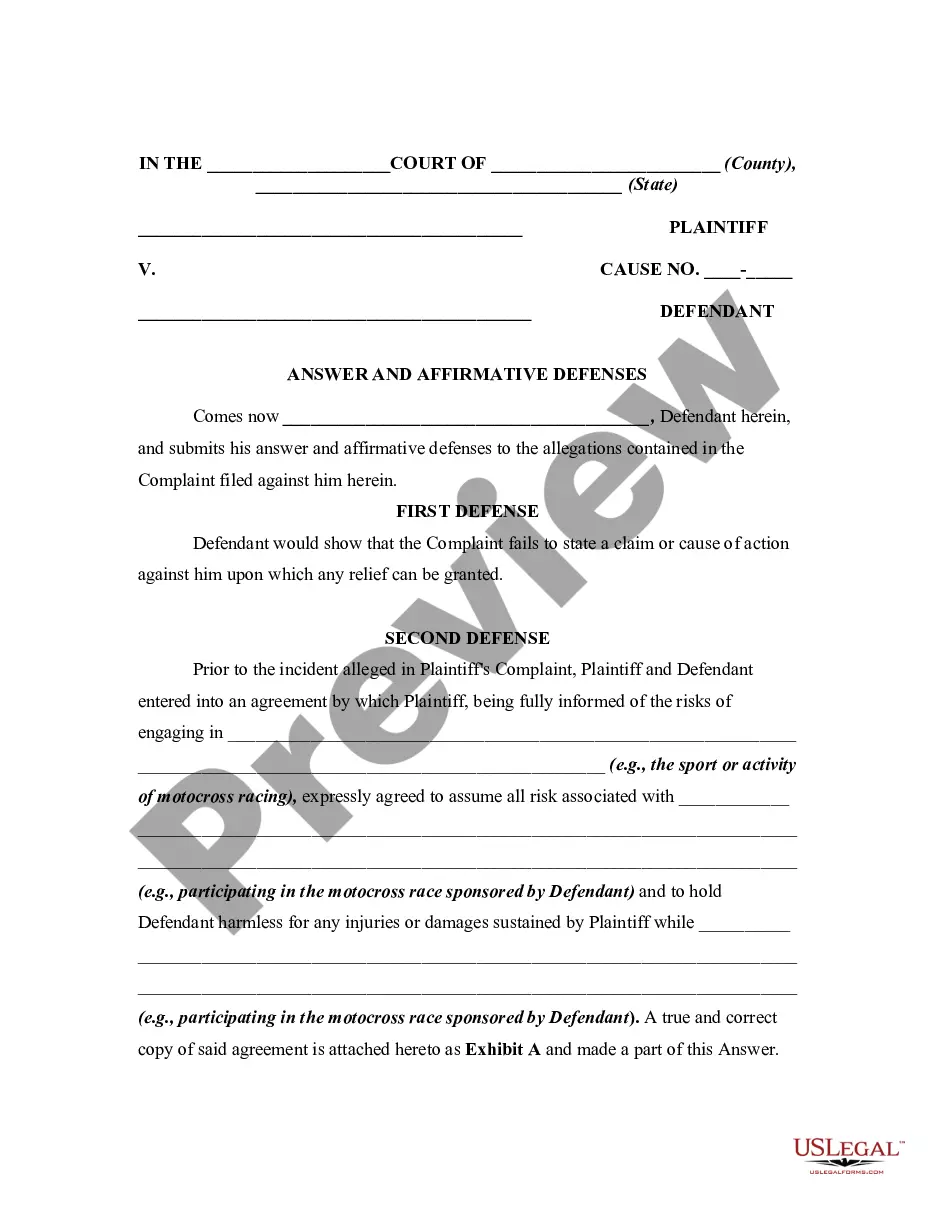
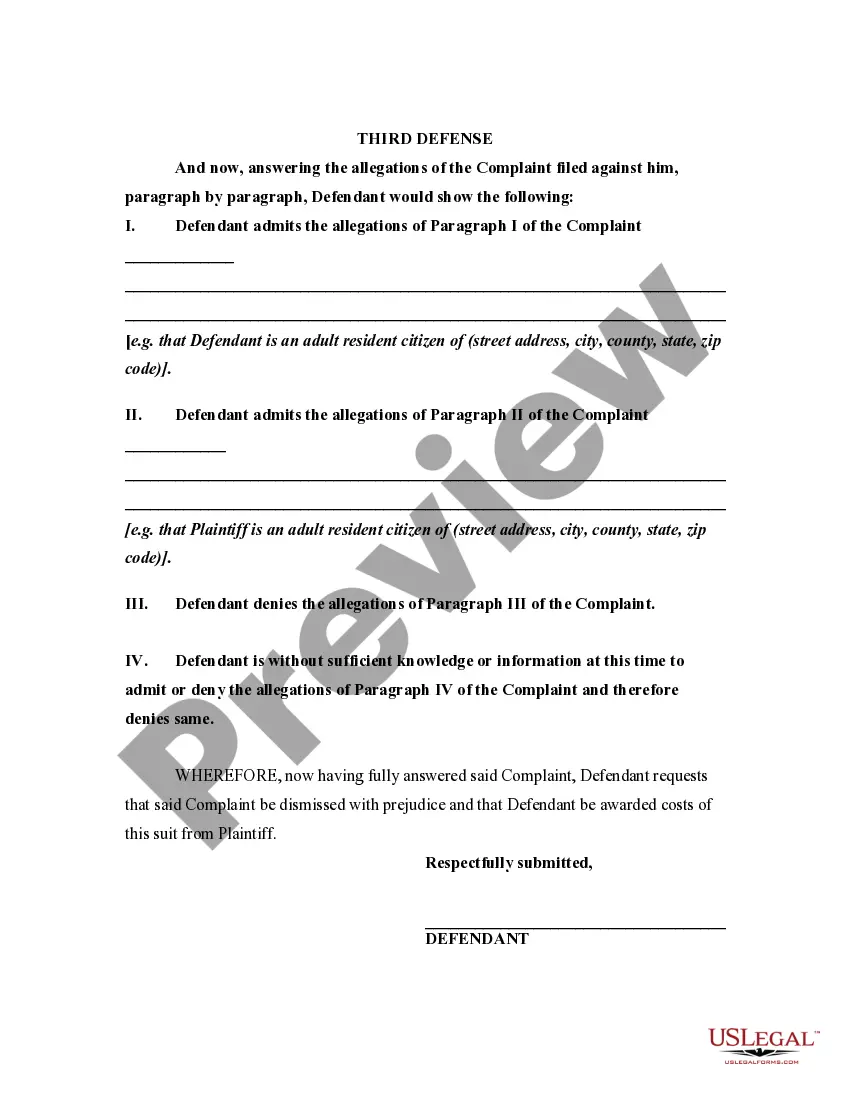
How to fill out Answer By Defendant In A Civil Lawsuit Alleging The Affirmative Defense Of Assumption Of Risk?
Legal administration can be daunting, even for the most seasoned professionals.
When you are looking for an Affirmative Defense Force Majeure and don’t have the time to invest in finding the right and updated version, the procedures can become taxing.
Gain access to a resource library of articles, guides, and materials pertinent to your situation and requirements.
Save time and effort searching for the documents you need, and utilize US Legal Forms’ sophisticated search and Review tool to locate Affirmative Defense Force Majeure and download it.
Take advantage of the US Legal Forms online catalogue, backed by 25 years of experience and reliability. Revolutionize your everyday document management into a seamless and intuitive process today.
- If you have a monthly subscription, Log In to your US Legal Forms account, search for the form, and download it.
- Check your My documents tab to see the documents you previously saved and manage your folders as you see fit.
- If it's your first time with US Legal Forms, create a free account and gain unrestricted access to all the benefits of the library.
- After accessing the form you need, confirm it is the correct document by previewing it and reading its details.
- Ensure that the template is acceptable in your state or county.
- Choose Buy Now when you are ready.
- Select a subscription plan.
- Choose the file format you require, and Download, fill out, eSign, print, and send your documents.
- Access state- or county-specific legal and organizational documents.
- US Legal Forms addresses any demands you may have, from personal to organizational paperwork, all in one location.
- Utilize advanced tools to complete and manage your Affirmative Defense Force Majeure.
Form popularity
FAQ
To declare force majeure, you should first review your contract for specific provisions related to this concept. Typically, you need to notify the other party in writing, detailing how the unforeseen event has impacted your ability to perform your contractual obligations. It's essential to include the nature of the event, such as natural disasters or government actions, to substantiate your claim. This process is crucial for establishing an affirmative defense force majeure, ensuring that you protect your legal interests.
To write a force majeure letter, begin by stating the reason for the letter clearly, citing the unexpected event that has led to delays or disruptions. Be specific about how this event serves as an affirmative defense force majeure. Include the details of the impacted obligations and any actions you plan to take moving forward. Ending on a positive note can reaffirm your commitment to resolving the situation can also foster goodwill.
When writing a force majeure clause in an agreement, detail the specific types of events that will qualify for the clause, ensuring they are relevant to the contract's purpose. Include language that clarifies the process for invoking the clause, such as the need for written notice and possible time extensions. Additionally, consider how affirmative defense force majeure impacts both parties, aiming for a fair approach that protects your interests. Consulting templates can inspire your drafting process.
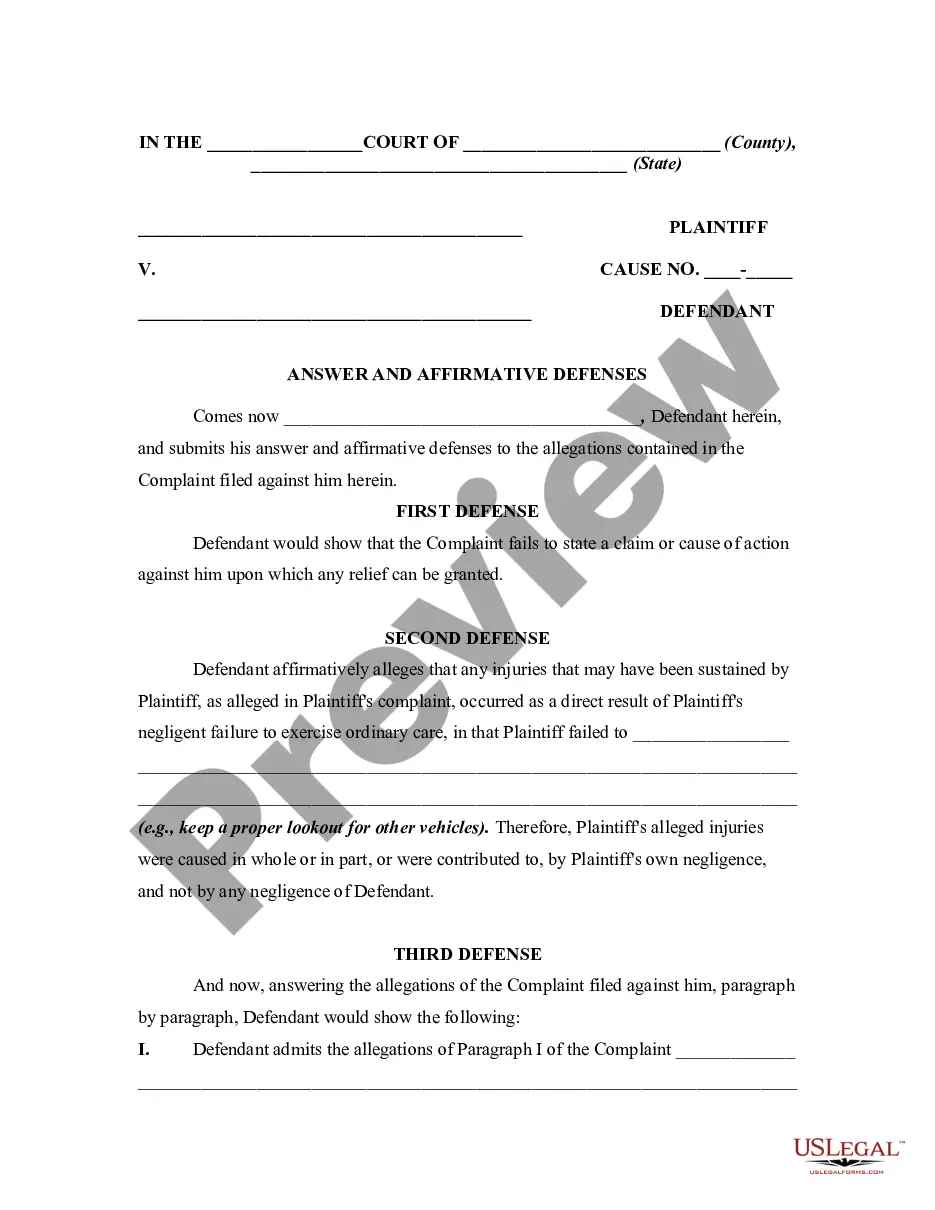
To write an affirmative defense in an answer, start by clearly stating the defense's basis, such as force majeure. You should detail the specific circumstances that created the impossibility of performance. It's crucial to provide supporting facts and avoid vague statements. By articulating your affirmative defense effectively, you can bolster your legal standing in response to claims.
Examples of force majeure events often include natural disasters, acts of war, or government restrictions. Each example illustrates situations in which a party might claim an affirmative defense force majeure due to interruptions in performance. The key is to ensure that the event was not predictable and wholly beyond the control of the parties involved. Identifying applicable examples in your contracts can guide how to respond when challenges arise.
To write an effective force majeure clause, begin by clearly defining the events considered as force majeure. Include examples like earthquakes, floods, or war. It is also important to specify the appropriate actions a party must take if such an event occurs, including giving prompt notice to the other party. With affirmative defense force majeure in mind, make sure to consult legal advice to tailor the clause to your specific needs.
The classic force majeure clause outlines specific events that can excuse a party's performance due to circumstances beyond their control, such as natural disasters or pandemics. In the context of affirmative defense force majeure, it provides legal protection for parties who face unforeseen obstacles. This clause typically requires notice to be given and may define the timeframes for performance. A well-drafted clause can prevent disputes and clarify responsibilities.
The three elements of force majeure typically include an event that is unforeseeable, an event that is beyond a party's control, and an event that directly affects the party's ability to fulfill a contract. In the context of affirmative defense force majeure, these elements help establish a legitimate claim that a party could not perform due to circumstances outside their control. It is essential to document these elements clearly to support your position. Additionally, understanding these elements aids in drafting effective legal clauses.
Affirmative defenses to a breach of contract claim can include argumentation around duress, misrepresentation, or the failure of consideration. Each defense serves to explain or justify why the defendant should not be held liable. Notably, invoking an affirmative defense force majeure is key in asserting that unexpected events prevented contract fulfillment, offering a robust legal strategy.
The defense of force majeure allows a party to excuse non-performance of contractual obligations due to unforeseen events beyond their control. When invoking this defense, a party must demonstrate that they took reasonable steps to avoid the impact of the event. This principle is closely aligned with the affirmative defense force majeure, providing a safety net for parties facing extraordinary circumstances.