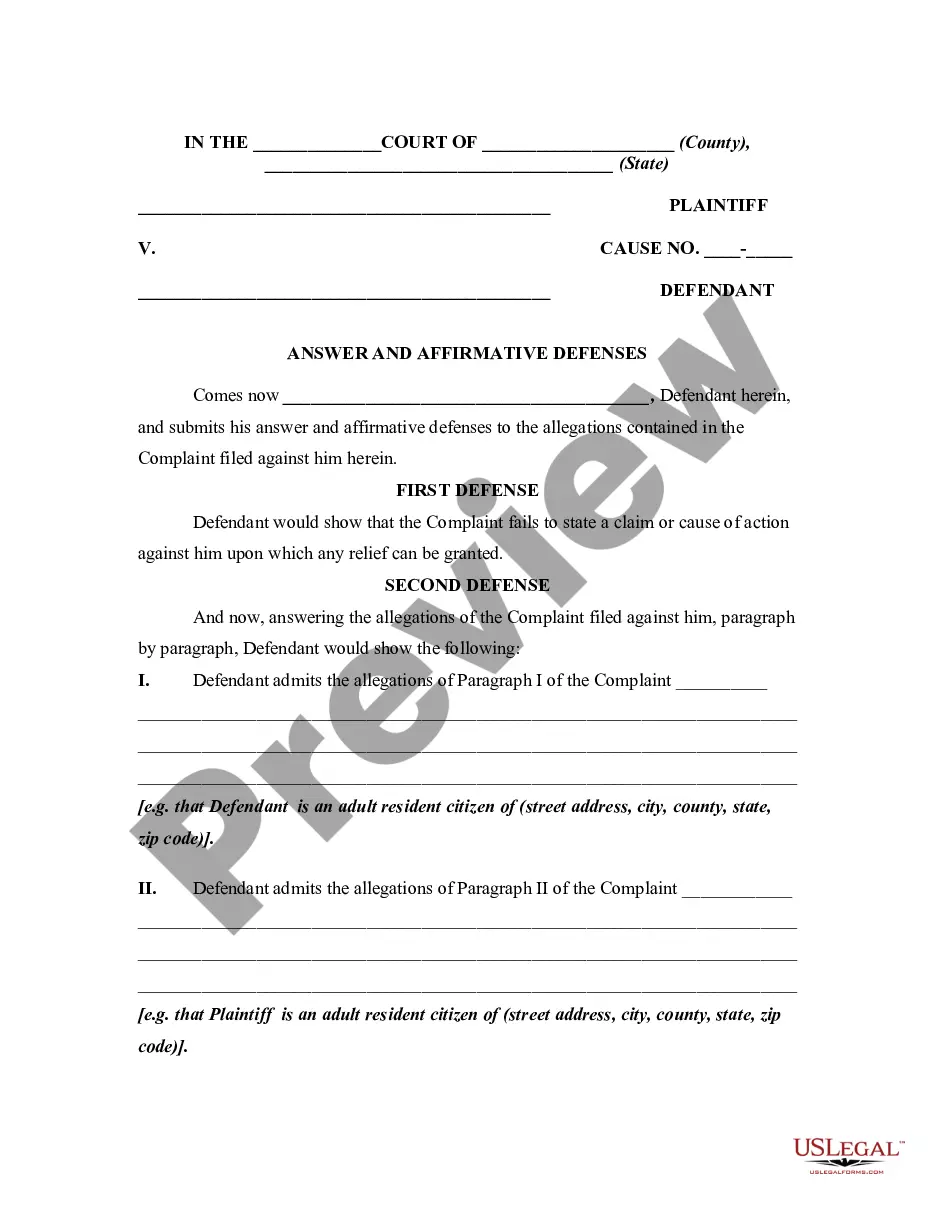
Defendant Answer Form For Witness
Description
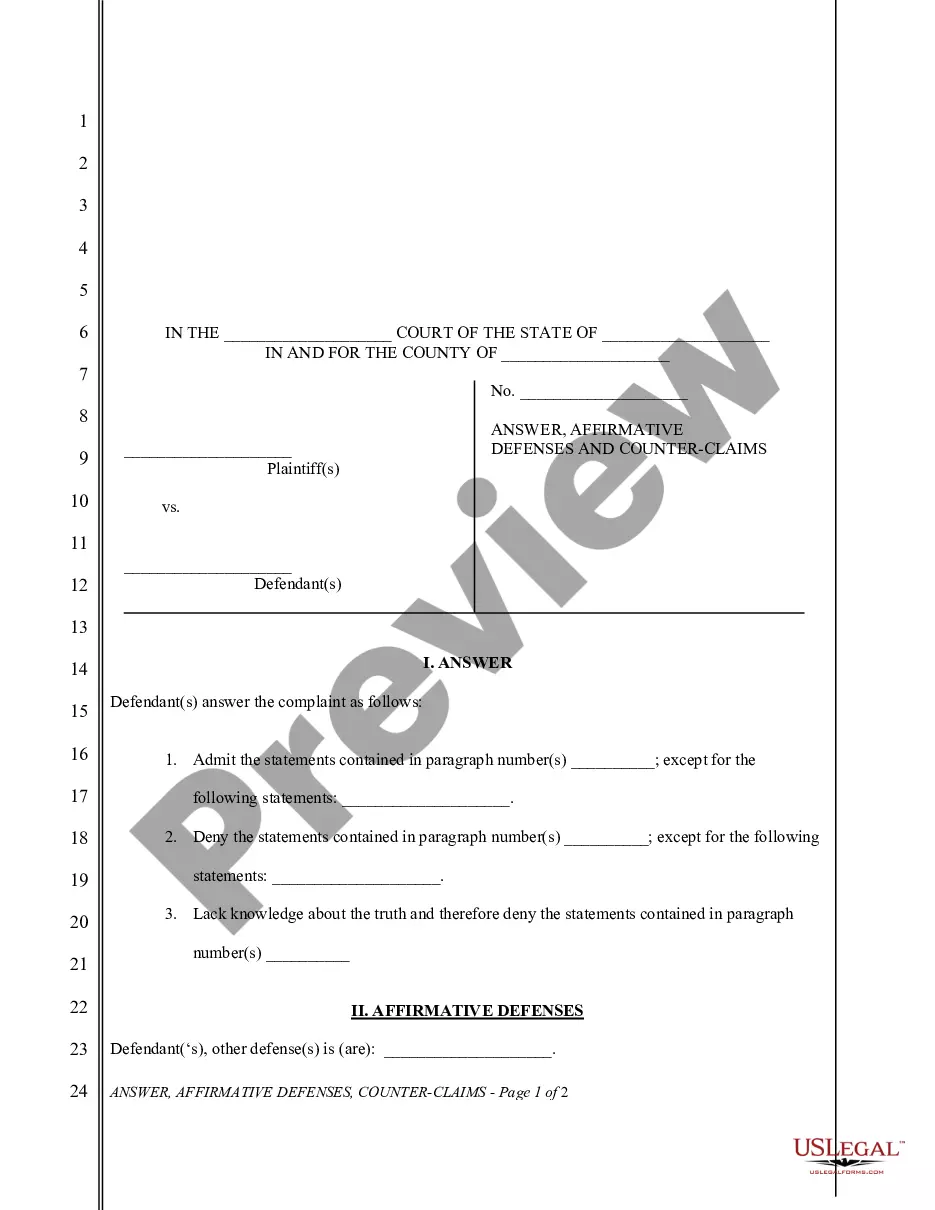
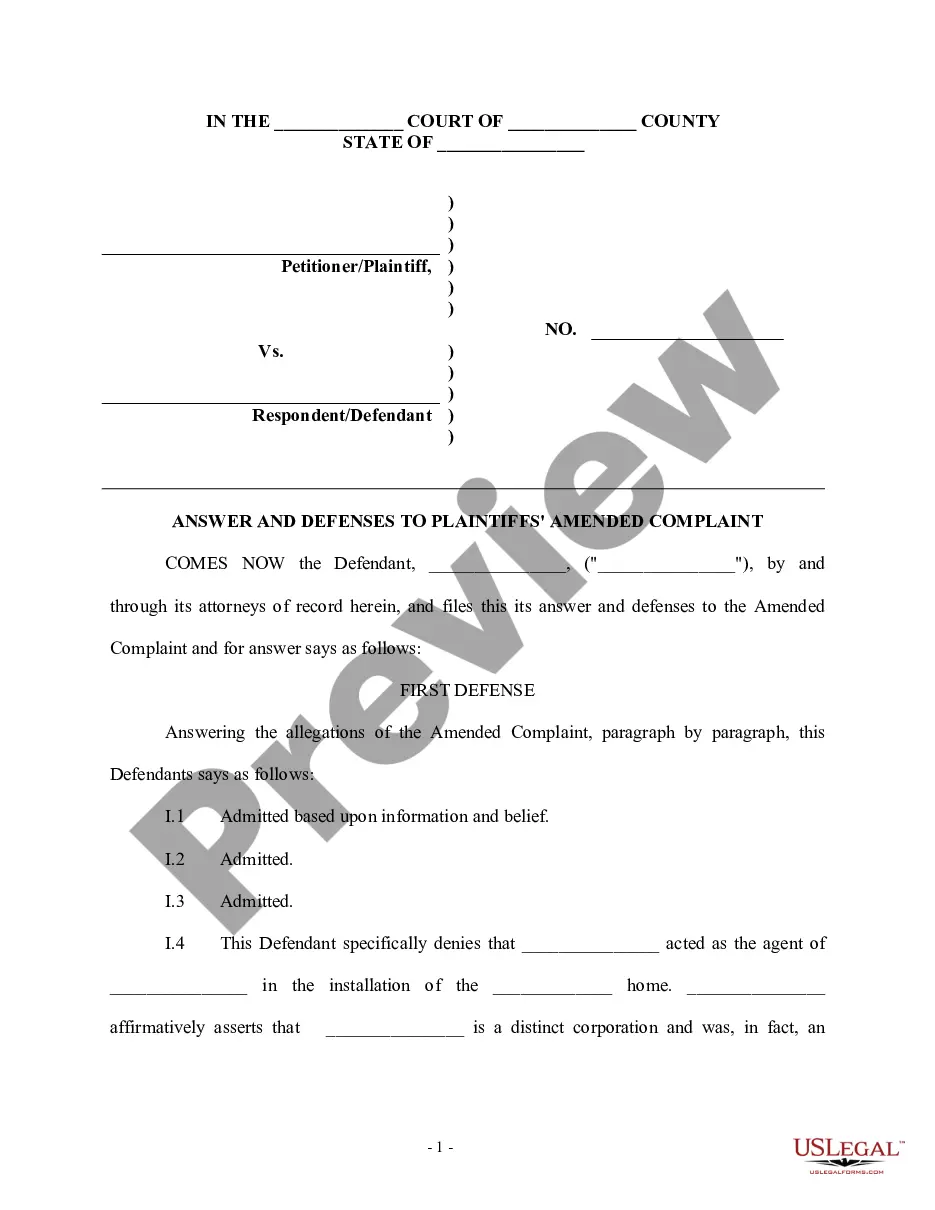
Get your form ready online
Our built-in tools help you complete, sign, share, and store your documents in one place.
Make edits, fill in missing information, and update formatting in US Legal Forms—just like you would in MS Word.
Download a copy, print it, send it by email, or mail it via USPS—whatever works best for your next step.
Sign and collect signatures with our SignNow integration. Send to multiple recipients, set reminders, and more. Go Premium to unlock E-Sign.
If this form requires notarization, complete it online through a secure video call—no need to meet a notary in person or wait for an appointment.
We protect your documents and personal data by following strict security and privacy standards.

Make edits, fill in missing information, and update formatting in US Legal Forms—just like you would in MS Word.

Download a copy, print it, send it by email, or mail it via USPS—whatever works best for your next step.

Sign and collect signatures with our SignNow integration. Send to multiple recipients, set reminders, and more. Go Premium to unlock E-Sign.

If this form requires notarization, complete it online through a secure video call—no need to meet a notary in person or wait for an appointment.

We protect your documents and personal data by following strict security and privacy standards.
Looking for another form?
How to fill out General Form Of An Answer By Defendant In A Civil Lawsuit?
Creating legal documents from the ground up can occasionally be somewhat daunting. Certain situations may require extensive research and significant financial investment.
If you’re seeking a simpler and more cost-effective method of preparing the Defendant Answer Form For Witness or any other documentation without unnecessary complications, US Legal Forms is always accessible.
Our digital repository of over 85,000 current legal forms encompasses nearly every aspect of your financial, legal, and personal matters. With just a few clicks, you can swiftly obtain state- and county-specific templates carefully crafted for you by our legal experts.
Utilize our website whenever you require dependable and trustworthy services through which you can quickly find and download the Defendant Answer Form For Witness. If you’re familiar with our services and have previously registered with us, simply Log In to your account, find the template and download it or re-download it anytime later in the My documents section.
Ensure the template you select meets the criteria of your state and county. Choose the most appropriate subscription plan to obtain the Defendant Answer Form For Witness. Download the form, then fill it out, certify it, and print it. US Legal Forms has a stellar reputation and over 25 years of experience. Join us today and make form completion a simple and efficient process!
- Not registered yet? No problem.
- Setting it up and navigating the catalog takes just minutes.
- Before directly downloading the Defendant Answer Form For Witness, consider these tips.
- Review the form preview and descriptions to ensure you have located the document you need.
Form popularity
FAQ
Writing a legal Answer requires clarity and precision. Begin by stating your name and the case number, followed by your responses to each allegation in the complaint. Using a Defendant answer form for witness simplifies this process, making sure you include all necessary details and legal defenses. This form not only organizes your thoughts but also ensures compliance with court rules.
Filing an Answer for a summons involves several steps. First, complete the Defendant answer form for witness, ensuring you respond to every point mentioned in the summons. After filling out the form, file it with the court where the case was initiated, and make sure to serve a copy to the opposing party. This process ensures that you meet legal requirements and protect your rights.
To write a response letter when you are being sued, start by acknowledging the lawsuit and clearly stating your intent to respond. Include your name, address, and case information. Utilize a Defendant answer form for witness to structure your response correctly, addressing each claim made against you. This form provides a clear framework that helps you present your arguments effectively.
When answering as a witness in court, it's important to listen carefully to the questions asked. Use the Defendant answer form for witness to clarify your statements and provide accurate information. Speak clearly and honestly, focusing on the facts of the case. If you feel uncertain, remember that you can ask for clarification on the questions before responding.
To file an answer in Oregon, you need to complete the Defendant answer form for witness. Start by gathering necessary information about the case and ensuring that you understand the claims against you. Then, fill out the form accurately and submit it to the appropriate court. It's advisable to keep a copy for your records and consider consulting a legal expert if you have questions.
If a defendant does not file an answer, the court may interpret this as an admission of the claims made against them. This can lead to a default judgment, meaning the plaintiff could win the case without further proceedings. It is crucial for defendants to respond promptly using the Defendant answer form for witness, as this allows them to present their side and protect their rights. Utilizing US Legal Forms can simplify this process, providing clear instructions and templates necessary for an effective response.
When writing a customer complaint response, consider following these steps: Read the entire complaint. ... Apologize for any inconvenience. ... Explain what may have caused the issue. ... Propose an actionable, detailed solution. ... Explain how you can improve the customer's experience in the future. ... Offer an incentive.
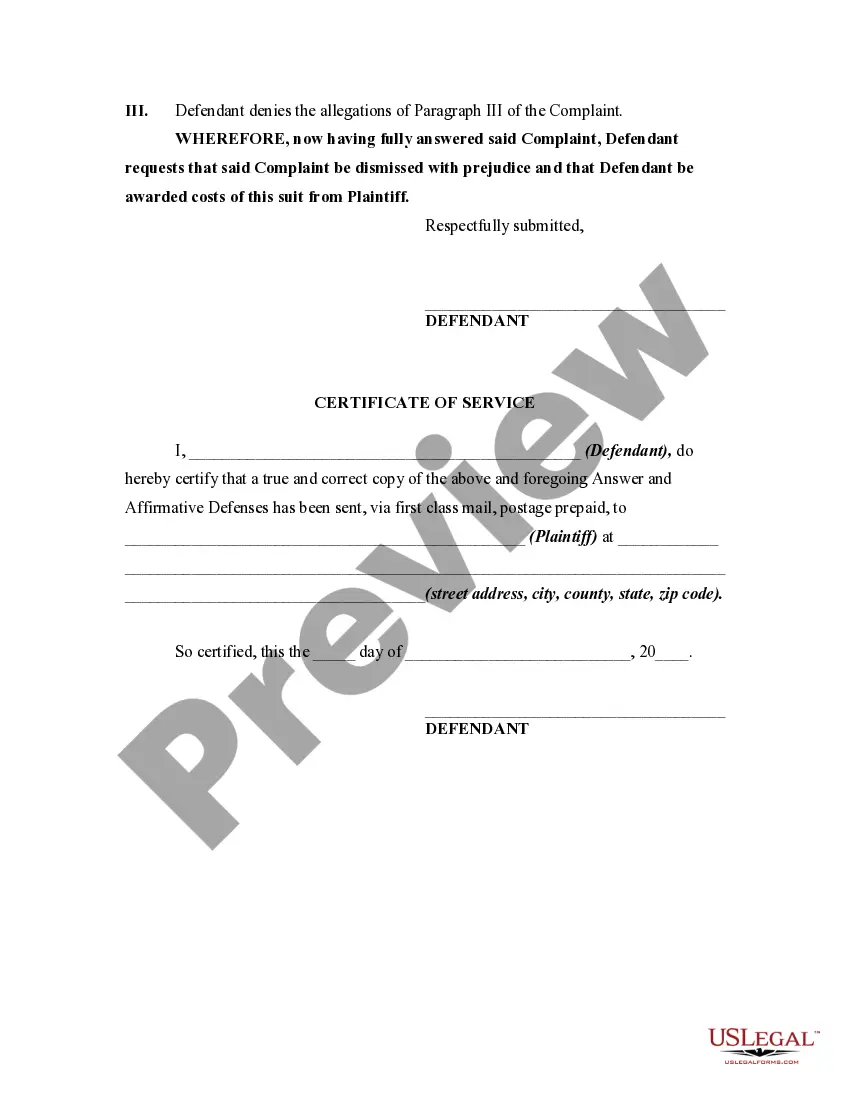
An Answer is the most common way to respond to a lawsuit. The Answer is the defendant's opportunity to admit or deny the specific allegations brought against them in the complaint. Any statements in the complaint that are not denied will be taken as true for the purposes of this case.
On a separate page or pages, write a short and plain statement of the answer to the allegations in the complaint. Number the paragraphs. The answer should correspond to each paragraph in the complaint, with paragraph 1 of the answer corresponding to paragraph 1 of the complaint, etc.
Alternative dispute resolution (ADR): Methods of resolving disputes out of court, including mediation and arbitration. answer: a defendant's response to a plaintiff's initial court filing (called a complaint or petition).