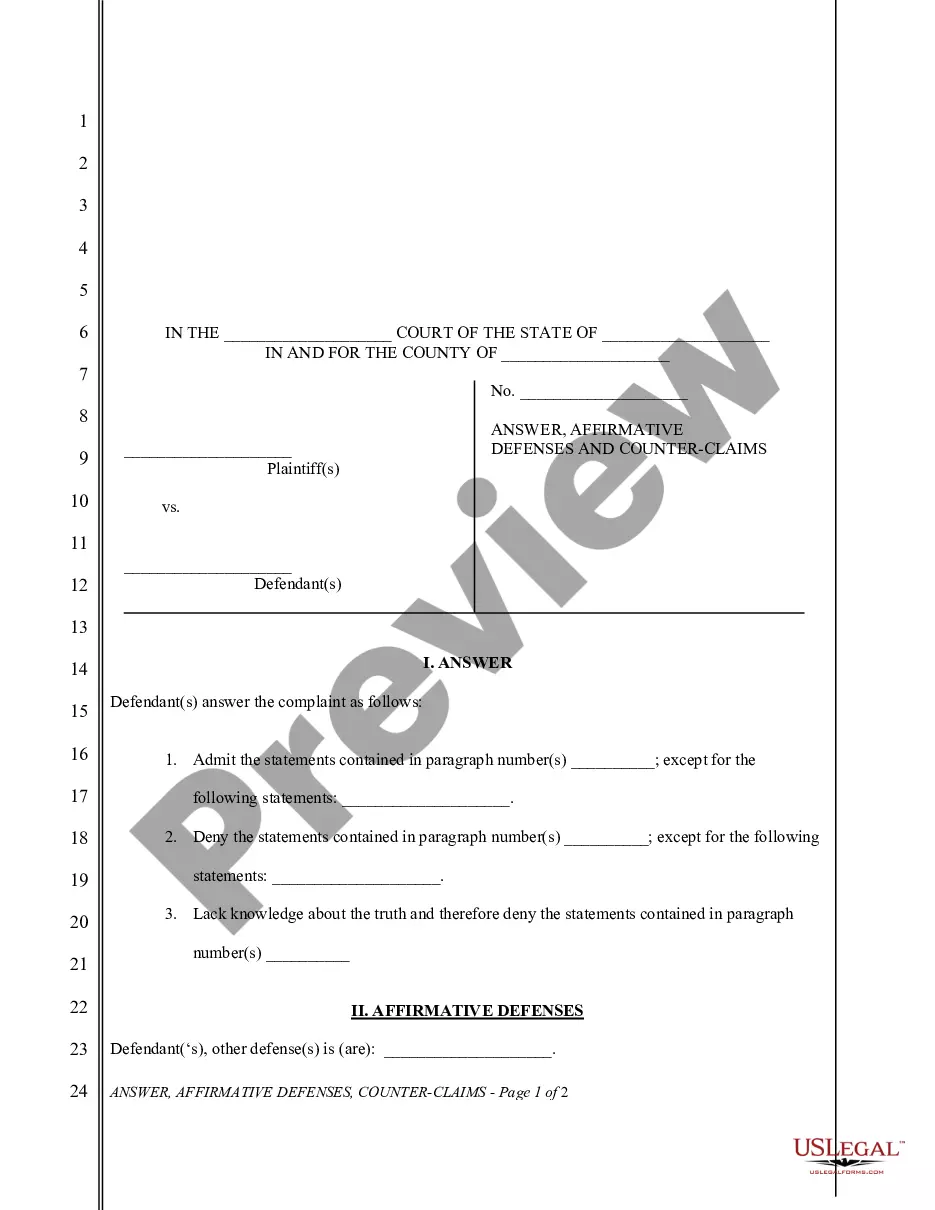
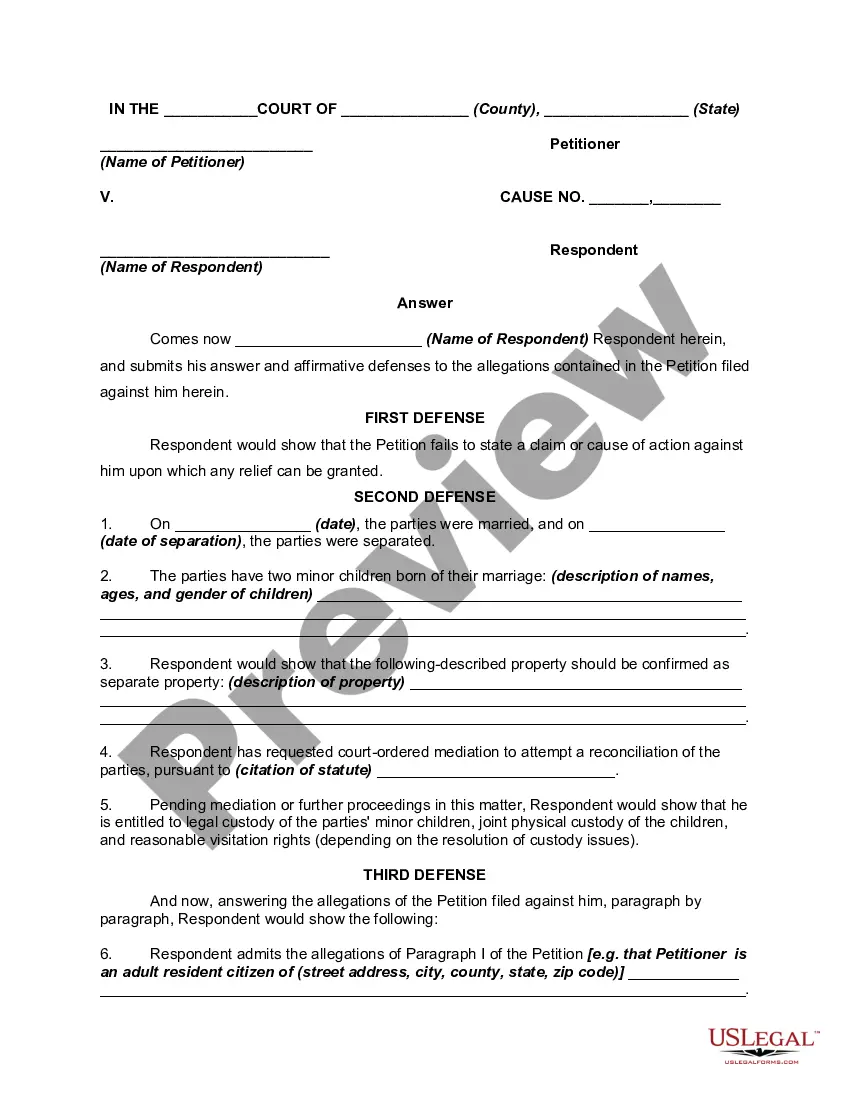
Affirmative Defense Answer To Complaint
Description
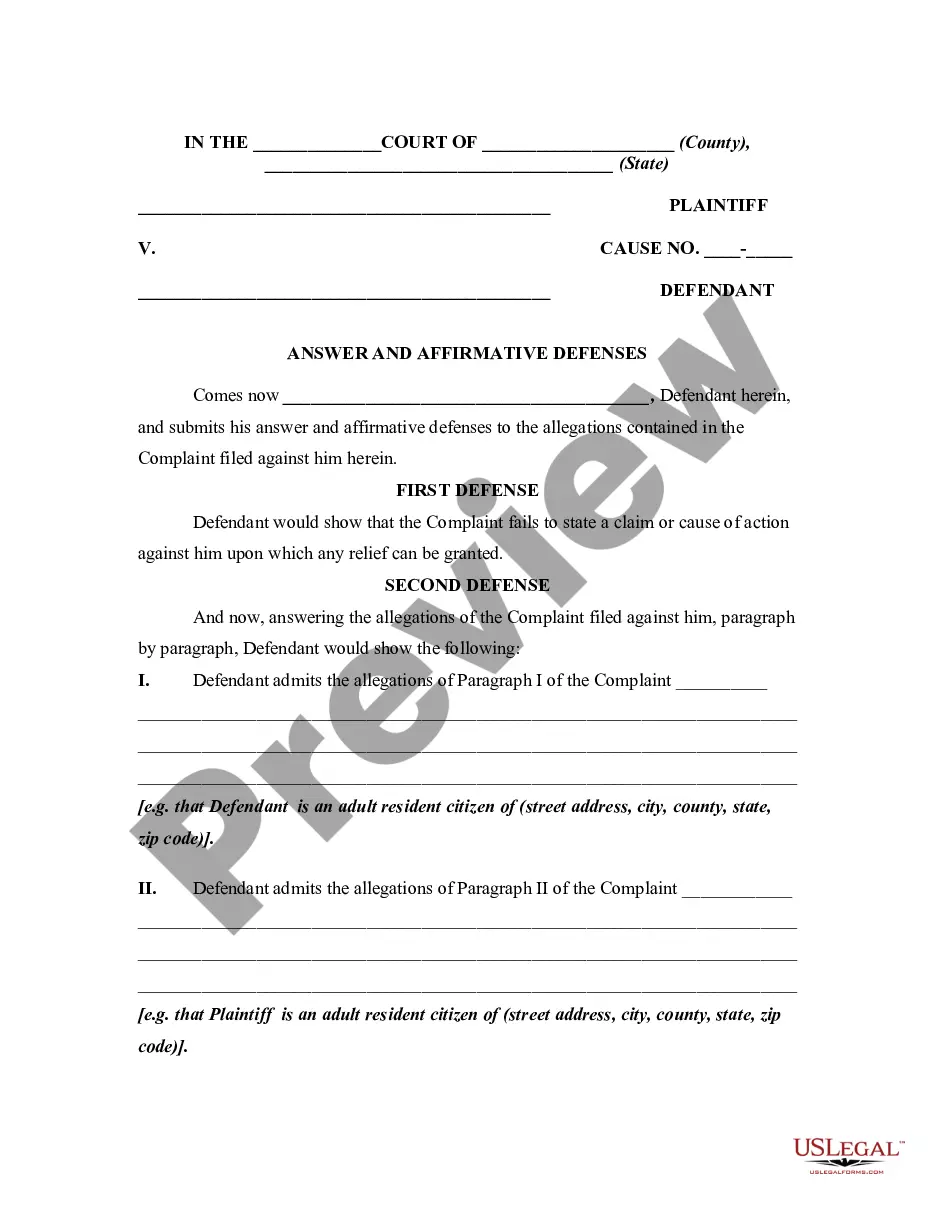
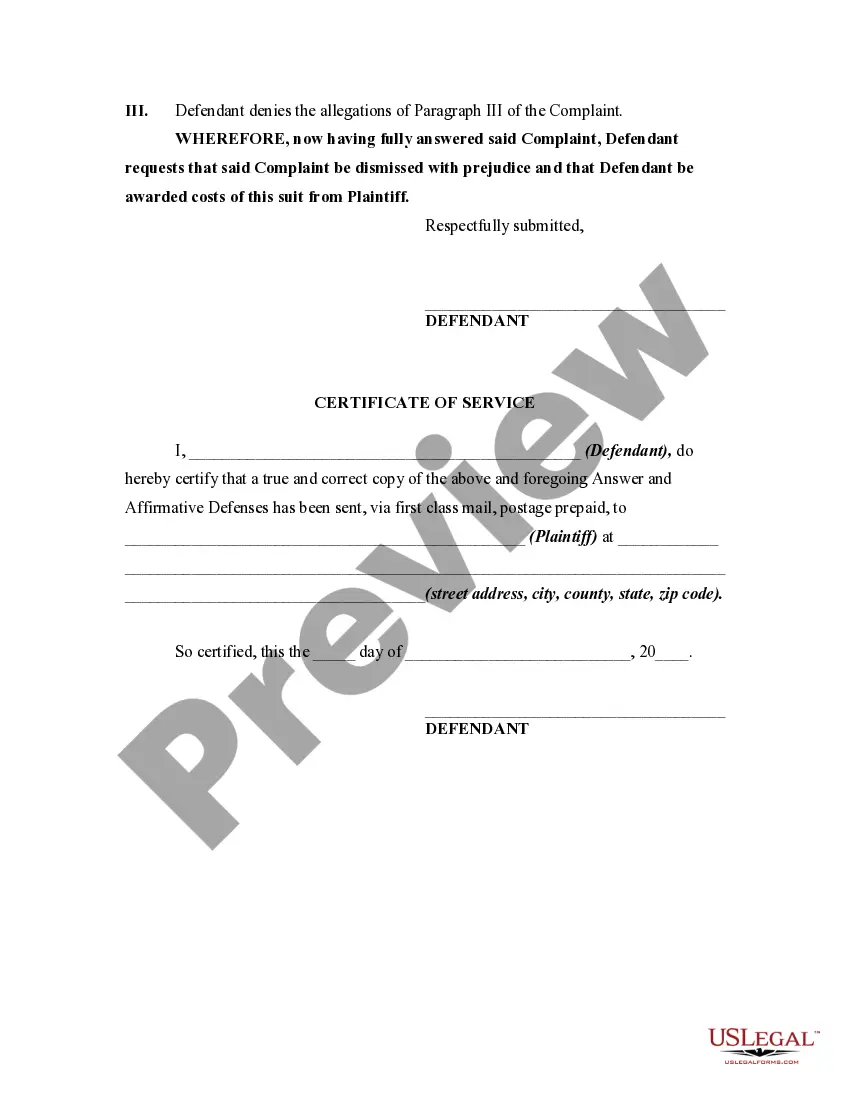
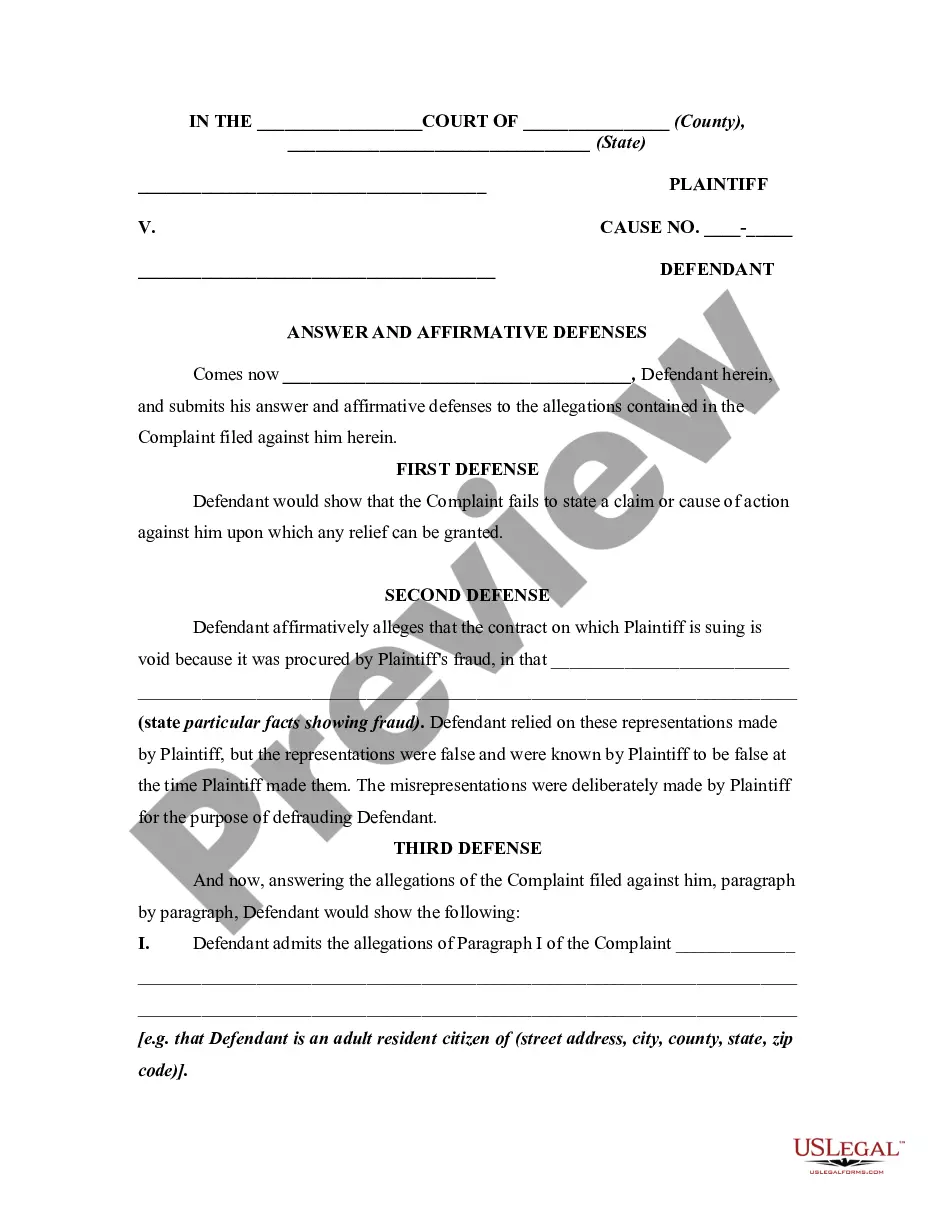
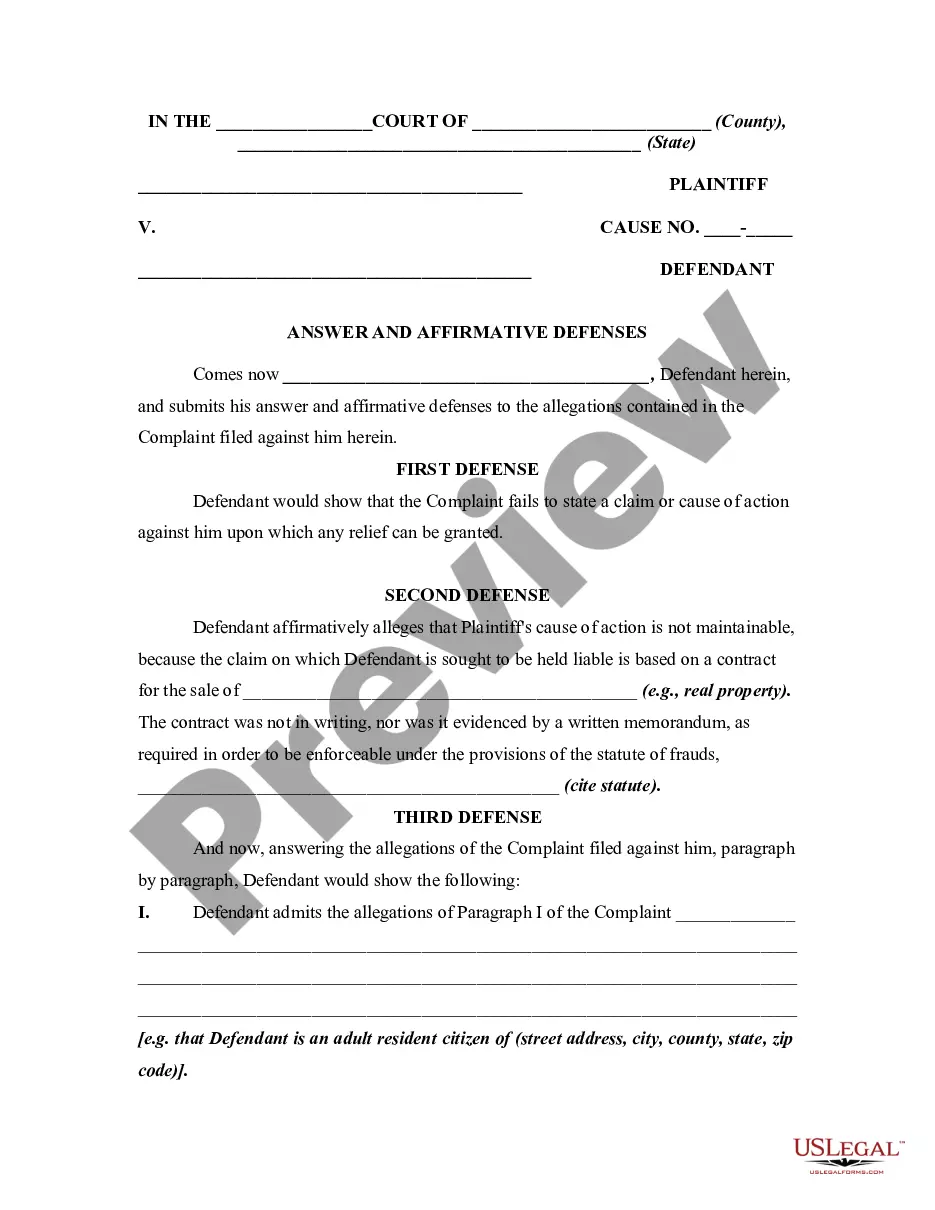
Get your form ready online
Our built-in tools help you complete, sign, share, and store your documents in one place.
Make edits, fill in missing information, and update formatting in US Legal Forms—just like you would in MS Word.
Download a copy, print it, send it by email, or mail it via USPS—whatever works best for your next step.
Sign and collect signatures with our SignNow integration. Send to multiple recipients, set reminders, and more. Go Premium to unlock E-Sign.
If this form requires notarization, complete it online through a secure video call—no need to meet a notary in person or wait for an appointment.
We protect your documents and personal data by following strict security and privacy standards.

Make edits, fill in missing information, and update formatting in US Legal Forms—just like you would in MS Word.

Download a copy, print it, send it by email, or mail it via USPS—whatever works best for your next step.

Sign and collect signatures with our SignNow integration. Send to multiple recipients, set reminders, and more. Go Premium to unlock E-Sign.

If this form requires notarization, complete it online through a secure video call—no need to meet a notary in person or wait for an appointment.

We protect your documents and personal data by following strict security and privacy standards.
Looking for another form?





How to fill out General Form Of An Answer By Defendant In A Civil Lawsuit?
Whether for business purposes or for individual affairs, everyone has to handle legal situations sooner or later in their life. Completing legal paperwork needs careful attention, beginning from picking the appropriate form sample. For example, if you pick a wrong version of the Affirmative Defense Answer To Complaint, it will be turned down when you submit it. It is therefore important to get a trustworthy source of legal documents like US Legal Forms.
If you need to obtain a Affirmative Defense Answer To Complaint sample, follow these simple steps:
- Get the template you need by using the search field or catalog navigation.
- Check out the form’s description to make sure it fits your case, state, and region.
- Click on the form’s preview to view it.
- If it is the incorrect document, get back to the search function to locate the Affirmative Defense Answer To Complaint sample you need.
- Download the template if it matches your needs.
- If you already have a US Legal Forms profile, just click Log in to access previously saved documents in My Forms.
- In the event you don’t have an account yet, you may download the form by clicking Buy now.
- Select the proper pricing option.
- Finish the profile registration form.
- Choose your payment method: you can use a credit card or PayPal account.
- Select the file format you want and download the Affirmative Defense Answer To Complaint.
- Once it is downloaded, you are able to complete the form by using editing software or print it and finish it manually.
With a large US Legal Forms catalog at hand, you never have to spend time looking for the right template across the internet. Utilize the library’s simple navigation to get the correct form for any situation.
Form popularity
FAQ
If you file an Answer to the lawsuit and defend yourself in court, you can state an affirmative defense. You can deny what the plaintiff says you did without saying anything else. But you can also have affirmative defenses. You must raise it in your Answer or you may give up your right to bring it up later.
On a separate page or pages, write a short and plain statement of the answer to the allegations in the complaint. Number the paragraphs. The answer should correspond to each paragraph in the complaint, with paragraph 1 of the answer corresponding to paragraph 1 of the complaint, etc.
Affirmative defense?Examples On [Date], after making the contract and the alleged breach, and before this action was commenced, defendant paid to the plaintiff the sum of [specify amount], which was accepted by the plaintiff in full satisfaction and discharge of the damages claimed in the petition.
Answer. An Answer is the most common way to respond to a lawsuit. ... General Denial. A General Denial is a simple response to a lawsuit. ... Demurrer. ... Motion to Quash Service of Summons. ... Motion to Strike. ... Motion to Change Venue or Transfer. ... Cross-Complaints. ... For More Information.
Self-defense, entrapment, insanity, necessity, and respondeat superior are some examples of affirmative defenses. Under the Federal Rules of Civil Procedure Rule 56, any party may make a motion for summary judgment on an affirmative defense.