Adverse Possession By State For Land
Description
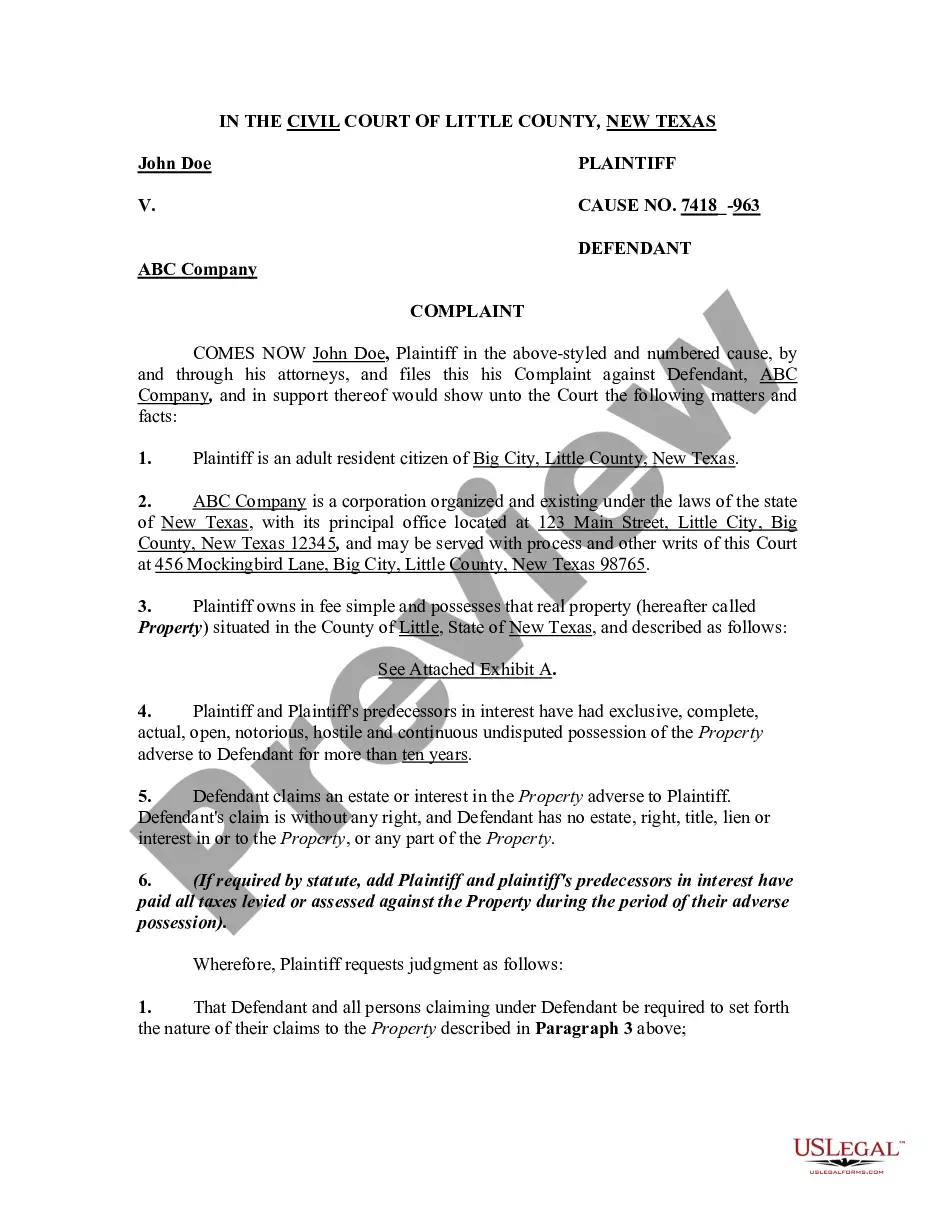
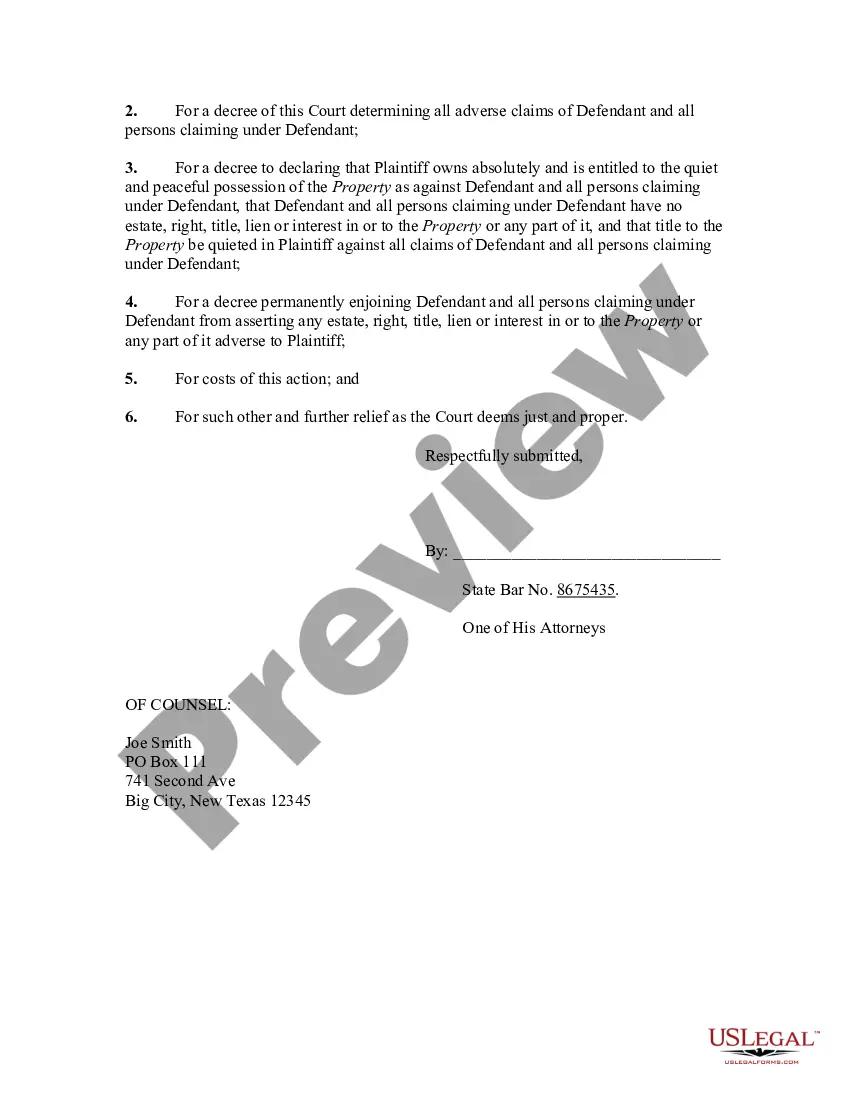
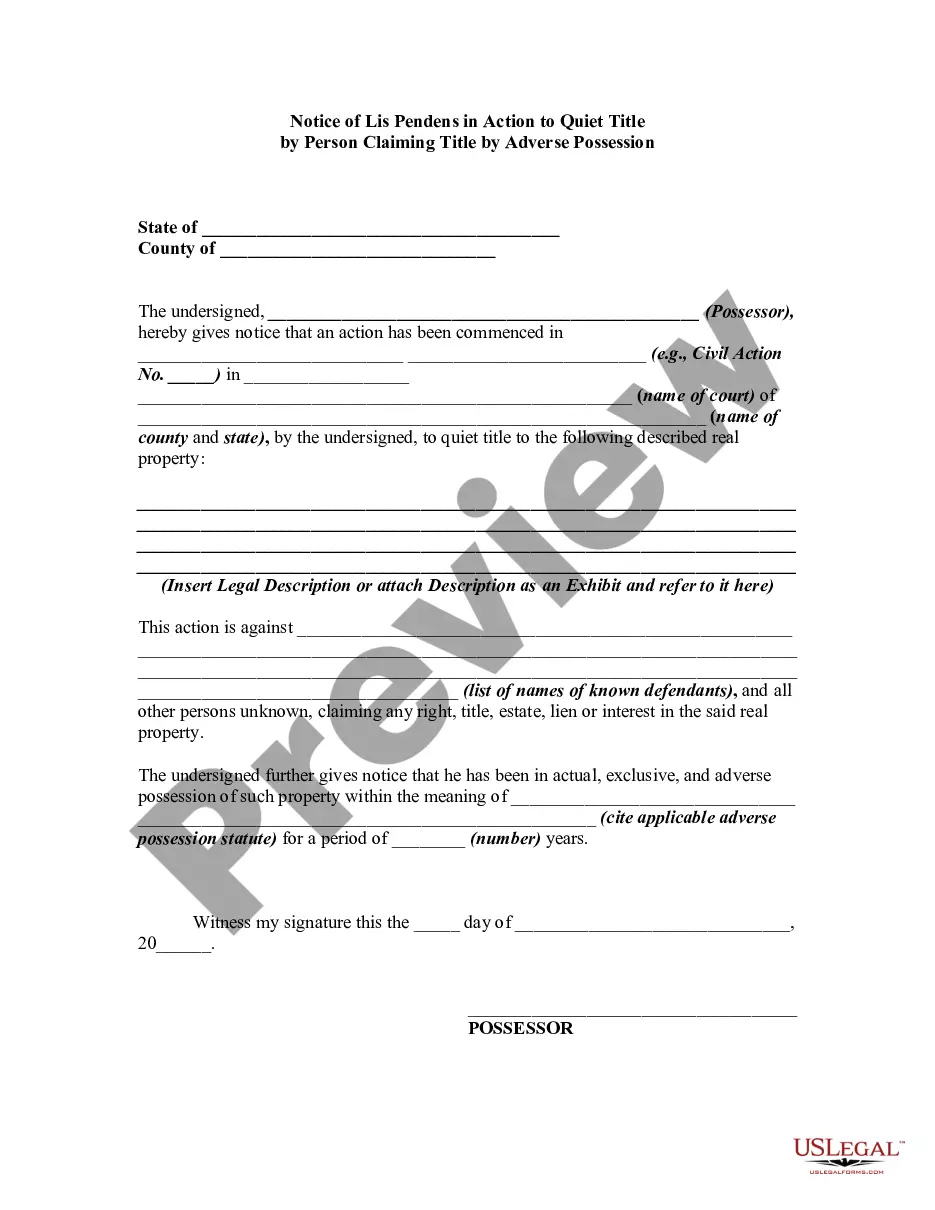
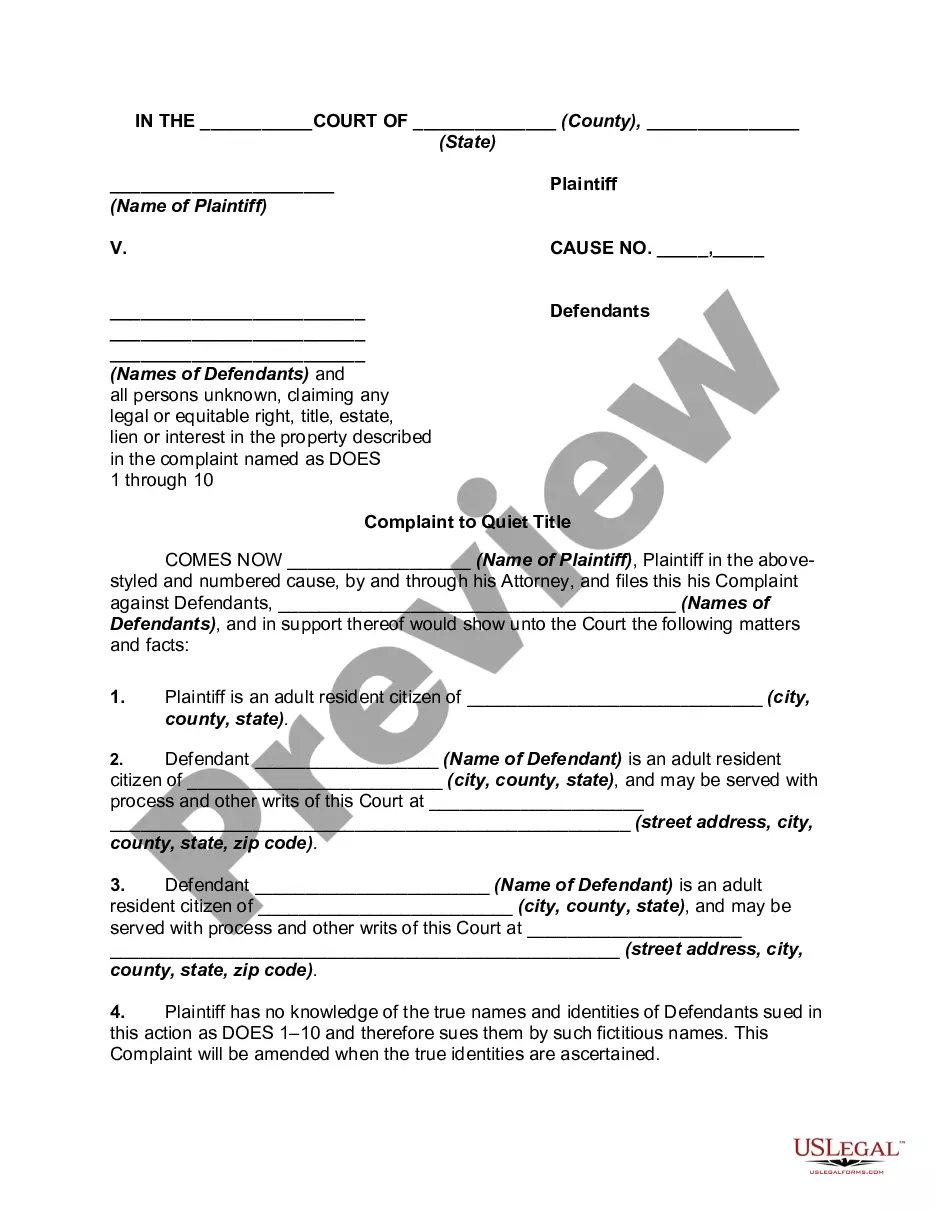


How to fill out Complaint To Quiet Title By Person Claiming Adverse Possession - Squatters Rights?
Regardless of whether for corporate intentions or personal matters, everyone eventually encounters legal dilemmas in their lives.
Completing legal paperwork requires meticulous care, starting from choosing the suitable form template.
With an extensive US Legal Forms collection available, you no longer need to waste time searching for the appropriate template online. Take advantage of the library’s easy navigation to find the right template for any circumstance.
- Obtain the template you require by utilizing the search bar or catalog browsing.
- Review the description of the form to confirm it corresponds with your situation, jurisdiction, and region.
- Click on the preview of the form to examine it.
- If it is the wrong document, return to the search feature to find the Adverse Possession By State For Land template you seek.
- Download the file if it fulfills your requirements.
- If you already possess a US Legal Forms account, simply click Log in to retrieve formerly saved templates in My documents.
- In case you have not created an account yet, you can acquire the form by clicking Buy now.
- Select the correct pricing choice.
- Fill out the account registration form.
- Choose your payment method: use a credit card or PayPal account.
- Select the format of the document you desire and download the Adverse Possession By State For Land.
- Once downloaded, you can either fill out the form using editing software or print it out to complete it by hand.
Form popularity
FAQ
The amended FDCPA allows debt collectors to use newer technologies, such as email and text messages, to communicate with consumers regarding their debts, subject to certain limitations, which protect consumers against harassment or abuse.
If you are struggling with debt and debt collectors, Farmer & Morris Law, PLLC can help. As soon as you use the 11-word phrase ?please cease and desist all calls and contact with me immediately? to stop the harassment, call us for a free consultation about what you can do to resolve your debt problems for good.
The Fair Debt Collection Practices Act was signed into law by President Jimmy Carter on September 20, 1977. The act prohibits certain debt collection practices, and requires debt collectors to identify themselves when communicating with a consumer and to validate the debt at the consumer's request.
Effective January 1, the small loan act applies to loans under $10,000 and not just $5,000 and certain other restrictions on scope are loosened. The anti-evasion provisions are also expanded. § 58-15-3(D). As of January 1, 2023, a fee of 5% of the principal may be charged for a loan of $500 or less.
The Statute of limitations for debts based on verbal agreements in Nevada is four years, compared to six years for written contracts. The statute of limitations on open-ended accounts and accounts with revolving balances, such as credit cards, is four years.
Under this Act (Title VIII of the Consumer Credit Protection Act), third-party debt collectors are prohibited from using deceptive or abusive conduct in the collection of consumer debts incurred for personal, family, or household purposes.
The Fair Debt Collection Practices Act (FDCPA) prohibits debt collectors from using abusive, unfair, or deceptive practices to collect debts from you, including: Misrepresenting the nature of the debt, including the amount owed. Falsely claiming that the person contacting you is an attorney.
One such recent development impacting consumer debt collections is the newly enacted Regulation F. Effective November 30, 2021, the Consumer Financial Protection Bureau (?CFPB?) enacted Regulation F to the Fair Debt Collection Practice Act (FDCPA). The full text of the Rule can be found here.