Warehouse Storage Policy
Description
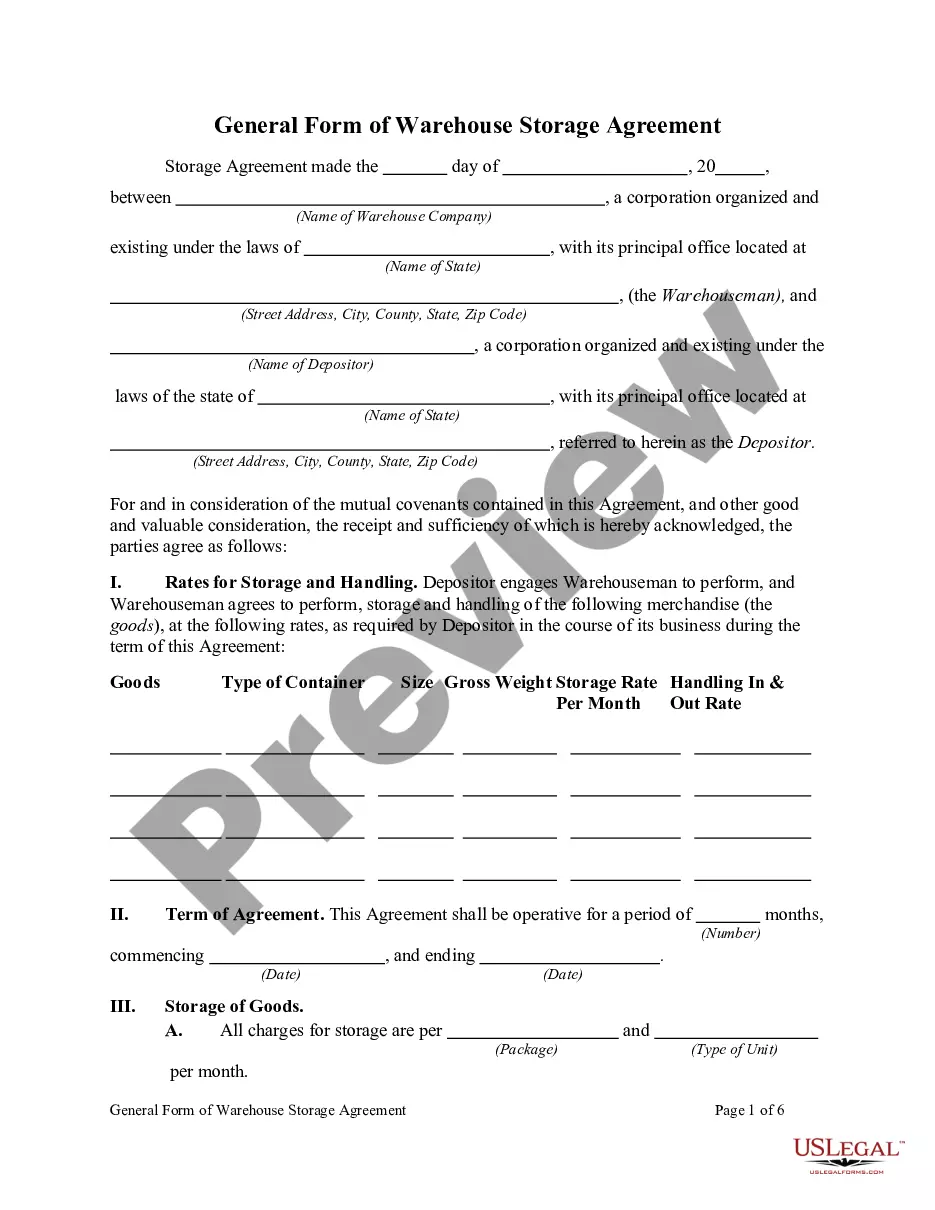
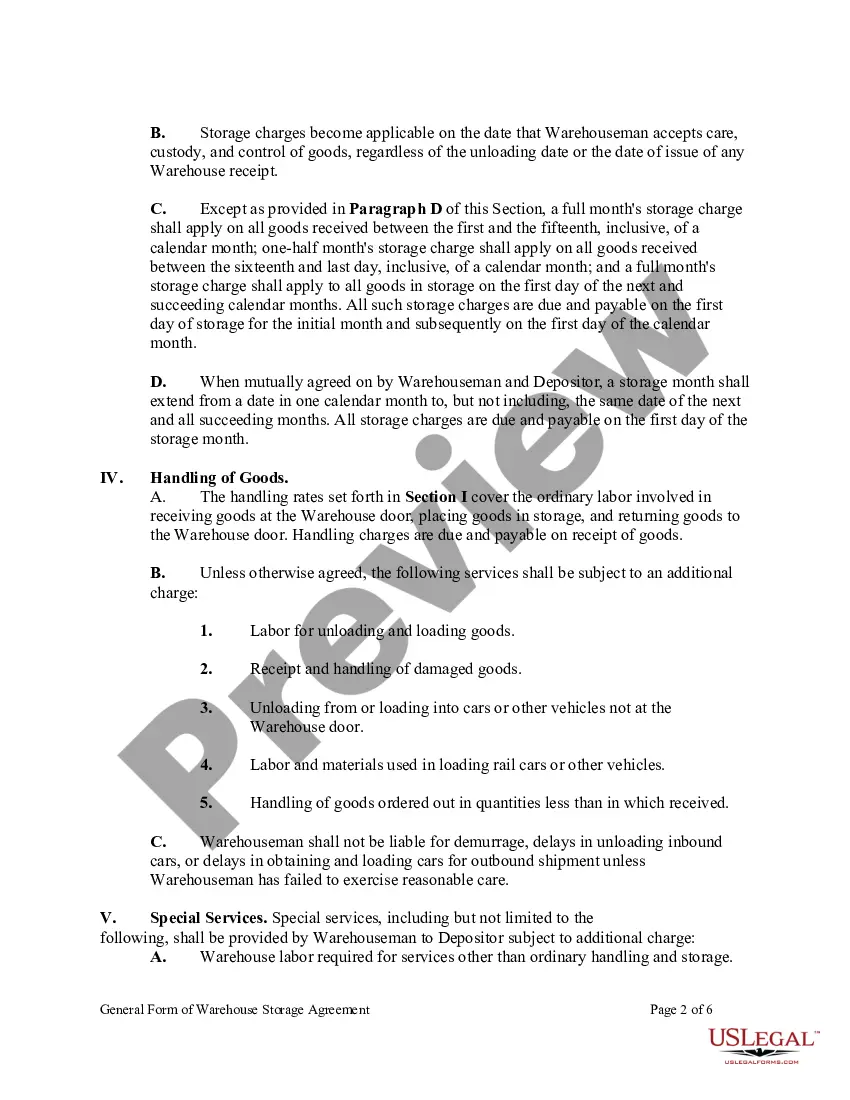
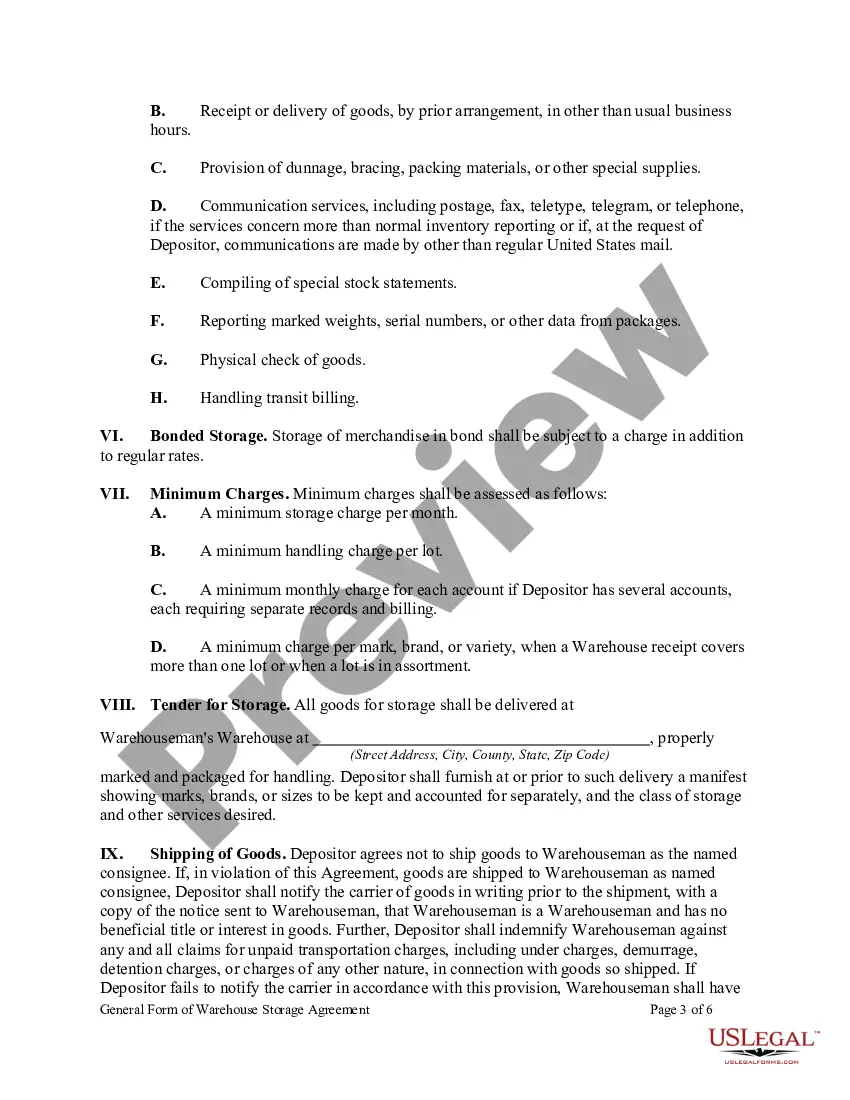
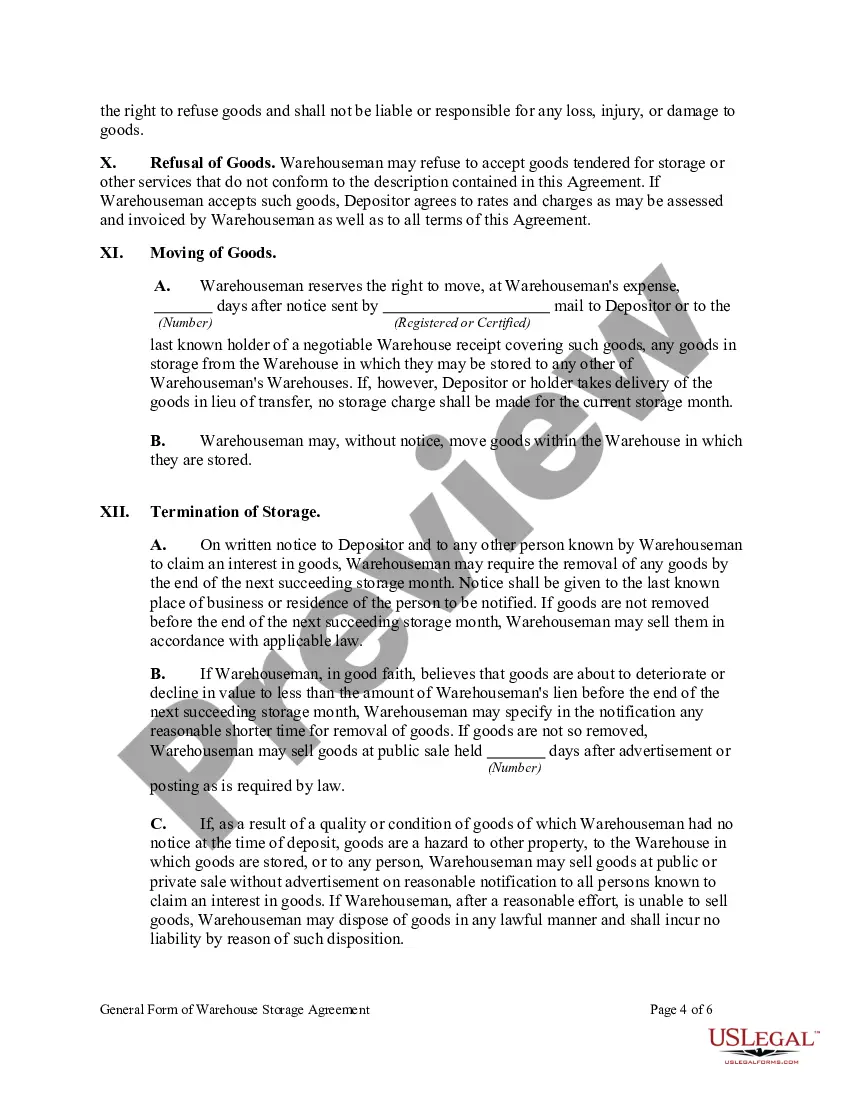
Get your form ready online
Our built-in tools help you complete, sign, share, and store your documents in one place.
Make edits, fill in missing information, and update formatting in US Legal Forms—just like you would in MS Word.
Download a copy, print it, send it by email, or mail it via USPS—whatever works best for your next step.
Sign and collect signatures with our SignNow integration. Send to multiple recipients, set reminders, and more. Go Premium to unlock E-Sign.
If this form requires notarization, complete it online through a secure video call—no need to meet a notary in person or wait for an appointment.
We protect your documents and personal data by following strict security and privacy standards.

Make edits, fill in missing information, and update formatting in US Legal Forms—just like you would in MS Word.

Download a copy, print it, send it by email, or mail it via USPS—whatever works best for your next step.

Sign and collect signatures with our SignNow integration. Send to multiple recipients, set reminders, and more. Go Premium to unlock E-Sign.

If this form requires notarization, complete it online through a secure video call—no need to meet a notary in person or wait for an appointment.

We protect your documents and personal data by following strict security and privacy standards.
Looking for another form?





How to fill out General Form Of Warehouse Storage Agreement?
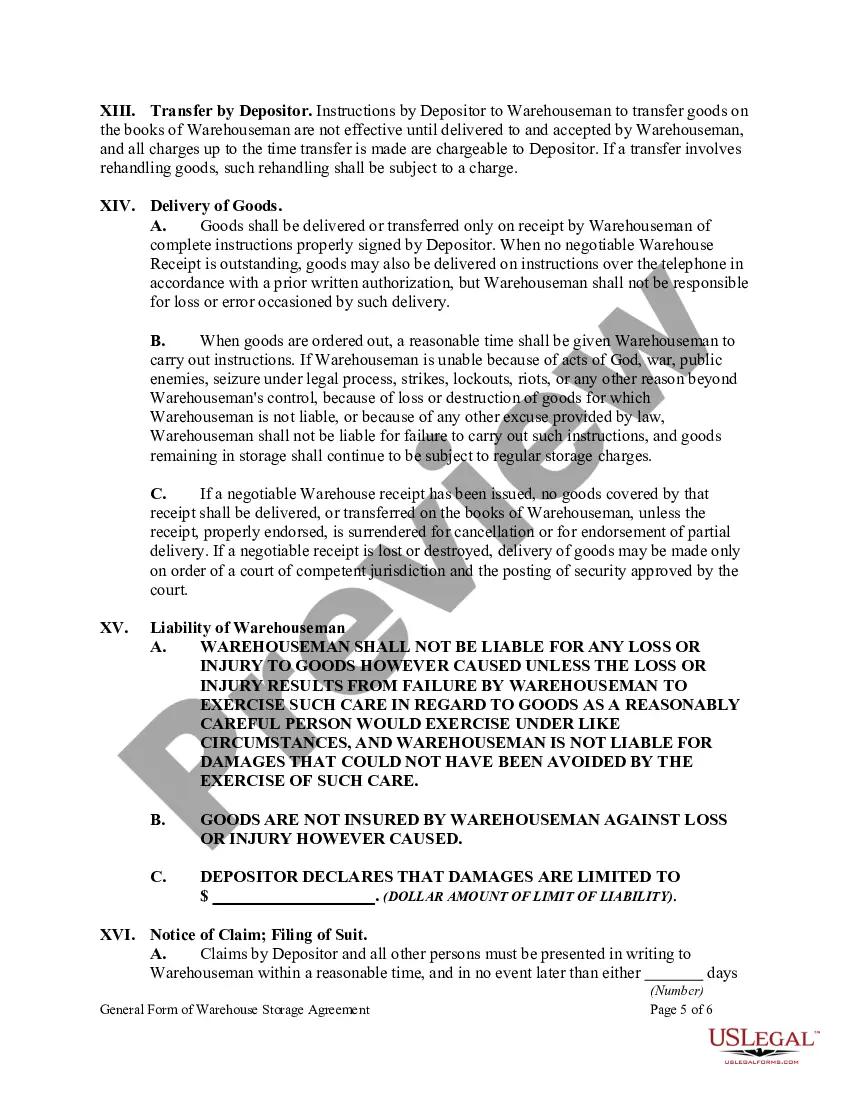
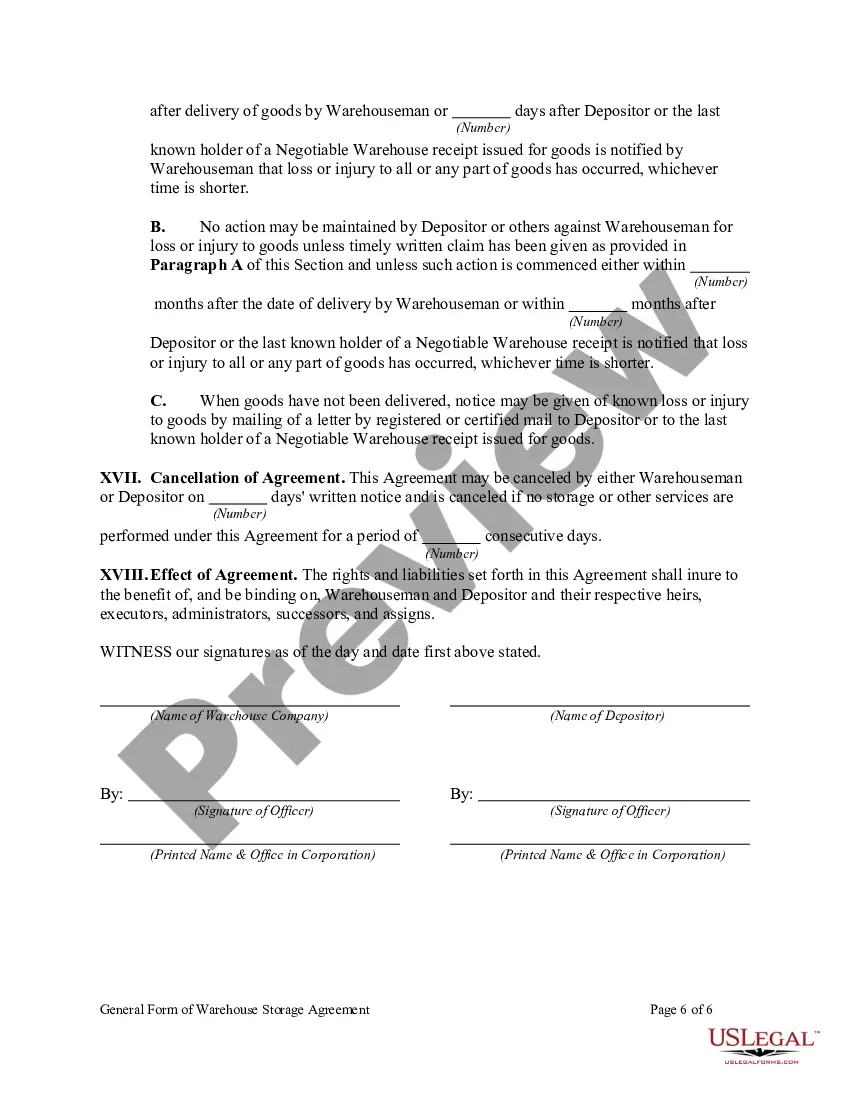
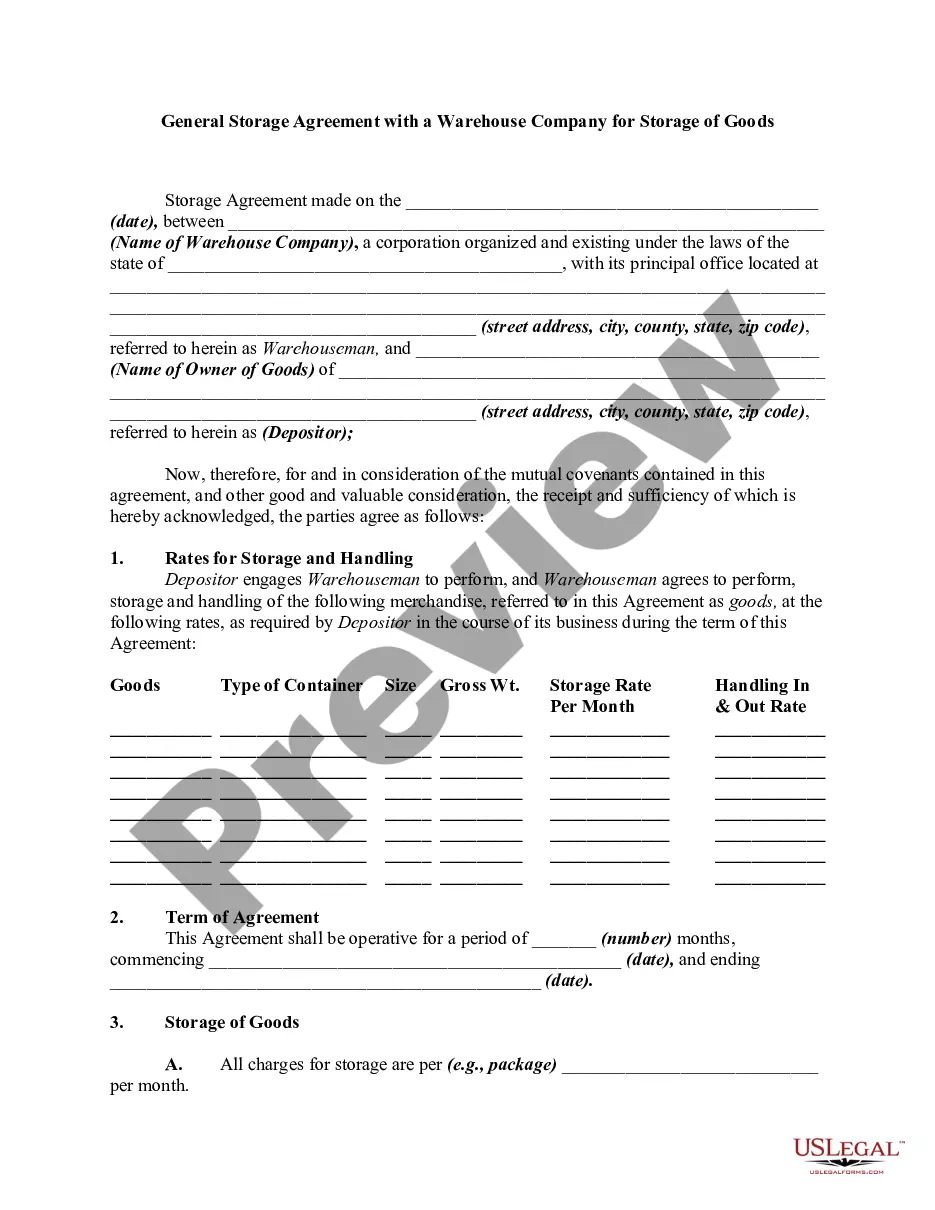
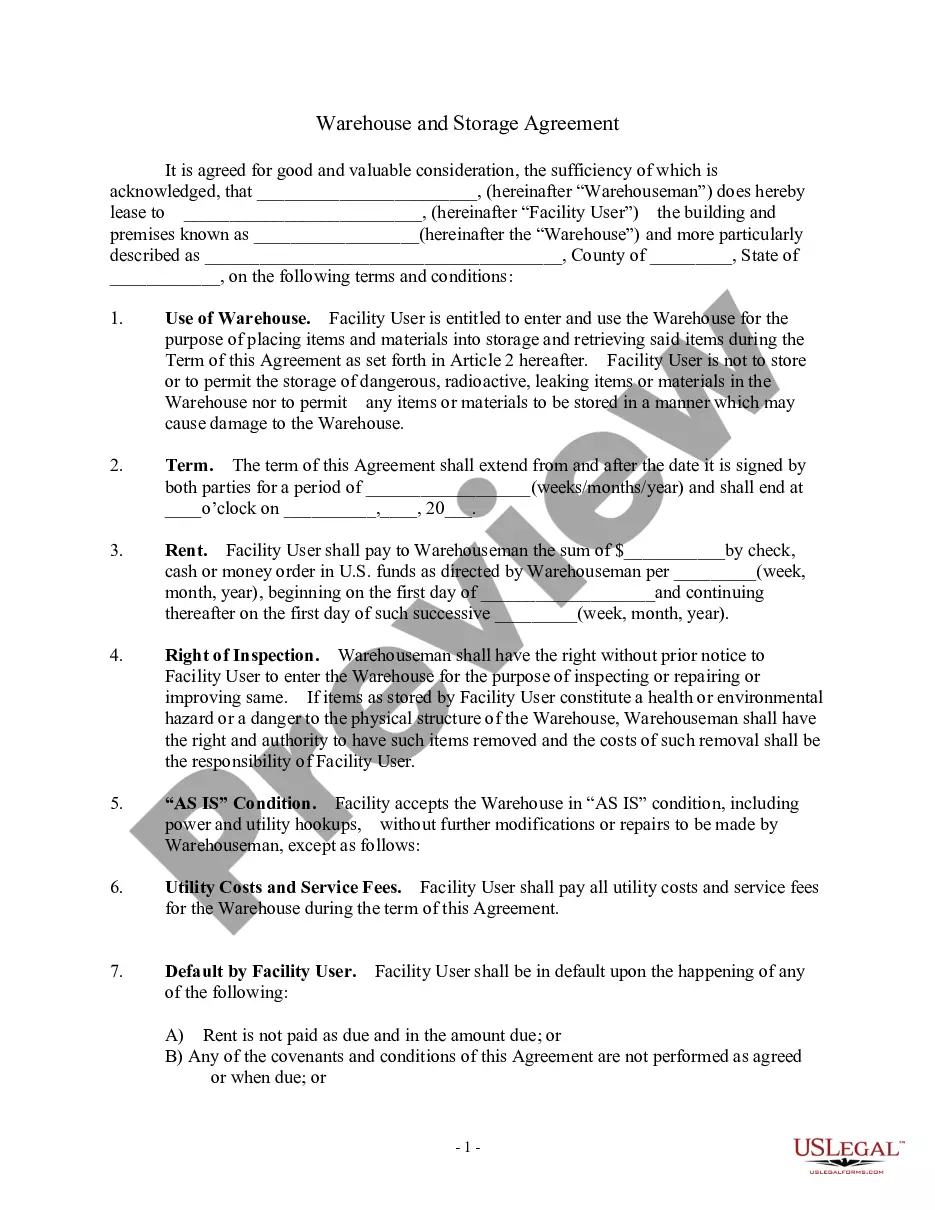
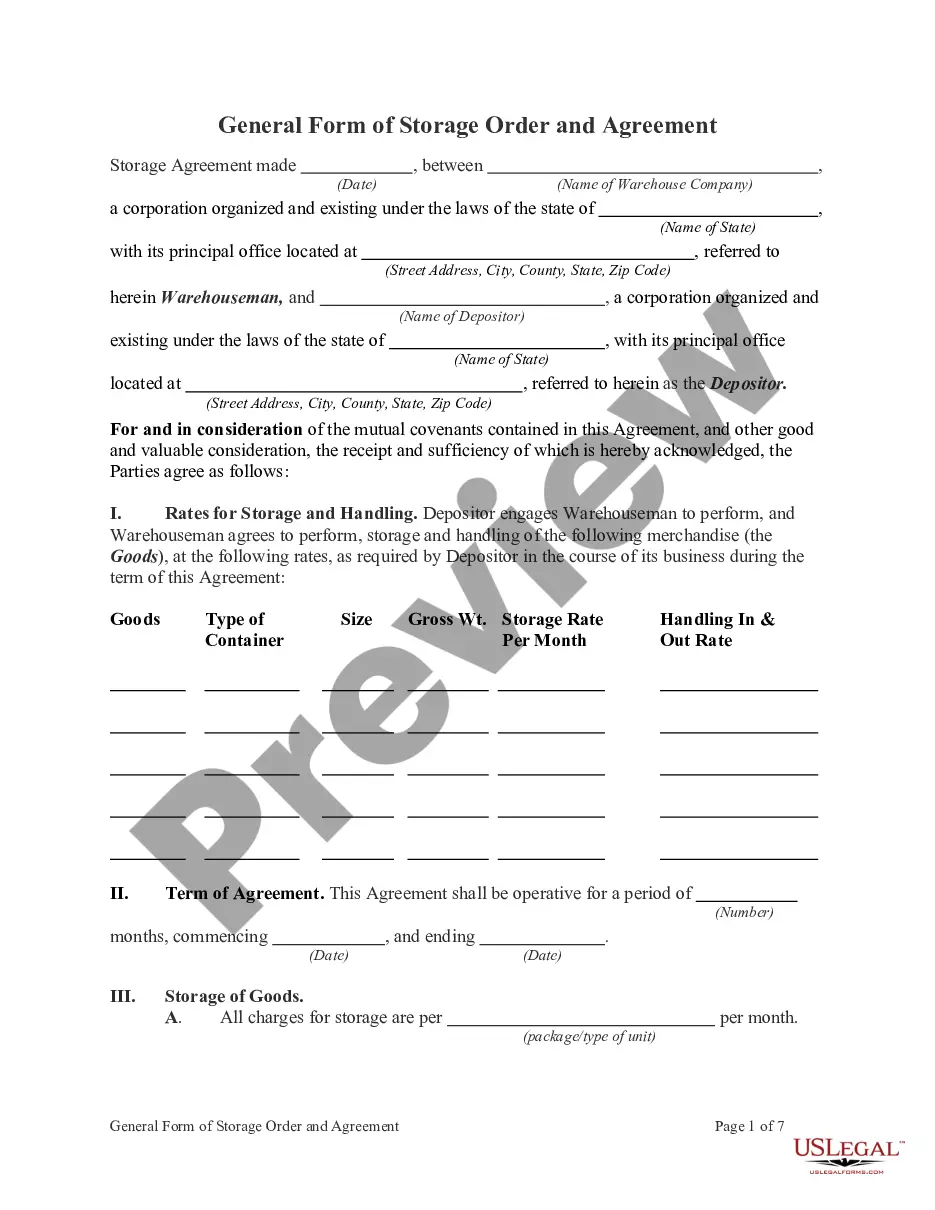
The Warehouse Storage Policy you see on this page is a multi-usable legal template drafted by professional lawyers in compliance with federal and state laws and regulations. For more than 25 years, US Legal Forms has provided people, organizations, and attorneys with more than 85,000 verified, state-specific forms for any business and personal scenario. It’s the quickest, easiest and most reliable way to obtain the documents you need, as the service guarantees bank-level data security and anti-malware protection.
Obtaining this Warehouse Storage Policy will take you just a few simple steps:
- Browse for the document you need and check it. Look through the file you searched and preview it or review the form description to confirm it suits your requirements. If it does not, use the search option to find the correct one. Click Buy Now when you have found the template you need.
- Subscribe and log in. Opt for the pricing plan that suits you and register for an account. Use PayPal or a credit card to make a quick payment. If you already have an account, log in and check your subscription to proceed.
- Get the fillable template. Select the format you want for your Warehouse Storage Policy (PDF, Word, RTF) and save the sample on your device.
- Complete and sign the document. Print out the template to complete it manually. Alternatively, utilize an online multi-functional PDF editor to rapidly and precisely fill out and sign your form with a legally-binding] {electronic signature.
- Download your paperwork one more time. Utilize the same document once again whenever needed. Open the My Forms tab in your profile to redownload any earlier saved forms.
Subscribe to US Legal Forms to have verified legal templates for all of life’s scenarios at your disposal.
Form popularity
FAQ
Some areas you can address in your policy document include the following: Warehouse safety rules. Warehouse safety checklist. Hazard reporting procedures. Personal protective equipment (PPE) Standard operating procedures. Emergency plans.
How to Maximize Warehouse Space Utilization Extend your racking up vertically. a mezzanine above a floor-level process. Reduce aisle width in the racking area. Change your storage medium. Add half-pallet storage locations. Leverage your warehouse management system for directed put-away. Use underutilized space.
How to Organize a Warehouse: A Step-by-Step Guide to Efficient Warehouse Organization Create a floor plan. Select shelving and storage solutions. Label racks, shelves, containers, and other warehouse organization assets. Maximize space utilization. Schedule regular maintenance. Conduct periodic audits and reviews.
Storage policies assign items to warehouse storage locations. Items may be assigned randomly, or similar items may be grouped in the same area of the warehouse, or items may be assigned based on order or picking volume.
Warehouse management is the overall process of overseeing the day-to-day operations of a warehouse. This includes the major procedures involved in ensuring the smooth performance of activities such as receiving, inventory, storage, packing, and shipping of products out of warehouses.