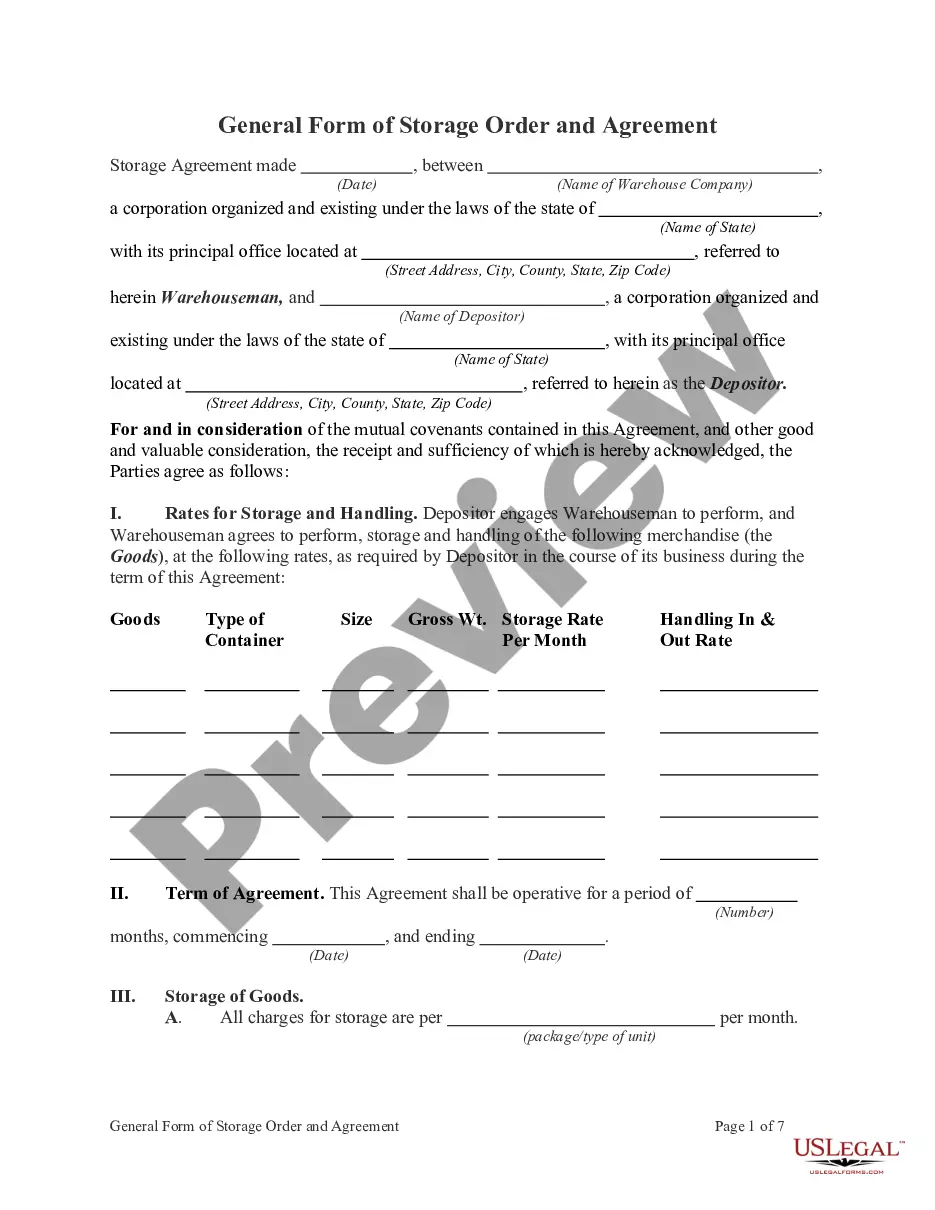
Warehouse Storage Agreement Template For House
Description
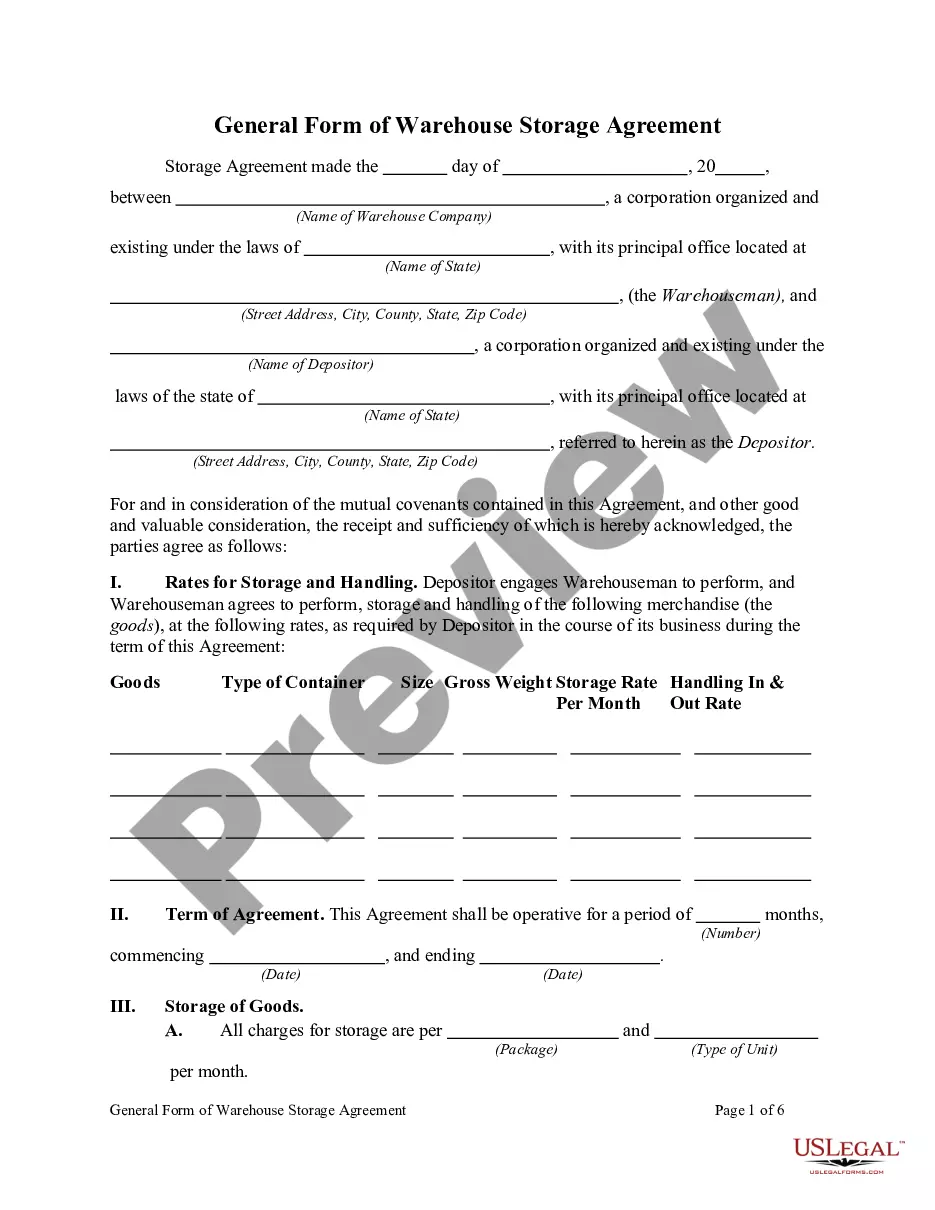
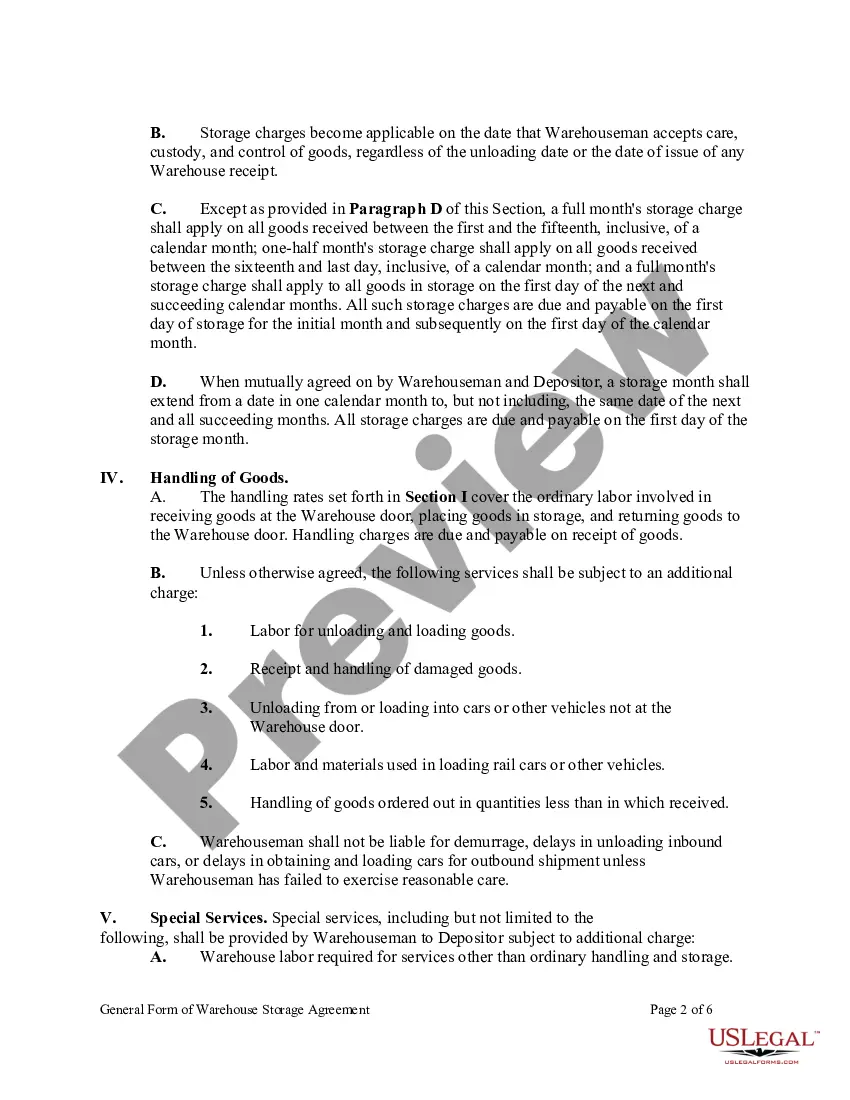
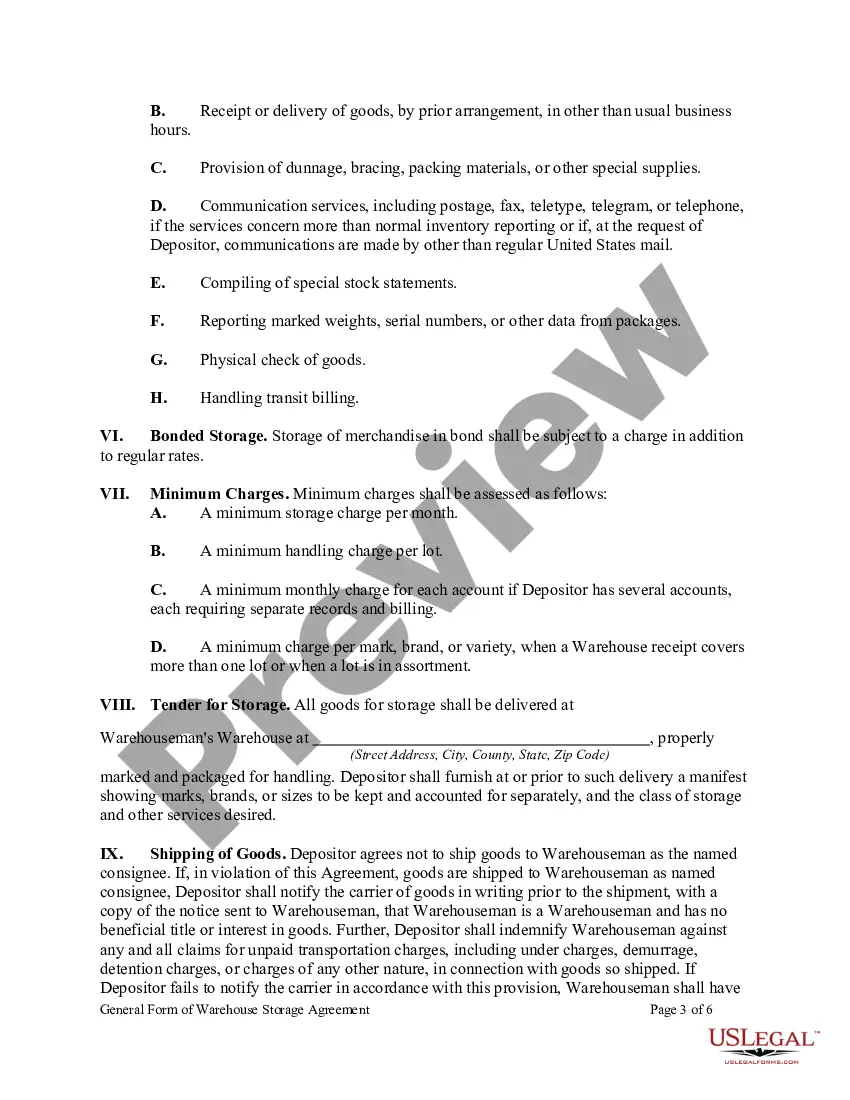
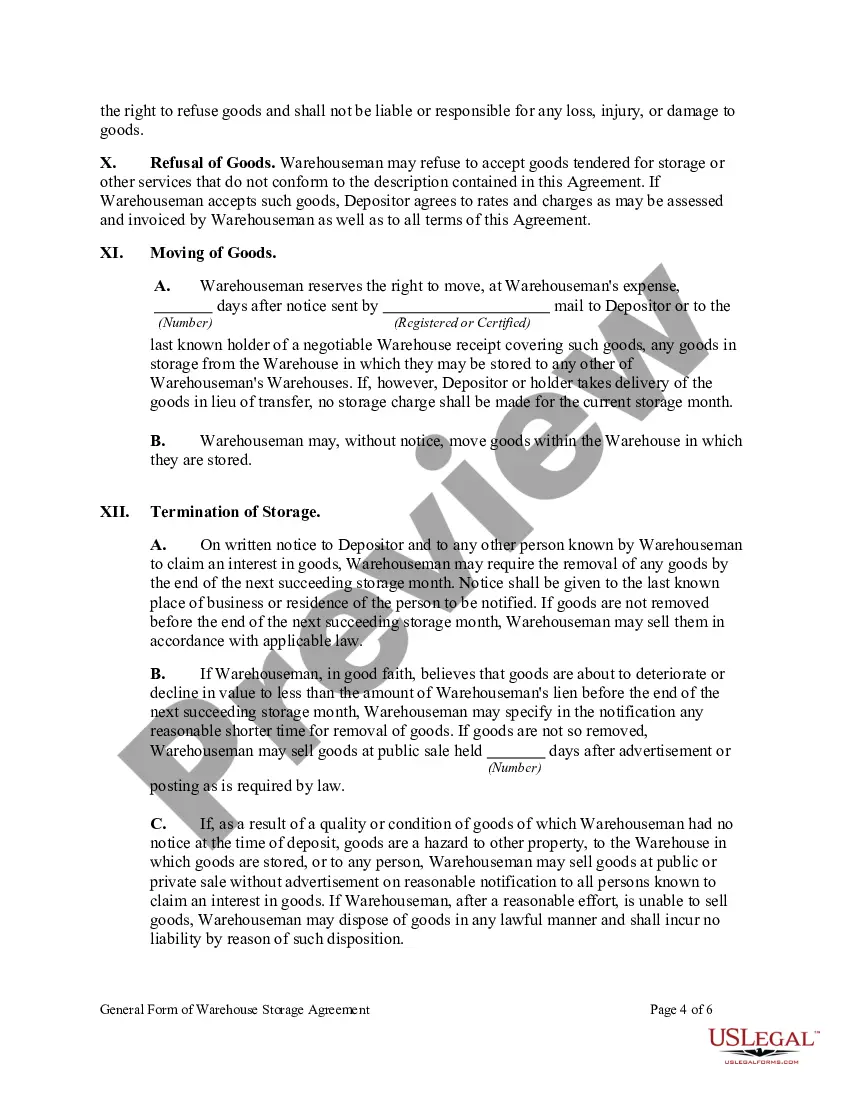
Get your form ready online
Our built-in tools help you complete, sign, share, and store your documents in one place.
Make edits, fill in missing information, and update formatting in US Legal Forms—just like you would in MS Word.
Download a copy, print it, send it by email, or mail it via USPS—whatever works best for your next step.
Sign and collect signatures with our SignNow integration. Send to multiple recipients, set reminders, and more. Go Premium to unlock E-Sign.
If this form requires notarization, complete it online through a secure video call—no need to meet a notary in person or wait for an appointment.
We protect your documents and personal data by following strict security and privacy standards.

Make edits, fill in missing information, and update formatting in US Legal Forms—just like you would in MS Word.

Download a copy, print it, send it by email, or mail it via USPS—whatever works best for your next step.

Sign and collect signatures with our SignNow integration. Send to multiple recipients, set reminders, and more. Go Premium to unlock E-Sign.

If this form requires notarization, complete it online through a secure video call—no need to meet a notary in person or wait for an appointment.

We protect your documents and personal data by following strict security and privacy standards.
Looking for another form?







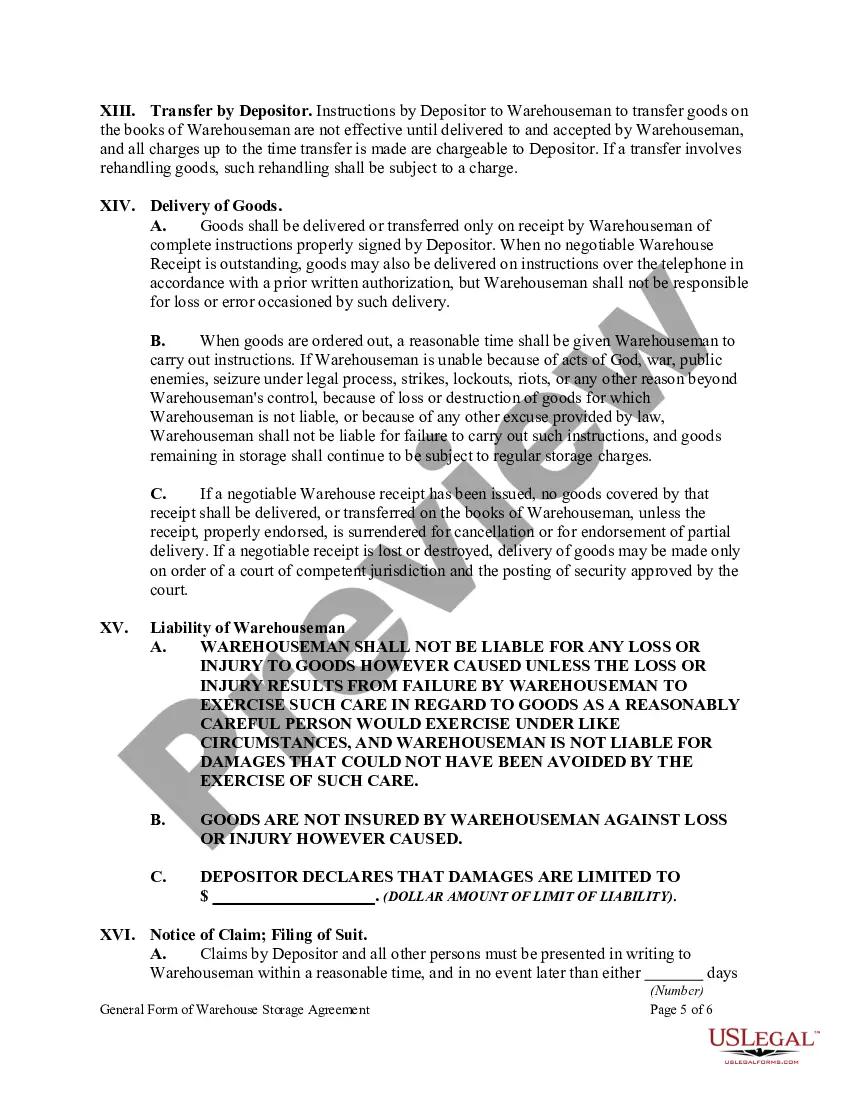
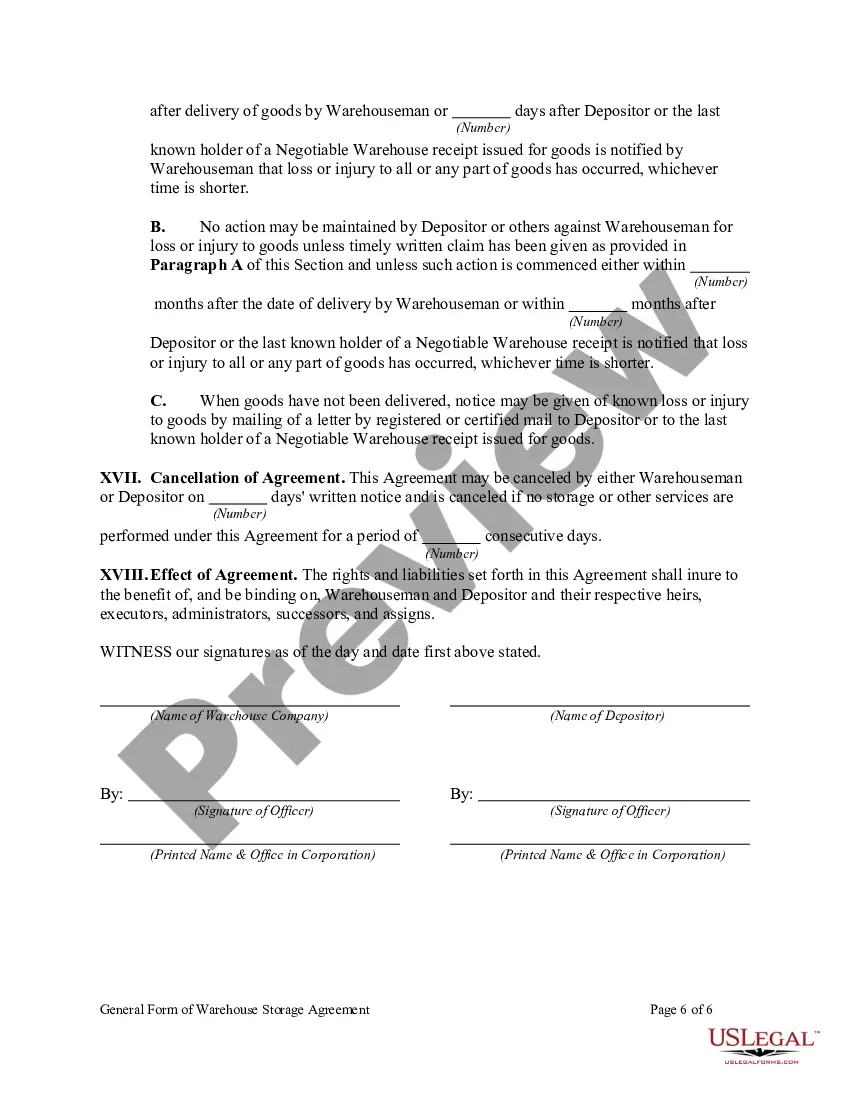
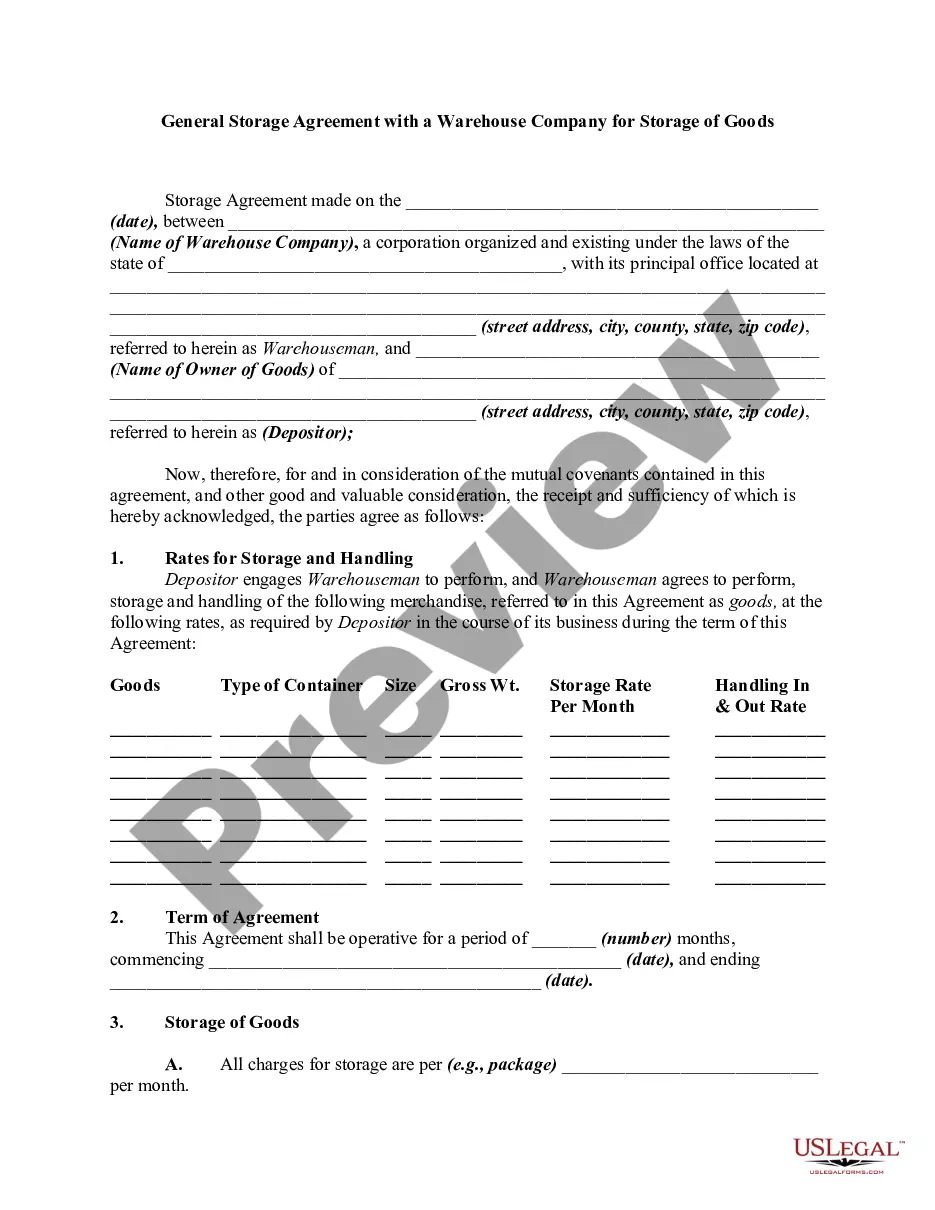
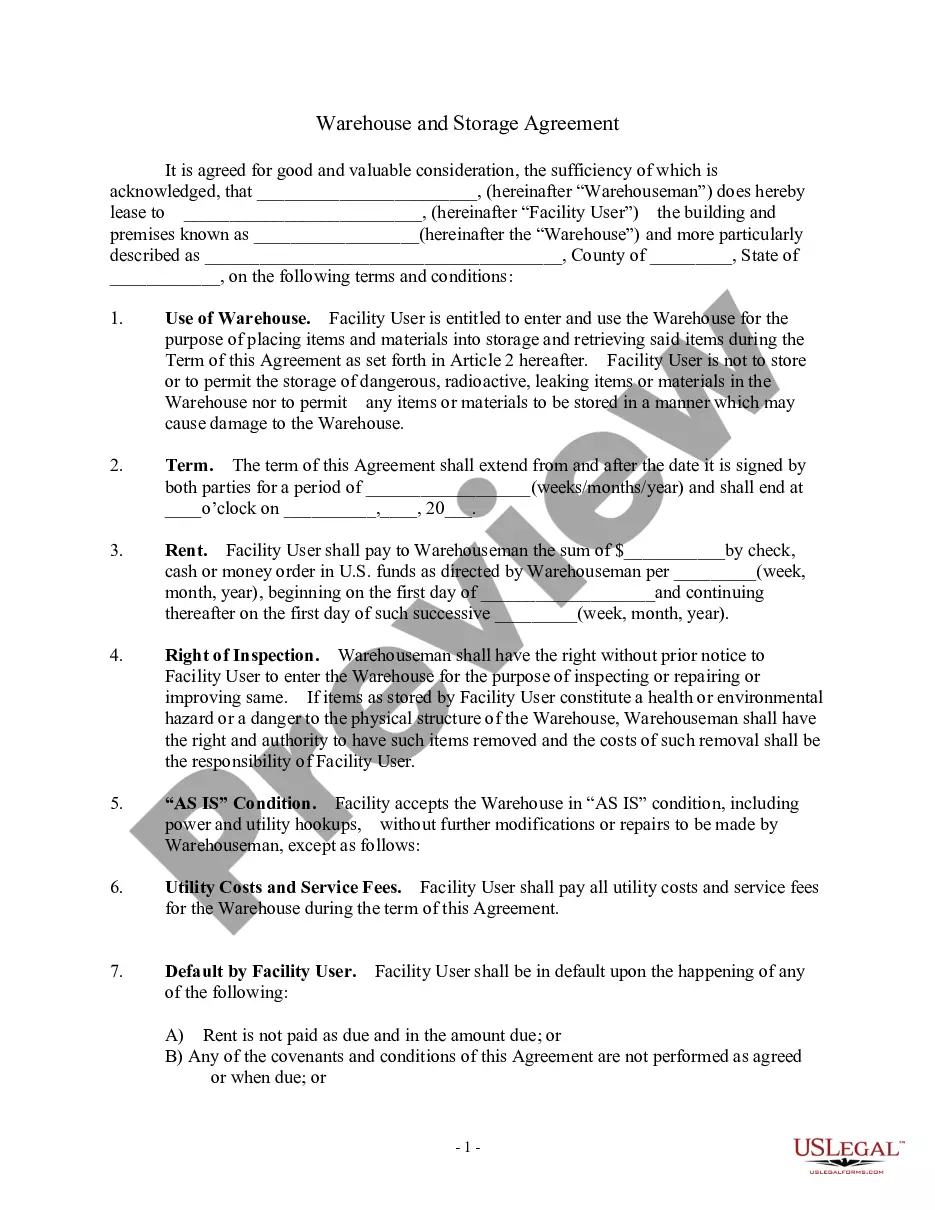
How to fill out General Form Of Warehouse Storage Agreement?
It’s clear that you cannot transform into a legal expert overnight, nor can you understand how to swiftly create a Warehouse Storage Agreement Template For House without possessing a specific skill set.
Developing legal documents is a lengthy procedure necessitating a distinct education and expertise. So why not delegate the creation of the Warehouse Storage Agreement Template For House to the experts.
With US Legal Forms, one of the most extensive legal document collections, you can discover anything from court forms to templates for internal corporate communication.
If you require a different form, restart your search.
Create a free account and select a subscription plan to purchase the template. Click Buy now. Once the transaction is finalized, you can obtain the Warehouse Storage Agreement Template For House, complete it, print it, and send or mail it to the appropriate individuals or entities.
- We recognize how vital compliance and observance of federal and state laws and regulations are.
- That’s why, on our platform, all templates are location-specific and current.
- Here’s how to start on our website and obtain the form you require in just minutes.
- Locate the form you need using the search bar at the top of the page.
- Preview it (if this option is available) and review the supporting description to confirm whether the Warehouse Storage Agreement Template For House is what you seek.
Form popularity
FAQ
Contract warehousing can also apply to just part of a warehouse. For example, a company may commit to a contract warehousing arrangement for 30,000 square feet out of a 130,000-square-foot warehouse. The 3PL can use the rest of the empty space for shared warehousing or even other contract arrangements.
Contract warehousing can also apply to just part of a warehouse. For example, a company may commit to a contract warehousing arrangement for 30,000 square feet out of a 130,000-square-foot warehouse. The 3PL can use the rest of the empty space for shared warehousing or even other contract arrangements.
A warehousing agreement, also called contract warehousing, is a legal contract in which a warehouse promises to receive and store goods on behalf of a client in exchange for compensation.
A contract warehouse is a third-party logistics (3PL) storage facility that stores goods on behalf of a client. The client and the warehouse enter into a contract, which can range from months to years. The agreement may have a fixed fee structure or operate on a cost-plus model.
Contract warehousing offers many advantages, including flexible fee structures like fixed, costs-plus, or a combination of both. It also carries less risk for retailers and manufacturers because they aren't tied to the recurring costs of owning a warehouse.