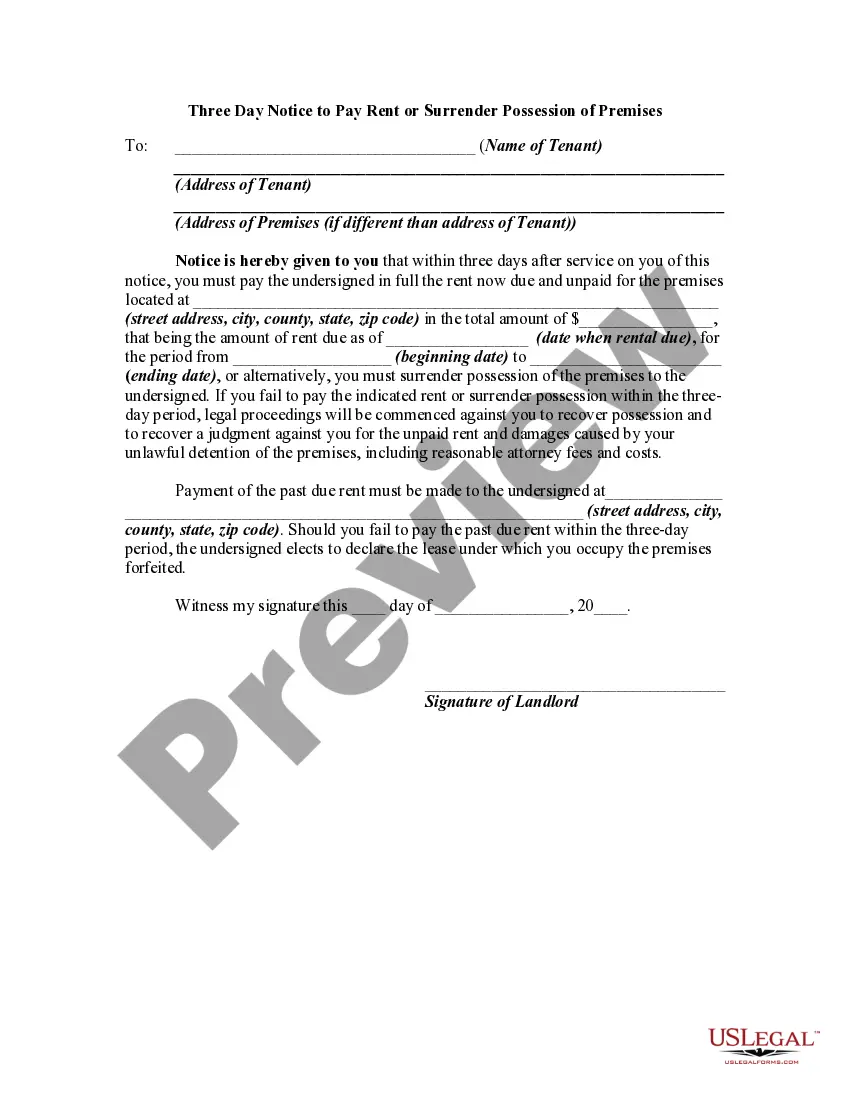
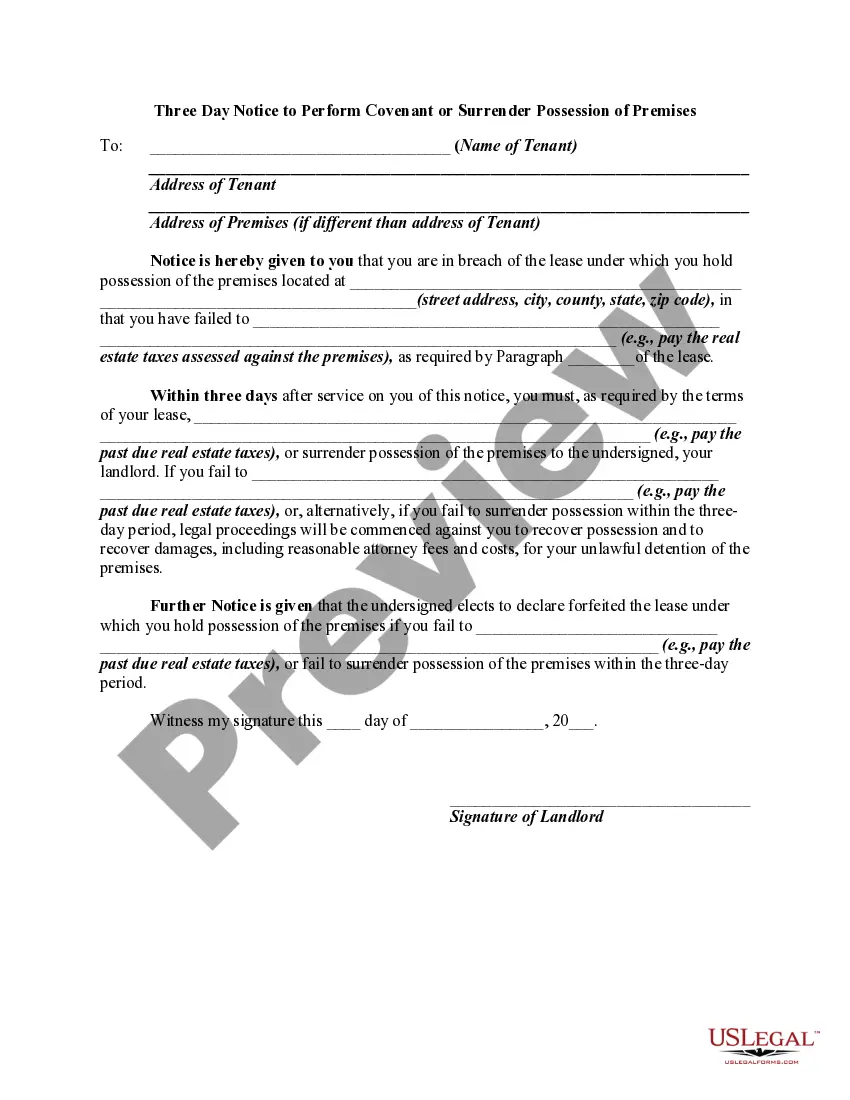
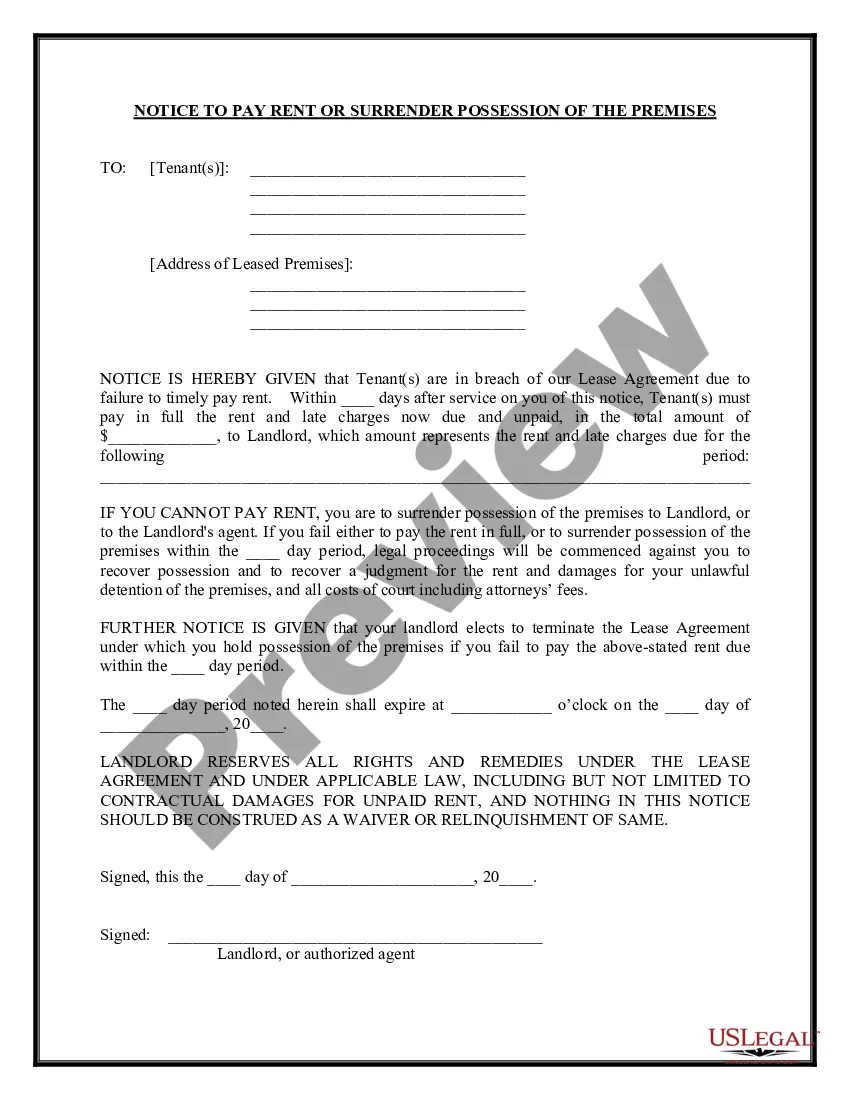
Three Day Notice Form For 60
Description
Get your form ready online
Our built-in tools help you complete, sign, share, and store your documents in one place.
Make edits, fill in missing information, and update formatting in US Legal Forms—just like you would in MS Word.
Download a copy, print it, send it by email, or mail it via USPS—whatever works best for your next step.
Sign and collect signatures with our SignNow integration. Send to multiple recipients, set reminders, and more. Go Premium to unlock E-Sign.
If this form requires notarization, complete it online through a secure video call—no need to meet a notary in person or wait for an appointment.
We protect your documents and personal data by following strict security and privacy standards.

Make edits, fill in missing information, and update formatting in US Legal Forms—just like you would in MS Word.

Download a copy, print it, send it by email, or mail it via USPS—whatever works best for your next step.

Sign and collect signatures with our SignNow integration. Send to multiple recipients, set reminders, and more. Go Premium to unlock E-Sign.

If this form requires notarization, complete it online through a secure video call—no need to meet a notary in person or wait for an appointment.

We protect your documents and personal data by following strict security and privacy standards.
Looking for another form?
How to fill out Three Day Notice To Pay Rent Or Surrender Possession Of Premises - Vacate - Past Due Rent - Eviction?
Whether for commercial objectives or personal matters, everyone must handle legal situations at some point in their lives.
Filling out legal paperwork requires meticulous attention, starting from selecting the appropriate form template.
After it is saved, you can fill out the form using editing software or print it and complete it manually. With a comprehensive US Legal Forms catalog available, you do not need to waste time searching for the correct template all over the internet. Utilize the library’s user-friendly navigation to find the right template for any circumstance.
- For example, if you select an incorrect version of the Three Day Notice Form For 60, it will be denied upon submission.
- Therefore, it is essential to acquire a trustworthy source of legal documents such as US Legal Forms.
- If you need to obtain a Three Day Notice Form For 60 sample, follow these simple steps.
- Locate the template you need using the search bar or catalog navigation.
- Review the form’s description to confirm it fits your situation, state, and county.
- Click on the form’s preview to examine it.
- If it is the wrong form, return to the search function to find the Three Day Notice Form For 60 sample you need.
- Acquire the template when it meets your requirements.
- If you already possess a US Legal Forms account, click Log in to access previously saved templates in My documents.
- If you do not have an account yet, you may download the form by selecting Buy now.
- Choose the suitable pricing option.
- Complete the account registration form.
- Select your payment method: use a credit card or PayPal account.
- Choose the document format you prefer and download the Three Day Notice Form For 60.
Form popularity
FAQ
To file this lawsuit, you must go to the General District Court Clerk's office. Ask for the proper court form. To sue for money, fill out a "Warrant in Debt." Even though this court form is called a "warrant," it is not used in a criminal case. It is used in a civil (non-criminal) case.
Five days' notice is required to the opposing party and the court. Motions may be typed by either party, may be filed on the General Notice and Motion Form or may be filed on one of the appropriate forms provided by the Supreme Court of Virginia (located here).
A civil lawsuit is a case in which a person or business asks for money or property from another. The party who brings the lawsuit is called the plaintiff and the party against whom the lawsuit is brought is called the defendant. Any Virginia resident, including corporations, can sue or be sued in GDC.
If your lawsuit is for more than $200, the filing fee is $26, plus $12 for each person or business you are suing. If your lawsuit is for $200 or less, the filing fee is $21, plus $12 for each person or business you are suing. If you win, the judgment will include your filing and service fees.
How Do I Collect on a Judgment: The Debt Collection Process in... Locate the debtor's assets (as many as possible) Attach the judgment to the assets by placing a lien on the assets (called a ?judgment lien?) Obtain the assets to satisfy the judgment (the process of liquidation or foreclosure).
The circuit court is the trial court with the broadest powers in Virginia. The circuit court handles all civil cases with claims of more than $25,000. It shares authority with the general district court to hear matters involving claims between $4,500 and $25,000.
A hearing shall be held by the court, as provided herein, and the court shall rule on any such motions not later than forty-five days after the date of judgment, not including the date of entry of such judgment.