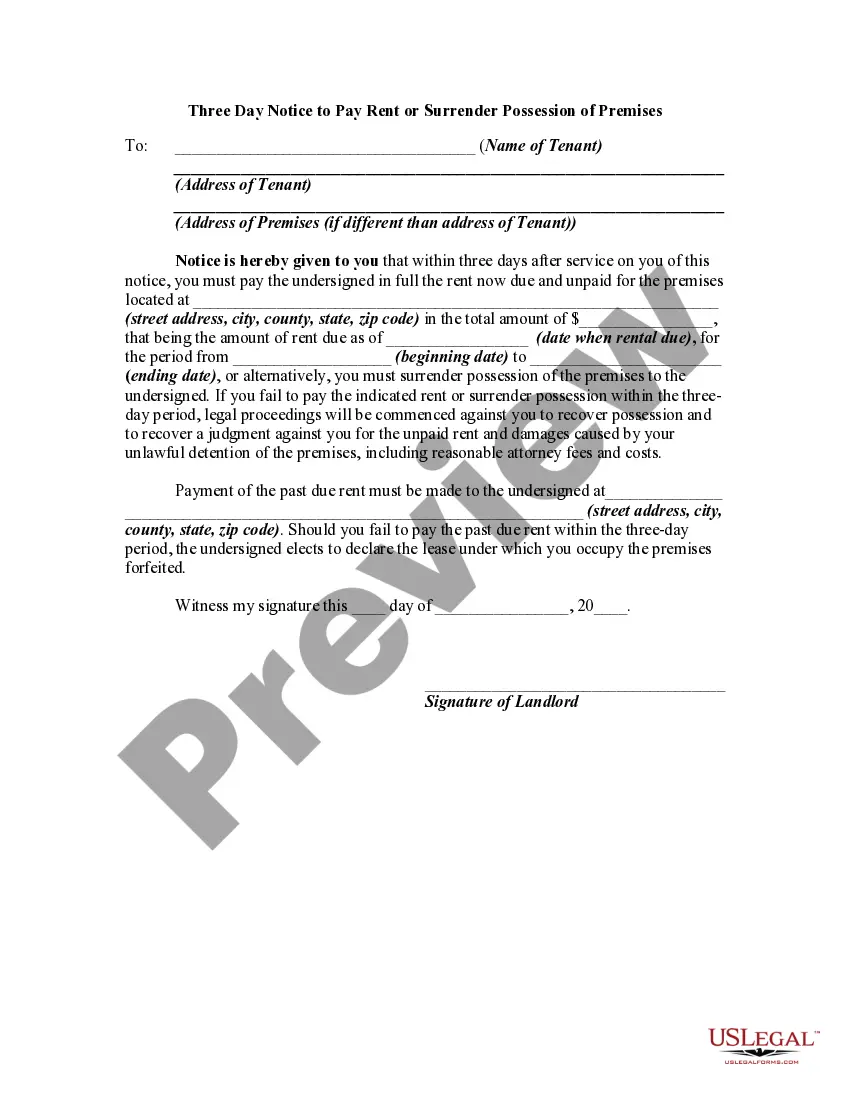
Premises Eviction Without Lease Agreement
Description
Get your form ready online
Our built-in tools help you complete, sign, share, and store your documents in one place.
Make edits, fill in missing information, and update formatting in US Legal Forms—just like you would in MS Word.
Download a copy, print it, send it by email, or mail it via USPS—whatever works best for your next step.
Sign and collect signatures with our SignNow integration. Send to multiple recipients, set reminders, and more. Go Premium to unlock E-Sign.
If this form requires notarization, complete it online through a secure video call—no need to meet a notary in person or wait for an appointment.
We protect your documents and personal data by following strict security and privacy standards.

Make edits, fill in missing information, and update formatting in US Legal Forms—just like you would in MS Word.

Download a copy, print it, send it by email, or mail it via USPS—whatever works best for your next step.

Sign and collect signatures with our SignNow integration. Send to multiple recipients, set reminders, and more. Go Premium to unlock E-Sign.

If this form requires notarization, complete it online through a secure video call—no need to meet a notary in person or wait for an appointment.

We protect your documents and personal data by following strict security and privacy standards.
Looking for another form?
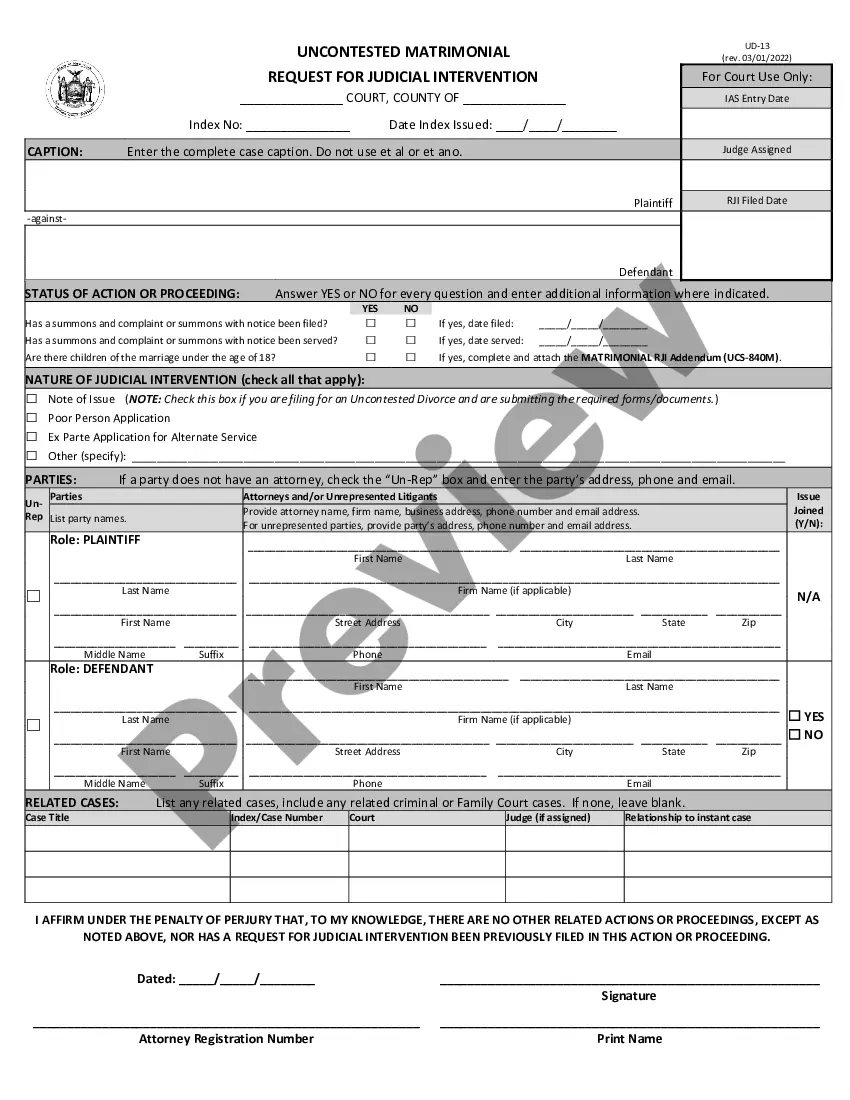

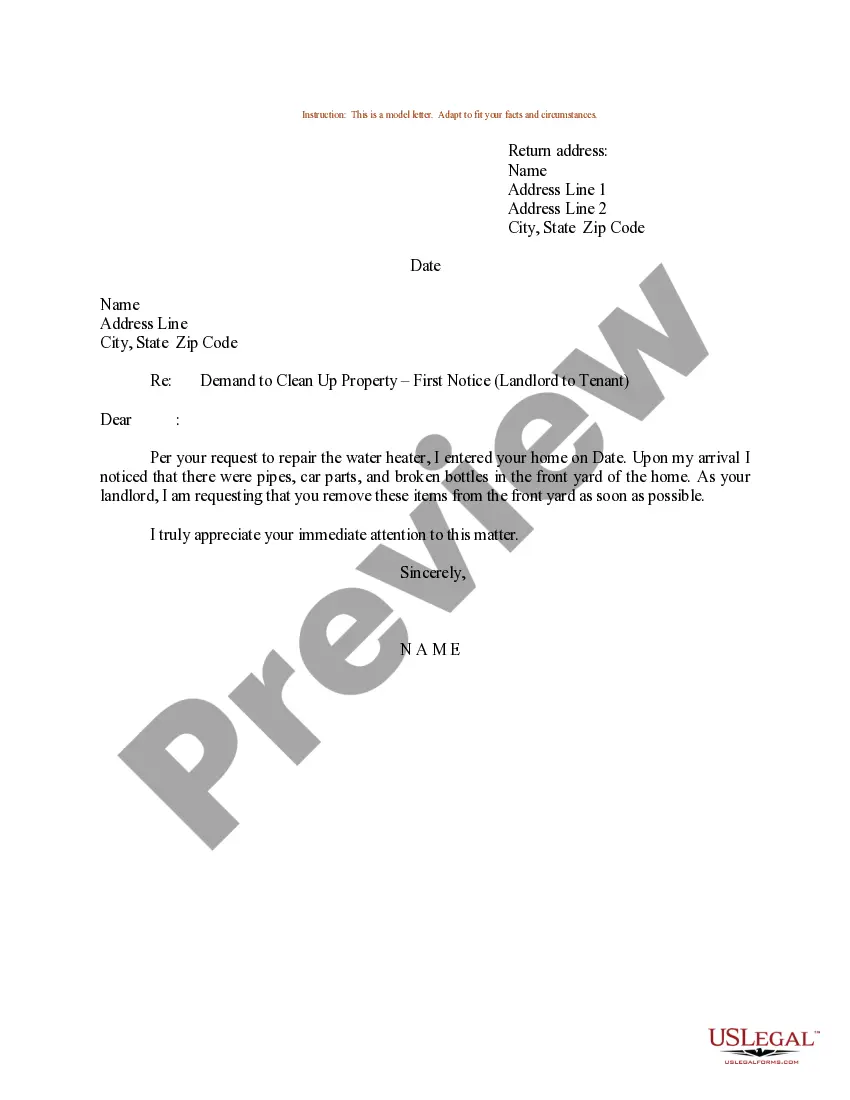
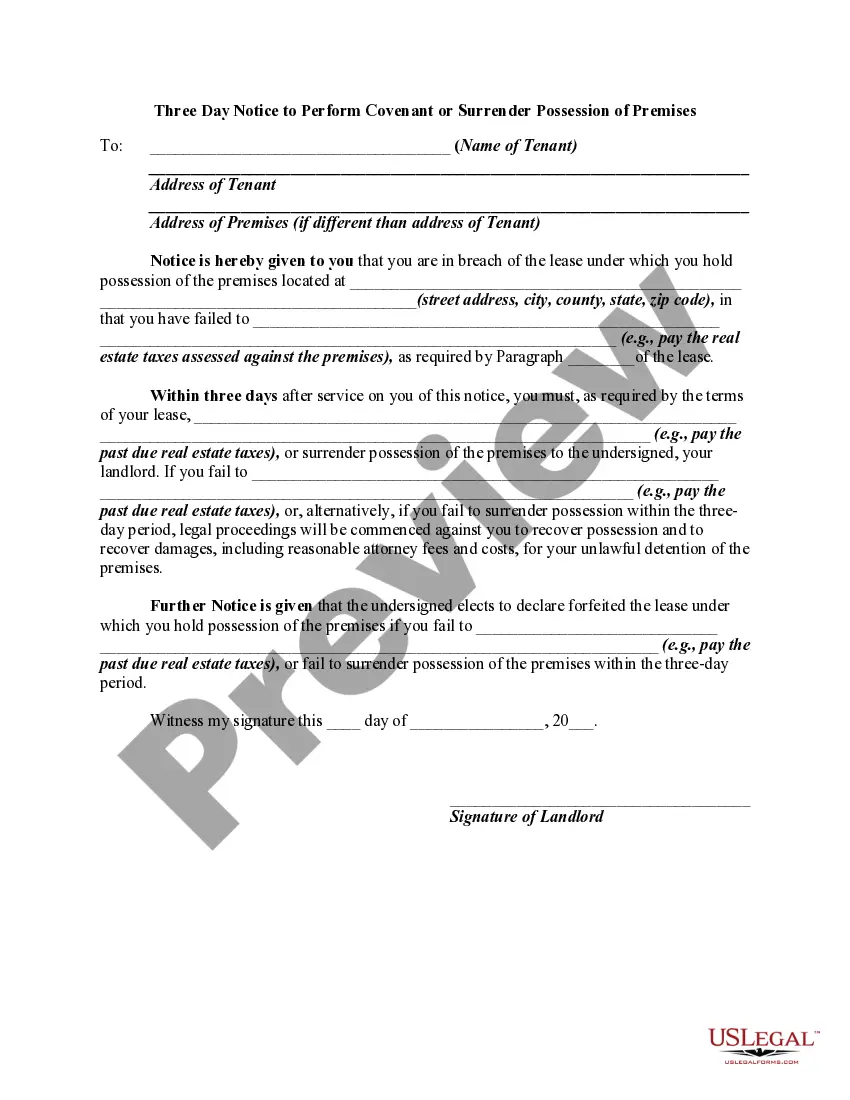
How to fill out Three Day Notice To Pay Rent Or Surrender Possession Of Premises - Vacate - Past Due Rent - Eviction?
Whether for commercial purposes or personal matters, everyone must confront legal issues at some stage in their lives.
Completing legal documents demands meticulous attention, starting with choosing the correct form template.
With an extensive US Legal Forms catalog available, you don't have to waste time searching for the correct sample online. Utilize the library's straightforward navigation to find the right form for any situation.
- Acquire the sample you require by using the search bar or catalog navigation.
- Review the form’s details to ensure it aligns with your circumstances, state, and county.
- Click on the form’s preview to examine it.
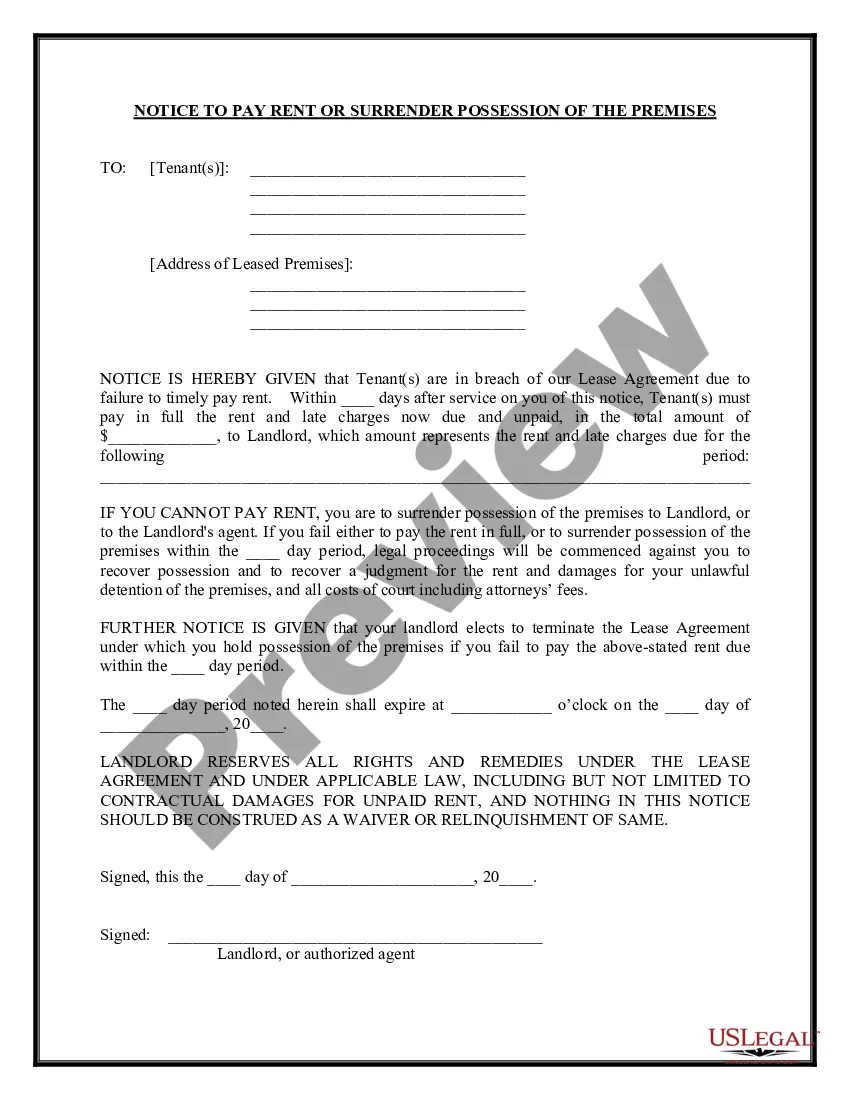
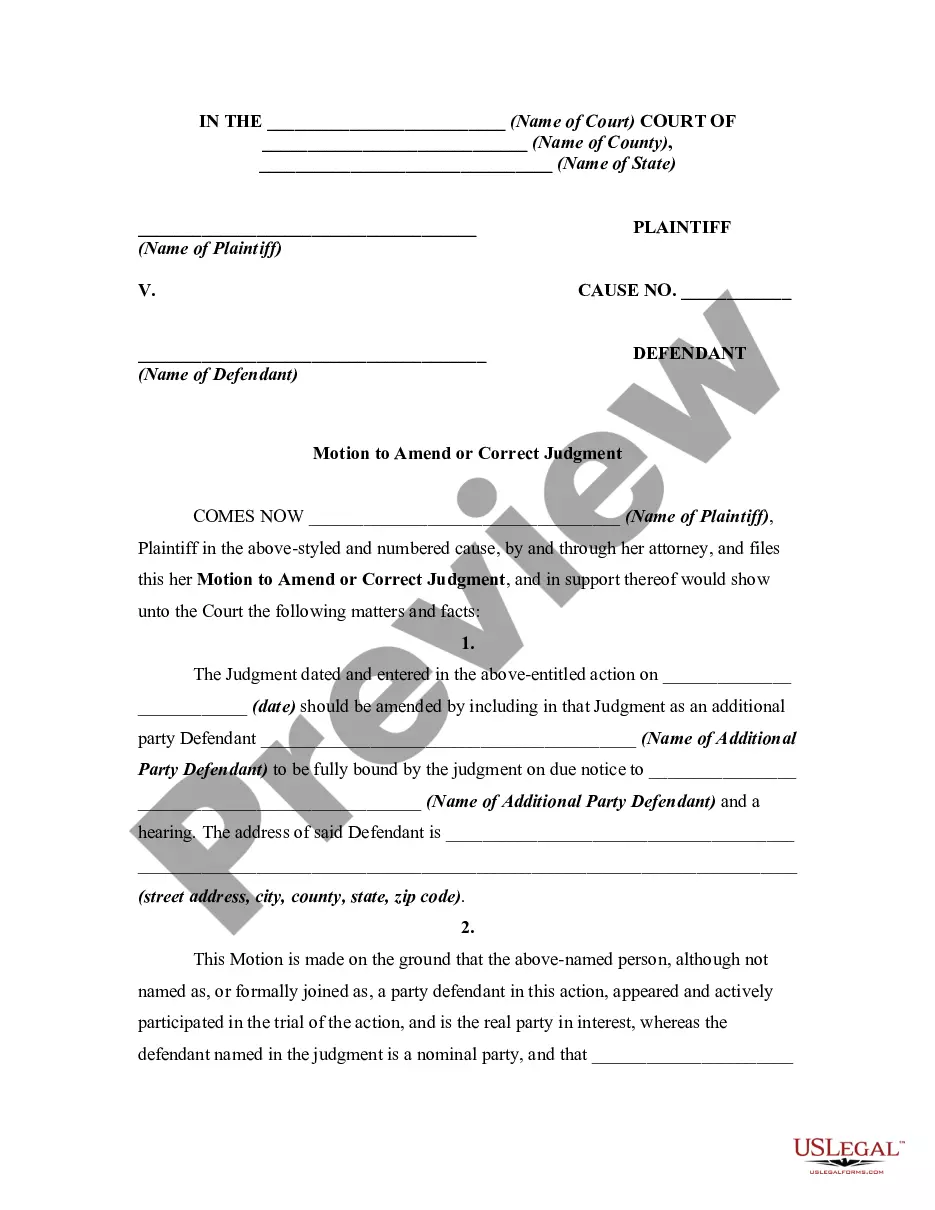
- If it is the incorrect form, return to the search tool to locate the Premises Eviction Without Lease Agreement template you require.
- Download the template when it satisfies your needs.
- If you already possess a US Legal Forms account, click Log in to access previously stored templates in My documents.
- If you do not yet have an account, you can obtain the form by clicking Buy now.
- Select the suitable pricing option.
- Complete the profile registration form.
- Choose your payment method: you can utilize a credit card or PayPal account.
- Select the file format you want and download the Premises Eviction Without Lease Agreement.
- Once it is downloaded, you can fill out the form using editing software or print it and complete it by hand.
Form popularity
FAQ
When dealing with premises eviction without lease agreement in California, it’s crucial to understand that landlords still have legal rights. In the absence of a written lease, landlords can proceed with eviction based on implied tenancy agreements or even verbal agreements. However, it is essential to follow proper legal procedures to avoid complications and potential disputes. Utilizing resources like US Legal Forms can help you navigate this process smoothly and ensure your eviction procedures comply with California laws.
Evicting someone not listed on the lease can be more complex, as they may not have signed an agreement. However, landlords can still initiate the eviction by proving that the individual is unlawfully occupying the premises. It's crucial to issue a proper eviction notice and follow the state's legal procedures to avoid complications. If you are unsure about the steps, US Legal Forms offers straightforward resources for managing premises eviction without lease agreement effectively.
When there is no tenancy agreement, the situation may complicate the eviction process. Landlords can still request tenants to leave the property, but they must comply with state law regarding notice periods and legal proceedings. It's essential to understand that tenants may have certain rights even without a formal lease. For help in understanding the implications of premises eviction without lease agreement, US Legal Forms can provide relevant information and templates.
Eviction rules in Mississippi vary depending on whether there is a lease agreement. Generally, landlords can initiate eviction for non-payment of rent, lease violations, or if the lease has expired. It's crucial to follow the legal process, which includes providing proper notice and filing the necessary paperwork in court. For more detailed guidance on navigating premises eviction without lease agreement in Mississippi, consider using US Legal Forms to access state-specific resources.
Writing an eviction notice without a lease involves clearly stating the reason for eviction along with essential details such as the tenant's name, property address, and your contact information. You should specify a timeline for the tenant to vacate, typically ranging from 3 to 30 days, depending on state laws. This notice serves as a formal communication, so keep it professional and straightforward. If you need assistance in drafting this notice, US Legal Forms offers templates tailored for premises eviction without lease agreement.
If you are a tenant living in a flat or house or running your own business on a rented property without a rent agreement, your landlord can simply give you an eviction notice of a minimum of 30 days or as per tenancy laws.
The easiest way to start the process of evicting a commercial tenant is to file for a Possession Claim from the County Court. The Government has an online Court and Tribunal Finder and you'll need to find the court which is closest to the commercial property itself.
As per the law in the absence of a rent agreement, it is considered that it is a month-on-month lease. This means that the owner has the right to serve notice to the tenant to vacate the property within a period of 15 days.
A landlord can serve a Section 21 Notice in the absence of a written tenancy agreement and in ance with the Housing Act 1988. This must expire after the agreed fixed term. If no minimum term has been agreed upon, the default is six months.
After section 21 is abolished, landlords will always need to provide their tenants with a reason for ending a tenancy, for example: a breach of contract or wanting to sell the property. However, tenants will be able to choose to end the tenancy at any time, as long as they provide two months' notice to the landlord.