Guardian Litem Agreement For Adults
Description
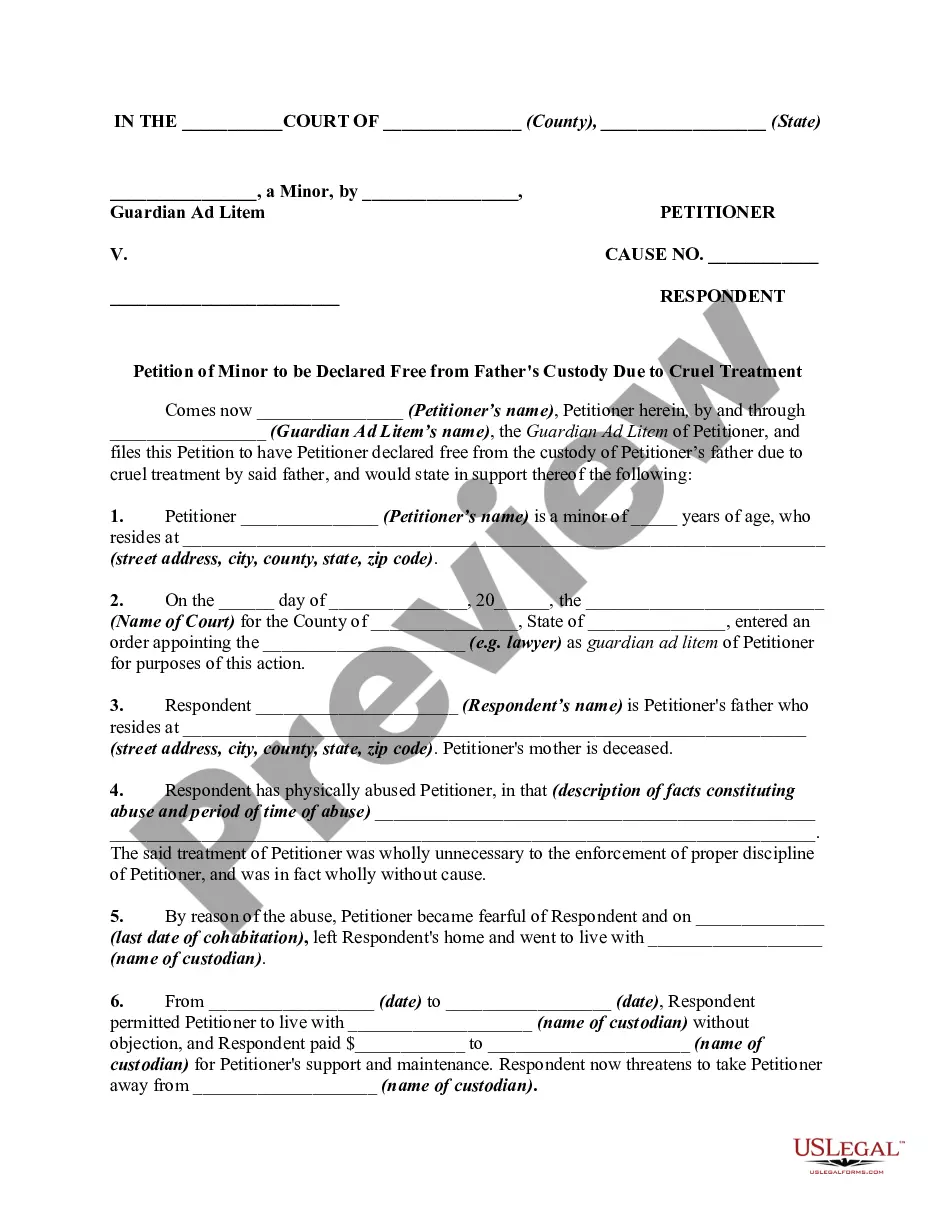
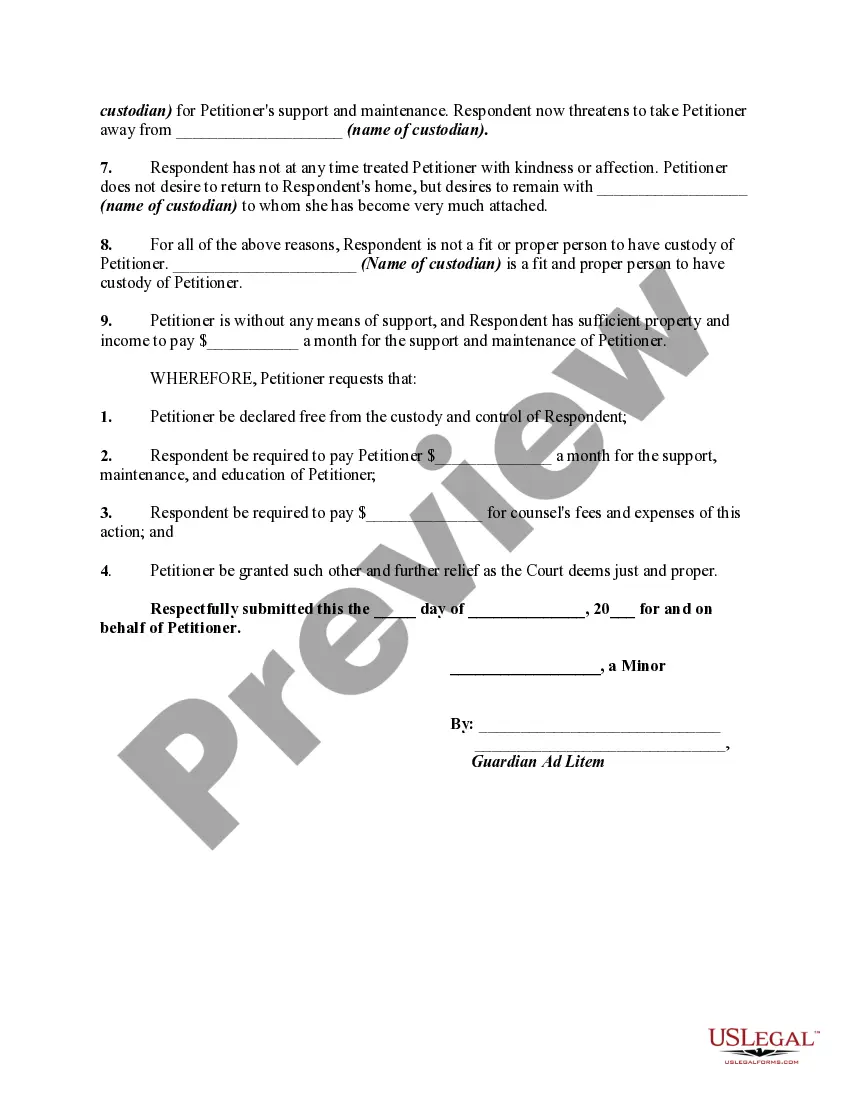
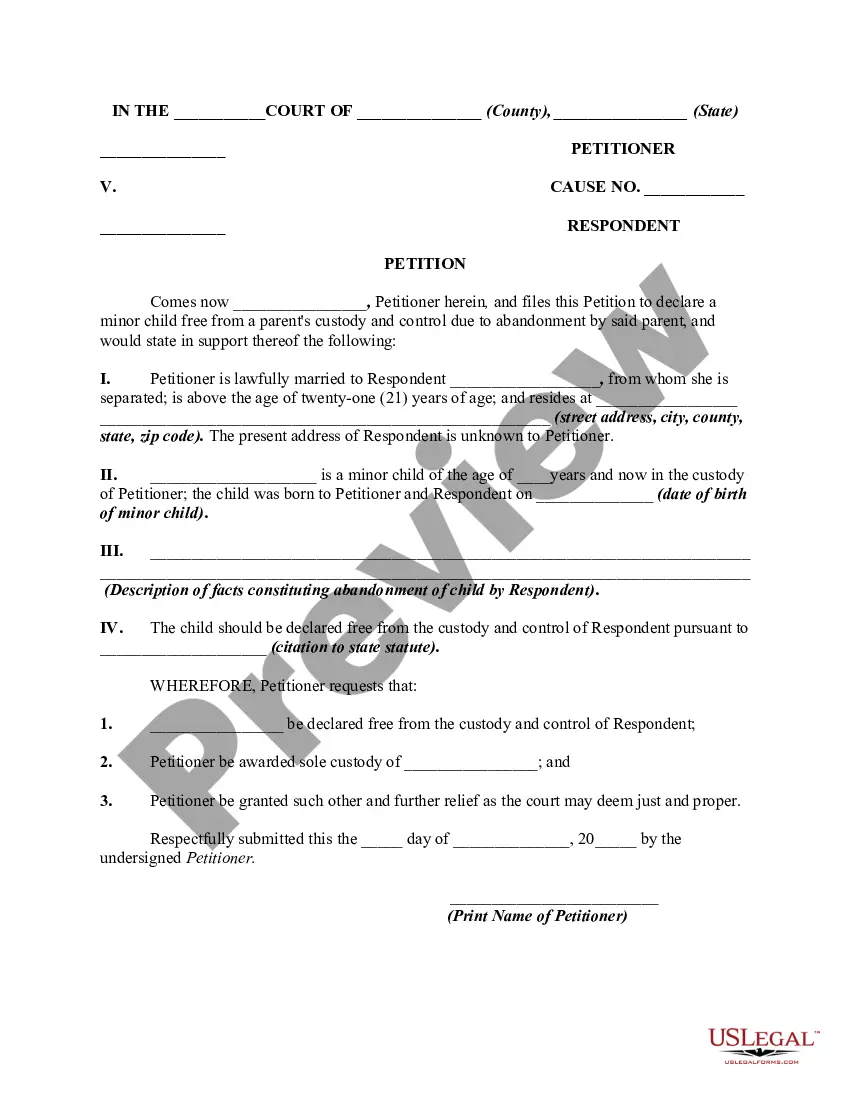
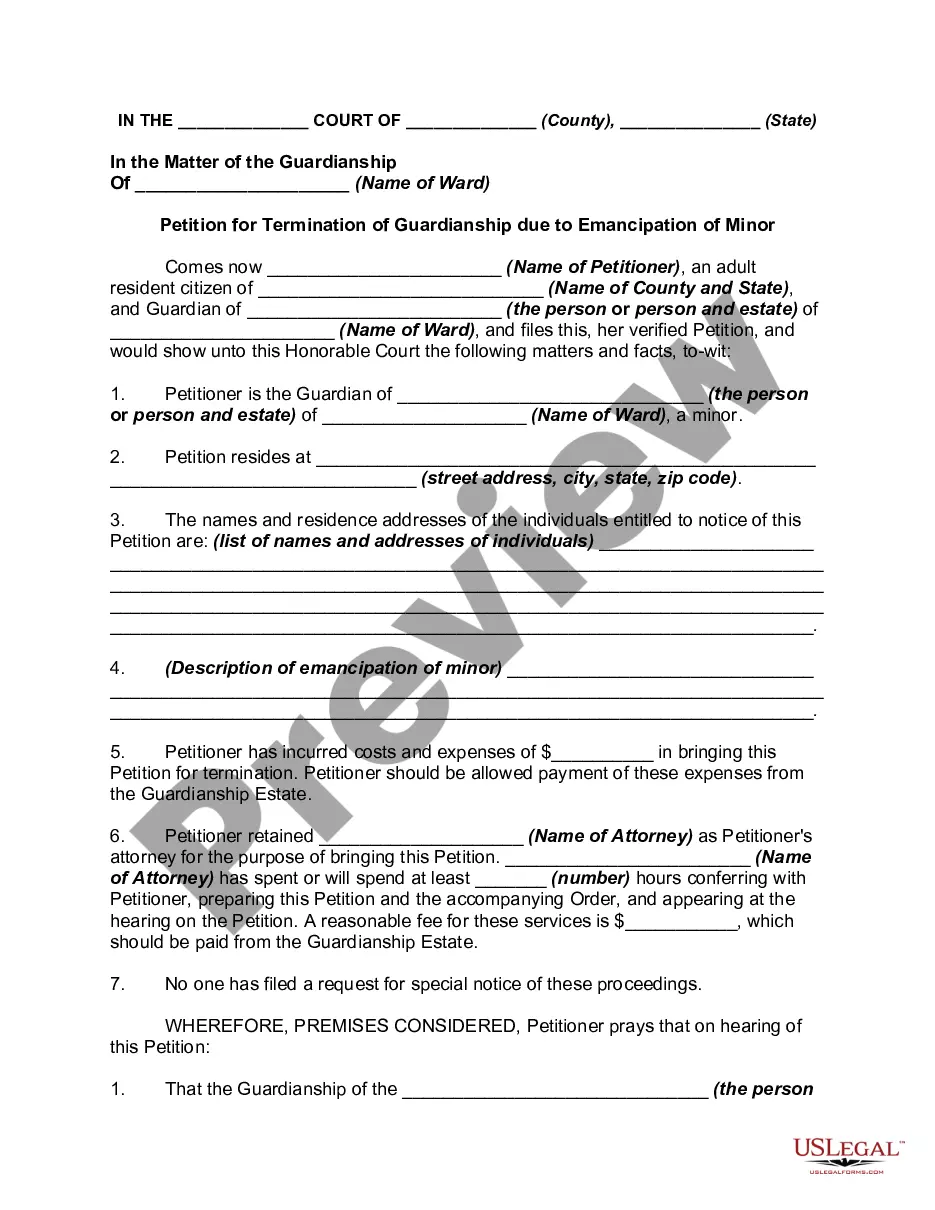
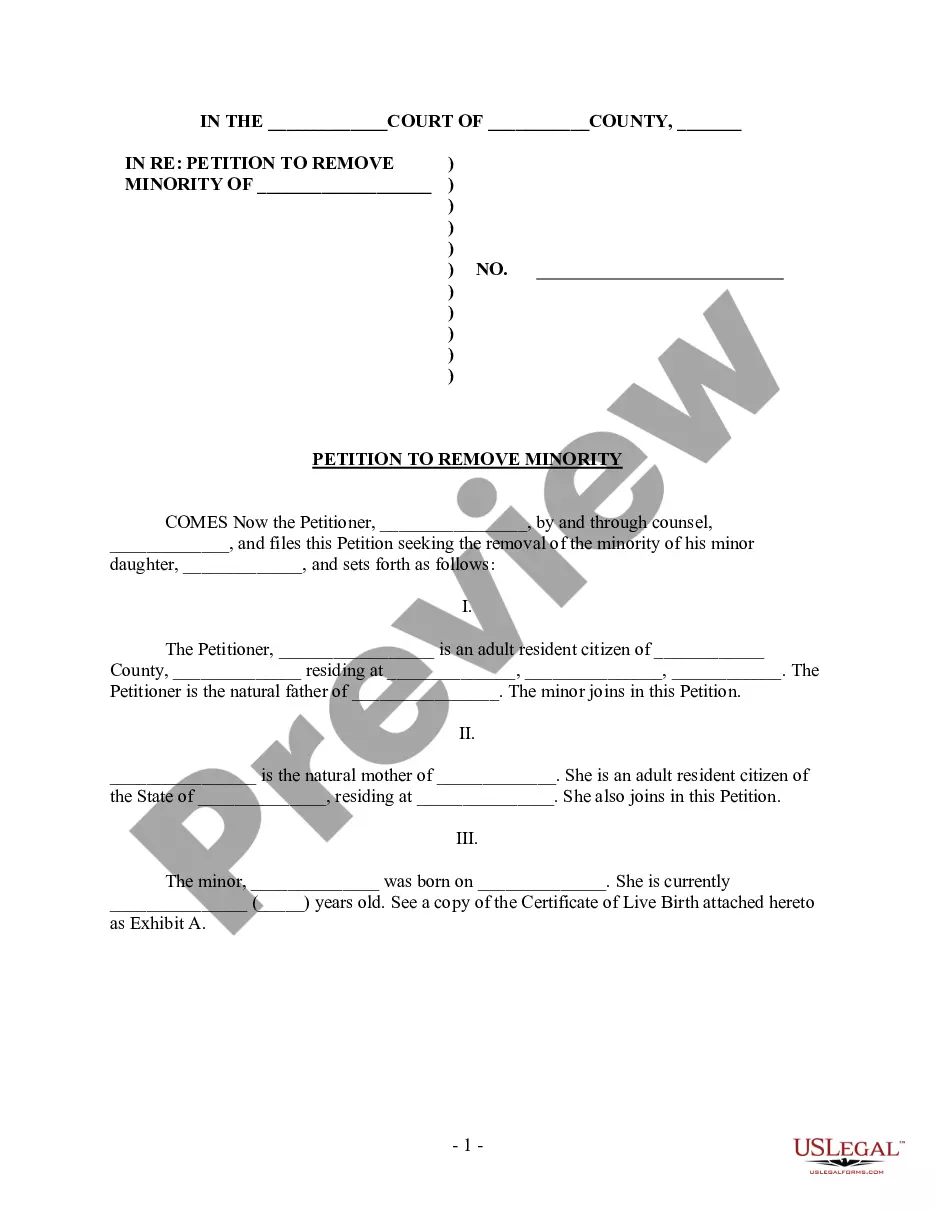



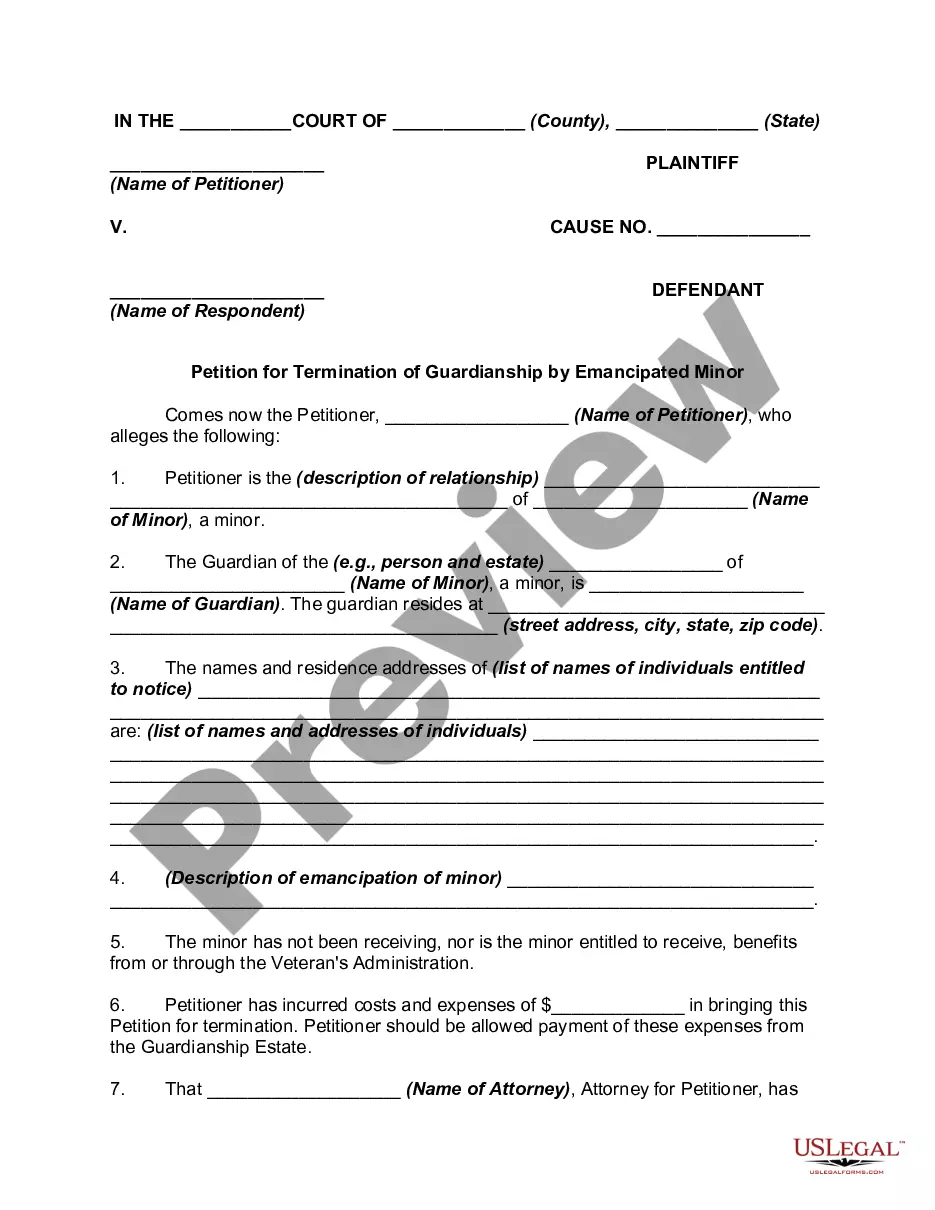
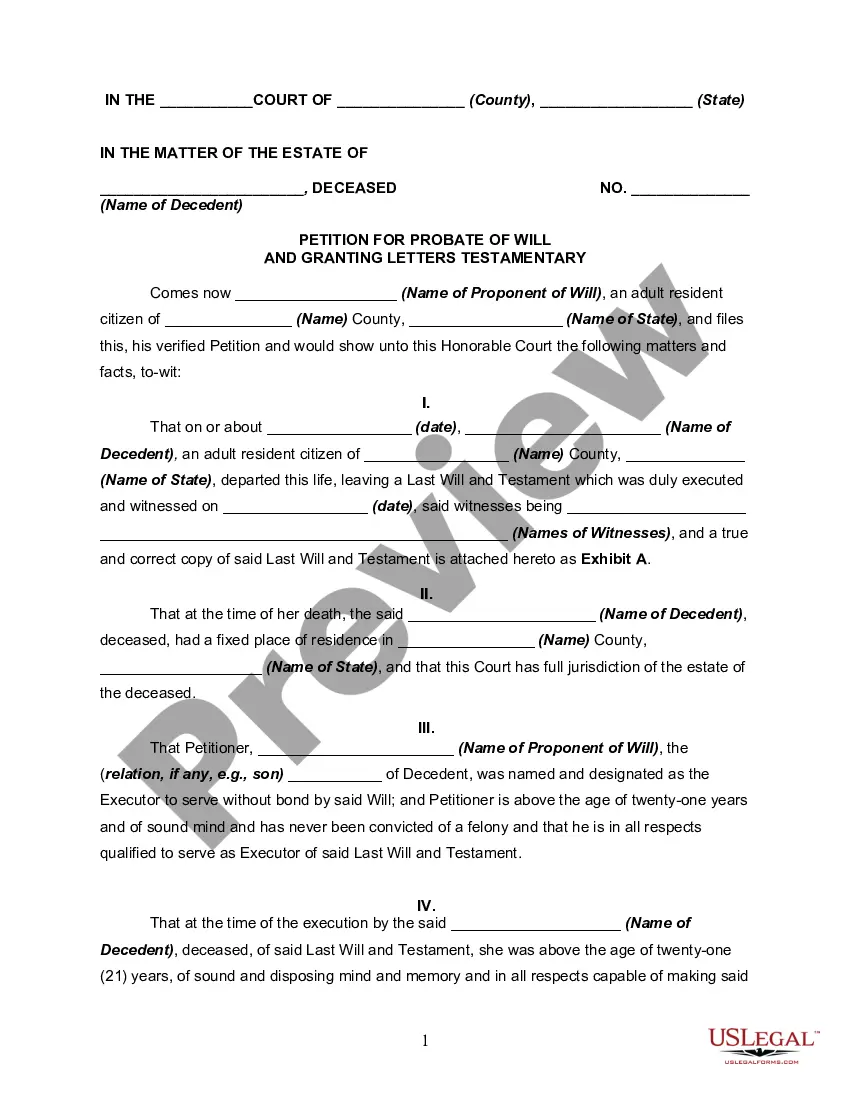
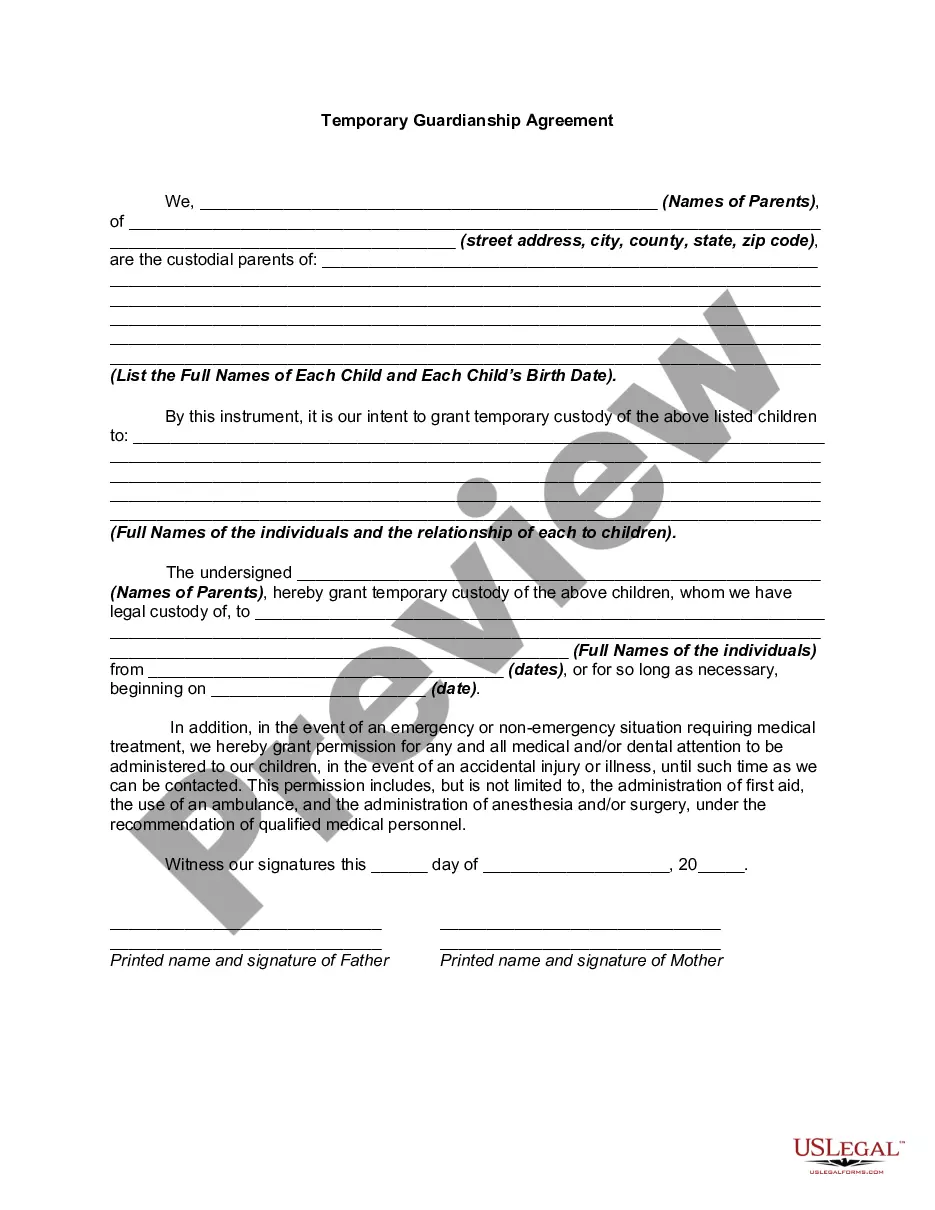
How to fill out Petition Of Minor By Guardian Ad Litem To Be Declared Free From Father's Custody Due To Cruel Treatment - Release Of Parental Rights?
The Guardian Litem Agreement For Adults you find on this website is a reusable legal template created by experienced attorneys in accordance with federal and state statutes and regulations.
For over 25 years, US Legal Forms has offered individuals, companies, and legal practitioners more than 85,000 authenticated, state-specific documents for all types of personal and business needs. It is the fastest, most straightforward, and most reliable way to acquire the forms you require, as the service ensures the highest standards of data protection and anti-virus security.
Re-download your documents anytime you need them. Access the My documents tab in your account to retrieve any forms you have downloaded before.
- Search for the document you require and verify it.
- Review the file you searched and preview it or verify the form's description to ensure it meets your requirements. If it doesn't, utilize the search feature to find the appropriate one. Click Buy Now once you’ve found the template you need.
- Register and Log In.
- Choose the pricing package that fits you best and set up an account. Use PayPal or a credit card for a quick payment. If you already have an account, Log In and review your subscription to continue.
- Obtain the fillable template.
- Choose the format you prefer for your Guardian Litem Agreement For Adults (PDF, DOCX, RTF) and save the document to your device.
- Complete and sign the document.
- Print the template to fill it out by hand. Alternatively, use an online multifunctional PDF editor to efficiently and accurately complete and sign your form online.
Form popularity
FAQ
GALs require payment for their services. You might have to pay the GAL upfront before the GAL will start working on your case. This payment is called a retainer. The cost of a GAL can be anywhere from $1,000 to $3,000 or even higher.
Guardianship is a court order that allows one person to make decisions for another person. There are two types of adult guardianships in Michigan. The first is for persons described as ?legally incapacitated individuals? and the other is specifically for people with intellectual or developmental disabilities.
A guardian ad litem (GAL) is an adult who is appointed by the court to represent the best interests of an individual for a specific purpose for a specific period of time. Under the direction of the court, a GAL performs an investigation and prepares a report for the court of the GAL's findings and recommendations.
In custody cases, the court appoints a guardian ad litem to investigate on behalf of the child at the rate of $150.00 per hour with an initial retainer that can range from several hundred dollars to several thousand dollars.
They can be paid for their services, or serve as volunteer GALs. Paid GALs can be employed by a county (perhaps family court services) but more often are individuals who do GAL work as part- or full-time self-employment. Most volunteer GALs serve as court appointed special advocates (CASA) in dependency actions.