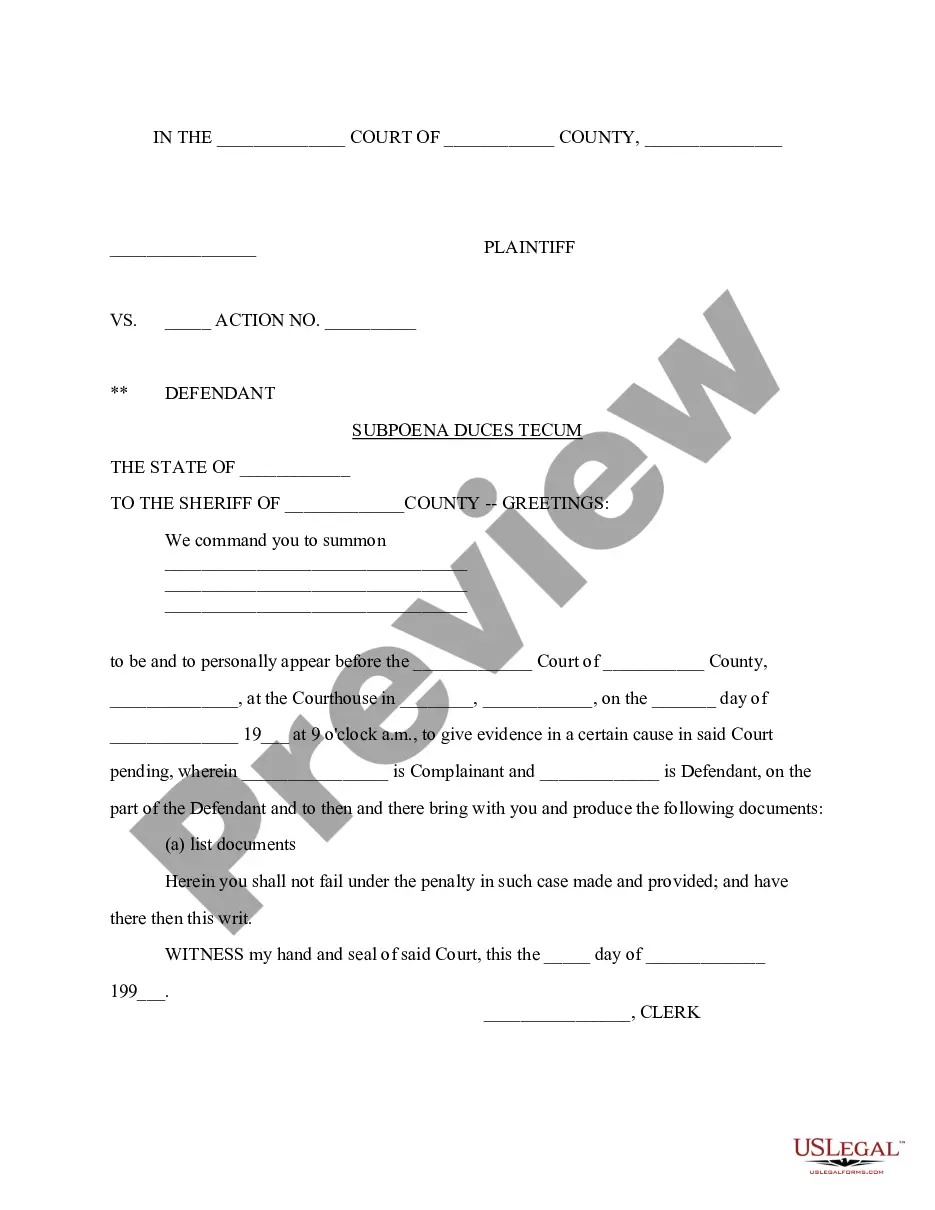
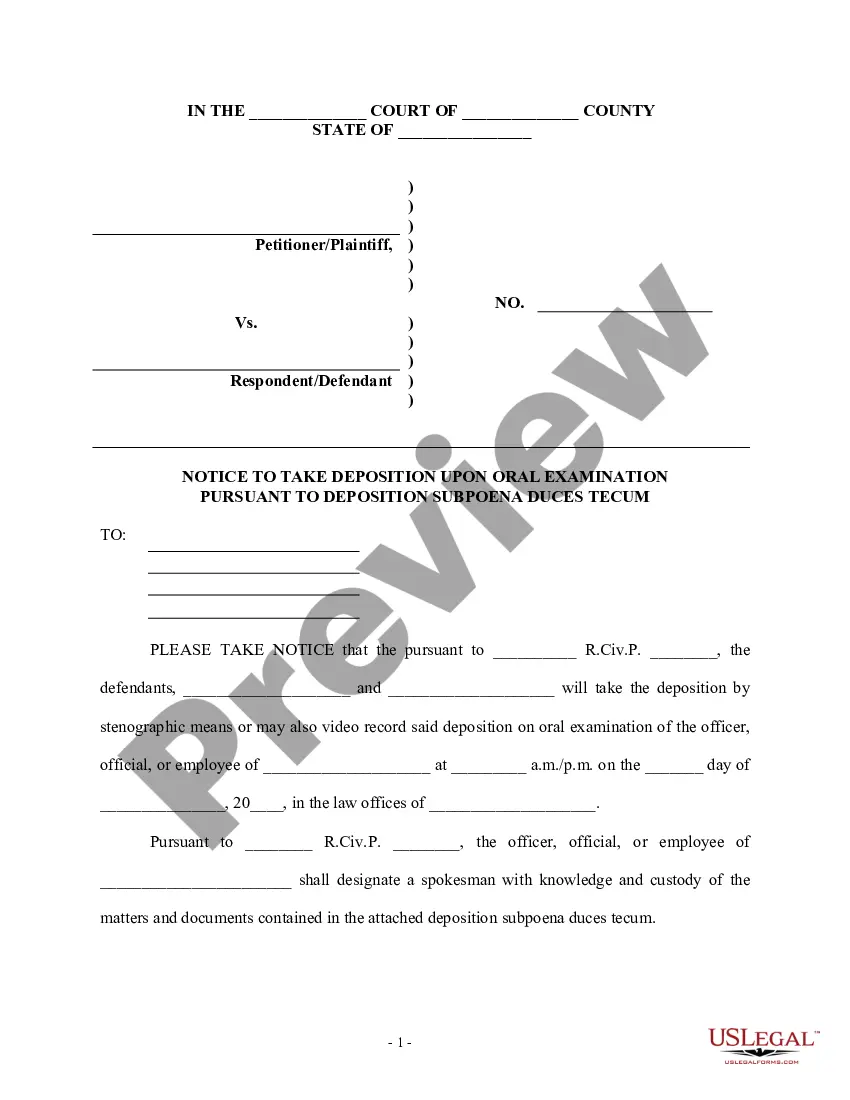
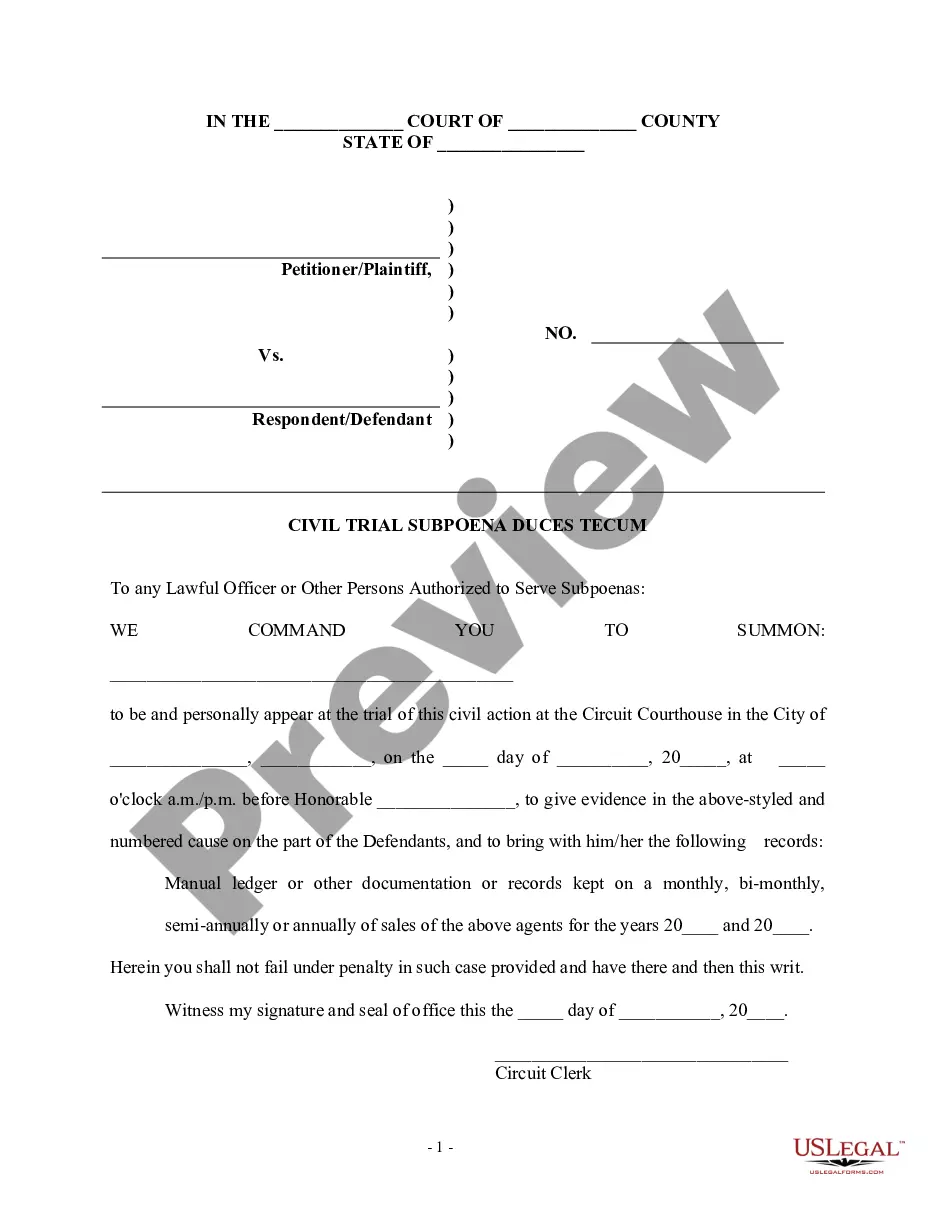
Federal Court Subpoena Form For Documents
Description




How to fill out Subpoena Duces Tecum?
Locating a reliable source for procuring the latest and suitable legal templates constitutes a major part of grappling with bureaucratic processes.
Identifying the appropriate legal documentation demands meticulousness and careful consideration, which is why sourcing samples of the Federal Court Subpoena Form For Documents exclusively from reputable providers, such as US Legal Forms, is essential. An incorrect template can lead to time wastage and prolong your situation.
Once the form is saved on your device, you can modify it using an editor or print it out for manual completion. Remove the stress linked to your legal documentation. Explore the extensive catalog of US Legal Forms to discover legal templates, verify their suitability for your situation, and download them immediately.
- Use the directory navigation or search bar to locate your template.
- Access the form’s details to confirm if it aligns with the requirements of your state and locality.
- View the form preview, if available, to ensure the template meets your specific needs.
- Return to the search to find an alternative document if the Federal Court Subpoena Form For Documents does not suit your requirements.
- If you are confident about the form’s applicability, proceed to download it.
- As a registered user, click Log in to verify your identity and access your selected forms in My documents.
- If you haven't created an account yet, click Buy now to acquire the form.
- Choose the payment plan that best fits your needs.
- Continue with the registration to finalize your purchase.
- Complete your transaction by choosing a payment method (credit card or PayPal).
- Select the document format for downloading the Federal Court Subpoena Form For Documents.
Form popularity
FAQ
Yes, you can oppose a subpoena duces tecum, which is a type of subpoena demanding documents. To do this, you must show that the subpoena is unreasonable or overly broad. Properly submitting an objection involves strategic planning, and using a Federal court subpoena form for documents can help in the process. Engaging with a knowledgeable attorney can streamline your efforts to oppose it effectively.
Rule 45 of the Federal Rules of Civil Procedure governs subpoenas for documents. This rule outlines the requirements for issuing a Federal court subpoena form for documents and ensures that the process respects privacy and legal boundaries. Understanding this rule helps you comply properly while safeguarding your rights. If you have questions, resources are available to clarify the process.
A subpoena to produce documents in a civil action is a legal order requiring an individual or organization to provide specified documents to a court. This is often issued using a Federal court subpoena form for documents. The party requesting the documents typically needs them to support their case or to gather evidence. Understanding how to respond appropriately can help you manage your obligations.
When facing a Federal court subpoena form for documents, reviewing the specifics of the subpoena is essential. You may challenge it by arguing it is overly broad or not relevant to the case. If you believe compliance could harm you, consulting with an attorney who specializes in subpoenas is advisable. They can help you determine the best course of action.
Yes, you can file a subpoena without a lawyer, but it requires careful understanding of the process. You will need to complete the federal court subpoena form for documents correctly and ensure you follow all legal protocols. However, having a lawyer can help you navigate the complexities involved, so consider seeking legal advice if possible.
To request federal court documents, you can start by identifying the specific case you are interested in. Generally, you will need to fill out a form to submit your request, often available online through the court’s website. Using a federal court subpoena form for documents may streamline your request, making it easier to obtain the information you need.
Responding to a subpoena to produce documents requires careful attention. First, review the federal court subpoena form for documents you received to understand what is being requested. You may need to gather all relevant documents and prepare them for submission. If needed, consider consulting with a lawyer to ensure proper compliance.