Court Subpoena Example With Bank
Description

Get your form ready online
Our built-in tools help you complete, sign, share, and store your documents in one place.
Make edits, fill in missing information, and update formatting in US Legal Forms—just like you would in MS Word.
Download a copy, print it, send it by email, or mail it via USPS—whatever works best for your next step.
Sign and collect signatures with our SignNow integration. Send to multiple recipients, set reminders, and more. Go Premium to unlock E-Sign.
If this form requires notarization, complete it online through a secure video call—no need to meet a notary in person or wait for an appointment.
We protect your documents and personal data by following strict security and privacy standards.

Make edits, fill in missing information, and update formatting in US Legal Forms—just like you would in MS Word.

Download a copy, print it, send it by email, or mail it via USPS—whatever works best for your next step.

Sign and collect signatures with our SignNow integration. Send to multiple recipients, set reminders, and more. Go Premium to unlock E-Sign.

If this form requires notarization, complete it online through a secure video call—no need to meet a notary in person or wait for an appointment.

We protect your documents and personal data by following strict security and privacy standards.
Looking for another form?



How to fill out Subpoena Duces Tecum?
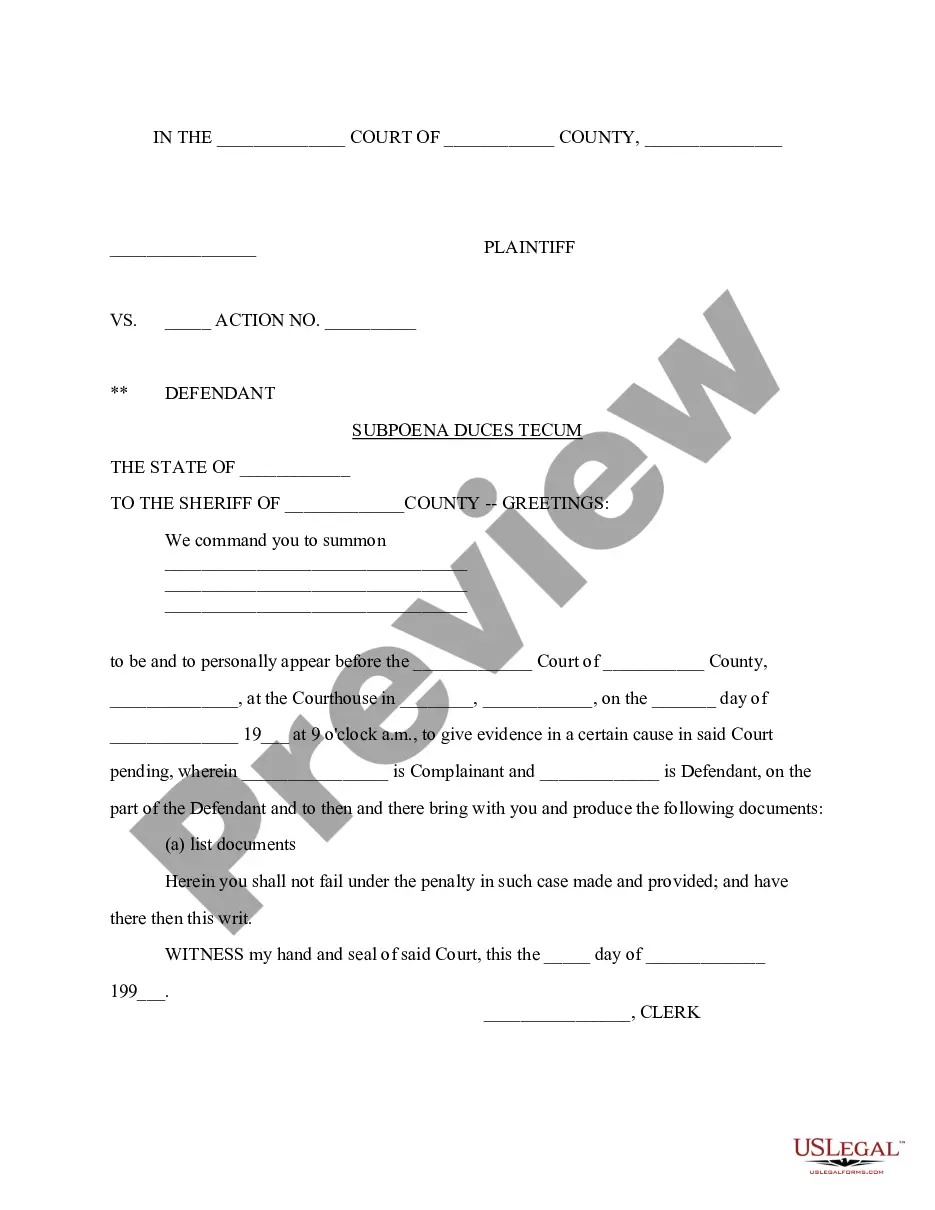
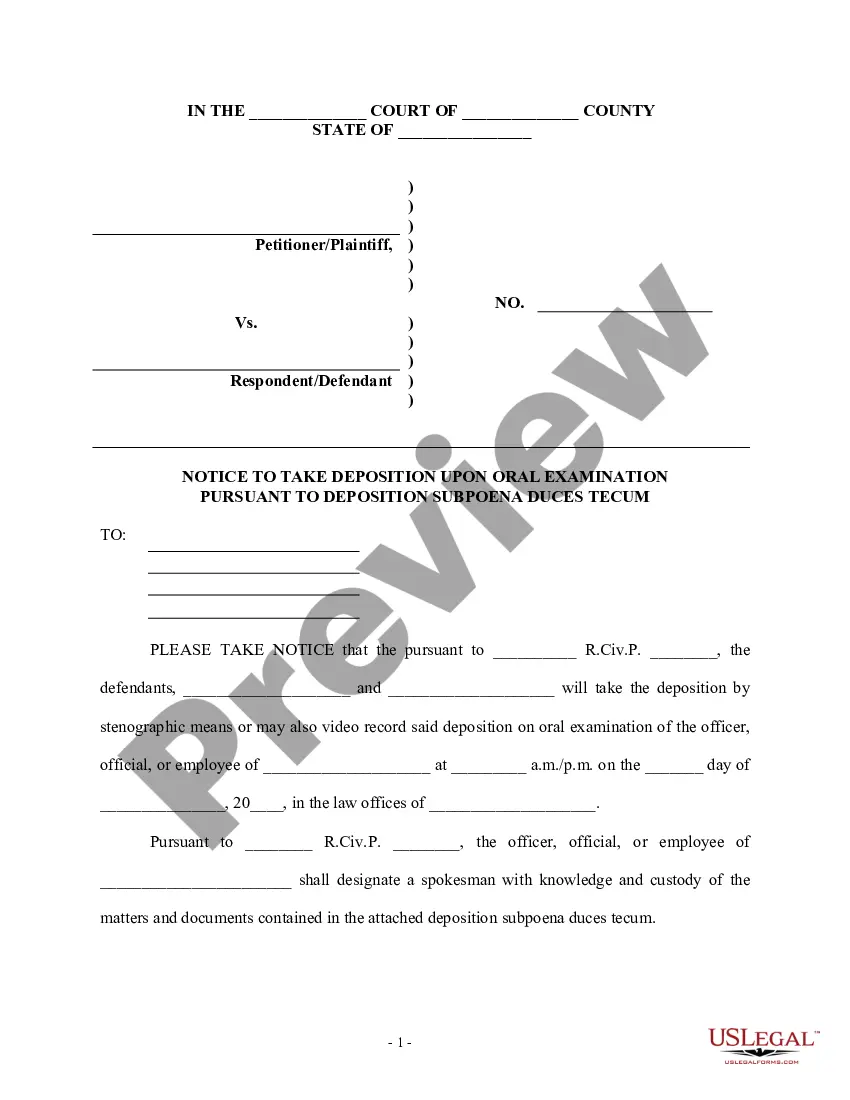
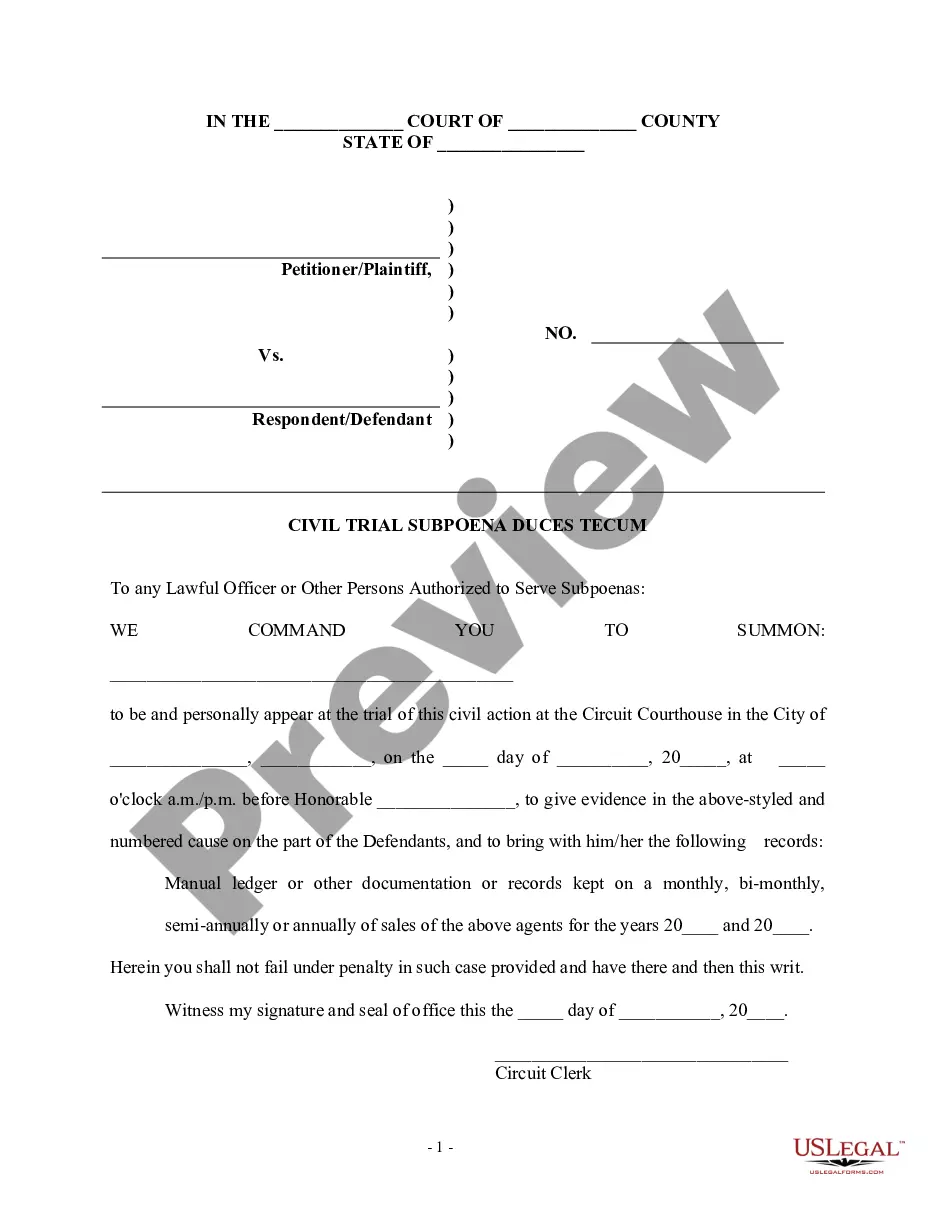
The Court Subpoena Sample With Bank displayed on this page is a reusable legal model created by experienced attorneys in accordance with federal and local laws and regulations.
For over 25 years, US Legal Forms has offered individuals, businesses, and legal professionals access to more than 85,000 verified, state-specific documents for any business or personal scenario.
Subscribe to US Legal Forms to access verified legal templates for all of life’s situations at your fingertips.
- Search for the document you require and examine it.
- Look through the file you searched and preview it or review the form description to ensure it meets your necessities. If it doesn't, use the search bar to locate the appropriate one. Click Buy Now once you have found the template you need.
- Subscribe and Log In. Choose the pricing plan that meets your needs and create an account. Use PayPal or a credit card to make a quick payment. If you already possess an account, Log In and check your subscription to move forward.
- Obtain the editable template. Select the format you prefer for your Court Subpoena Sample With Bank (PDF, DOCX, RTF) and download the sample to your device.
- Fill out and sign the document. Print the template to complete it manually. Alternatively, use an online multifunctional PDF editor to quickly and accurately fill out and sign your form with a valid.
- Download your documents again. Use the same document whenever necessary. Open the My documents tab in your profile to redownload any previously saved documents.
Form popularity
FAQ
Yes, you can file a subpoena without a lawyer, but it is wise to understand the requirements involved. A court subpoena example with bank records can serve various purposes, including obtaining financial information for a case. When filing, ensure you have the correct forms and information, as errors can delay the process. Platforms like US Legal Forms provide resources to help you navigate this process efficiently, ensuring you meet all legal requirements.
A bank may receive a subpoena for several reasons, often related to ongoing legal matters. For instance, a court might seek financial records to investigate a suspected fraud, to resolve a lawsuit, or to gather evidence in a criminal case. The court subpoena example with bank records serves to ensure transparency in financial transactions that are under examination. Understanding these situations can help protect your interests and comply with legal obligations.
Yes, a court can issue a subpoena to obtain bank records. This legal document compels the bank to produce specific records as part of a court case. A court subpoena example with bank records typically arises in cases involving financial disputes, criminal investigations, or divorce proceedings. It's crucial for individuals to understand their rights and the legal ramifications when bank records are involved.
When serving a subpoena, it is important to clearly identify yourself and explain the purpose of the subpoena. You can say something like, 'I am serving you this document because the court requires your testimony or records regarding this matter.' Additionally, ensure that the individual understands they have a legal obligation to comply with the subpoena. Utilizing uslegalforms can help you craft the language you need to serve a subpoena effectively and properly.
A court subpoena example with bank involves a legal document that orders a bank to provide specific documents or information in a court case. For instance, if someone is involved in a lawsuit, the court may issue a subpoena to the bank to release account statements relevant to the case. This ensures all necessary evidence is available for the court to review. By using uslegalforms, you can find the right template to create a valid subpoena tailored to your needs.
Serving process on a bank entails delivering legal documents that require the bank to take action. Typically, this involves following specific rules related to serving subpoenas and ensuring that the documents are sent to the correct department. A court subpoena example with bank can guide you on the best practices and legal standards for serving process.
Yes, you can subpoena a bank as part of a legal process to obtain necessary records or information. This action is often crucial in cases involving financial disputes or investigations. Using a court subpoena example with bank can help you understand how to effectively issue this kind of request.
To serve a subpoena on a bank, first ensure that you prepare the subpoena correctly and check local rules for service. You may need to deliver it in person or send it via certified mail, depending on the bank's policies. Consulting a court subpoena example with bank can provide valuable insights into the serving process.
Yes, you can request a subpoena without a lawyer, though it may involve some complexities. Understanding the legal requirements and proper procedures is essential to ensure that you submit a valid request. Looking at a court subpoena example with bank can provide clarity on how to structure your request properly.
Yes, banks are legally obligated to respond to subpoenas that they receive. They must comply by gathering the requested documents and providing them to the court or the requesting party. A court subpoena example with bank serves as a reminder of the responsibilities banks have when it comes to legal requests.