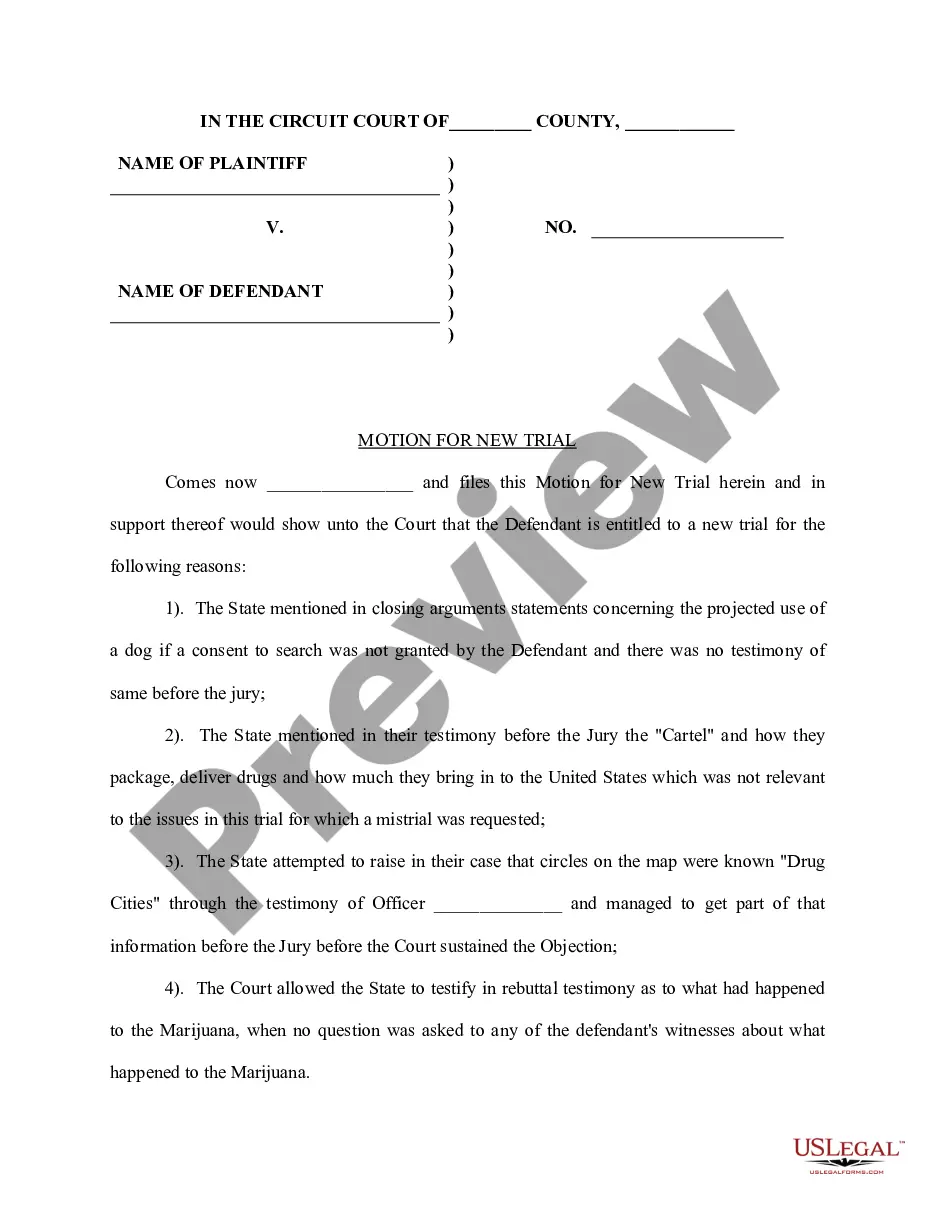
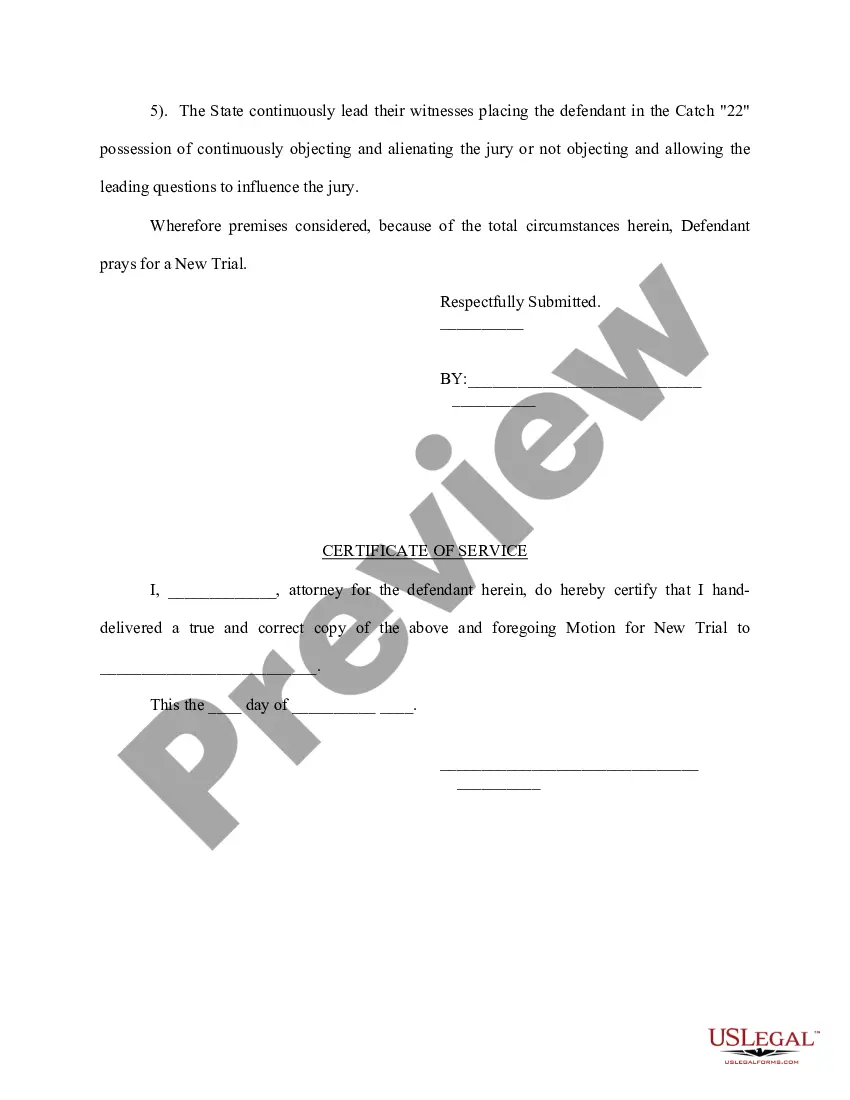
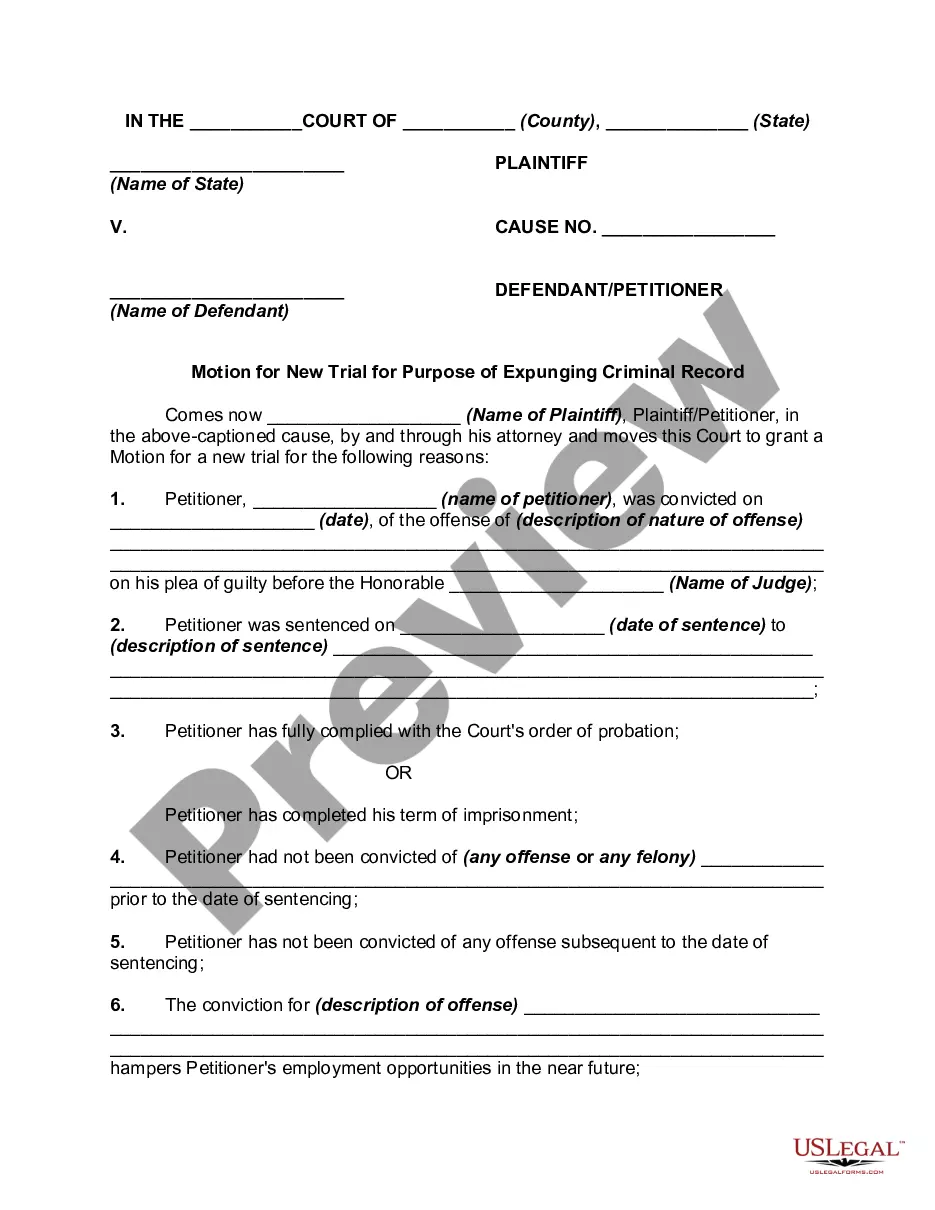
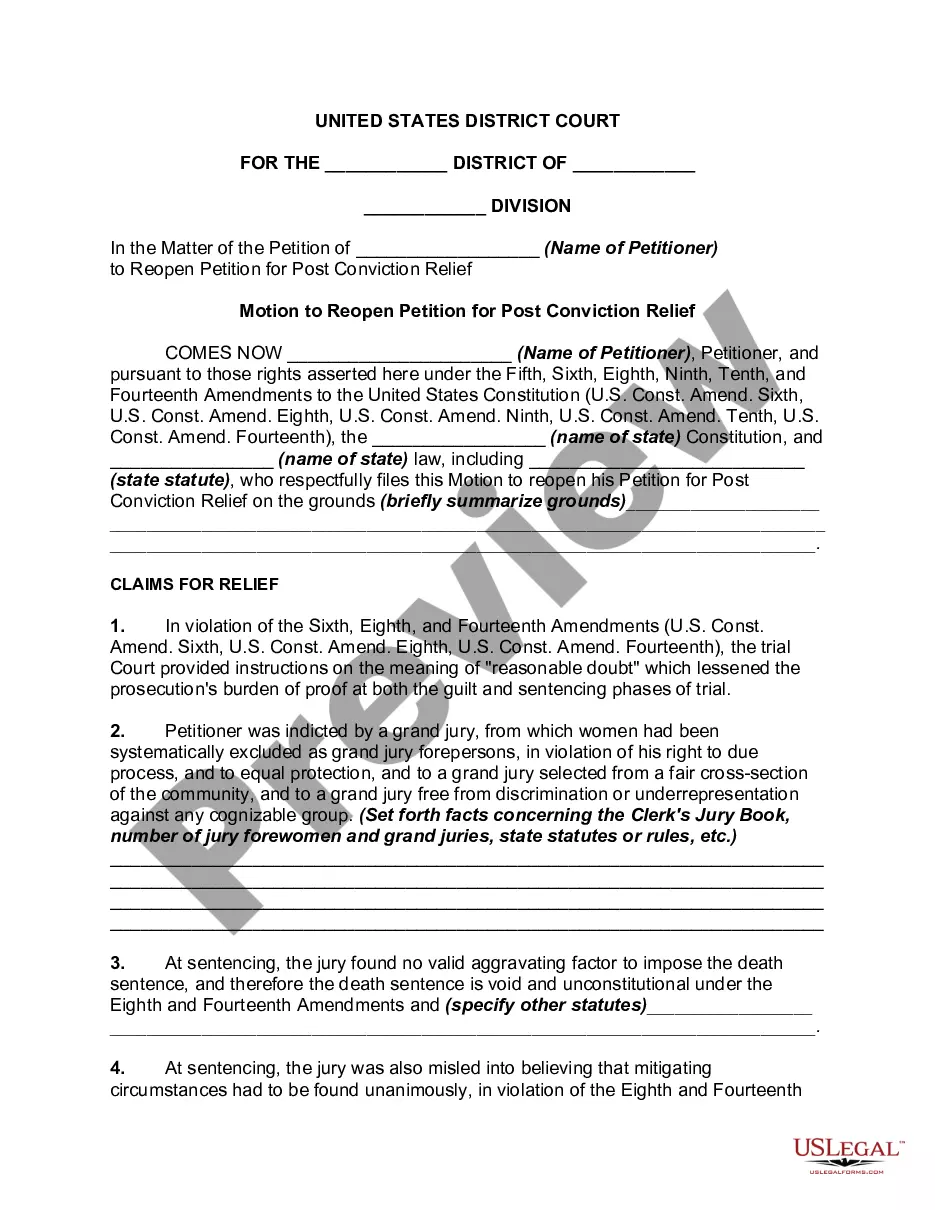
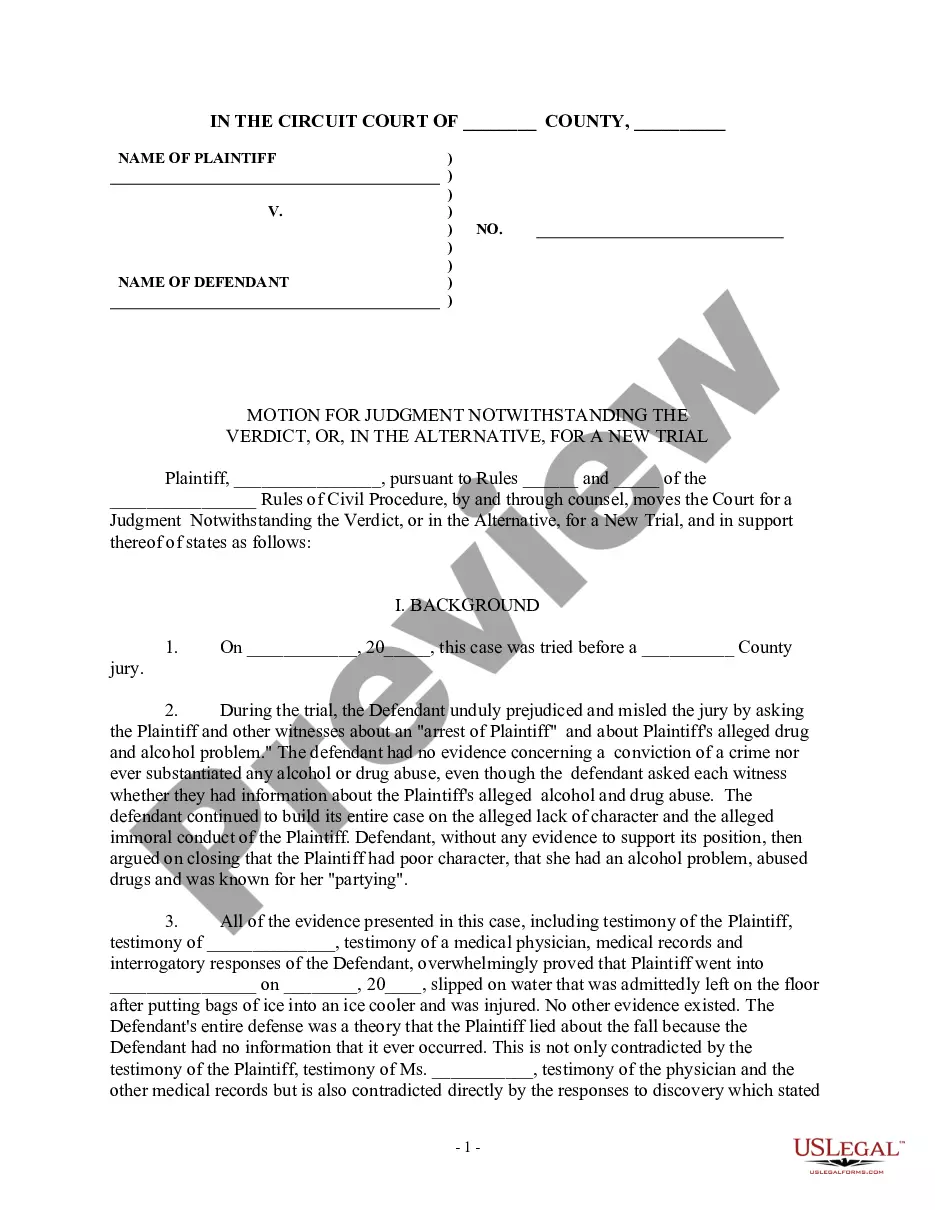
Motion For New Trial Federal Court
Description
Get your form ready online
Our built-in tools help you complete, sign, share, and store your documents in one place.
Make edits, fill in missing information, and update formatting in US Legal Forms—just like you would in MS Word.
Download a copy, print it, send it by email, or mail it via USPS—whatever works best for your next step.
Sign and collect signatures with our SignNow integration. Send to multiple recipients, set reminders, and more. Go Premium to unlock E-Sign.
If this form requires notarization, complete it online through a secure video call—no need to meet a notary in person or wait for an appointment.
We protect your documents and personal data by following strict security and privacy standards.

Make edits, fill in missing information, and update formatting in US Legal Forms—just like you would in MS Word.

Download a copy, print it, send it by email, or mail it via USPS—whatever works best for your next step.

Sign and collect signatures with our SignNow integration. Send to multiple recipients, set reminders, and more. Go Premium to unlock E-Sign.

If this form requires notarization, complete it online through a secure video call—no need to meet a notary in person or wait for an appointment.

We protect your documents and personal data by following strict security and privacy standards.
Looking for another form?
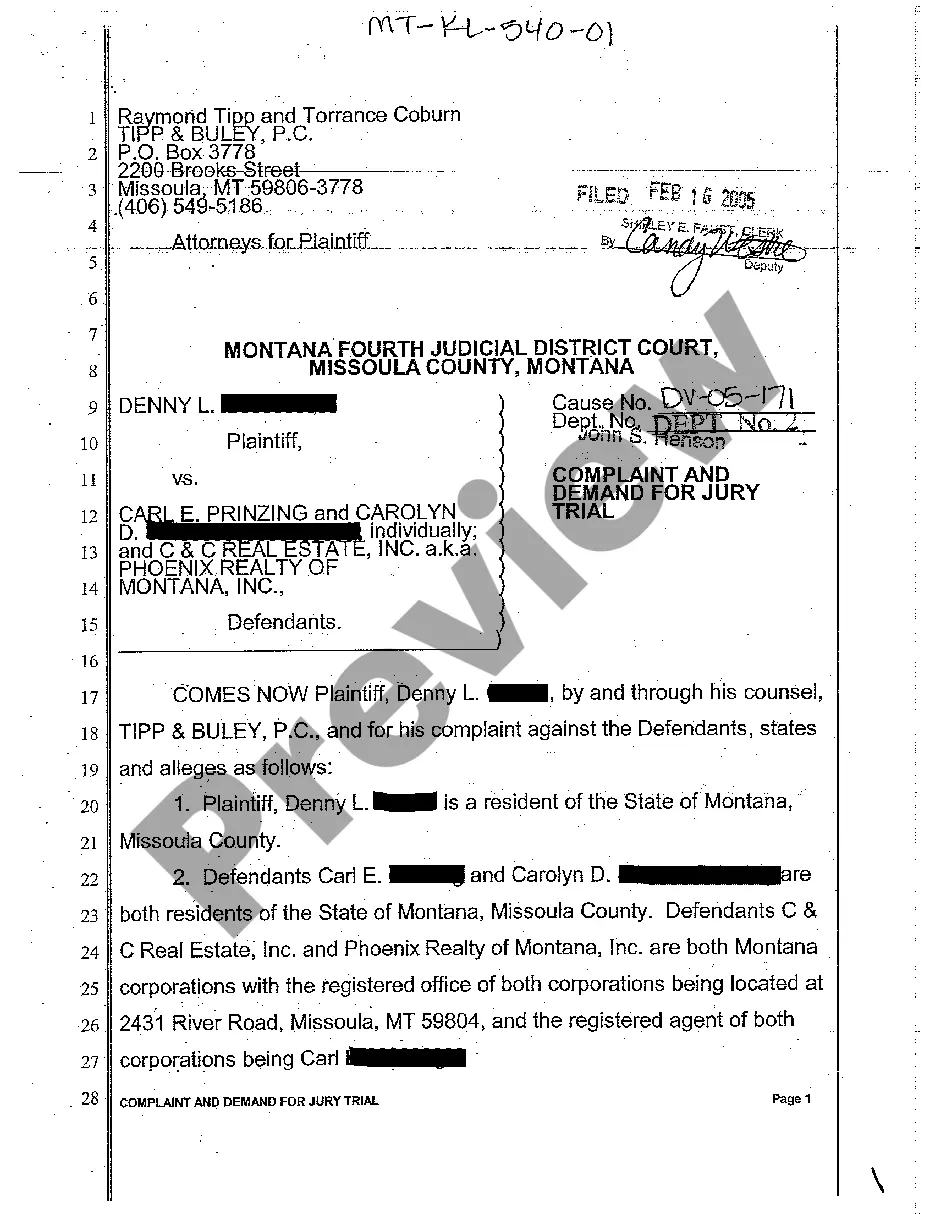
How to fill out Motion For New Trial?
Locating a reliable source for the most up-to-date and pertinent legal templates is a significant part of navigating bureaucracy. Selecting the appropriate legal documents requires precision and meticulousness, which is why it is vital to obtain samples of Motion For New Trial Federal Court solely from trustworthy providers, such as US Legal Forms. An incorrect template can waste your time and delay your situation. With US Legal Forms, you have minimal concerns. You can access and verify all the specifics about the document’s application and relevance for your situation and in your state or county.
Follow these steps to complete your Motion For New Trial Federal Court.
Once you have the form on your device, you can modify it using the editor or print it out and fill it in manually. Eliminate the complications that come with your legal documentation. Discover the extensive US Legal Forms library where you can find legal templates, evaluate their relevance to your situation, and download them instantly.
- Utilize the library navigation or search bar to locate your template.
- Review the form’s details to determine if it meets the criteria of your state and county.
- View the form preview, if accessible, to confirm the template is indeed the one you need.
- Return to the search to find the appropriate document if the Motion For New Trial Federal Court does not align with your requirements.
- If you are confident about the form’s applicability, download it.
- If you are a registered user, click Log in to verify and access your chosen templates in My documents.
- If you do not have an account yet, click Buy now to acquire the form.
- Select the pricing plan that fits your needs.
- Proceed to the registration to finalize your purchase.
- Complete your transaction by selecting a payment method (credit card or PayPal).
- Choose the document format for downloading the Motion For New Trial Federal Court.
Form popularity
FAQ
The federal rule governing motions for a new trial is found in both Rule 59 of the Federal Rules of Civil Procedure for civil cases and Rule 33 of the Federal Rules of Criminal Procedure for criminal cases. These rules outline the procedures, timelines, and grounds upon which a party may seek a new trial. Understanding these rules can significantly impact the success of your motion. For further assistance, platforms like US Legal Forms can provide detailed resources and templates tailored to your specific legal needs.
The Rule 33 motion for a new trial is specific to criminal cases and is governed by the Federal Rules of Criminal Procedure. This rule permits a defendant to request a new trial based on newly discovered evidence that could not have been found with reasonable diligence before the original trial. The motion must be filed within three years after the verdict, which highlights its distinct nature from civil cases. If you’re dealing with such a situation, consider using US Legal Forms to ensure your motion is properly structured.
Rule 59 of the Federal Rules of Civil Procedure governs motions for a new trial in federal court. This rule allows a party to request a new trial based on errors of law, newly discovered evidence, or the verdict being against the weight of the evidence. Importantly, this rule emphasizes the necessity of filing the motion within a specified period after the judgment. Understanding Rule 59 is essential for effectively navigating the motion for a new trial federal court process.
To obtain a new trial, you must file a motion for a new trial in federal court within a specific time frame, usually within 28 days after the judgment. In your motion, you should clearly outline the grounds for your request, such as legal errors or newly discovered evidence. It's crucial to support your motion with relevant facts and documentation. Utilizing platforms like US Legal Forms can simplify this process by providing you with the necessary templates and guidance.
A motion for a new trial in federal court is a legal request asking the court to annul a previous verdict and conduct a new trial. This motion typically arises when a party believes there were significant errors during the original trial that affected the outcome. Such errors can include improper admission of evidence or jury misconduct. By filing this motion, you seek to correct these issues and obtain a fair reevaluation of your case.
In the federal court system, any party involved in a case can file a motion for a new trial. Typically, this is done by the losing party who believes that the trial did not proceed fairly, or that new evidence has emerged that could significantly impact the outcome. It's important to follow specific legal procedures and timelines when filing this motion. If you're unsure how to navigate this process, US Legal Forms offers resources and templates that can help you file a motion for a new trial in federal court.
The grounds for granting a motion for a new trial include a significant error of law, verdict going against the weight of evidence, irregularity in the court proceeding, jury misconduct, newly discovered material evidence, and improper damages.
A motion for new trial based on newly discovered evidence may be made only within three years after the verdict or finding of guilty. But if an appeal is pending, the court may grant the motion only on remand of the case.
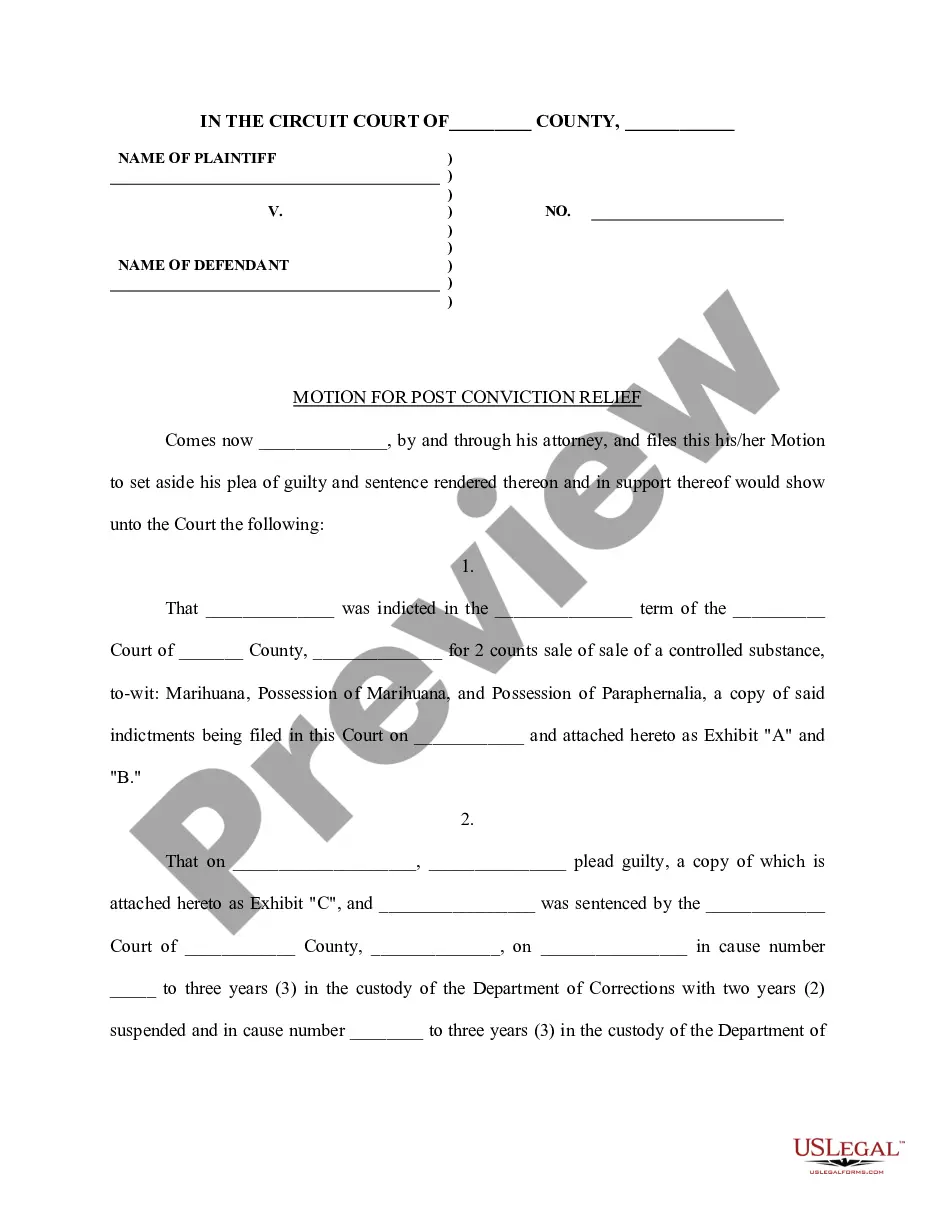
There are several different types of post-judgment motions, but the most common are motions for new trial, motions to vacate, and motions to set-aside. Motions for new trial, motions to vacate, and motions to set-aside are the three most common post-judgment motions.
Section 1008 allows the trial court to reconsider and modify, amend or revoke its prior order only upon new or different facts, circumstances or law. It is improper for a court to expressly invite the parties to file a second summary judgment motion in order to reassess its prior ruling.