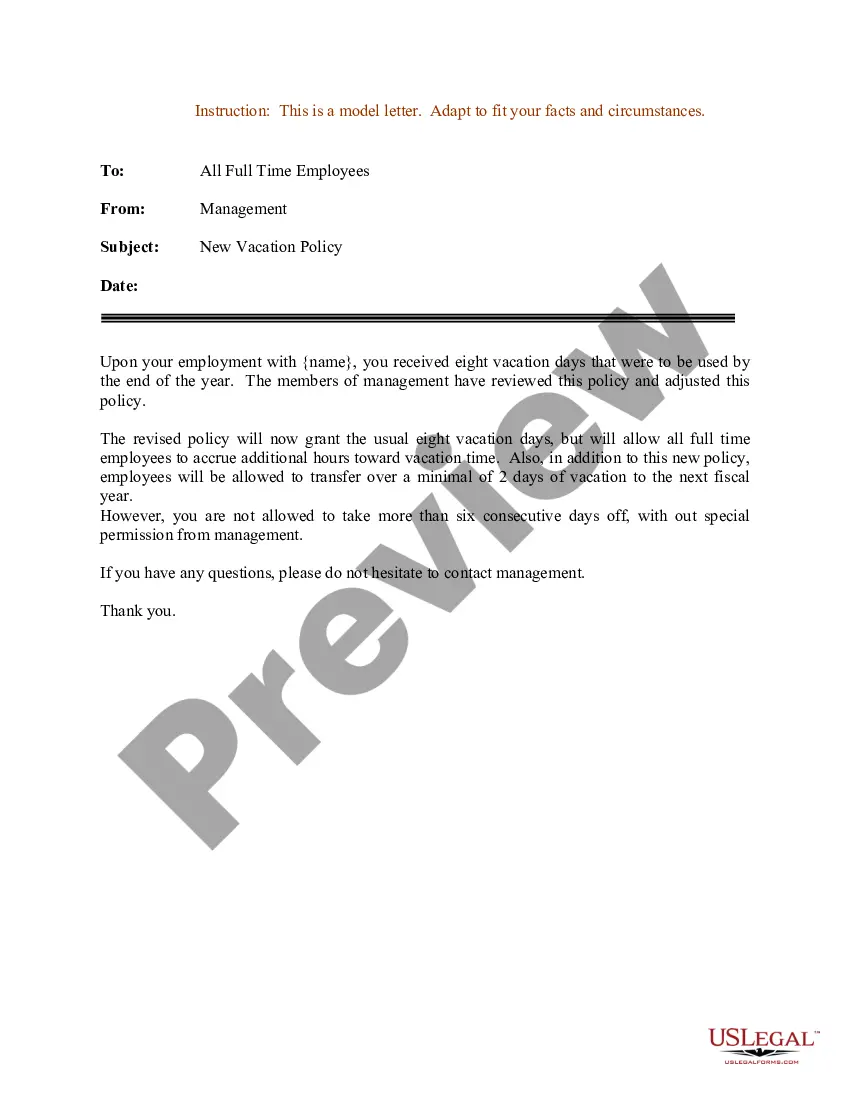
Vacation Policy Employees With No Pto
Description
Get your form ready online
Our built-in tools help you complete, sign, share, and store your documents in one place.
Make edits, fill in missing information, and update formatting in US Legal Forms—just like you would in MS Word.
Download a copy, print it, send it by email, or mail it via USPS—whatever works best for your next step.
Sign and collect signatures with our SignNow integration. Send to multiple recipients, set reminders, and more. Go Premium to unlock E-Sign.
If this form requires notarization, complete it online through a secure video call—no need to meet a notary in person or wait for an appointment.
We protect your documents and personal data by following strict security and privacy standards.

Make edits, fill in missing information, and update formatting in US Legal Forms—just like you would in MS Word.

Download a copy, print it, send it by email, or mail it via USPS—whatever works best for your next step.

Sign and collect signatures with our SignNow integration. Send to multiple recipients, set reminders, and more. Go Premium to unlock E-Sign.

If this form requires notarization, complete it online through a secure video call—no need to meet a notary in person or wait for an appointment.

We protect your documents and personal data by following strict security and privacy standards.
Looking for another form?
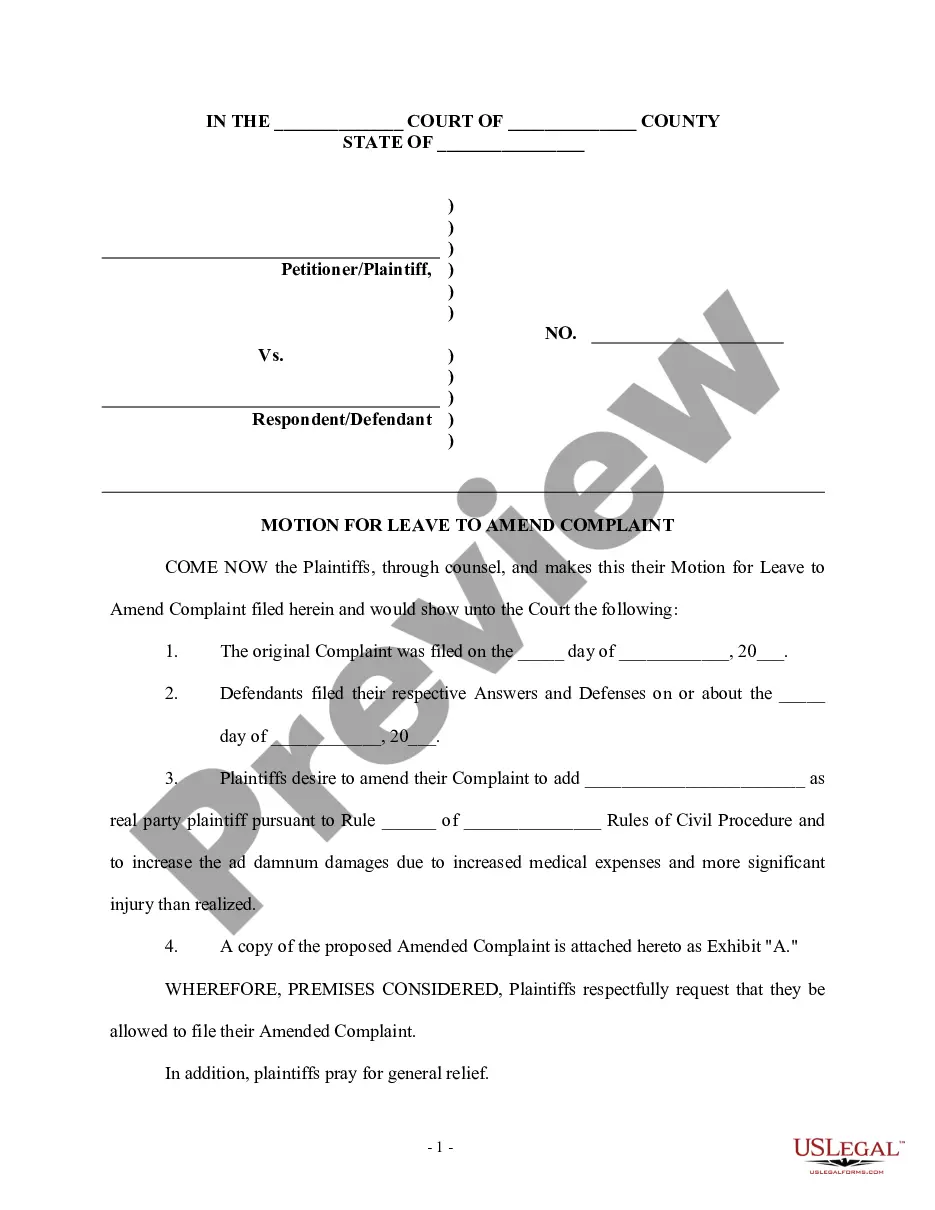







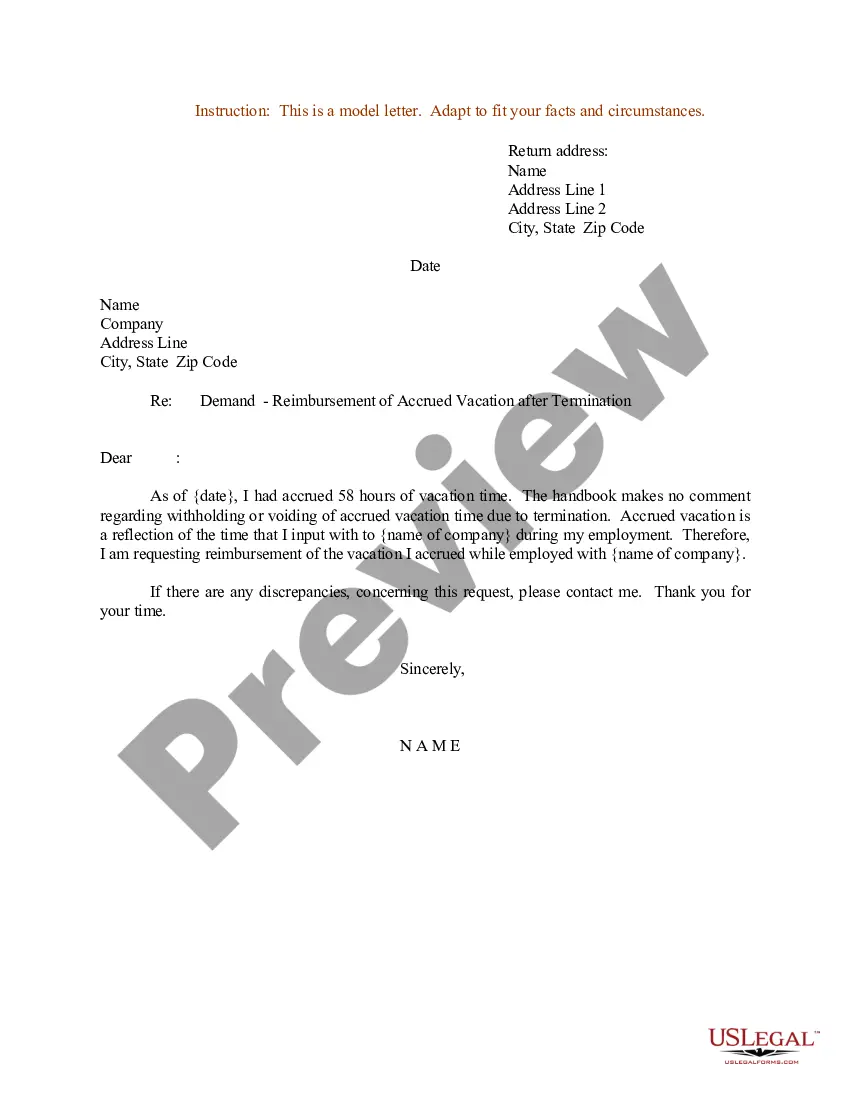
How to fill out Sample Letter For New Vacation Policy?
Creating legal documents from the ground up can frequently be intimidating.
Certain situations may require extensive research and substantial financial investment.
If you seek a more straightforward and cost-effective method for generating Vacation Policy Employees With No Pto or any other documents without unnecessary complications, US Legal Forms is always available to assist you.
Our online repository of over 85,000 current legal documents covers nearly every aspect of your financial, legal, and personal matters.
Review the document preview and descriptions to confirm that you have located the form you need.
- With a few clicks, you can quickly obtain state- and county-compliant templates carefully crafted for you by our legal experts.
- Utilize our platform whenever you require dependable and trustworthy services to efficiently locate and download the Vacation Policy Employees With No Pto.
- If you are a returning user and have set up an account with us previously, simply Log In to your account, find the template, and download it immediately or re-download it later in the My documents section.
- No account? No worries. It takes just a few minutes to register and explore the catalog. But before proceeding to download Vacation Policy Employees With No Pto, heed these suggestions.
Form popularity
FAQ
Unlike most of the traditional leave plans, PTO plans don't distinguish employee absences from personal days, vacation days, or sick days.
PTO is any time an employee is getting paid while away from work?it's more all-encompassing than ?vacation.? Think of it like this: all vacation is PTO while not all PTO is vacation. Some examples of PTO include parental leave, jury duty, sick leave, holiday pay, or disability leave.
Unpaid time off (UTO) is time away from work an employee can take without pay. Employees can use UTO if they're sick, want to take a vacation, or have other personal obligations. Workers can also take an unpaid leave of absence from work, which is an extended period of time away from work.
If you do not have any paid time off left you will probably have to take the time off as unpaid. You should inquire from your HR department if you qualify for FMLA leave so that you can designate this time off as protected leave. Short answer-don't come back until you have recovered.
If you need time off but don't have enough PTO to cover the absence, speak with your supervisor or HR Representative. They may allow you to simply take unpaid time off. You'll receive a smaller paycheck that period, which is not ideal, but you'll be free to take the time you need.