Partner With Limited Liability
Description
Get your form ready online
Our built-in tools help you complete, sign, share, and store your documents in one place.
Make edits, fill in missing information, and update formatting in US Legal Forms—just like you would in MS Word.
Download a copy, print it, send it by email, or mail it via USPS—whatever works best for your next step.
Sign and collect signatures with our SignNow integration. Send to multiple recipients, set reminders, and more. Go Premium to unlock E-Sign.
If this form requires notarization, complete it online through a secure video call—no need to meet a notary in person or wait for an appointment.
We protect your documents and personal data by following strict security and privacy standards.

Make edits, fill in missing information, and update formatting in US Legal Forms—just like you would in MS Word.

Download a copy, print it, send it by email, or mail it via USPS—whatever works best for your next step.

Sign and collect signatures with our SignNow integration. Send to multiple recipients, set reminders, and more. Go Premium to unlock E-Sign.

If this form requires notarization, complete it online through a secure video call—no need to meet a notary in person or wait for an appointment.

We protect your documents and personal data by following strict security and privacy standards.
Looking for another form?








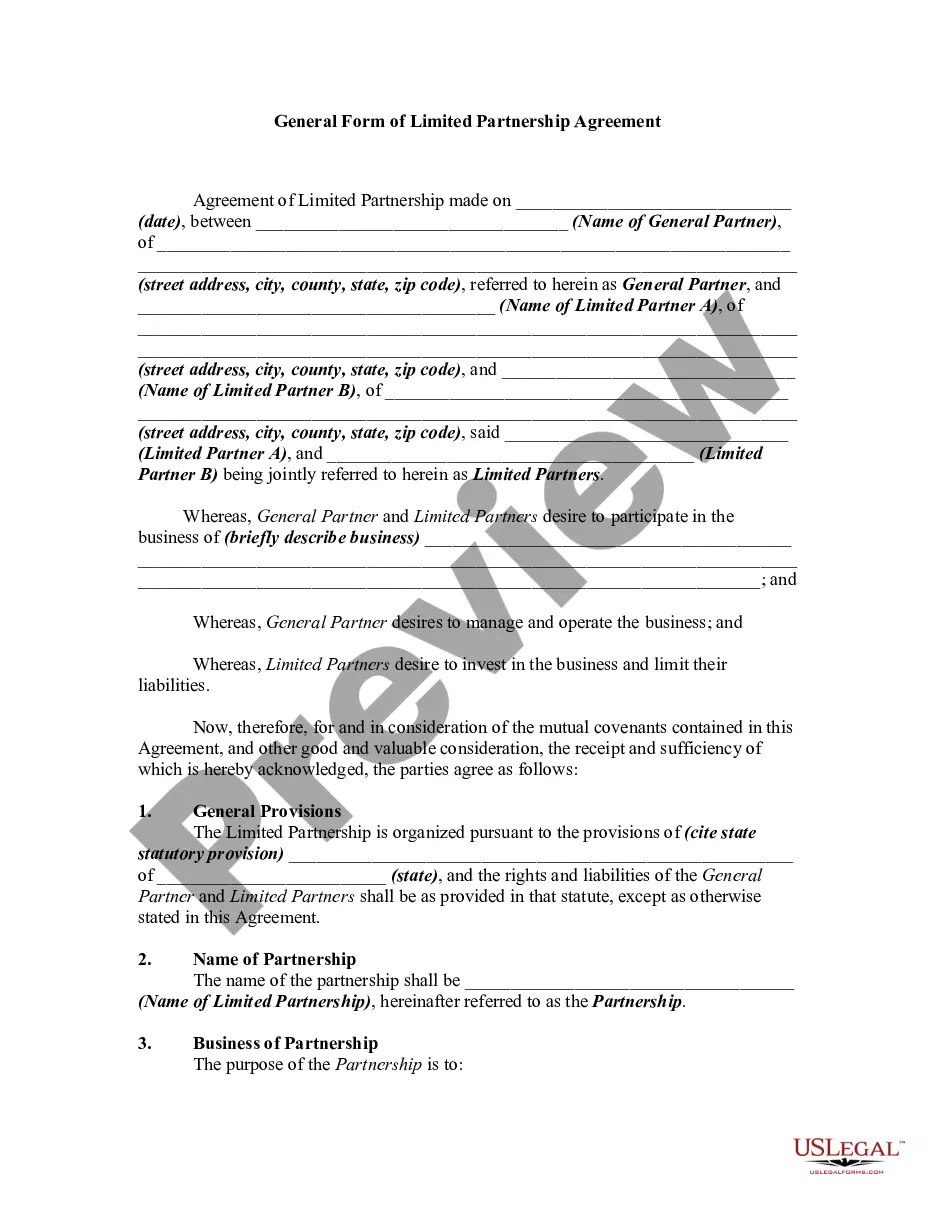
How to fill out Limited Partnership Agreement Between Limited Liability Company And Limited Partner?
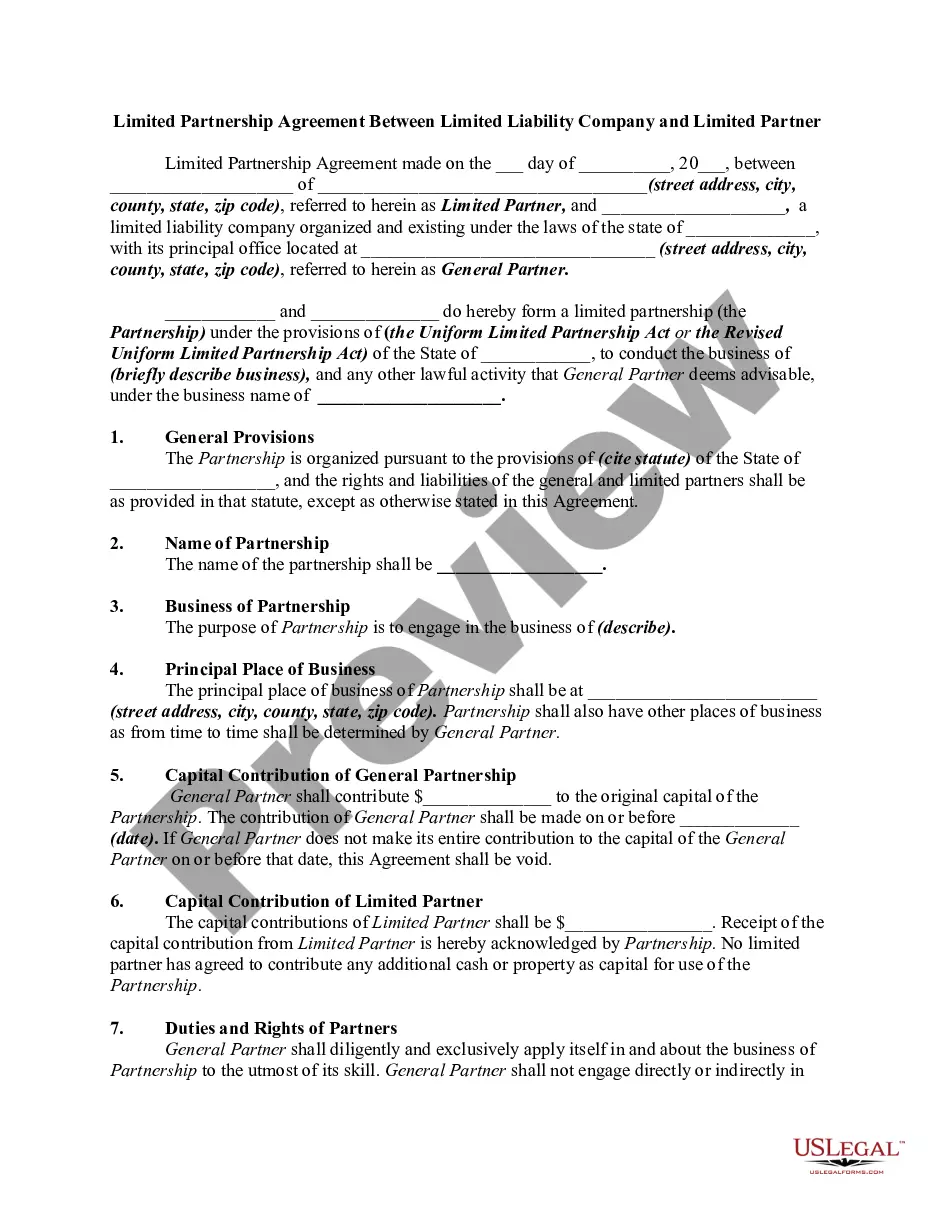
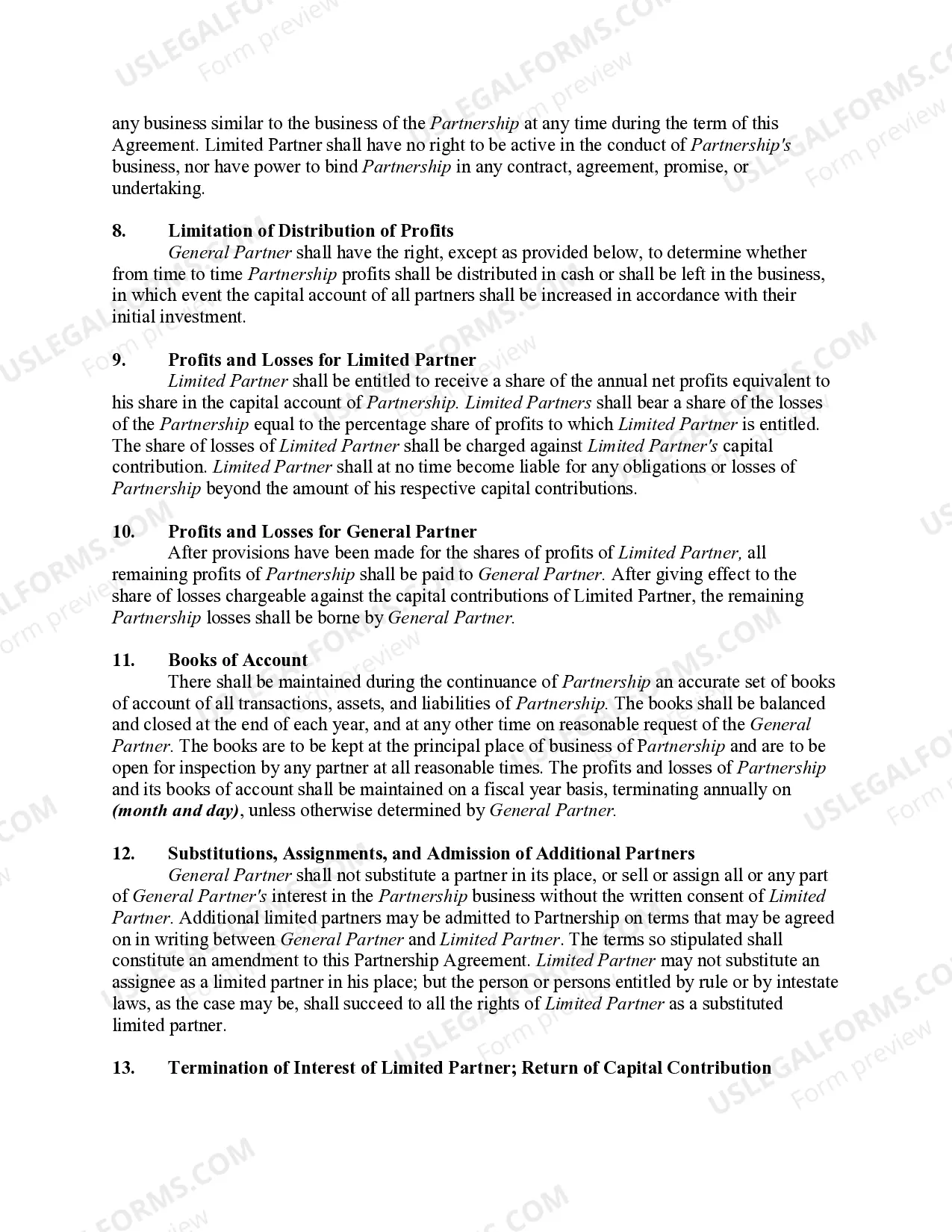
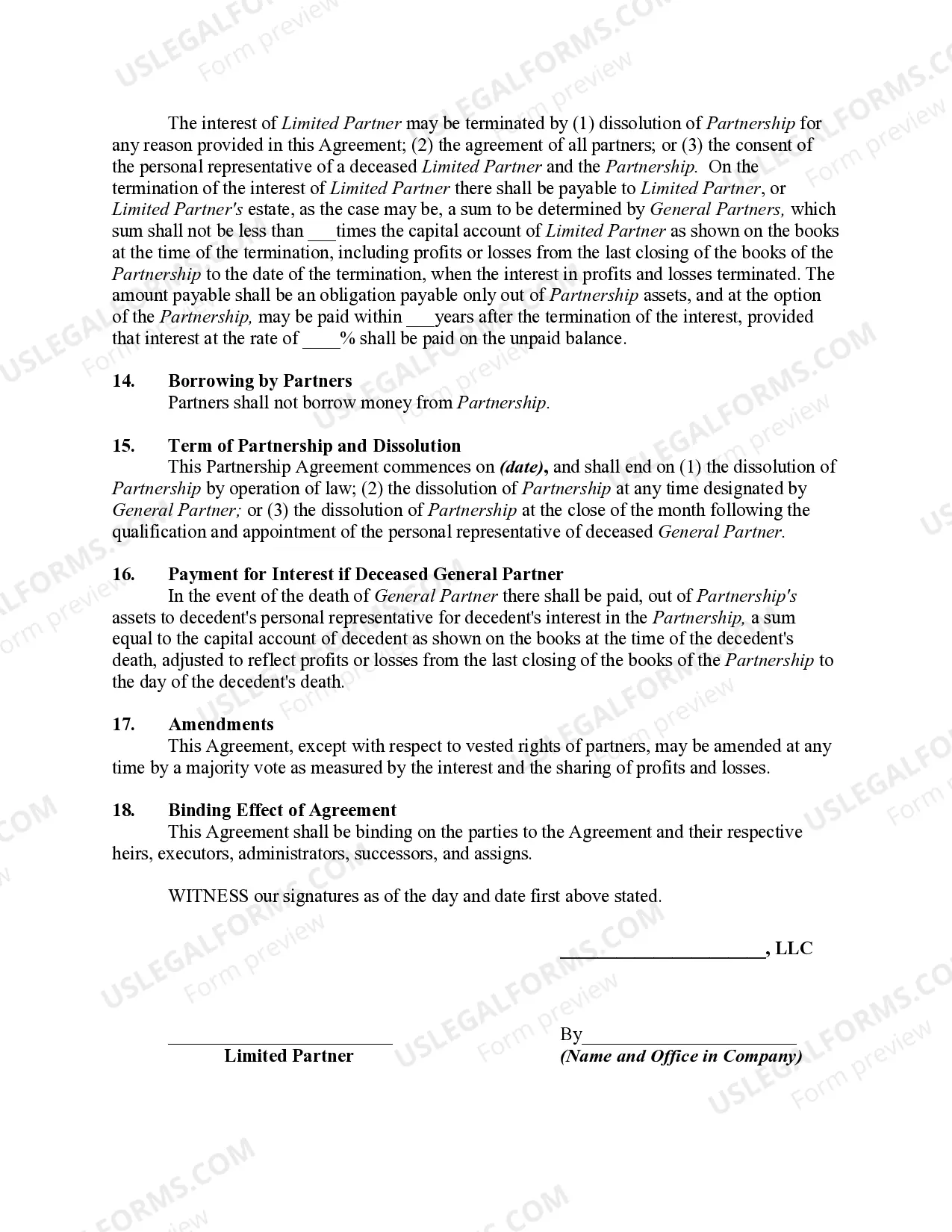
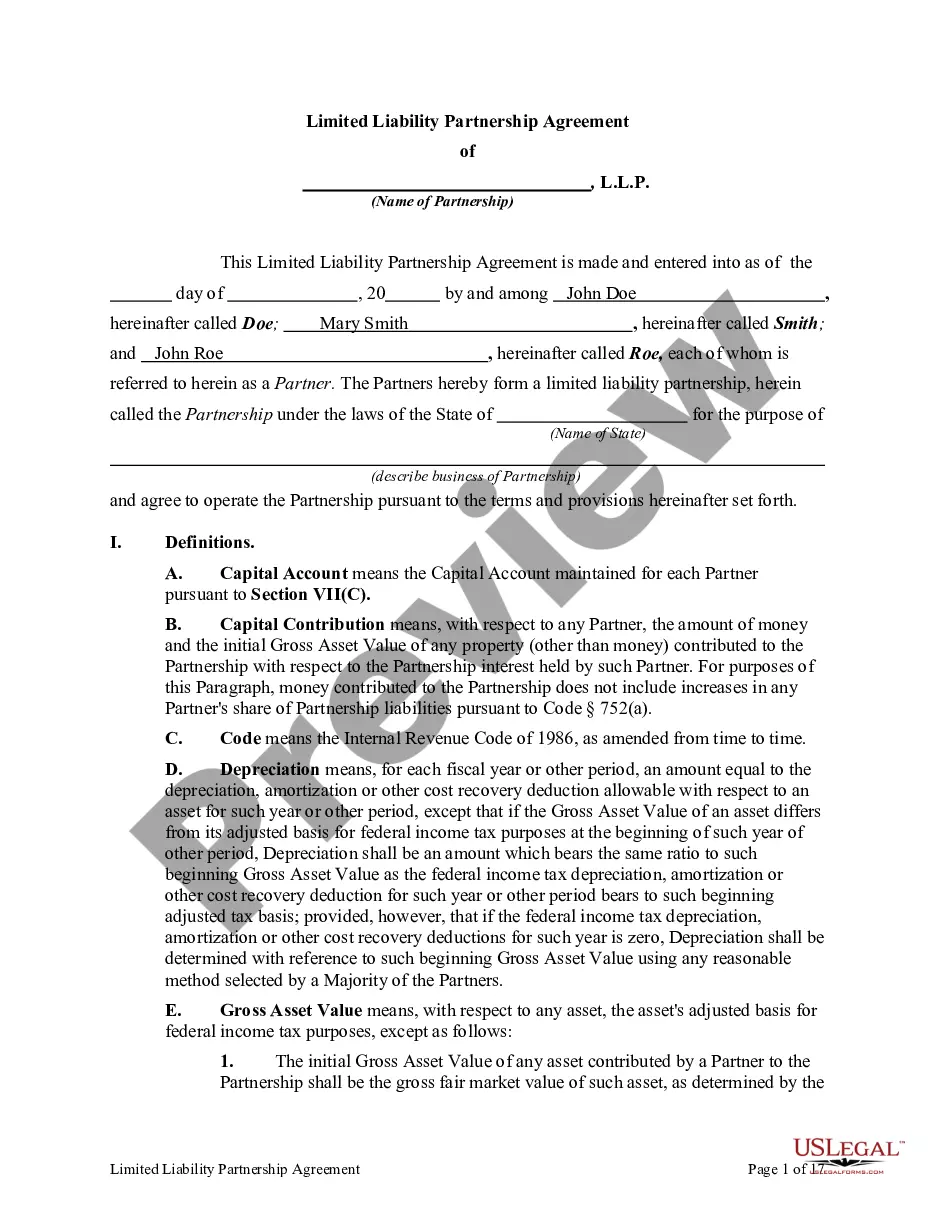
The Partner With Limited Liability displayed on this page is a versatile formal template crafted by expert attorneys in accordance with federal and local laws.
For over 25 years, US Legal Forms has supplied individuals, businesses, and legal professionals with more than 85,000 authenticated, state-specific forms for various business and personal needs. It’s the fastest, simplest, and most trustworthy method to acquire the documents you require, as the service assures the utmost level of data protection and anti-malware safeguards.
Choose the format you wish for your Partner With Limited Liability (PDF, Word, RTF) and download the template to your device.
- Search for the document you require and review it.
- Examine the sample you found and preview it or check the form description to ensure it meets your criteria. If it doesn’t, use the search feature to find the right one. Click Buy Now when you have found the form you want.
- Enroll and Log Into your account.
- Select the pricing plan that fits you and sign up for an account. Utilize PayPal or a credit card for immediate payment. If you already possess an account, Log In and check your subscription to proceed.
- Obtain the fillable template.
Form popularity
FAQ
A limited liability partnership, or LLP, is a business structure where partners have limited liabilities. This means that each partner's personal assets are protected from debts and claims against the partnership. In an LLP, partners can also actively manage the business without risking their personal finances. When you decide to partner with limited liability, you're ensuring that your personal investment is safeguarded.
A limited liability partnership is similar to a limited liability company (LLC) in that all partners are granted limited liability protection. However, in some states the partners in an LLP get less liability protection than in an LLC. LLP requirements vary from state to state.
The LLP files a Schedule K-1 (IRS Form 1065) to report its income, gains, losses, and deductions like a general partnership. Partners file Form 1040 and pay self-employment taxes (social security and Medicare).
Limited liability partnerships (LLPs) allow for a partnership structure where each partner's liabilities are limited to the amount they put into the business. Having business partners means spreading the risk, leveraging individual skills and expertise, and establishing a division of labor.
Why would I choose an LLP over an LLC? Unlike LLCs, an LLP will allow some limited partners to be passive owners with lower liability and no management responsibility. There are many other considerations that will depend on your state laws. For example, it may be more expensive to run an LLC than an LLP in your state.
Creating an LLP requires filing registration paperwork with the state government and paying the required fees. There may be annual filings, as well, such as an Annual Return. To set forth how an LLP should be managed and what percentage ownership each partner has, partners should have a written partnership agreement.