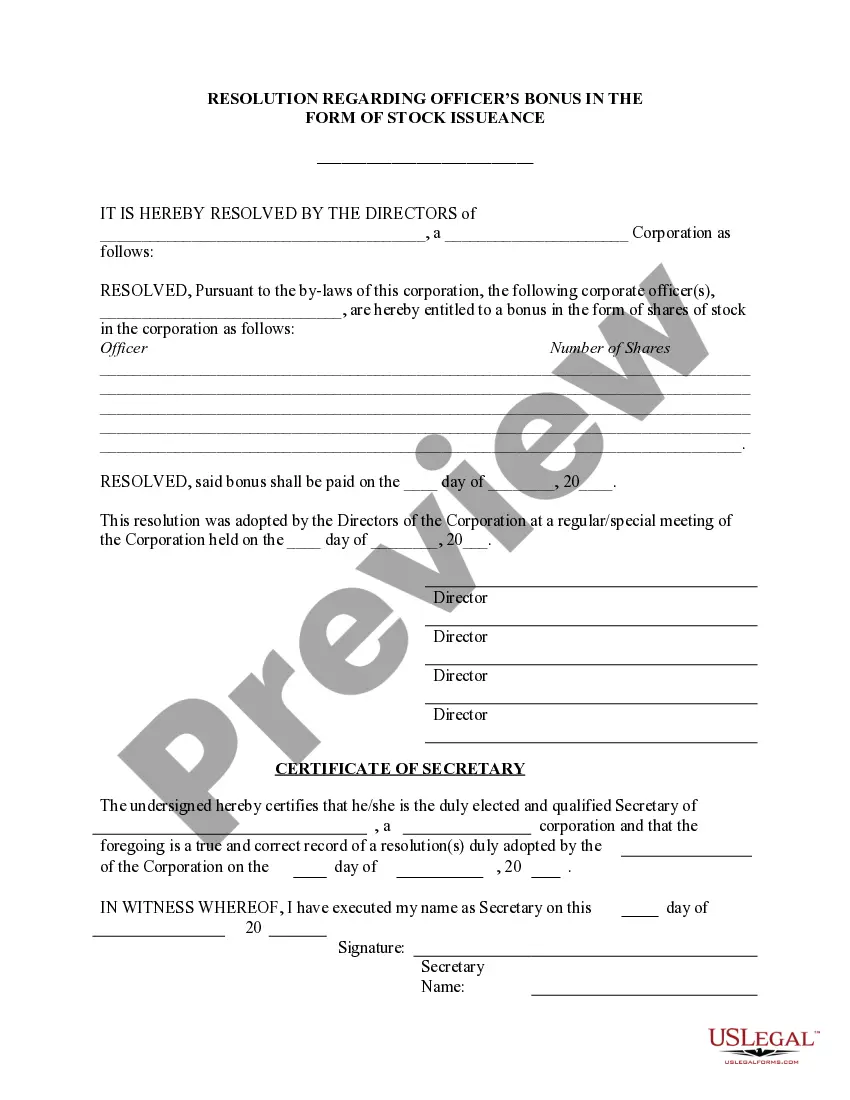
Issued Stock For Equipment
Description
Get your form ready online
Our built-in tools help you complete, sign, share, and store your documents in one place.
Make edits, fill in missing information, and update formatting in US Legal Forms—just like you would in MS Word.
Download a copy, print it, send it by email, or mail it via USPS—whatever works best for your next step.
Sign and collect signatures with our SignNow integration. Send to multiple recipients, set reminders, and more. Go Premium to unlock E-Sign.
If this form requires notarization, complete it online through a secure video call—no need to meet a notary in person or wait for an appointment.
We protect your documents and personal data by following strict security and privacy standards.

Make edits, fill in missing information, and update formatting in US Legal Forms—just like you would in MS Word.

Download a copy, print it, send it by email, or mail it via USPS—whatever works best for your next step.

Sign and collect signatures with our SignNow integration. Send to multiple recipients, set reminders, and more. Go Premium to unlock E-Sign.

If this form requires notarization, complete it online through a secure video call—no need to meet a notary in person or wait for an appointment.

We protect your documents and personal data by following strict security and privacy standards.
Looking for another form?








How to fill out Officers Bonus In Form Of Stock Issuance - Resolution Form?
Managing legal paperwork and processes can be a lengthy addition to your daily schedule.
Forms like Issued Stock For Equipment usually require you to search for them and grasp the most efficient way to complete them accurately.
Therefore, whether you are handling financial, legal, or personal issues, utilizing a comprehensive and seamless online directory of forms when necessary will be extremely beneficial.
US Legal Forms is the top online resource for legal templates, providing over 85,000 state-specific forms and various tools to assist you in completing your documents effortlessly.
Simply Log In to your account, search for Issued Stock For Equipment, and obtain it immediately in the My documents section. You can also access forms you have previously saved.
- Browse the array of relevant documents available with just one click.
- US Legal Forms offers you state- and county-specific documents ready for download at any time.
- Protect your document management tasks by using a premium service that allows you to create any form within minutes without extra or hidden fees.
Form popularity
FAQ
Consumer Credit and the Removal of Medical Collections from Credit Reports. The three nationwide consumer reporting companies announced the removal of medical collections under $500 from consumer credit reports on April 11, 2023.
Under this Act (Title VIII of the Consumer Credit Protection Act), third-party debt collectors are prohibited from using deceptive or abusive conduct in the collection of consumer debts incurred for personal, family, or household purposes.
Starting November 30, 2021, debt collectors face new restrictions under changes to the federal Fair Debt Collection Practices Act (FDCPA). The Fair Debt Collection Practices Act (FDCPA) (15 U.S.C. § 1692 and following) protects consumers from abusive debt collectors.
One such recent development impacting consumer debt collections is the newly enacted Regulation F. Effective November 30, 2021, the Consumer Financial Protection Bureau (?CFPB?) enacted Regulation F to the Fair Debt Collection Practice Act (FDCPA). The full text of the Rule can be found here.
The Fair Debt Collection Practices Act (FDCPA) (15 USC 1692 et seq.), which became effective in March 1978, was designed to eliminate abusive, deceptive, and unfair debt collection practices.
The amended FDCPA allows debt collectors to use newer technologies, such as email and text messages, to communicate with consumers regarding their debts, subject to certain limitations, which protect consumers against harassment or abuse.
In the new changes to Regulation F, the frequency at which a collections agency can contact a consumer has changed. This change, presented in Section 1006.14B21A, addresses telephone call frequency and restricts agencies to contacting a consumer seven times within seven consecutive days.
Legislative history The Fair Debt Collection Practices Act (FDCPA) was introduced into the United States House of Representatives on March 22, 1977. The act passed the House by a vote of 199-198 on April 4. The bill moved to the United States Senate Committee on Banking, Housing, and Urban Affairs.