Credit Reference Agencies For Business
Description
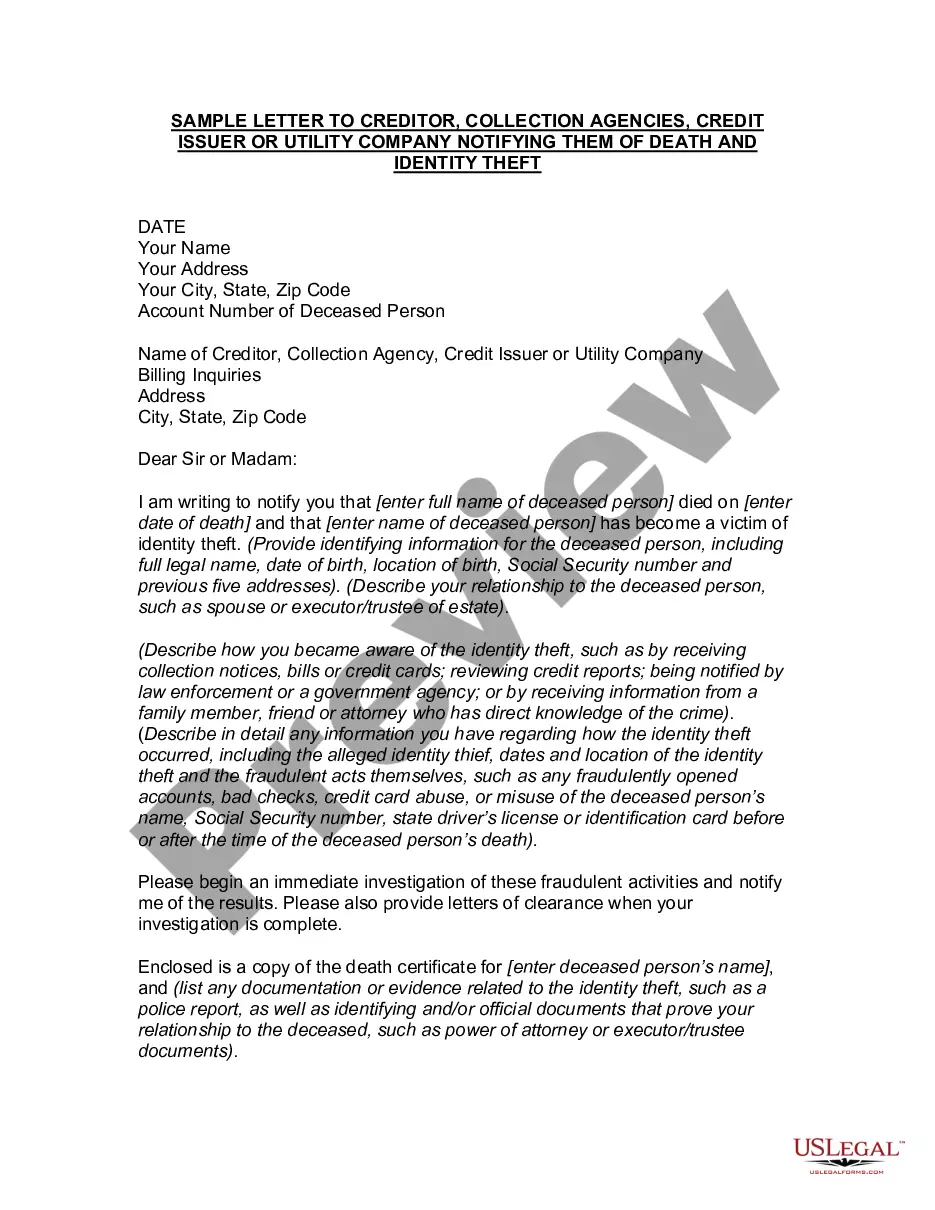

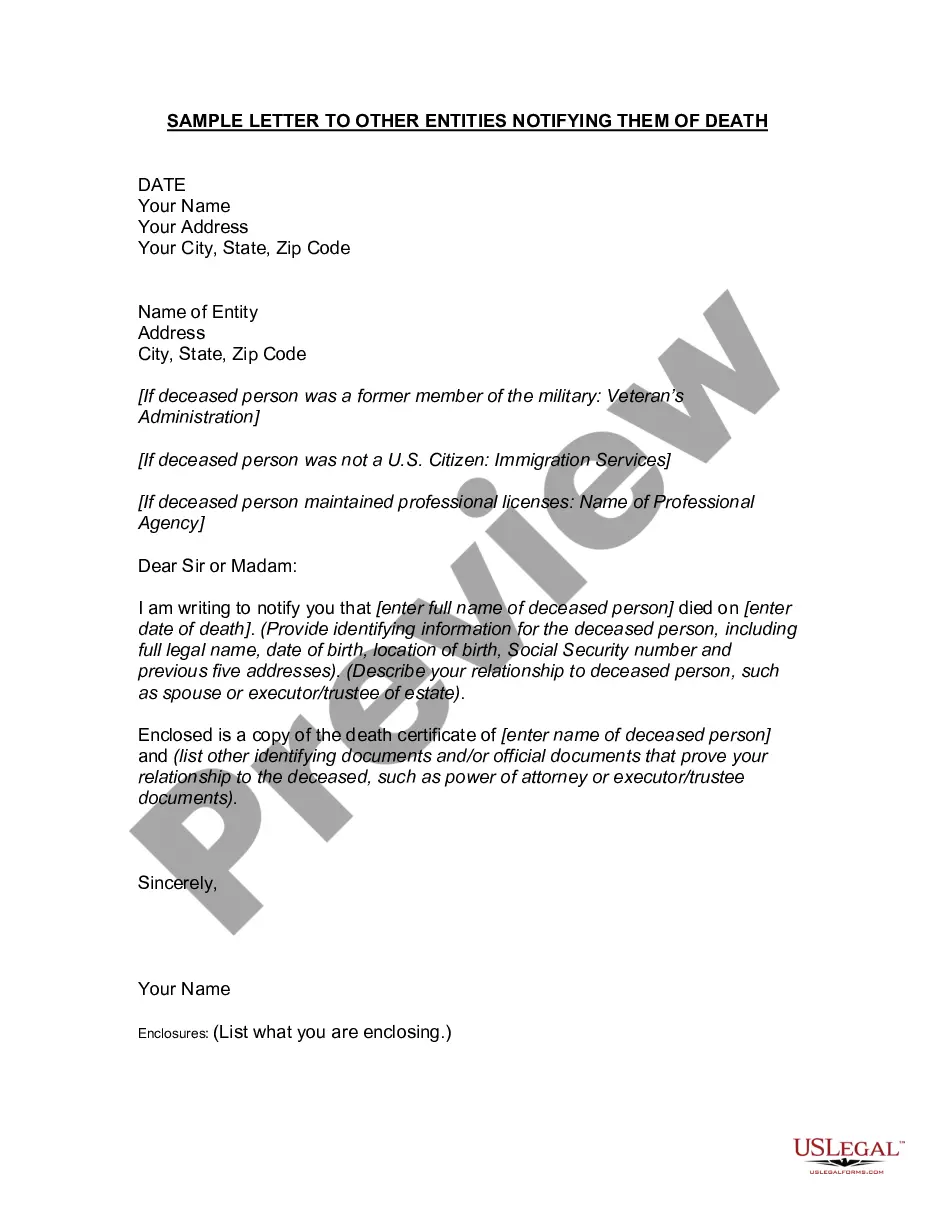


How to fill out Letter To Creditor, Collection Agencies, Credit Issuer Or Utility Company Notifying Them Of Death?
Finding a go-to place to take the most current and appropriate legal templates is half the struggle of handling bureaucracy. Discovering the right legal papers demands accuracy and attention to detail, which explains why it is very important to take samples of Credit Reference Agencies For Business only from reliable sources, like US Legal Forms. A wrong template will waste your time and delay the situation you are in. With US Legal Forms, you have very little to be concerned about. You may access and view all the information concerning the document’s use and relevance for the situation and in your state or county.
Take the listed steps to finish your Credit Reference Agencies For Business:
- Utilize the catalog navigation or search field to find your sample.
- Open the form’s information to ascertain if it matches the requirements of your state and region.
- Open the form preview, if available, to ensure the template is the one you are interested in.
- Return to the search and find the right template if the Credit Reference Agencies For Business does not suit your needs.
- When you are positive about the form’s relevance, download it.
- If you are an authorized customer, click Log in to authenticate and access your picked forms in My Forms.
- If you do not have an account yet, click Buy now to obtain the form.
- Choose the pricing plan that fits your preferences.
- Proceed to the registration to complete your purchase.
- Finalize your purchase by selecting a transaction method (bank card or PayPal).
- Choose the document format for downloading Credit Reference Agencies For Business.
- Once you have the form on your gadget, you can modify it using the editor or print it and finish it manually.
Get rid of the inconvenience that comes with your legal paperwork. Explore the extensive US Legal Forms catalog where you can find legal templates, check their relevance to your situation, and download them immediately.
Form popularity
FAQ
Anyone who has provided the applicant credit or had a financial relationship can serve as a credit reference. Applicant's credit card company, local bank, investment firm, past landlord, or a local business that offered a payment plan are examples.
Contact one of the four primary business credit bureaus to request a business credit report. Dun & Bradstreet specialize in business credit and, while often more expensive, will provide more thorough information.
Trade reference is a report provided by a vendor that indicates a customer's creditworthiness based on their past business transactions. In contrast, a credit reference is a document that shows the credit history of those who have applied for a loan.
What is a trade reference example? Customer identifying information (name of business, address etc) Credit terms (i.e. net 10, net 30) Date account opened. Open AR balance (AR = accounts receivable) Past due balance. Highest previous balance. DBT (days beyond terms) ? current and previous. Number of late payments.
WHAT TO INCLUDE IN A BUSINESS CREDIT APPLICATION Name of the business, address, phone and fax number. Names, addresses, Social Security numbers of principals. Type of business (corporation, partnership, proprietorship) Industry. Number of employees. Bank references. Trade payment references.