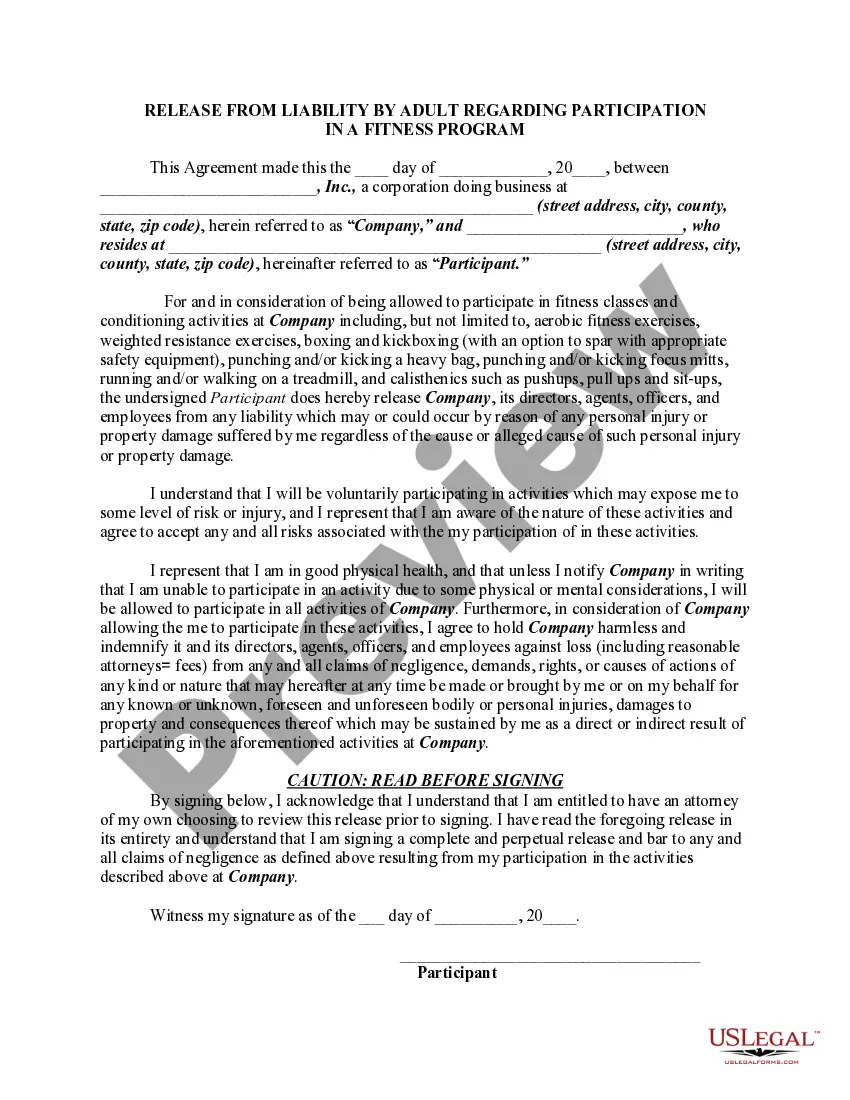
Personal Training Liability Waiver Template
Description
Get your form ready online
Our built-in tools help you complete, sign, share, and store your documents in one place.
Make edits, fill in missing information, and update formatting in US Legal Forms—just like you would in MS Word.
Download a copy, print it, send it by email, or mail it via USPS—whatever works best for your next step.
Sign and collect signatures with our SignNow integration. Send to multiple recipients, set reminders, and more. Go Premium to unlock E-Sign.
If this form requires notarization, complete it online through a secure video call—no need to meet a notary in person or wait for an appointment.
We protect your documents and personal data by following strict security and privacy standards.

Make edits, fill in missing information, and update formatting in US Legal Forms—just like you would in MS Word.

Download a copy, print it, send it by email, or mail it via USPS—whatever works best for your next step.

Sign and collect signatures with our SignNow integration. Send to multiple recipients, set reminders, and more. Go Premium to unlock E-Sign.

If this form requires notarization, complete it online through a secure video call—no need to meet a notary in person or wait for an appointment.

We protect your documents and personal data by following strict security and privacy standards.
Looking for another form?


Form popularity
FAQ
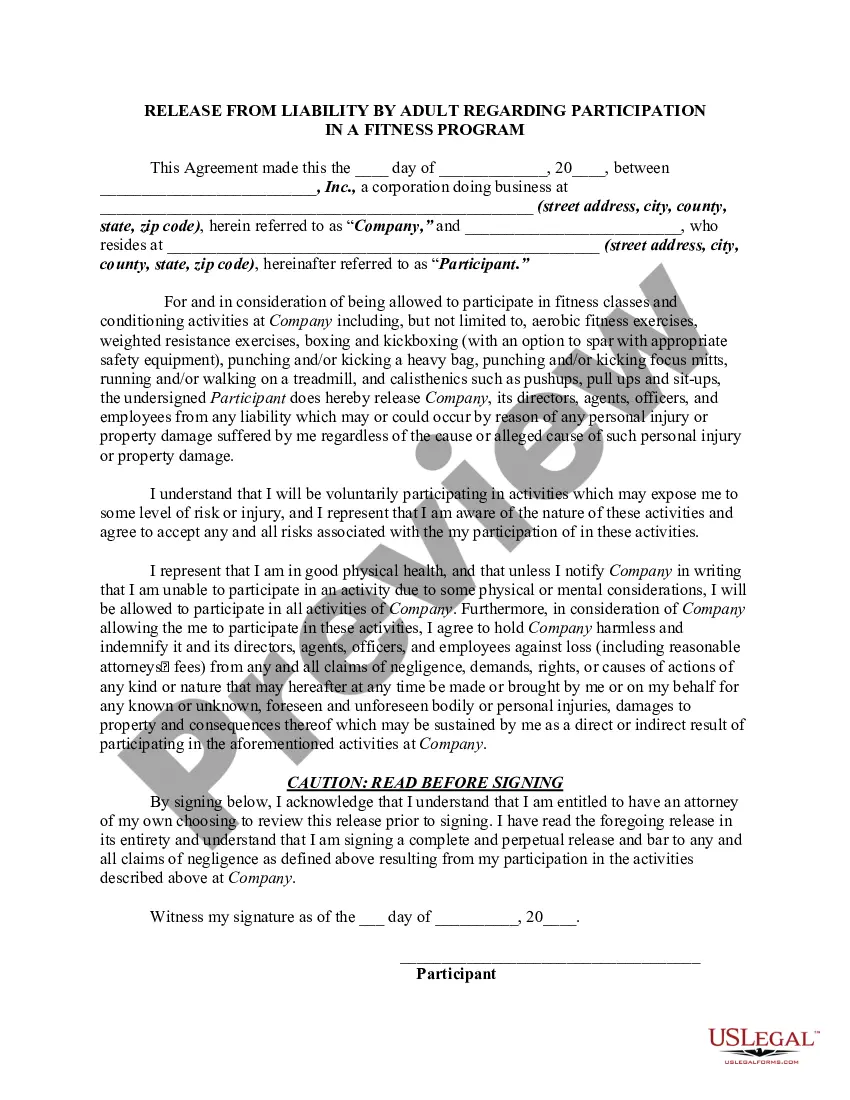
To write a personal training waiver, start by including the names of both the trainer and the client. Outline the types of training involved and the inherent risks. It is crucial to include a release of liability section, which can be easily crafted by utilizing a Personal training liability waiver template. This ensures your waiver covers all necessary components and protects your business.
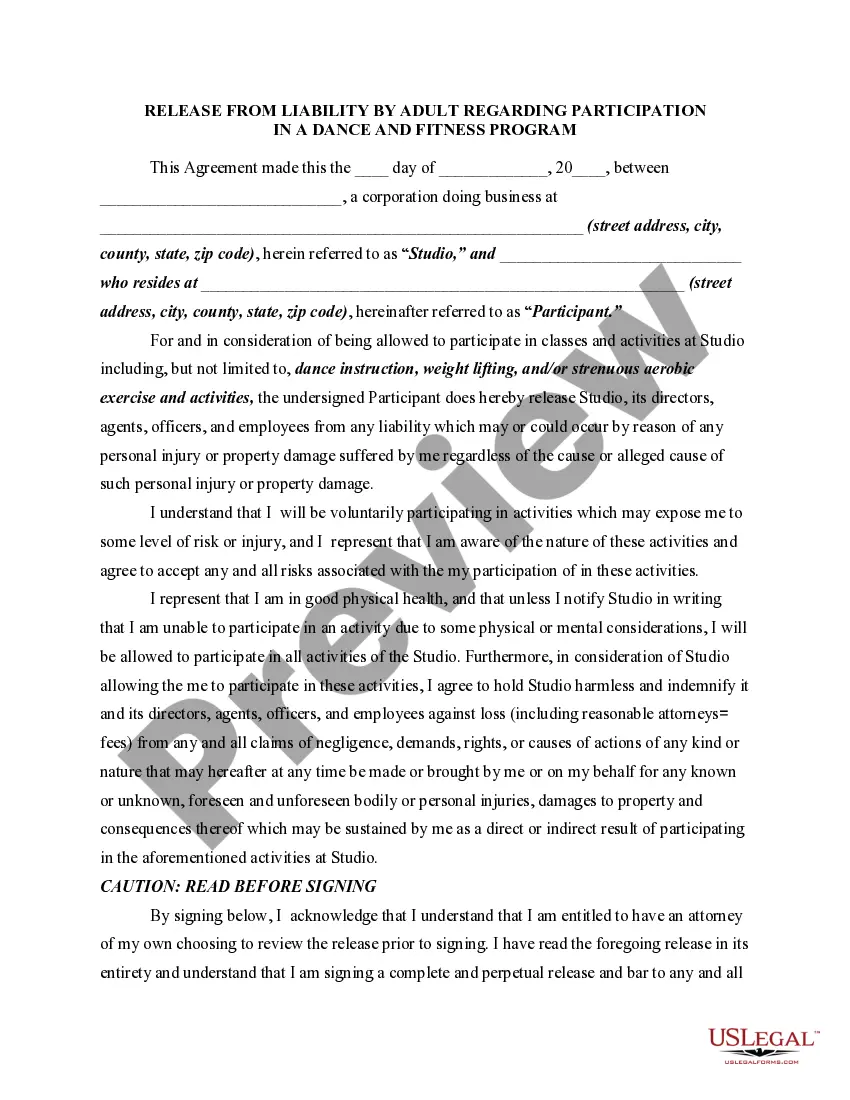
An example of a fitness waiver would include a statement indicating that participants understand the risks associated with physical training. It might also detail the nature of the exercises involved and ask participants to acknowledge their health status. Using a Personal training liability waiver template can provide a structured approach to drafting effective fitness waivers.
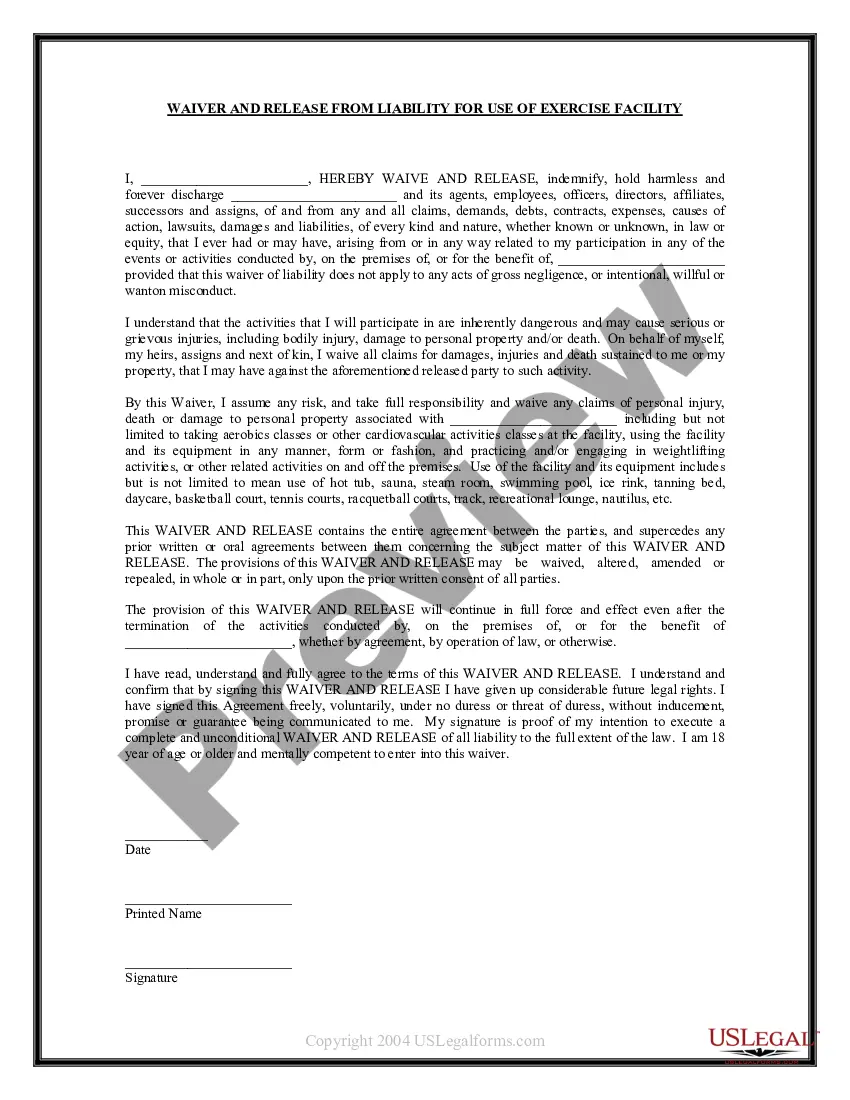
A waiver should clearly state the activity being participated in and outline the risks involved. It must include a release of liability clause, which protects the provider from claims resulting from injuries. Incorporating specific language from a Personal training liability waiver template helps ensure your waiver is comprehensive and legally sound.
To write a simple waiver, start by clearly identifying the parties involved. Include a section that describes the activity and the risks associated with it. Finish by adding a clear statement that releases the service provider from liability, along with a signature line for the participant. Using a Personal training liability waiver template can simplify this process significantly.
While liability insurance is not legally required to be a personal trainer, it is highly recommended. Insurance protects you from potential lawsuits that may arise from client injuries during training sessions. By investing in liability insurance, you not only safeguard your business but also demonstrate professionalism and responsibility to your clients. Combining this insurance with a personal training liability waiver template strengthens your overall risk management strategy.
Typically, a release of liability form does not need to be notarized to be valid, but it can add an extra layer of credibility. Signing in the presence of a witness, however, can also reinforce the document's legitimacy. Always check state laws, as requirements may vary. A personal training liability waiver template can provide guidance on whether notarization is necessary for your situation.
A waiver of liability for gym use is a legal document that protects gym owners and trainers from potential lawsuits related to injuries that occur in the facility. Clients sign this waiver to acknowledge the inherent risks of gym activities and agree not to hold the gym liable for any accidents. This protective measure is crucial for businesses in the fitness industry. It often complements a personal training liability waiver template for a comprehensive approach to risk management.
Liability insurance for personal trainers is a policy that provides financial protection against claims resulting from injuries or accidents during training sessions. This insurance helps trainers cover legal fees and settlements, safeguarding their business. Having liability insurance is not just smart; it can also enhance your professionalism and trust with clients. Consider reviewing options along with a personal training liability waiver template for maximum protection.
Creating a waiver for personal training involves clearly outlining the risks associated with physical activities. You need to state the responsibilities of both the trainer and the client. Fortunately, using a personal training liability waiver template can simplify this process, allowing you to customize the form to meet your specific needs. This ensures that your waiver is comprehensive and legally binding.
To terminate your personal trainer, review your contract for any specific cancellation terms. Communicate directly with your trainer about your decision, providing feedback if necessary. If you are using a gym, check their policies on trainer changes. A well-crafted termination document can ensure clarity and may include a personal training liability waiver template to protect all parties.