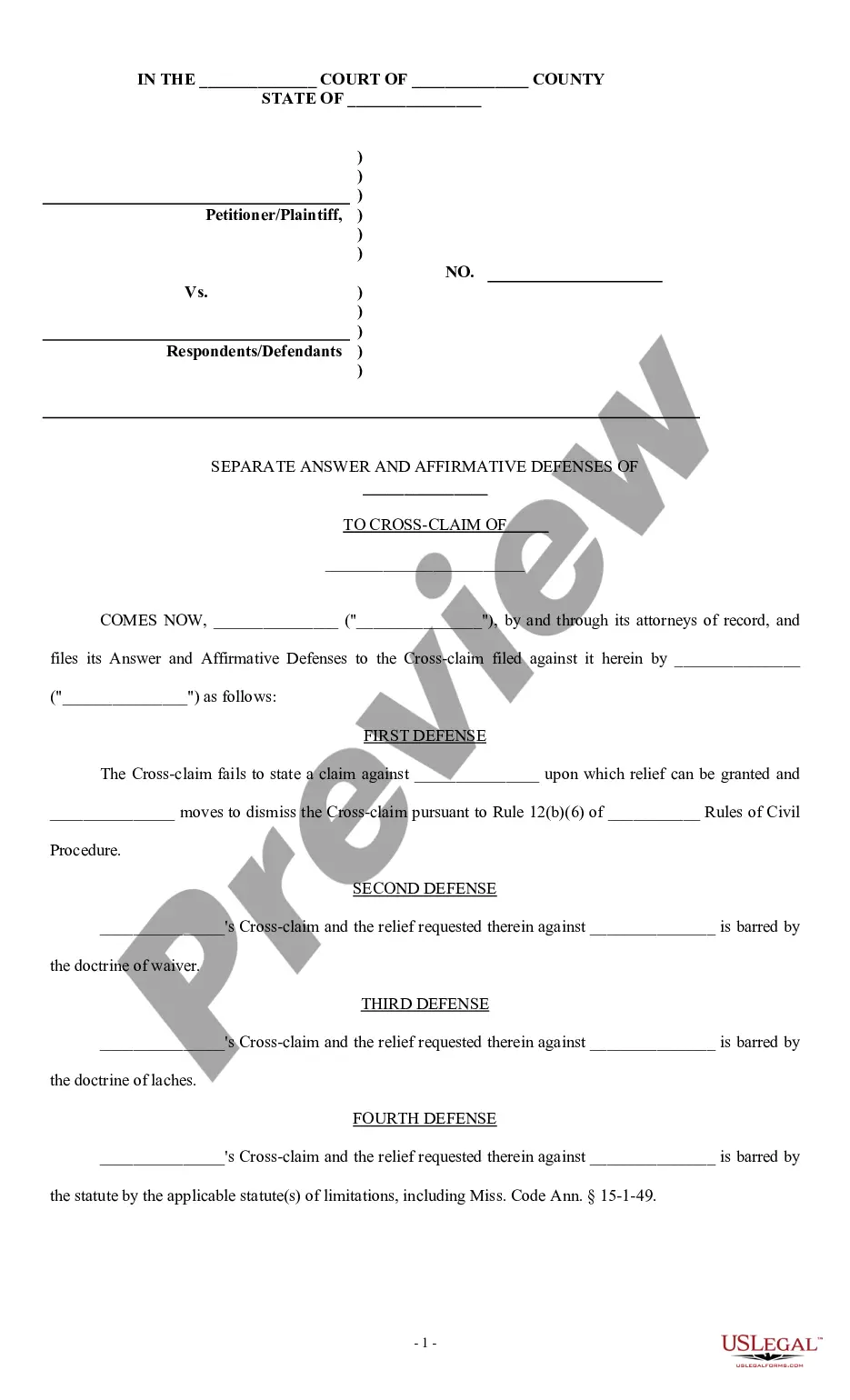
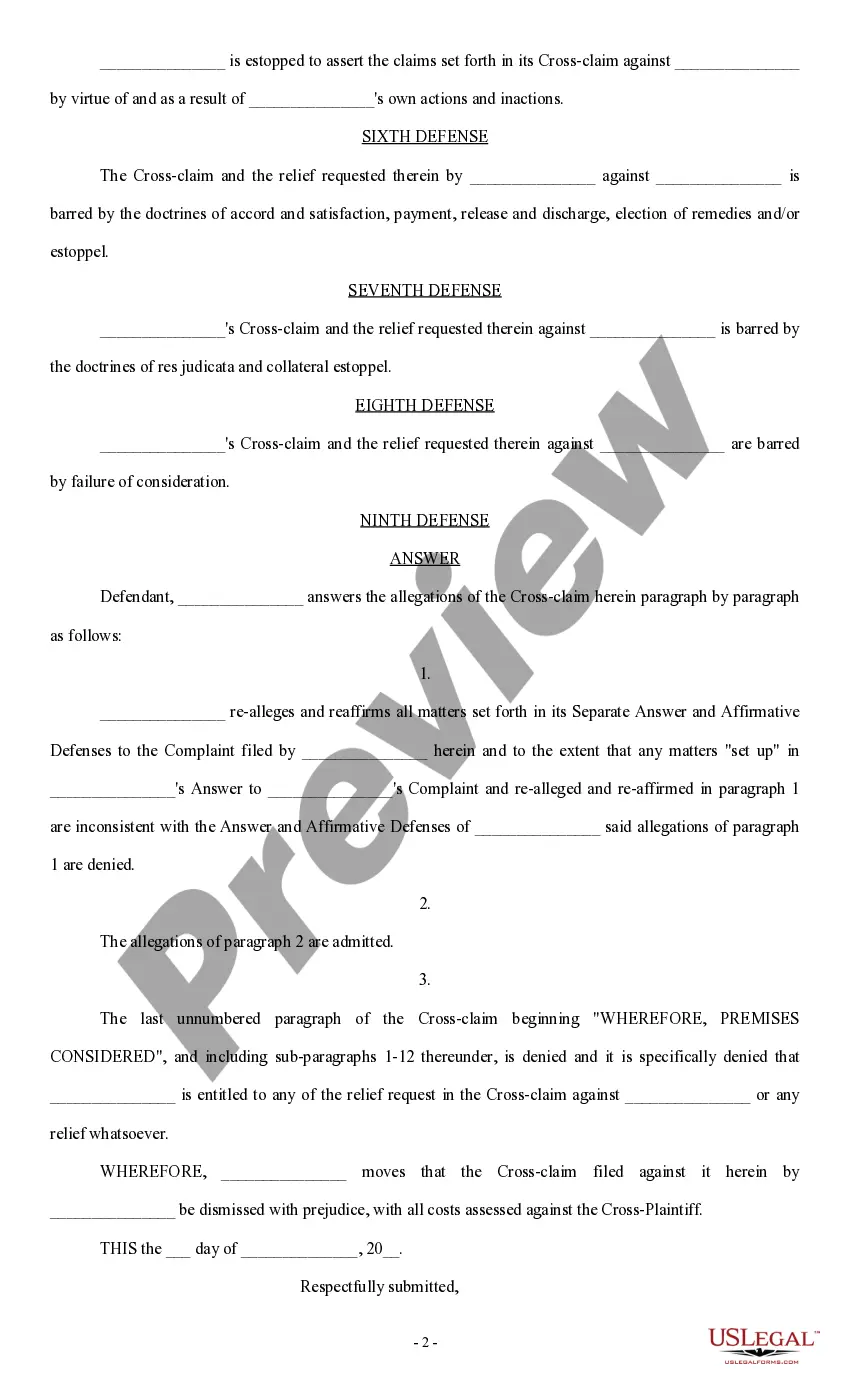
Affirmative Defenses Sample For Debt Collection Lawsuit
Description
Get your form ready online
Our built-in tools help you complete, sign, share, and store your documents in one place.
Make edits, fill in missing information, and update formatting in US Legal Forms—just like you would in MS Word.
Download a copy, print it, send it by email, or mail it via USPS—whatever works best for your next step.
Sign and collect signatures with our SignNow integration. Send to multiple recipients, set reminders, and more. Go Premium to unlock E-Sign.
If this form requires notarization, complete it online through a secure video call—no need to meet a notary in person or wait for an appointment.
We protect your documents and personal data by following strict security and privacy standards.

Make edits, fill in missing information, and update formatting in US Legal Forms—just like you would in MS Word.

Download a copy, print it, send it by email, or mail it via USPS—whatever works best for your next step.

Sign and collect signatures with our SignNow integration. Send to multiple recipients, set reminders, and more. Go Premium to unlock E-Sign.

If this form requires notarization, complete it online through a secure video call—no need to meet a notary in person or wait for an appointment.

We protect your documents and personal data by following strict security and privacy standards.
Looking for another form?


How to fill out Separate Answer And Affirmative Defenses To Crossclaim?
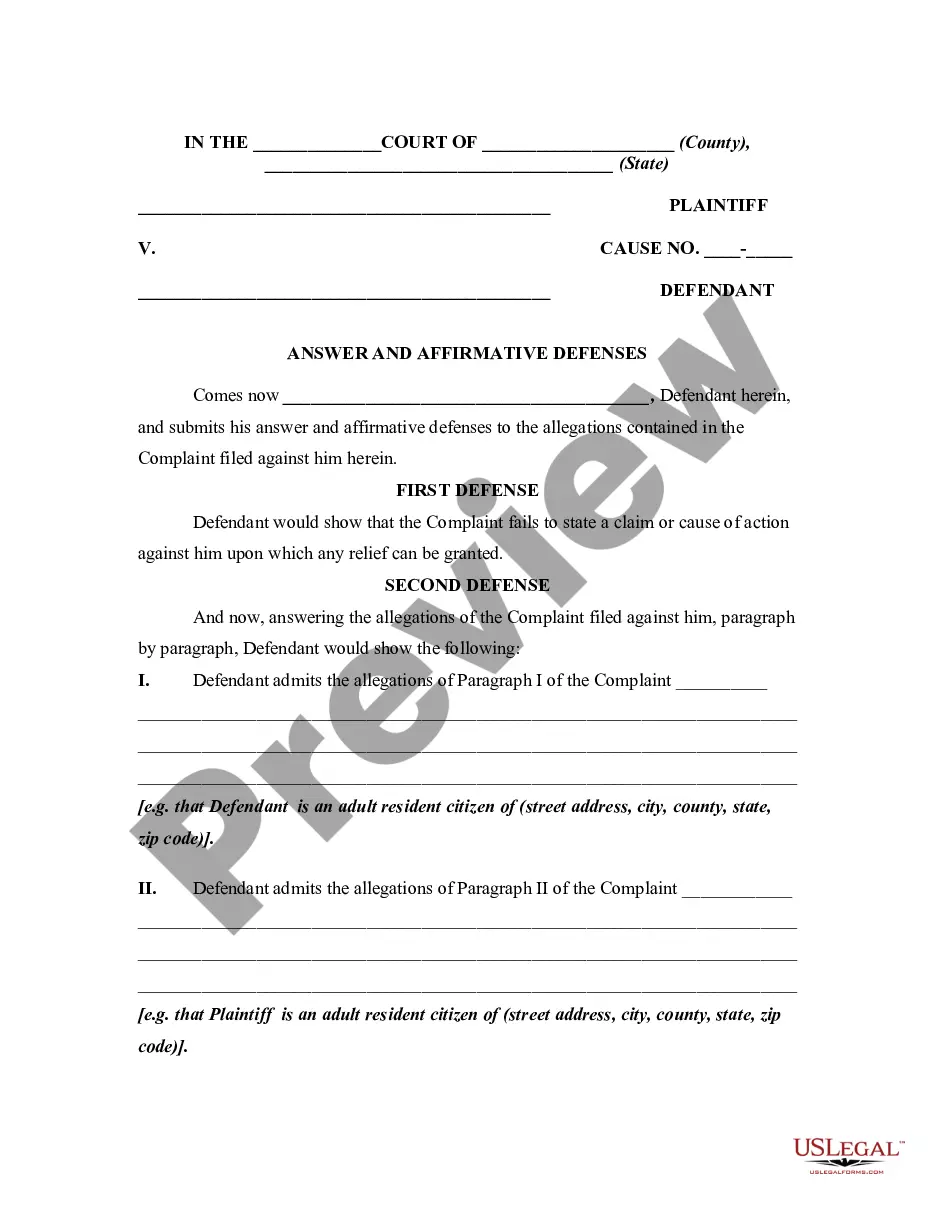
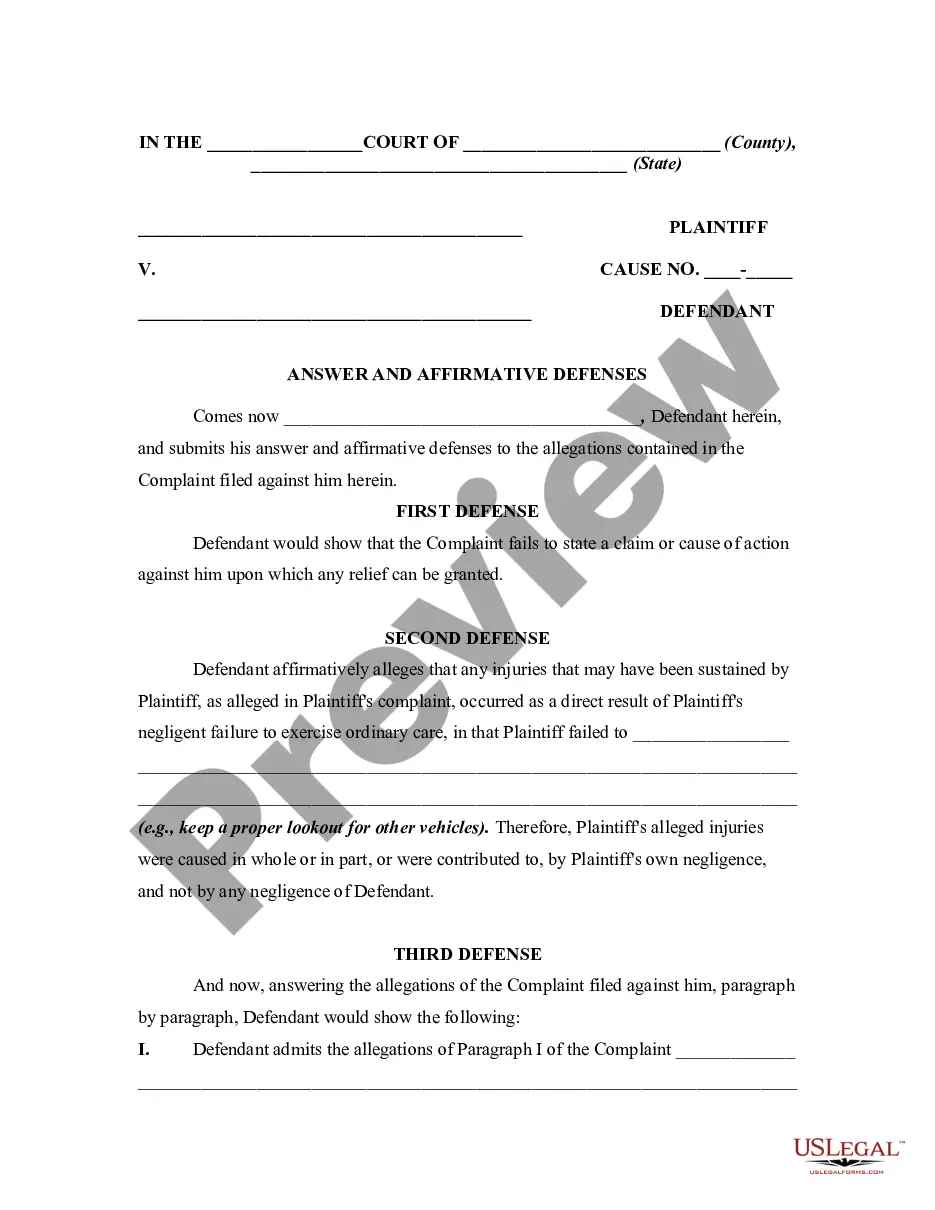
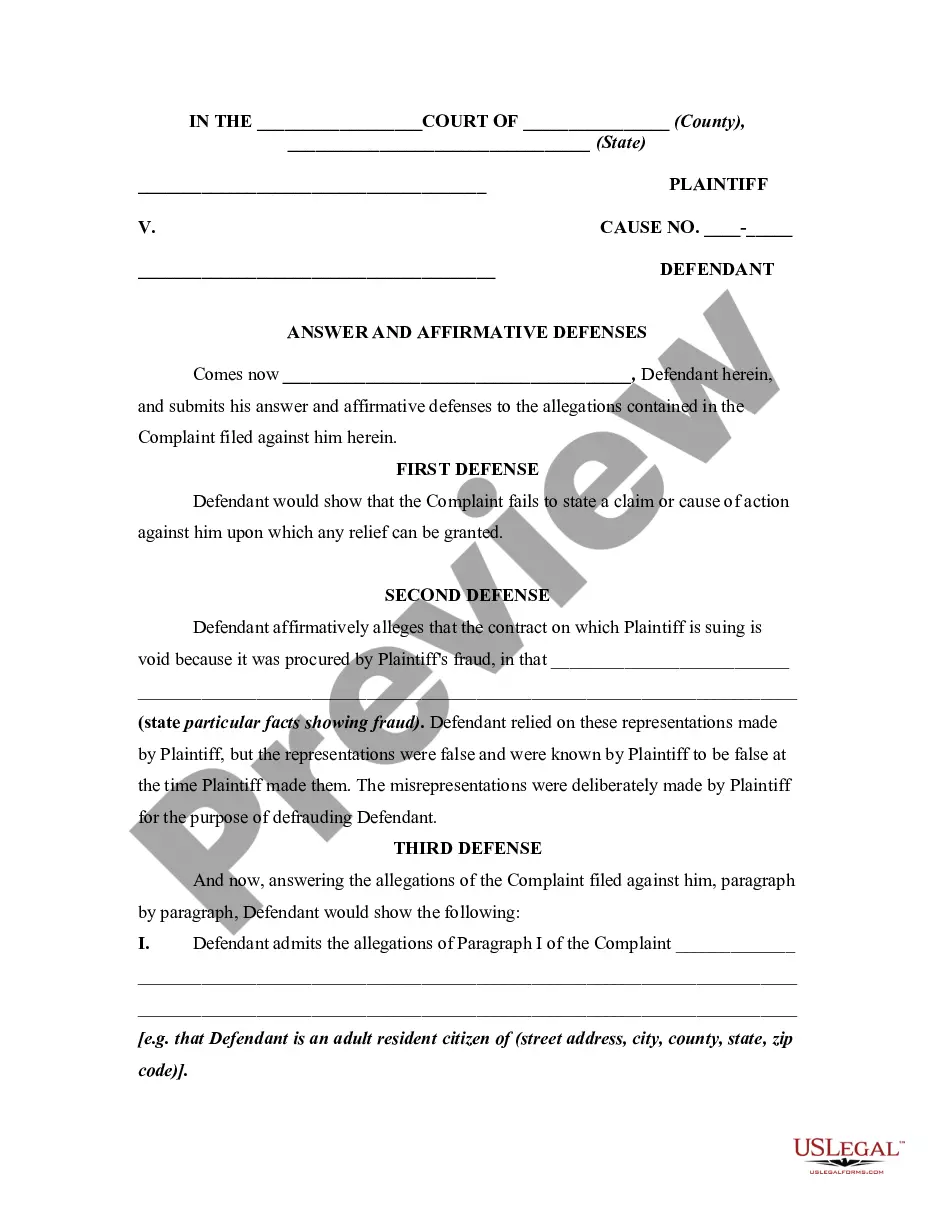
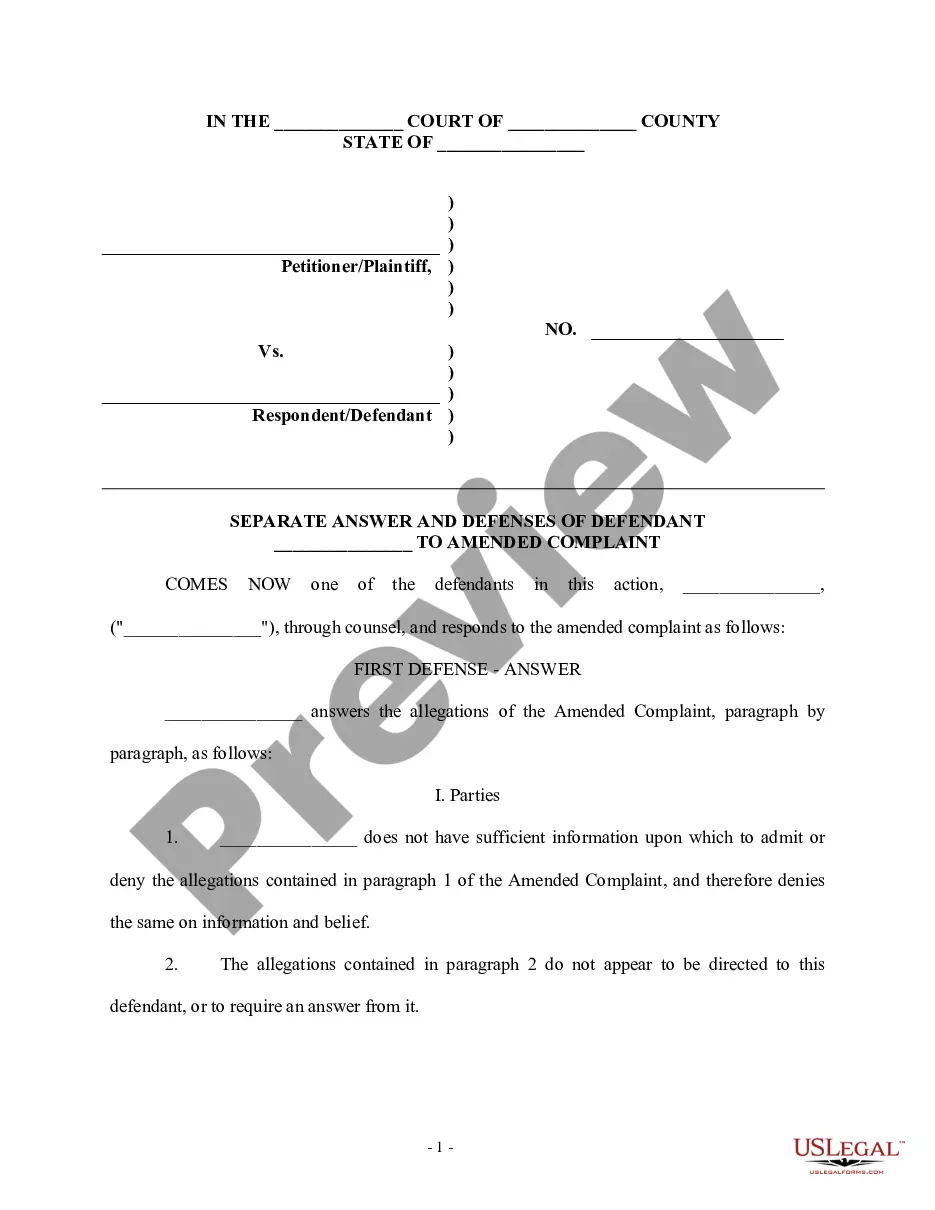
The Positive Defense Example For Debt Recovery Litigation displayed on this page is a reusable legal format crafted by experienced attorneys in accordance with national and local statutes.
For over 25 years, US Legal Forms has supplied individuals, entities, and legal practitioners with more than 85,000 validated, state-specific documents for any business and personal circumstance. It’s the quickest, easiest, and most dependable way to obtain the necessary paperwork, as the service ensures bank-level information protection and anti-malware safeguards.
Subscribe to US Legal Forms to have authenticated legal templates for every situation in life readily available.
- Search for the document you require and examine it.
- Browse through the example you looked for and view it or verify the form description to confirm it meets your criteria. If it doesn't, use the search function to find the suitable one. Click Buy Now when you have found the template you want.
- Register and Log In.
- Choose the subscription plan that fits your needs and create an account. Utilize PayPal or a credit card for a swift payment. If you already have an account, Log In and check your membership to proceed.
- Acquire the fillable format.
- Select the type you prefer for your Positive Defense Example For Debt Recovery Litigation (PDF, Word, RTF) and download the example onto your device.
- Complete and sign the document.
- Print the template to fill it out manually. Alternatively, use an online multifunctional PDF editor to quickly and accurately complete and sign your form with a valid signature.
- Redownload your documents as needed.
- Utilize the same form again at any time required. Access the My documents section in your account to redownload any previously saved documents.
Form popularity
FAQ
The 777 rule with debt collectors specifies that collectors must adhere to respectful communication standards, reducing the stress often associated with debt recovery practices. This rule aims to prevent harassment and ensures that you are legally protected during contentious interactions. If you face harassment, invoking affirmative defenses sample for debt collection lawsuit could help in your efforts to counteract aggressive tactics. Knowing your rights empowers you to take control of your financial situation.
The 777 rule for debt collectors refers to a guideline that limits how often debt collectors can contact you, particularly when you express difficulties in repaying the debt. This rule can help protect you from harassment or intrusive collection practices. If you find yourself in a debt collection situation, understanding this rule and using an affirmative defenses sample for debt collection lawsuit can be crucial in your defense. It's important to know your rights and protections.
To defend against a debt collection lawsuit, you should gather all necessary documents, such as your payment history and any communication with the creditor. Additionally, identify and research affirmative defenses relevant to your case, as these can strengthen your defense. Platforms like US Legal Forms provide valuable resources and sample documents that can guide you in building a strong case. Use these tools to create a comprehensive response to the lawsuit.
An example of an affirmative defense in a civil case is the statute of limitations. This defense asserts that the time limit to file a lawsuit has expired. In debt collection lawsuits, using an affirmative defenses sample for debt collection lawsuit can help you strengthen your case. By leveraging such defenses, you have a better chance of resolving disputes favorably.
Writing a response to a debt lawsuit requires careful detailing of your objections and defenses. Start by reviewing the complaint thoroughly and addressing each point raised by the plaintiff. Make use of clear affirmative defenses sample for debt collection lawsuit to bolster your arguments. Tools available on US Legal Forms can assist you in structuring your response effectively, helping you navigate this crucial process.
Yes, you should respond to a debt collection lawsuit. Ignoring the lawsuit can lead to a default judgment against you, which could result in wage garnishment or bank levies. By answering, you can present your case and potentially use affirmative defenses sample for debt collection lawsuit to argue against the claims made. Protect your rights by being proactive in your legal response.
To effectively write an answer to a debt collection lawsuit, start by addressing each claim made by the plaintiff. It’s important to admit, deny, or state that you lack information to respond to each claim. Incorporate your own affirmative defenses sample for debt collection lawsuit to strengthen your position. Consider utilizing resources from US Legal Forms to guide you in crafting a structured and legally sound response.
Writing an affirmative defense in your answer involves clearly stating your defense and supporting it with facts. Begin by identifying the specific legal reason that counters the plaintiff's claims. Use the affirmative defenses sample for debt collection lawsuit to ensure you include necessary details and formats. Be concise, yet thorough, to provide the best chance for your defense to be acknowledged.
An example of an affirmative defense is the argument of payment. If the debtor can prove that they have made the necessary payments, this defense can negate the creditor's claims in court. Documenting your payments and relying on an affirmative defenses sample for debt collection lawsuit can support your case effectively. By providing evidence, you strengthen your defense against the allegations.
The first affirmative defense is often a claim of lack of standing. This defense challenges whether the party bringing the lawsuit has the legal right to do so, based on ownership of the debt or proper assignment of rights. A thorough understanding of this defense is crucial, as it can prevent a creditor from proceeding with the case. This is where an affirmative defenses sample for debt collection lawsuit can help clarify your position.