Publisher Agreement With Author
Description
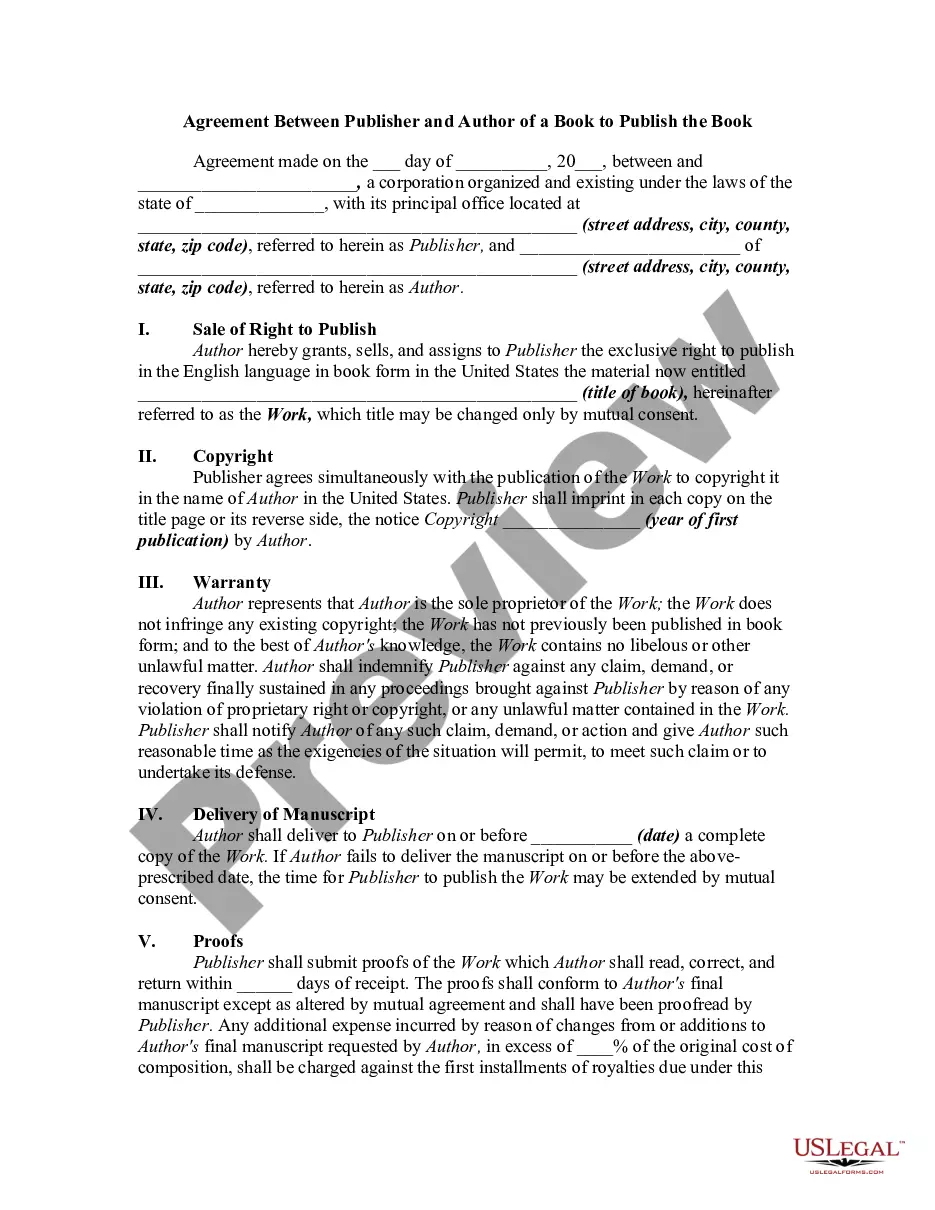
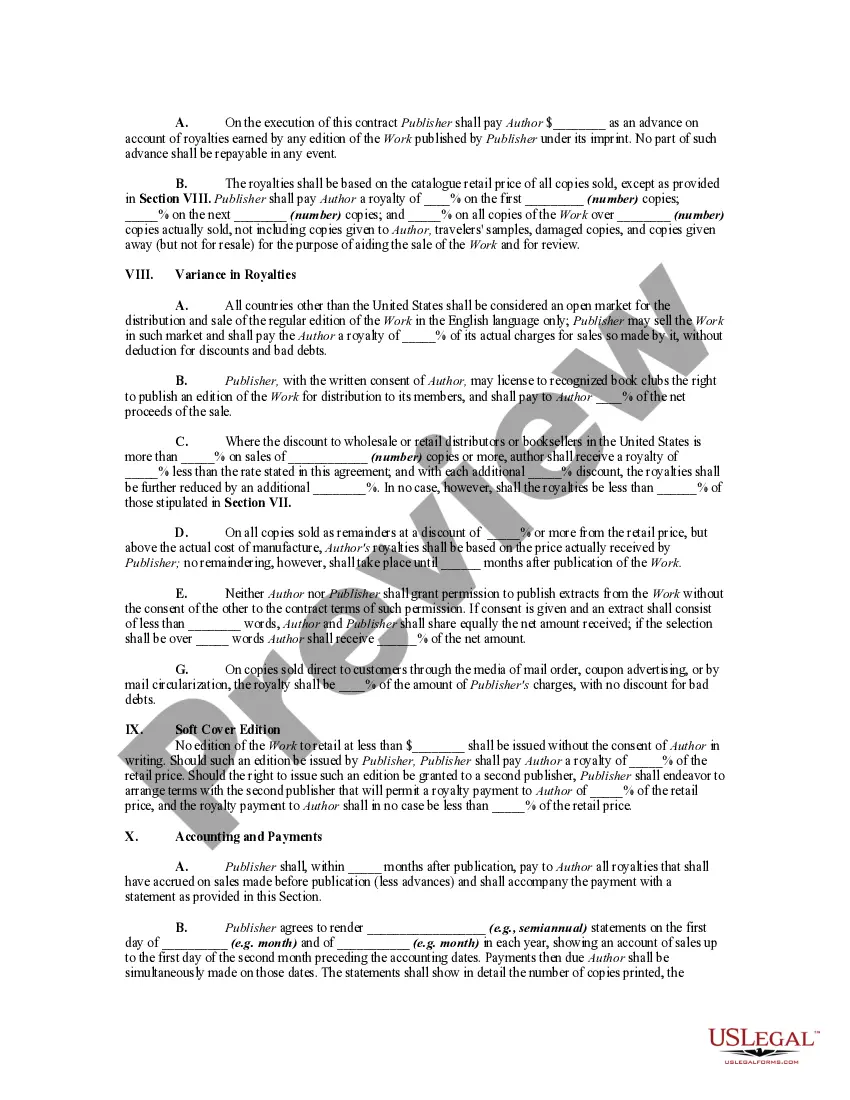
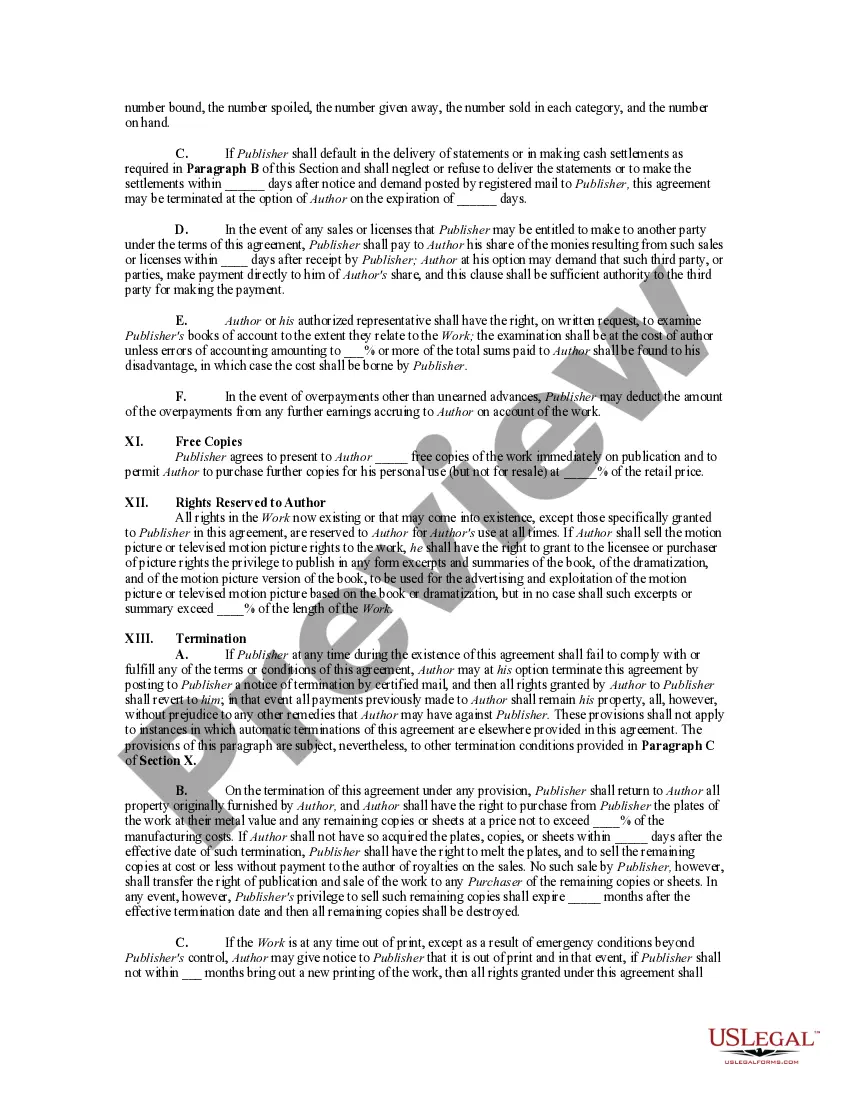
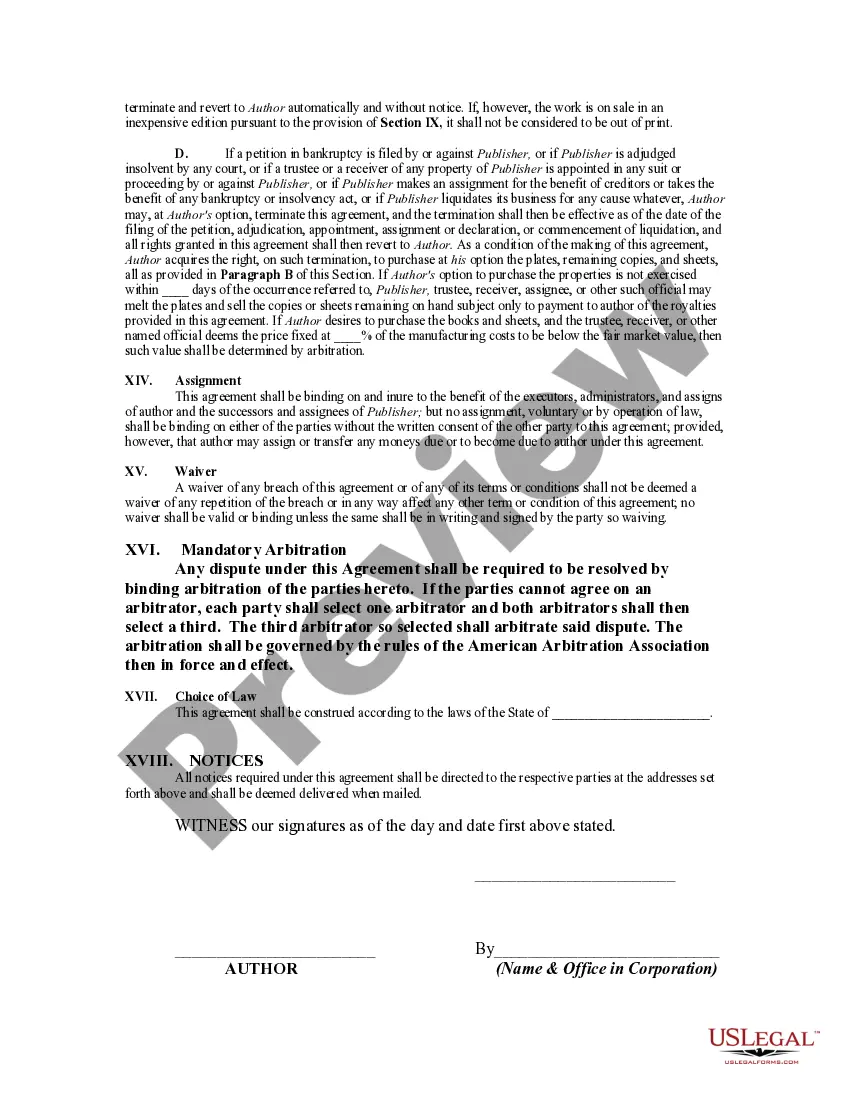


Get your form ready online
Our built-in tools help you complete, sign, share, and store your documents in one place.
Make edits, fill in missing information, and update formatting in US Legal Forms—just like you would in MS Word.
Download a copy, print it, send it by email, or mail it via USPS—whatever works best for your next step.
Sign and collect signatures with our SignNow integration. Send to multiple recipients, set reminders, and more. Go Premium to unlock E-Sign.
If this form requires notarization, complete it online through a secure video call—no need to meet a notary in person or wait for an appointment.
We protect your documents and personal data by following strict security and privacy standards.

Make edits, fill in missing information, and update formatting in US Legal Forms—just like you would in MS Word.

Download a copy, print it, send it by email, or mail it via USPS—whatever works best for your next step.

Sign and collect signatures with our SignNow integration. Send to multiple recipients, set reminders, and more. Go Premium to unlock E-Sign.

If this form requires notarization, complete it online through a secure video call—no need to meet a notary in person or wait for an appointment.

We protect your documents and personal data by following strict security and privacy standards.
Looking for another form?








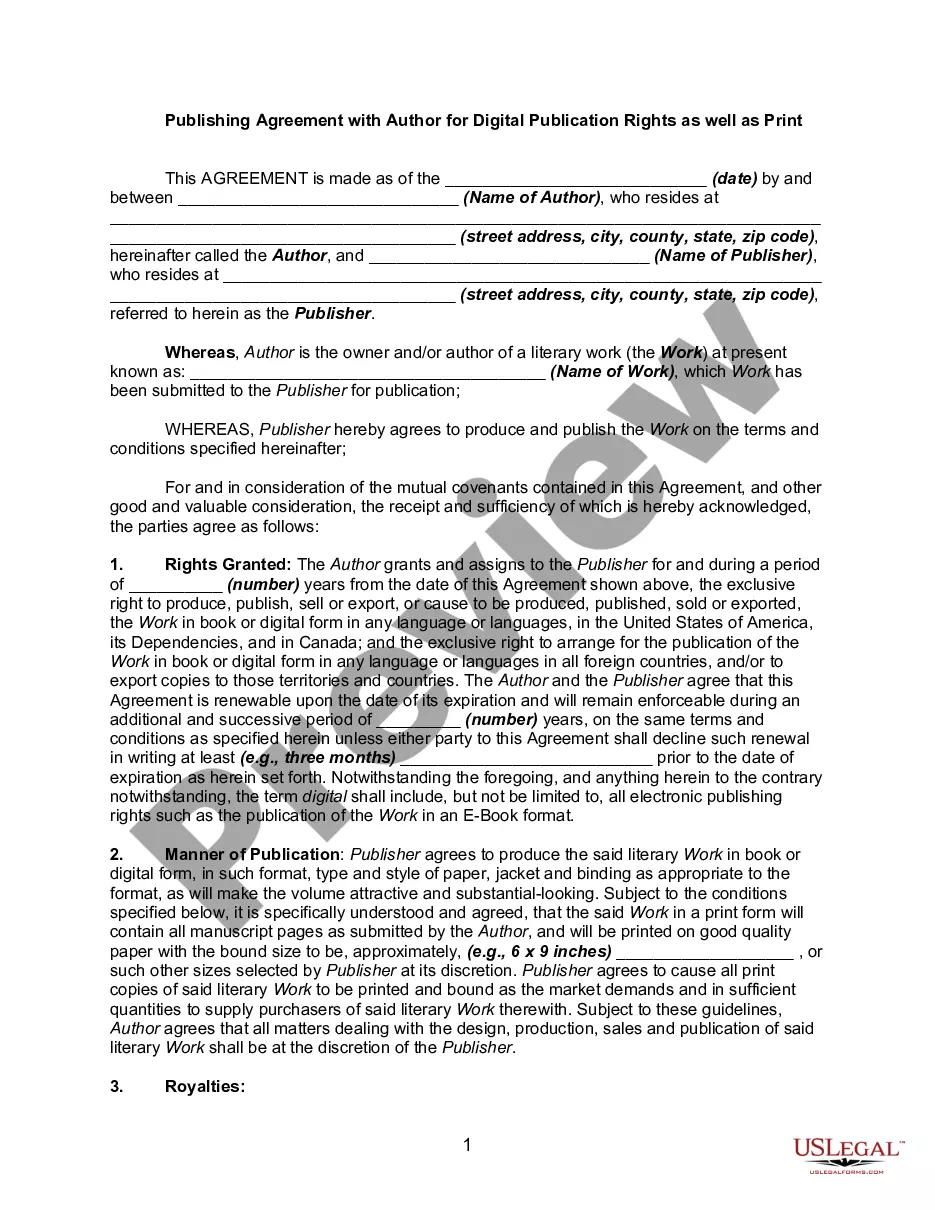
How to fill out Agreement Between Publisher And Author Of A Book To Publish A Book?
Individuals commonly link legal documentation with intricacies that only an expert can handle.
In some respects, this is accurate, as creating a Publisher Agreement With Author requires substantial knowledge of subject matters, including state and local laws.
Nonetheless, with US Legal Forms, the process has been simplified: ready-made legal templates for various life and business events reflective of state regulations are compiled in a single online directory and are now accessible to all.
Print your document or upload it to an online editor for quicker completion. All templates in our catalog are reusable: once purchased, they are stored in your profile, allowing you to access them anytime via the My documents tab. Experience all the advantages of the US Legal Forms platform. Register today!
- US Legal Forms provides over 85k current documents categorized by state and area of application, making it quick to find the Publisher Agreement With Author or any other specific template.
- Previous users with an existing subscription must Log In to their account and click Download to acquire the form.
- New users to the service must create an account and subscribe before they can download any documents.
- Here is a detailed guide on how to obtain the Publisher Agreement With Author.
- Examine the page content carefully to confirm it aligns with your requirements.
- Review the form description or check it via the Preview feature.
- If the previous sample does not meet your needs, use the Search bar above to find another one.
- Press Buy Now when you discover the appropriate Publisher Agreement With Author.
- Select a pricing plan that fits your requirements and budget.
- Create an account or Log In to continue to the payment page.
- Complete your subscription payment using PayPal or a credit card.
- Choose the format for your file and click Download.
Form popularity
FAQ
How to Draft Publishing Contracts As a Small Publisher Beginning the Contract. Granting Rights to the Book. Identifying How Royalties are Calculated. Explaining the Author's Duties. Explaining Termination and Reversion of Rights. Protecting Yourself from Lawsuits. Finalizing the Contract.
A traditional publisher pays you, the author, for the right to publish your work, under certain terms and conditions. Hire a company to help you publish your book. There are thousands of publishing services out there, some cheap and some expensive.
A publishing contract is a legal contract between a publisher and a writer or author (or more than one), to publish original content by the writer(s) or author(s). This may involve a single written work, or a series of works.
Under standard royalties, an author gets roughly 20 to 30% of the publisher's revenue for a hardcover, 15% for a trade paperback, and 25% for an eBook. So, very roughly, every hardcover release that earns out brings the author something like 25% of all revenue earned by the publisher.
The path to publication generally requires authors to sign a publishing contract that covers such topics as: manuscript delivery and acceptance, copyright ownership and grants; royalty advances, rates and payment; author warranties and indemnities; contract duration and rights reversion (out-of-print); options on new
