Law For Theft In Philippines
Description
Get your form ready online
Our built-in tools help you complete, sign, share, and store your documents in one place.
Make edits, fill in missing information, and update formatting in US Legal Forms—just like you would in MS Word.
Download a copy, print it, send it by email, or mail it via USPS—whatever works best for your next step.
Sign and collect signatures with our SignNow integration. Send to multiple recipients, set reminders, and more. Go Premium to unlock E-Sign.
If this form requires notarization, complete it online through a secure video call—no need to meet a notary in person or wait for an appointment.
We protect your documents and personal data by following strict security and privacy standards.

Make edits, fill in missing information, and update formatting in US Legal Forms—just like you would in MS Word.

Download a copy, print it, send it by email, or mail it via USPS—whatever works best for your next step.

Sign and collect signatures with our SignNow integration. Send to multiple recipients, set reminders, and more. Go Premium to unlock E-Sign.

If this form requires notarization, complete it online through a secure video call—no need to meet a notary in person or wait for an appointment.

We protect your documents and personal data by following strict security and privacy standards.
Looking for another form?







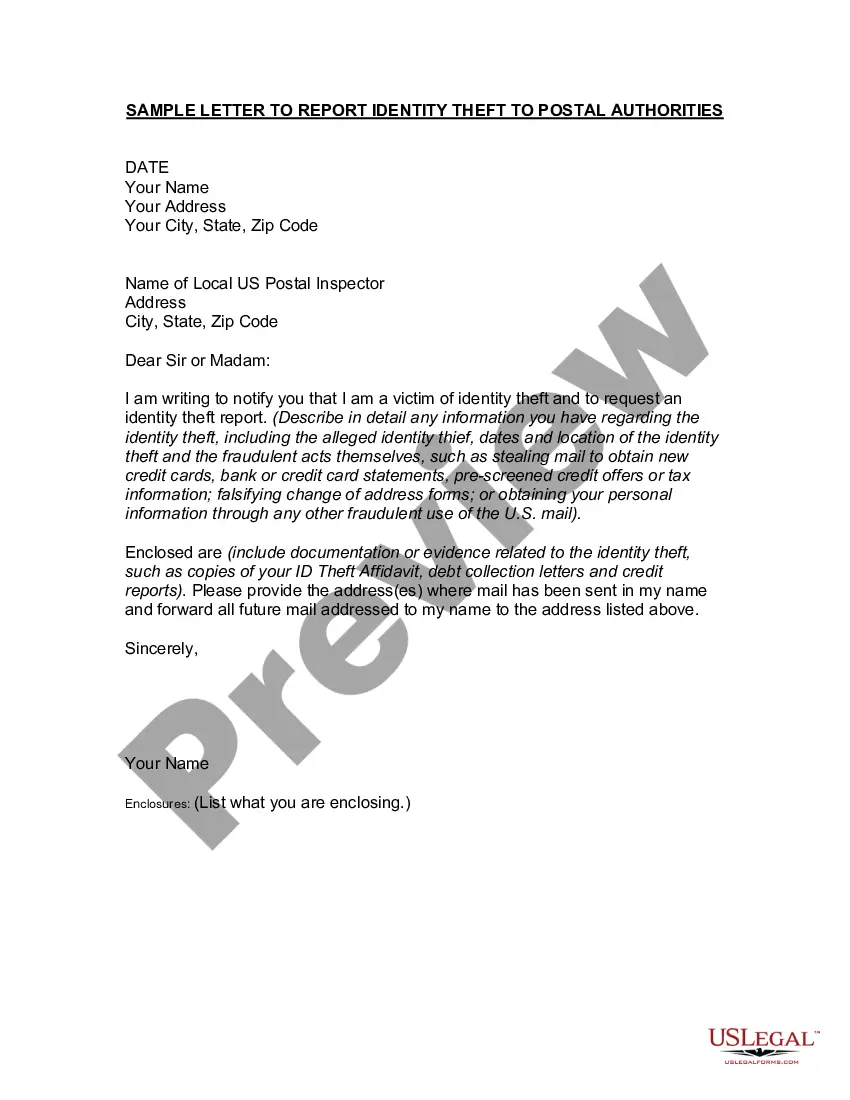
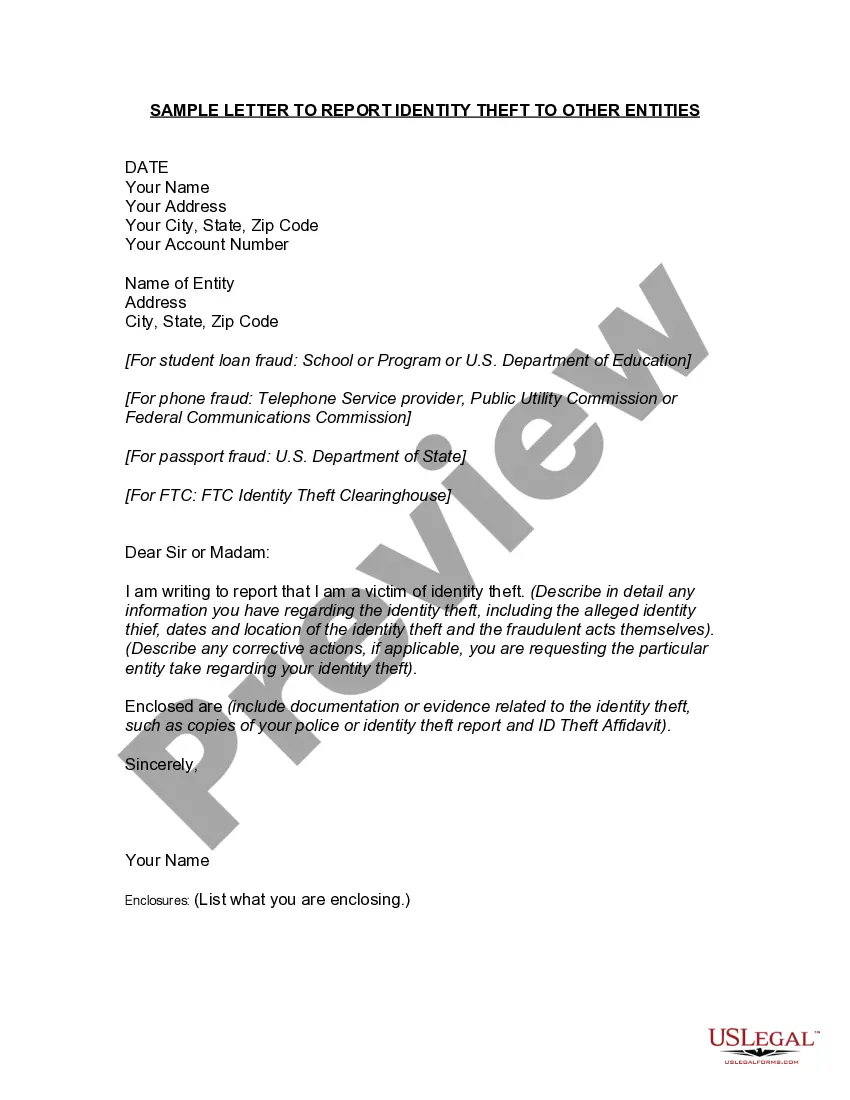
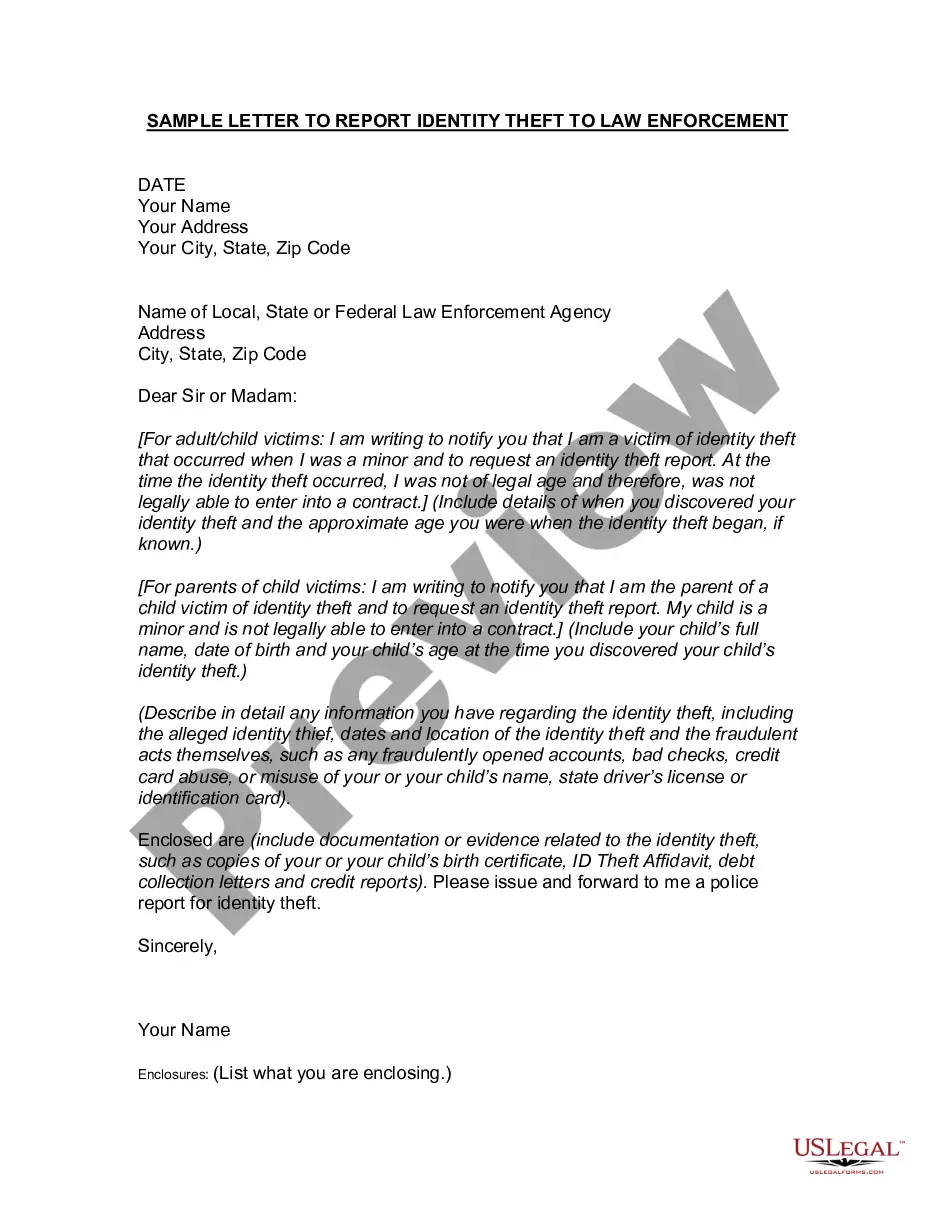
How to fill out Letter Notifying Law Enforcement Of Identity Theft?
Regardless of whether it’s for commercial reasons or personal matters, everyone will inevitably face legal issues at some point in their lives. Completing legal documents requires meticulous attention, beginning with selecting the appropriate form template. For instance, if you select an incorrect version of a Law For Theft In Philippines, it will be rejected upon submission. Thus, it is crucial to have a reliable source of legal documents like US Legal Forms.
If you need to obtain a Law For Theft In Philippines template, follow these simple steps.
Once it is downloaded, you can fill out the form using editing software or print it and complete it manually. With an extensive US Legal Forms catalog available, you no longer have to waste time searching for the right template online. Take advantage of the library’s straightforward navigation to find the correct template for any purpose.
- Acquire the necessary template by utilizing the search bar or catalog navigation.
- Review the form’s description to confirm it suits your circumstances, state, and locality.
- Click on the form’s preview to examine it.
- If it is the wrong form, return to the search feature to locate the Law For Theft In Philippines template you require.
- Download the file when it aligns with your needs.
- If you possess a US Legal Forms account, simply click Log in to access previously saved documents in My documents.
- If you have not yet created an account, you can acquire the form by clicking Buy now.
- Choose the relevant pricing option.
- Fill out the account registration form.
- Select your payment method: you may use a credit card or PayPal account.
- Choose the document format you desire and download the Law For Theft In Philippines.
Form popularity
FAQ
The complaint is typically lodged with the law enforcement agency or directly to the Prosecutor's Office. It must detail the facts surrounding the incident and the alleged crime. Upon receipt of the complaint, a preliminary investigation is carried out by the Prosecutor's Office.
Article 308 of the RPC defines theft as that which is committed by any person, who with intent to gain but without violence, against or intimidation of persons nor force upon things, shall take the personal property of another without the latter's consent.
For small amounts like 750 pesos, the crime may be considered as "petty theft," but it is still a criminal offense that carries legal consequences. Penalties may range from arresto menor (imprisonment for 1 to 30 days) to prision mayor (imprisonment for 6 years and 1 day to 12 years), depending on various factors.
The Bail Amount in the Philippines depends on what the offense is and the offense's penalty. Bail is the maximum penalty multiplied by 2,000 for Theft or Qualified Theft up to 600,000. Bail is the maximum penalty multiplied by 6,000 for Theft or Qualified Theft over 600,000.