Website Hosting Agreement Template For House
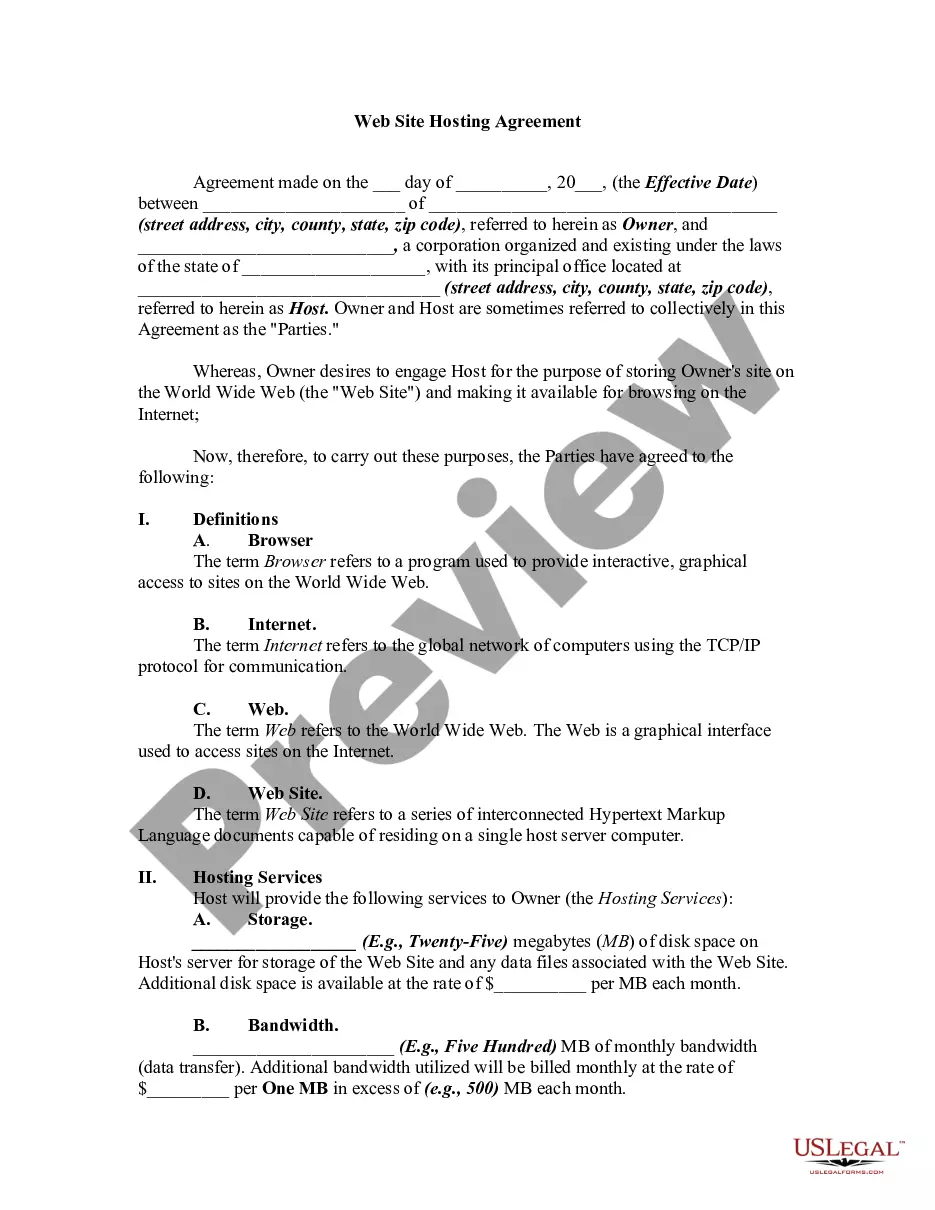
Description
Get your form ready online
Our built-in tools help you complete, sign, share, and store your documents in one place.
Make edits, fill in missing information, and update formatting in US Legal Forms—just like you would in MS Word.
Download a copy, print it, send it by email, or mail it via USPS—whatever works best for your next step.
Sign and collect signatures with our SignNow integration. Send to multiple recipients, set reminders, and more. Go Premium to unlock E-Sign.
If this form requires notarization, complete it online through a secure video call—no need to meet a notary in person or wait for an appointment.
We protect your documents and personal data by following strict security and privacy standards.

Make edits, fill in missing information, and update formatting in US Legal Forms—just like you would in MS Word.

Download a copy, print it, send it by email, or mail it via USPS—whatever works best for your next step.

Sign and collect signatures with our SignNow integration. Send to multiple recipients, set reminders, and more. Go Premium to unlock E-Sign.

If this form requires notarization, complete it online through a secure video call—no need to meet a notary in person or wait for an appointment.

We protect your documents and personal data by following strict security and privacy standards.
Looking for another form?


How to fill out Web Site Hosting Agreement?
Locating a preferred location to obtain the latest and pertinent legal samples is part of the challenge of navigating bureaucracy.
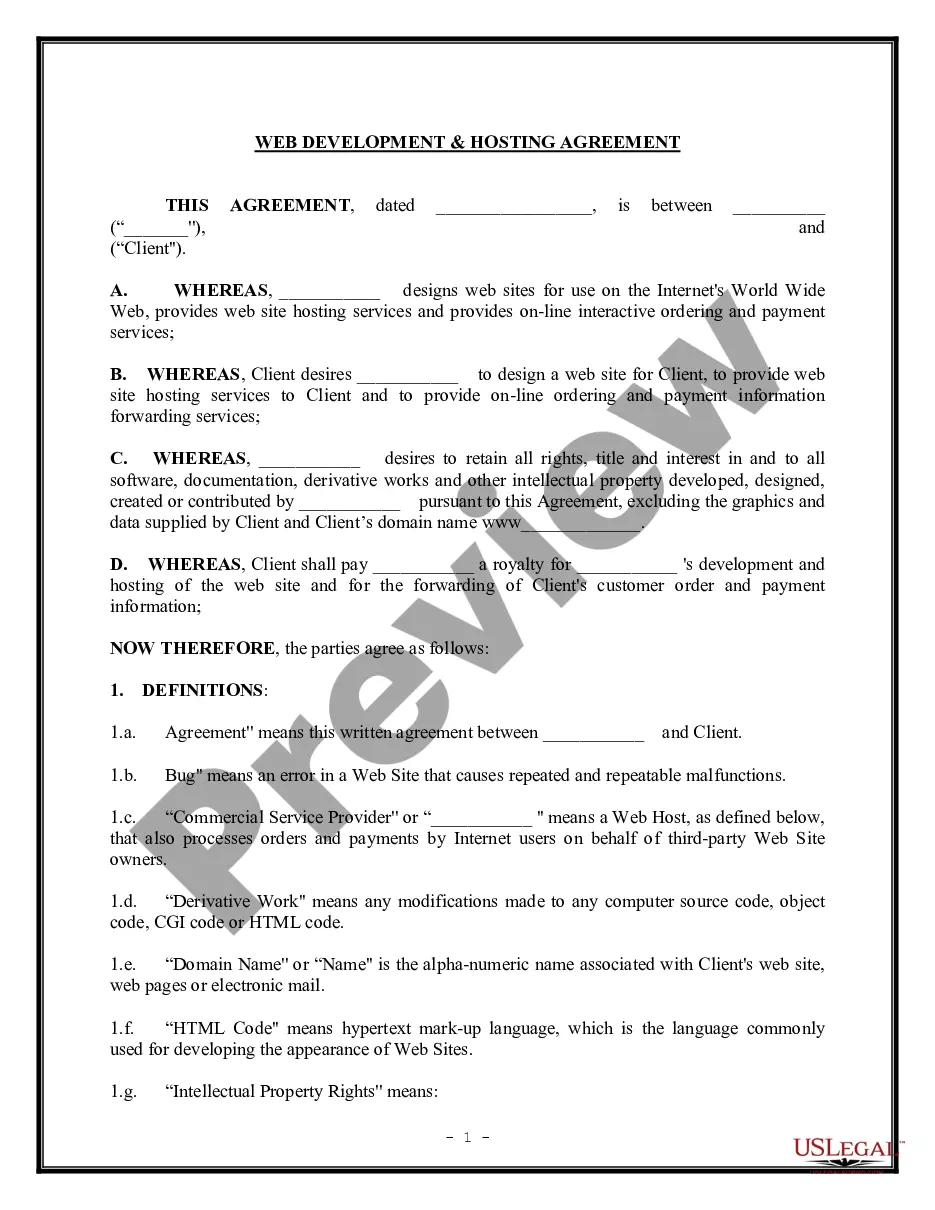
Identifying the correct legal documents necessitates precision and carefulness, which is why it is essential to draw samples of the Website Hosting Agreement Template For House solely from trustworthy sources, like US Legal Forms. An incorrect template will squander your time and delay your situation. With US Legal Forms, you have minimal worries. You can access and verify all the details regarding the document’s applicability and significance for your scenario and in your jurisdiction.
Eliminate the stress related to your legal paperwork. Browse the comprehensive US Legal Forms database where you can discover legal samples, verify their relevance to your case, and download them instantly.
- Utilize the library navigation or search bar to find your template.
- Examine the form’s details to determine if it meets the standards of your region and locality.
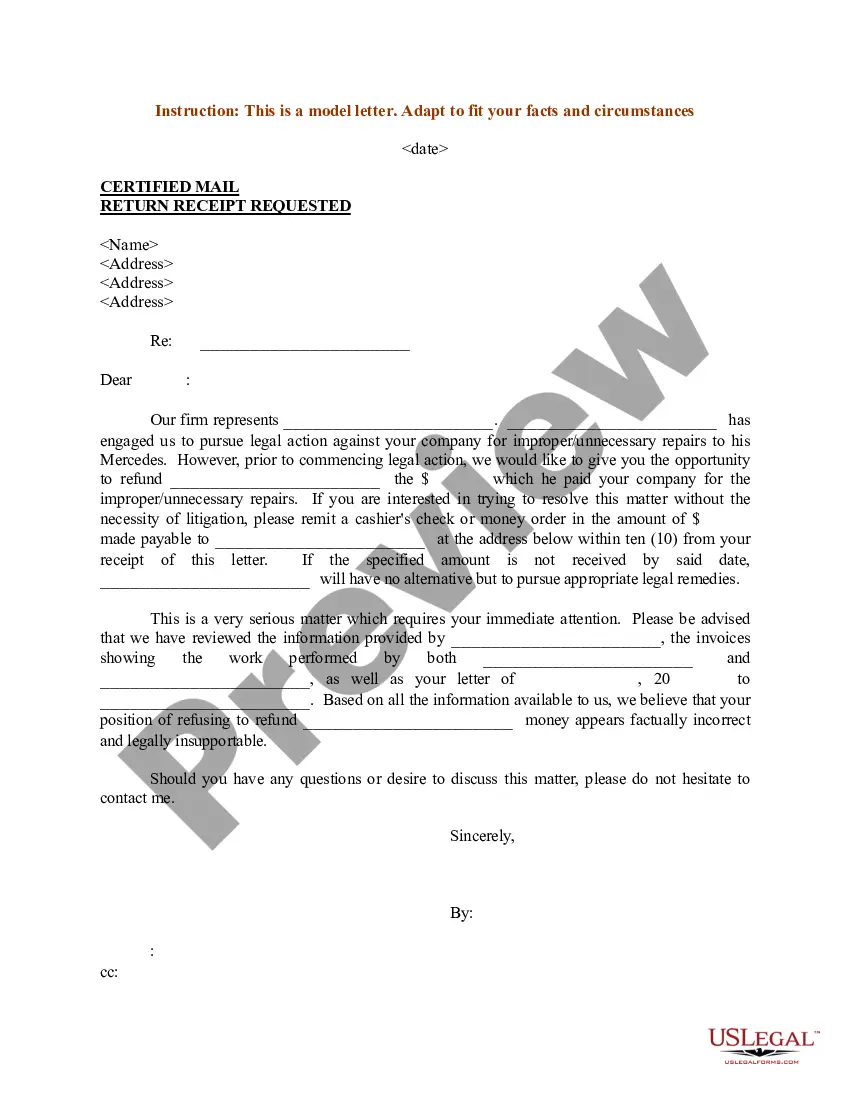
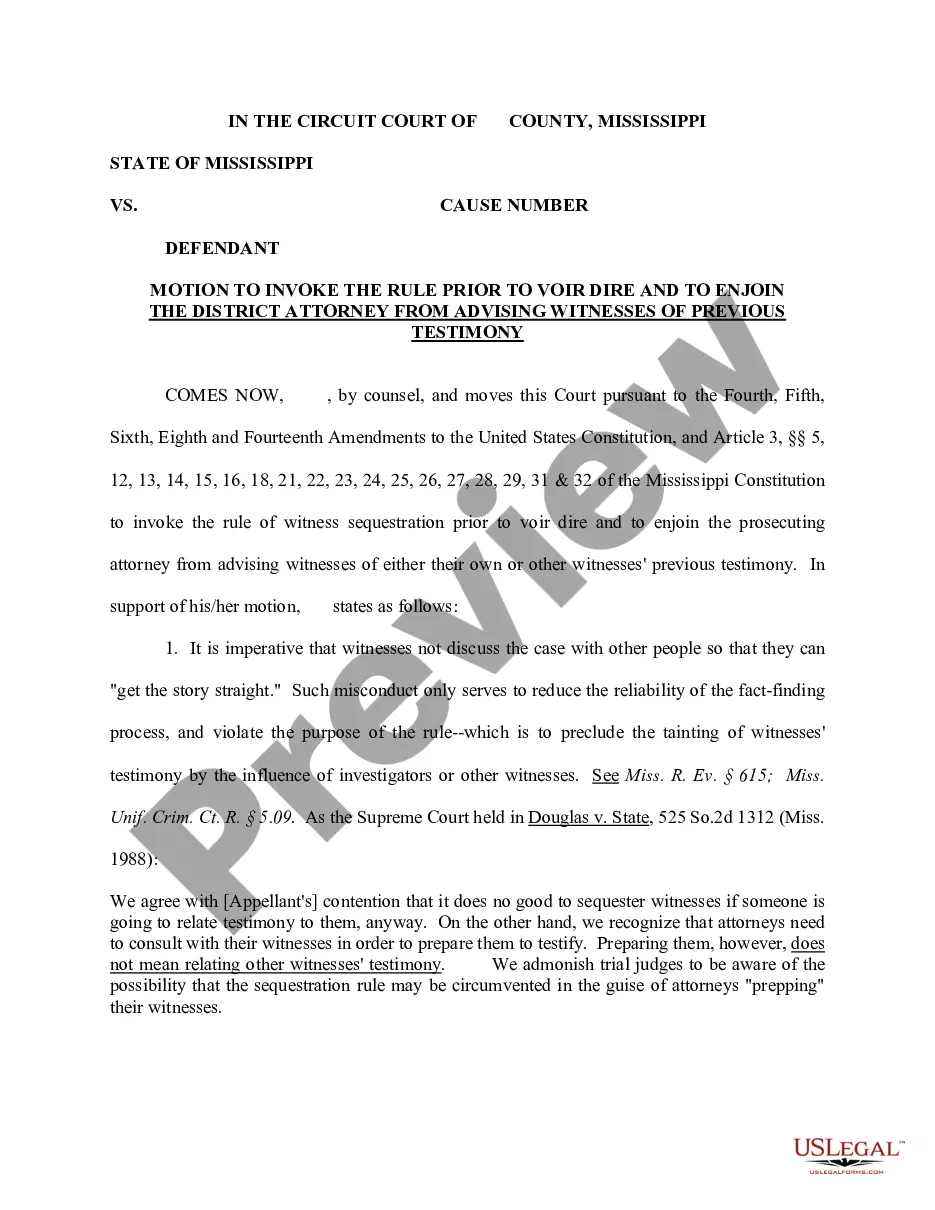
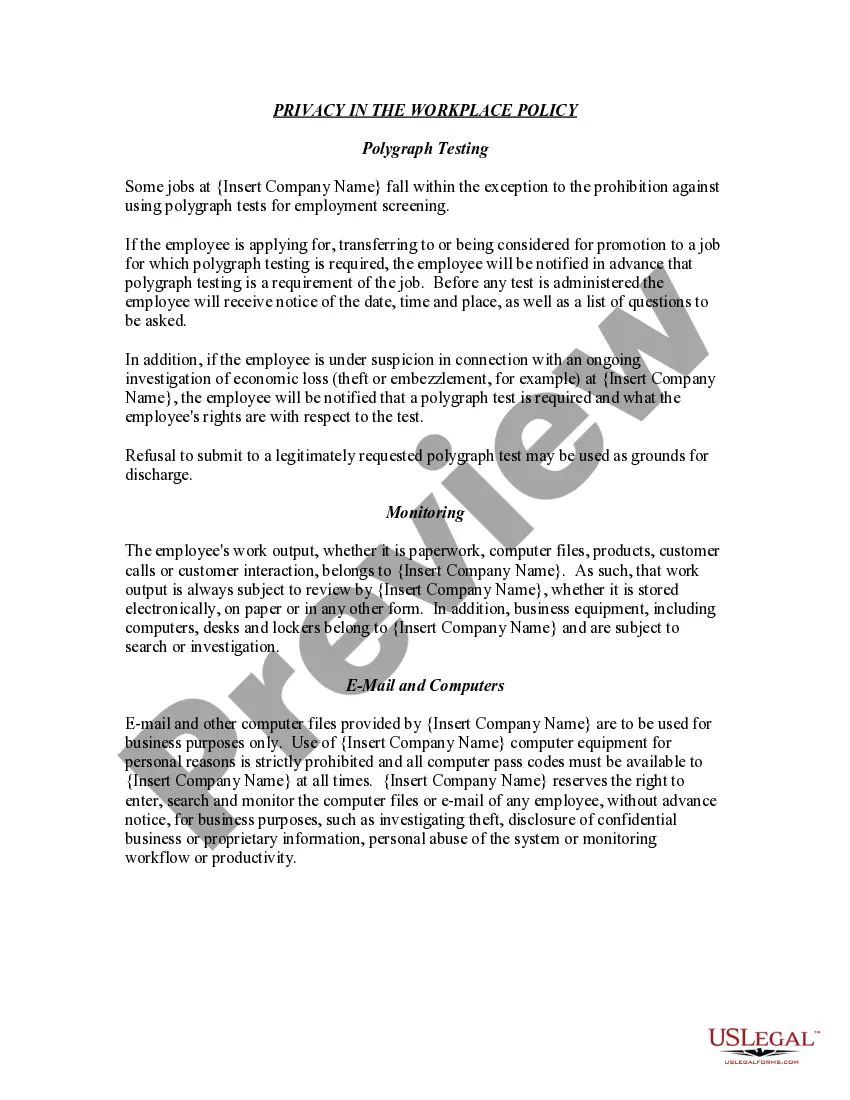
- Preview the form, if available, to confirm it is indeed the one you need.
- Continue searching for the appropriate template if the Website Hosting Agreement Template For House does not fulfill your needs.
- If you are confident about the form’s applicability, download it.
- If you are a registered user, click Log in to verify and access your selected forms in My documents.
- If you do not have an account yet, click Buy now to acquire the form.
- Select the pricing plan that fits your needs.
- Proceed to the registration to finalize your purchase.
- Complete your transaction by choosing a payment option (credit card or PayPal).
- Select the file format for downloading the Website Hosting Agreement Template For House.
- After obtaining the form on your device, you may modify it with the editor or print it and complete it manually.
Form popularity
FAQ
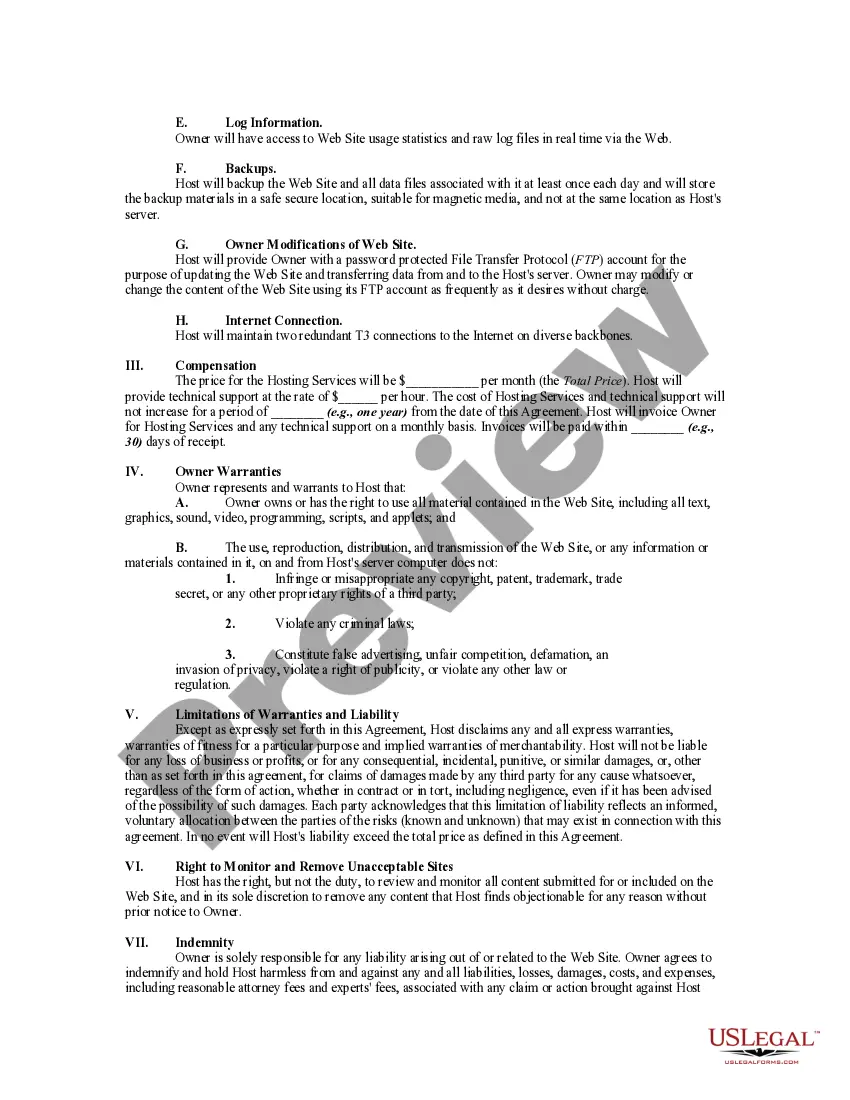
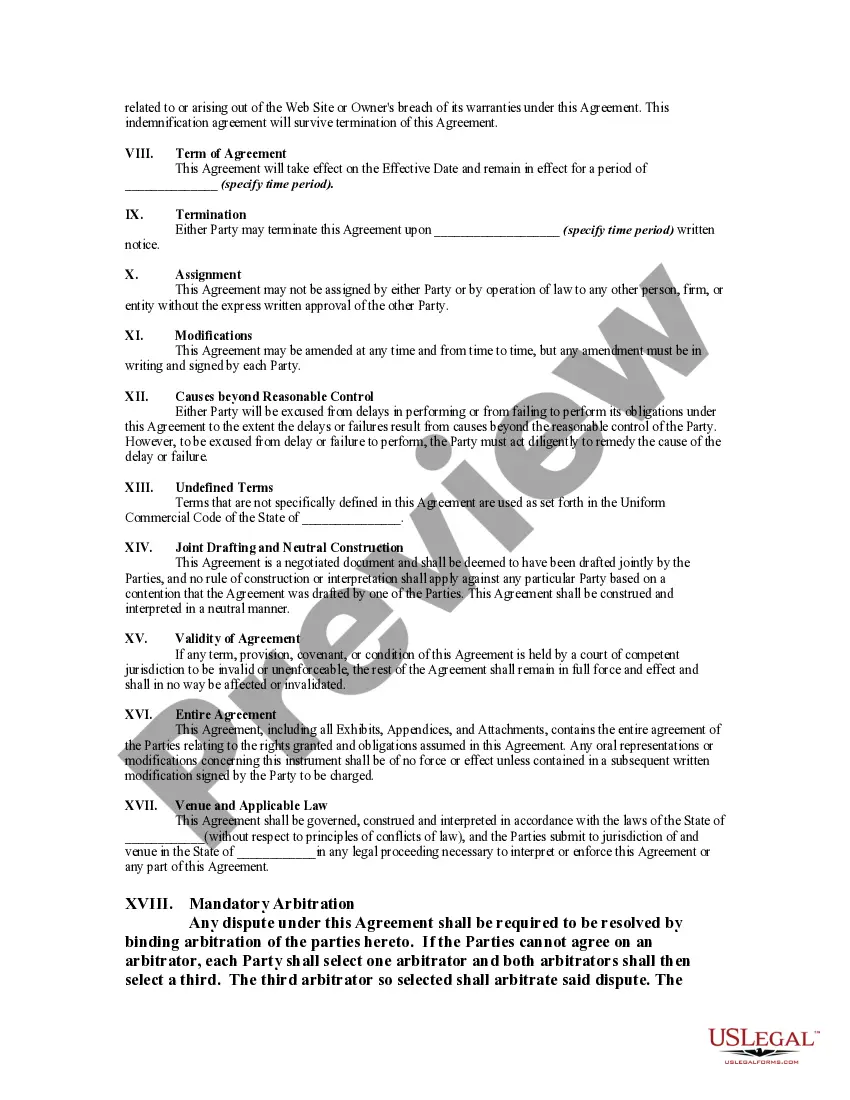
A website hosting agreement is an agreement between a company that owns the website and a different company that provides web hosting. The hosting company agrees to provide storage space on their server for a specific period in exchange for payment.
Yes, you can host your own website with your own physical server. This is a process that can be difficult to configure and you'll solely be responsible for your website being available at all times.
5 Steps to Host a Website Decide on Your Website Type. The first step of building a website is to decide whether you need a static or dynamic one. ... Choose a Web Hosting Provider. ... Select a Web Hosting Plan. ... Get and Register a Unique Domain Name for Your Website. ... Create or Upload Your Website.
Here's how to host your own website in five steps: Choose a Content Management System (CMS) ... Purchase a Web Hosting Service. ... Get a Domain Name. ... Connect Your Domain To Your Web Host. ... WordPress (or Migrate An Existing Site)
Web hosting definition: It provides a secure place to store online content. The code, images, videos, and text that comprise a website all have to be stored somewhere. Without a stable digital repository, none of us could consistently access content on the web.