Common Trip Vs Independent Trip
Description

Get your form ready online
Our built-in tools help you complete, sign, share, and store your documents in one place.
Make edits, fill in missing information, and update formatting in US Legal Forms—just like you would in MS Word.
Download a copy, print it, send it by email, or mail it via USPS—whatever works best for your next step.
Sign and collect signatures with our SignNow integration. Send to multiple recipients, set reminders, and more. Go Premium to unlock E-Sign.
If this form requires notarization, complete it online through a secure video call—no need to meet a notary in person or wait for an appointment.
We protect your documents and personal data by following strict security and privacy standards.

Make edits, fill in missing information, and update formatting in US Legal Forms—just like you would in MS Word.

Download a copy, print it, send it by email, or mail it via USPS—whatever works best for your next step.

Sign and collect signatures with our SignNow integration. Send to multiple recipients, set reminders, and more. Go Premium to unlock E-Sign.

If this form requires notarization, complete it online through a secure video call—no need to meet a notary in person or wait for an appointment.

We protect your documents and personal data by following strict security and privacy standards.
Looking for another form?



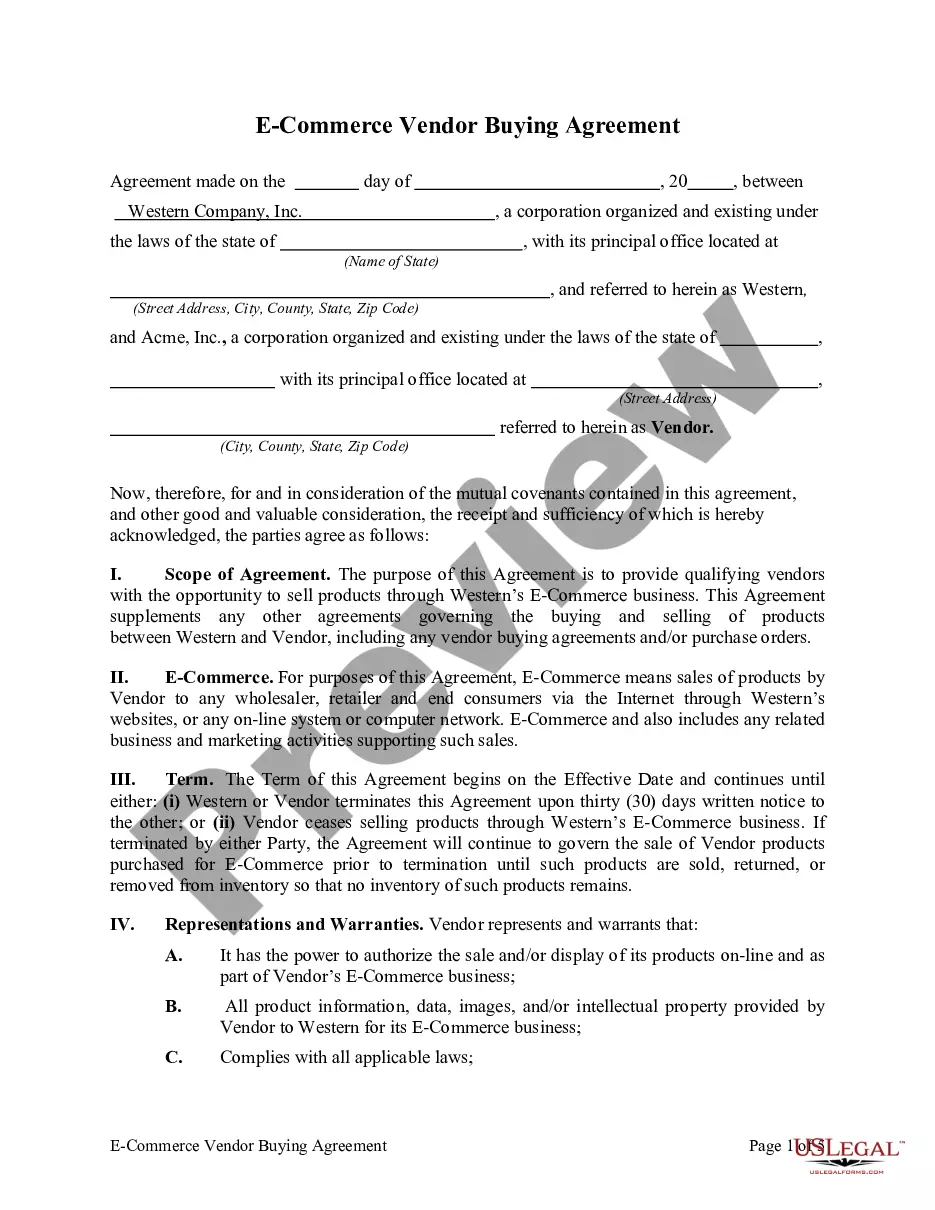






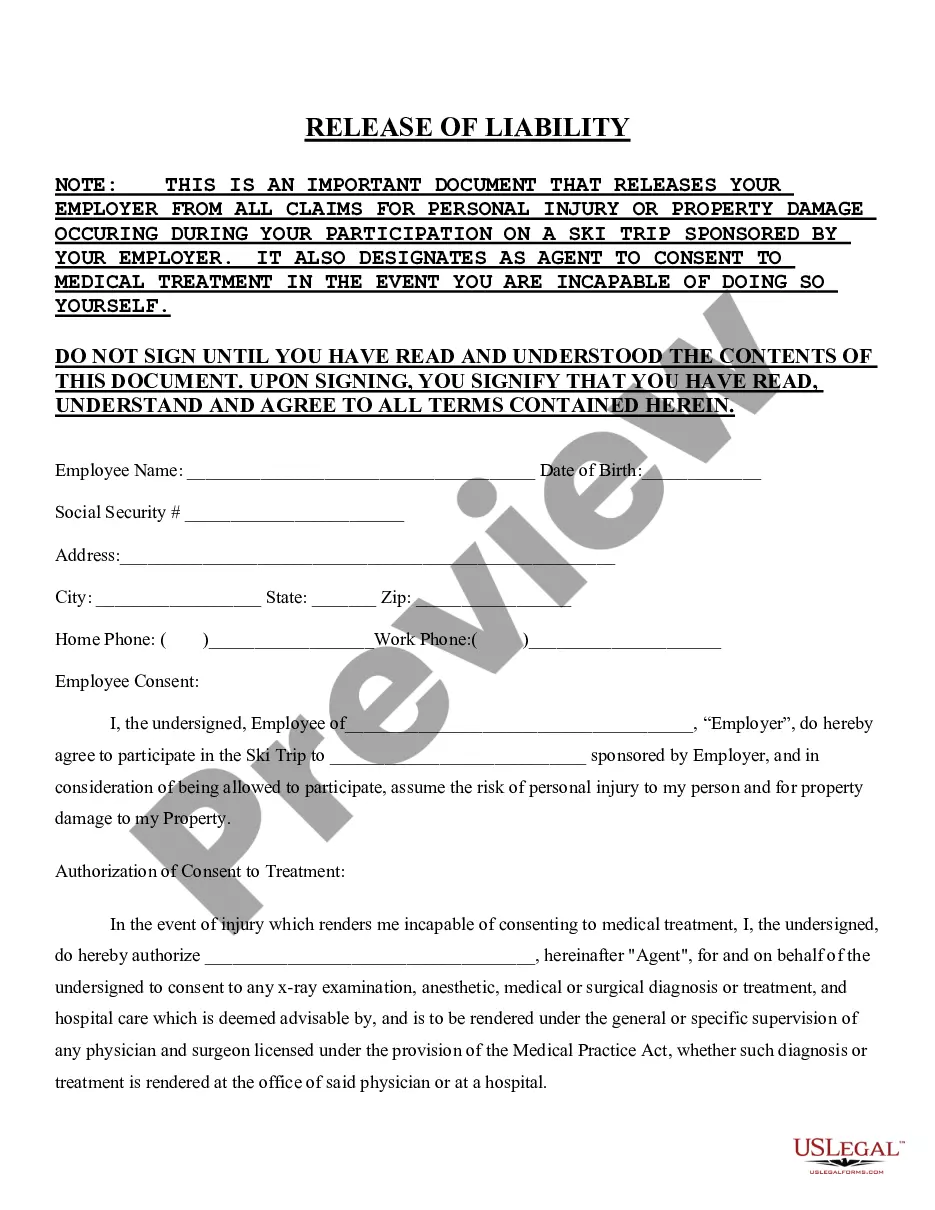
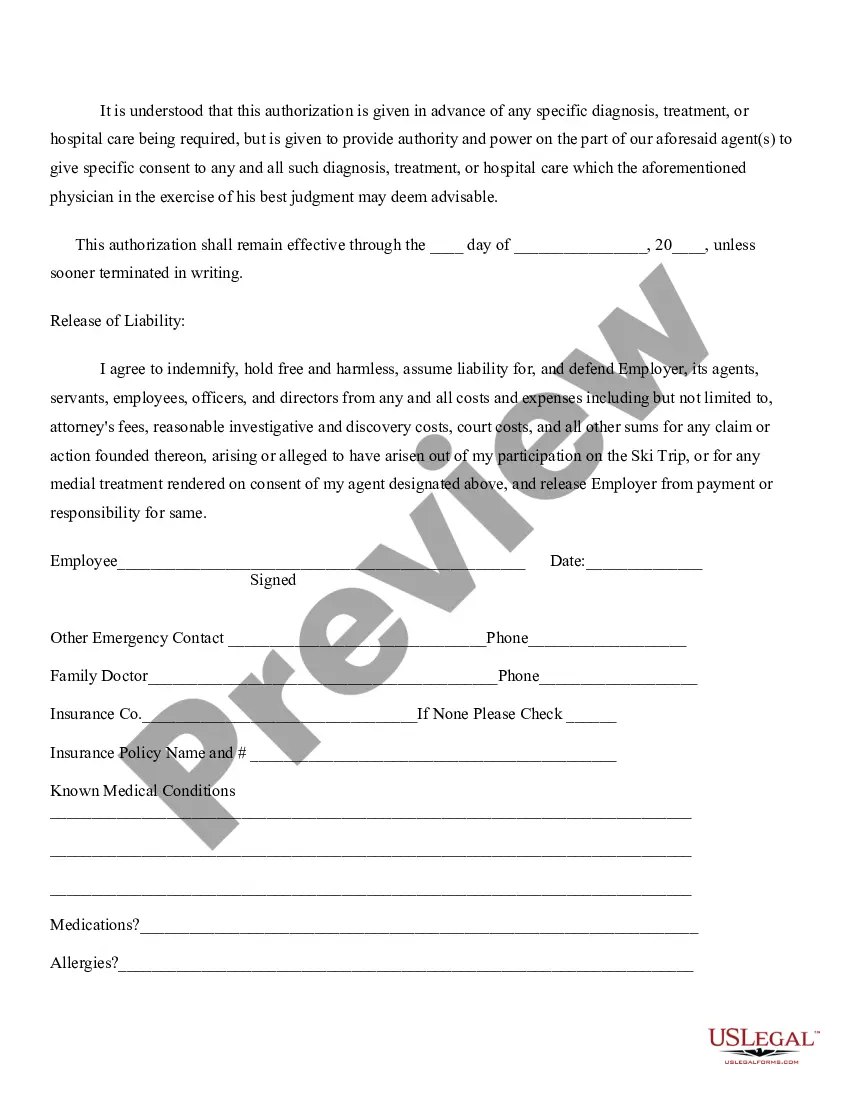
How to fill out Release Of Liability Of Employer - Ski Trip?
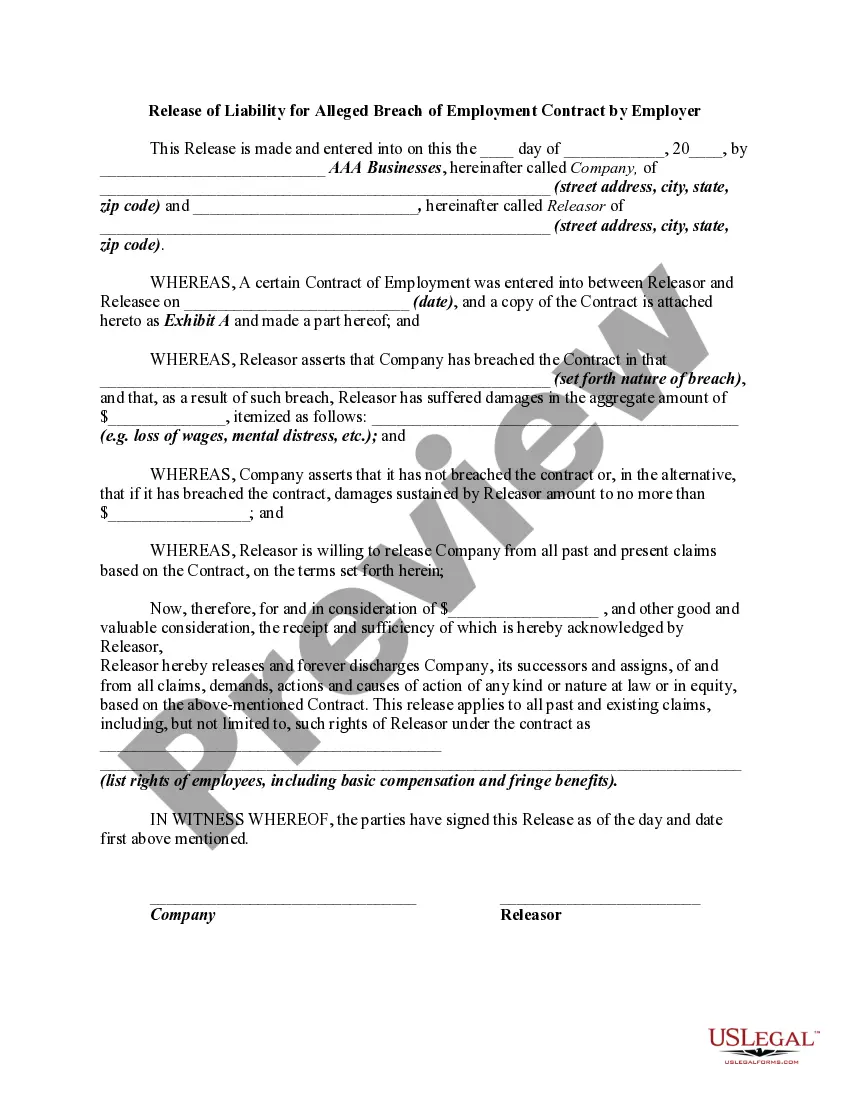
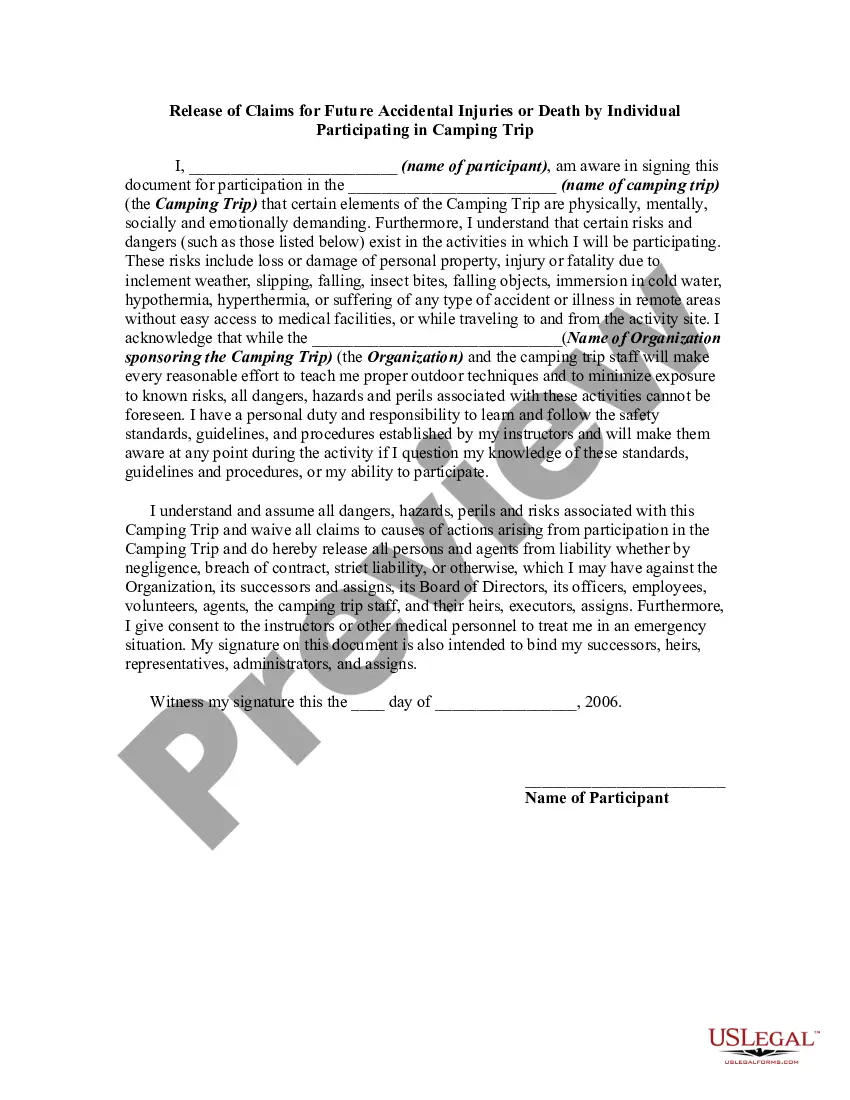
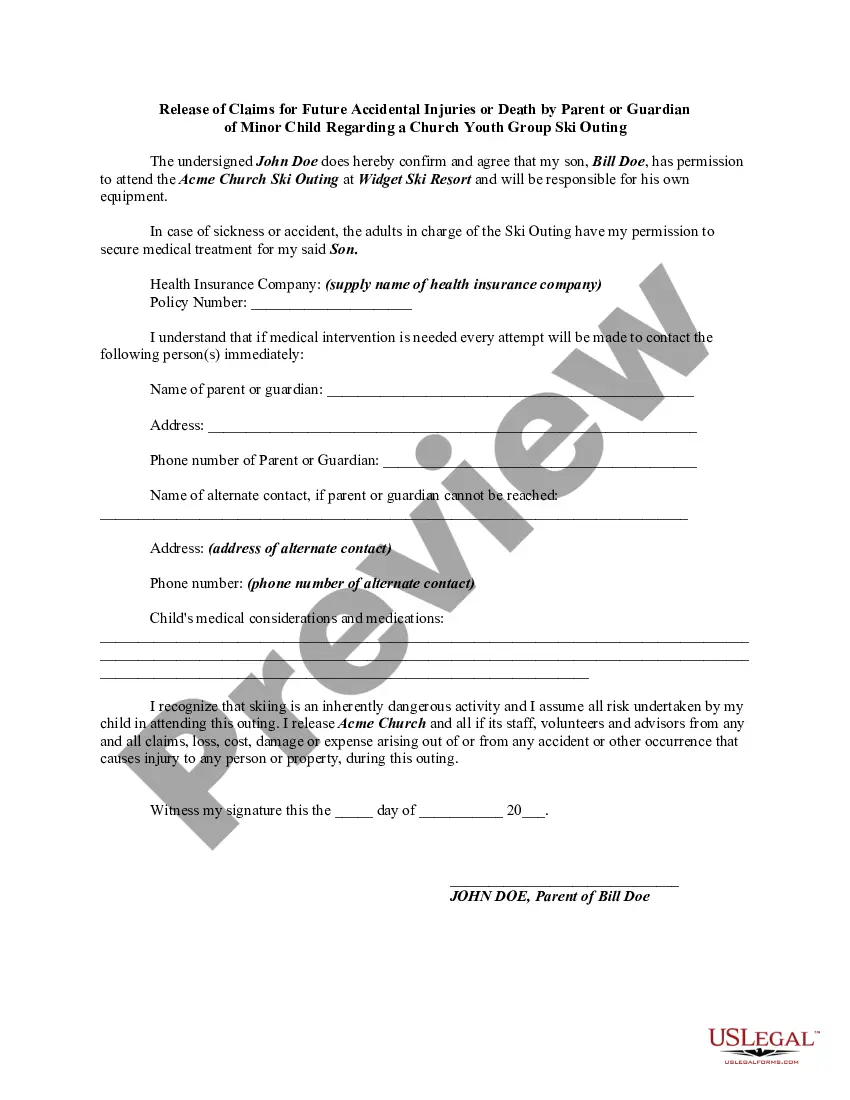
The Standard Trip vs Solo Trip you find on this page is a versatile legal template created by expert attorneys in accordance with national and local regulations.
For over 25 years, US Legal Forms has supplied individuals, enterprises, and legal practitioners with more than 85,000 authenticated, state-specific documents for any professional and personal event. It is the quickest, easiest, and most reliable method to acquire the necessary paperwork, as the service assures the utmost level of data protection and anti-malware safeguards.
Subscribe to US Legal Forms to have authenticated legal templates for all of life's situations readily available.
- Examine the document you require and review it. Browse through the file you searched and preview it or review the form description to confirm it meets your needs. If it doesn't, utilize the search bar to find the correct one. Click Buy Now when you have located the template you want.
- Register and Log In. Select the pricing plan that fits you and establish an account. Use PayPal or a credit card for a swift payment. If you already possess an account, Log In and review your subscription to proceed.
- Acquire the editable template. Choose the format you prefer for your Standard Trip vs Solo Trip (PDF, Word, RTF) and save the document on your device.
- Fill out and sign the document. Print the template to complete it manually. Alternatively, utilize an online multifunctional PDF editor to swiftly and accurately fill out and sign your form with a legally-binding electronic signature.
- Download your documents again. Access the same document whenever necessary. Open the My documents tab in your profile to redownload any previously purchased forms.
Form popularity
FAQ
Circuit breakers trip when there is too much electricity flowing through them or when they can no longer handle the excess current load. The breakers trip to turn off the power and cut off the flow of electricity to avoid problems that might exacerbate and cause more damage.
This means the 2 or 3 poles are linked internally and if any pole trips, they all open together.
Not common trip" just means that every breaker won't trip due to only one having a reason to trip, or that you can use each independently with the two in the center being one.
A true common trip is an internal mechanism, where the thermal or GFCI or AFCI trigger event causes both of the protected wires in the circuit to be disconnected at the same time. A basic requirement for such breakers is that their tripping is independent of handle position.
Trip free circuit breakers are used in circuits with equipment which are sensitive to overload and in circuits which are not critical. Non-Trip Free circuit breakers are used in circuits which are critical for plant operation and for safety.