Accident And Injuries Vocabulary
Description
Get your form ready online
Our built-in tools help you complete, sign, share, and store your documents in one place.
Make edits, fill in missing information, and update formatting in US Legal Forms—just like you would in MS Word.
Download a copy, print it, send it by email, or mail it via USPS—whatever works best for your next step.
Sign and collect signatures with our SignNow integration. Send to multiple recipients, set reminders, and more. Go Premium to unlock E-Sign.
If this form requires notarization, complete it online through a secure video call—no need to meet a notary in person or wait for an appointment.
We protect your documents and personal data by following strict security and privacy standards.

Make edits, fill in missing information, and update formatting in US Legal Forms—just like you would in MS Word.

Download a copy, print it, send it by email, or mail it via USPS—whatever works best for your next step.

Sign and collect signatures with our SignNow integration. Send to multiple recipients, set reminders, and more. Go Premium to unlock E-Sign.

If this form requires notarization, complete it online through a secure video call—no need to meet a notary in person or wait for an appointment.

We protect your documents and personal data by following strict security and privacy standards.
Looking for another form?






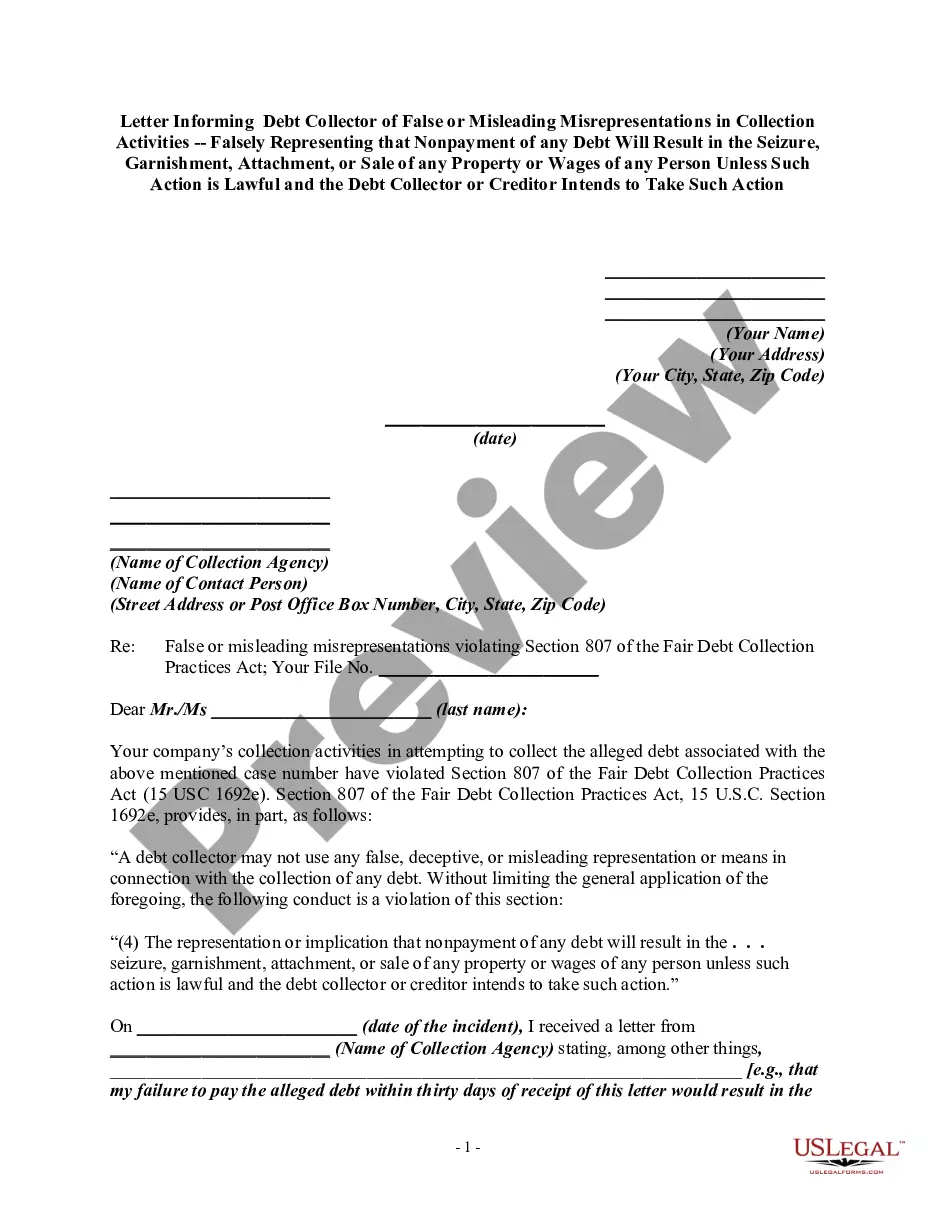

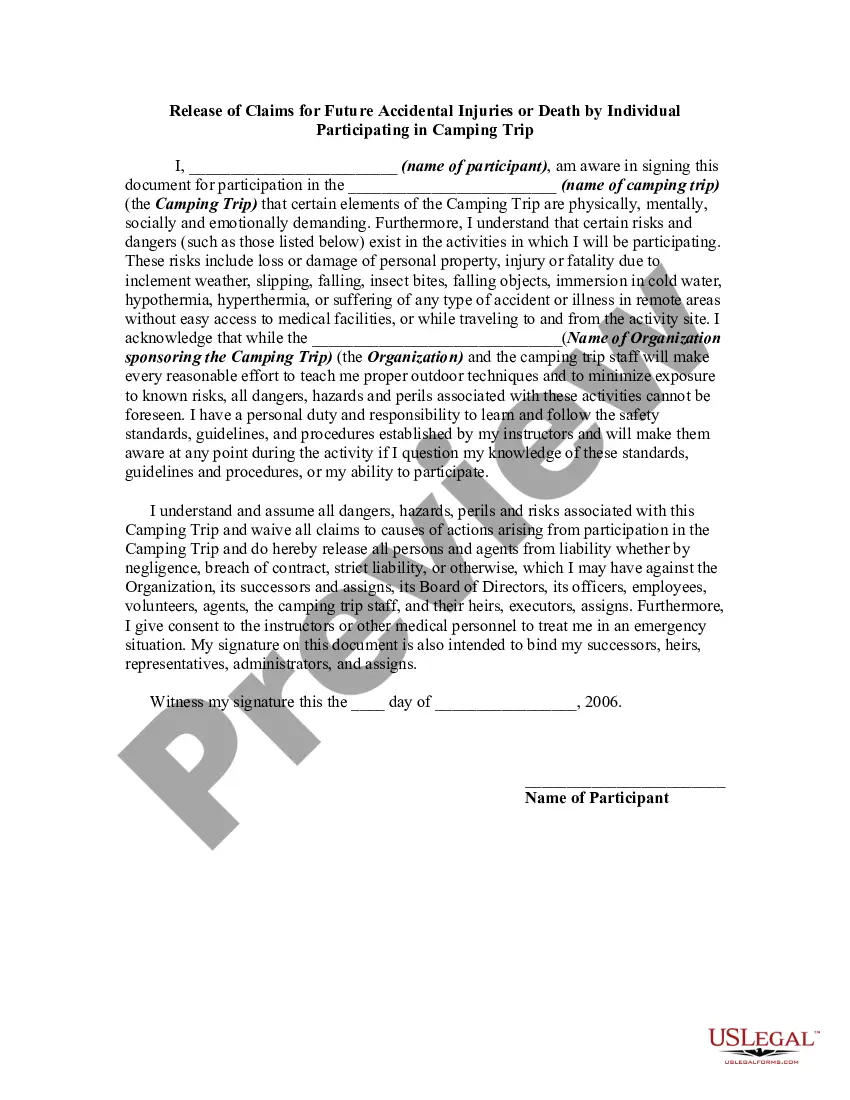
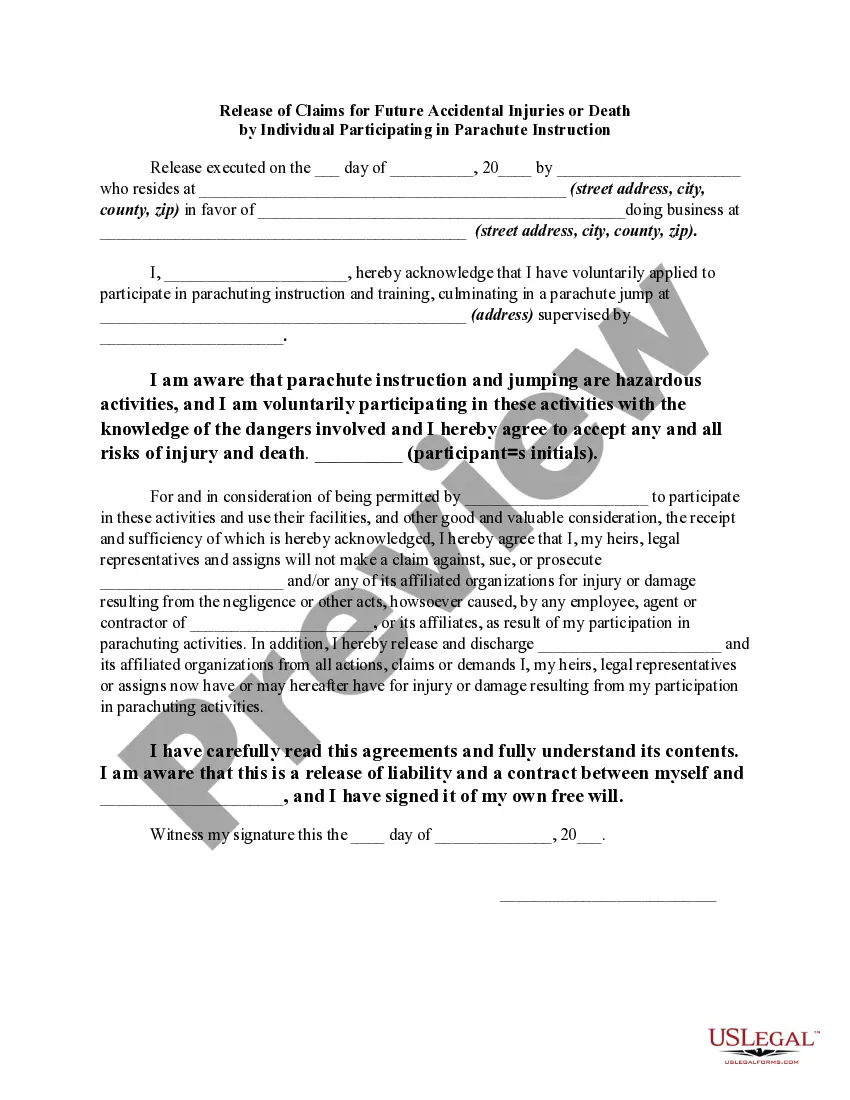
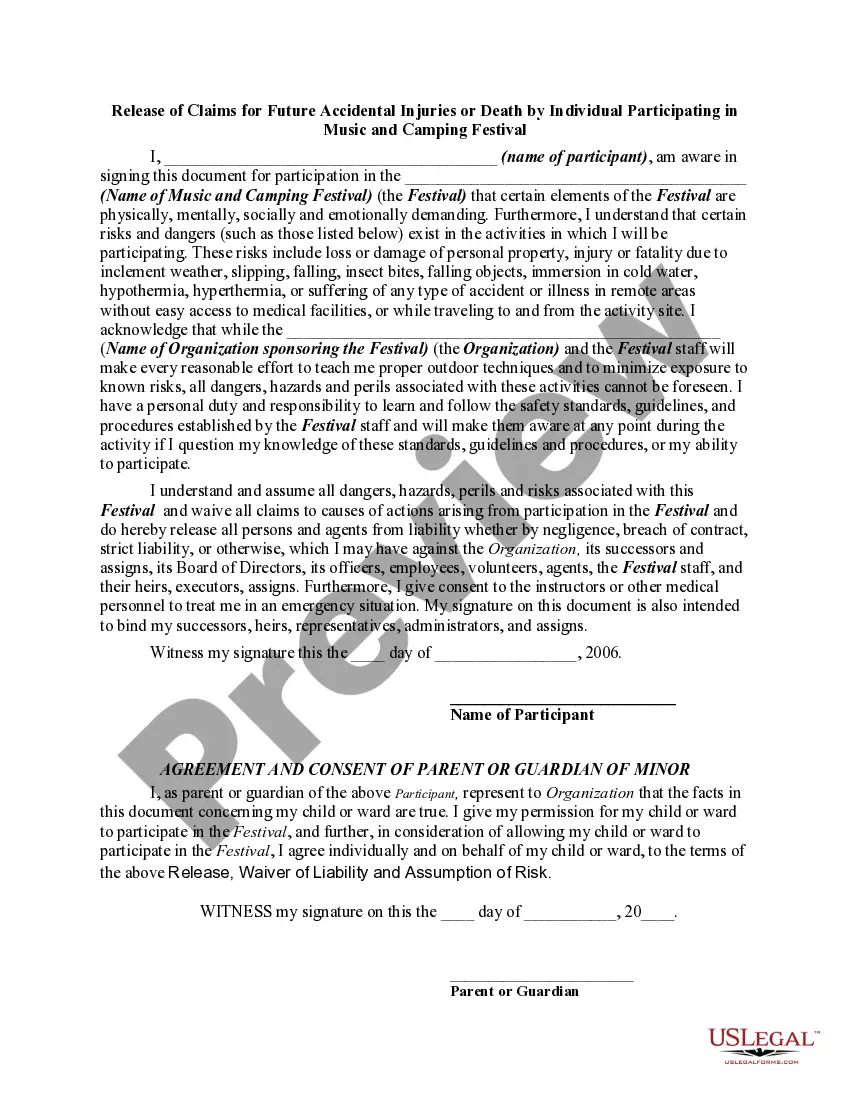
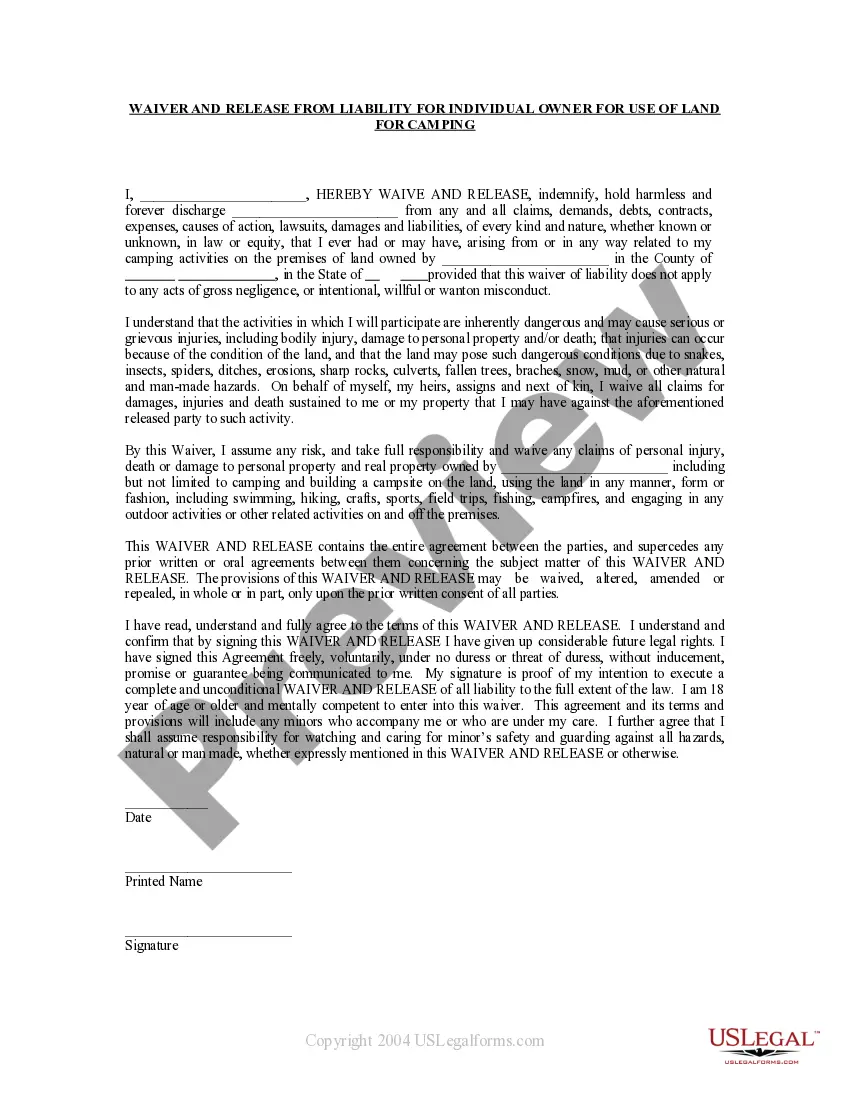
How to fill out Release Of Claims For Future Accidental Injuries Or Death By Individual Participating In Camping Trip?
- If you are an existing user, log in to your account and ensure your subscription is active. Download the necessary form template directly.
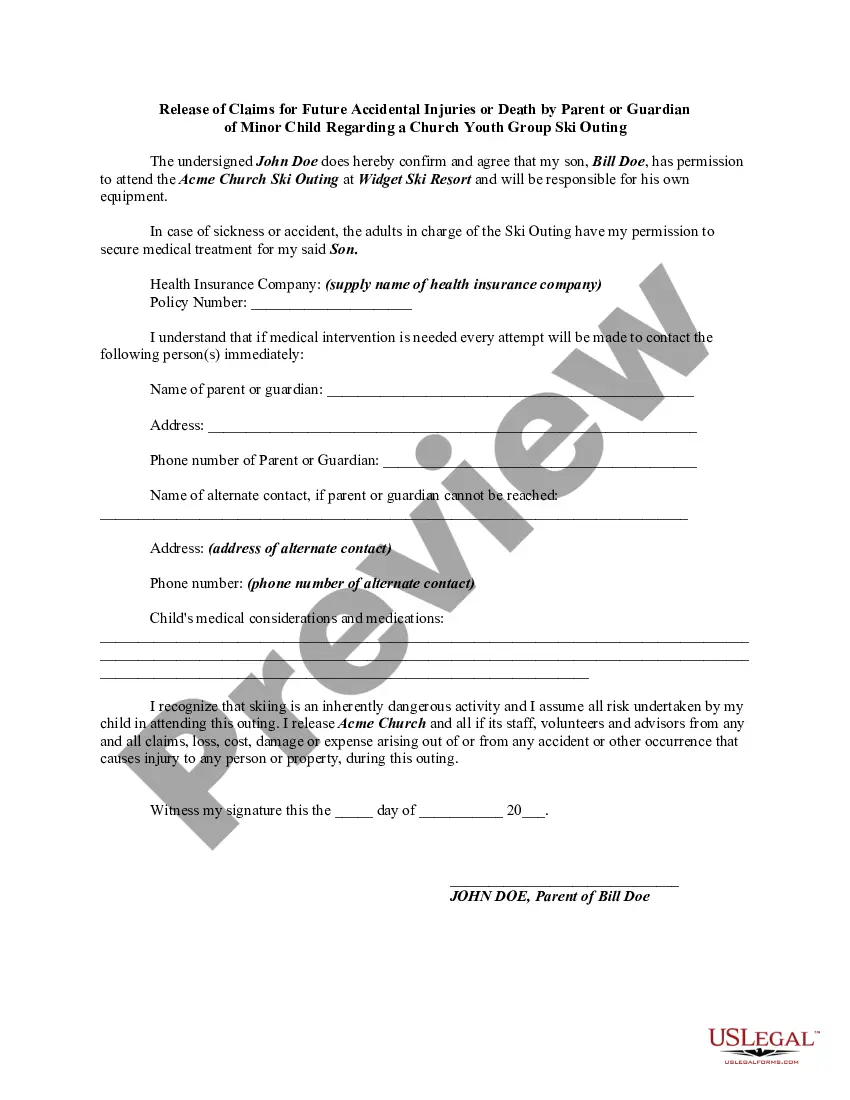
- If you are new to the service, start by checking the Preview mode and form description. Validate that you've selected the correct template that aligns with your jurisdiction's requirements.
- In case of any discrepancies, utilize the Search tab to find an alternative template that meets your criteria.
- Purchase the document by clicking the Buy Now button and choosing your preferred subscription plan. Create an account to gain access to the full library.
- Complete your payment using your credit card or PayPal, and download your form. It's saved under the My documents section of your profile for future access.
By following these simple steps, you can effectively manage your legal document needs. US Legal Forms stands out with its extensive collection and support from legal experts, offering users a reliable solution.
Take charge of your legal documentation today and explore the benefits of US Legal Forms!
Form popularity
FAQ
Words that describe injury include damage, wound, and impairment. Each of these terms highlights different aspects of what an injury entails, whether it involves physical, emotional, or psychological impact. Understanding these terms enriches your comprehension of accident and injuries vocabulary, vital for supporting your case or communicating with legal professionals.
Another name for injury is 'harm.' Harm refers to any type of damage or detriment to a person's body or mental state. When discussing legal matters, it is useful to be familiar with both terms, as they encompass the scope of accident and injuries vocabulary and help convey your situation effectively.
To make a personal injury claim, start by documenting your injuries and collecting evidence from the accident scene. You will then need to file a claim with the appropriate insurance company, providing them with all necessary documentation. If you need assistance, uslegalforms offers accessible resources to guide you through each step of the process, ensuring you understand the accident and injuries vocabulary involved.
The medical term for an injury is often referred to as 'trauma.' Trauma encompasses various forms of physical damage to the body, which can occur from accidents, falls, or other incidents. Understanding this term is crucial when navigating legal discussions or medical assessments related to accidents and injuries vocabulary.
Writing a personal injury statement requires clarity and detail. Start by outlining the circumstances of the accident, including the date, location, and cause. Use straightforward language to describe your injuries and the impact on your daily life. Incorporating accident and injuries vocabulary will help convey your situation accurately and effectively.
The vocabulary of crash includes terms like 'impact,' 'collision,' 'wreck,' and 'smash.' Understanding these words is vital for discussing the details surrounding vehicle accidents and the resulting injuries. By familiarizing yourself with the accident and injuries vocabulary, you enable yourself to articulate incidents and their implications more effectively.
To describe an accident, you can use words like 'unexpected,' 'sudden,' and 'unforeseen.' These descriptors convey the abrupt nature of such events, highlighting their unpredictable aspects. Expanding your accident and injuries vocabulary not only enhances your communication but also improves your ability to explain the circumstances of incidents clearly.
The vocabulary of accident includes terms like 'collision,' 'incident,' 'casualty,' and 'mishap.' Familiarity with this terminology can aid in understanding legal documents and insurance policies related to accidents. By mastering the accident and injuries vocabulary, you can communicate more effectively in relevant discussions and documentation.
Another word for accident is 'incident.' This term can describe various unexpected events that cause damage or injury. Knowing the synonyms within the accident and injuries vocabulary helps you articulate experiences more clearly, especially when discussing legal matters or insurance claims.
Accidents and injuries refer to unplanned events that result in harm or damage to individuals or property. These incidents can arise from various situations, such as vehicle collisions, falls, or even workplace mishaps. Understanding accident and injuries vocabulary is crucial for navigating legal matters, insurance claims, and personal recovery.