Liquor License With Dui
Description
Get your form ready online
Our built-in tools help you complete, sign, share, and store your documents in one place.
Make edits, fill in missing information, and update formatting in US Legal Forms—just like you would in MS Word.
Download a copy, print it, send it by email, or mail it via USPS—whatever works best for your next step.
Sign and collect signatures with our SignNow integration. Send to multiple recipients, set reminders, and more. Go Premium to unlock E-Sign.
If this form requires notarization, complete it online through a secure video call—no need to meet a notary in person or wait for an appointment.
We protect your documents and personal data by following strict security and privacy standards.

Make edits, fill in missing information, and update formatting in US Legal Forms—just like you would in MS Word.

Download a copy, print it, send it by email, or mail it via USPS—whatever works best for your next step.

Sign and collect signatures with our SignNow integration. Send to multiple recipients, set reminders, and more. Go Premium to unlock E-Sign.

If this form requires notarization, complete it online through a secure video call—no need to meet a notary in person or wait for an appointment.

We protect your documents and personal data by following strict security and privacy standards.
Looking for another form?
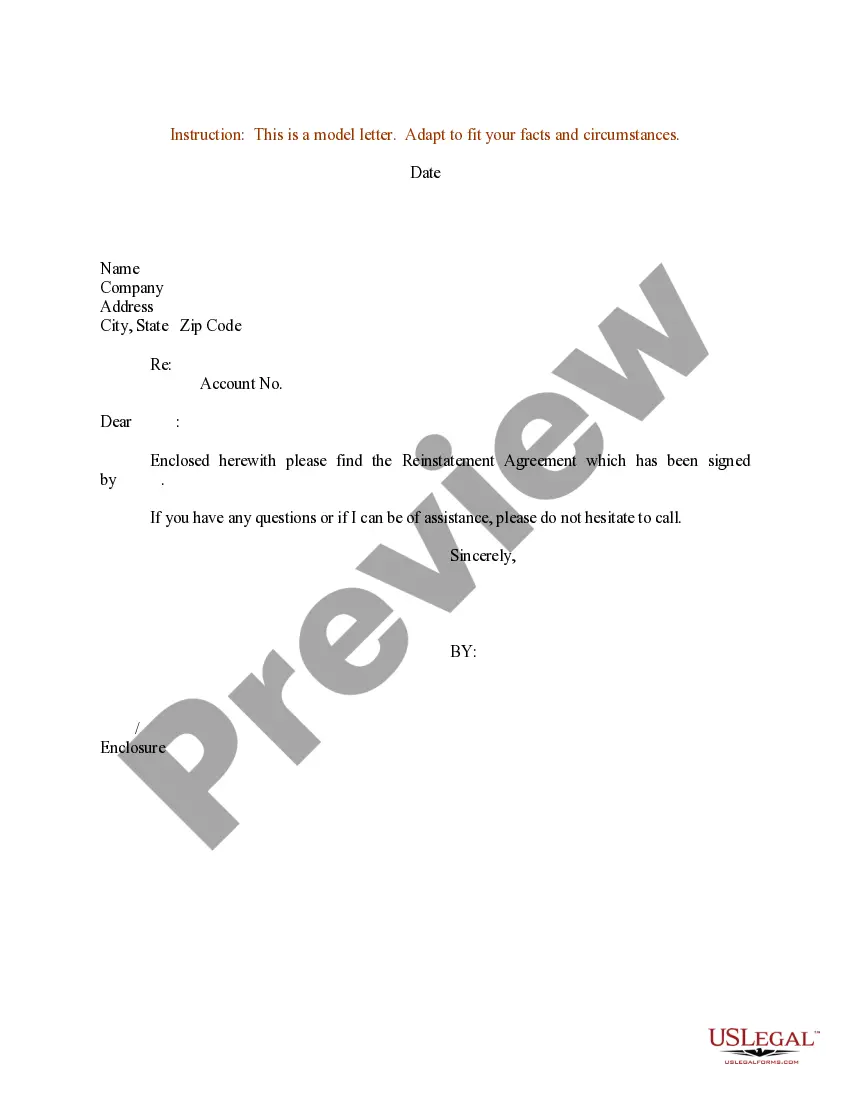
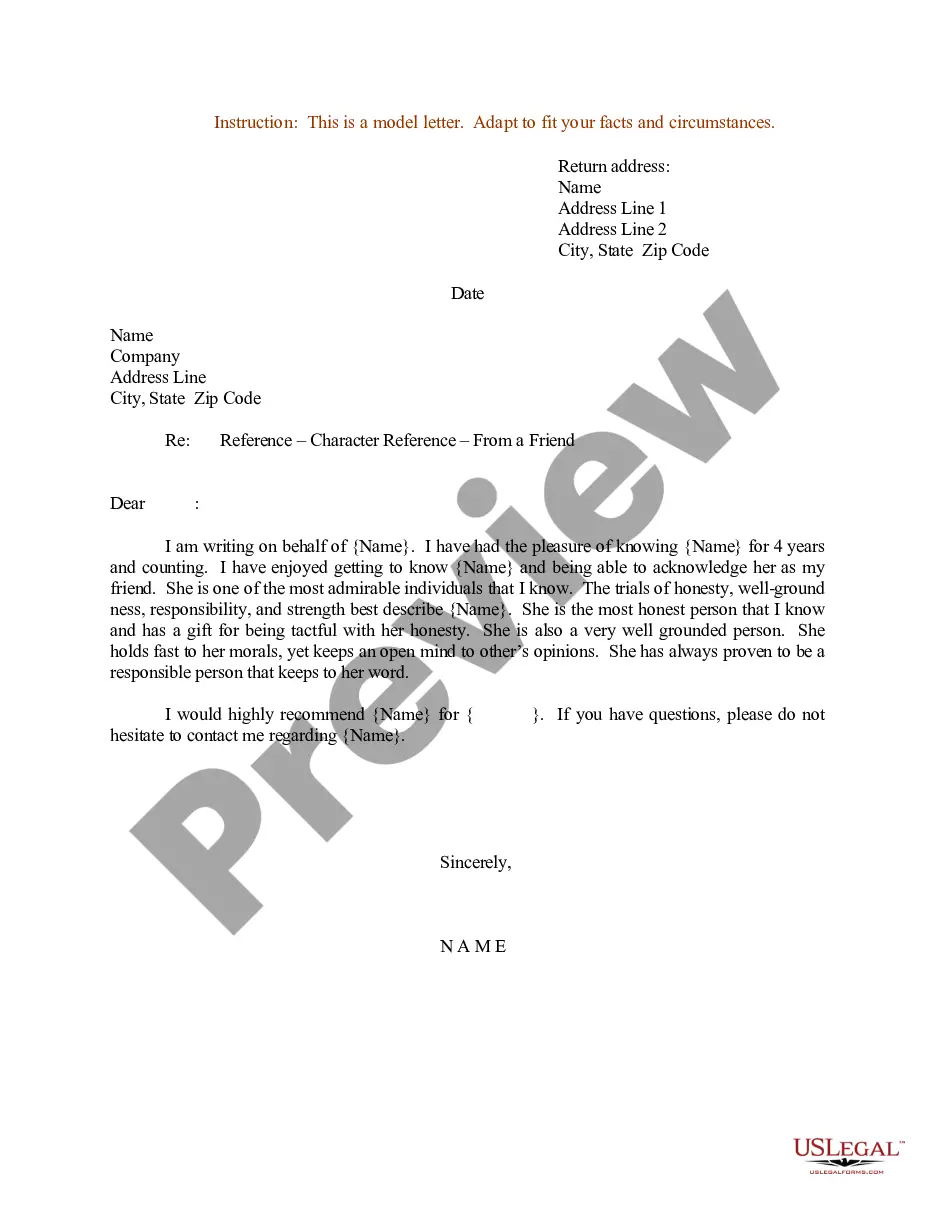
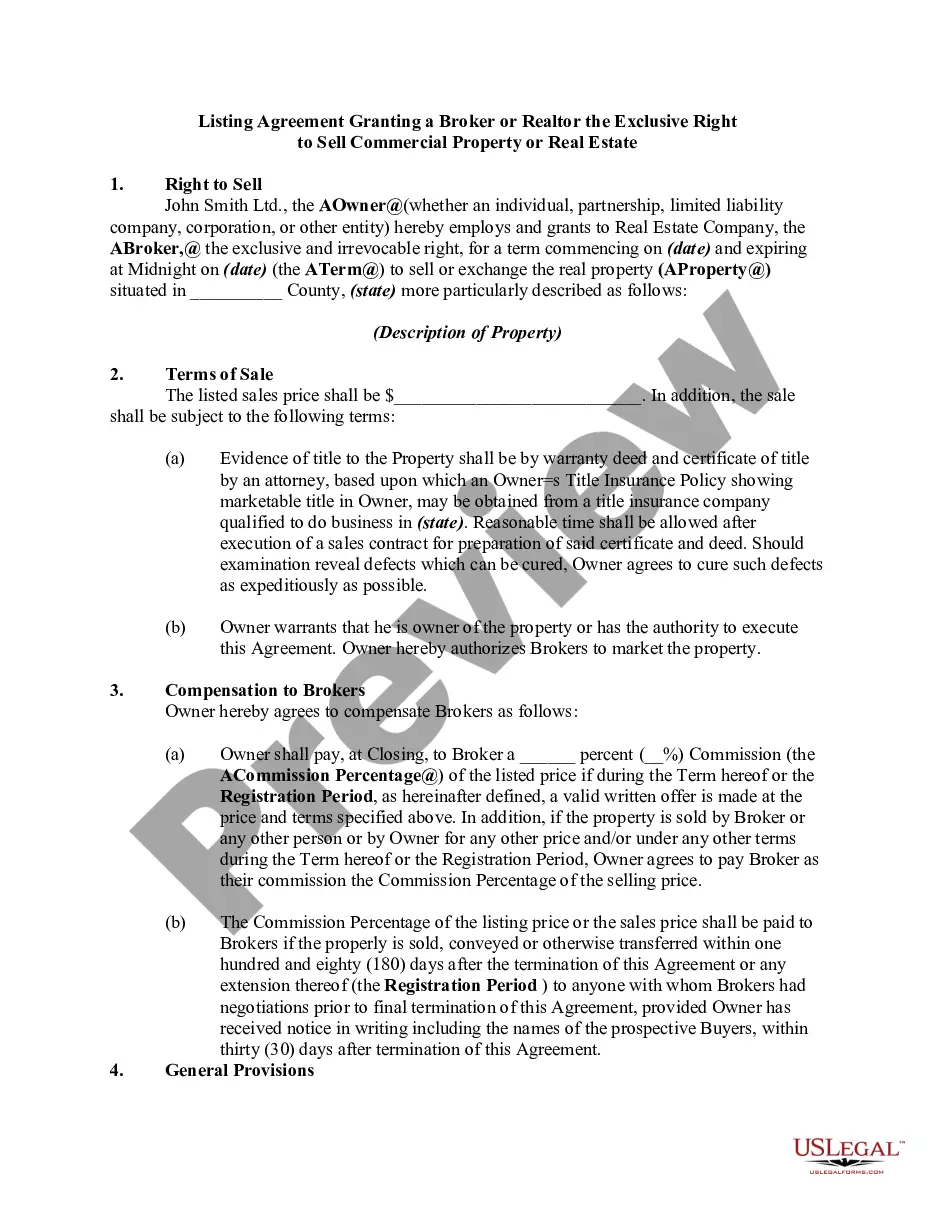
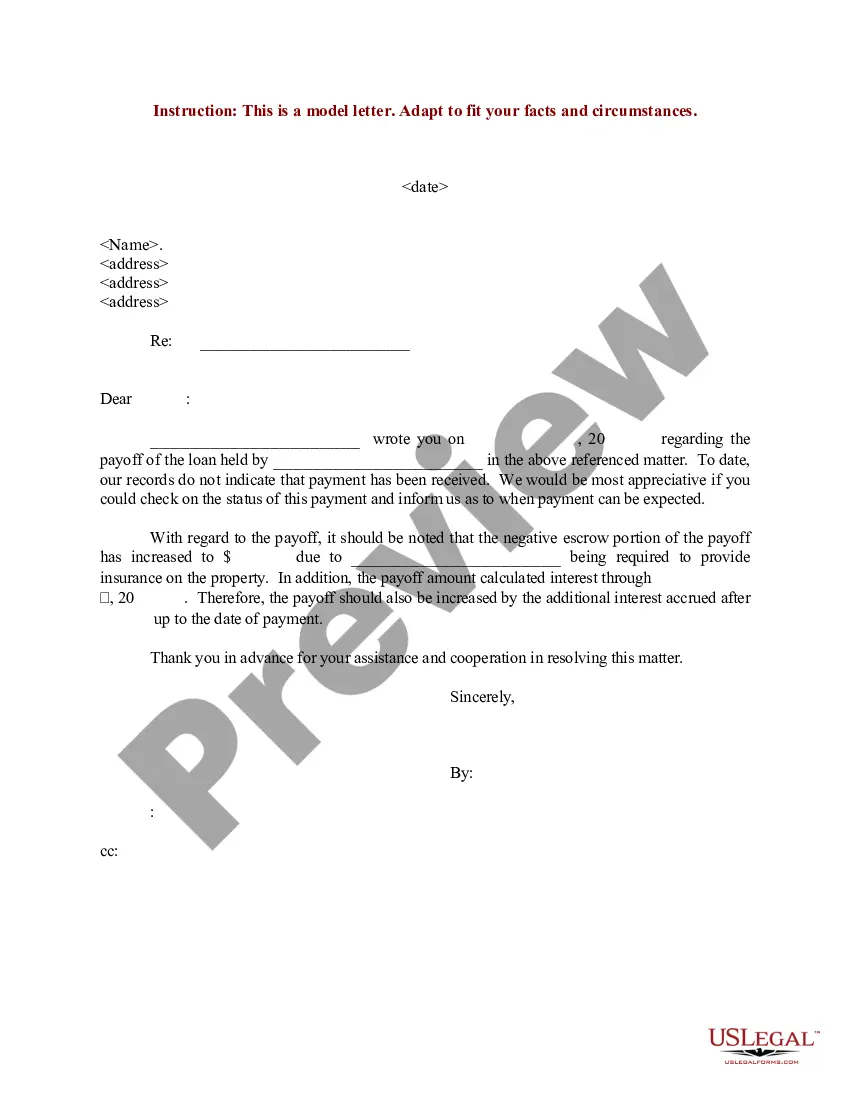
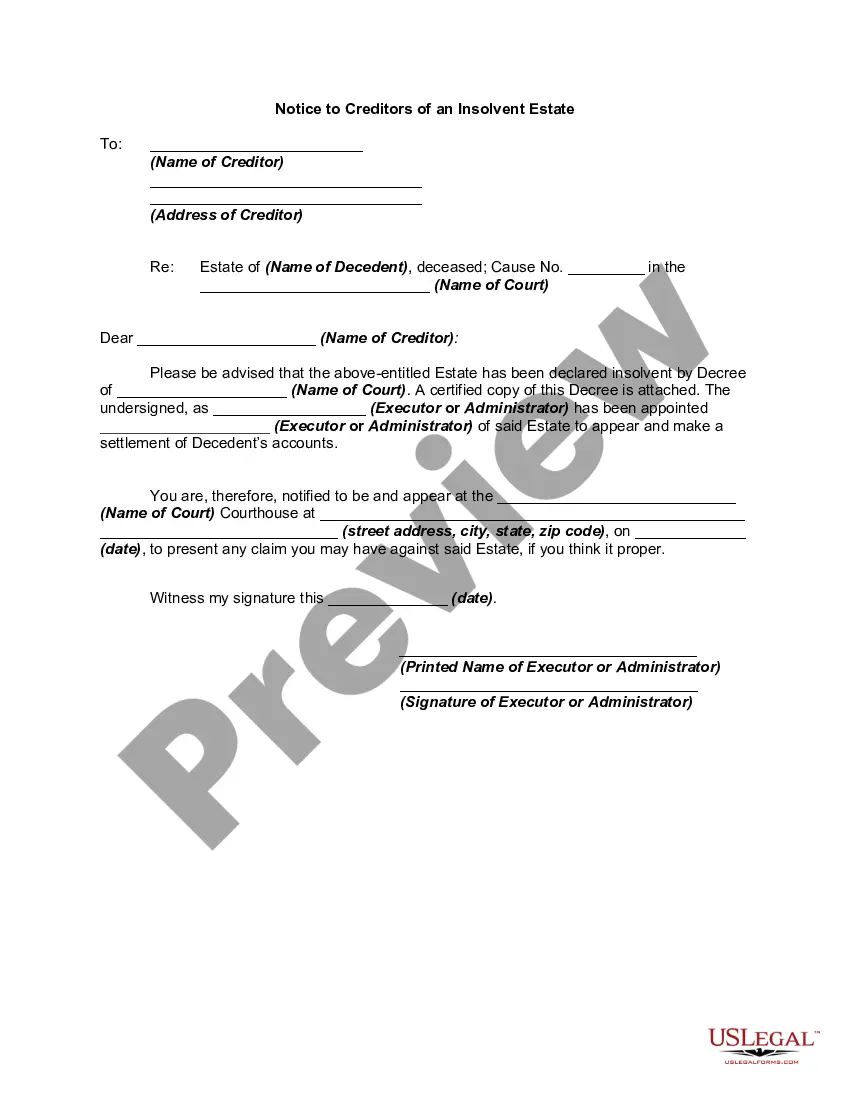
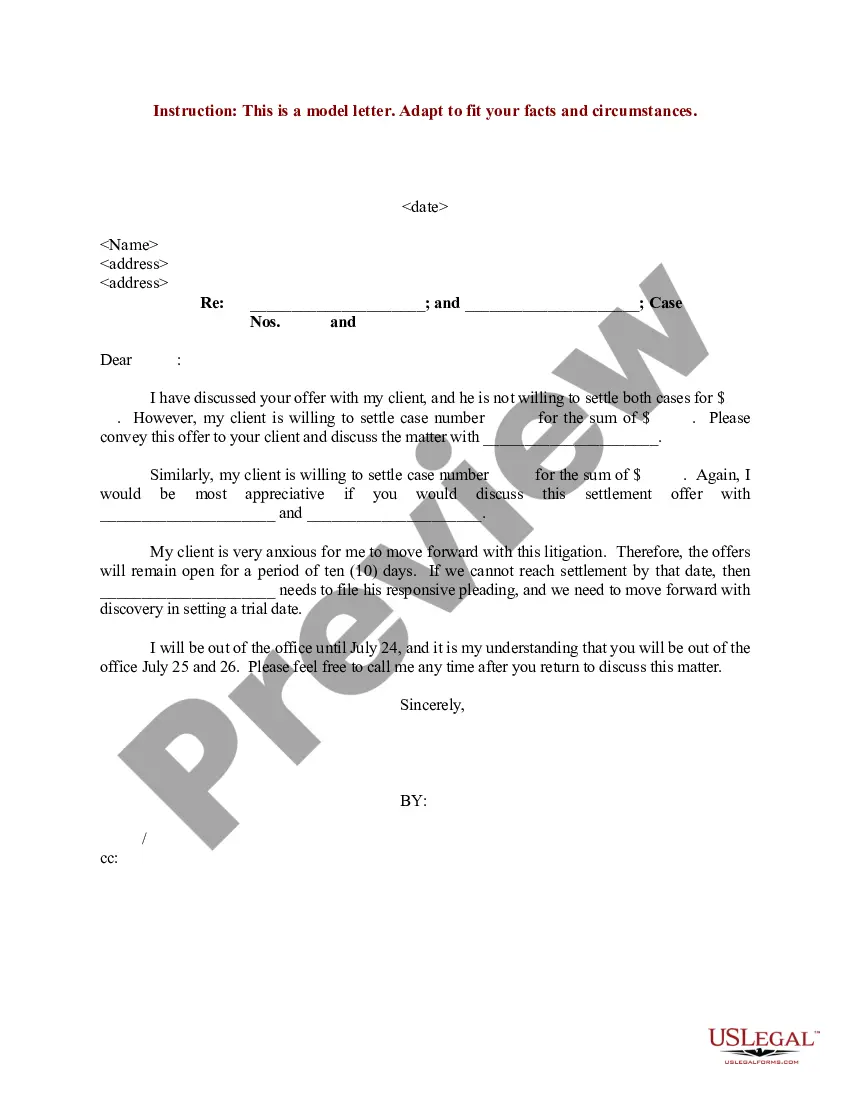
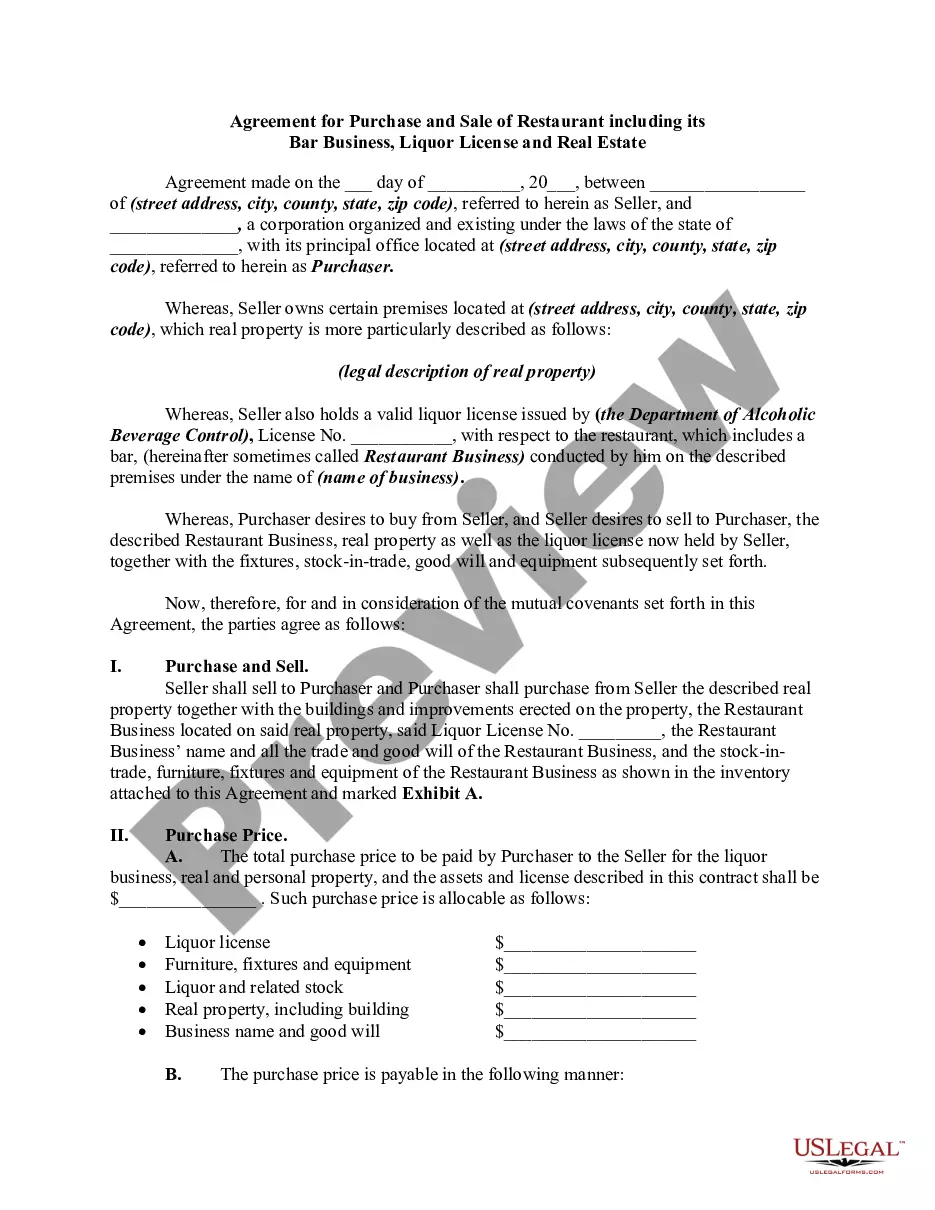
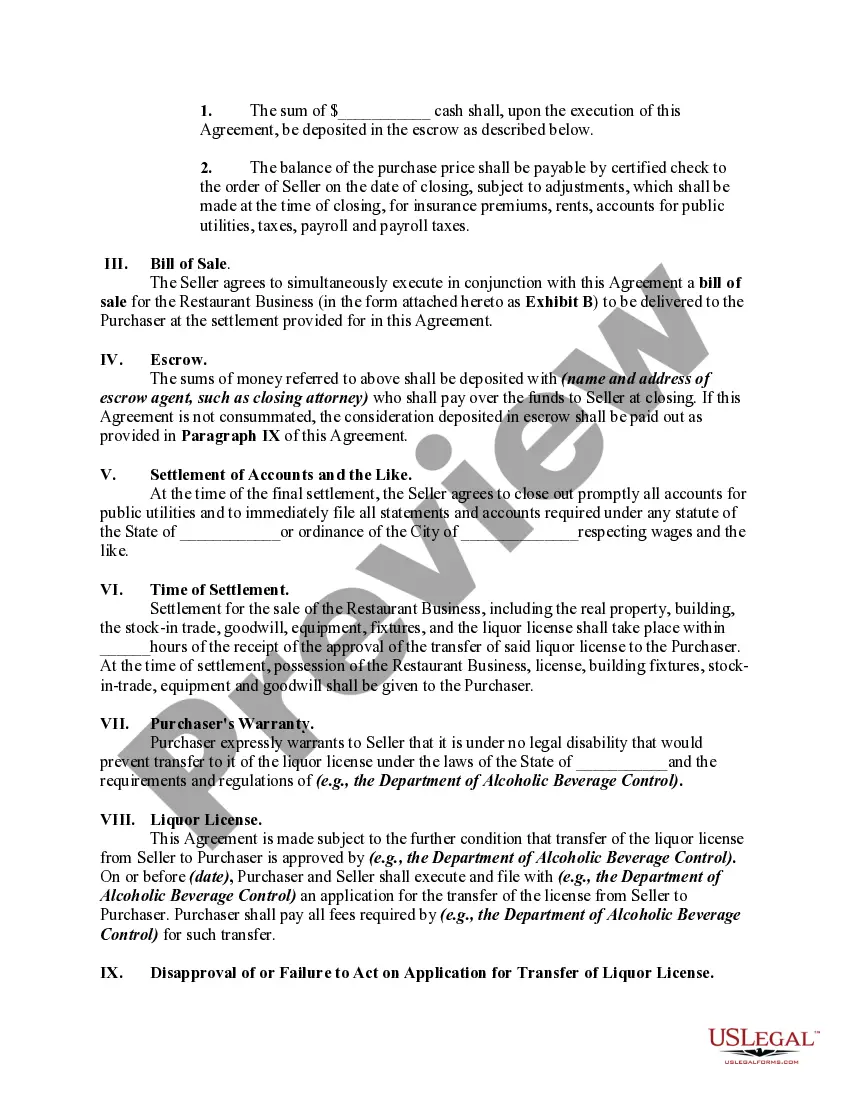
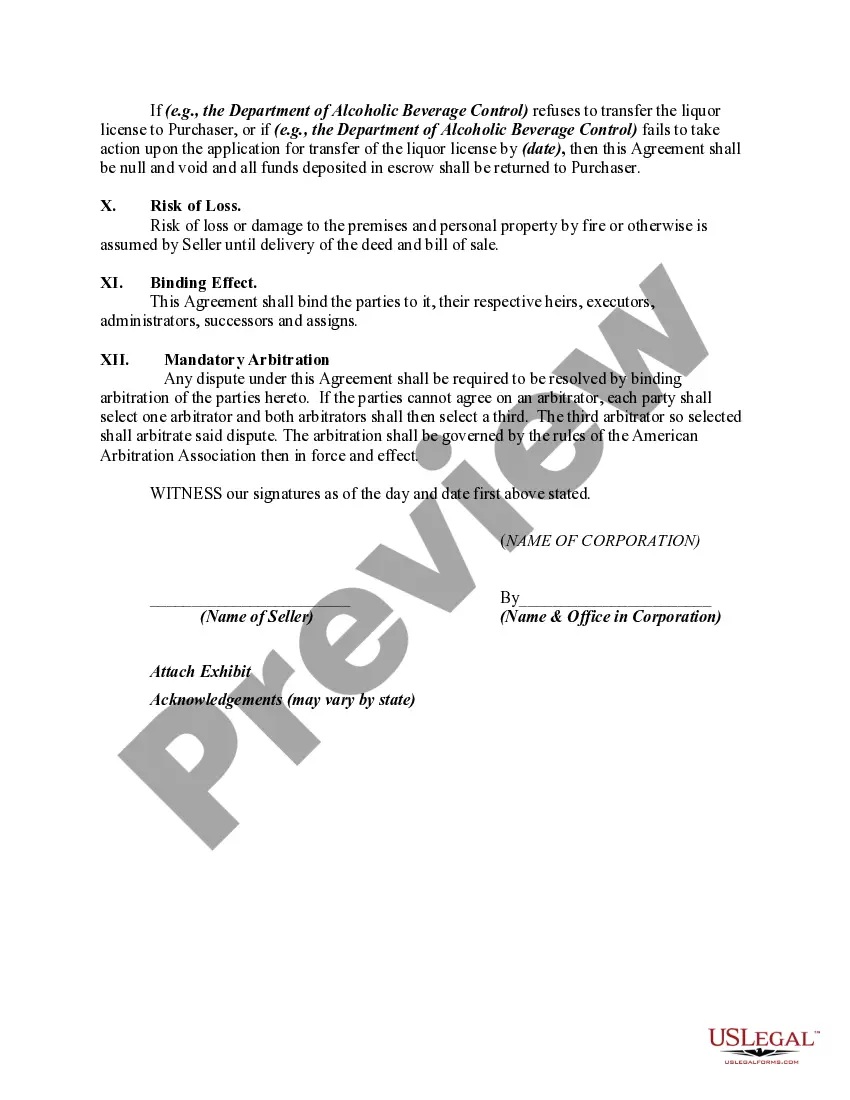
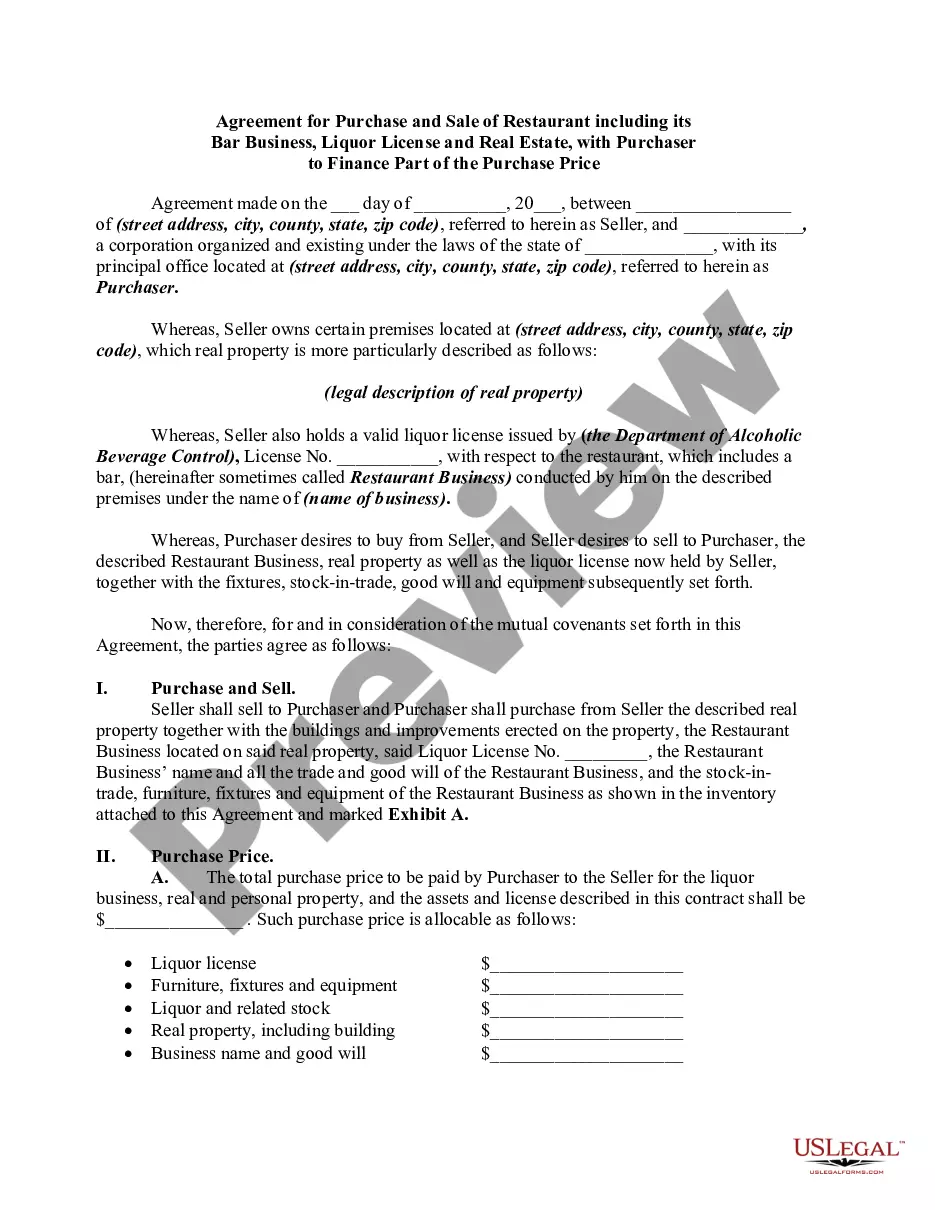
How to fill out Agreement For Purchase And Sale Of Restaurant Including Bar Business, Liquor License And Real Estate?
Regardless of whether it's for corporate objectives or personal matters, all individuals must manage legal circumstances at some stage in their existence.
Filling out legal paperwork necessitates meticulous care, starting from the selection of the appropriate form template.
With an extensive US Legal Forms catalog available, there's no need to waste time searching for the appropriate template across the internet. Leverage the library's straightforward navigation to find the correct form for any purpose.
- Locate the template you require through the search bar or catalog navigation.
- Review the form's description to confirm it aligns with your situation, jurisdiction, and area.
- Click on the form's preview to inspect it.
- If it's the incorrect form, return to the search feature to find the Liquor License With Dui template you require.
- Obtain the template when it fulfills your specifications.
- If you already possess a US Legal Forms account, click Log in to access previously saved templates in My documents.
- Should you not have an account yet, you can download the form by clicking Buy now.
- Choose the correct pricing option.
- Fill out the account registration form.
- Select your payment method: utilize a credit card or PayPal account.
- Pick the document format you desire and download the Liquor License With Dui.
- After downloading, you can complete the form using editing software or print it and fill it out manually.
Form popularity
FAQ
Owning a liquor license with a DUI on your record is challenging, but not impossible. The influence of a DUI will vary by state, with some having strict rules that may limit your eligibility. However, working through the legal complexities with guidance from professionals can help you navigate the requirements effectively, ensuring you understand your options.
Yes, having a DUI can significantly impact your ability to secure a liquor license. Many states, including Ohio and Texas, consider DUI offenses seriously, especially if they are recent. They can serve as a red flag during the application process, making it imperative to understand your situation fully. Seeking assistance from experts can help improve your chances of obtaining a liquor license with DUI on your record.
To obtain a liquor license in Texas, applicants must be at least 21 years old, a U.S. citizen or legal resident, and meet certain local regulations. You must submit a detailed application and undergo a background check, which will assess any prior criminal activity. Notably, if you are dealing with a liquor license with DUI history, it can complicate the process, so it’s wise to consult an expert like uslegalforms.
In Ohio, certain factors can disqualify you from obtaining a liquor license. A felony conviction, especially those involving alcohol or drug-related offenses, can lead to denial. Additionally, if you have unpaid taxes or failed to comply with local laws, you may not qualify. Therefore, it's essential to understand how a liquor license with DUI can impact your eligibility.
In Ohio, obtaining a liquor license with a DUI on your record may be challenging. The state typically assesses applicants' criminal backgrounds, and a DUI can hinder your chances. However, the rules can vary based on the specifics of your case and how long ago the conviction occurred. Consulting with a legal expert in liquor licensing can provide insights into your unique situation.
Serving alcohol after a DUI can be complicated, especially if you hold a liquor license. Depending on the nature of your conviction, you may face restrictions that affect your ability to serve alcohol. It's important to check with your local regulatory body to understand the specific implications of a DUI on your liquor license. Enlisting the help of resources like uslegalforms can guide you through these legal nuances.
The new liquor law in Missouri focuses on modernizing the licensing process for businesses. It aims to streamline applications and reduce waiting times for obtaining a liquor license. The law also includes provisions that address public safety and responsible alcohol service. For business owners dealing with a liquor license and DUI issues, understanding these changes is crucial for compliance.
Yes, getting a DUI can lead to the loss of your liquor license, especially if you are the license holder. States view DUI charges seriously, as they affect your ability to operate a business selling alcohol. Depending on the severity of the offense, you may face penalties that impact your business operations. If you've been issued a liquor license with a DUI, working with professionals can help you navigate your options.
To open a bar in Missouri, you need to secure a liquor license, which is essential for serving alcohol. This process includes submitting an application to the state and local authorities, paying fees, and meeting zoning requirements. Additionally, you must consider local health and safety regulations. If you have a liquor license with a DUI on your record, it may complicate the process.
Yes, you can lease a liquor license in Florida, but this process involves specific legal considerations. Often, the lease will need approval from the appropriate state authorities to ensure compliance. Leasing can be a practical solution for businesses looking to operate without purchasing a license outright. To navigate this, consider using the resources available on uslegalforms, which can help you understand the requirements for leasing a liquor license with DUI.