Trust Documentation Sample For Project
Description
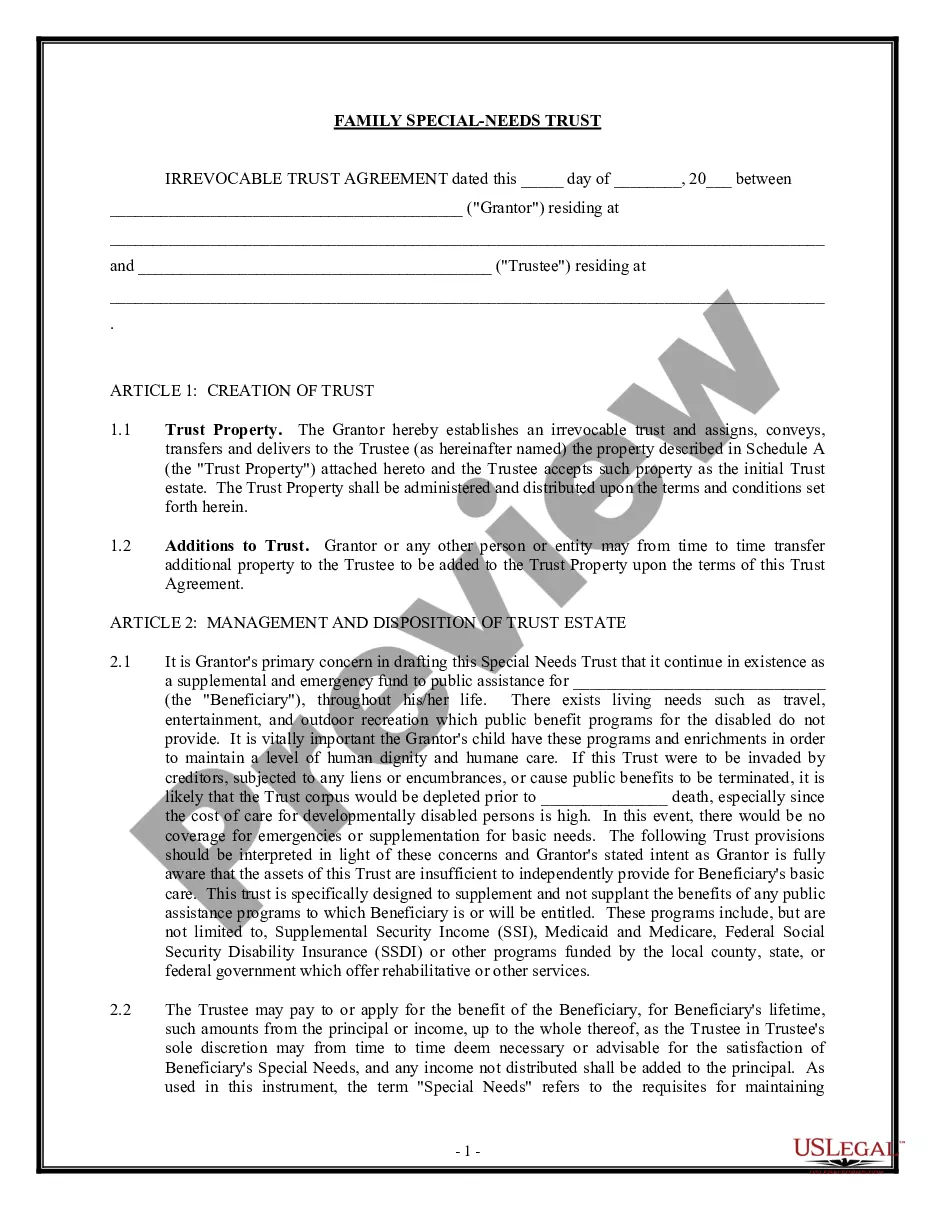
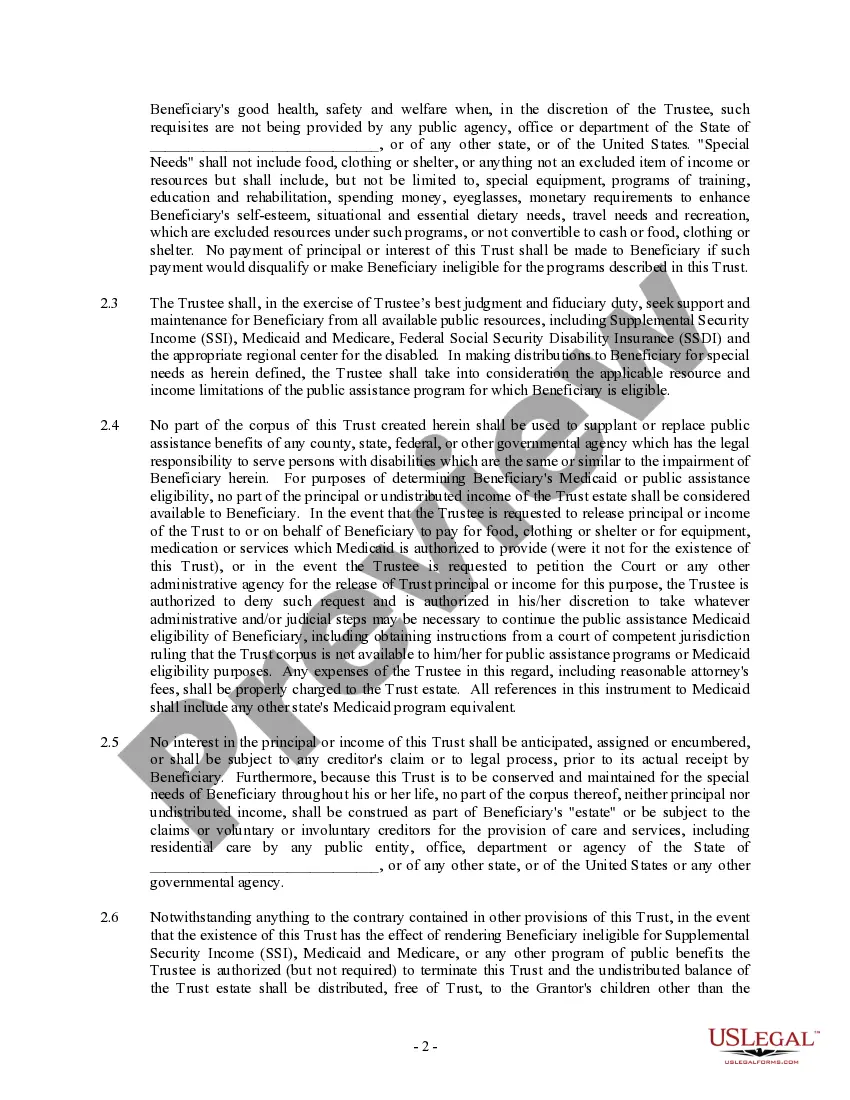
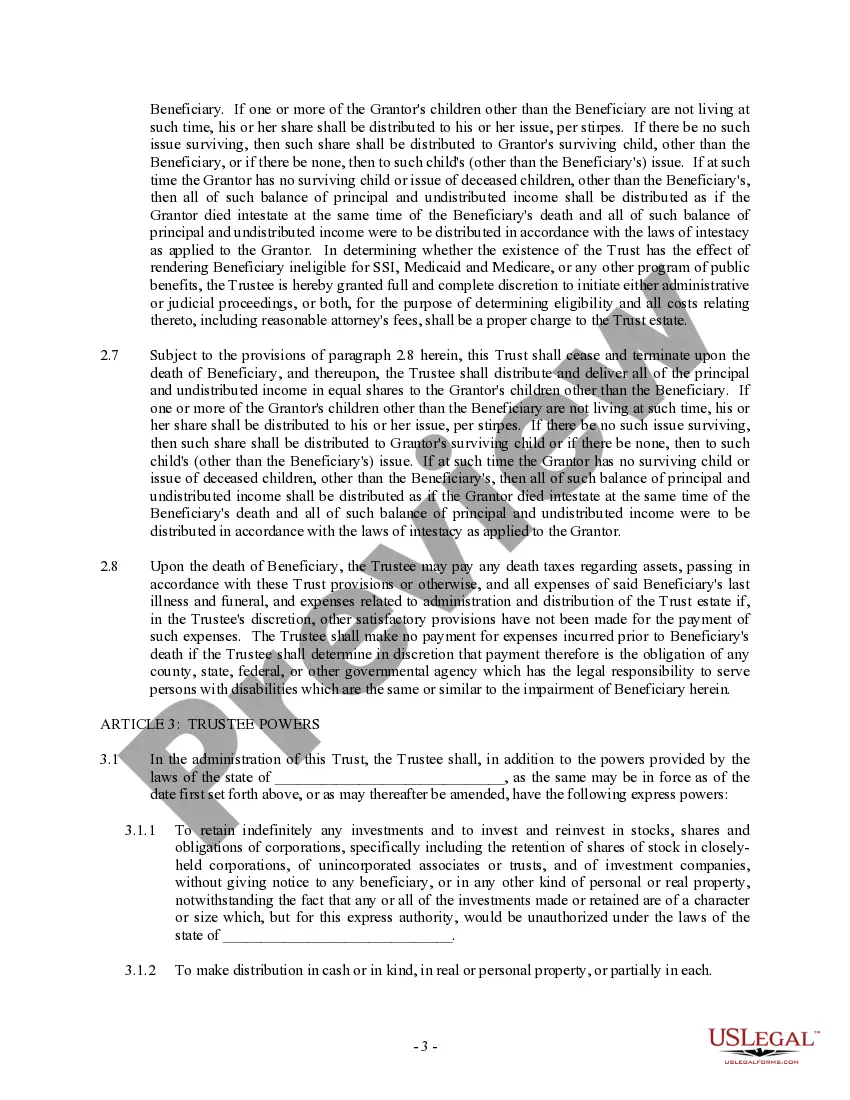
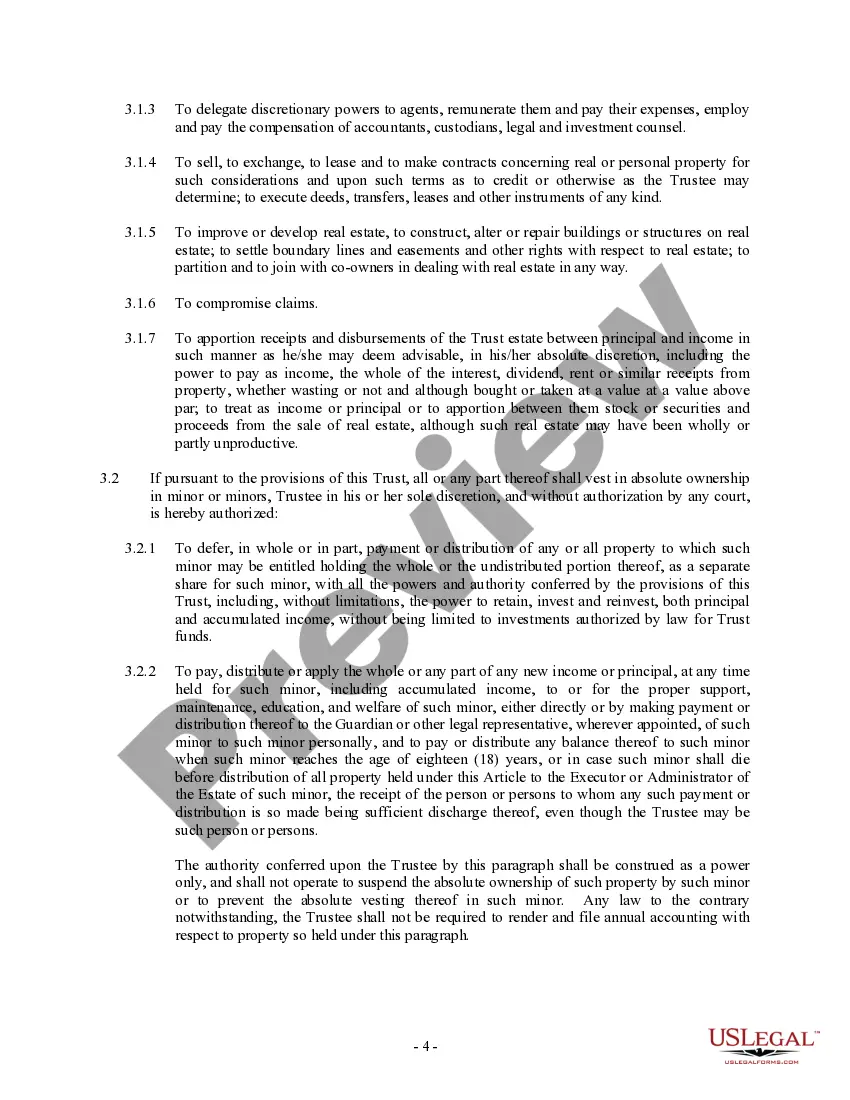
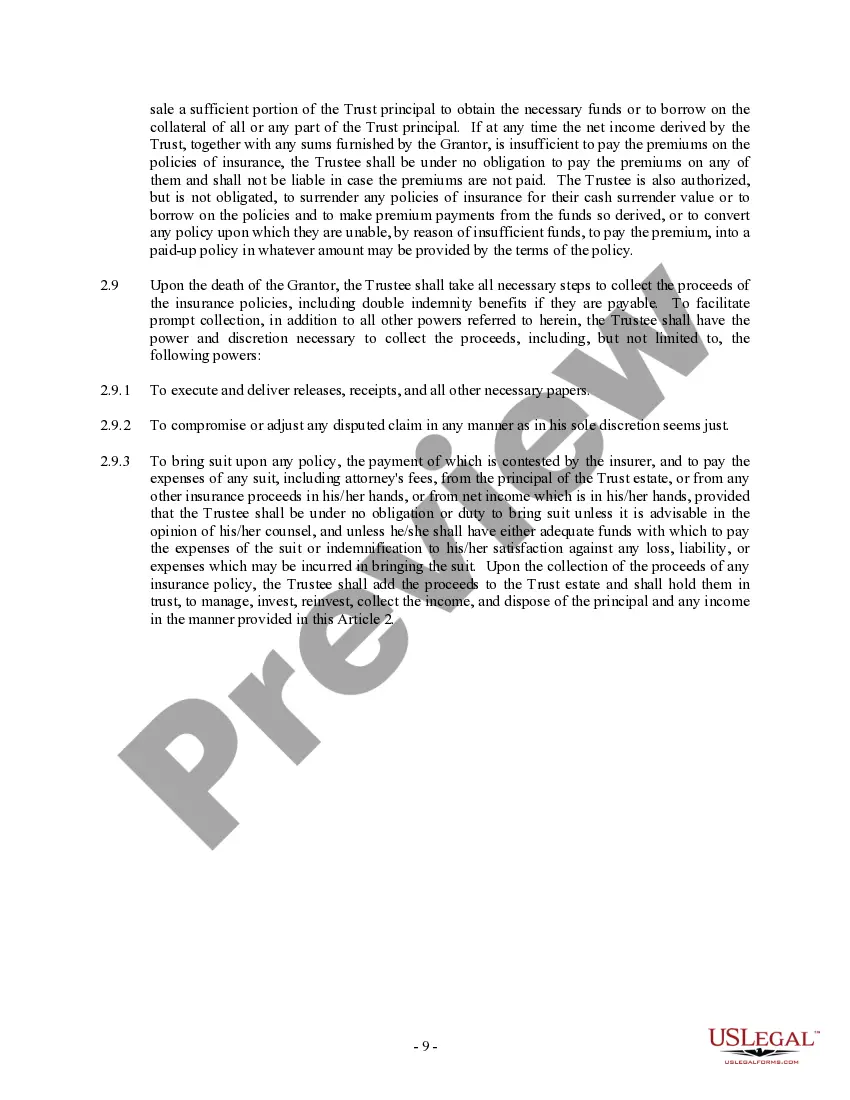
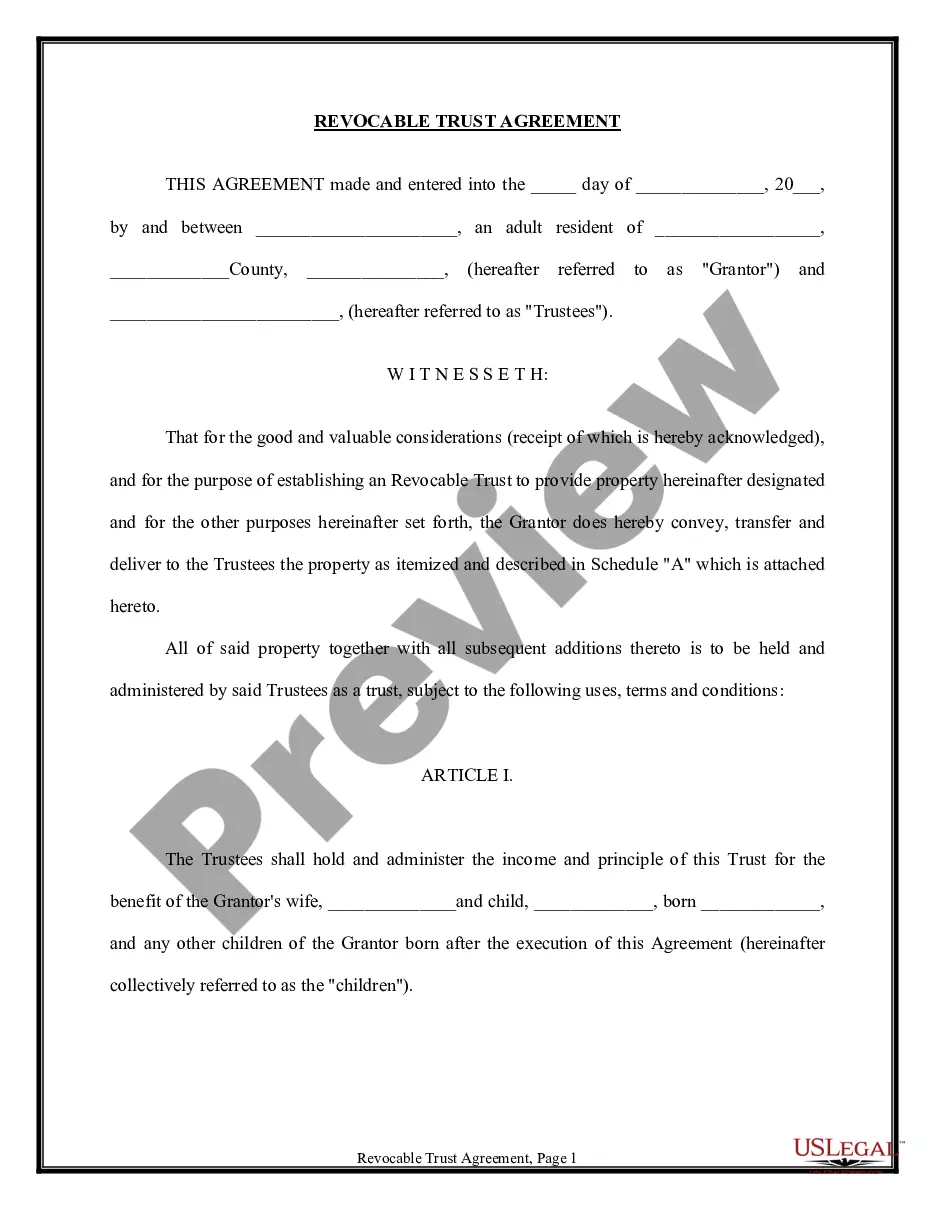
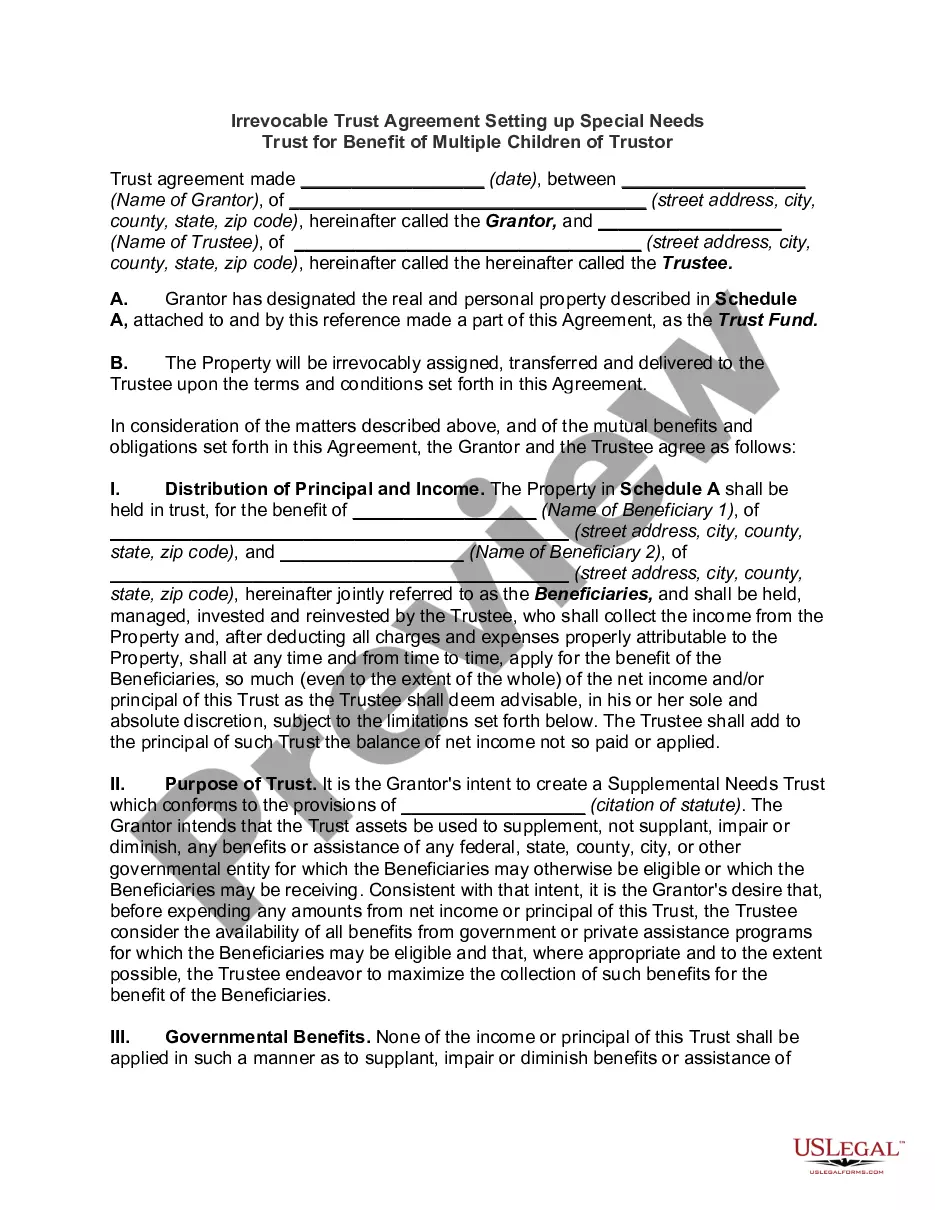

Get your form ready online
Our built-in tools help you complete, sign, share, and store your documents in one place.
Make edits, fill in missing information, and update formatting in US Legal Forms—just like you would in MS Word.
Download a copy, print it, send it by email, or mail it via USPS—whatever works best for your next step.
Sign and collect signatures with our SignNow integration. Send to multiple recipients, set reminders, and more. Go Premium to unlock E-Sign.
If this form requires notarization, complete it online through a secure video call—no need to meet a notary in person or wait for an appointment.
We protect your documents and personal data by following strict security and privacy standards.

Make edits, fill in missing information, and update formatting in US Legal Forms—just like you would in MS Word.

Download a copy, print it, send it by email, or mail it via USPS—whatever works best for your next step.

Sign and collect signatures with our SignNow integration. Send to multiple recipients, set reminders, and more. Go Premium to unlock E-Sign.

If this form requires notarization, complete it online through a secure video call—no need to meet a notary in person or wait for an appointment.

We protect your documents and personal data by following strict security and privacy standards.
Looking for another form?
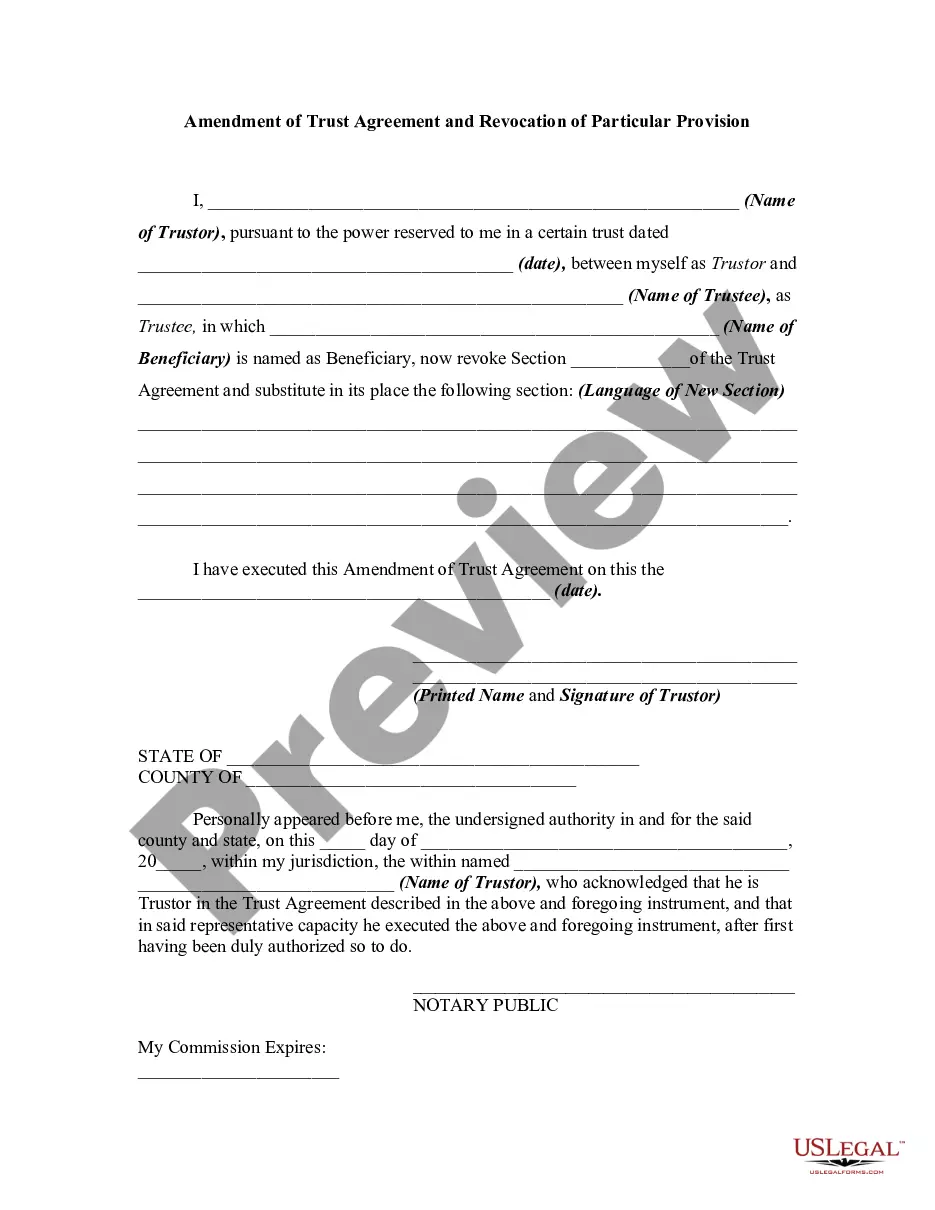
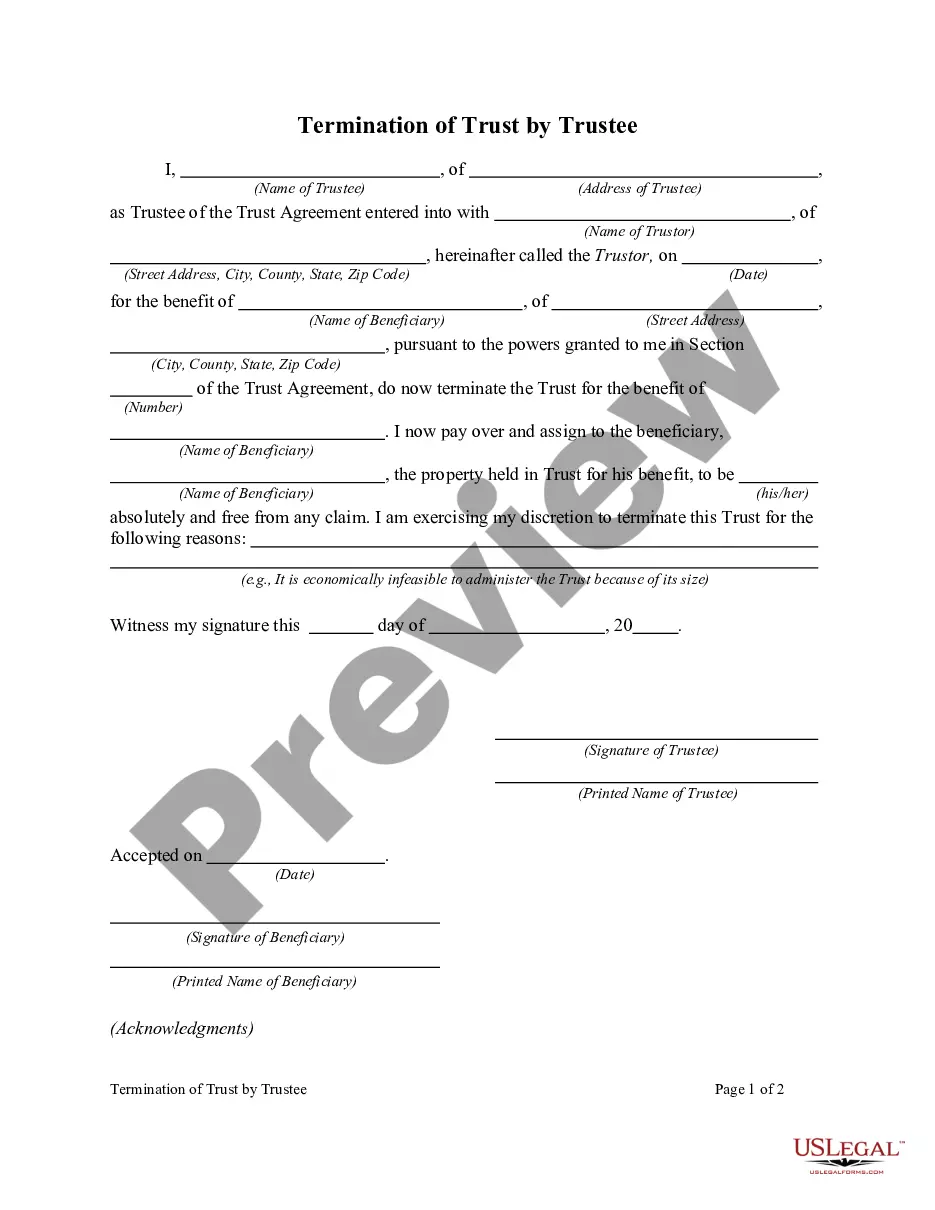
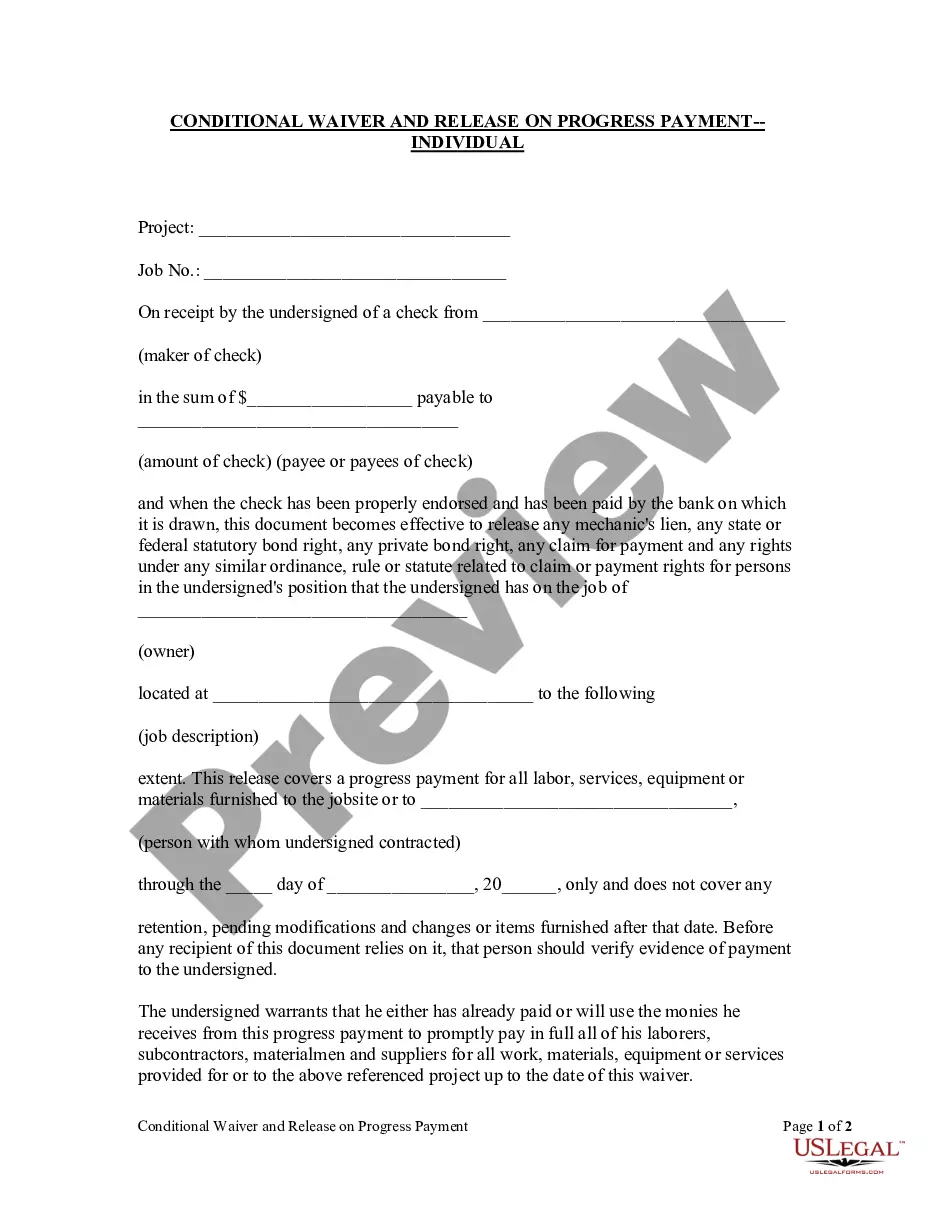
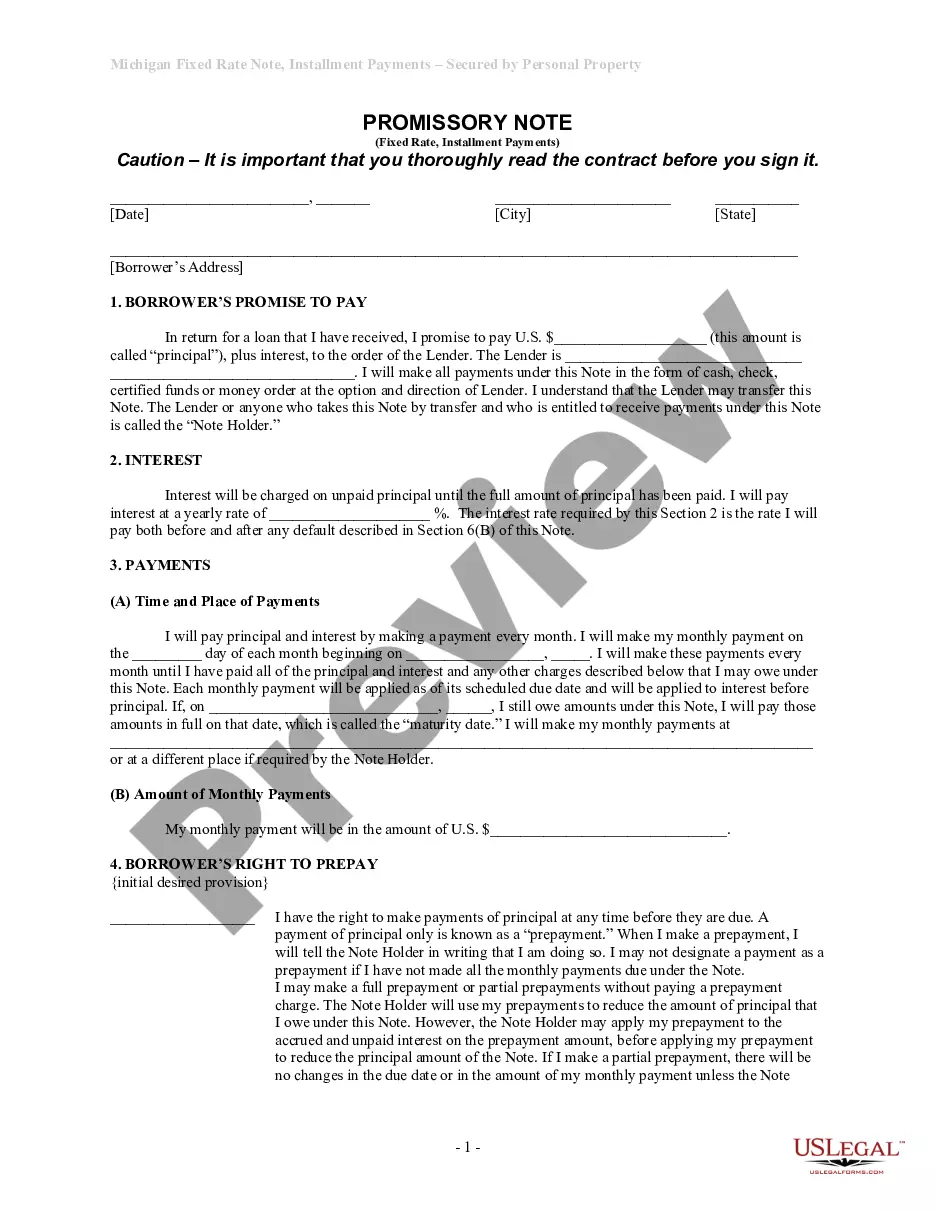




How to fill out Trust Agreement - Family Special Needs?
Managing legal documents and protocols can be a lengthy addition to your daily agenda.
Trust Documentation Example For Project and similar forms frequently require you to search for them and find the optimal method to fill them out correctly.
Thus, whether you are addressing financial, legal, or personal concerns, having a comprehensive and accessible online repository of documents handy will significantly help.
US Legal Forms is the leading online platform for legal templates, boasting over 85,000 state-specific documents and various tools to assist you in completing your paperwork seamlessly.
Is it your first time using US Legal Forms? Register and create a free account within a few minutes to access the document library and Trust Documentation Example For Project. Then, follow the steps outlined below to complete your document.
- Browse the collection of relevant documents available to you with just a click.
- US Legal Forms provides you with state- and county-specific documents available for download at any time.
- Streamline your document management processes by utilizing a premium service that enables you to create any document within minutes without any additional or concealed fees.
- Merely Log In to your account, locate Trust Documentation Example For Project, and download it immediately from the My documents section.
- You can also retrieve previously downloaded documents.
Form popularity
FAQ
A simple example would be the situation in which one member of a family advances money to another and asks the second member to hold the money or to invest it for him. A more complicated example of an implied trust would be the situation in which one party provides money to another for the purchase of property.
In general, a trust is a relationship in which one person holds title to property, subject to an obligation to keep or use the property for the benefit of another. A trust is formed under state law.
Most trusts are named after the Trust Creators and also include the date the trust was created. Examples are ?John and Jane Smith Revocable Trust dated 1/1/20?; or ?Smith Family Trust dated 1/1/20?; or ?John W. Smith and Jane A. Smith Revocable Family Trust dated 1/1/20?.
There are two basic types of Deeds of Trust, the Long Form and the Short Form. The Long Form, which could be 20-30 pages long, is the one generally used by institutional lenders. The Short Form is the one that is most widely used by private party lenders.
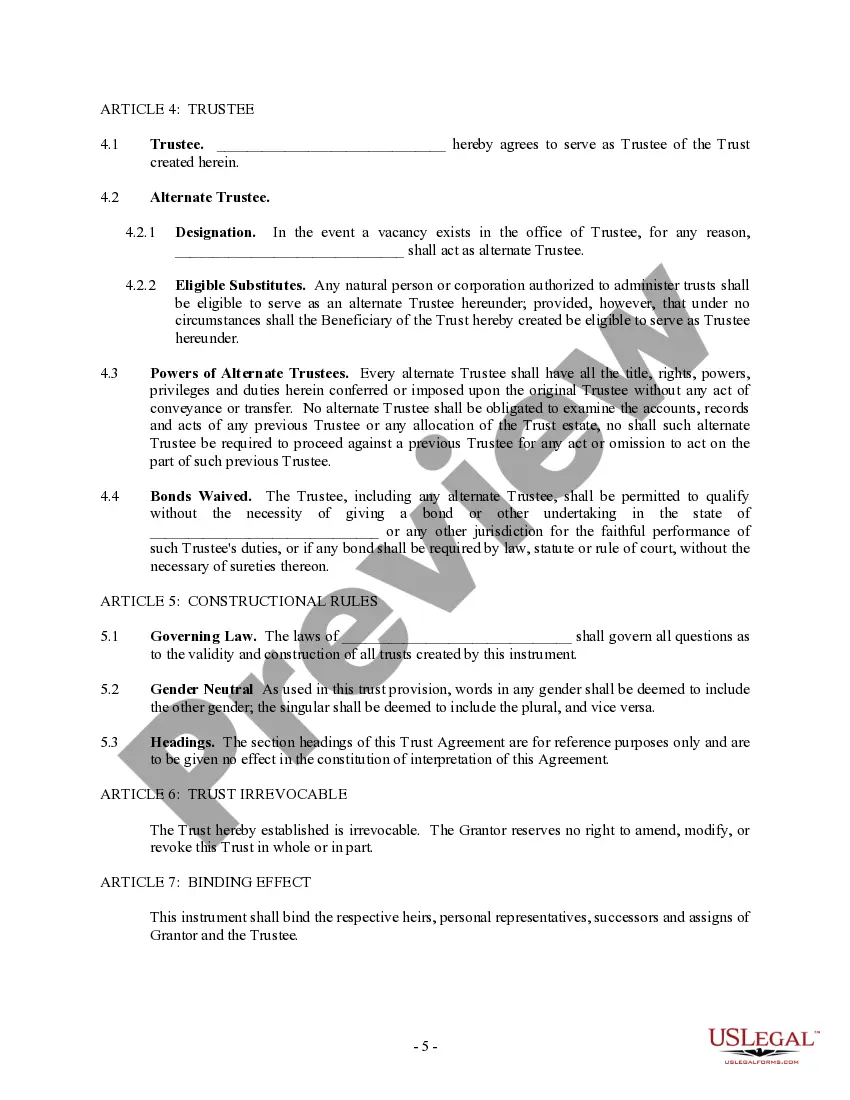
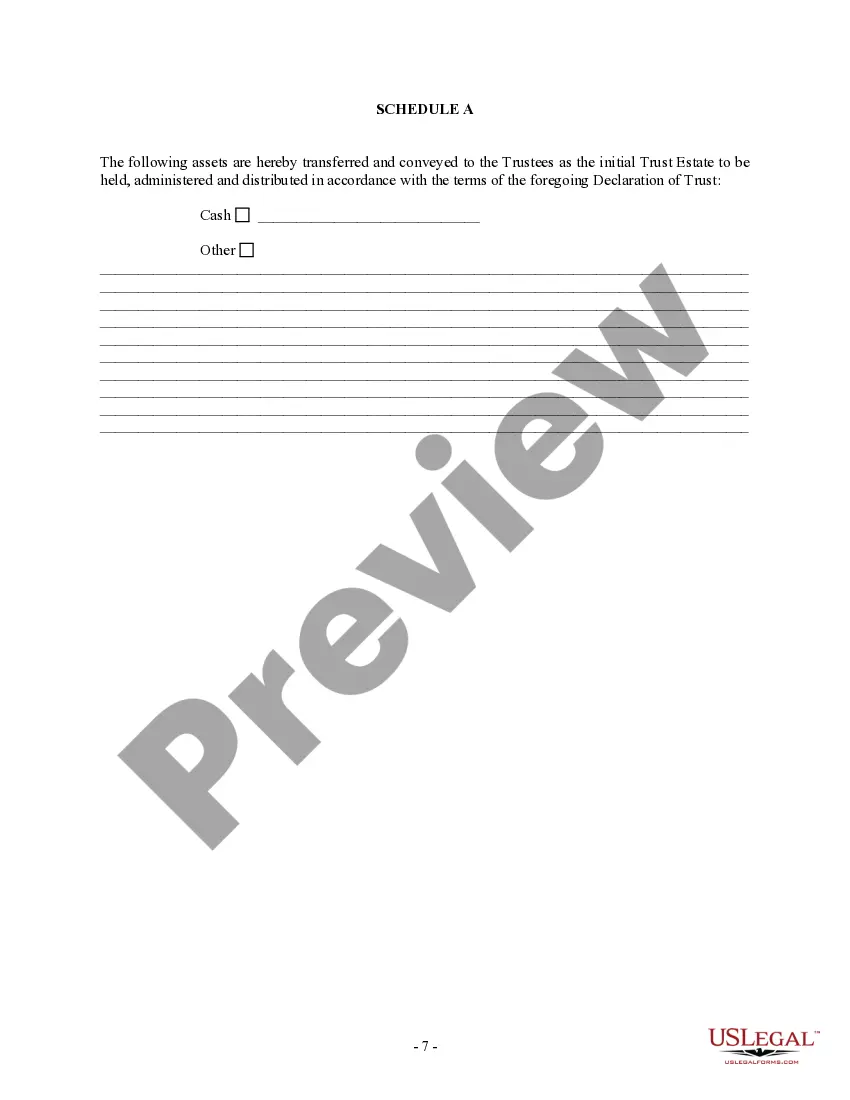
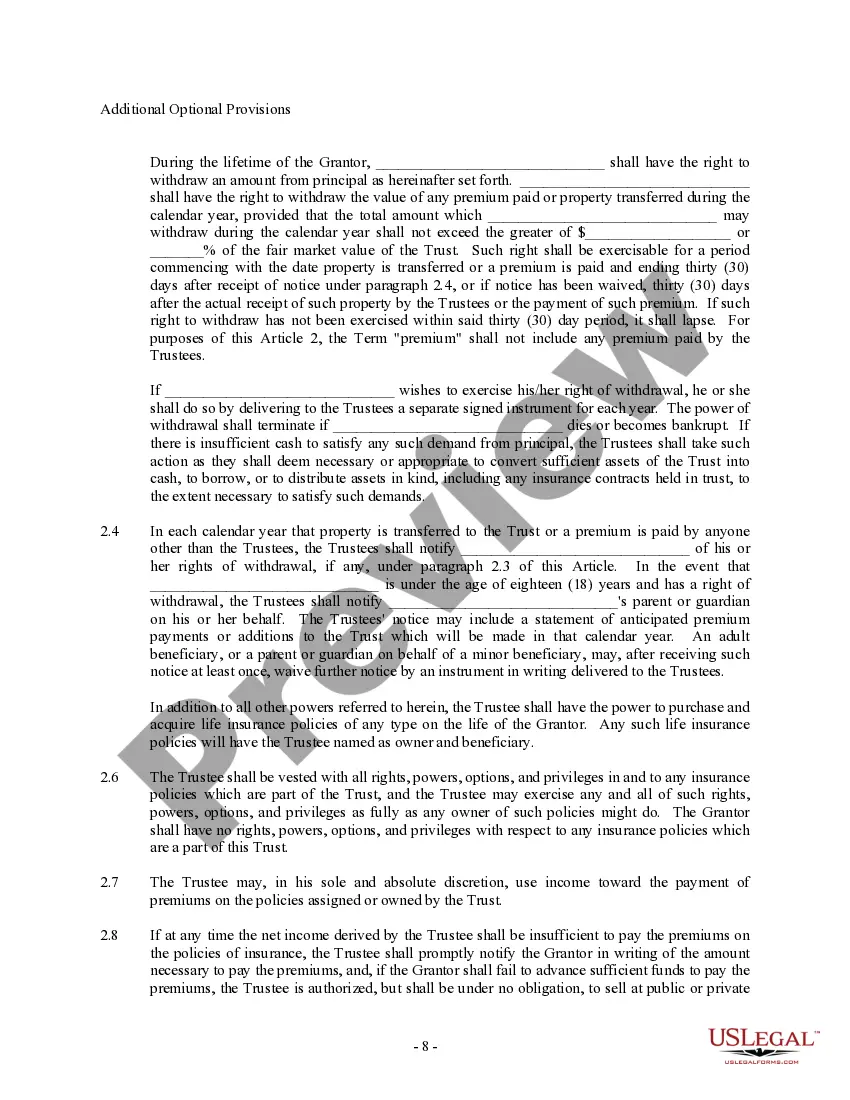
A trust agreement is a legal document containing, terms, conditions and provisions that allows the trustor to transfer the ownership of assets to the trustee to be held for the trustor's beneficiaries.