Subscription Agreements With The United States
Description

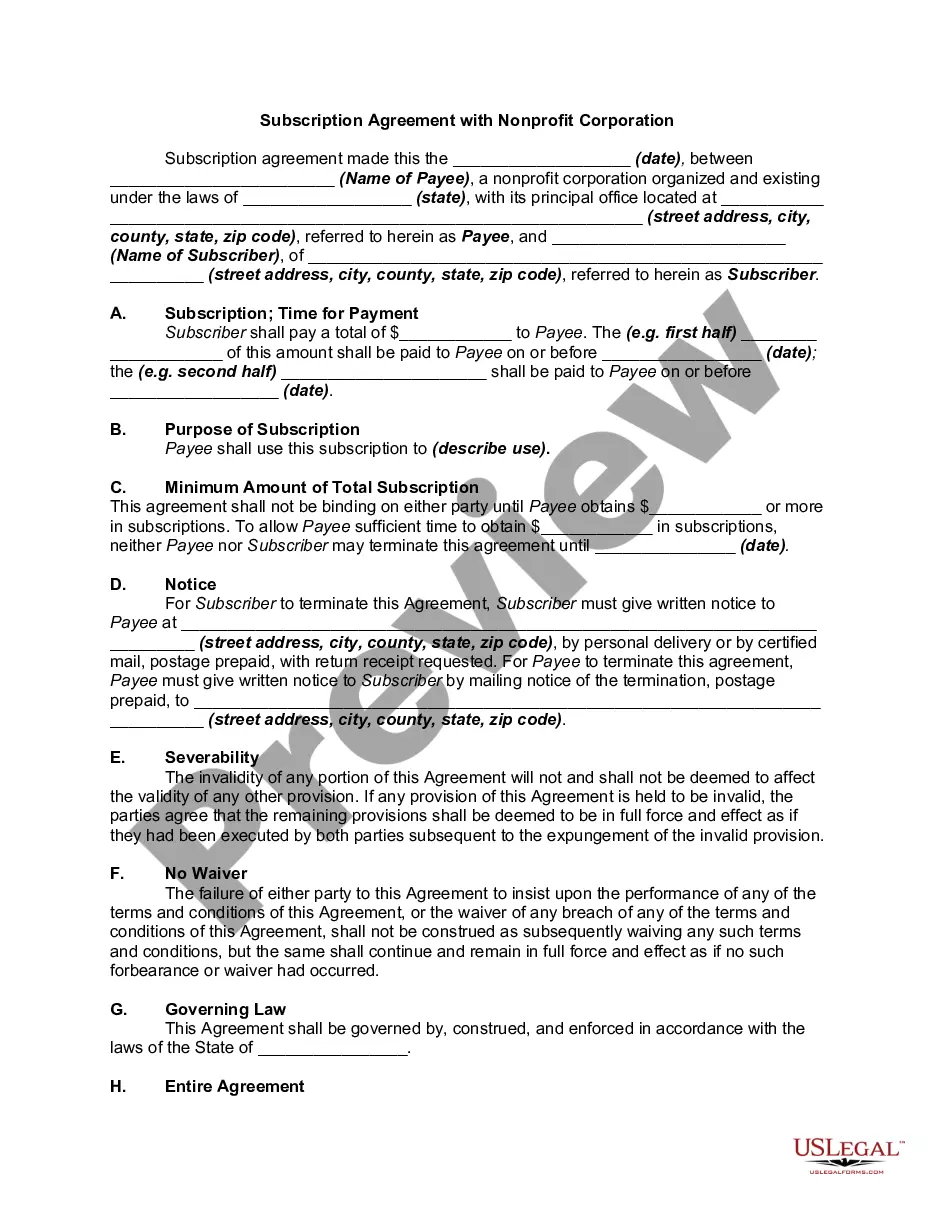



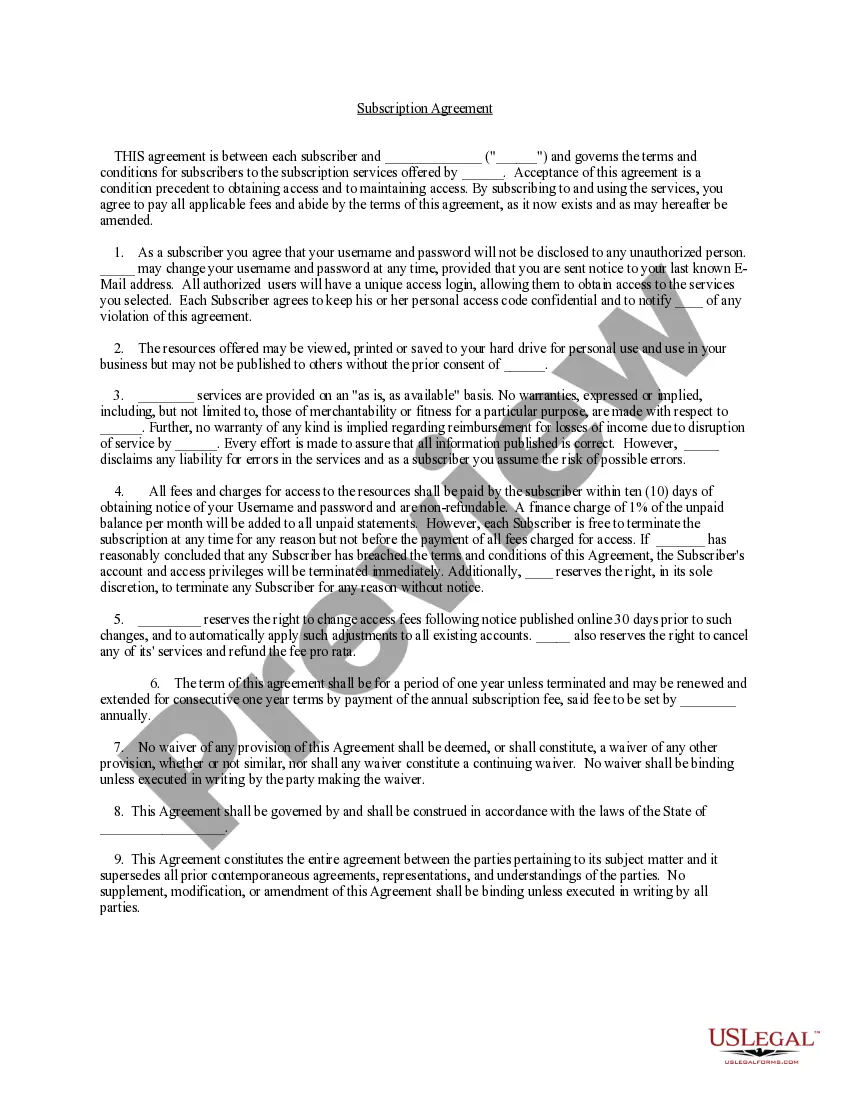
How to fill out Subscription Agreement?
- Log in to your account at US Legal Forms if you're a returning user. Ensure that your subscription is active before proceeding.
- Check out the Preview mode and form descriptions to confirm you've selected the correct subscription agreement that meets local jurisdiction requirements.
- If necessary, utilize the Search feature to find the right template. Make sure it aligns with your legal needs.
- Once you’ve identified the correct document, click on the Buy Now button and select your preferred subscription plan. An account registration will be necessary to access the resources.
- Complete the payment process by entering your credit card details or using your PayPal account to finalize your subscription.
- After payment, download your chosen form to your device. You can find it anytime in the My Forms section of your profile.
In conclusion, US Legal Forms offers a comprehensive legal form library that empowers users to effortlessly navigate subscription agreements with the United States. With over 85,000 forms available, you're bound to find exactly what you need.
Don't hesitate to take advantage of the vast resources at US Legal Forms—start your document journey today!
Form popularity
FAQ
The distinction lies in their primary functions. A subscription agreement focuses on the acquisition of shares and the financial relationship between investors and the company. Conversely, an Operating Agreement governs the management structure and operational procedures of an LLC. Understanding these differences is essential for anyone navigating the complexities of subscription agreements with the United States.
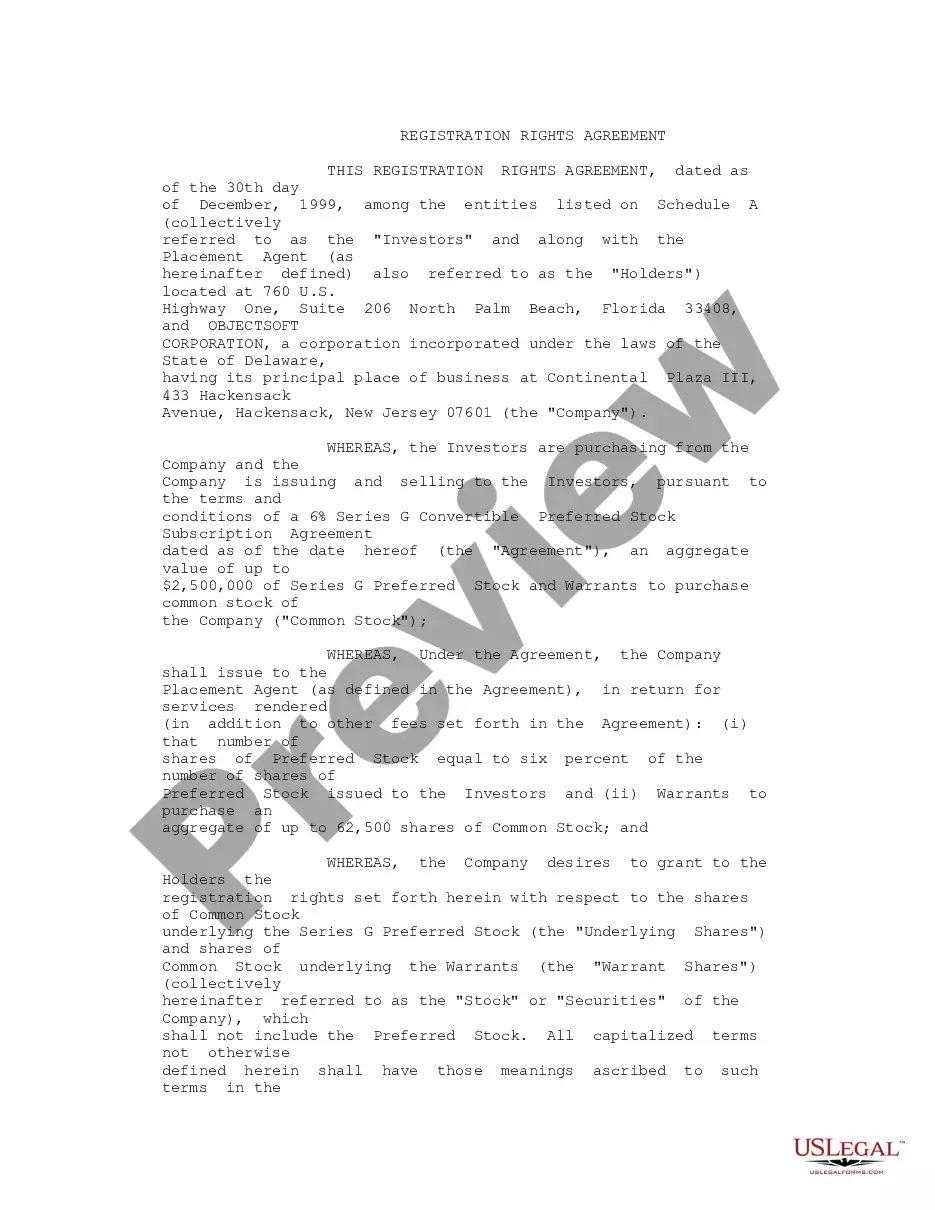
A subscription agreement is a legal document that formalizes an investor's commitment to acquire shares in a company. It typically contains important information such as investment amount, payment methods, and terms related to the issuance of shares. This important legal tool is crucial for both companies and investors to establish clear expectations in subscription agreements with the United States.
A limited partnership agreement establishes the relationship between general and limited partners, detailing their roles, liabilities, and sharing of profits. In contrast, a subscription agreement with the United States relates directly to the process of an investor buying shares in a company. While both documents are important in business finance, a limited partnership agreement concerns operational structure, whereas a subscription agreement focuses solely on equity investment.
A partnership agreement outlines the responsibilities and profit-sharing arrangements among partners in a business, while a subscription agreement specifically addresses the purchasing of shares in a company. Essentially, partnership agreements focus on the operational aspects, whereas subscription agreements with the United States concentrate on the financial commitment of acquiring equity. Understanding these differences is crucial for anyone entering into these types of agreements.
While not always mandatory, a subscription agreement is highly advisable. It provides a written record of each party’s agreement on share purchases, protecting everyone's interests. Having such an agreement can foster transparency and prevent conflicts later on. Utilizing subscription agreements with the United States can significantly enhance your business dealings.
A subscription letter is not always necessary but can be beneficial. It acts as a formal confirmation of your intent to subscribe to shares in an LLC. This document can simplify communication and clarify intentions. For those interested in subscription agreements with the United States, it is recommended to ensure all documentation is clear and comprehensive.
Yes, a subscription agreement is legally binding once both parties sign it. This means that all parties are obligated to adhere to the terms outlined in the agreement. If one party fails to meet the terms, the other party has the right to seek legal recourse. Therefore, understanding subscription agreements with the United States is crucial to ensure compliance and enforceability.
While it's not always legally required, having an operating agreement for your LLC is highly recommended. This document acts as the foundation for your business, outlining management structure, member roles, and operational procedures. An agreement helps prevent disputes among members and shows potential investors that your business is organized. Therefore, subscribing to agreements with the United States can provide peace of mind and clarity.
Yes, you typically need a subscription agreement for an LLC. This document outlines the terms and conditions under which a member can buy into the company. It helps protect both the LLC and its members by clearly defining their investment rights and obligations. Subscription agreements with the United States ensure that all parties involved understand their roles and responsibilities.