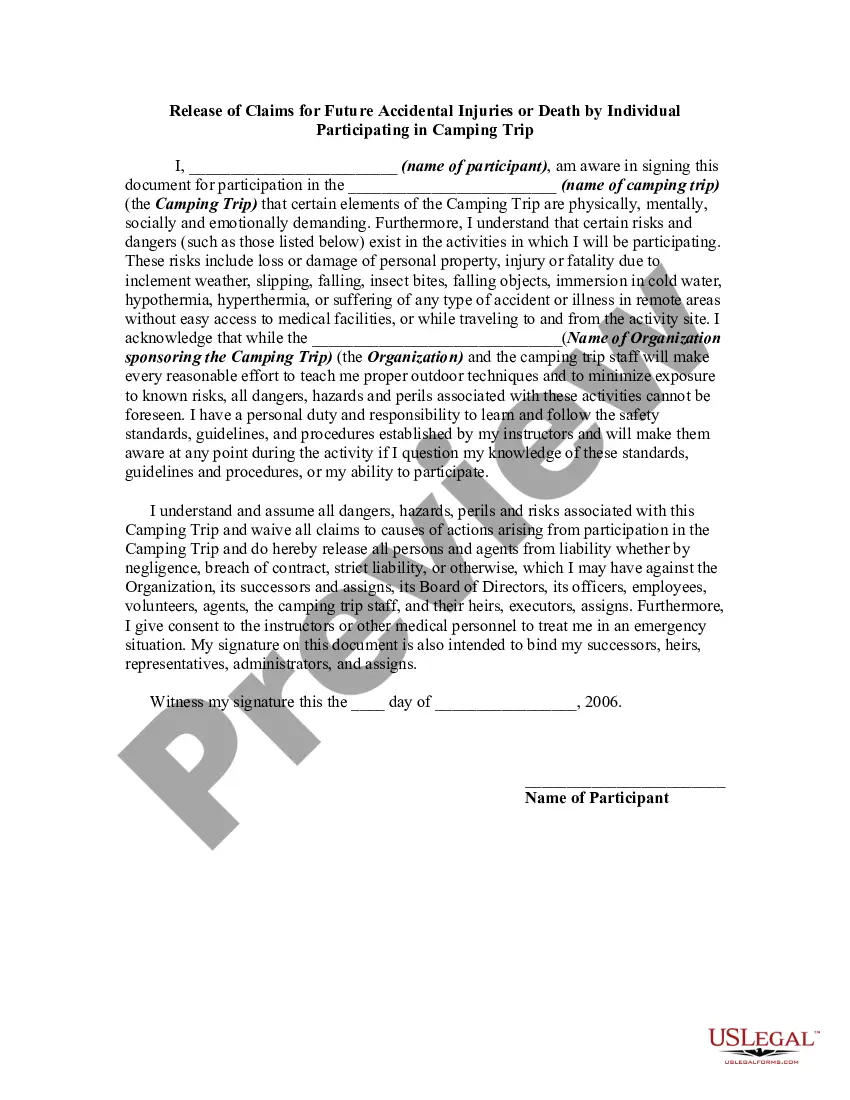
Claims Accidental With Theft
Description
Get your form ready online
Our built-in tools help you complete, sign, share, and store your documents in one place.
Make edits, fill in missing information, and update formatting in US Legal Forms—just like you would in MS Word.
Download a copy, print it, send it by email, or mail it via USPS—whatever works best for your next step.
Sign and collect signatures with our SignNow integration. Send to multiple recipients, set reminders, and more. Go Premium to unlock E-Sign.
If this form requires notarization, complete it online through a secure video call—no need to meet a notary in person or wait for an appointment.
We protect your documents and personal data by following strict security and privacy standards.

Make edits, fill in missing information, and update formatting in US Legal Forms—just like you would in MS Word.

Download a copy, print it, send it by email, or mail it via USPS—whatever works best for your next step.

Sign and collect signatures with our SignNow integration. Send to multiple recipients, set reminders, and more. Go Premium to unlock E-Sign.

If this form requires notarization, complete it online through a secure video call—no need to meet a notary in person or wait for an appointment.

We protect your documents and personal data by following strict security and privacy standards.
Looking for another form?







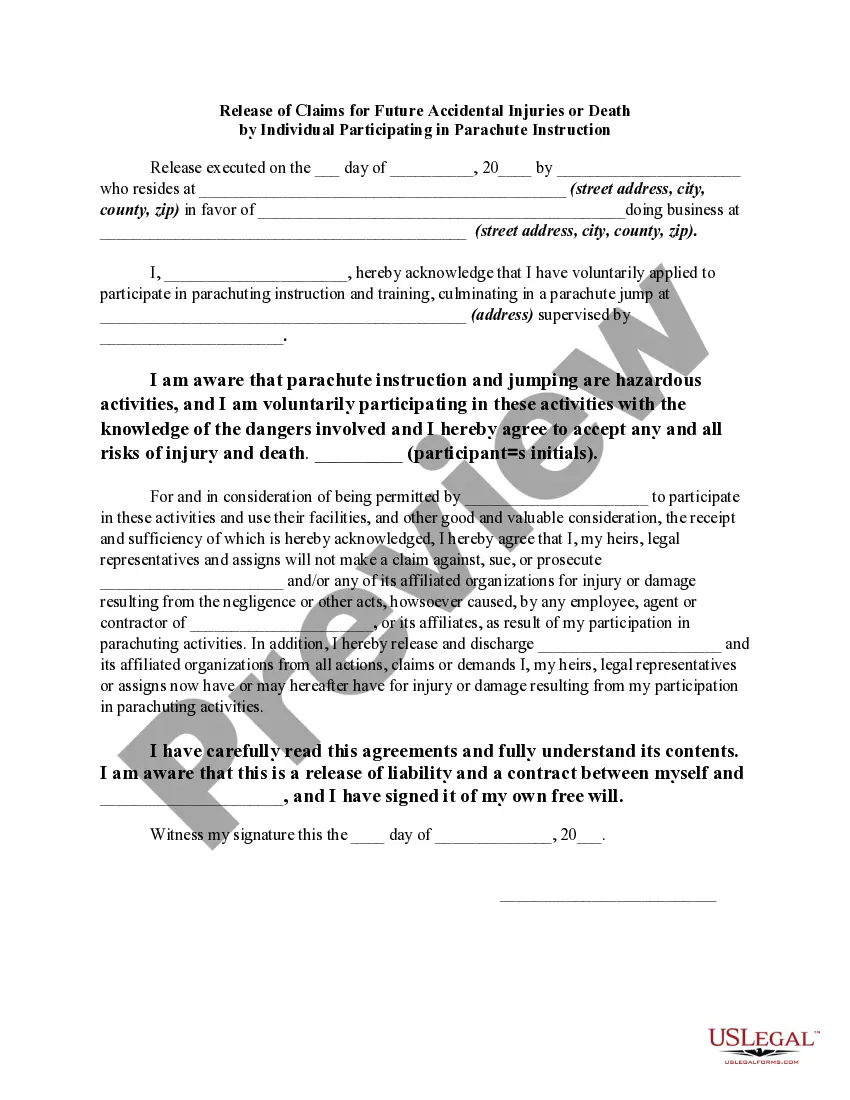
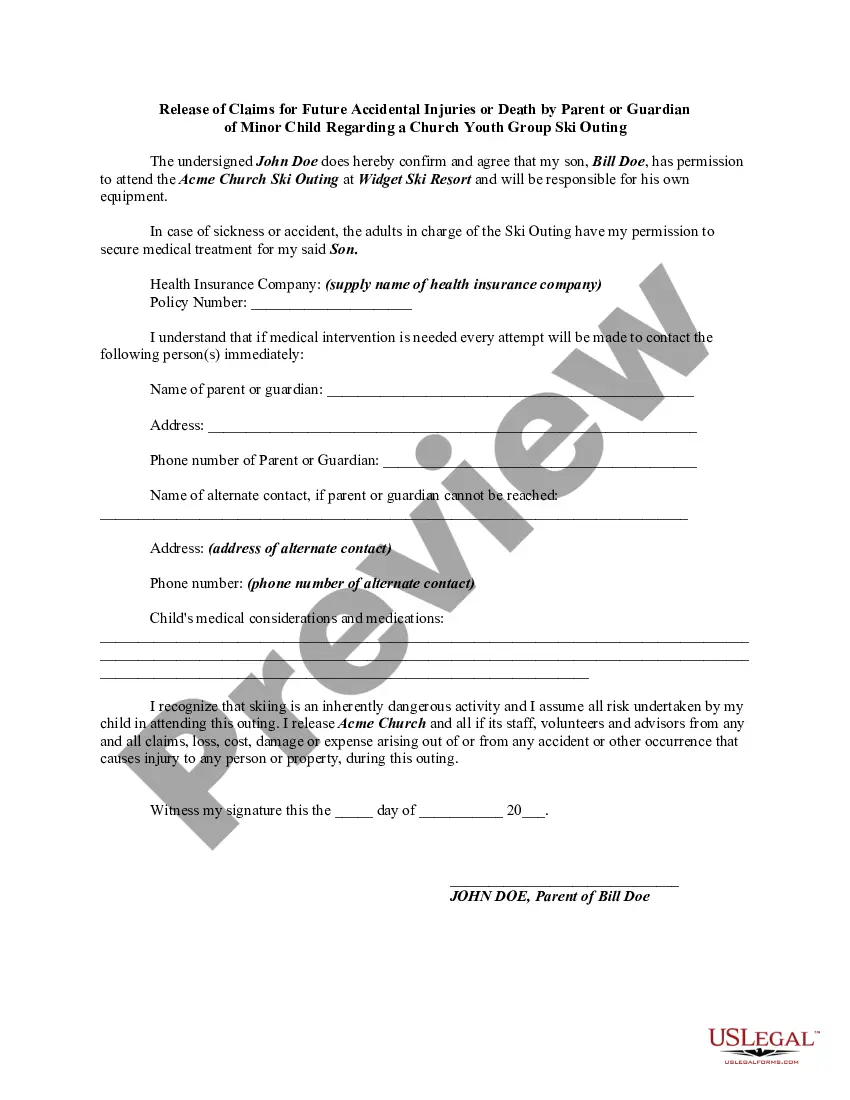
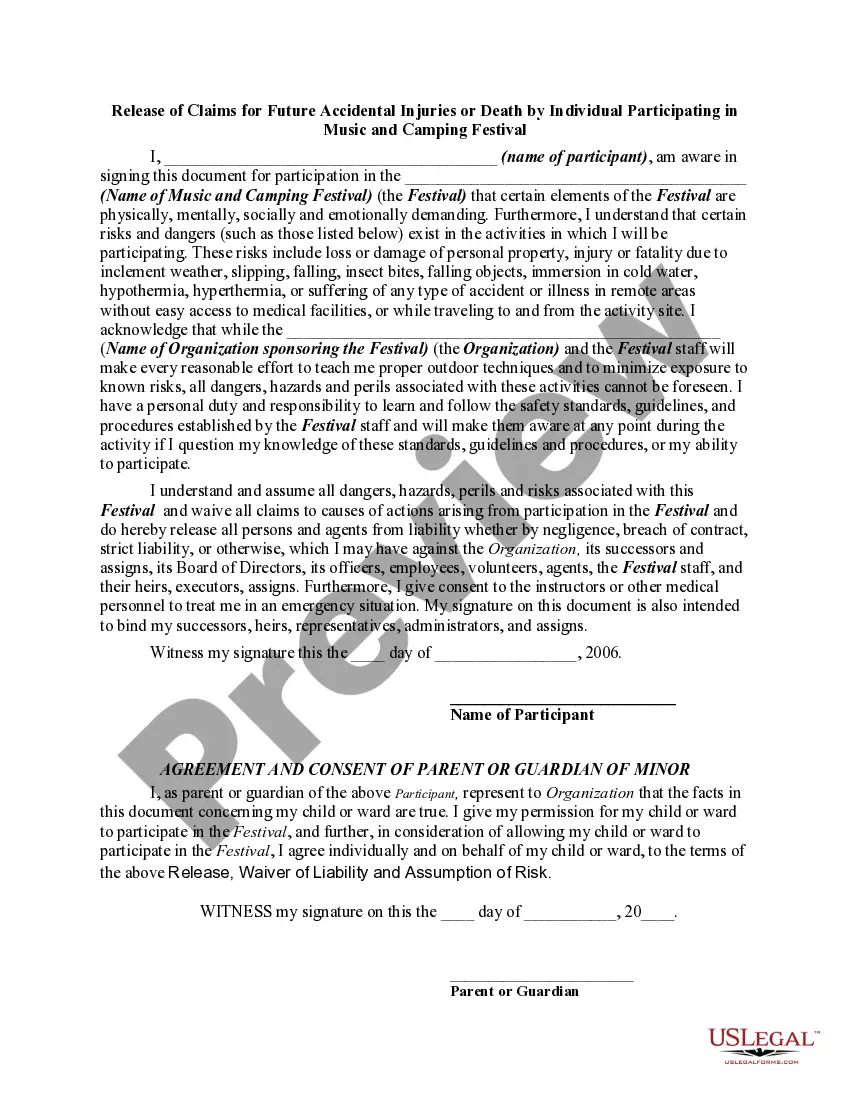
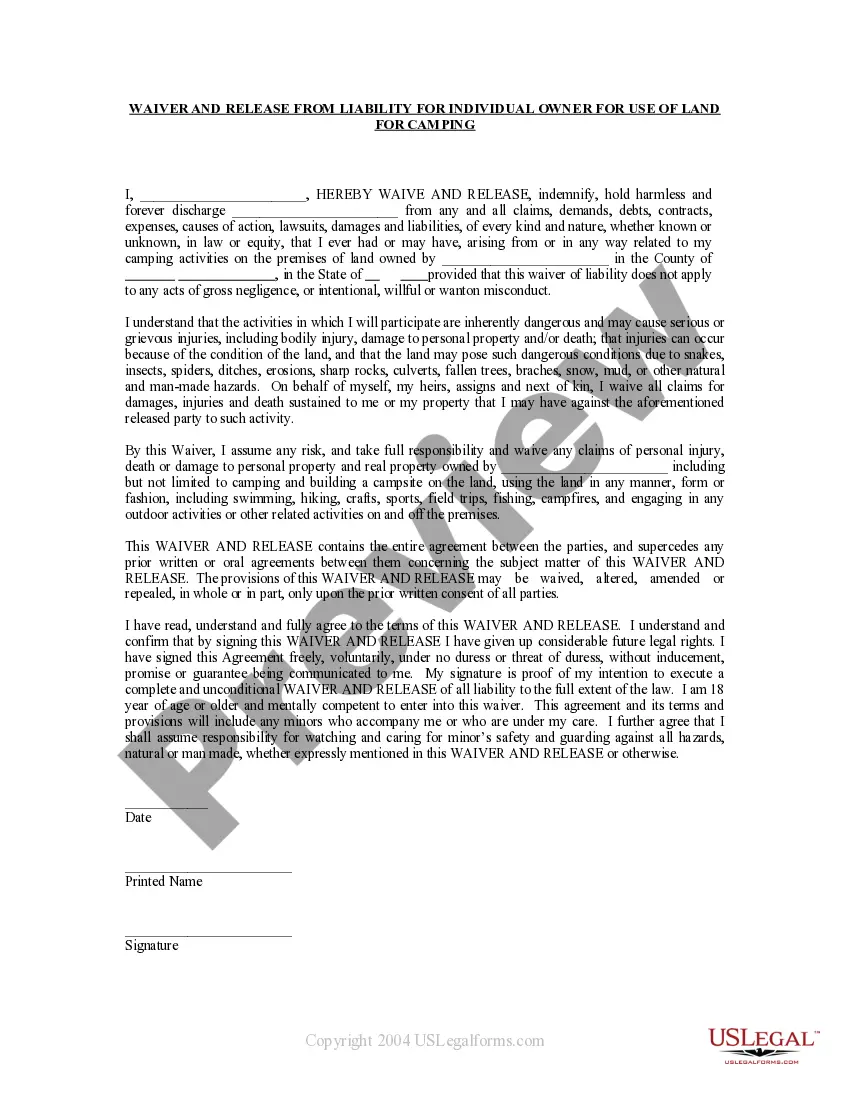
How to fill out Release Of Claims For Future Accidental Injuries Or Death By Individual Participating In Camping Trip?
- Log into your US Legal Forms account if you have one. If not, create a new account to get started.
- Explore the extensive library of forms and use the search feature to locate the 'Claims accidental with theft' template.
- Check the preview mode and form description to ensure it meets your specific needs and complies with your local laws.
- Select the correct template and click on the 'Buy Now' button to choose a subscription plan that suits you.
- Complete the purchase by providing your payment details, either through credit card or PayPal, to access the form.
- Download the document to your device and access it in the 'My Forms' section whenever you need it.
By following these steps, you can efficiently acquire the forms necessary for filing a claim after theft. US Legal Forms not only saves you time but also ensures that your documents are compliant and thorough.
Start your journey today with US Legal Forms and empower yourself to easily manage your legal document needs!
Form popularity
FAQ
To claim a theft loss on your taxes, you must report it on IRS Form 4684 for casualty and theft losses. The IRS allows you to deduct the loss amount that exceeds any insurance reimbursement. Documentation is crucial, so keep records of the theft incident and any associated costs. Resources like US Legal Forms can help you navigate the process smoothly.
Filing a claim for an accidental theft can be beneficial, especially if the loss exceeds your deductible. However, consider the potential impact on your future premiums. If your claim results in a significant rate increase, it may not be worth it. Weigh your options carefully, and consult your insurance provider for guidance.
When you file claims accidental with theft, it is possible that your insurance premiums may increase. Insurance companies often view theft claims as a higher risk, which can lead to adjustments in your policy. However, each insurer has different policies regarding claims. It's a good idea to check with your insurance provider to understand how filing a theft claim might impact your rates.
Accidental damage protection covers unexpected harm to your property, including spills, drops, or breakage due to unforeseen events. However, it typically excludes theft and intentional acts. Understanding the limitations of your accidental damage policy helps you assess your overall protection. To safeguard against theft, consider integrating your policy with dedicated coverage.
Physical damage coverage varies but generally does not cover theft. Instead, it focuses on damage caused by accidents or unexpected events. For situations involving claims accidental with theft, you should consider a separate policy that addresses theft specifically. Review your current coverage to ensure you are adequately protected.
Theft is typically covered under a comprehensive insurance policy or specialized theft coverage. This type of insurance protects you financially if your property is stolen, allowing you to file claims accidental with theft. It’s essential to know the differences between policies, as not all homeowners or renters insurance automatically include theft coverage. Always clarify your coverage options with your provider.
Accidental damage policies often exclude specific scenarios, such as intentional harm or regular wear and tear. It is important to know that theft usually falls outside of covered incidents for accidental damage. Thus, you may need a dedicated theft policy to protect against losses. Check your policy details to clarify what is not included.
Accidental damage typically does not cover theft. Accidental damage insurance focuses on unintentional harm to your property. When dealing with claims accidental with theft, it is essential to understand the specific terms of your policy. Review your coverage details to see if separate theft coverage exists.
Yes, theft can indeed be unintentional. Unintentional acts occur when individuals mistakenly take items without realizing they do not belong to them. Still, these situations can lead to complex legal discussions regarding claims accidental with theft. It is vital to consult with a legal professional to navigate these waters effectively and safeguard your interests.
While unintended actions may feel less severe, taking someone else's property can still be considered stealing legally. Intent is critical, but accidental theft can still result in legal ramifications. If you find yourself in such a situation, acknowledging the mistake and taking responsibility can often alleviate complications. Legal resources, like uslegalforms, can help you understand your situation better.