Audit For Business
Description
Get your form ready online
Our built-in tools help you complete, sign, share, and store your documents in one place.
Make edits, fill in missing information, and update formatting in US Legal Forms—just like you would in MS Word.
Download a copy, print it, send it by email, or mail it via USPS—whatever works best for your next step.
Sign and collect signatures with our SignNow integration. Send to multiple recipients, set reminders, and more. Go Premium to unlock E-Sign.
If this form requires notarization, complete it online through a secure video call—no need to meet a notary in person or wait for an appointment.
We protect your documents and personal data by following strict security and privacy standards.

Make edits, fill in missing information, and update formatting in US Legal Forms—just like you would in MS Word.

Download a copy, print it, send it by email, or mail it via USPS—whatever works best for your next step.

Sign and collect signatures with our SignNow integration. Send to multiple recipients, set reminders, and more. Go Premium to unlock E-Sign.

If this form requires notarization, complete it online through a secure video call—no need to meet a notary in person or wait for an appointment.

We protect your documents and personal data by following strict security and privacy standards.
Looking for another form?









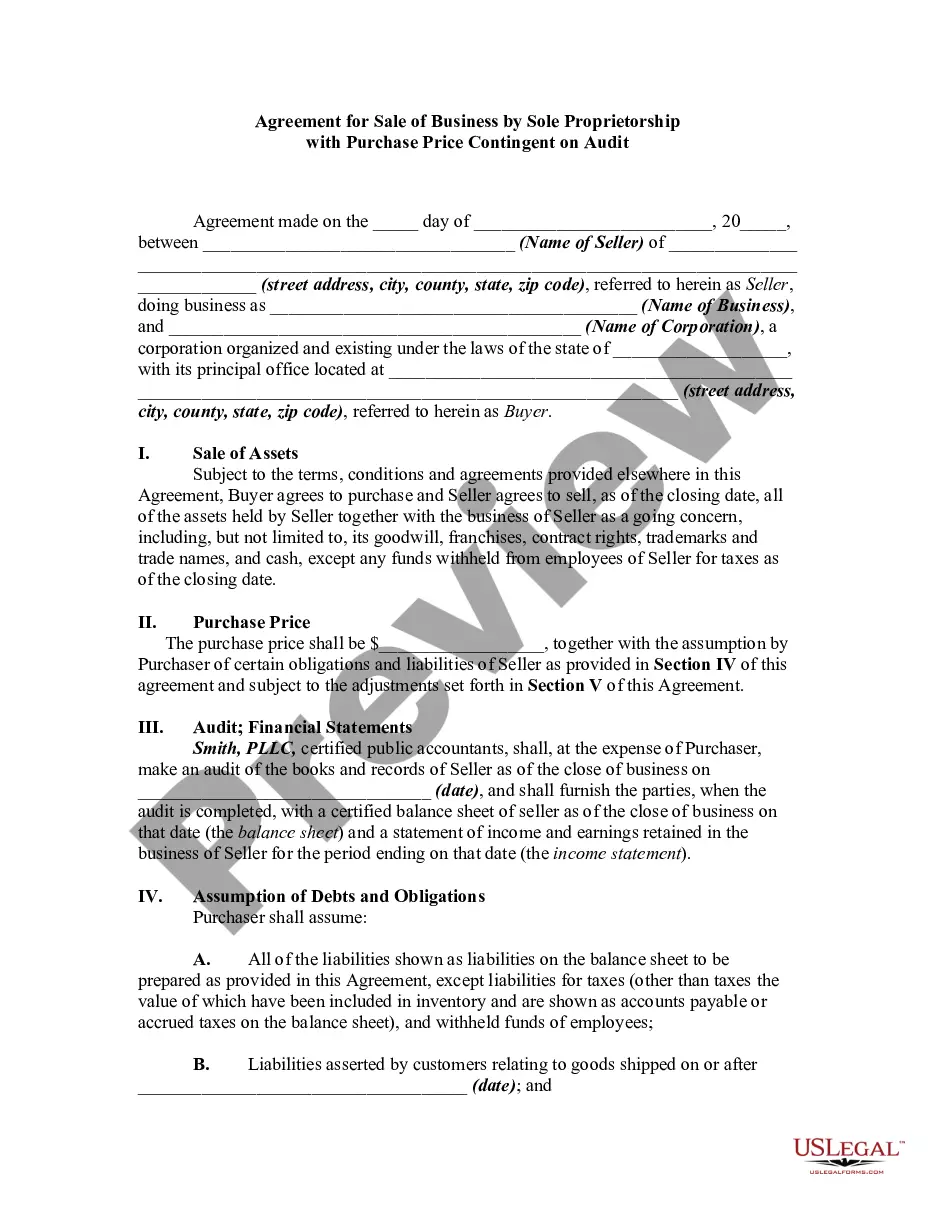
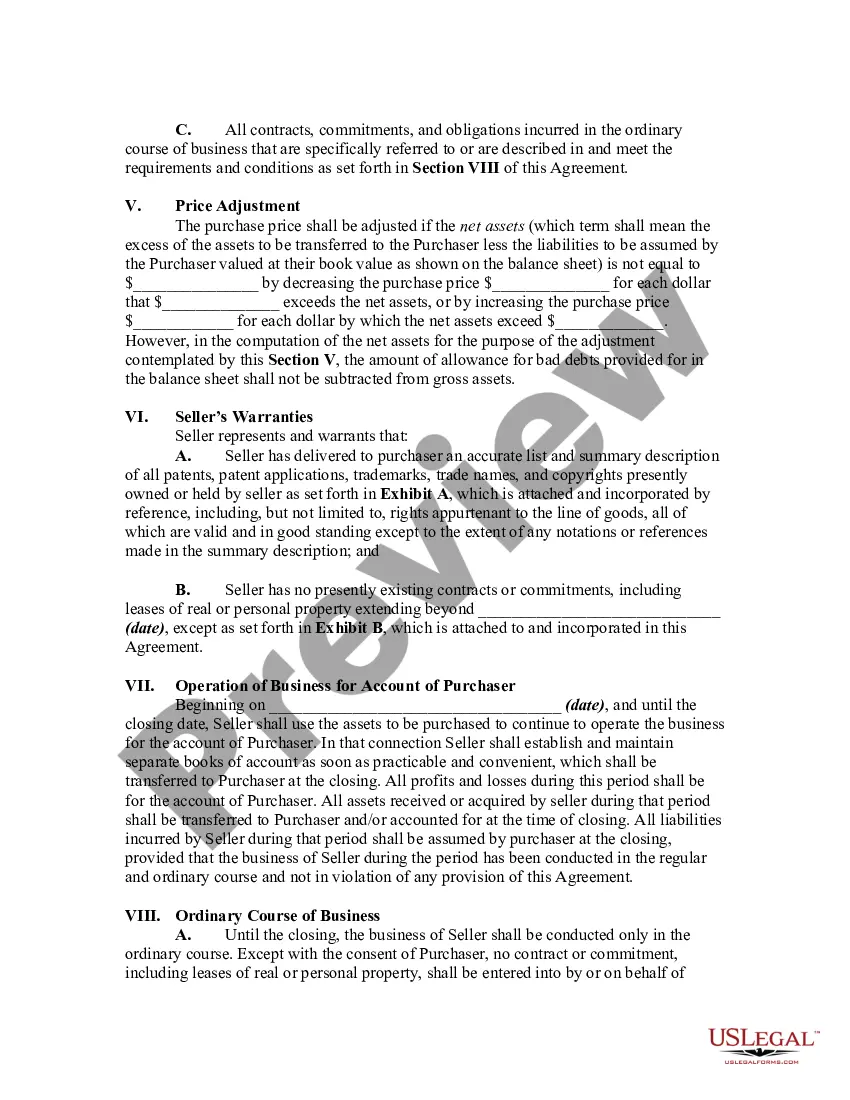
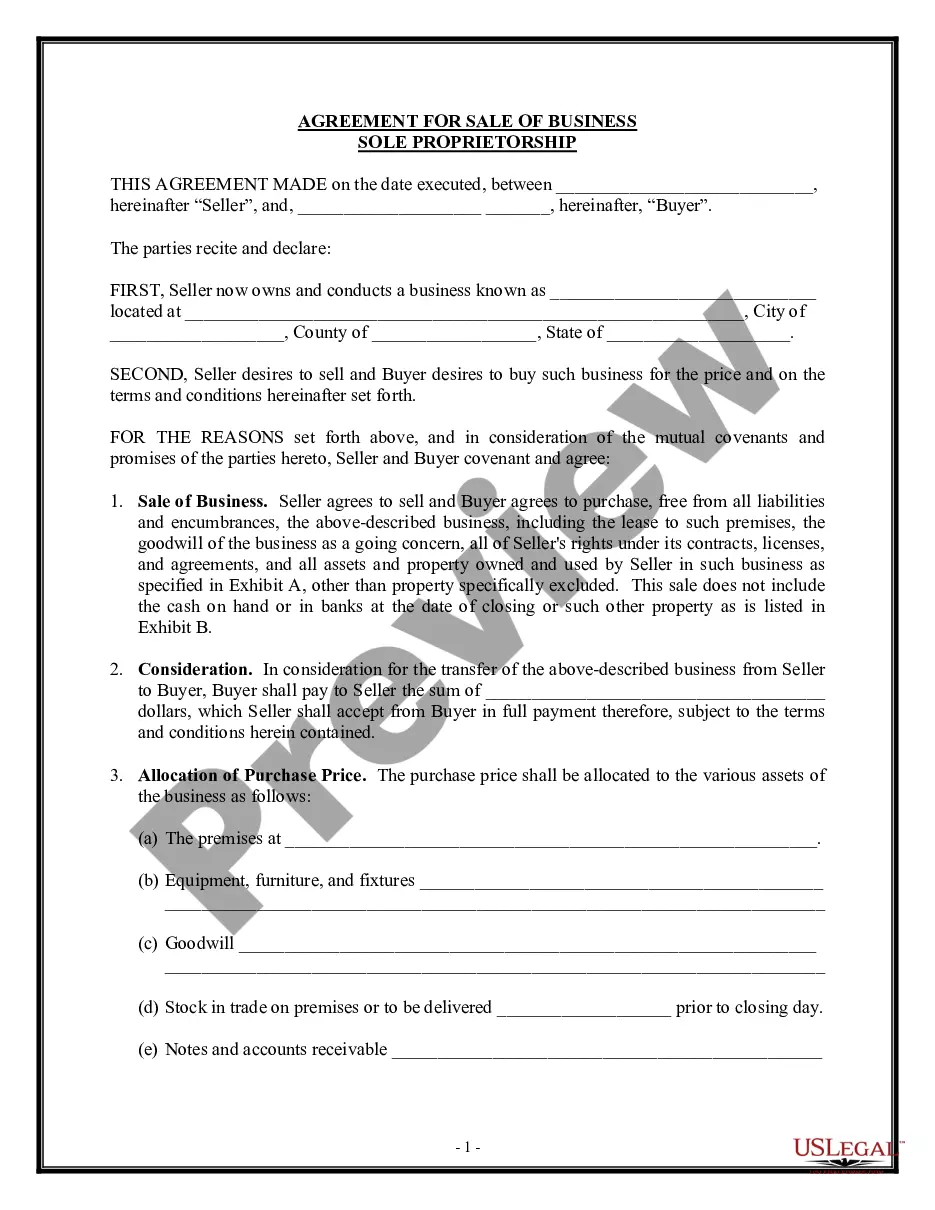
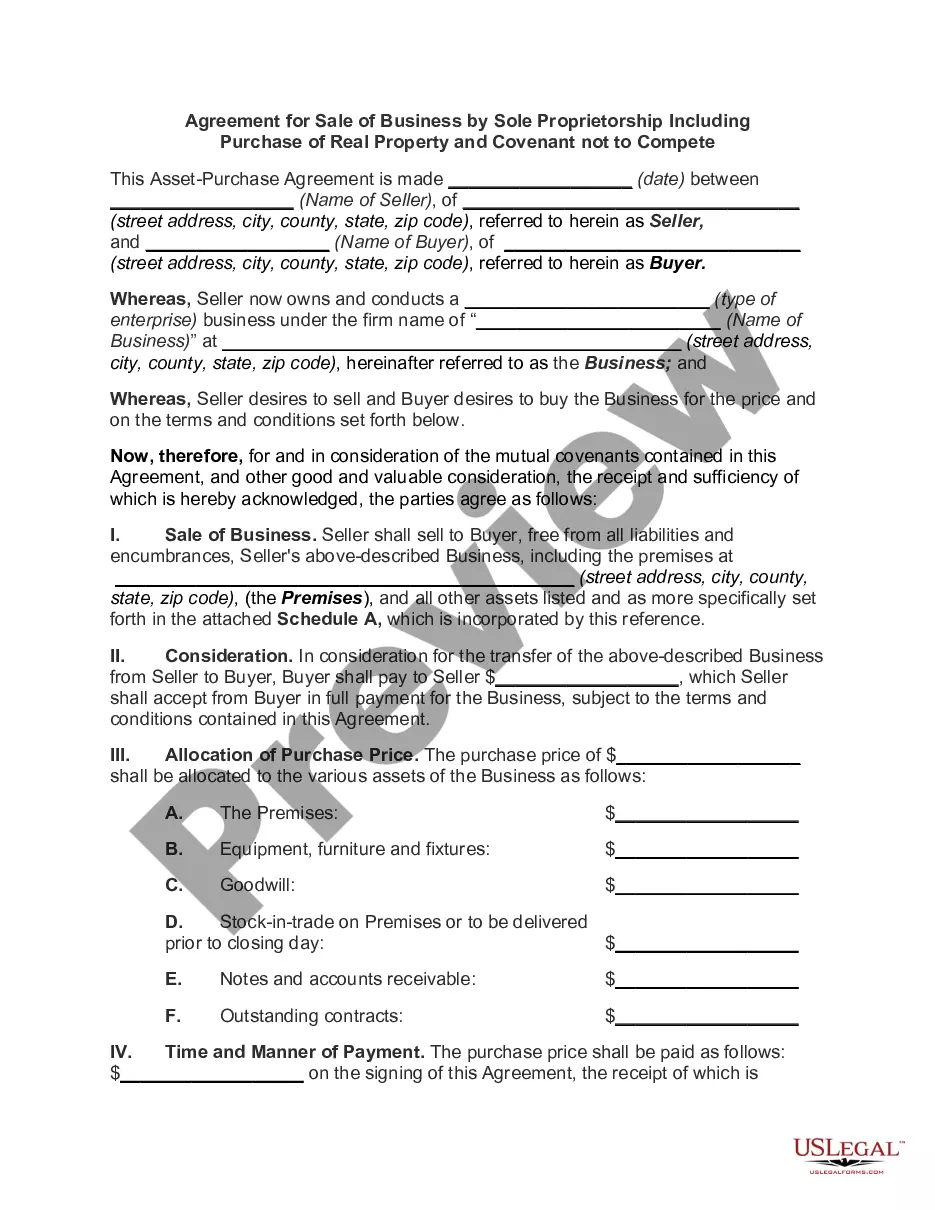
How to fill out Agreement For Sale Of Business By Sole Proprietorship With Purchase Price Contingent On Audit?
- If you have an existing account, log in to download your preferred form template by selecting the Download button. Ensure your subscription is active; otherwise, renew it as per your plan.
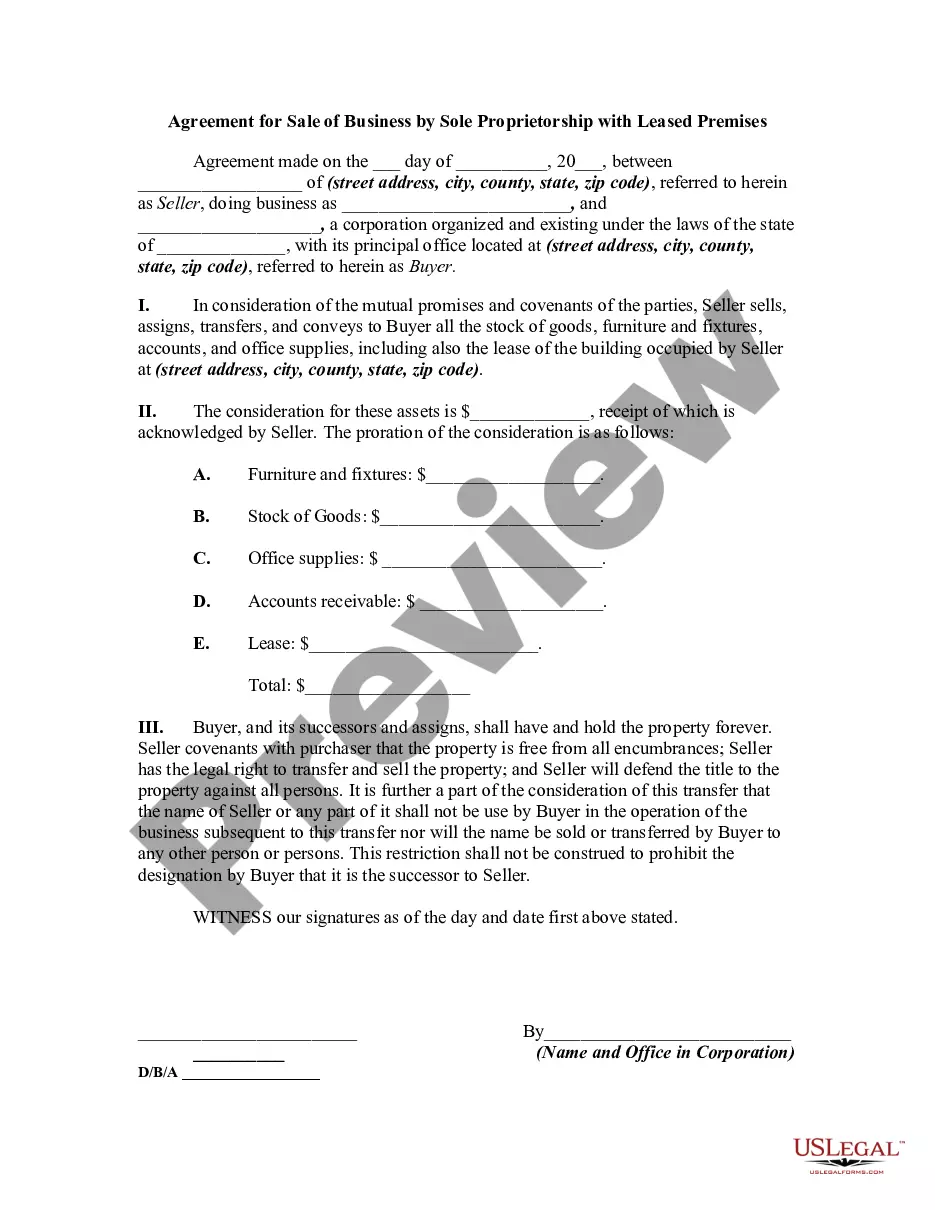
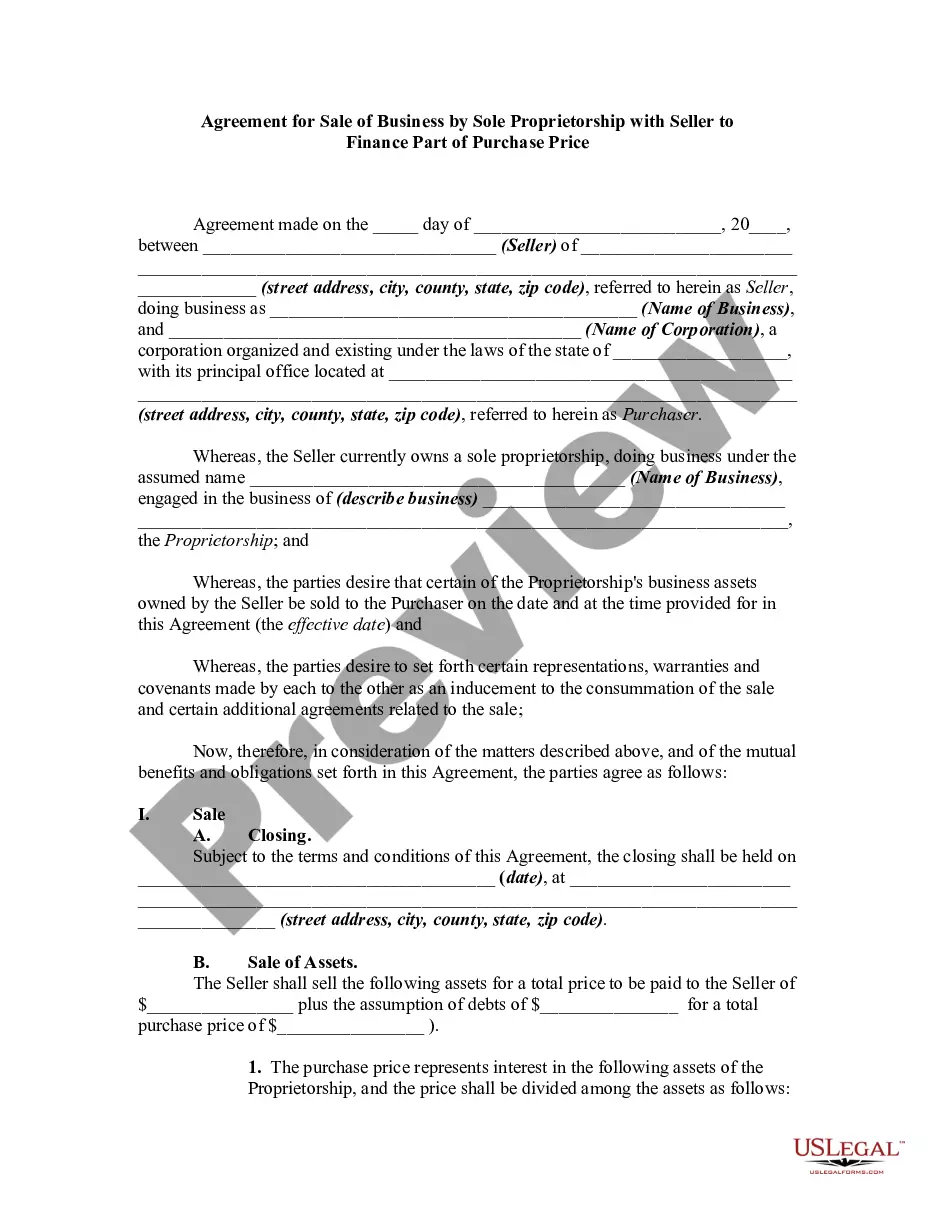
- Review the form description in Preview mode to confirm it meets your local jurisdiction requirements. If your initial choice is not suitable, utilize the Search tab to find the correct template.
- Purchase the document by clicking on the Buy Now button and selecting your desired subscription plan. Account registration is necessary for extensive library access.
- Complete your purchase by entering your payment details via credit card or PayPal.
- Finally, download the necessary form and save it on your device. You can also access it later from the My Forms section of your profile.
By following these straightforward steps, you can leverage US Legal Forms to streamline your audit for business and ensure that your legal documents are accurate and compliant.
Don’t delay; start your journey towards seamless legal documentation today!
Form popularity
FAQ
To perform an audit for business step by step, follow these general phases: planning, fieldwork, and reporting. Begin by defining the scope and objectives of the audit, proceed to gather and analyze data, and finally compile your findings in a detailed report. US Legal Forms can provide valuable support throughout this process.
Conducting an audit for business involves a systematic review of financial records, Internal controls, and compliance with relevant laws. Begin by collecting documents, reviewing transactions, and assessing accounting practices. Consider using platforms like US Legal Forms, which offer resources to assist in executing your audit effectively.
If you suspect a business should be audited, you can report it to the relevant regulatory body or agency. Ensure you provide comprehensive details and any evidence of wrongdoing. Filing an audit request for business involves understanding the procedures specific to your local jurisdiction.
Filing an audit means submitting your financial and operational records for examination by an authorized entity. This process ensures that your business complies with applicable laws and regulations. A thorough audit for business can enhance your credibility and help identify areas for improvement.
To set up a file audit for business, start by determining what records are necessary for review. Then, create a checklist to ensure you collect all relevant documents. By using US Legal Forms, you can access templates and resources that simplify setting up your file audit effectively and efficiently.
Filing an audit for business involves gathering your financial records and submitting necessary documents to the auditing agency. You should ensure all data is organized, complete, and compliant with the relevant guidelines. Utilizing tools or services like US Legal Forms can help streamline this process and ensure you meet all requirements.
Several factors may trigger an IRS audit for your business. Common triggers include reporting discrepancies, underreporting income, excessive deductions, or having a complex business structure. To minimize your audit risk, use reliable software or services, like USLegalForms, that help manage your records accurately and ensure compliance.
The likelihood of receiving an IRS audit for your business depends on several factors, including your income level and the accuracy of your tax return. While the audit rate is low for most businesses, higher-income individuals face increased scrutiny. Staying organized and compliant with tax laws can significantly lower your chances of an audit.
The income level that could trigger an audit for a business varies, but it typically concerns high earners or those with significant discrepancies in their reporting. The IRS often pays close attention to tax returns that display large amounts of income, unusual deductions, or excessive business expenses. It's essential to maintain accurate records to reduce the risk of an audit.
To get an audit for your business, start by gathering your financial records, such as income statements, balance sheets, and transaction histories. You may need to hire a qualified auditor, who will review your documents and identify any inconsistencies or risks. A thorough audit helps ensure compliance with regulations and increases your business's credibility.