Charitable Remainder Trust Withdrawals
Description
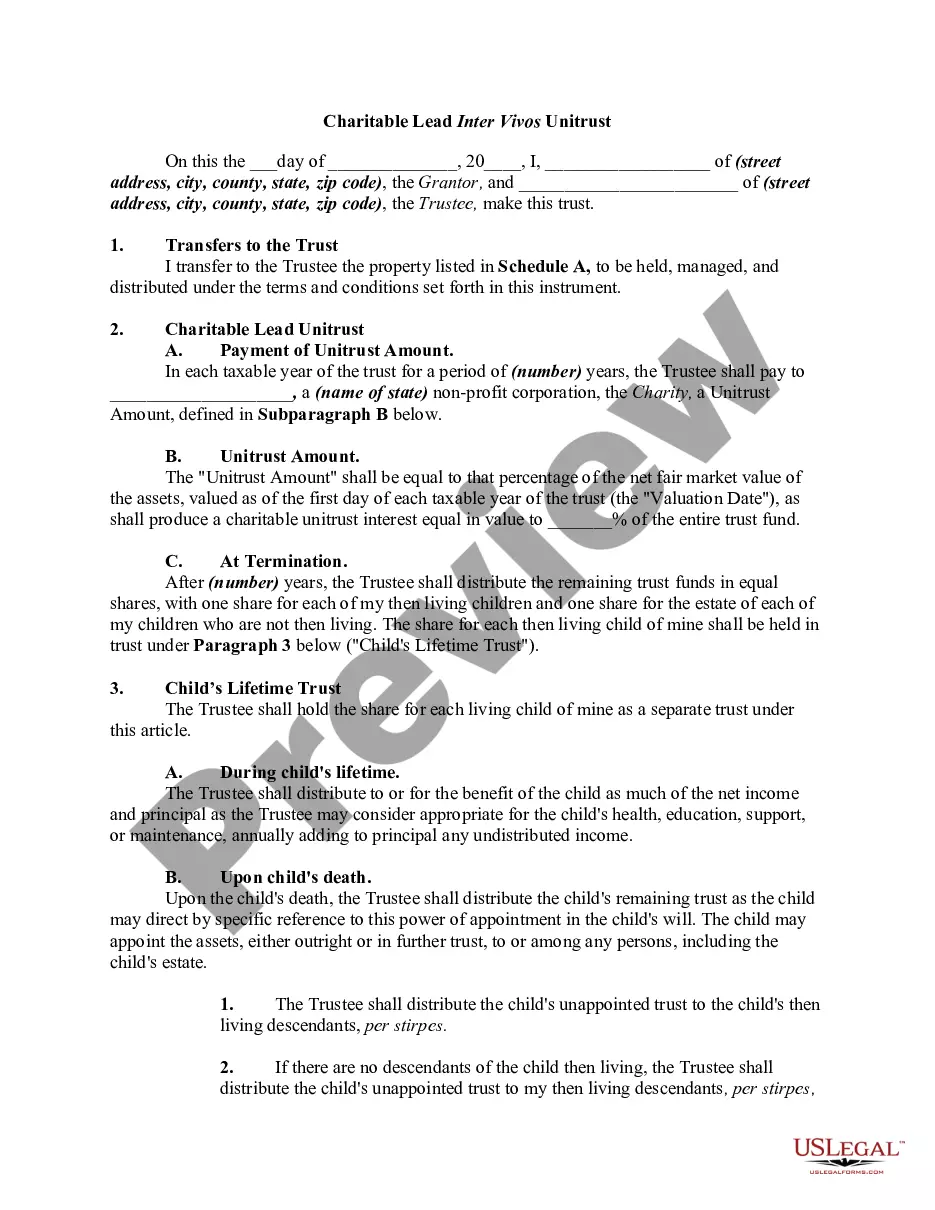
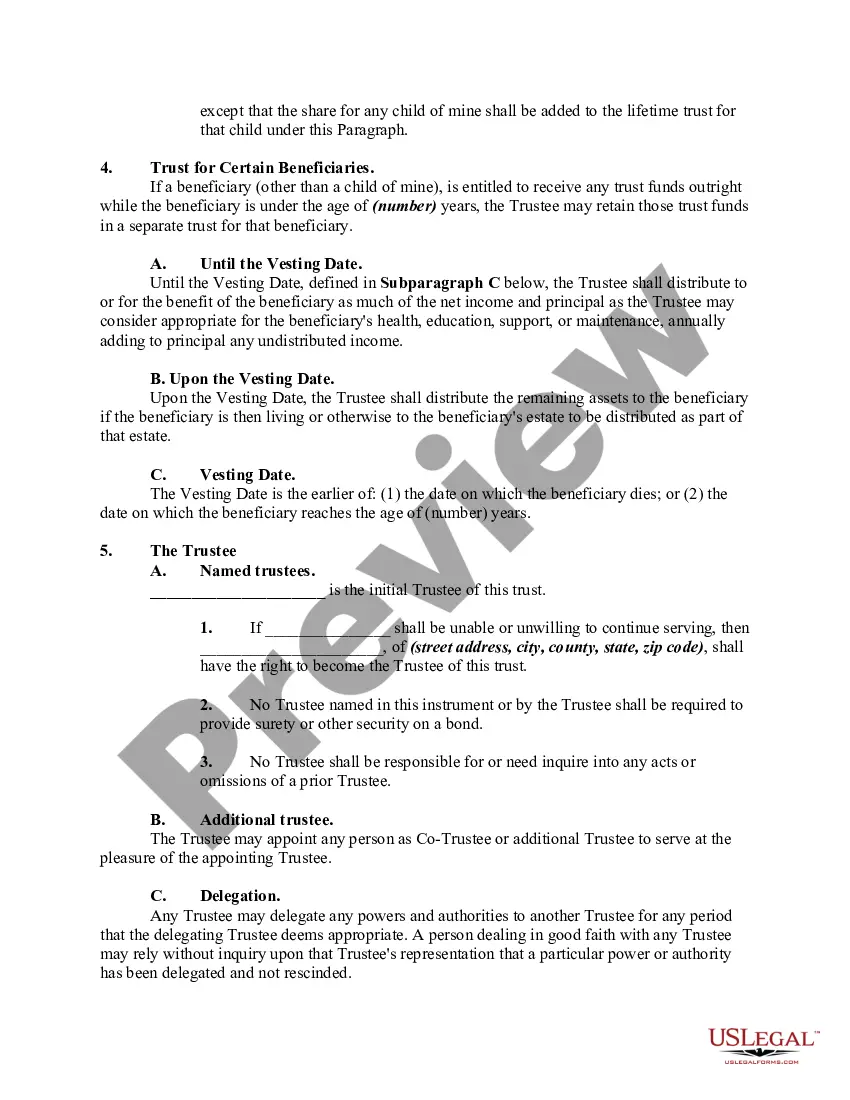
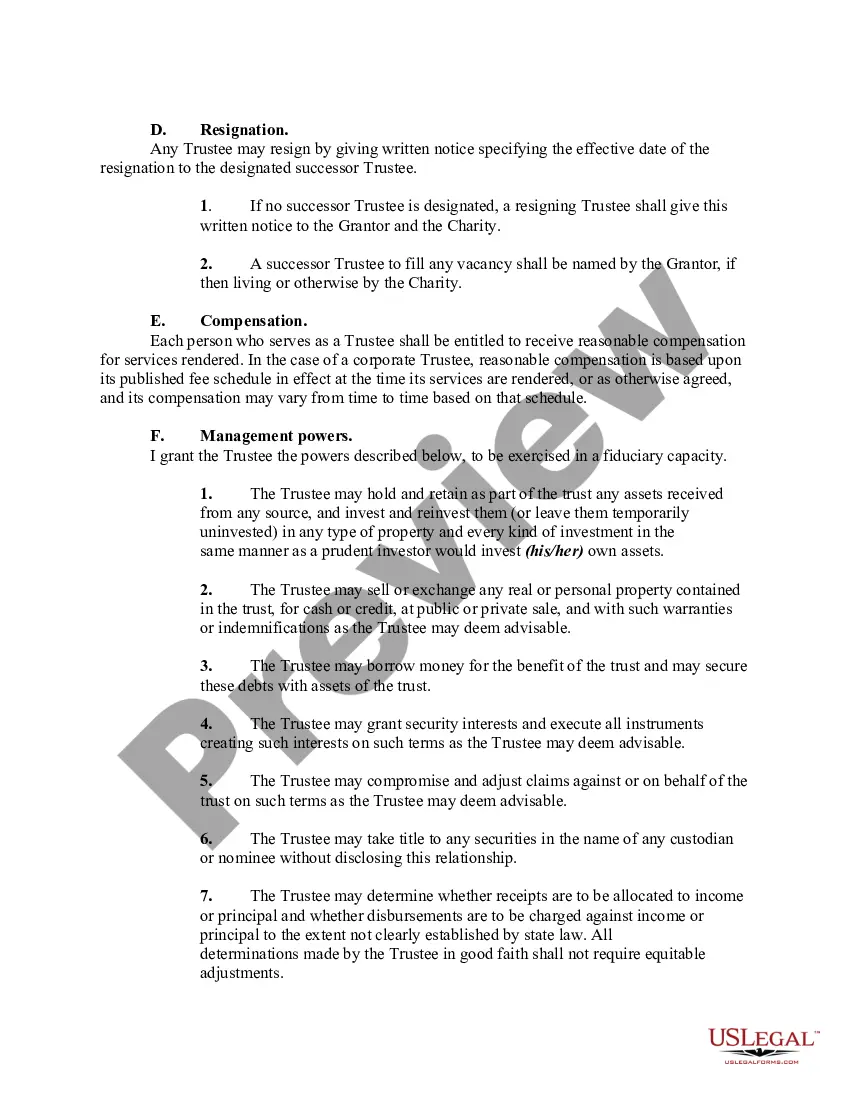
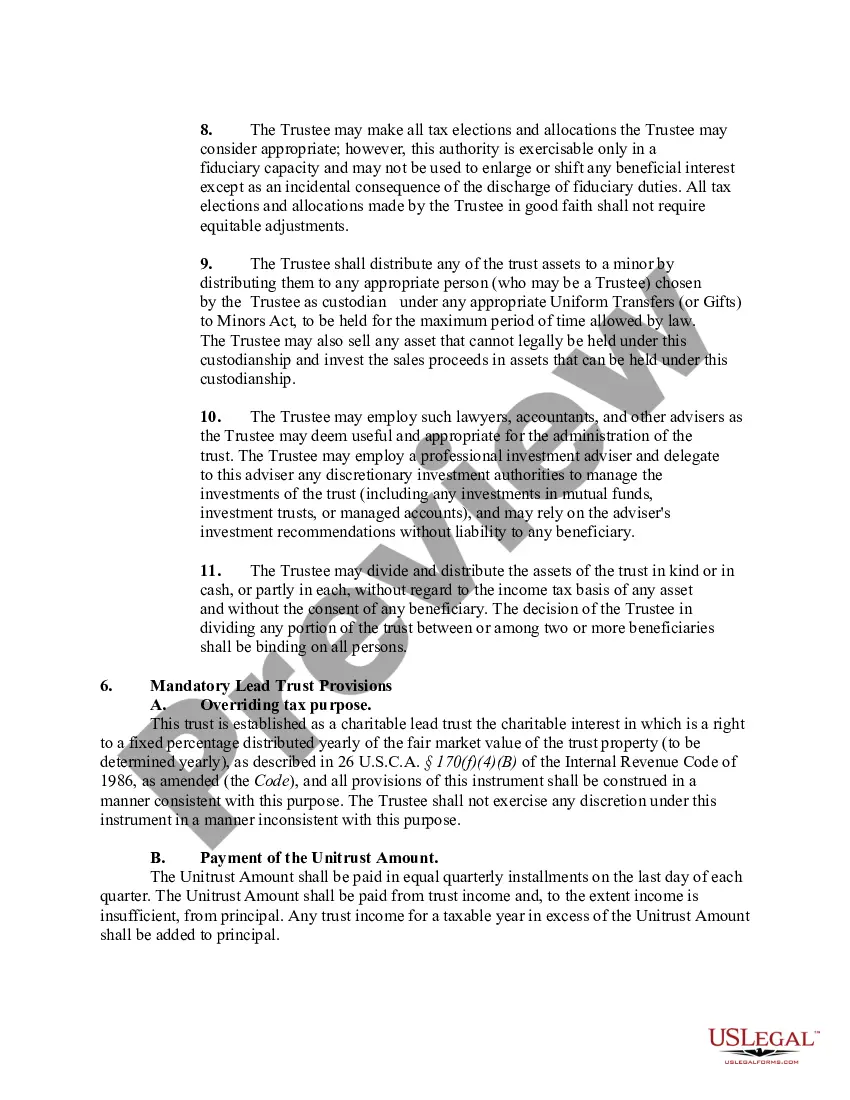
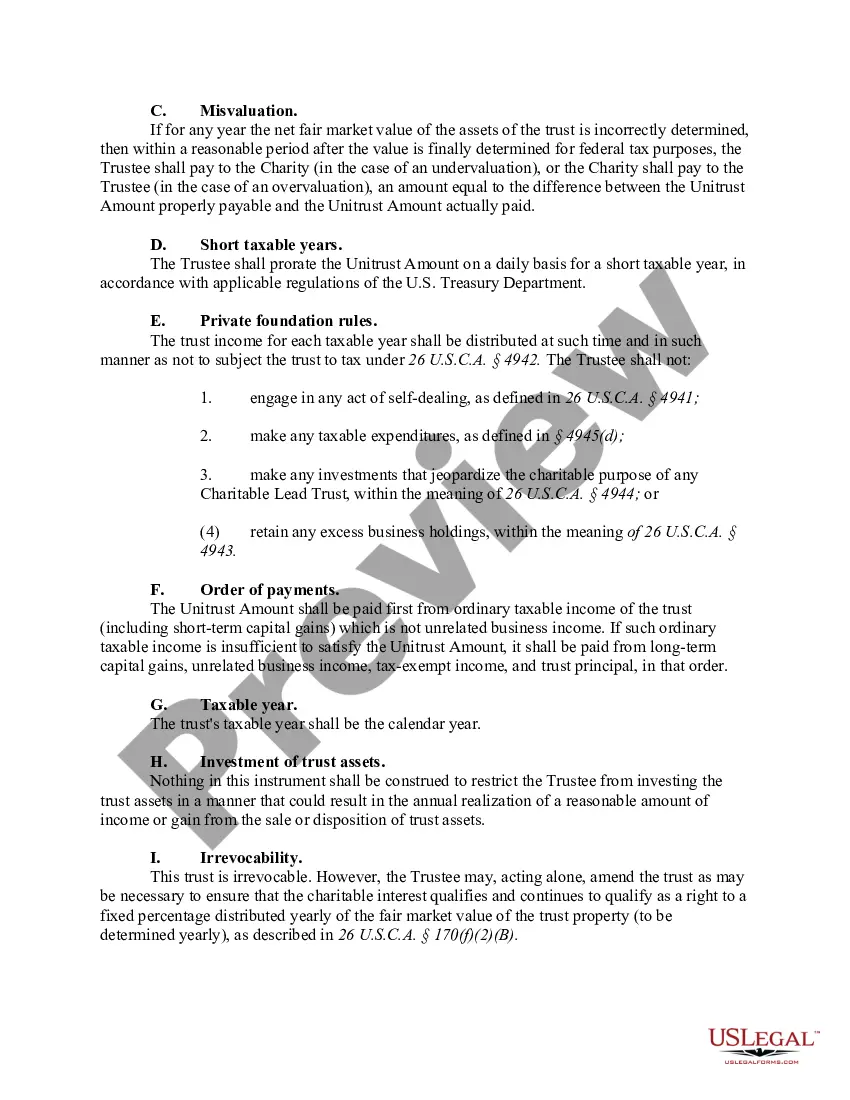
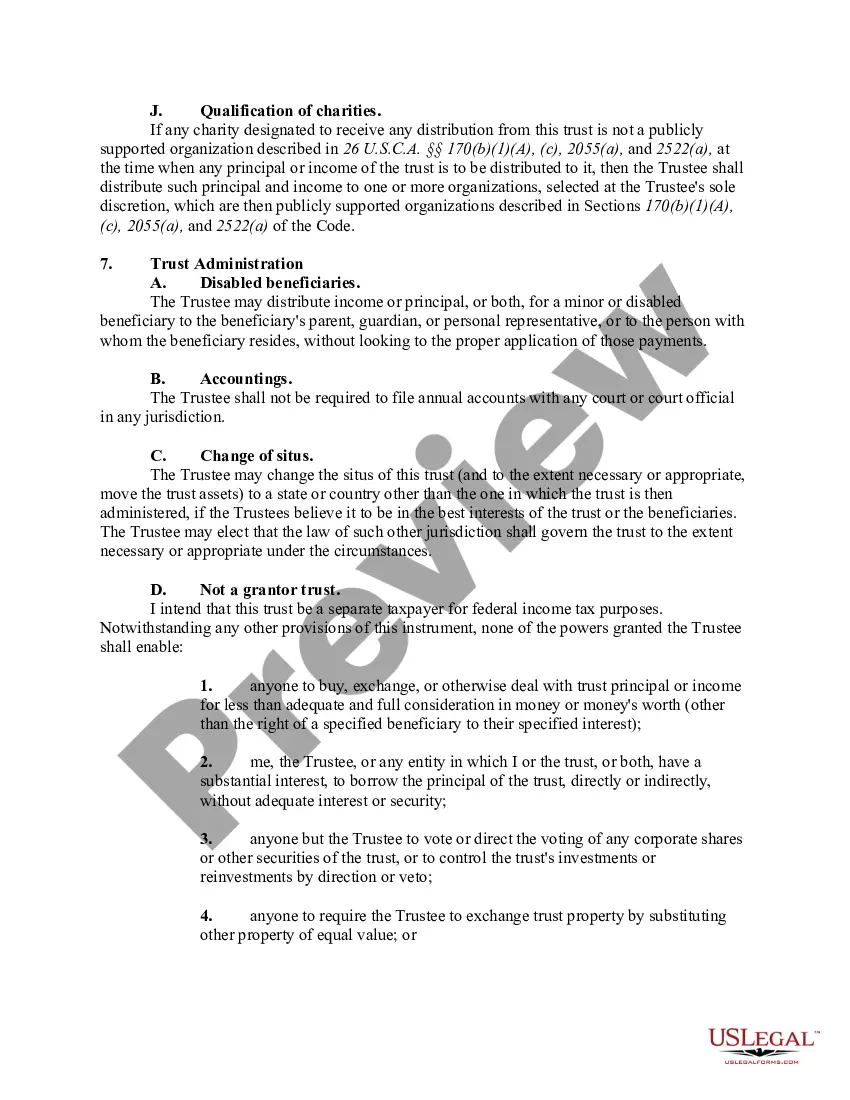
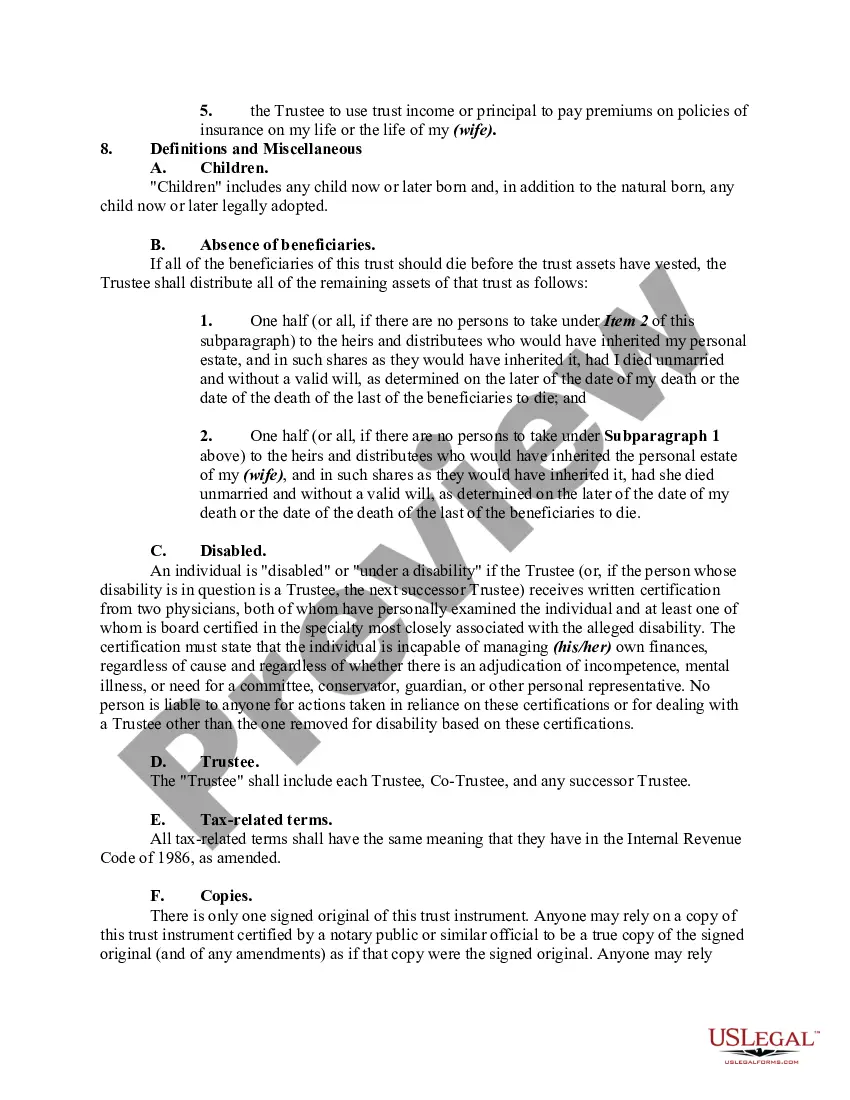
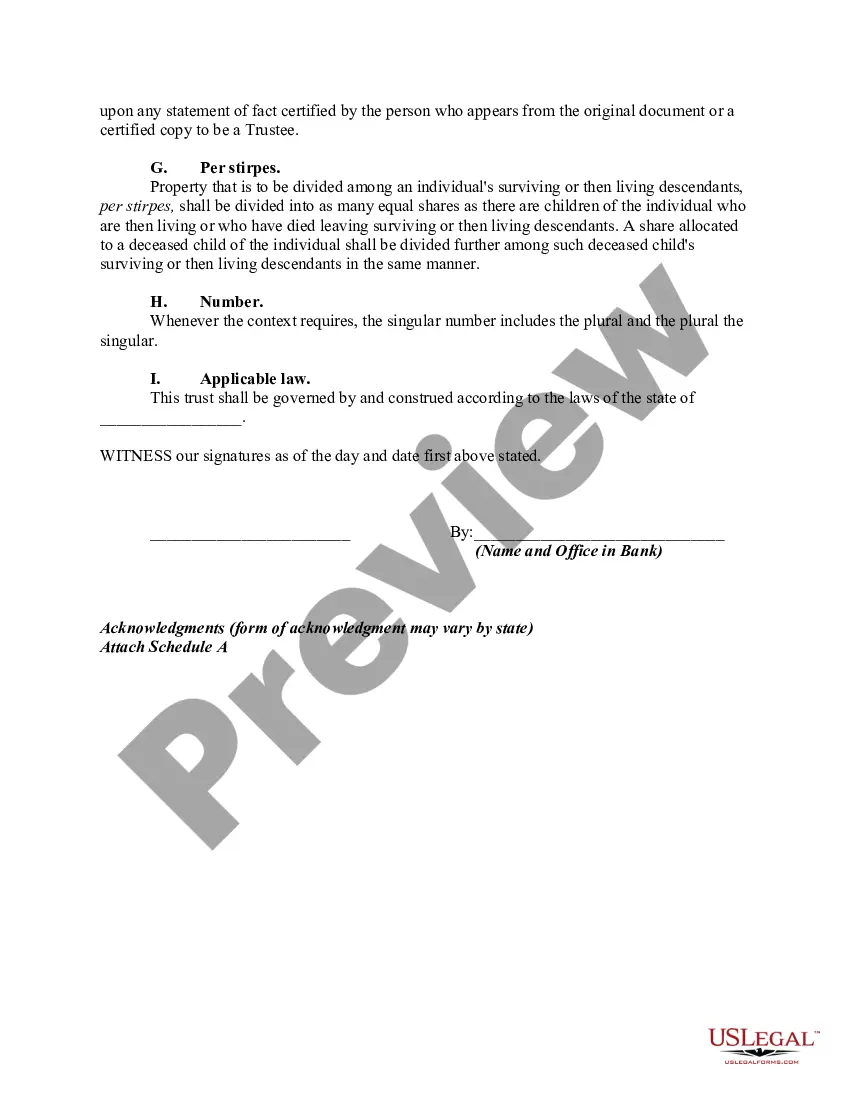
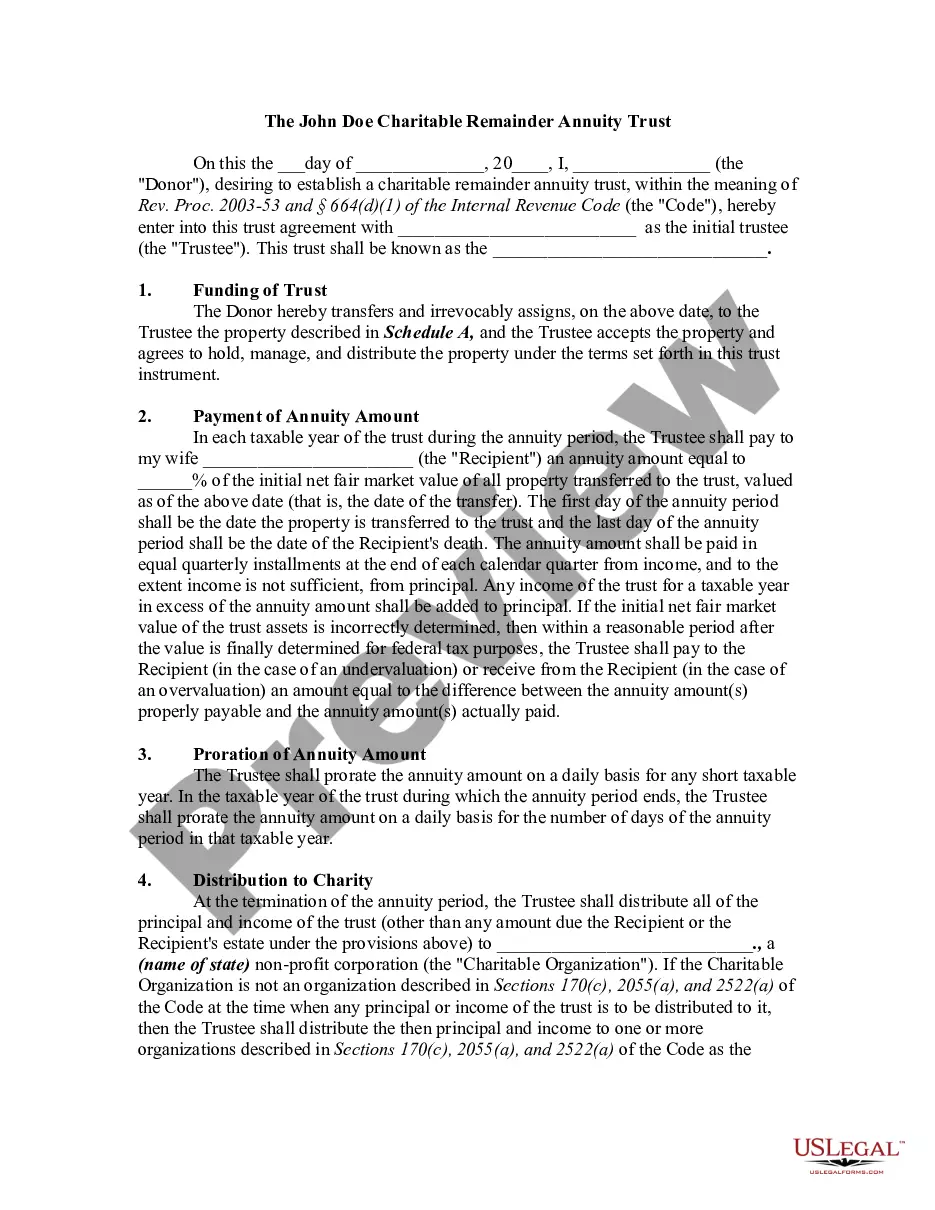
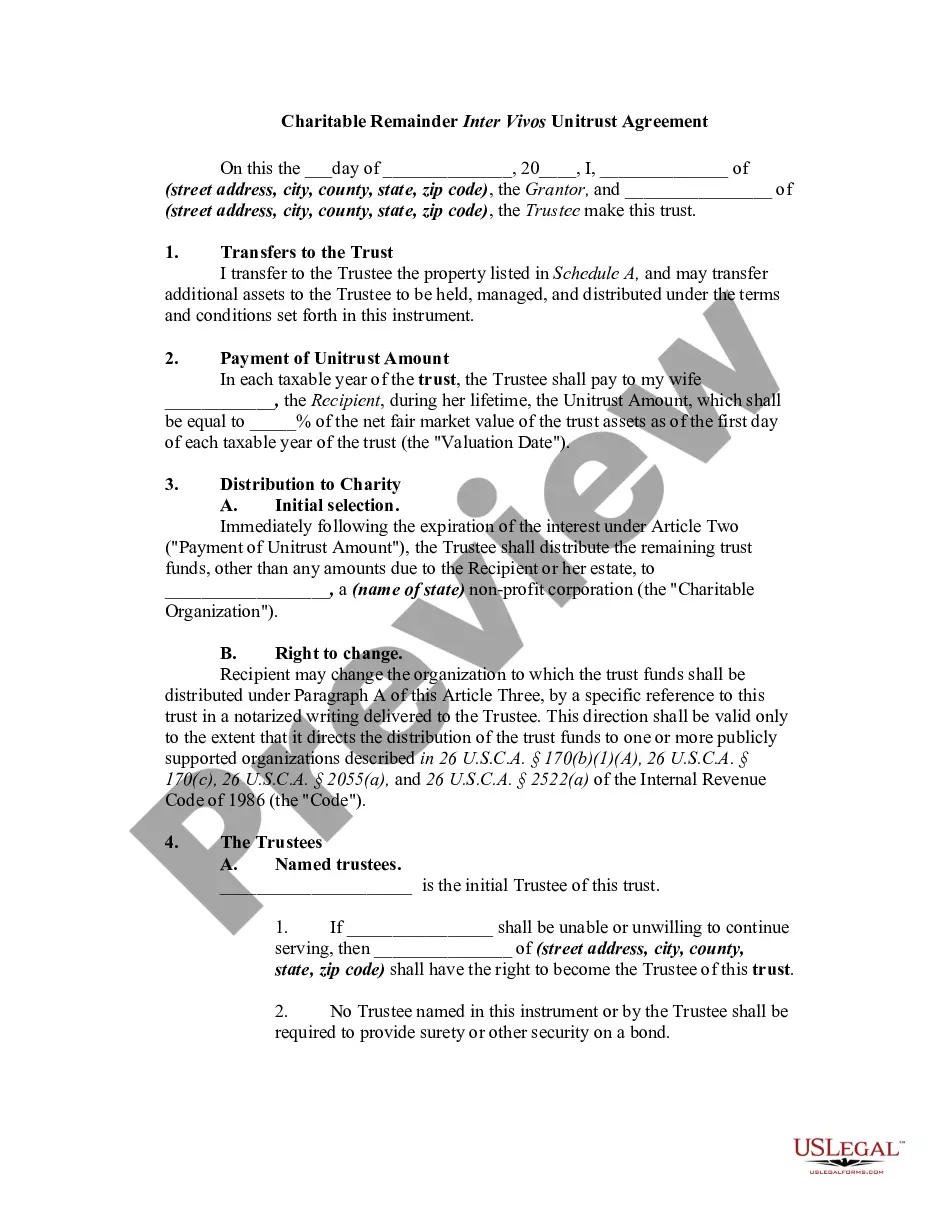
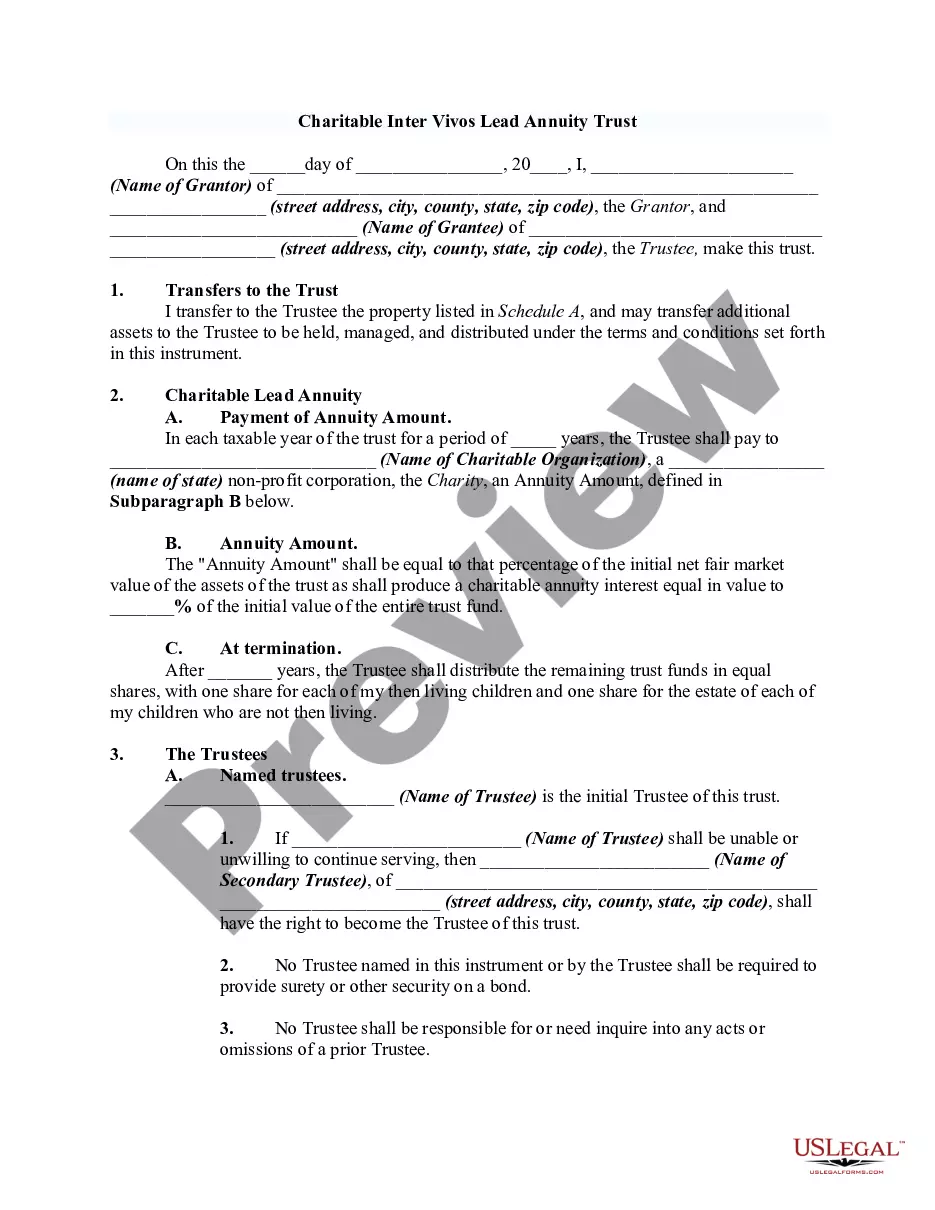
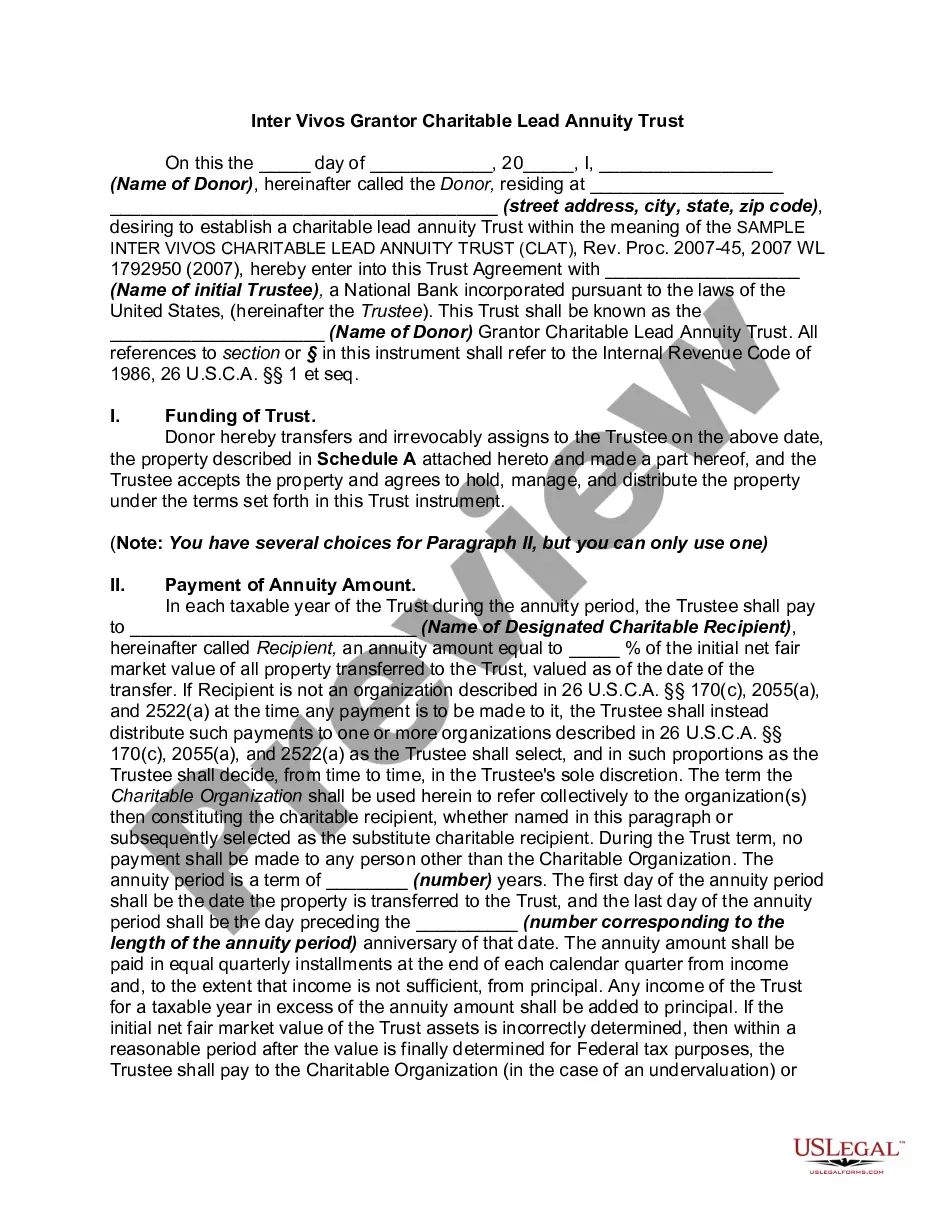
Get your form ready online
Our built-in tools help you complete, sign, share, and store your documents in one place.
Make edits, fill in missing information, and update formatting in US Legal Forms—just like you would in MS Word.
Download a copy, print it, send it by email, or mail it via USPS—whatever works best for your next step.
Sign and collect signatures with our SignNow integration. Send to multiple recipients, set reminders, and more. Go Premium to unlock E-Sign.
If this form requires notarization, complete it online through a secure video call—no need to meet a notary in person or wait for an appointment.
We protect your documents and personal data by following strict security and privacy standards.

Make edits, fill in missing information, and update formatting in US Legal Forms—just like you would in MS Word.

Download a copy, print it, send it by email, or mail it via USPS—whatever works best for your next step.

Sign and collect signatures with our SignNow integration. Send to multiple recipients, set reminders, and more. Go Premium to unlock E-Sign.

If this form requires notarization, complete it online through a secure video call—no need to meet a notary in person or wait for an appointment.

We protect your documents and personal data by following strict security and privacy standards.
Looking for another form?





How to fill out Charitable Lead Inter Vivos Unitrust?
Dealing with legal documents and procedures can be an arduous addition to your entire day.
Charitable Remainder Trust Withdrawals and similar forms often necessitate that you search for them and comprehend how to properly complete them.
Consequently, if you are managing financial, legal, or personal affairs, utilizing a comprehensive and practical online directory of forms at your disposal will greatly aid you.
US Legal Forms is the leading online platform for legal templates, boasting over 85,000 state-specific forms and various tools to help you complete your documents with ease.
Simply Log In to your account, find Charitable Remainder Trust Withdrawals, and obtain it immediately in the My documents section. You can also access previously saved forms.
- Explore the directory of relevant documents available with a single click.
- US Legal Forms provides state- and county-specific forms accessible at any moment for downloading.
- Safeguard your document management processes with a high-quality service that enables you to create any form in minutes without extra or concealed fees.
Form popularity
FAQ
The 10 percent rule for charitable remainder trusts ensures that the present value of the charity's eventual interest must be at least 10% of the total value of the trust's assets. This rule is important for maintaining the charitable purpose and legality of the trust. Understanding the 10 percent rule helps ensure that your charitable remainder trust withdrawals comply with IRS regulations. You can find resources on compliance through platforms like US Legal Forms.
The 4 legal documents every adult should have A will. Also known as: a last will and testament. ... A living will. Also known as: an advance directive. ... Durable health care power of attorney. It appoints: a health care proxy. ... Durable financial power of attorney. It appoints: an attorney-in-fact or agent.
EForms | The #1 website for free legal forms and documents.
1. Legal documents you buy online may not hold up in court. Consumers reported completing documents online for things like changing their name, only to learn once they were in court that the paperwork they had paid for was invalid.
Examples of these documents include birth certificates, contracts, deeds, leases, titles, wills, etc. During a trial or in preparation of a trial, documents such as a complaint or a summons can also be referred to as legal papers.
1. Will. A will is a legal document that designates who should receive your assets after death.
Common documents include a will, durable power of attorney for finances, and a living trust. A will specifies how your estate ? your property, money, and other assets ? will be distributed and managed when you die.
The 5 Legal Documents Everyone Should Have A Will. No matter if you have $1000 in assets or $1,000,000, everyone should have a Will. ... A Revocable Trust. ... Healthcare Power of Attorney. ... Advanced Directive. ... Durable Financial Power of Attorney.
What Are Important Documents? Legal identification documents. Social Security cards. Birth certificates. ... Tax documents. Tax returns. W-2s and 1099 forms. ... Property records. Vehicle registrations and titles. Mortgage statements, deeds and bills of sale. ... Estate planning documents. Wills and trusts. ... Finance records. Pay stubs.