Charitable Remainder Trust With Real Estate
Description
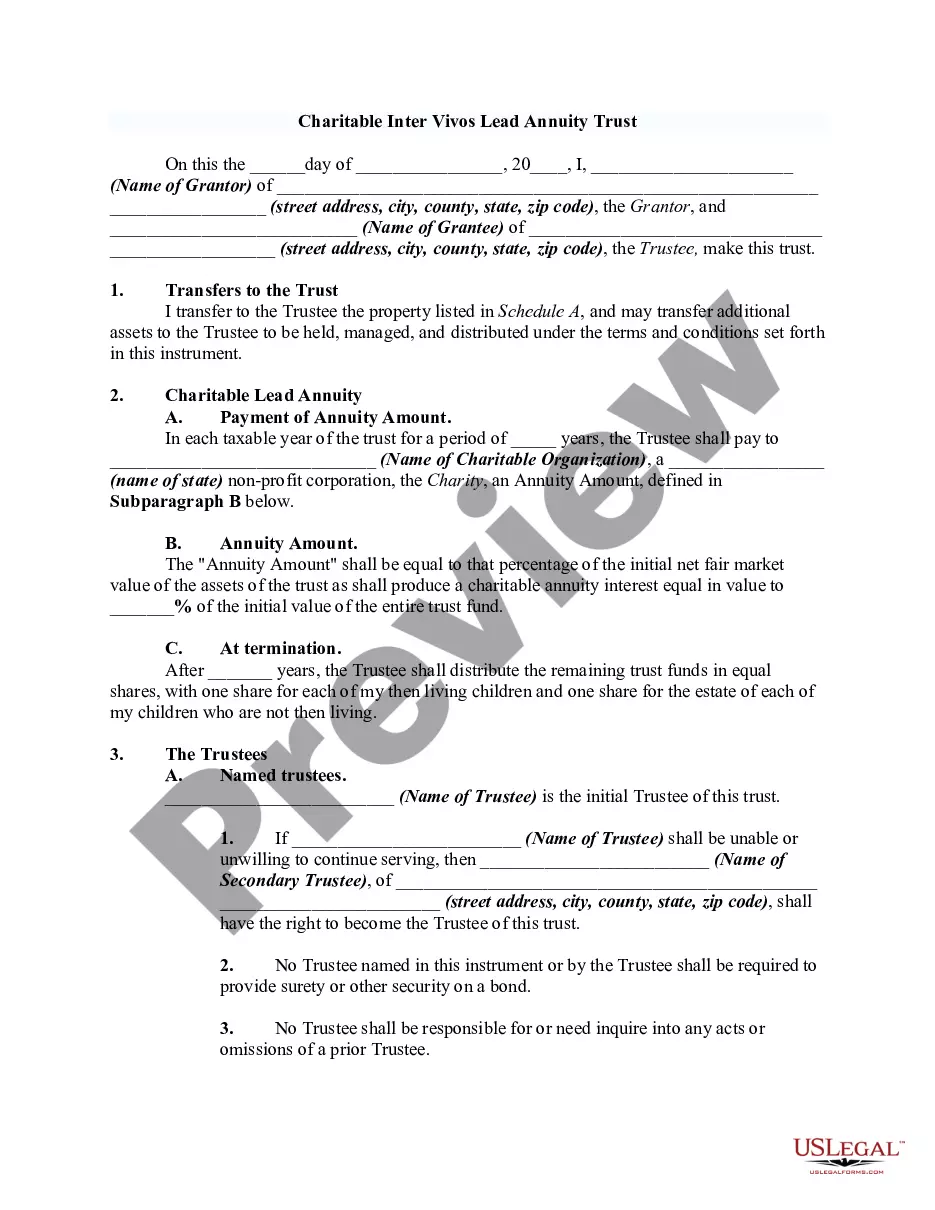
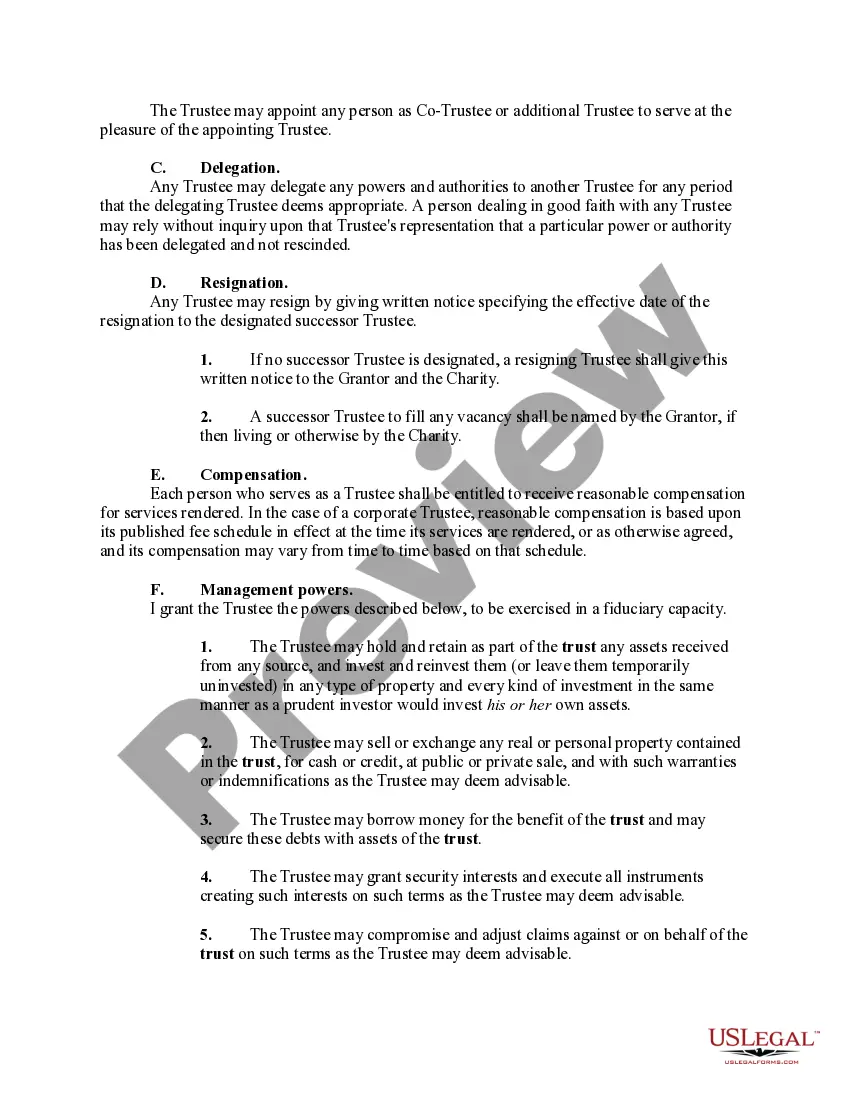
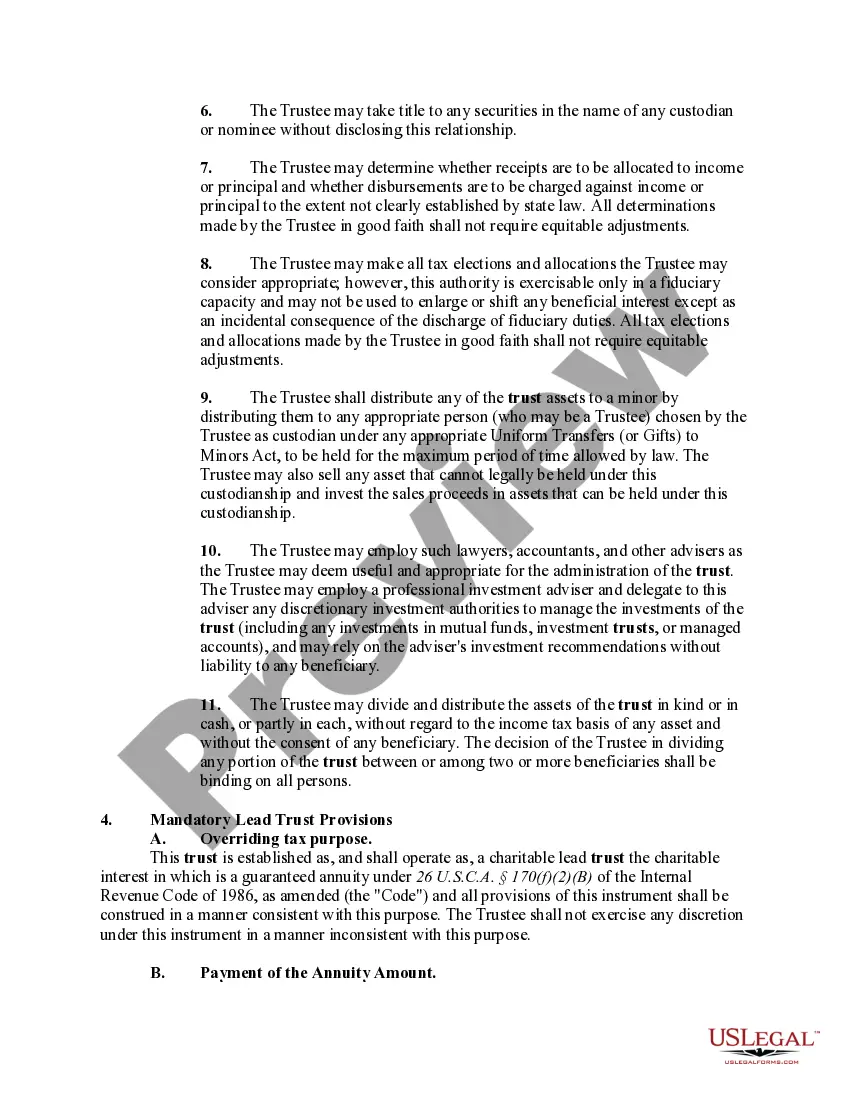
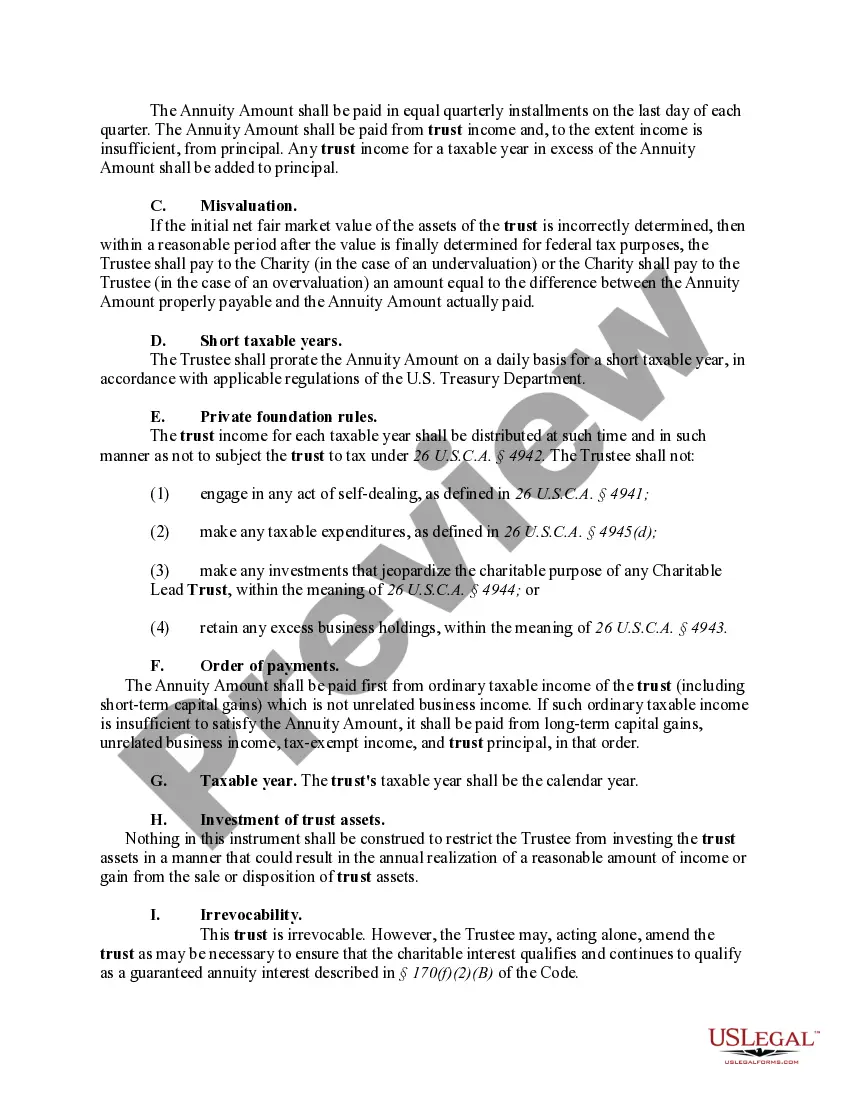
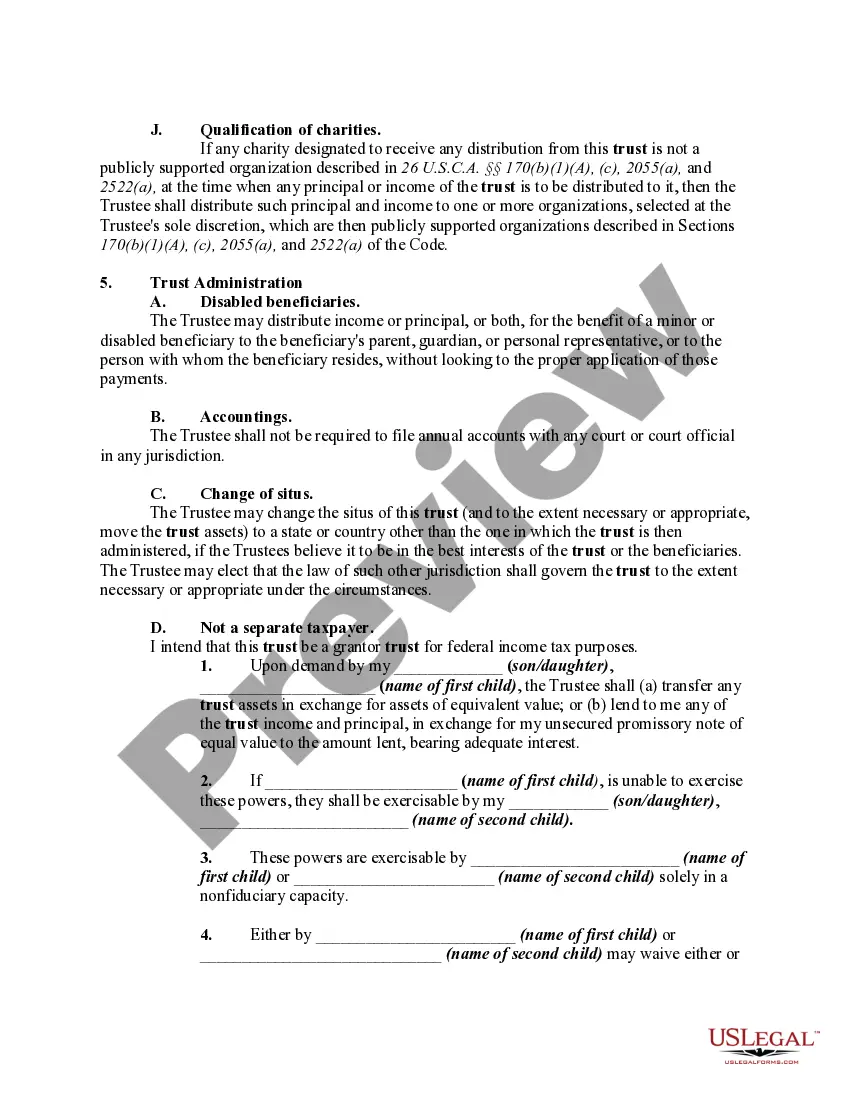
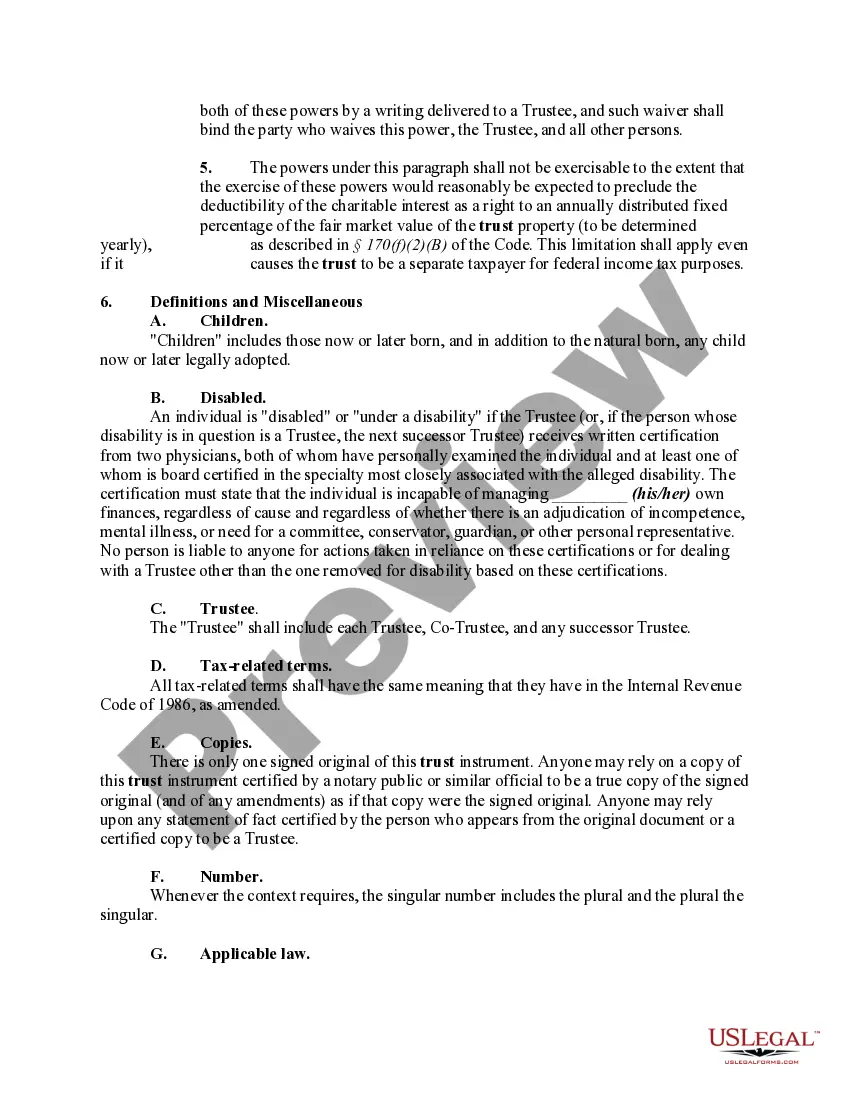
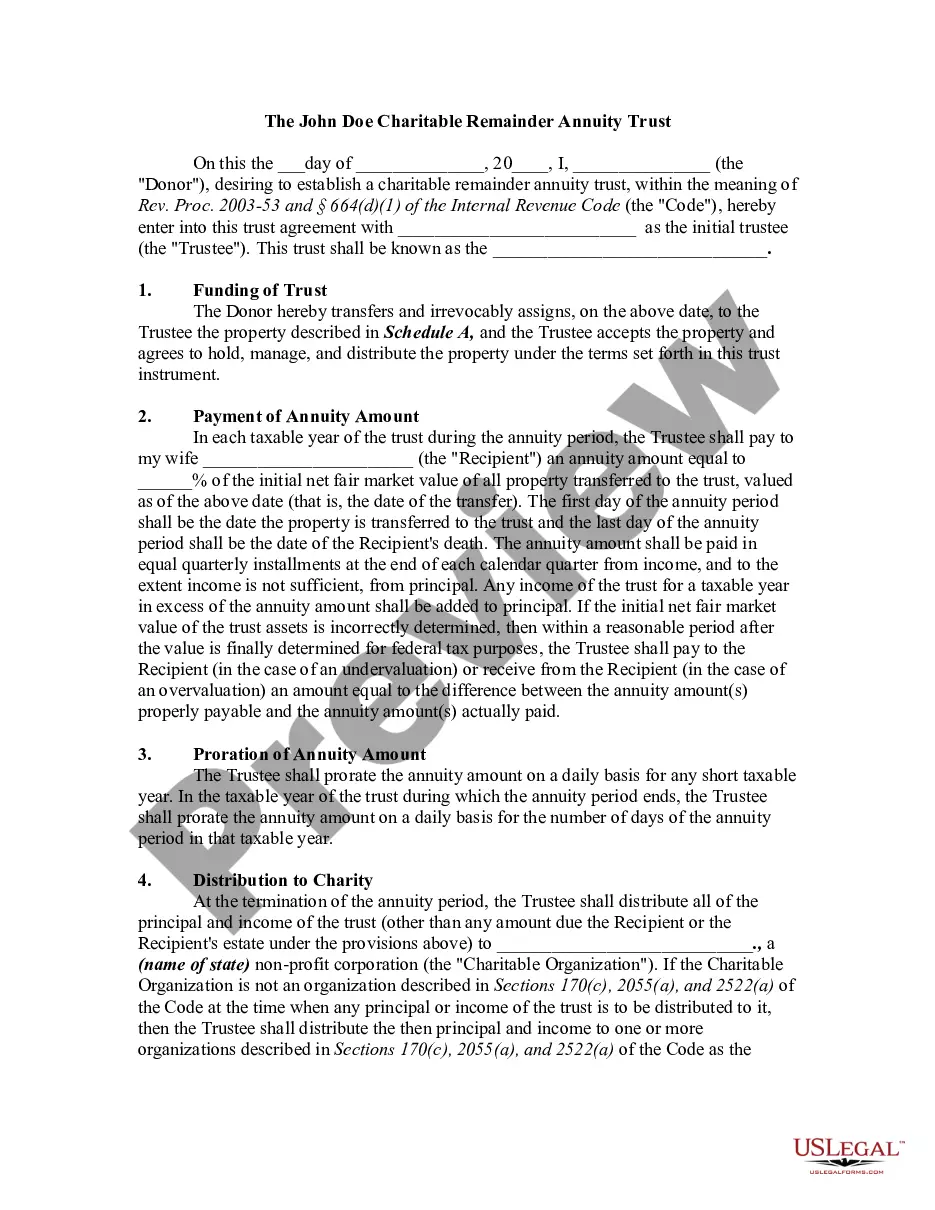
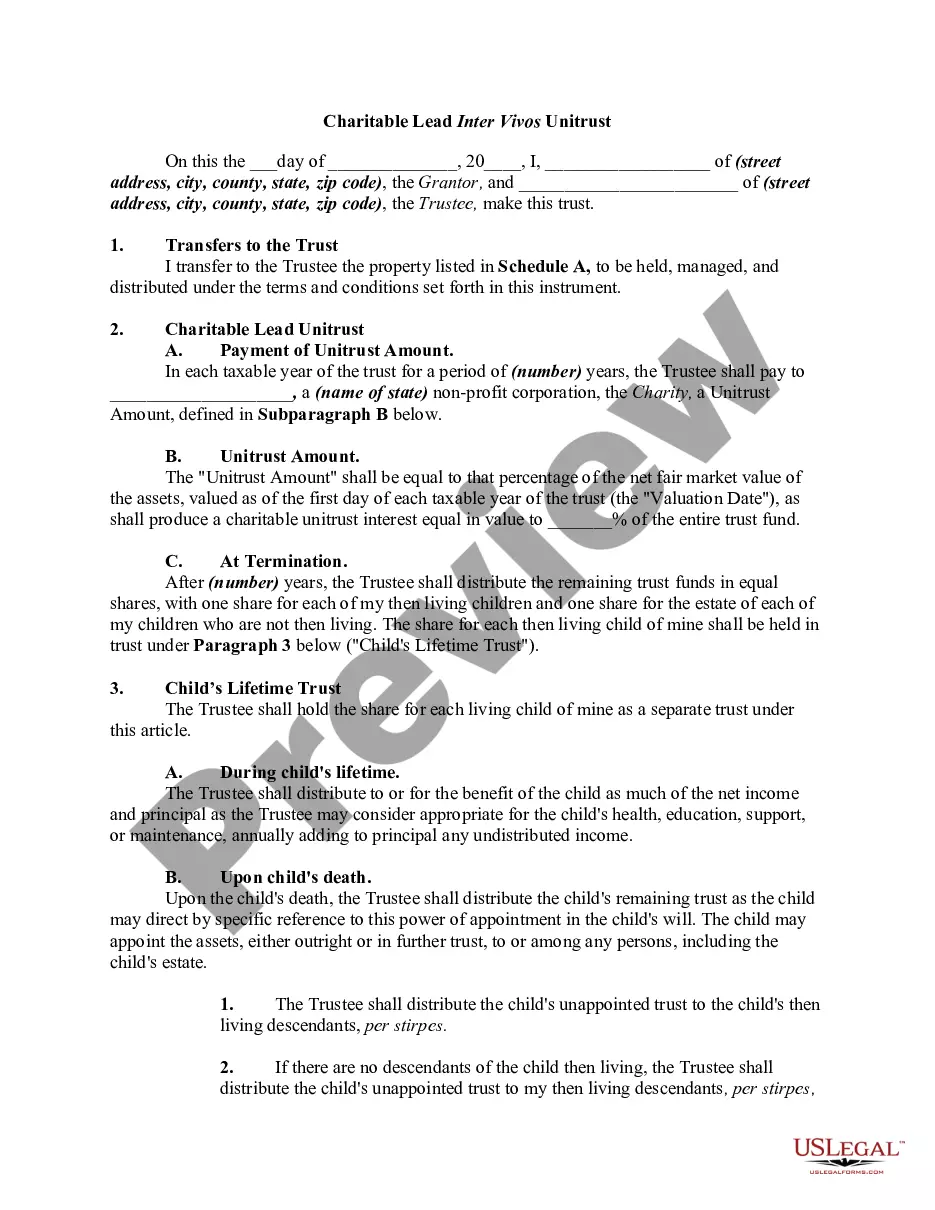
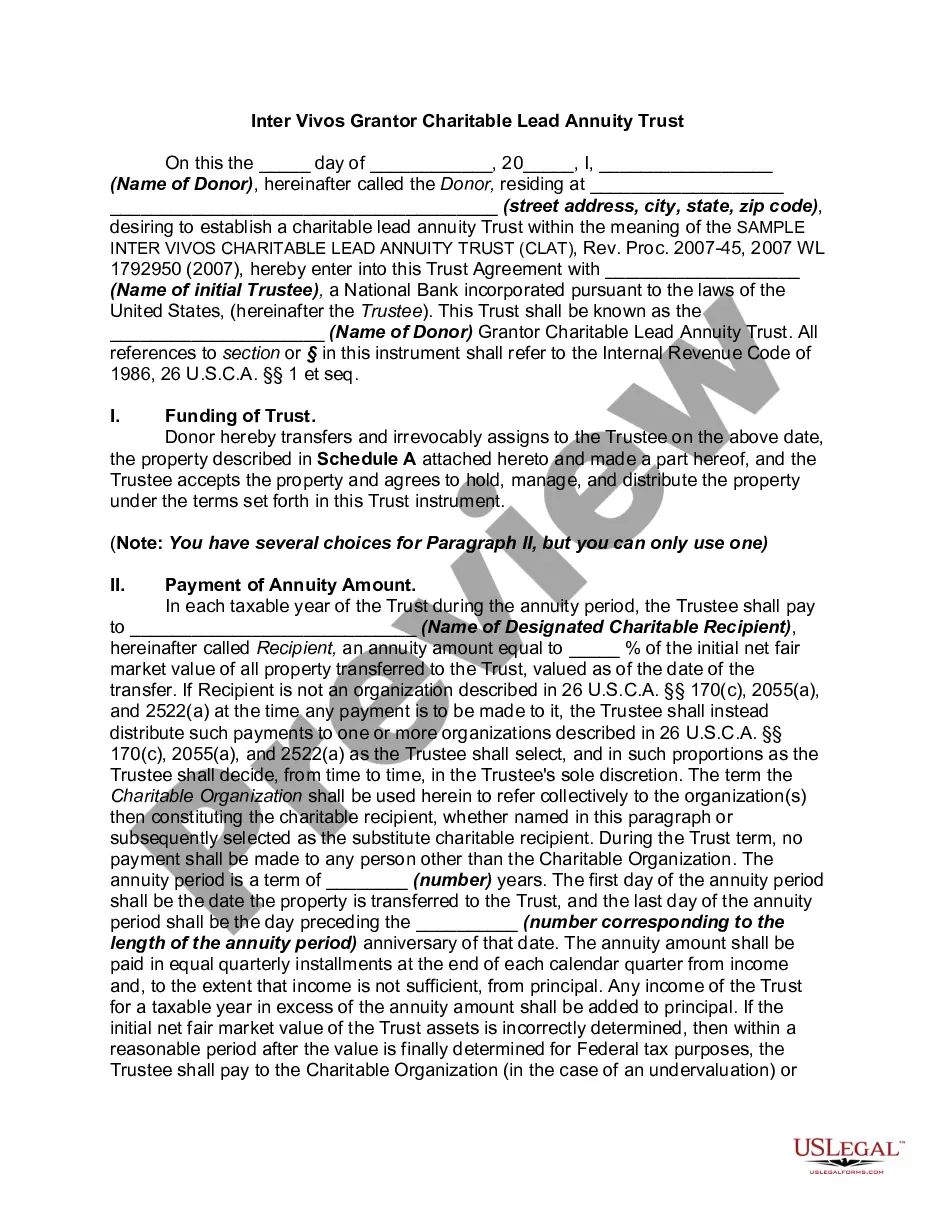
Get your form ready online
Our built-in tools help you complete, sign, share, and store your documents in one place.
Make edits, fill in missing information, and update formatting in US Legal Forms—just like you would in MS Word.
Download a copy, print it, send it by email, or mail it via USPS—whatever works best for your next step.
Sign and collect signatures with our SignNow integration. Send to multiple recipients, set reminders, and more. Go Premium to unlock E-Sign.
If this form requires notarization, complete it online through a secure video call—no need to meet a notary in person or wait for an appointment.
We protect your documents and personal data by following strict security and privacy standards.

Make edits, fill in missing information, and update formatting in US Legal Forms—just like you would in MS Word.

Download a copy, print it, send it by email, or mail it via USPS—whatever works best for your next step.

Sign and collect signatures with our SignNow integration. Send to multiple recipients, set reminders, and more. Go Premium to unlock E-Sign.

If this form requires notarization, complete it online through a secure video call—no need to meet a notary in person or wait for an appointment.

We protect your documents and personal data by following strict security and privacy standards.
Looking for another form?










How to fill out Charitable Inter Vivos Lead Annuity Trust?
- Start by visiting the US Legal Forms website. If you're an existing user, simply log in to your account. Check your subscription status; if expired, renew it as per your payment plan.
- Explore the library by checking the Preview mode and form descriptions. Ensure you select the appropriate form for a charitable remainder trust with real estate that meets local requirements.
- If you don’t find the right template, utilize the Search tab to look for alternatives until you find the perfect match.
- Once you have identified the correct document, click the Buy Now button and select your preferred subscription plan. You will also need to register for an account.
- Proceed with your purchase by entering your payment details through credit card or PayPal.
- Download your completed form and save it to your device. You can access it anytime through the My Forms section of your profile.
Benefiting from US Legal Forms means having access to over 85,000 fillable legal forms, positioning you to handle your estate planning needs efficiently.
Take charge of your financial future today! Explore US Legal Forms and start crafting your charitable remainder trust with real estate.
Form popularity
FAQ
Yes, a trust fund can own real estate, making this a vital aspect of a charitable remainder trust with real estate. By holding real estate in the trust, you can generate income while supporting charitable causes. This structure allows you to potentially gain tax benefits and support your chosen charity upon the trust's termination. If you need assistance in setting up such a trust, consider utilizing platforms like US Legal Forms for expert guidance.
To set up a charitable remainder trust with real estate, certain requirements must be met. First, the trust must provide income to beneficiaries for a specified period or for their lifetime. Additionally, the trust must ultimately distribute its assets to a qualified charitable organization. Understanding these requirements helps you ensure that your trust complies with regulations and achieves your charitable goals.
A key benefit of a charitable remainder trust with real estate is the potential for tax advantages. However, one area that does not serve as a benefit is the requirement for ongoing management of the trust's assets. While many appreciate the philanthropic impact, some may find the administrative tasks burdensome. When you establish a trust, ensure you consider all aspects, including the necessary management processes.
Yes, a charitable remainder trust can own real estate. By holding real estate within the trust, it can produce income while benefiting charity after the trust's term. This approach makes a charitable remainder trust with real estate a valuable option for individuals looking to balance charitable giving with asset management.
Indeed, a trust can invest in real estate. This investment can provide both income and capital growth depending on the market conditions. For those exploring a charitable remainder trust with real estate, investing in property can be a strategic way to support charitable endeavors while securing financial benefits.
Yes, a charitable foundation can own real estate. This ownership allows the foundation to hold property for its charitable mission, or it can generate income through leasing. When integrated with a charitable remainder trust with real estate, the foundation can optimize its portfolio and support its charitable goals more effectively.
Yes, a charitable trust can invest its assets to generate income or appreciate in value. This income can be used to support charitable activities. When considering a charitable remainder trust with real estate, proper investment strategies can enhance the trust's financial returns and impact.
You can put various assets into a charitable remainder trust, including real estate, stocks, bonds, and other investments. This flexibility allows you to choose assets that best suit your financial goals and charitable intentions. By creating a charitable remainder trust with real estate, you can also unlock liquidity and generate income while supporting charitable causes. If you need assistance with the process, our platform offers guidance to help you set up your trust effectively.
Generally, a charitable remainder trust is not included in your taxable estate, as it is structured to benefit a charity. When you establish a charitable remainder trust with real estate, the assets placed in the trust are not counted towards your estate for estate tax purposes. However, it's wise to consult with a tax advisor to fully understand the implications. Using our platform, you can find resources to help navigate the specific details concerning estate inclusion.
Yes, you can put real estate into a charitable remainder unitrust (CRUT). This type of trust allows you to donate property, such as real estate, while still receiving an income stream from it. When you transfer real estate into a CRUT, you often receive a charitable deduction based on the present value of the remainder interest. This mechanism makes the charitable remainder trust with real estate an attractive option for those looking to combine philanthropy with financial benefits.