Charitable Remainder Trust And Interest Rates
Description
Get your form ready online
Our built-in tools help you complete, sign, share, and store your documents in one place.
Make edits, fill in missing information, and update formatting in US Legal Forms—just like you would in MS Word.
Download a copy, print it, send it by email, or mail it via USPS—whatever works best for your next step.
Sign and collect signatures with our SignNow integration. Send to multiple recipients, set reminders, and more. Go Premium to unlock E-Sign.
If this form requires notarization, complete it online through a secure video call—no need to meet a notary in person or wait for an appointment.
We protect your documents and personal data by following strict security and privacy standards.

Make edits, fill in missing information, and update formatting in US Legal Forms—just like you would in MS Word.

Download a copy, print it, send it by email, or mail it via USPS—whatever works best for your next step.

Sign and collect signatures with our SignNow integration. Send to multiple recipients, set reminders, and more. Go Premium to unlock E-Sign.

If this form requires notarization, complete it online through a secure video call—no need to meet a notary in person or wait for an appointment.

We protect your documents and personal data by following strict security and privacy standards.
Looking for another form?







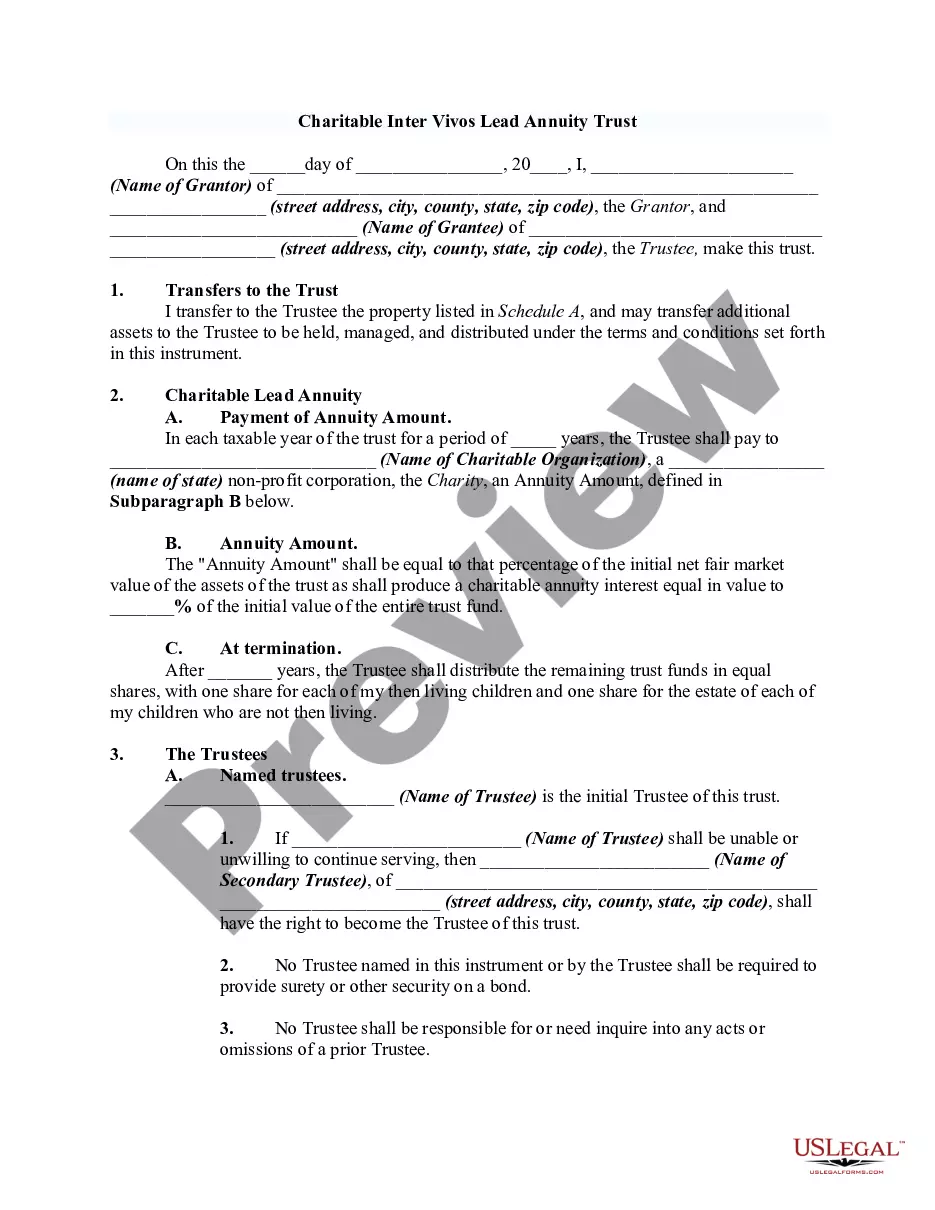
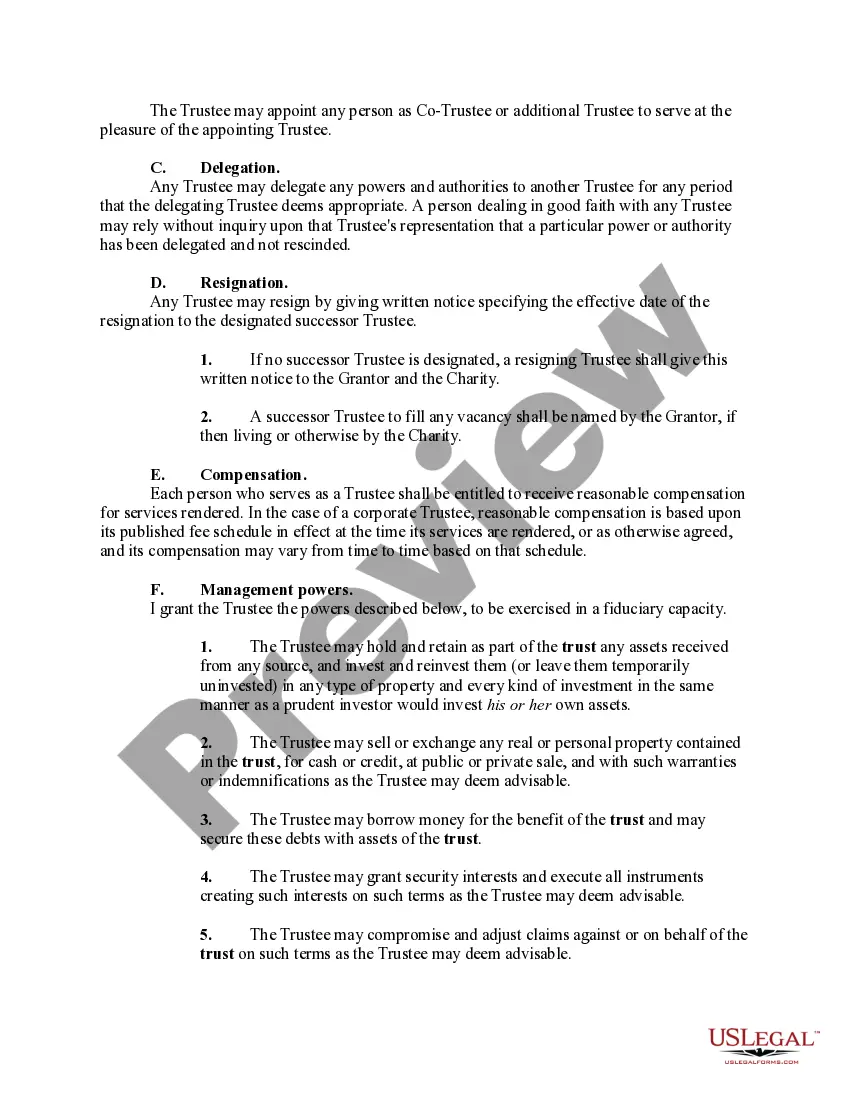
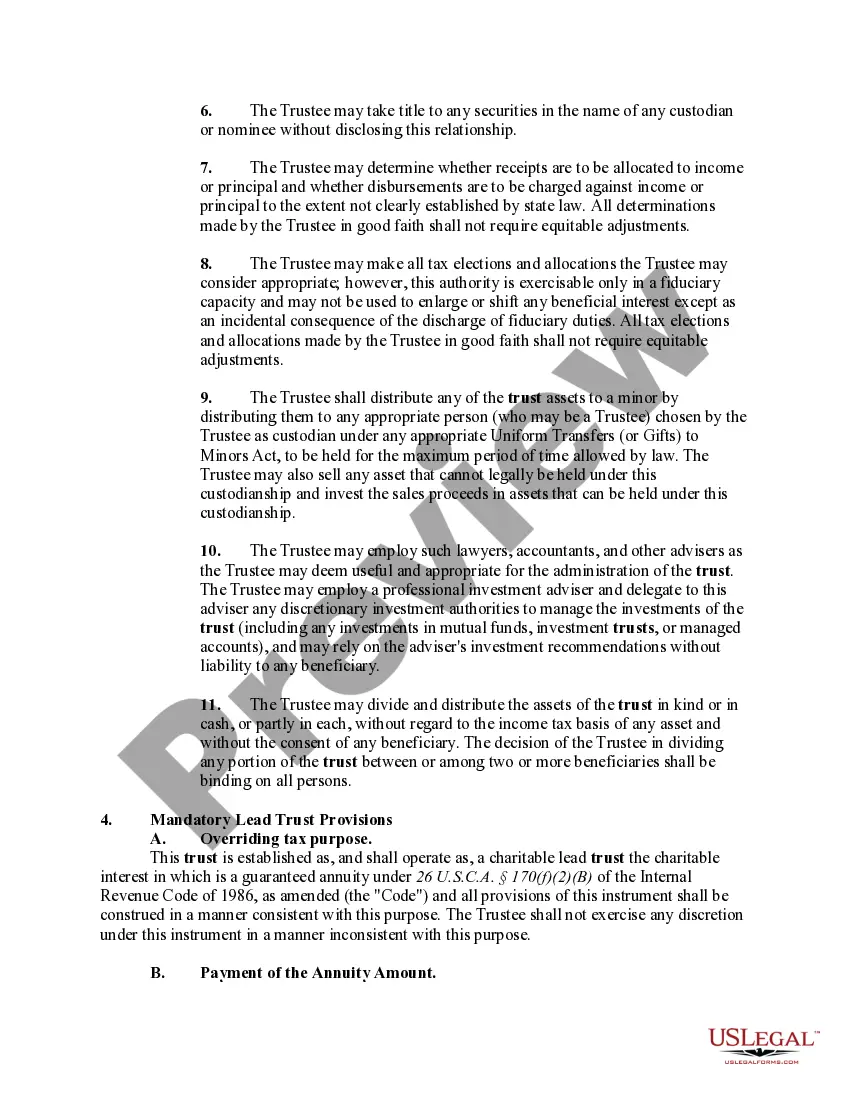
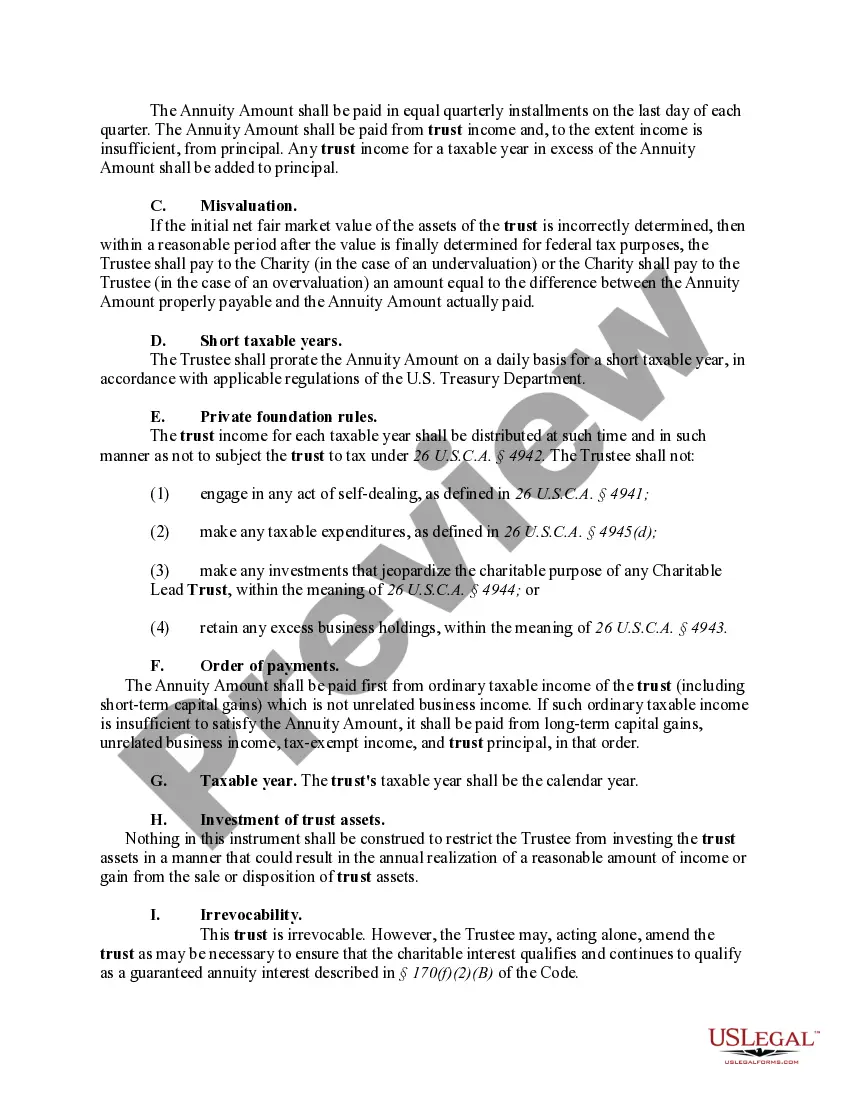
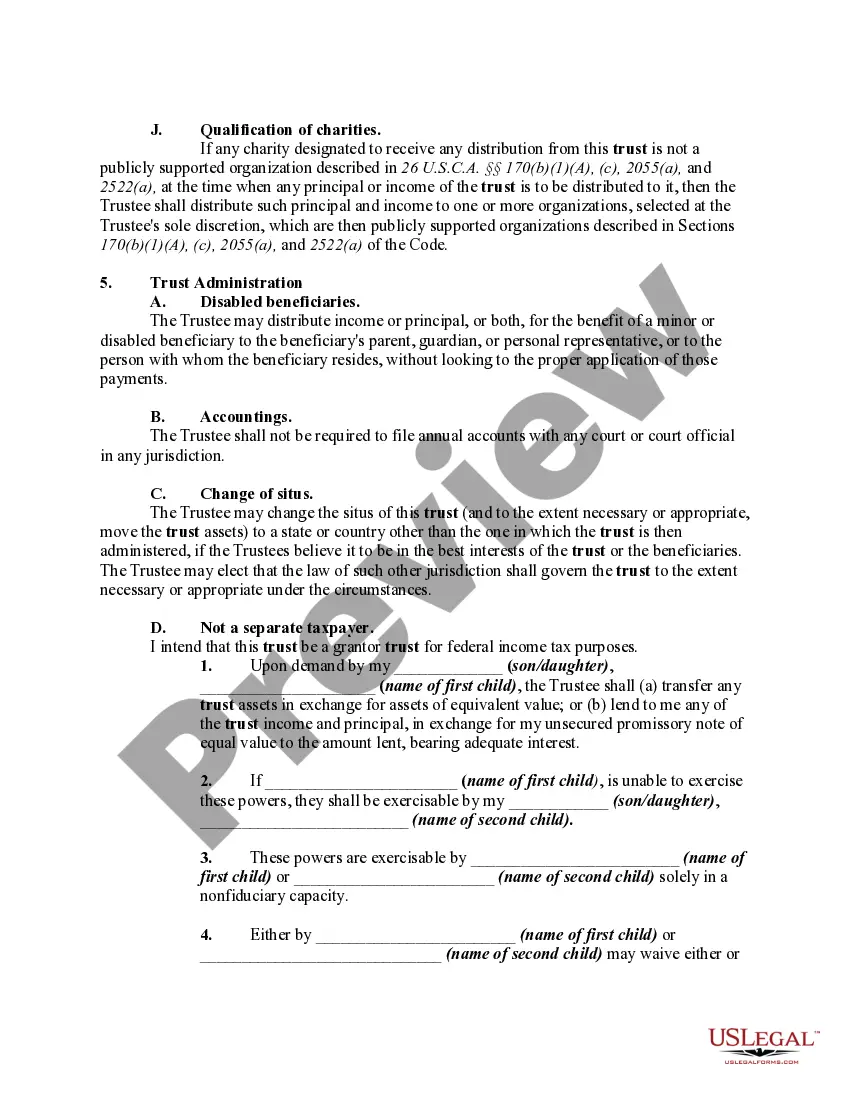
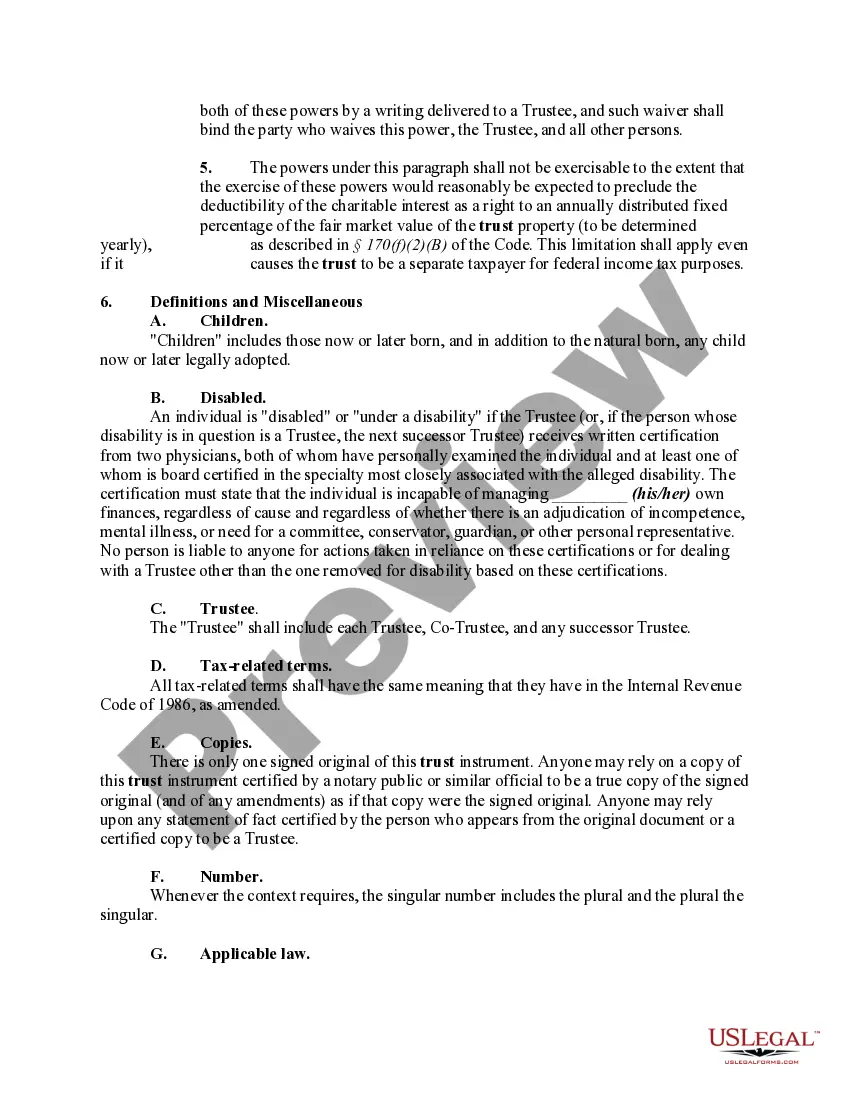
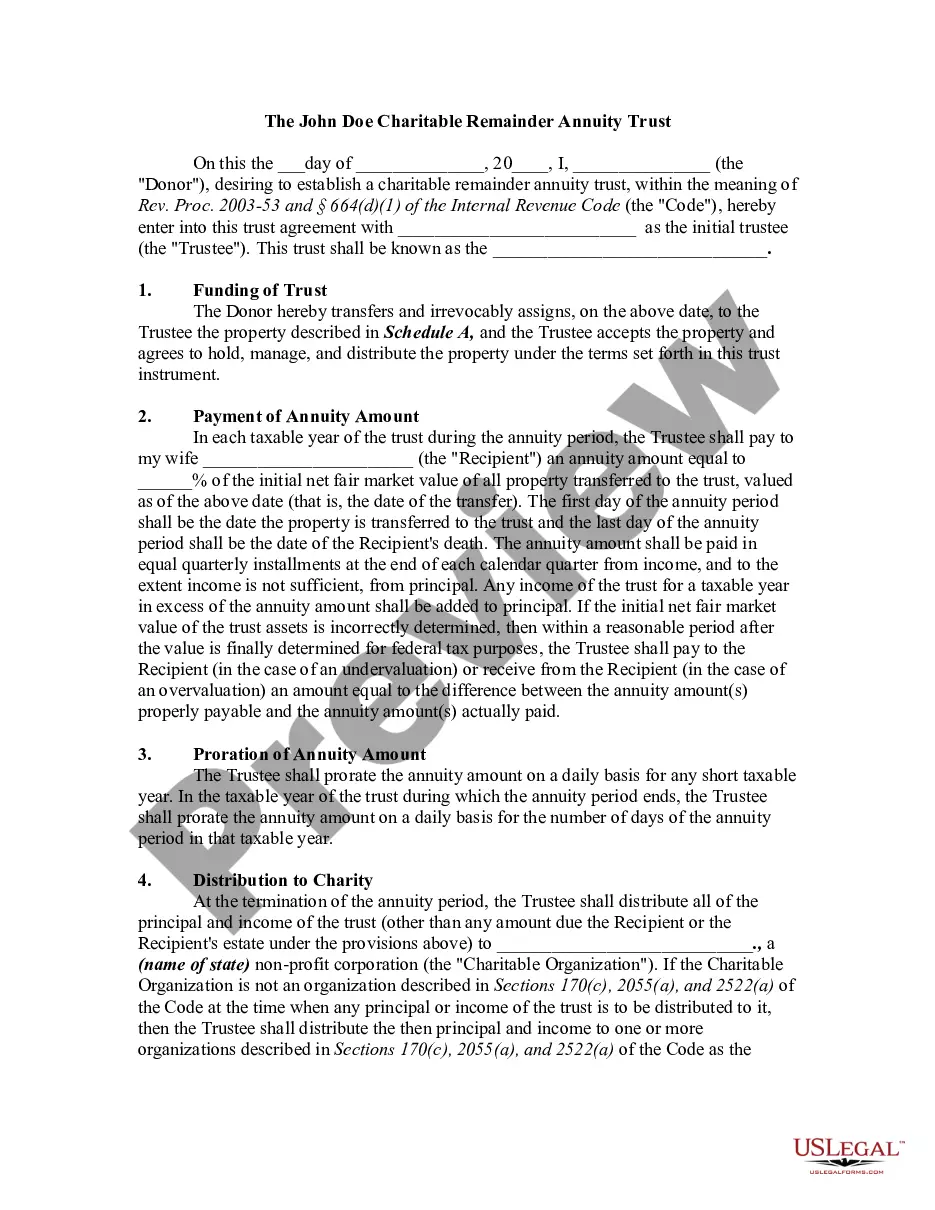
How to fill out Charitable Inter Vivos Lead Annuity Trust?
- Log in to your US Legal Forms account if you are a returning user. Ensure your subscription is currently active; renew it if needed.
- Preview the form you need and read the description to confirm it meets your legal requirements.
- If the document isn't suitable, utilize the Search function to find an alternative that aligns with your needs.
- Purchase the intended form by selecting your preferred subscription plan and creating an account for full access.
- Complete your payment using a credit card or PayPal and finalize your subscription.
- Download the completed document directly to your device, and access it anytime through the 'My Forms' section of your profile.
In conclusion, US Legal Forms offers a streamlined approach to accessing a vast library of over 85,000 legal templates and packages. With the added benefit of expert assistance, users can ensure their documents are legally sound and tailored to their needs.
Get started today and empower yourself with the right tools to manage your legal documents effectively.
Form popularity
FAQ
The gift of income interest in a charitable remainder trust allows donors to specify that the income generated by the trust is given to a beneficiary during a set period. This arrangement provides a predictable income stream while ultimately benefiting a charity. Exploring charitable remainder trusts alongside interest rates can offer significant advantages for donors and recipients alike.
An income interest in a trust refers to the right of a beneficiary to receive income generated by the trust assets during the trust's term. This income can come from various sources, such as dividends or interest. Properly incorporating charitable remainder trusts and interest rates can enhance the benefits of the income interest for beneficiaries while still supporting your charitable goals.
The 10% rule for a charitable remainder trust stipulates that the present value of the charitable interest must be at least 10% of the total charitable remainder trust assets. This rule ensures that the trust is structured to provide significant support to the designated charity. Familiarizing yourself with this rule and understanding interest rates can help you plan an effective charitable giving strategy.
A gift of present interest trust refers to a donation that gives beneficiaries immediate access to the income generated by the trust. This type of gift often qualifies for the annual gift tax exclusion, making it a popular choice for donors. By incorporating charitable remainder trusts and interest rates, you can enhance the financial benefits of your gift while supporting charitable endeavors.
A charitable remainder interest allows individuals to donate assets to a charitable organization while retaining an income stream from those assets for a specified period. This arrangement is part of a charitable remainder trust, which can benefit both the donor and a designated charity. Understanding the interplay between charitable remainder trusts and interest rates can help maximize your returns while supporting a cause.
The rate for a charitable remainder trust typically ranges between 5% and 8%, depending on various factors, including age and the specific terms of the trust. This rate is crucial as it affects the amount of income that beneficiaries receive and the charitable remainder's value. By understanding how rates are determined and the implications of charitable remainder trust and interest rates, you can make informed decisions about your financial planning.
While charitable remainder trusts offer several benefits, they also come with potential downsides. One downside includes the irrevocability of the trust, which means once you set it up, you cannot easily change or dissolve it. Additionally, fees for managing the trust and varying interest rates can impact overall growth, so it is wise to assess these factors carefully before establishing a charitable remainder trust.
To value the remainder interest in a trust, you generally assess the present value of expected future payments, discounted at the appropriate interest rate. This process involves estimating the expected lifetime of the income beneficiary and applying IRS tables for annuities. The valuation provides a clear picture of how much the charitable remainder interest contributes to the overall value of the charitable remainder trust and interest rates.
The 10 percent rule is a guideline for charitable remainder trusts that requires the present value of the charitable remainder interest to be at least 10 percent of the fair market value of the trust assets. This rule helps ensure that a meaningful portion of the trust goes to charity. Understanding this rule is important when considering the tax implications and benefits of a charitable remainder trust and interest rates.
The tax treatment of a Charitable Remainder Unitrust (CRUT) allows you to receive an income tax deduction in the year you establish the trust. This deduction is based on the present value of the charitable remainder, calculated by considering the trust's payout rate and current interest rates. Staying informed about tax implications helps you leverage your CRUT effectively and enhance your charitable giving strategy.