Charitable Lead Annuity Trust With Employees
Description
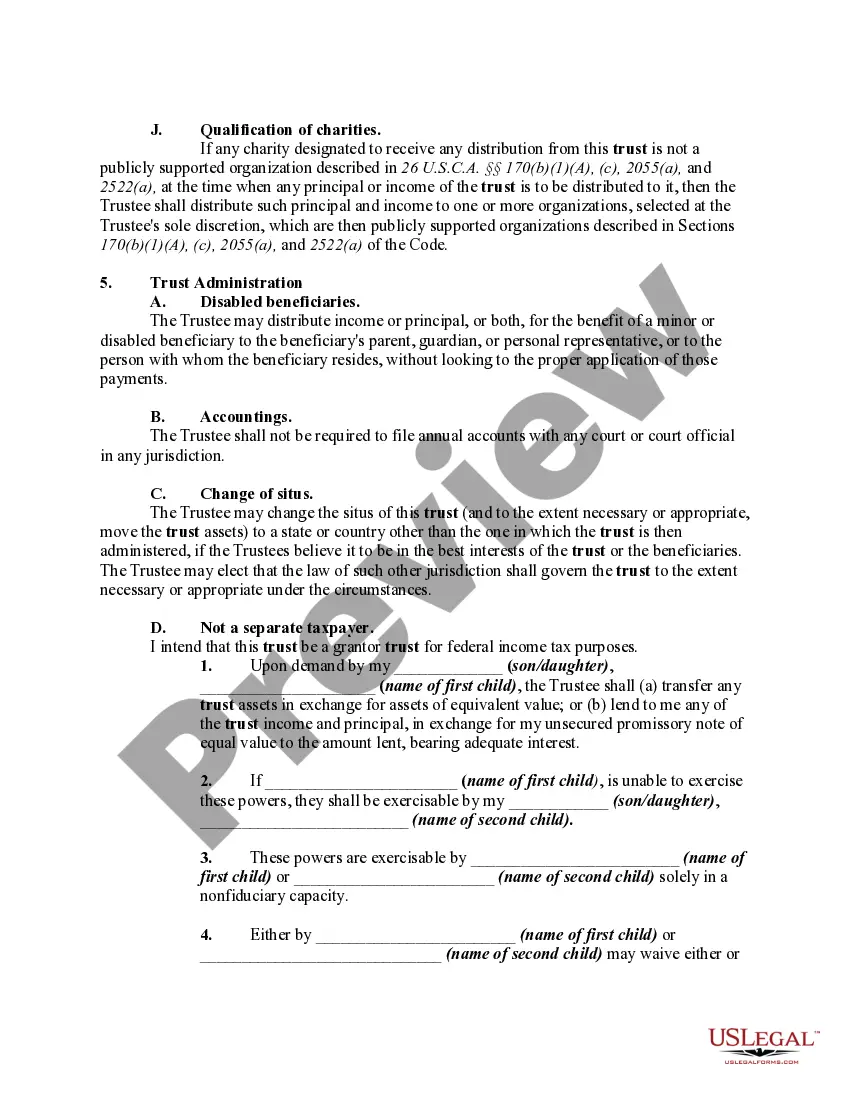
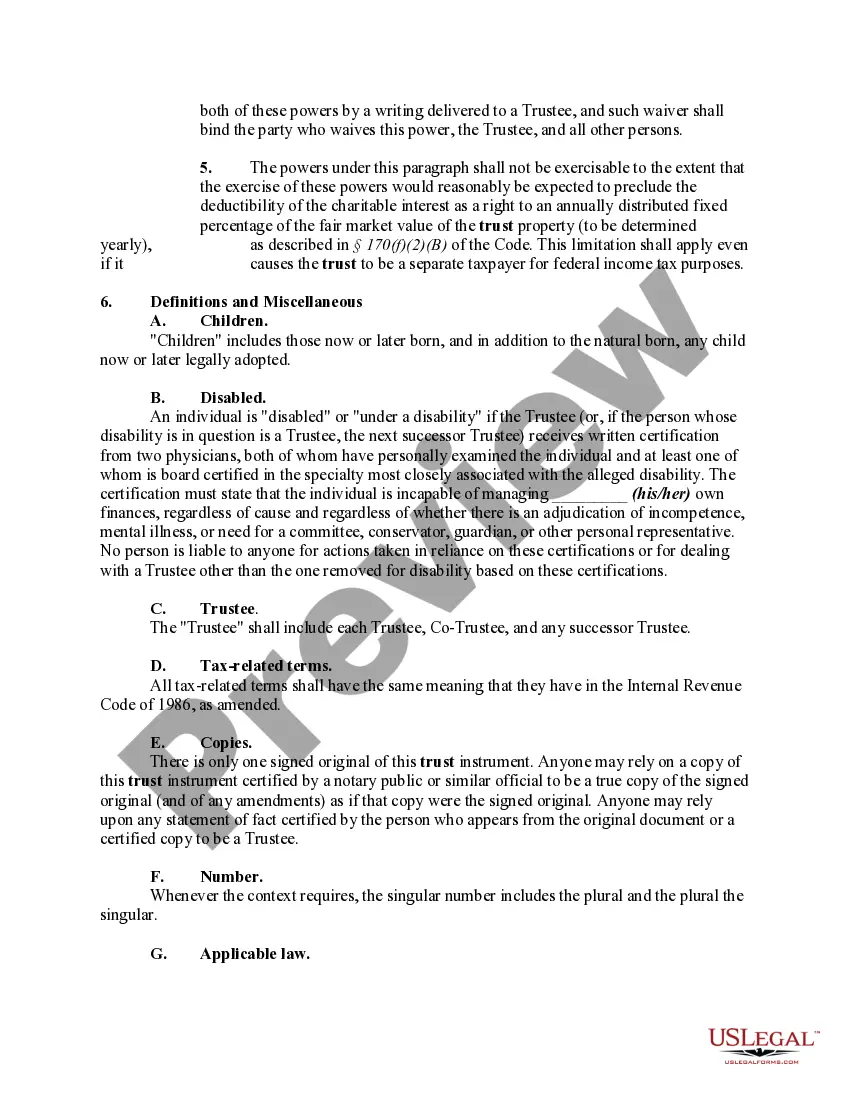

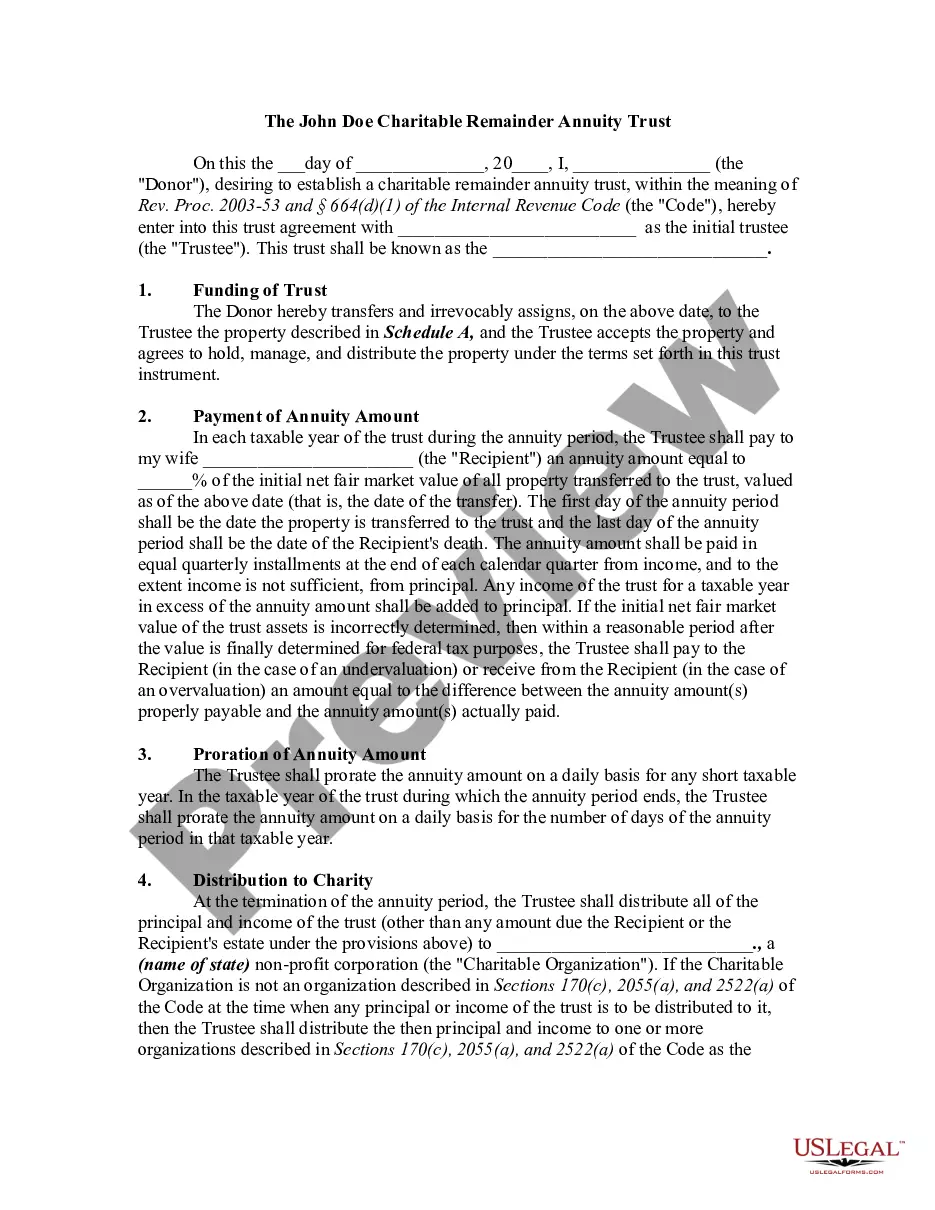
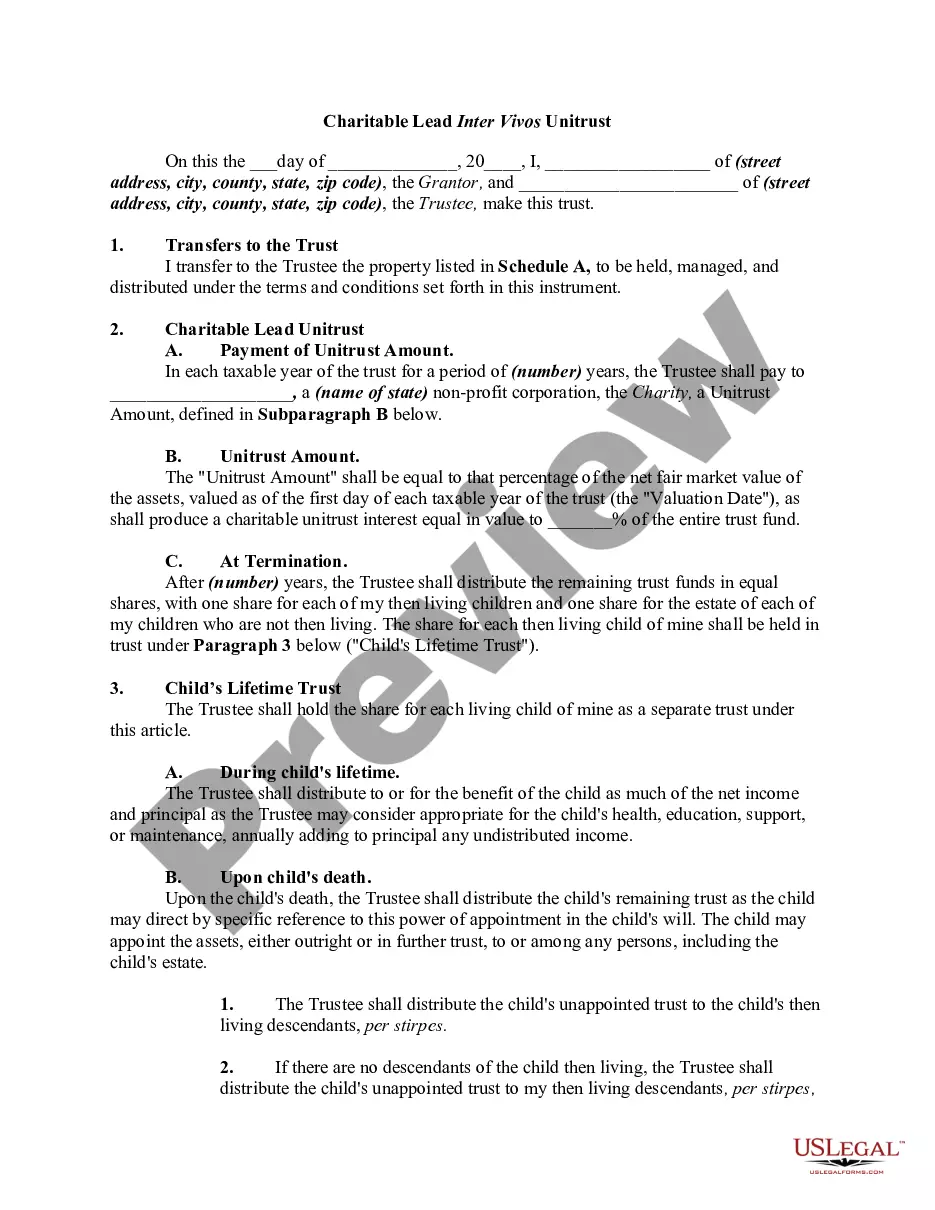
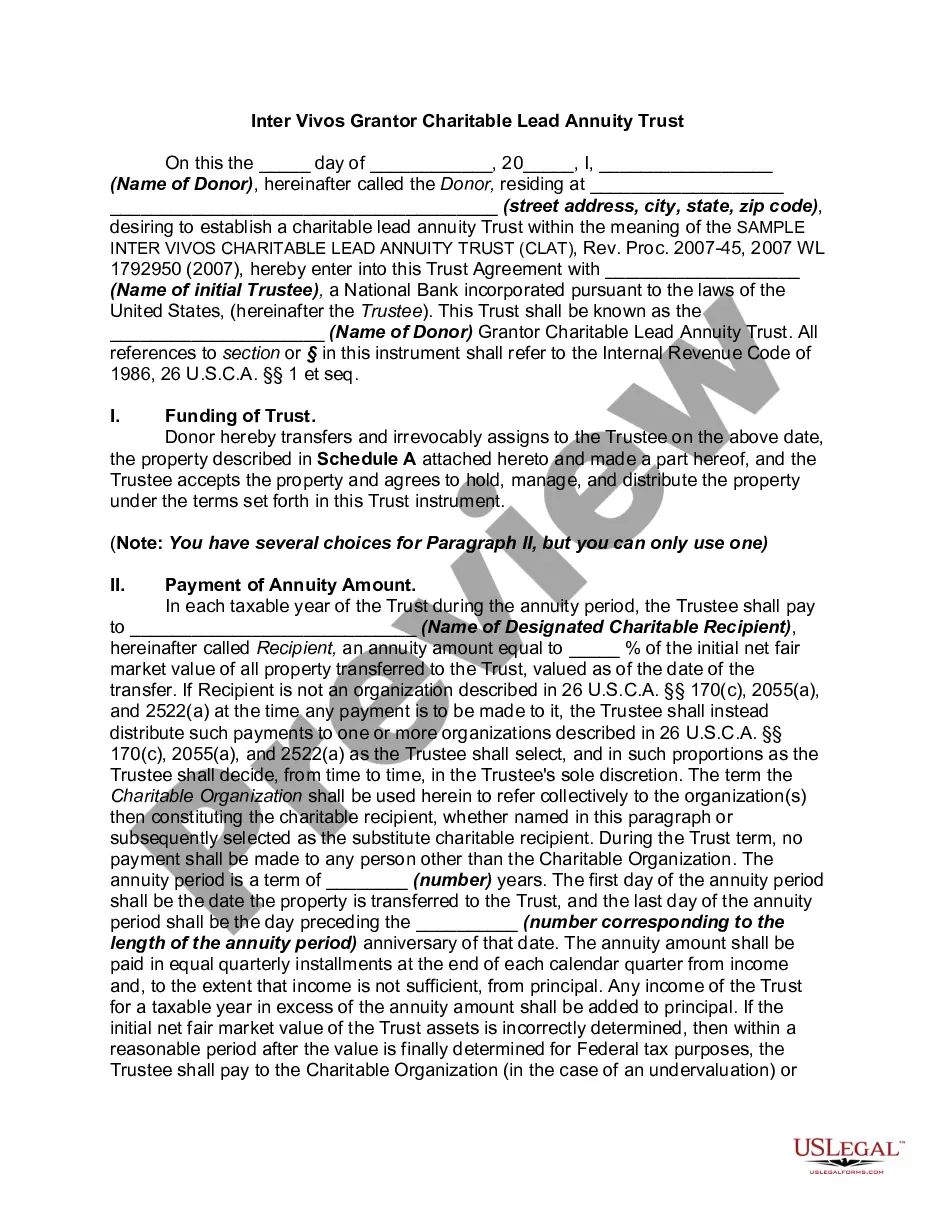
Get your form ready online
Our built-in tools help you complete, sign, share, and store your documents in one place.
Make edits, fill in missing information, and update formatting in US Legal Forms—just like you would in MS Word.
Download a copy, print it, send it by email, or mail it via USPS—whatever works best for your next step.
Sign and collect signatures with our SignNow integration. Send to multiple recipients, set reminders, and more. Go Premium to unlock E-Sign.
If this form requires notarization, complete it online through a secure video call—no need to meet a notary in person or wait for an appointment.
We protect your documents and personal data by following strict security and privacy standards.

Make edits, fill in missing information, and update formatting in US Legal Forms—just like you would in MS Word.

Download a copy, print it, send it by email, or mail it via USPS—whatever works best for your next step.

Sign and collect signatures with our SignNow integration. Send to multiple recipients, set reminders, and more. Go Premium to unlock E-Sign.

If this form requires notarization, complete it online through a secure video call—no need to meet a notary in person or wait for an appointment.

We protect your documents and personal data by following strict security and privacy standards.
Looking for another form?










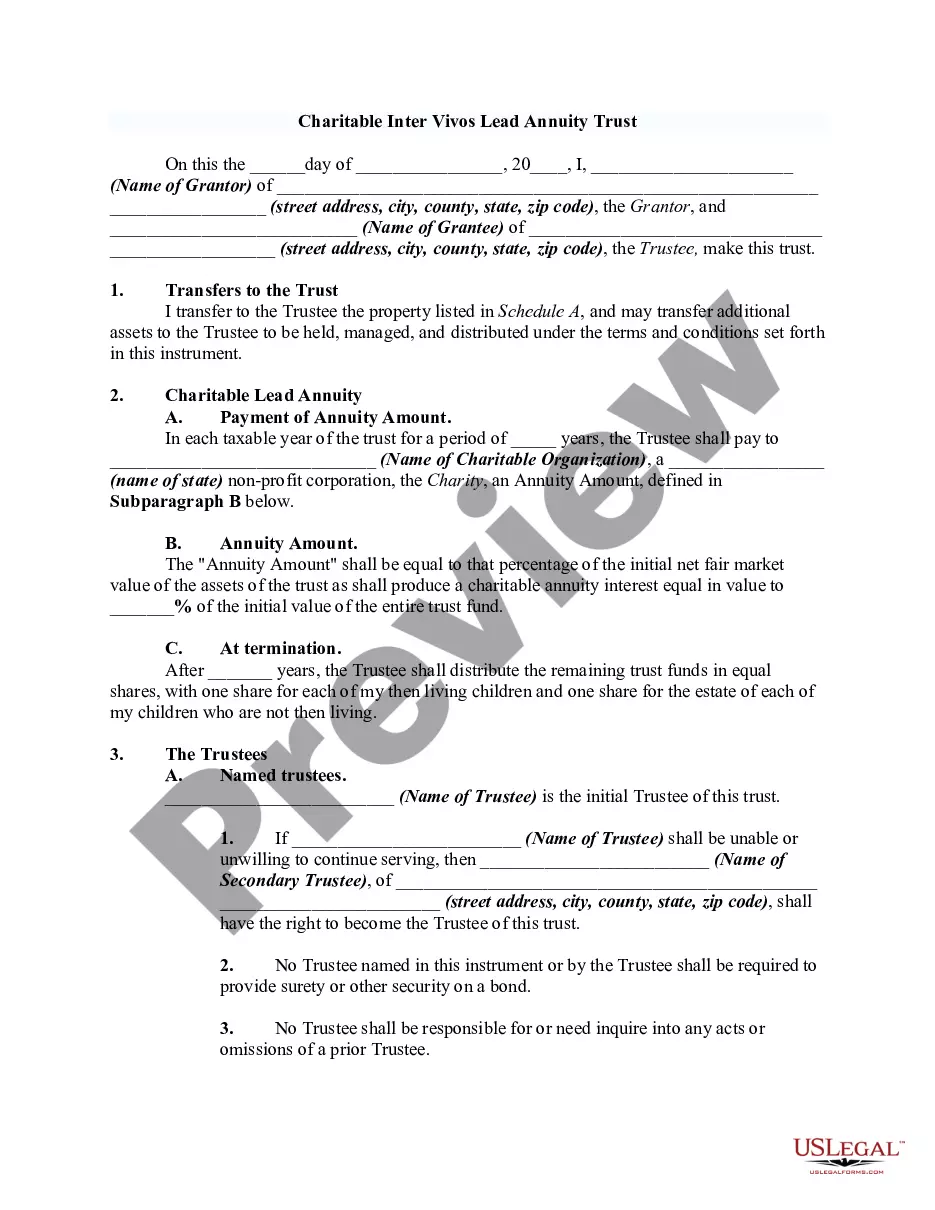
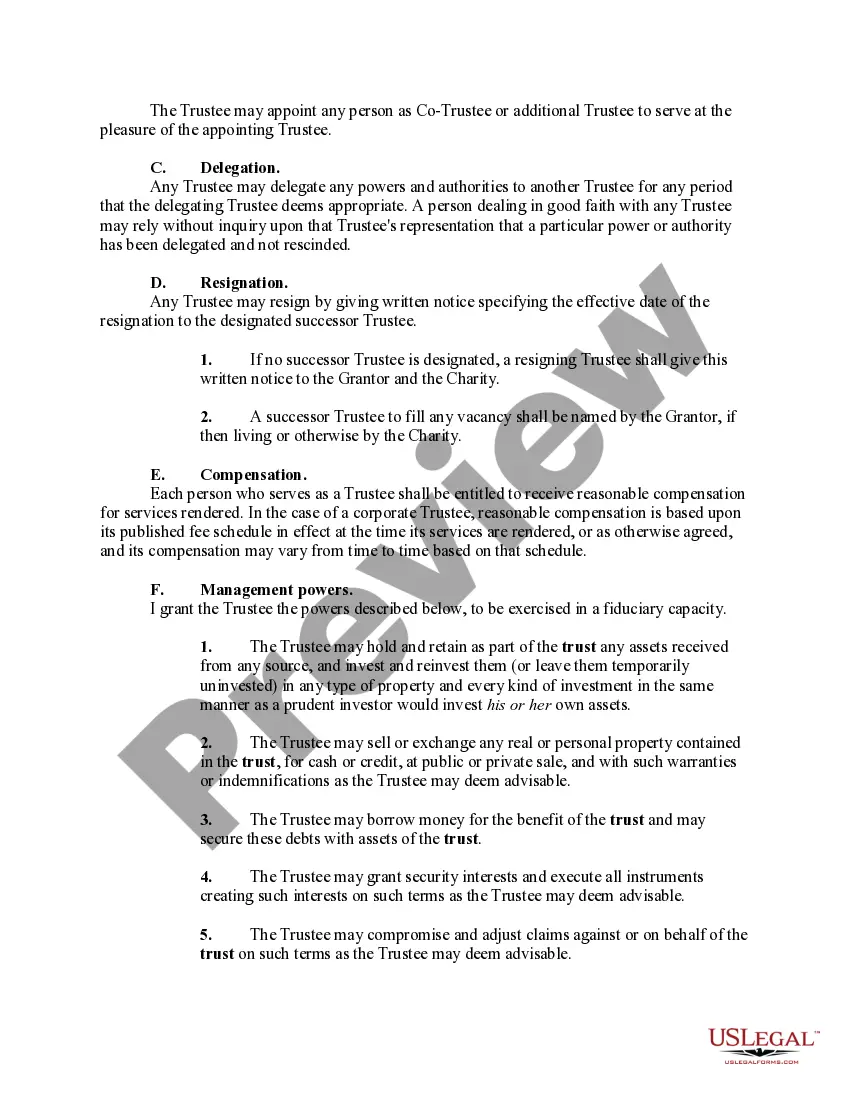
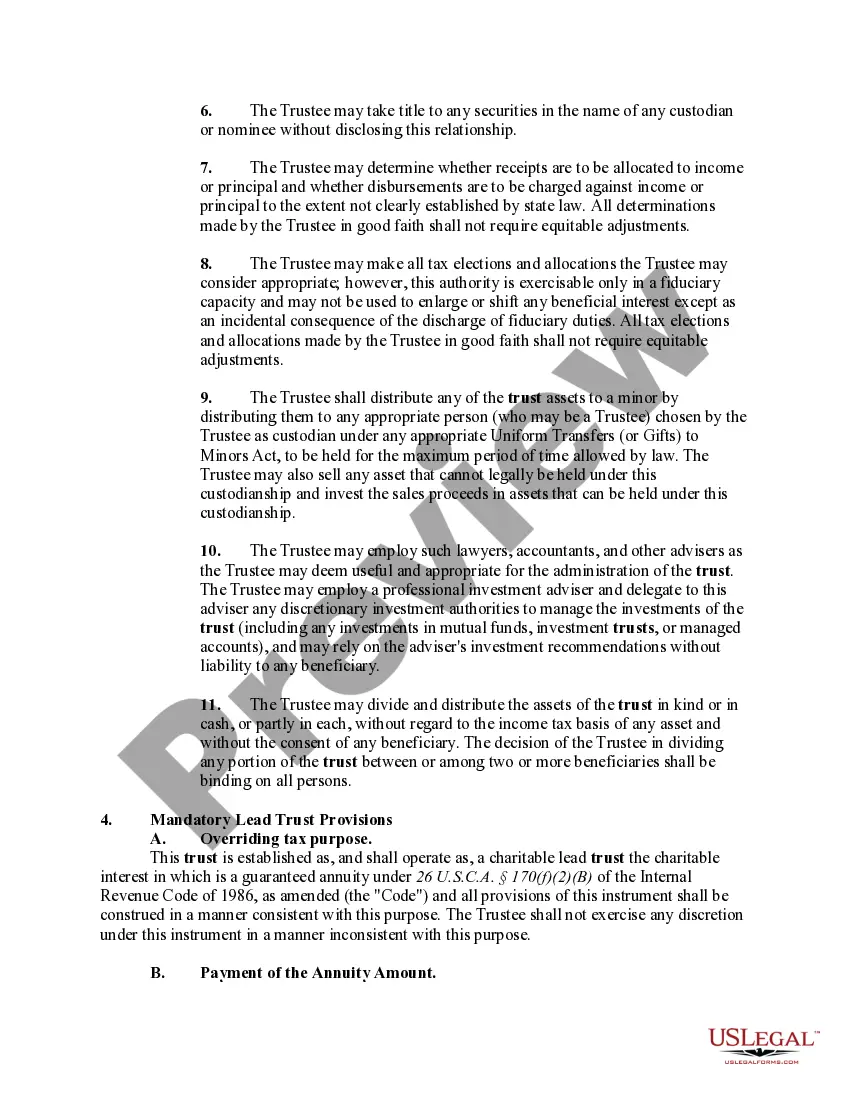
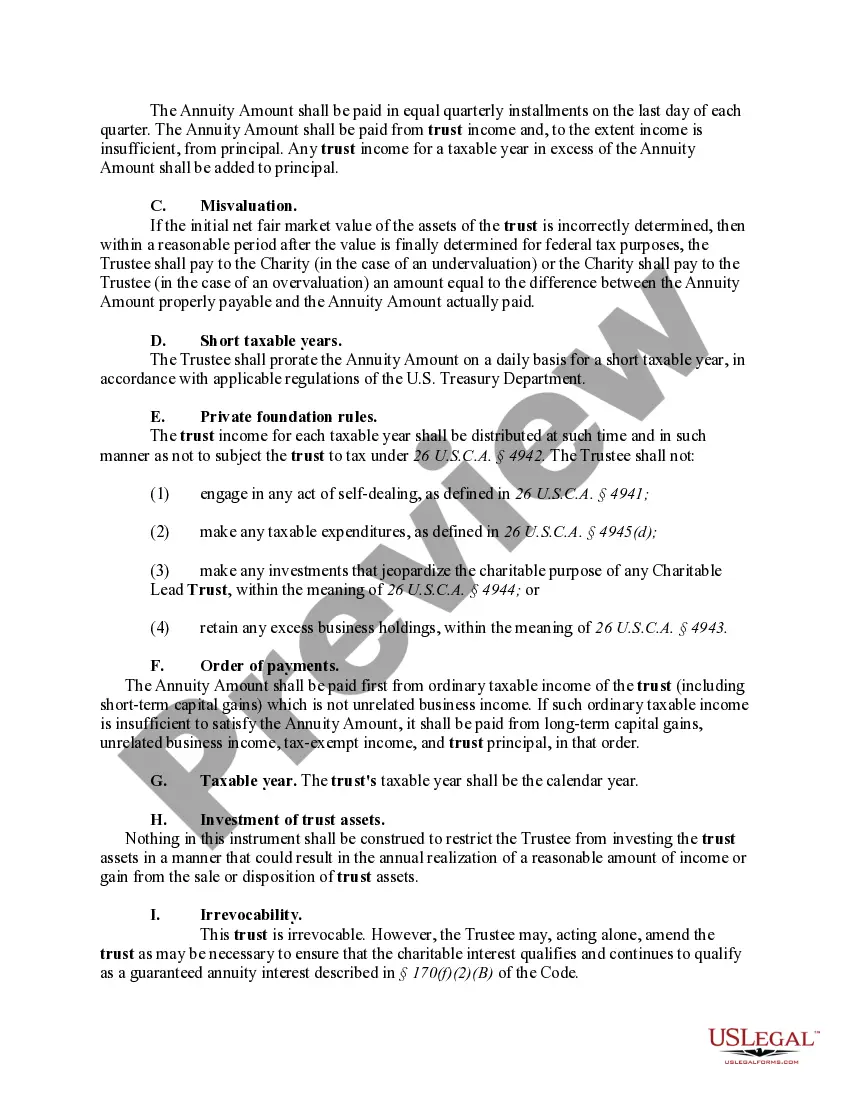
How to fill out Charitable Inter Vivos Lead Annuity Trust?
It’s clear that you cannot become a legal expert instantly, nor can you quickly learn how to prepare Charitable Lead Annuity Trust With Employees without possessing a specific skill set.
Assembling legal documents is a lengthy undertaking that demands particular education and expertise.
So why not entrust the creation of the Charitable Lead Annuity Trust With Employees to professionals.
Preview it (if this feature is available) and review the accompanying description to ascertain whether Charitable Lead Annuity Trust With Employees is what you are looking for.
Reinitiate your search if you require another template. Create a free account and choose a subscription plan to purchase the form. Click Buy now. Once the payment is completed, you can download the Charitable Lead Annuity Trust With Employees, fill it out, print it, and send it or mail it to the intended recipients or organizations. You can access your forms again from the My documents tab at any time. If you are an existing customer, you can simply Log In and find and download the template from the same tab. Regardless of the purpose of your documents—whether financial, legal, or personal—our website has you covered. Give US Legal Forms a try now!
- With US Legal Forms, one of the most extensive legal document collections, you can find everything from court forms to templates for internal business correspondence.
- We understand the significance of compliance and adherence to federal and state regulations.
- That’s why, on our platform, all templates are location-specific and current.
- Start with our website and obtain the document you need in just minutes.
- Locate the form you want by utilizing the search bar located at the top of the page.
Form popularity
FAQ
Charitable lead annuity trusts are generally subject to tax on the income they earn. The trust will need to report this income as it accumulates. Working with experts in charitable trusts can provide you with valuable insights on how to manage taxes effectively within your charitable lead annuity trust with employees.
Yes, charitable trusts can be subject to tax, especially on the income they generate. However, the distributions made to qualified charities may provide tax exemptions. Consulting the US Legal Forms platform can help clarify tax implications for your charitable lead annuity trust with employees, ensuring you maximize benefits.
Yes, a charitable lead trust usually needs to file IRS Form 1041, also known as the U.S. Income Tax Return for Estates and Trusts. This form reports the income, deductions, gains, and losses of the trust. Understanding these requirements can help you effectively manage your charitable lead annuity trust with employees.
Some trusts can be exempt from tax, including certain irrevocable trusts that meet specific criteria. For example, charitable trusts established expressly for charitable purposes may enjoy some tax exemptions. It’s important to work with tax professionals to ensure your charitable lead annuity trust with employees adheres to these regulations.
A charitable remainder trust must file IRS Form 5227 annually. This form helps the IRS track the trust's income and distributions to beneficiaries. Understanding the requirements for filing can help you manage your charitable lead annuity trust with employees effectively.
To file a charitable remainder trust (CRT), you must gather relevant financial documents and make sure the trust is properly established. Usually, the filing involves completing IRS Form 5227, which is specifically for charitable remainder trusts. If you need guidance, consider using the US Legal Forms platform, which can help you navigate the filing process smoothly.
To fill out a W-9 for a trust, first ensure you have the trust's name and tax identification number. In the form, list the trust's name exactly as it appears in the trust document and provide the appropriate tax classification. If the trust is a charitable lead annuity trust with employees, indicate that clearly in your records. If you need assistance during this process, consider using uslegalforms, where you can find helpful templates and resources.
A charitable lead annuity trust allows you to contribute assets while benefiting a charity first. This trust pays a fixed annuity to a designated charity for a certain number of years. After this period, the remaining assets go to your beneficiaries, often allowing for significant tax advantages. It’s a great way to support causes you care about while still providing for your employees.
While charitable remainder trusts offer tax benefits, they also come with limitations. For instance, the donor cannot change their mind after the trust is established, which can be restrictive. Additionally, managing these trusts requires ongoing administrative work, which may not be ideal for everyone. As you contemplate options like a charitable lead annuity trust with employees, understanding these factors is crucial.
Charitable lead annuity trusts provide a structured way to benefit charity while taking care of your estate. Typically, you fund the trust with assets, and it pays a fixed annual amount to the charity for a set term. At the end of the term, the remaining assets go to your beneficiaries. This strategy can effectively combine philanthropy with financial planning, especially when you have employees whose future you want to secure.