Promissory Unsecured Loan With Examples
Description
Get your form ready online
Our built-in tools help you complete, sign, share, and store your documents in one place.
Make edits, fill in missing information, and update formatting in US Legal Forms—just like you would in MS Word.
Download a copy, print it, send it by email, or mail it via USPS—whatever works best for your next step.
Sign and collect signatures with our SignNow integration. Send to multiple recipients, set reminders, and more. Go Premium to unlock E-Sign.
If this form requires notarization, complete it online through a secure video call—no need to meet a notary in person or wait for an appointment.
We protect your documents and personal data by following strict security and privacy standards.

Make edits, fill in missing information, and update formatting in US Legal Forms—just like you would in MS Word.

Download a copy, print it, send it by email, or mail it via USPS—whatever works best for your next step.

Sign and collect signatures with our SignNow integration. Send to multiple recipients, set reminders, and more. Go Premium to unlock E-Sign.

If this form requires notarization, complete it online through a secure video call—no need to meet a notary in person or wait for an appointment.

We protect your documents and personal data by following strict security and privacy standards.
Looking for another form?








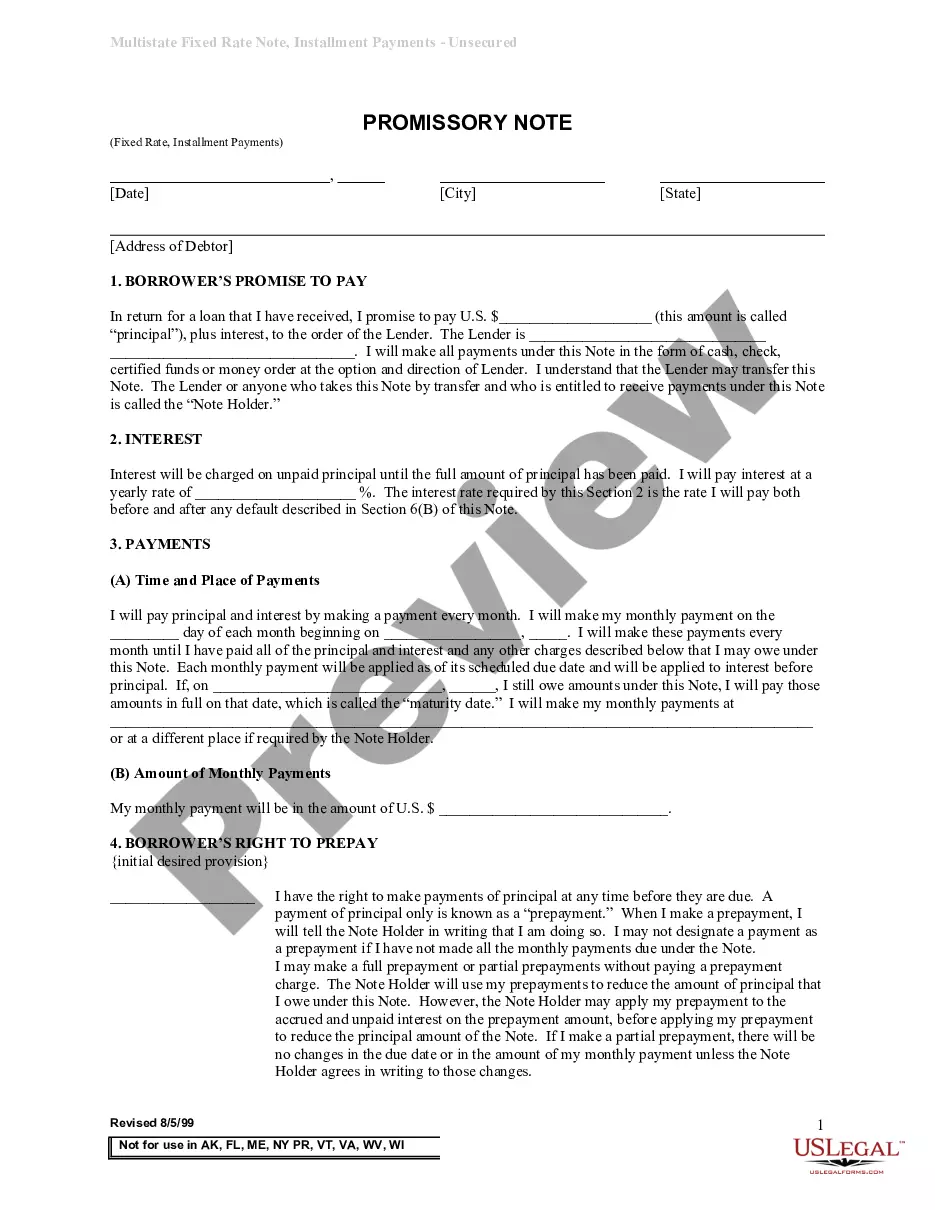
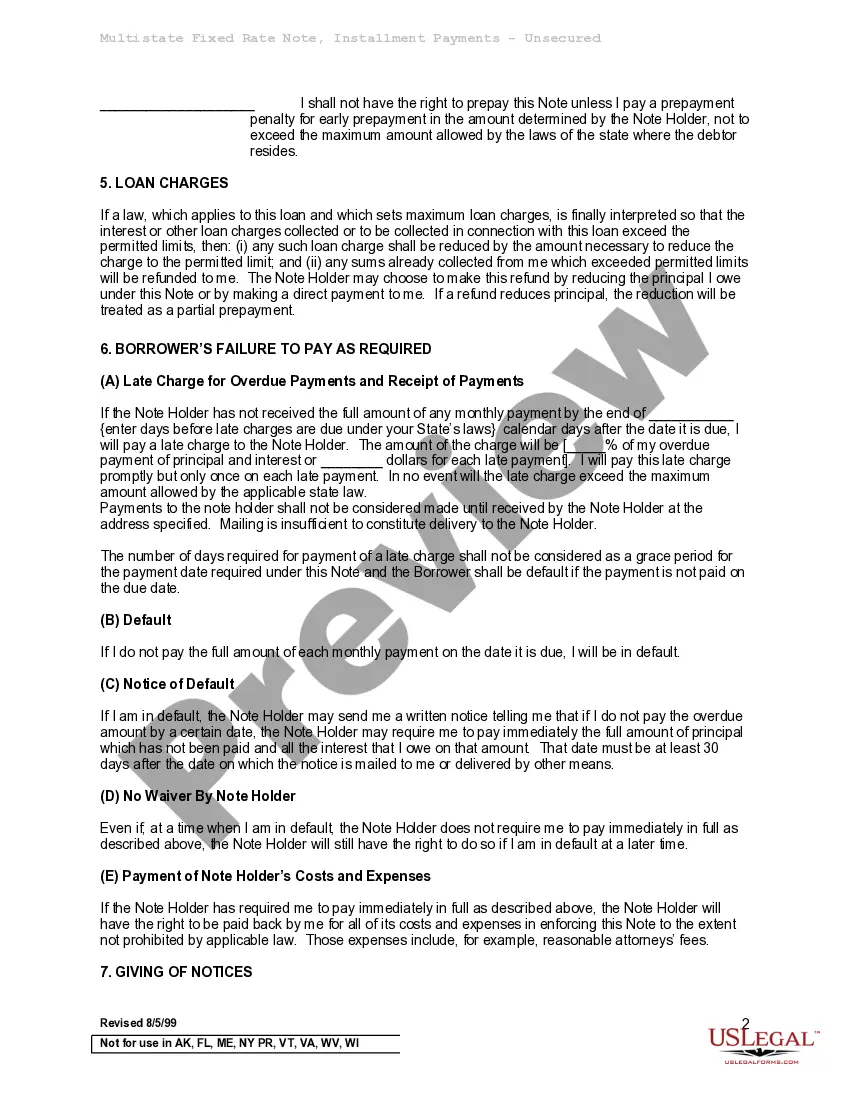
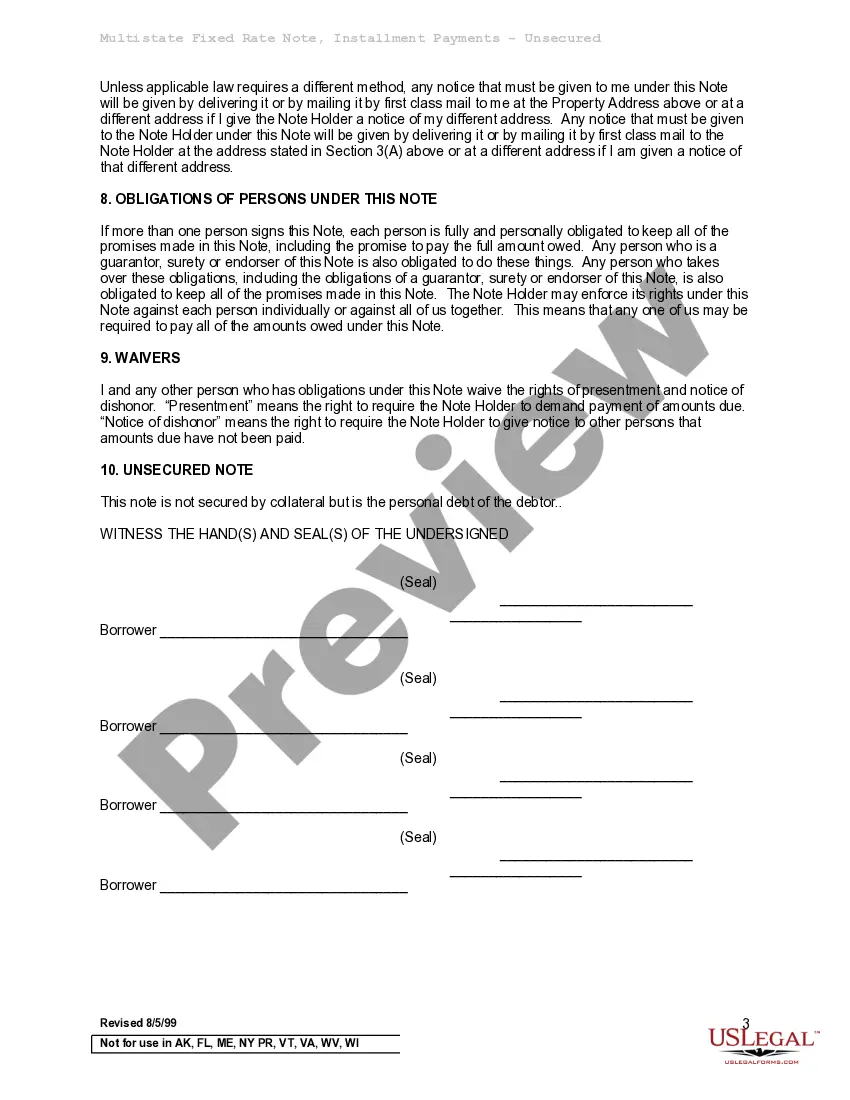
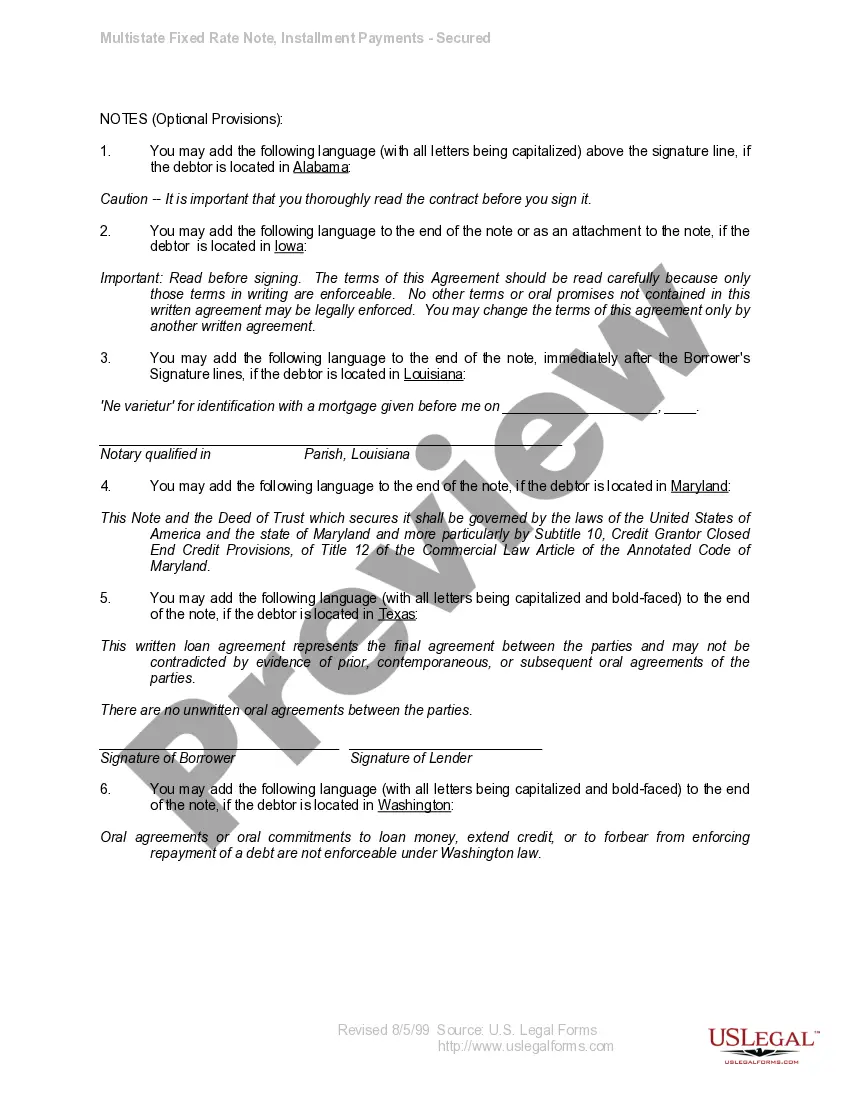
How to fill out Multistate Promissory Note - Unsecured - Signature Loan?
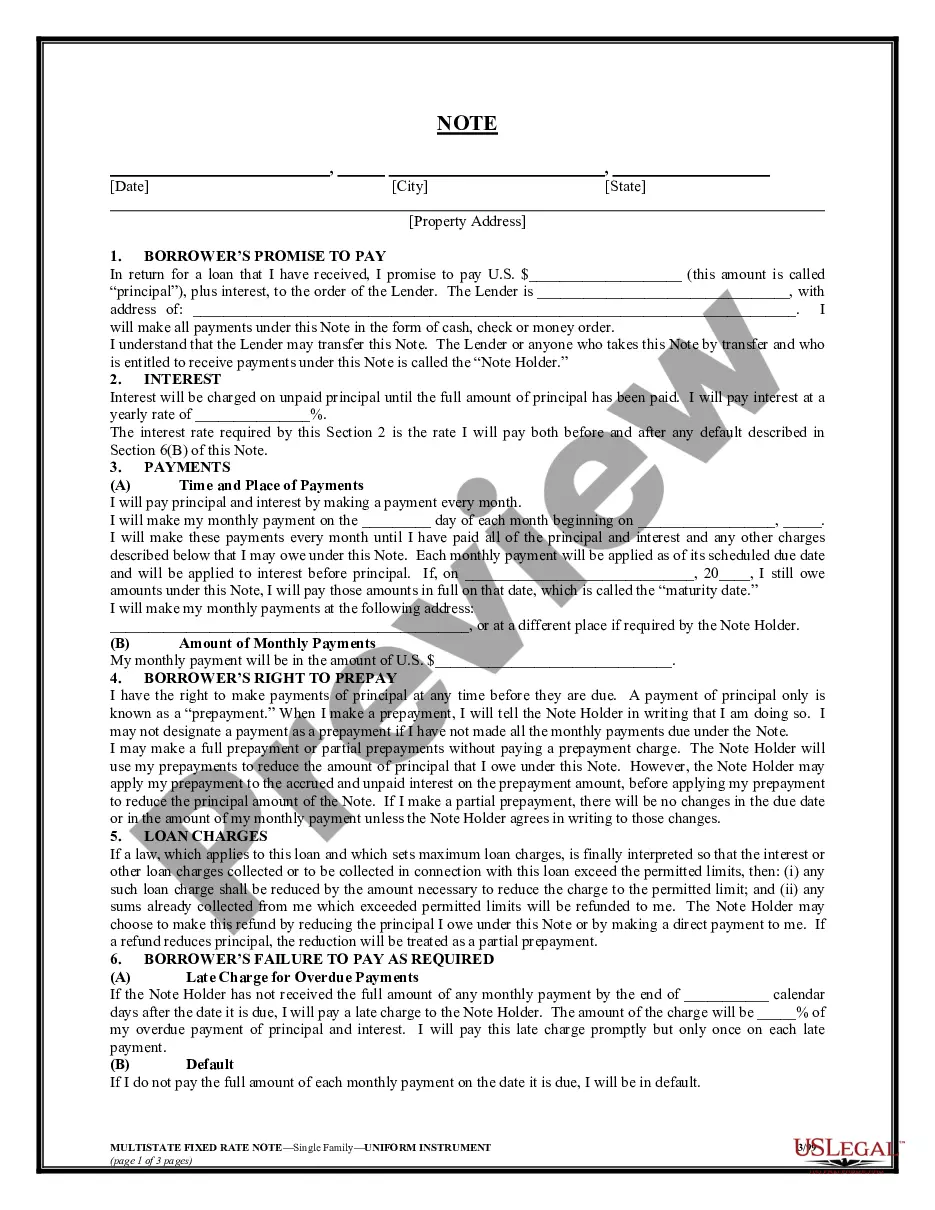
It’s widely known that you cannot become a legal authority instantly, nor can you swiftly learn how to draft a Promissory Unsecured Loan With Examples without possessing a specialized skill set.
Drafting legal documents is a lengthy process that demands specific education and abilities. So why not entrust the creation of the Promissory Unsecured Loan With Examples to the professionals.
With US Legal Forms, which boasts one of the largest legal document collections, you can find everything from court documents to templates for internal business communication.
If you require additional forms, start your search again.
Sign up for a free account and select a subscription plan to acquire the template. Click Buy now. After completing the payment, you can download the Promissory Unsecured Loan With Examples, fill it out, print it, and send it or mail it to the appropriate individuals or organizations.
- We recognize the importance of compliance and adherence to federal and local regulations.
- That’s why all templates on our site are location-specific and current.
- Here’s how you can begin using our platform and secure the document you require in just a few minutes.
- Locate the document you need by utilizing the search bar at the top of the page.
- Preview it (if this option is available) and read the accompanying description to determine if Promissory Unsecured Loan With Examples is what you are looking for.
Form popularity
FAQ
What to include in your loan agreement? The amount of the loan, also known as the principal amount. The date of the creation of the loan agreement. The name, address, and contact information of the borrower. The name, address, and contact information of the lender.
A banknote is frequently referred to as a promissory note, as it is made by a bank and payable to bearer on demand. Mortgage notes are another prominent example. If the promissory note is unconditional and readily saleable, it is called a negotiable instrument.
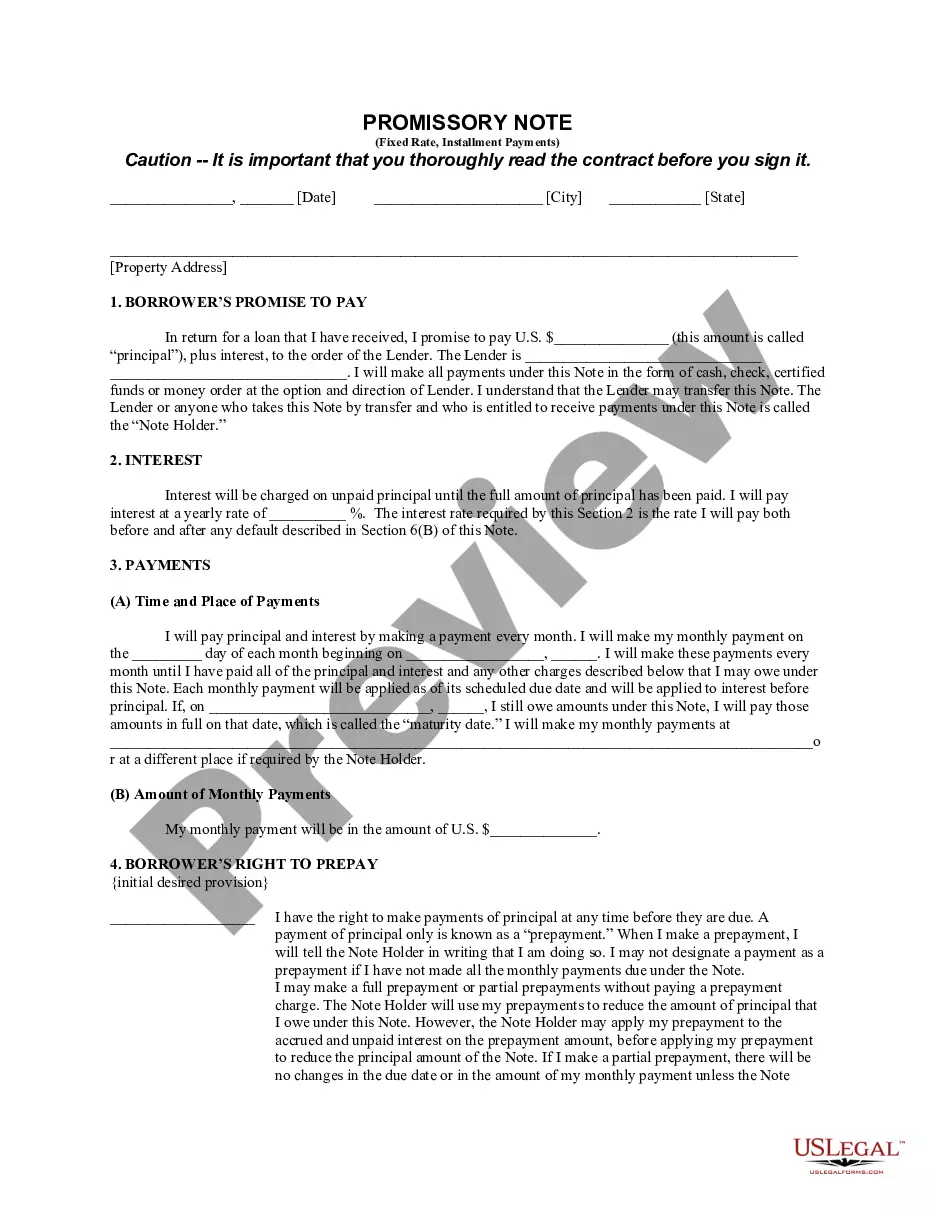
An unsecured promissory note is an obligation for payment without any property securing the payment. If the payor fails to pay, the payee must file a lawsuit and hope that the payor has sufficient assets that can be seized to satisfy the loan. If the payor does not have sufficient assets, the payee is out of luck.
Student loans, personal loans and credit cards are all example of unsecured loans. Since there's no collateral, financial institutions give out unsecured loans based in large part on your credit score and history of repaying past debts.
A simple promissory note might be for a lump sum repayment on a certain date. For example, you lend your friend $1,000 and he agrees to repay you by December 1. The full amount is due on that date, and there is no payment schedule involved.