Well Water Agreement With Canada
Description
Get your form ready online
Our built-in tools help you complete, sign, share, and store your documents in one place.
Make edits, fill in missing information, and update formatting in US Legal Forms—just like you would in MS Word.
Download a copy, print it, send it by email, or mail it via USPS—whatever works best for your next step.
Sign and collect signatures with our SignNow integration. Send to multiple recipients, set reminders, and more. Go Premium to unlock E-Sign.
If this form requires notarization, complete it online through a secure video call—no need to meet a notary in person or wait for an appointment.
We protect your documents and personal data by following strict security and privacy standards.

Make edits, fill in missing information, and update formatting in US Legal Forms—just like you would in MS Word.

Download a copy, print it, send it by email, or mail it via USPS—whatever works best for your next step.

Sign and collect signatures with our SignNow integration. Send to multiple recipients, set reminders, and more. Go Premium to unlock E-Sign.

If this form requires notarization, complete it online through a secure video call—no need to meet a notary in person or wait for an appointment.

We protect your documents and personal data by following strict security and privacy standards.
Looking for another form?





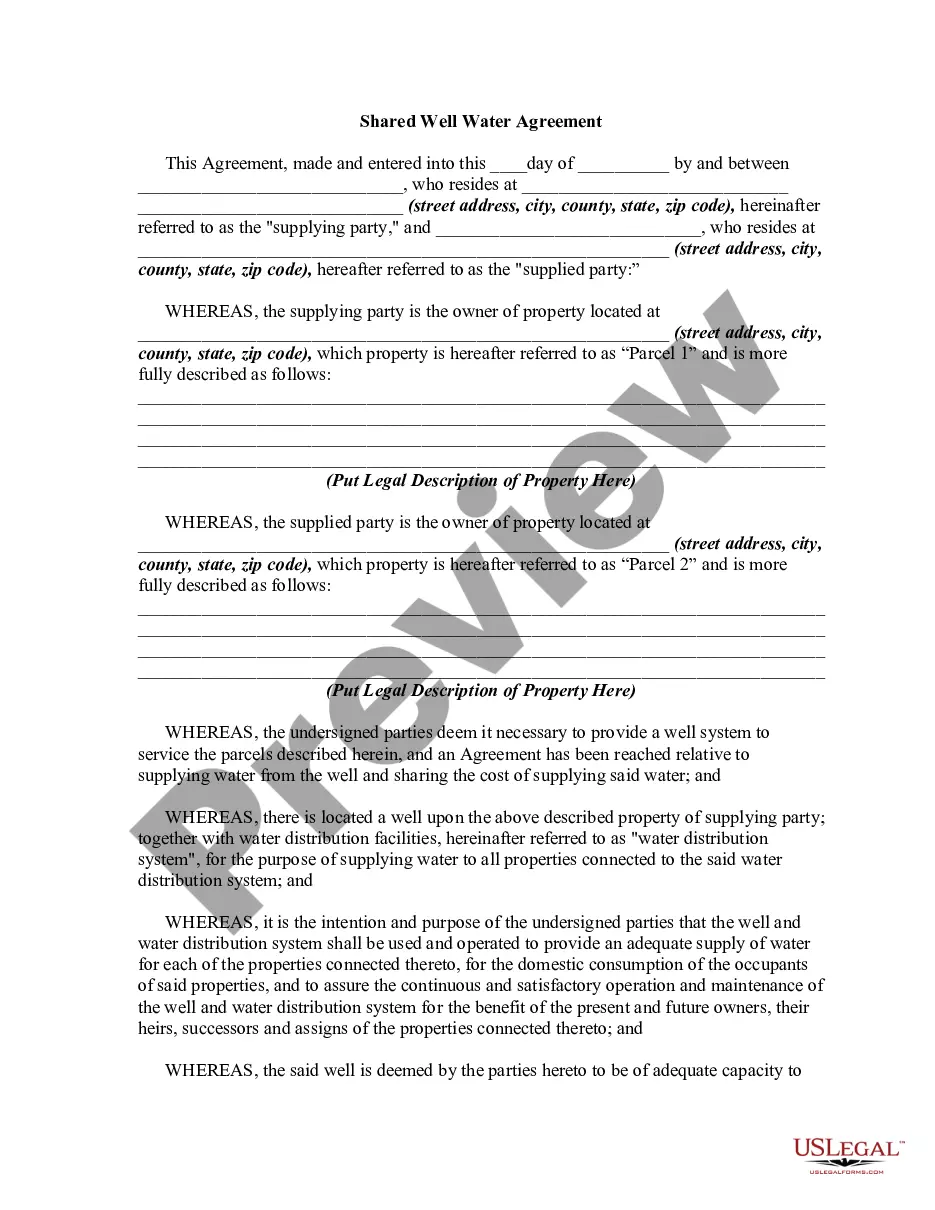
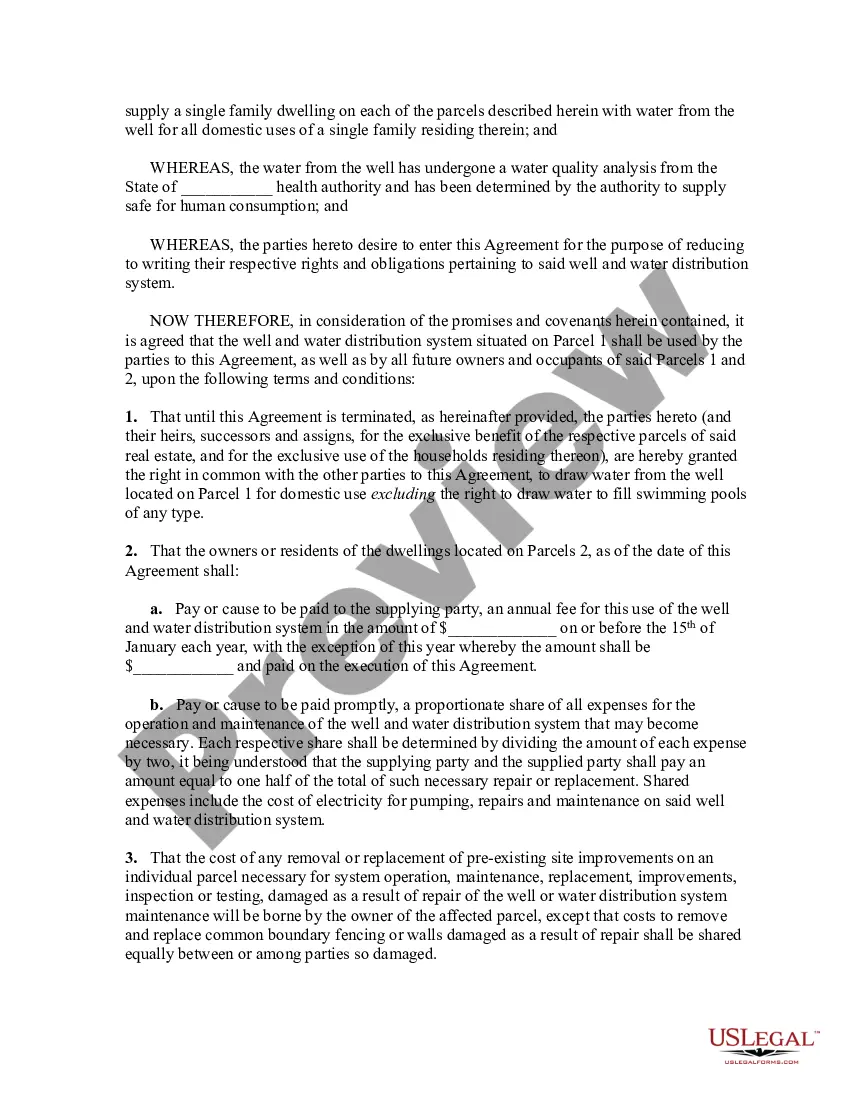
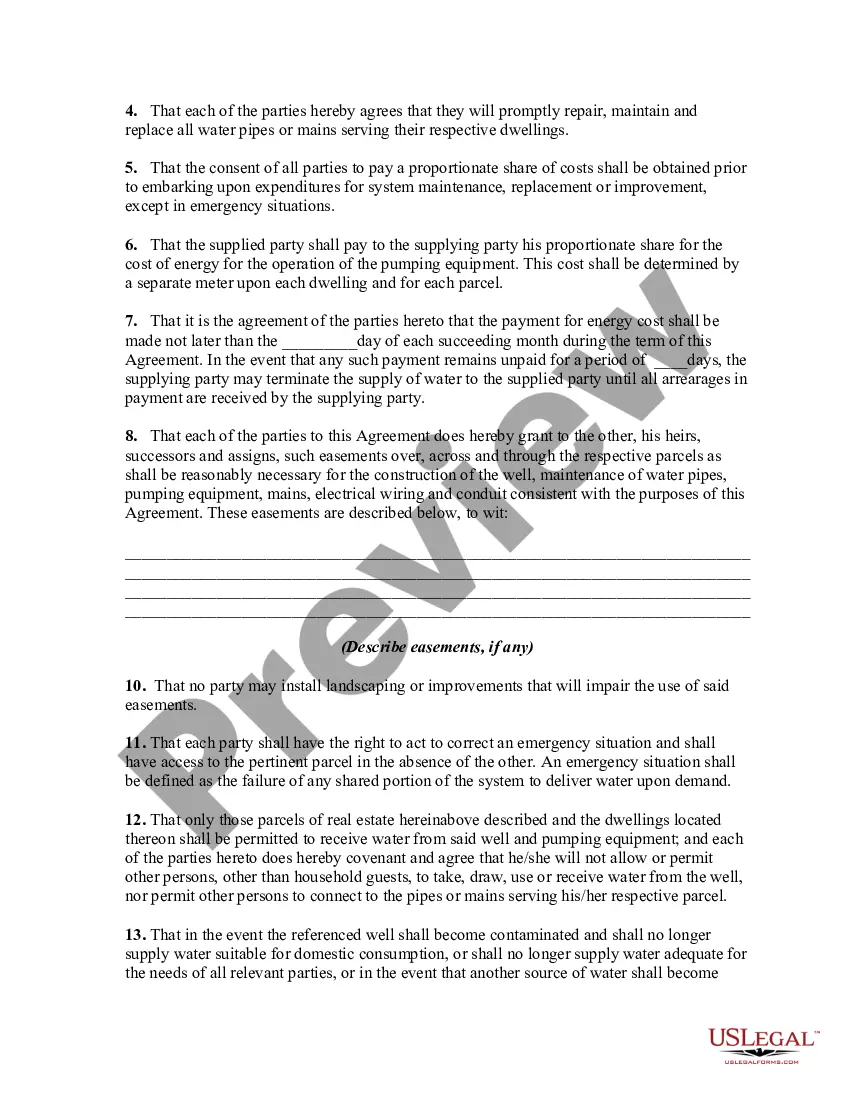
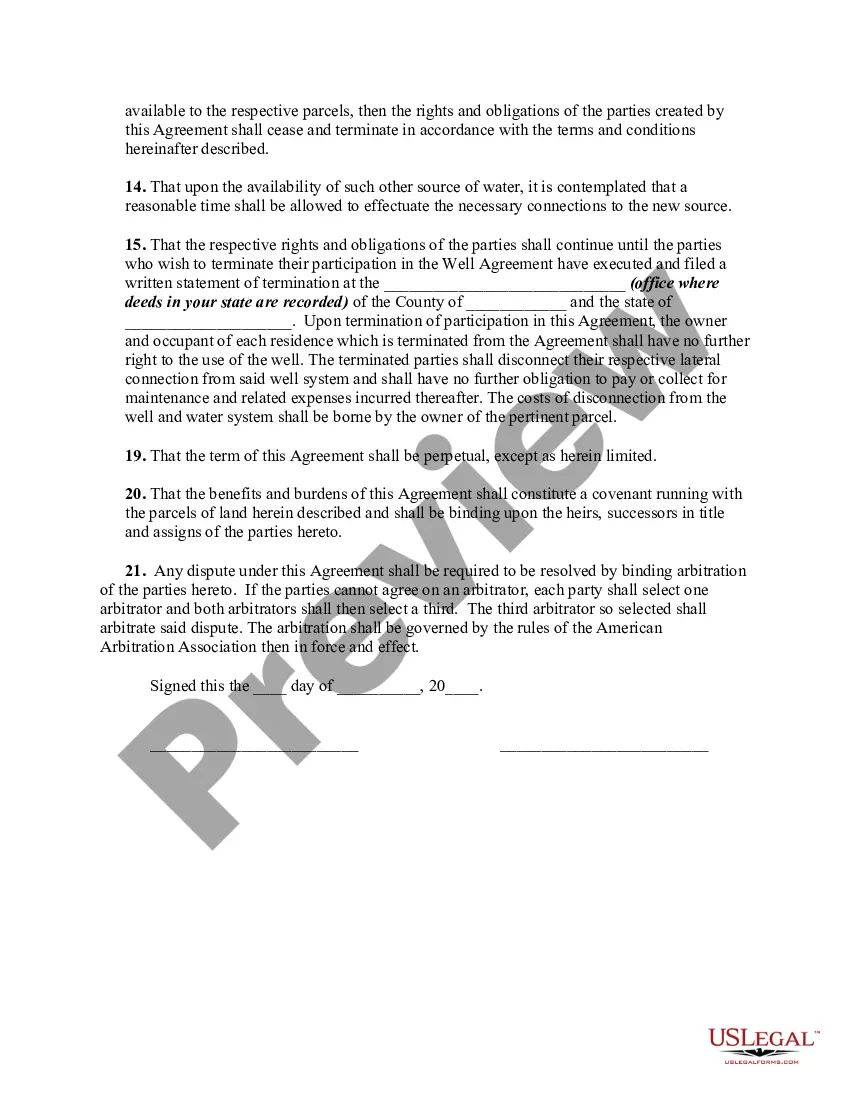
How to fill out Shared Well Water Agreement?
- If you are a returning user, log in to your account to access the required form template. Confirm that your subscription remains active; if not, renew as per your chosen plan.
- For first-time users, begin by previewing the available forms and checking their descriptions. This ensures you select the appropriate document that aligns with your jurisdiction's requirements.
- Should you need a different template, utilize the Search tab to find the perfect match. Once located, verify its suitability before proceeding.
- To purchase your selected document, click the Buy Now button and opt for a subscription plan that fits your needs. You will need to create an account for full access.
- Complete the purchase by entering your credit card details or utilizing your PayPal account for payment.
- After payment, download your form directly to your device, making it accessible in the My Forms section of your profile.
By following these steps, you can quickly access essential legal documents like the well water agreement with Canada.
Empower yourself today by exploring US Legal Forms’ extensive library and ensure your legal documents are comprehensive and accurate. Start your journey with us now!
Form popularity
FAQ
Writing a shared well agreement requires a clear structure to avoid any misunderstandings. Begin with the title, such as 'Shared Well Agreement,' and detail the parties involved, responsibilities for maintenance, and terms for usage. Incorporate provisions addressing water quality standards and dispute resolution methods to safeguard both parties, ensuring that the contract is effective and protective.
To write a simple written agreement, start by stating the purpose of the agreement clearly—that is, a well water agreement with Canada. Include the names of all parties, the specific terms regarding well access, maintenance responsibilities, and a dispute resolution process. Make sure all parties sign and date the agreement to formalize it.
To establish a shared well, both parties must agree on the terms outlined in a well water agreement with Canada. Typically, requirements include secure access to the well, equal maintenance responsibilities, and compliance with local water-use regulations. Additionally, it is crucial to ensure that both parties can legally utilize the water supply provided by the well.
The well water agreement with Canada outlines the terms under which the two nations manage their shared water resources. This agreement aims to ensure the sustainable use of water, protecting the environments and economies of both countries. By focusing on collaboration, the well water agreement fosters mutual benefits for communities relying on these water sources. Engaging with platforms like US Legal Forms can help you understand your rights and responsibilities related to this agreement.
Canada supplies various natural resources to the United States, including energy, timber, and yes, water in certain contexts. The transfer of water is generally regulated by agreements that emphasize conservation. A well water agreement with Canada ensures that both nations manage their joint resources effectively. Being aware of what Canada supplies can enhance your strategic planning regarding resource management.
The USA does receive water from Canada, predominantly through river systems and groundwater aquifers. While there is no broad export of water, treaties and agreements facilitate the flow of shared resources. A well water agreement with Canada plays a crucial role in facilitating these exchanges, ensuring both countries prioritize water quality and availability. Understanding these dynamics is essential for anyone involved in cross-border water issues.
Canada does not sell water to the United States in bulk; however, some agreements allow for limited, specific agreements regarding the transfer of water. A well water agreement with Canada emphasizes shared resources rather than trade. These arrangements focus on sustainability and mutual benefit, ensuring that both countries can access the water they need. Familiarizing yourself with these agreements can be beneficial for your understanding of international water management.
Water law in Canada encompasses various regulations that govern the use and management of water resources. Provincial and federal laws work together to regulate water rights, usage, and conservation practices. A well water agreement with Canada may include provisions that impact the legal framework of water usage and distribution. Understanding these laws can assist you in navigating your rights and responsibilities.
Canada refrains from exporting bulk water primarily due to environmental concerns and national policies. The country prioritizes conservation and responsible management over commercial trade. The well water agreement with Canada typically focuses on protecting shared water resources rather than exportation. This helps maintain ecological balance while addressing domestic water needs.
Water from Canada does flow into the United States, primarily through rivers and lakes that straddle the border. This natural exchange raises the question of a well water agreement with Canada. Such agreements help manage the water resources shared by both countries, ensuring sustainability and quality. Understanding these agreements can clarify how both nations benefit from their water resources.