Well Water Agreement For The Sea
Description
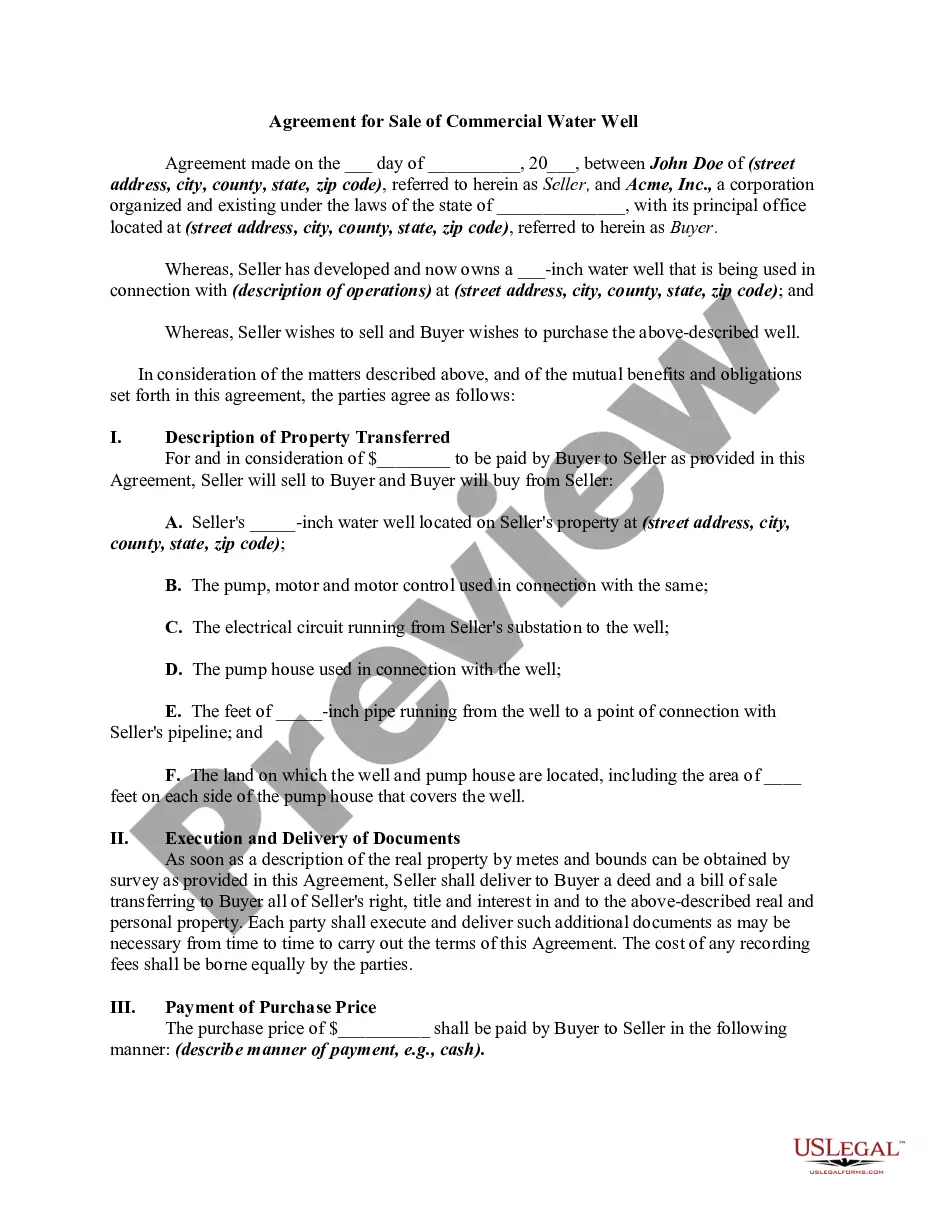
Get your form ready online
Our built-in tools help you complete, sign, share, and store your documents in one place.
Make edits, fill in missing information, and update formatting in US Legal Forms—just like you would in MS Word.
Download a copy, print it, send it by email, or mail it via USPS—whatever works best for your next step.
Sign and collect signatures with our SignNow integration. Send to multiple recipients, set reminders, and more. Go Premium to unlock E-Sign.
If this form requires notarization, complete it online through a secure video call—no need to meet a notary in person or wait for an appointment.
We protect your documents and personal data by following strict security and privacy standards.

Make edits, fill in missing information, and update formatting in US Legal Forms—just like you would in MS Word.

Download a copy, print it, send it by email, or mail it via USPS—whatever works best for your next step.

Sign and collect signatures with our SignNow integration. Send to multiple recipients, set reminders, and more. Go Premium to unlock E-Sign.

If this form requires notarization, complete it online through a secure video call—no need to meet a notary in person or wait for an appointment.

We protect your documents and personal data by following strict security and privacy standards.
Looking for another form?
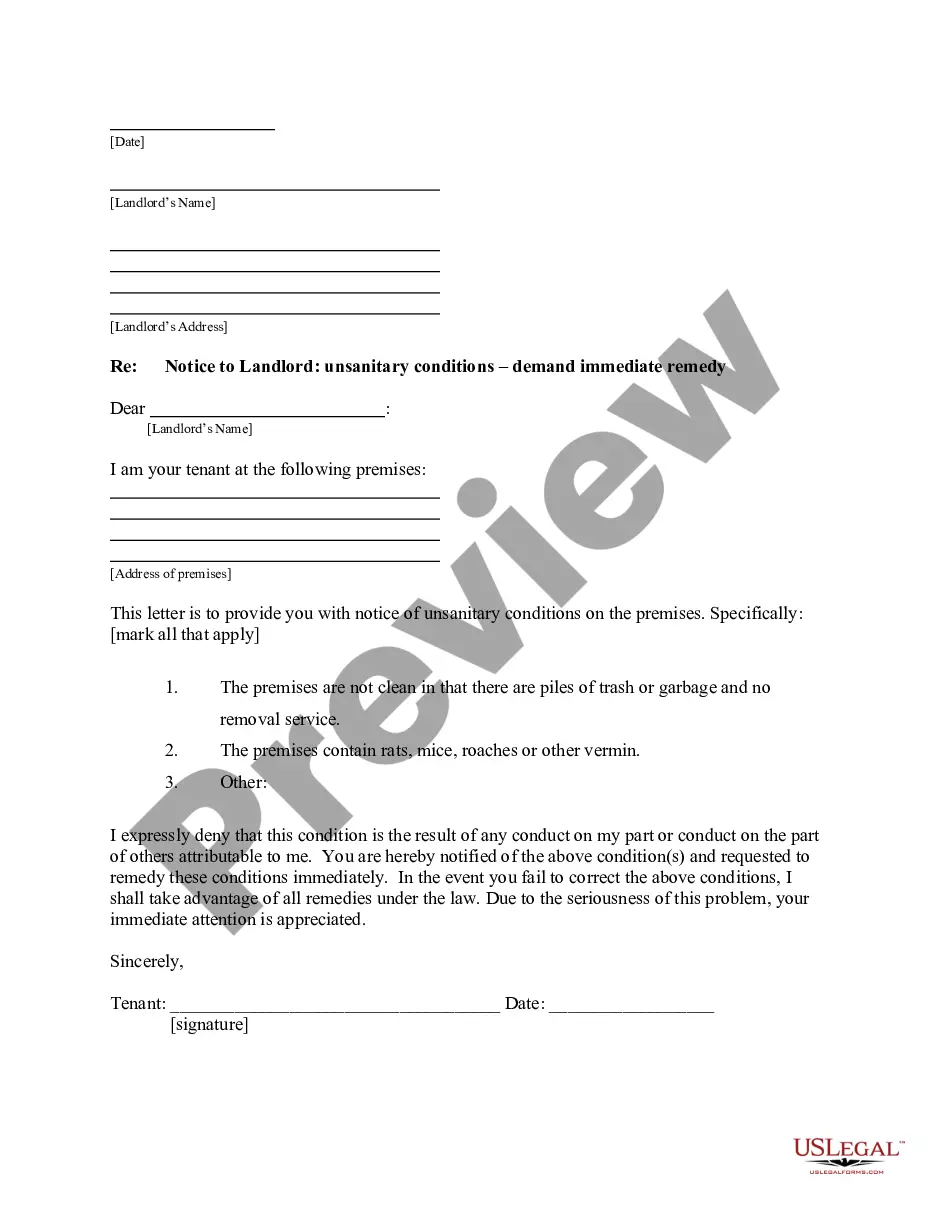


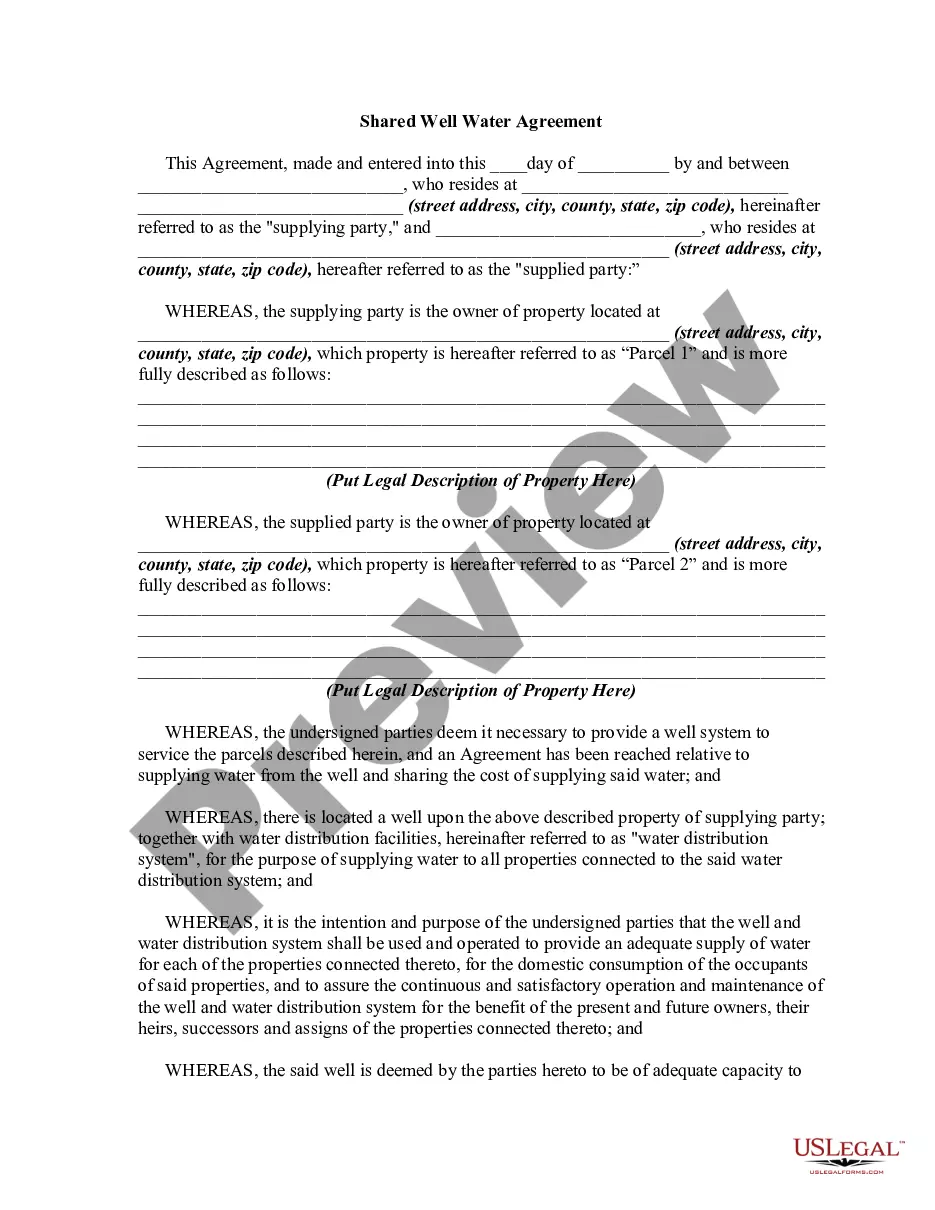
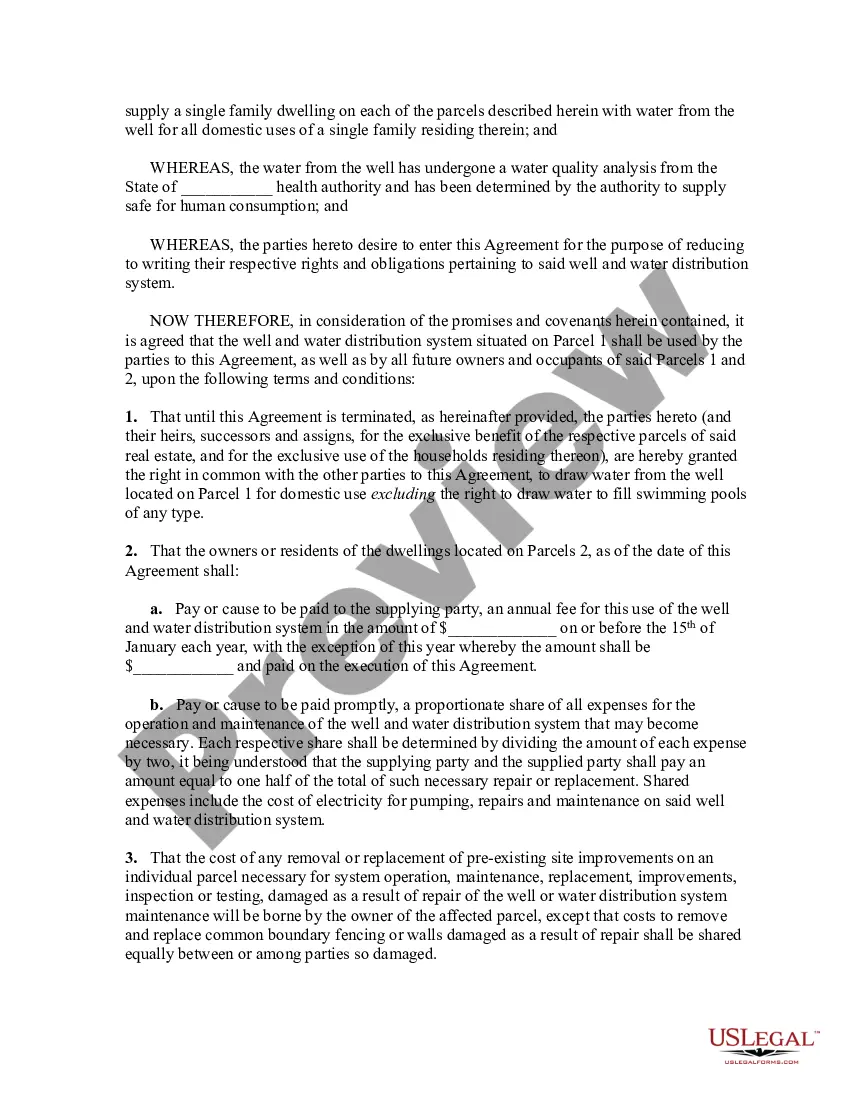
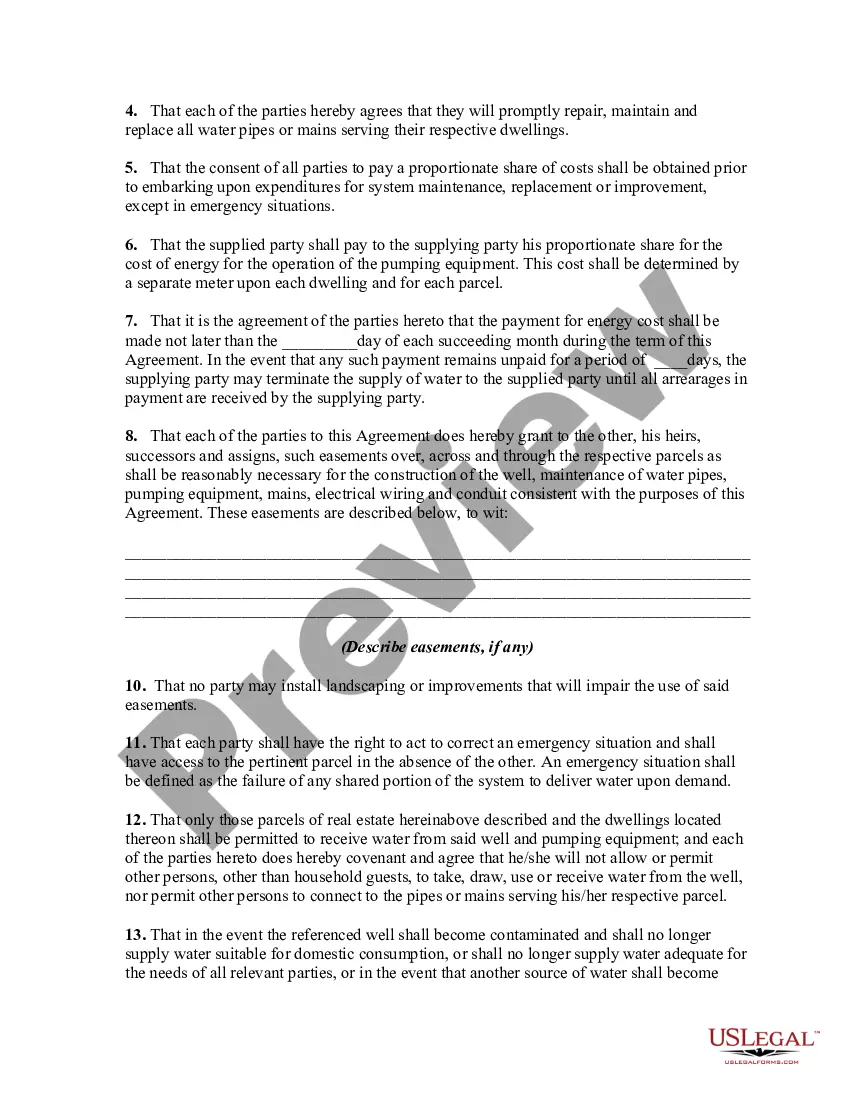
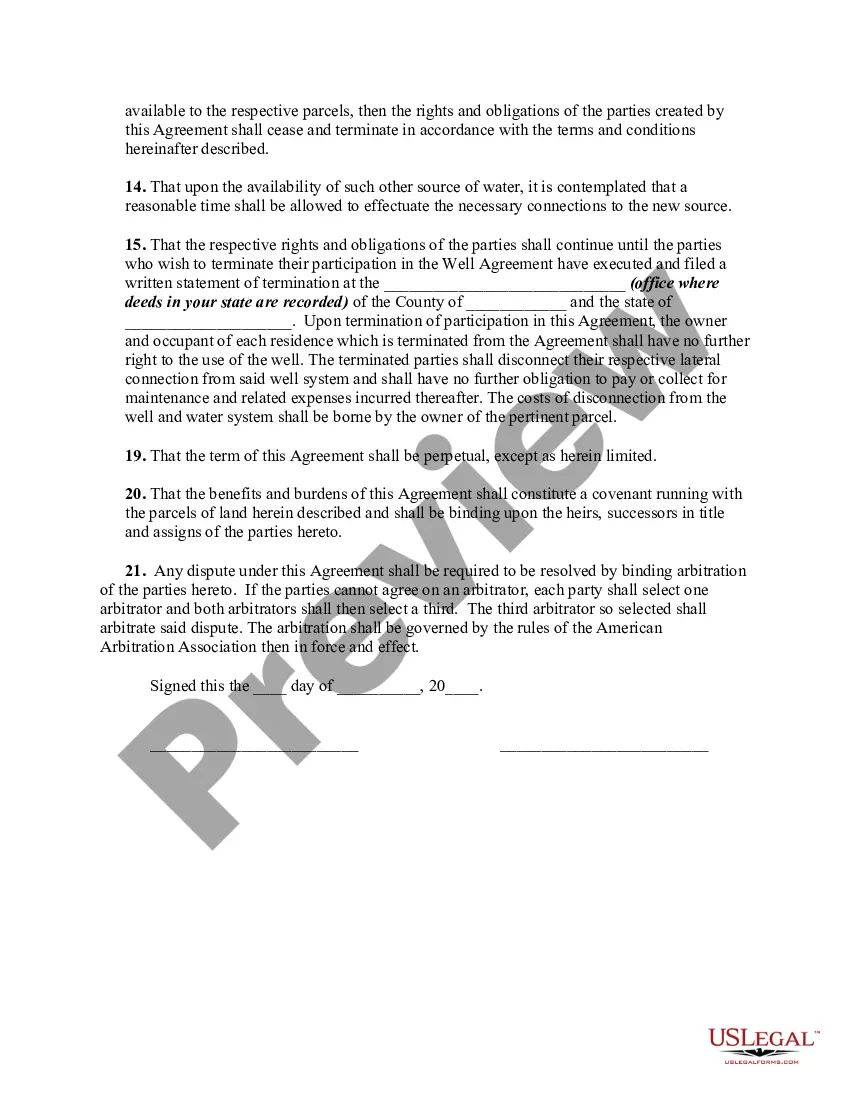
How to fill out Shared Well Water Agreement?
- Log in to your US Legal Forms account if you are a returning user. Ensure your subscription is active to access resources.
- If you’re new, start by checking the Preview mode and form description of the well water agreement. Confirm it fits your requirements and complies with local regulations.
- If adjustments are needed, utilize the Search tab above to locate any other relevant templates.
- Purchase the desired document by clicking on the Buy Now button and selecting a subscription plan. You will need to register for an account.
- Complete your payment using a credit card or PayPal to finalize your subscription.
- Download your form and save it on your device. You can always revisit it in the My Forms section of your profile.
By following these steps, you can easily navigate the legal documentation process with confidence. US Legal Forms offers an extensive library of over 85,000 legal forms, ensuring you find the right templates at competitive prices.
Don’t wait any longer—visit US Legal Forms today to streamline your legal documentation needs and ensure your agreements are precise and legally sound!
Form popularity
FAQ
Yes, obtaining a mortgage with a shared well is possible, but you may face additional scrutiny. Lenders will often require proof of a well agreement and may assess risks associated with shared arrangements. A strong well water agreement for the sea can demonstrate to lenders that water access is legally secured, making the mortgage process smoother. Having all documentation in order can greatly assist in securing financing.
A well agreement is a legal document that defines the rights and obligations of parties sharing a well. It establishes guidelines for usage, maintenance, and responsibilities, thereby preventing conflicts. In the case of a shared water source like a well, a well water agreement for the sea can ensure fair access and protect the interests of all involved. This type of agreement can help clarify expectations and promote good relationships.
Having a shared well is not inherently bad, but it comes with specific challenges. Potential problems include limited access during dry seasons and disputes over maintenance or costs. However, these concerns can be mitigated with a well water agreement for the sea, outlining each party's rights and responsibilities, thereby fostering a cooperative relationship among users.
Yes, you can sell a house with a shared well, but it requires proper documentation. Buyers typically want to know about the shared arrangement and any associated agreements. A clear well water agreement for the sea can enhance marketability and reassure potential buyers about their water rights and access. Ensuring everything is legally documented is beneficial for both sellers and buyers.
Shared wells can lead to conflicts between neighbors regarding water usage. You might encounter issues such as inconsistent water supply or disputes over maintenance responsibilities. Additionally, the quality of water may vary, which can raise health concerns. A well water agreement for the sea can help outline responsibilities and protect all parties involved.
The most common method to enforce a contract is through negotiation and mediation, allowing parties to discuss issues and seek a resolution without resorting to legal action. If informal methods fail, parties may proceed to litigation, where a court will determine whether the agreement was violated. Well-defined contracts, such as a well water agreement for the sea, can simplify this process by clearly outlining expectations and remedies for non-compliance.
Yes, a shared well agreement can be terminated under certain conditions, usually stipulated within the agreement itself. Common reasons for termination include non-compliance or a shift in circumstances that make the agreement untenable. Regardless of the reason, it’s important to follow the termination process outlined in the contract. Having a transparent well water agreement for the sea helps in navigating such changes smoothly.
To enforce a well agreement, ensure all parties understand their rights and obligations outlined in the contract. If a violation occurs, start conversations to resolve the issue amicably. If necessary, legal action may be considered to enforce compliance. Using a well water agreement for the sea helps establish a strong foundation for addressing issues as they arise.
An easement for the use of a well allows a designated party to access and utilize the well water, even if they do not own the land on which the well resides. This legal right lays out the terms of use while protecting the property itself. Clearly defined terms in an easement document can prevent misunderstandings and promote cooperation among users. Always include relevant provisions in your well water agreement for the sea for clarity.
Enforcing an agreement typically involves ensuring all parties adhere to the terms laid out in the document. If a party fails to comply, you may need to issue a formal notice and seek mediation or legal action. Documentation of all communications and actions taken is vital for proving your position. When you use a well water agreement for the sea, you set a clear framework for resolving disputes effectively.