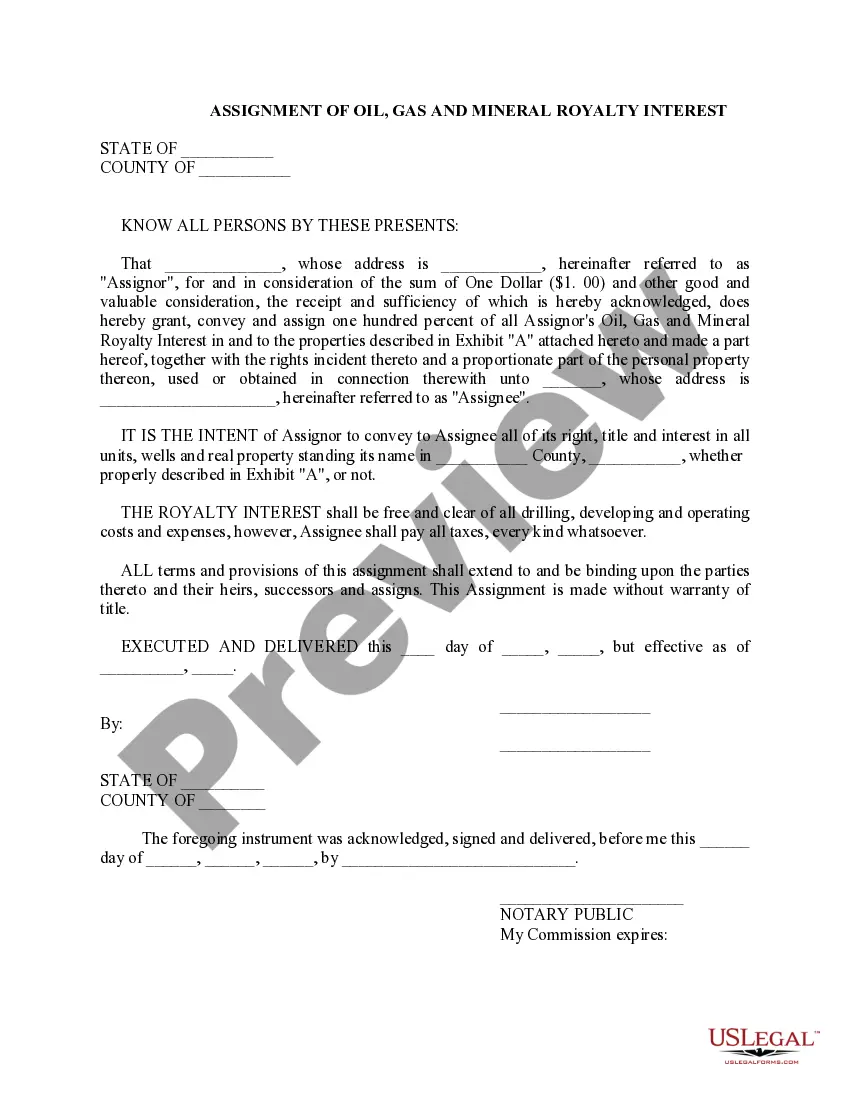
Royalty Payment For Mineral Rights
Description
Get your form ready online
Our built-in tools help you complete, sign, share, and store your documents in one place.
Make edits, fill in missing information, and update formatting in US Legal Forms—just like you would in MS Word.
Download a copy, print it, send it by email, or mail it via USPS—whatever works best for your next step.
Sign and collect signatures with our SignNow integration. Send to multiple recipients, set reminders, and more. Go Premium to unlock E-Sign.
If this form requires notarization, complete it online through a secure video call—no need to meet a notary in person or wait for an appointment.
We protect your documents and personal data by following strict security and privacy standards.

Make edits, fill in missing information, and update formatting in US Legal Forms—just like you would in MS Word.

Download a copy, print it, send it by email, or mail it via USPS—whatever works best for your next step.

Sign and collect signatures with our SignNow integration. Send to multiple recipients, set reminders, and more. Go Premium to unlock E-Sign.

If this form requires notarization, complete it online through a secure video call—no need to meet a notary in person or wait for an appointment.

We protect your documents and personal data by following strict security and privacy standards.
Looking for another form?








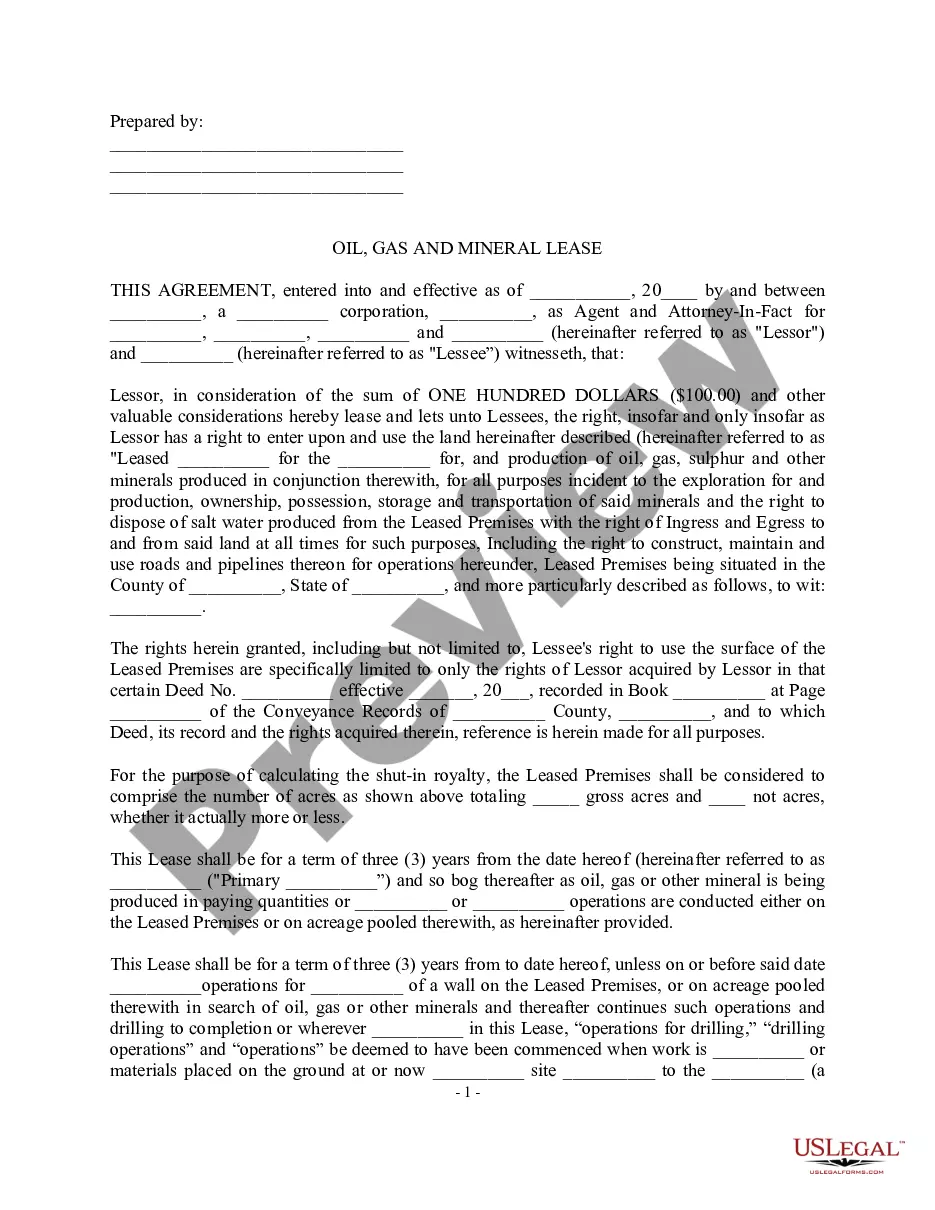
How to fill out Oil, Gas And Mineral Royalty Transfer?
- If you are already a user, log in to your account and download the necessary form by clicking the Download button. Verify that your subscription is active and renew if needed.
- For first-time users, start by previewing the available forms. Read the descriptions carefully to select one that meets your legal requirements.
- If you find discrepancies in your selected form, utilize the Search tab above to look for the correct document.
- Once you identify the right paper, click the Buy Now button to choose your desired subscription plan and create your account.
- Proceed with your purchase by entering payment details using a credit card or your PayPal account.
- After the transaction, download your document and save it to your device. You can access it anytime through the My Forms section.
US Legal Forms offers an extensive library of over 85,000 legal forms, making it easy to find the right documents tailored to your needs.
Take advantage of expert assistance for form completion to ensure accuracy and compliance. Start your journey today and simplify your legal processes with US Legal Forms!
Form popularity
FAQ
Mineral royalties do not usually count as earned income, as they come from passive sources rather than active work or services. Instead, they are considered unearned income, which is subject to different tax treatments. It is essential to clearly understand the definitions of income types, as it will influence how you manage your royalty payment for mineral rights.
Reporting mineral rights income requires you to claim any royalty payments you receive as income on your tax return. You will typically report this income on Schedule E. It’s crucial to maintain accurate records of these payments for clarity, as they can impact your taxable income considerably. Utilizing tools and services from platforms like uslegalforms can streamline your reporting process.
Calculating mineral rights royalties involves determining the production volumes and the agreed upon royalty percentage. Generally, this percentage ranges from 12% to 25% of the revenue generated from your mineral rights. By multiplying the total revenue from sales by your royalty percentage, you can accurately find your royalty payment for mineral rights.
Mineral rights royalties are generally taxed as income, but they may also be subject to specific deductions. The IRS allows individuals to deduct certain expenses associated with the receipt of royalties, which can effectively lower your taxable income. Understanding the tax implications of royalty payment for mineral rights can be complex; using resources like US Legal Forms can help clarify these details and assist with proper reporting.
Income that is not considered earned income includes capital gains, interest, and, notably, royalties from mineral rights. These types of income do not require active participation in a business or job. Recognizing which parts of your income are not earned is crucial for proper tax planning, especially concerning royalty payment for mineral rights.
Filing royalty payments involves reporting your income accurately on your tax return. Typically, you will list your royalty income on Schedule E of your tax return, which details additional income sources. Using platforms like US Legal Forms can simplify this process by providing templates and guidance tailored to royalty payment for mineral rights, ensuring you meet all requirements efficiently.
Royalties do not count as earned income; rather, they fall under passive income. This classification means that if you receive royalties from mineral rights, these payments originate from investments or property ownership, not from your labor. Understanding this distinction can help you plan better for your tax obligations related to royalty payment for mineral rights.
Mineral royalties are generally considered unearned income because they come from property rights rather than employment or active business efforts. This means that, while they contribute to your overall income profile, they do not classify as earned income like wages or self-employment earnings. When managing royalty payment for mineral rights, it's important to understand the distinction for tax purposes.
A royalty payment for mineral rights specifically refers to the earnings received by landowners from the sale of minerals extracted from their property. This payment is usually defined in a lease agreement, outlining the percentage of revenue the owner will receive. It is vital for mineral rights owners to understand their rights and potential earnings. Platforms like US Legal Forms can provide valuable resources and guidance on these agreements.
A royalty payment for mineral rights is a percentage of the revenue generated from the extraction of minerals from a property. Typically, landowners receive a share of profits due to their ownership of the mineral rights on their land. This arrangement allows owners to benefit financially without directly engaging in the mining operations. Understanding this concept is essential for anyone involved in mineral rights agreements.