Mineral Royalty Rates
Description
Get your form ready online
Our built-in tools help you complete, sign, share, and store your documents in one place.
Make edits, fill in missing information, and update formatting in US Legal Forms—just like you would in MS Word.
Download a copy, print it, send it by email, or mail it via USPS—whatever works best for your next step.
Sign and collect signatures with our SignNow integration. Send to multiple recipients, set reminders, and more. Go Premium to unlock E-Sign.
If this form requires notarization, complete it online through a secure video call—no need to meet a notary in person or wait for an appointment.
We protect your documents and personal data by following strict security and privacy standards.

Make edits, fill in missing information, and update formatting in US Legal Forms—just like you would in MS Word.

Download a copy, print it, send it by email, or mail it via USPS—whatever works best for your next step.

Sign and collect signatures with our SignNow integration. Send to multiple recipients, set reminders, and more. Go Premium to unlock E-Sign.

If this form requires notarization, complete it online through a secure video call—no need to meet a notary in person or wait for an appointment.

We protect your documents and personal data by following strict security and privacy standards.
Looking for another form?




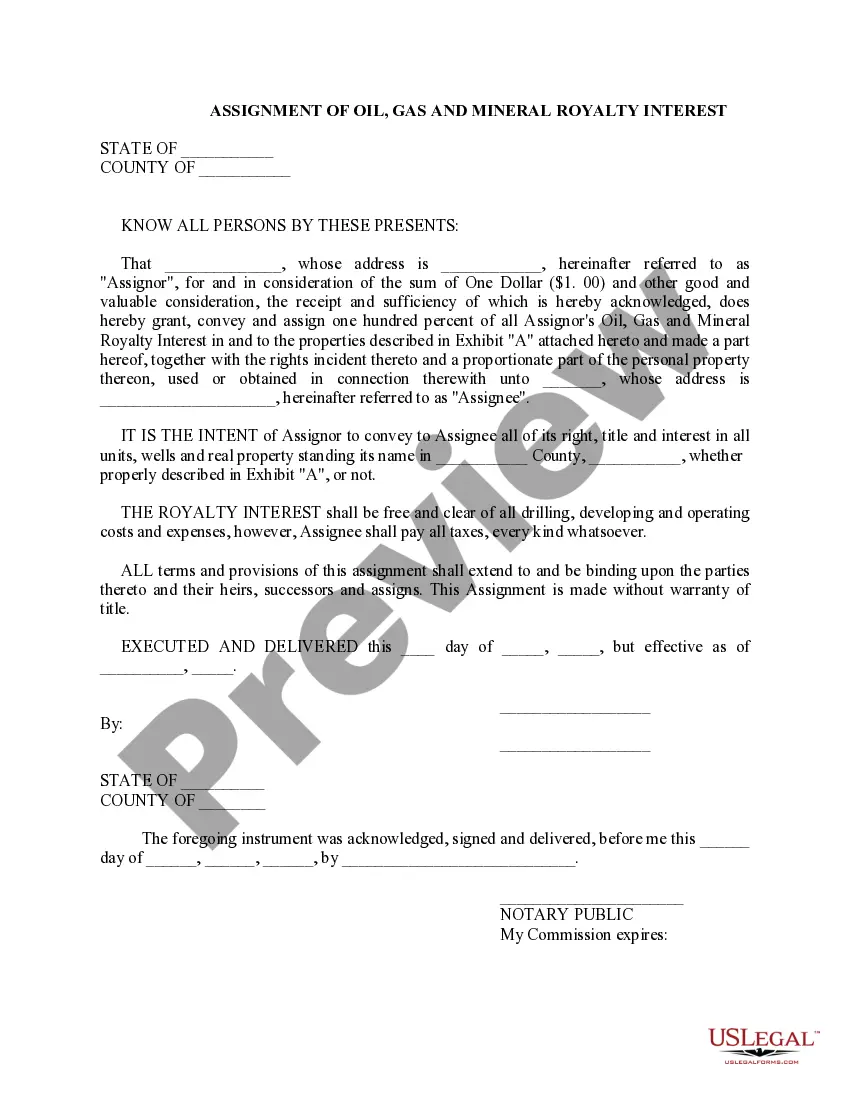
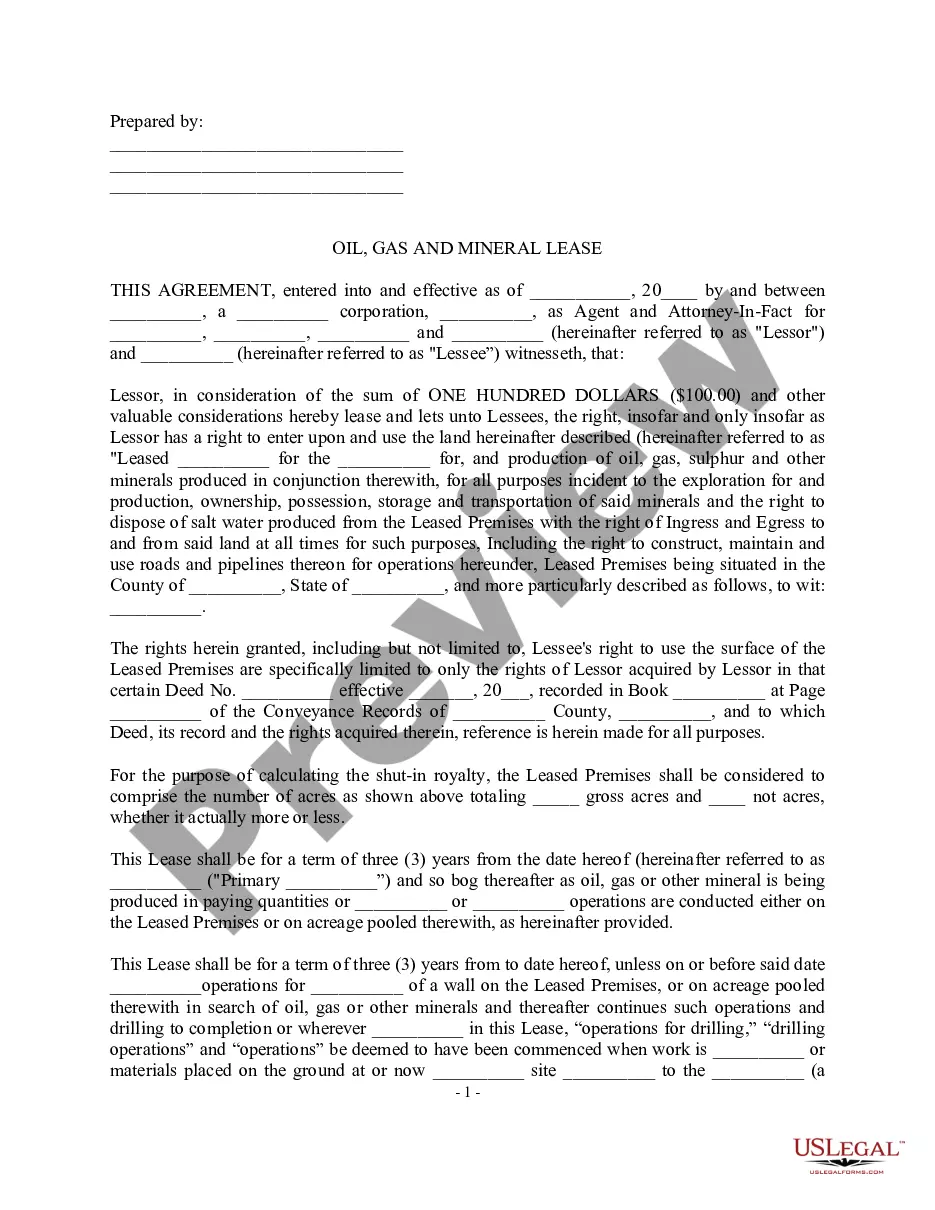
How to fill out Oil, Gas And Mineral Royalty Transfer?
Creating legal documents from the ground up can frequently be daunting.
Certain situations may require extensive research and significant financial investment.
If you’re looking for a more straightforward and economical approach to generating Mineral Royalty Rates or other forms without unnecessary hassles, US Legal Forms is always accessible to you.
Our online repository of over 85,000 current legal documents encompasses nearly every aspect of your financial, legal, and personal affairs. With just a few clicks, you can swiftly obtain state- and county-compliant forms meticulously prepared for you by our legal experts.
US Legal Forms has a solid reputation and over 25 years of expertise. Join us today and transform form execution into a simple and efficient process!
- Utilize our platform whenever you require dependable and trustworthy services through which you can rapidly find and download the Mineral Royalty Rates.
- If you’re already familiar with our services and have set up an account with us, simply Log In to your account, find the template, and download it, or re-download it at any later time in the My documents section.
- Not registered yet? No problem. It only takes a few minutes to sign up and navigate the catalog.
- Before downloading Mineral Royalty Rates, adhere to these suggestions.
- Review the document preview and descriptions to confirm that you are on the correct form.
Form popularity
FAQ
The tax rate on mineral royalties can vary depending on your tax bracket, but these royalties are generally treated as ordinary income. This means they are taxed at your standard tax rate, which can range significantly based on your overall income. Being aware of the current mineral royalty rates can aid in anticipating tax obligations.
To determine the value of your mineral rights, consider factors such as current mineral royalty rates, the location of the property, and the production history. A qualified appraiser can provide a detailed analysis, factoring in current market trends. This evaluation is essential for making informed decisions about selling or leasing your rights.
Calculating mineral royalties typically involves multiplying the production amount by the agreed-upon royalty rate. For example, if the mineral royalty rate is 15%, you would multiply the total revenue generated from the minerals by 0.15. Understanding this calculation can help you maximize the value of your mineral rights.
To file taxes for royalties, gather all relevant documents including 1099 forms that report your earnings from mineral royalties. You will typically include this income on your Form 1040, where you may also consider any deductions related to the expenses of managing your mineral rights. Understanding the mineral royalty rates you receive can help ensure you report accurately and take advantage of possible deductions.
Mineral royalties are subject to federal income tax, as well as potential state taxes. You must report royalties as income on your tax return, and this income can fall under ordinary tax rates. It's essential to keep accurate records of the mineral royalty rates you receive for proper reporting.
Typical royalty rates for mineral rights vary significantly, often falling between 12% and 25%, depending on the mineral commodity and region. Each state's market conditions impact these rates, and understanding them allows for better decision-making. It is advisable to research local trends and industry standards. US Legal Forms offers reliable information to better navigate these variables and secure fair agreements.
Typically, the percentage you receive for mineral rights ranges from 12.5% to 25%, based on mineral royalty rates in your area. Factors influencing this percentage include the type of mineral being extracted and market demand. Higher percentages may reflect more valuable mineral deposits or strong negotiations. Exploring US Legal Forms can provide you with insights and tools to obtain the most favorable terms.
Royalty payments for mineral rights represent the percentage of revenue a landowner receives from the extraction of minerals. These payments typically occur monthly or quarterly, depending on the agreement with the mining company. Understanding mineral royalty rates is crucial when negotiating contracts to ensure you receive fair compensation for your resources. At US Legal Forms, you can find helpful resources to navigate these agreements confidently.
To calculate mining royalties, first, identify the total revenue generated from the mining operation. Then, multiply this revenue by the established royalty percentage. Having a firm grasp on mineral royalty rates will enable you to manage your financial expectations effectively and discuss terms with mining companies.
You can obtain mineral rights on your property by purchasing them from the current owner or through a lease agreement. Investigate your property's records and consult local regulations, as they may guide you on how to acquire these rights. Remember that understanding mineral royalty rates can significantly benefit your negotiations.