Damage For Vehicle
Description
Get your form ready online
Our built-in tools help you complete, sign, share, and store your documents in one place.
Make edits, fill in missing information, and update formatting in US Legal Forms—just like you would in MS Word.
Download a copy, print it, send it by email, or mail it via USPS—whatever works best for your next step.
Sign and collect signatures with our SignNow integration. Send to multiple recipients, set reminders, and more. Go Premium to unlock E-Sign.
If this form requires notarization, complete it online through a secure video call—no need to meet a notary in person or wait for an appointment.
We protect your documents and personal data by following strict security and privacy standards.

Make edits, fill in missing information, and update formatting in US Legal Forms—just like you would in MS Word.

Download a copy, print it, send it by email, or mail it via USPS—whatever works best for your next step.

Sign and collect signatures with our SignNow integration. Send to multiple recipients, set reminders, and more. Go Premium to unlock E-Sign.

If this form requires notarization, complete it online through a secure video call—no need to meet a notary in person or wait for an appointment.

We protect your documents and personal data by following strict security and privacy standards.
Looking for another form?






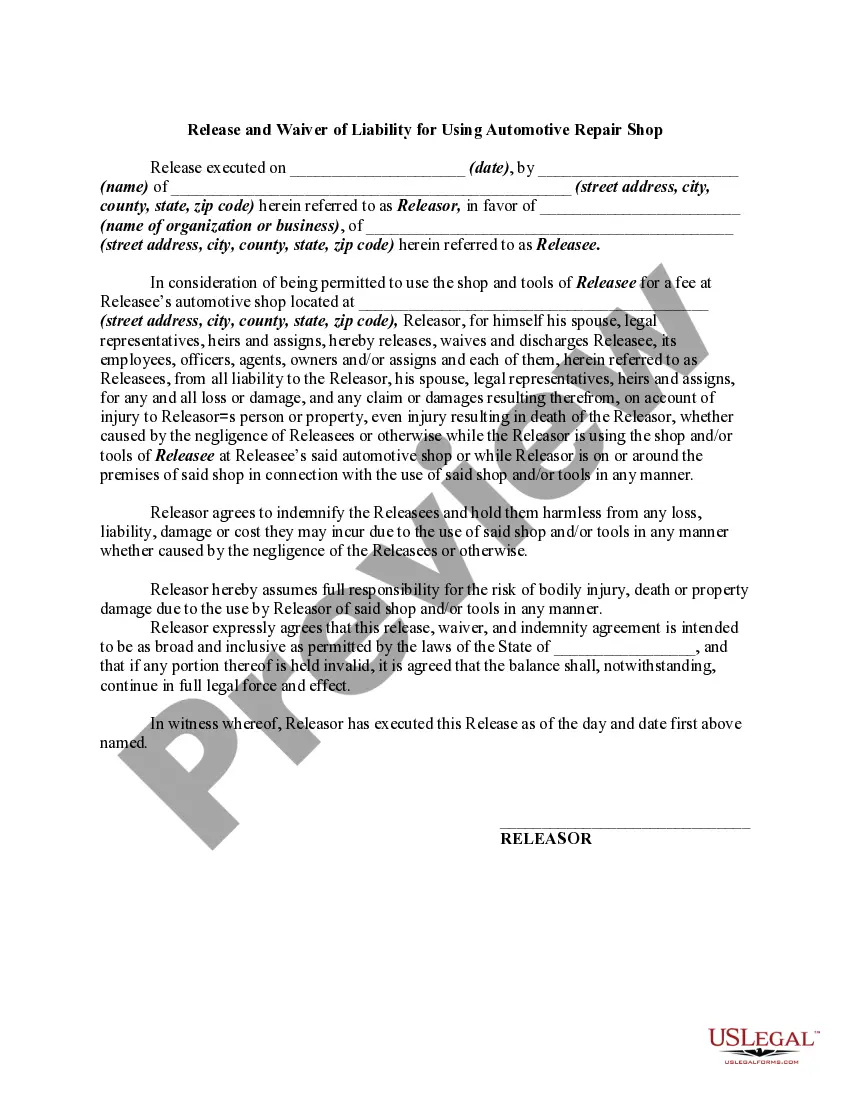
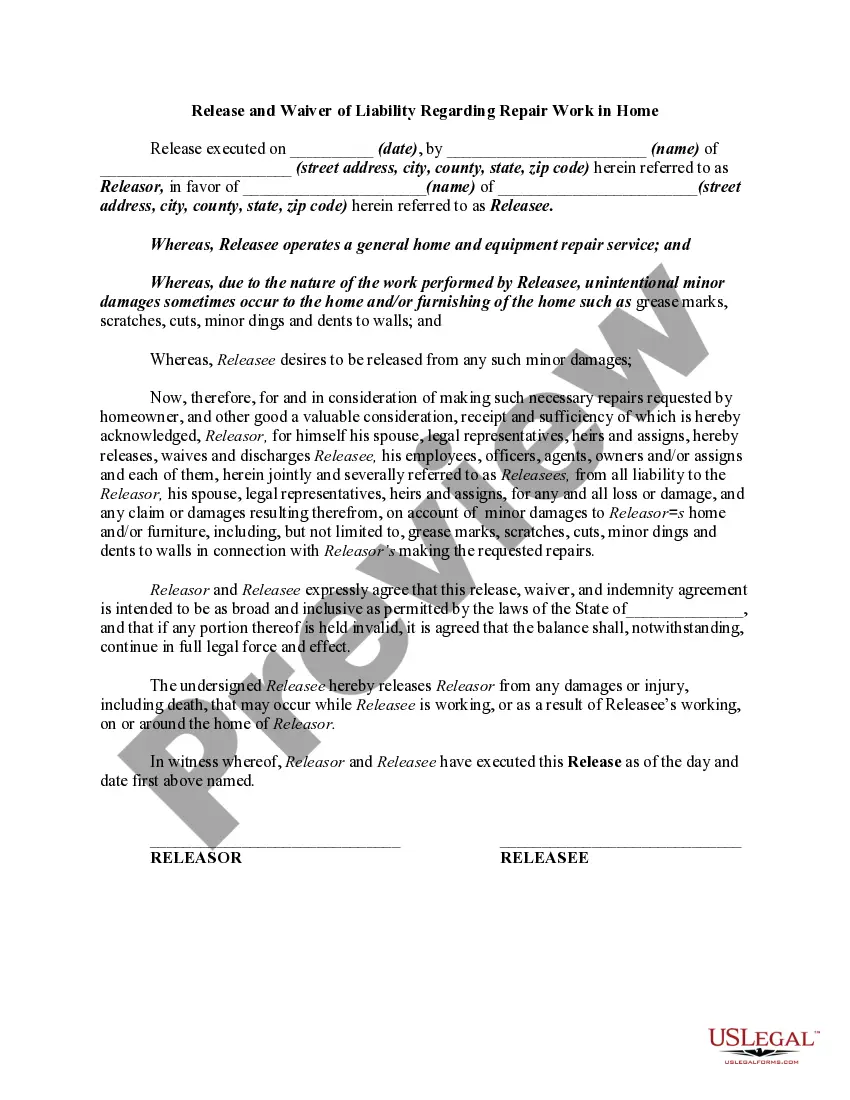
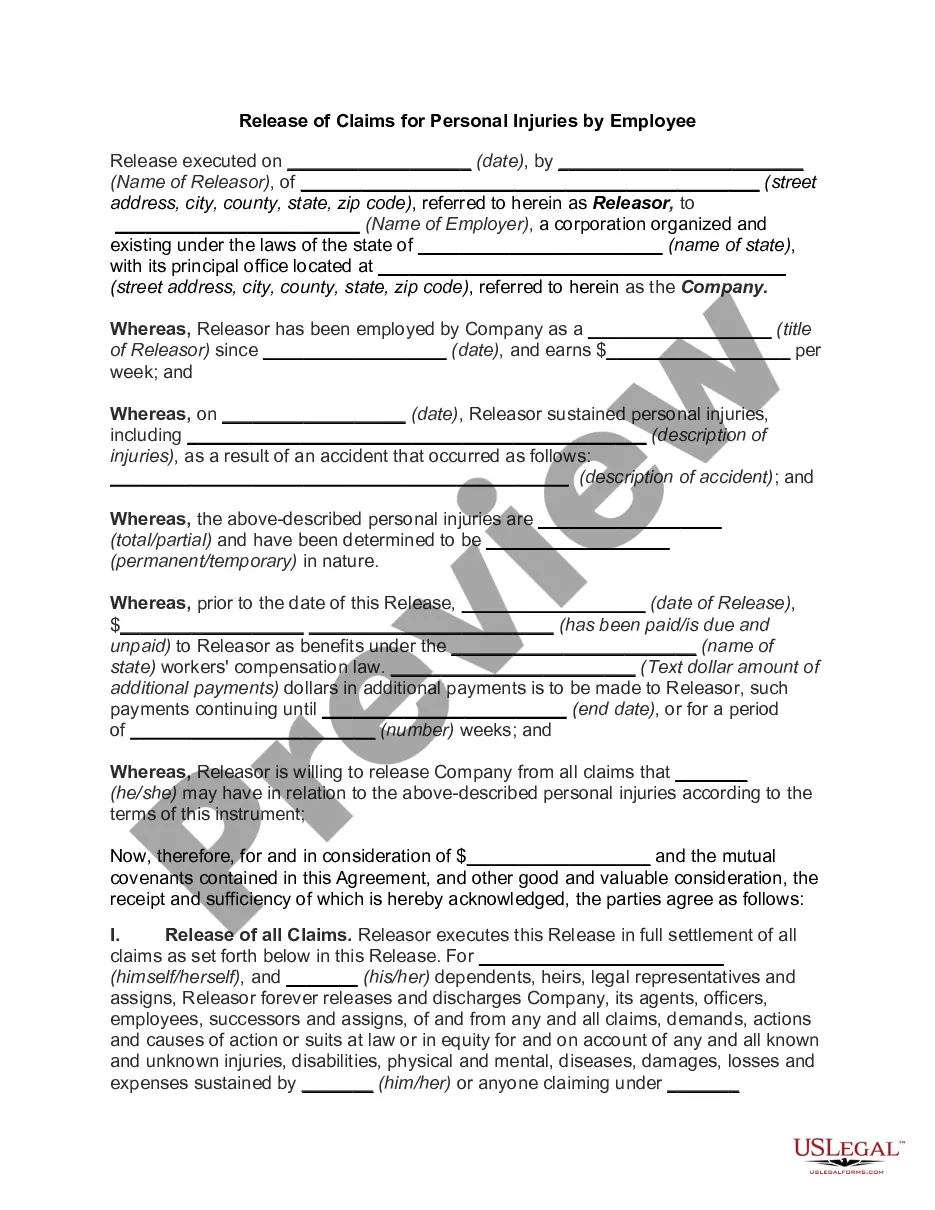
How to fill out Release And Waiver Of Liability And Personal Injury For Using Automotive Repair Shop?
Regardless of whether it’s for commercial intentions or personal matters, everyone eventually has to handle legal issues in their lifetime.
Filling out legal documents demands meticulous focus, starting with selecting the right form template.
Once saved, you can fill out the form using editing software or print it and complete it by hand. With an extensive US Legal Forms library available, you don’t need to waste time searching for the right template online. Use the library’s user-friendly navigation to find the appropriate form for any occasion.
- For instance, if you select an incorrect version of the Vehicle Damage form, it will be rejected upon submission.
- Thus, it is crucial to have a trustworthy source for legal paperwork such as US Legal Forms.
- To acquire a Vehicle Damage template, adhere to these straightforward instructions.
- Locate the template you require through the search bar or catalog browsing.
- Review the form details to confirm it aligns with your circumstances, state, and county.
- Click on the form’s preview to inspect it.
- If it turns out to be the wrong document, revert to the search feature to find the Vehicle Damage template you need.
- Download the document when it fits your specifications.
- If you already possess a US Legal Forms account, click Log in to retrieve previously stored documents in My documents.
- If you haven’t created an account yet, you can download the form by clicking Buy now.
- Choose the correct pricing option.
- Complete the profile registration form.
- Select your payment method: you may utilize a credit card or PayPal account.
- Pick the document format you desire and download the Vehicle Damage form.
Form popularity
FAQ
Reporting damage to your car is crucial, especially if it occurs after an accident or incident. Many insurance policies require you to report damage for your vehicle to ensure coverage during repairs. Moreover, having a proper record of the damage could be vital for future claims or disputes. Utilizing platforms like US Legal Forms can guide you through the necessary documentation process.
Damage on a car includes any physical harm that affects its functionality or appearance. This may involve dents, scratches, or more serious issues like frame damage or engine problems. Even minor damages can affect the vehicle's safety and value, so it's essential to assess the damage for your vehicle promptly. Taking immediate action helps maintain your car's condition and resale value.
A common term for a damaged car is 'wreck'. This word encapsulates the idea of vehicle harm, regardless of the severity. When discussing damage for vehicle, using terms like 'wreck' conveys the condition in a straightforward manner, helping others understand the extent of the issue.
When writing a damage report example, start by including the date, time, and location of the damage incident. Next, detail the type of damage for vehicle, such as scratches or dents, and provide photographs when possible. Finish with your contact information and any necessary signatures, ensuring the report is clear and comprehensive for any future claims.
To describe damage to a vehicle, focus on the specific areas affected and the nature of the damage. Use clear terms like 'crack', 'dent', or 'scrape' and mention any significant consequences, such as impaired function or safety issues. This level of detail is vital for accurate assessment and facilitates the repair or claims process.
You should fill out a vehicle damage survey after any incident involving harm to your car, whether it is an accident or minor damage. Completing this survey promptly assists in documenting the extent of the damage for vehicle, which is crucial for insurance purposes. Timely reporting can streamline the claims process and enhance your chances of receiving adequate compensation.
You can describe vehicle damage by outlining the type of harm, such as scratches, dents, or broken parts. Be specific about the locations of the damage on the vehicle, such as the hood, doors, or bumper. Providing a clear and detailed explanation helps in estimating repair costs and processing insurance claims effectively.
To fill out an accident report form, first gather all relevant information, including details of the incident, vehicles involved, and personal information. Then, document the circumstances leading to the accident, be specific about damage for vehicle, and include witness statements if available. Finally, submit the report to the appropriate authorities and your insurance provider.
Damage to a car refers to any physical harm that affects its body, parts, or functionality. This can include dents, scratches, or structural issues that compromise safety and performance. When assessing damage for vehicle, it is essential to evaluate both visible and hidden harm that might require repairs or replacement.