Damage For Cars
Description
Get your form ready online
Our built-in tools help you complete, sign, share, and store your documents in one place.
Make edits, fill in missing information, and update formatting in US Legal Forms—just like you would in MS Word.
Download a copy, print it, send it by email, or mail it via USPS—whatever works best for your next step.
Sign and collect signatures with our SignNow integration. Send to multiple recipients, set reminders, and more. Go Premium to unlock E-Sign.
If this form requires notarization, complete it online through a secure video call—no need to meet a notary in person or wait for an appointment.
We protect your documents and personal data by following strict security and privacy standards.

Make edits, fill in missing information, and update formatting in US Legal Forms—just like you would in MS Word.

Download a copy, print it, send it by email, or mail it via USPS—whatever works best for your next step.

Sign and collect signatures with our SignNow integration. Send to multiple recipients, set reminders, and more. Go Premium to unlock E-Sign.

If this form requires notarization, complete it online through a secure video call—no need to meet a notary in person or wait for an appointment.

We protect your documents and personal data by following strict security and privacy standards.
Looking for another form?









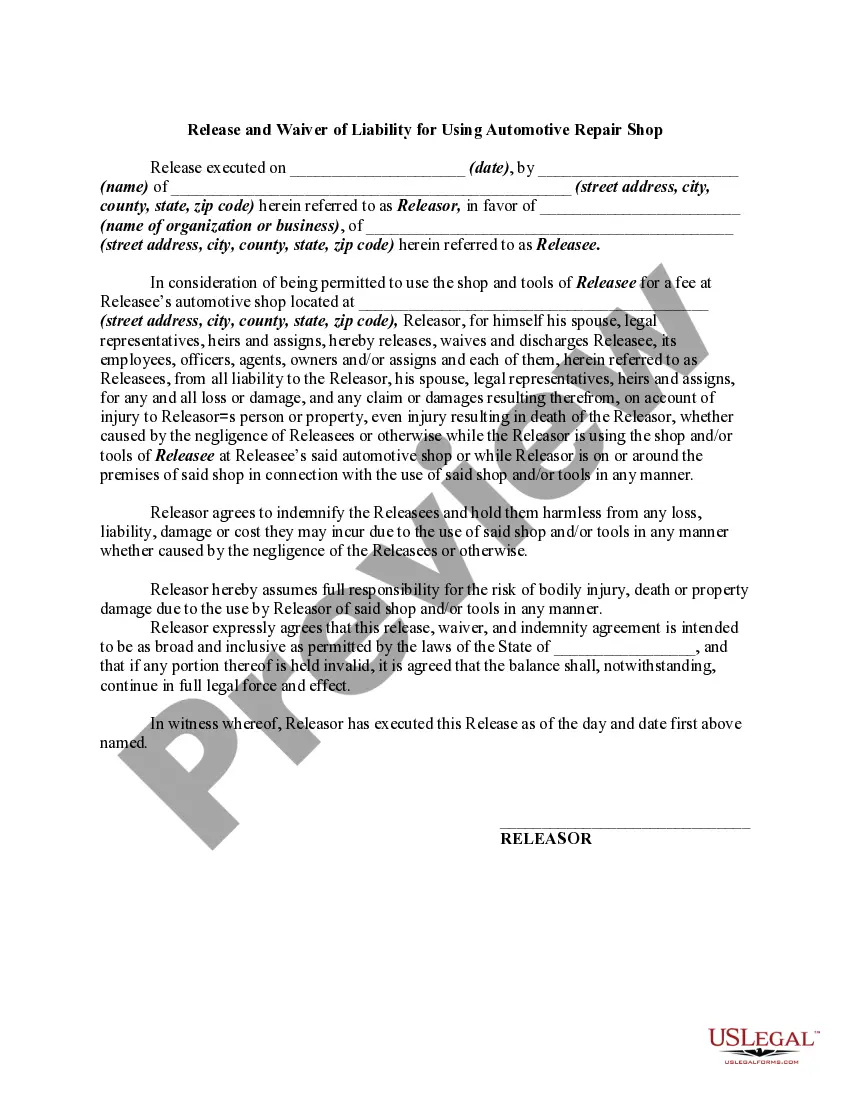
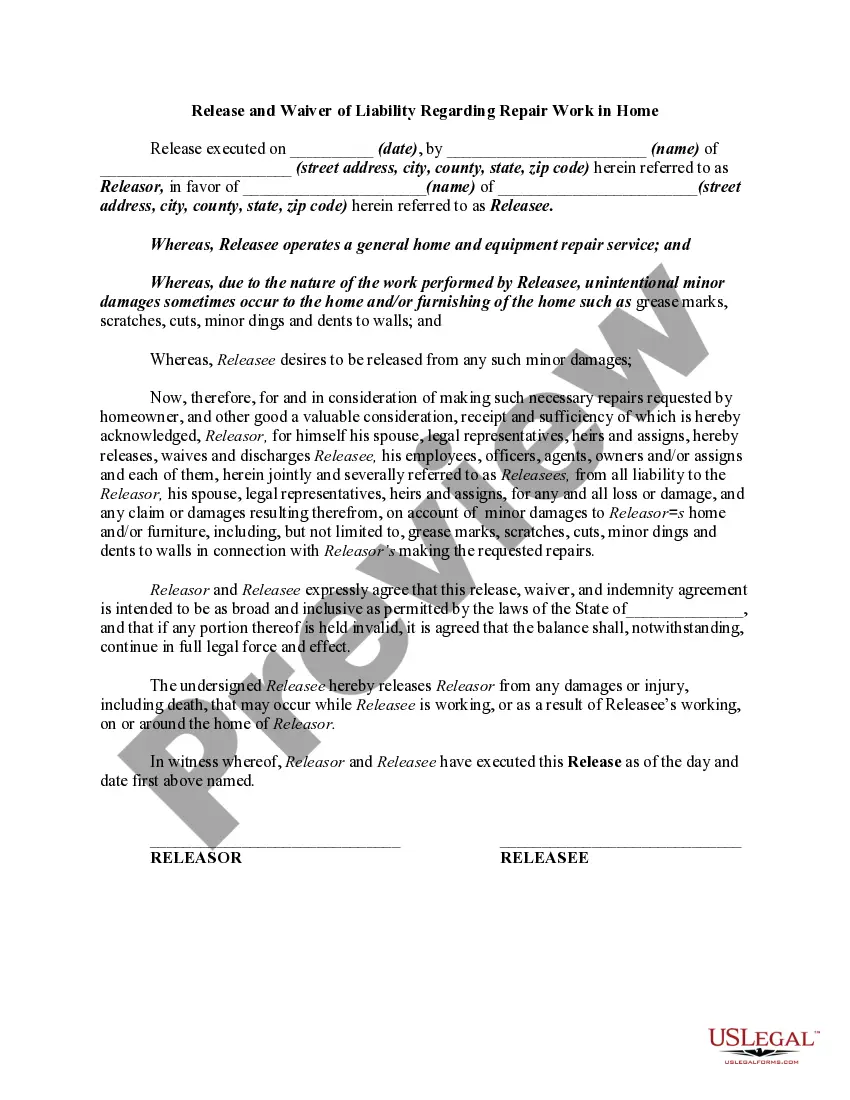
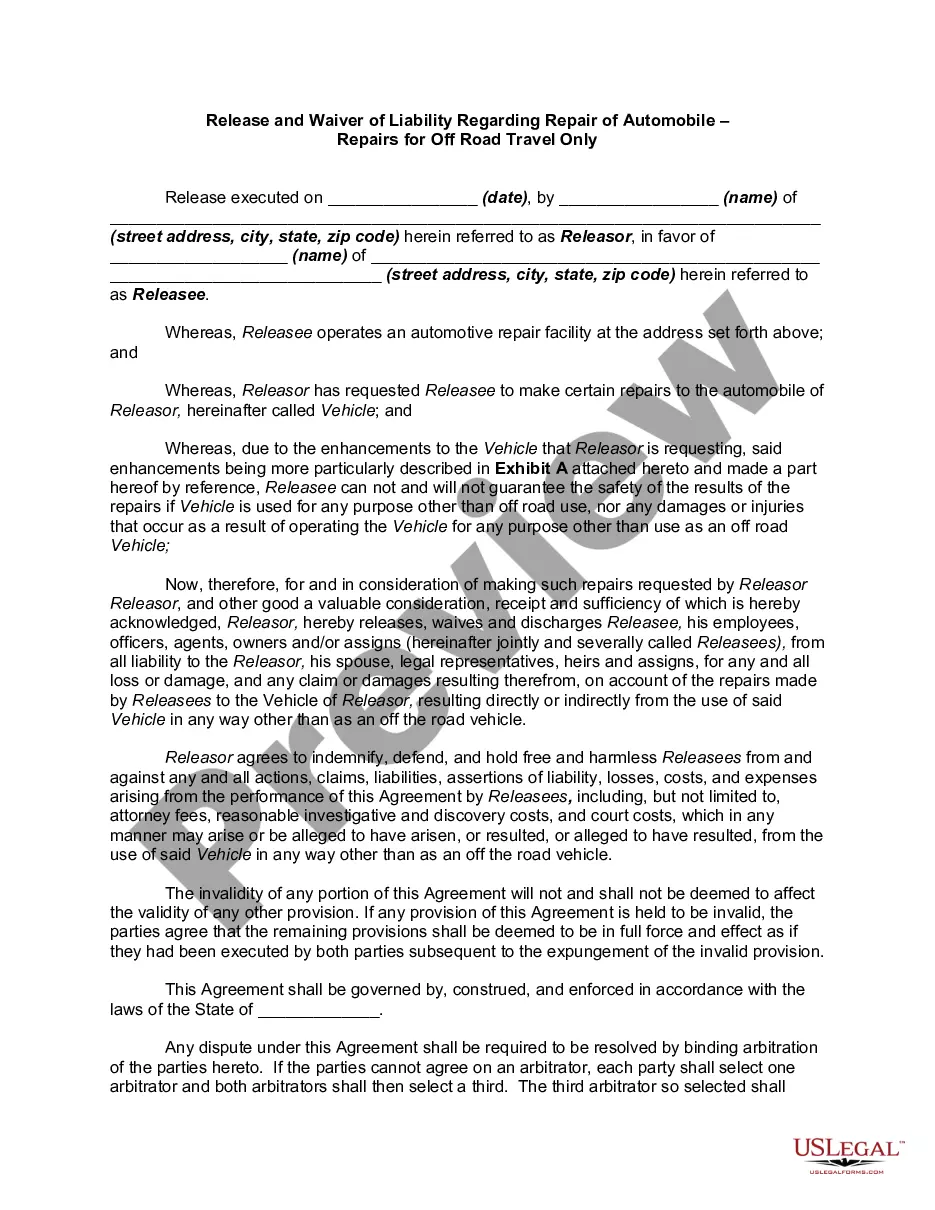
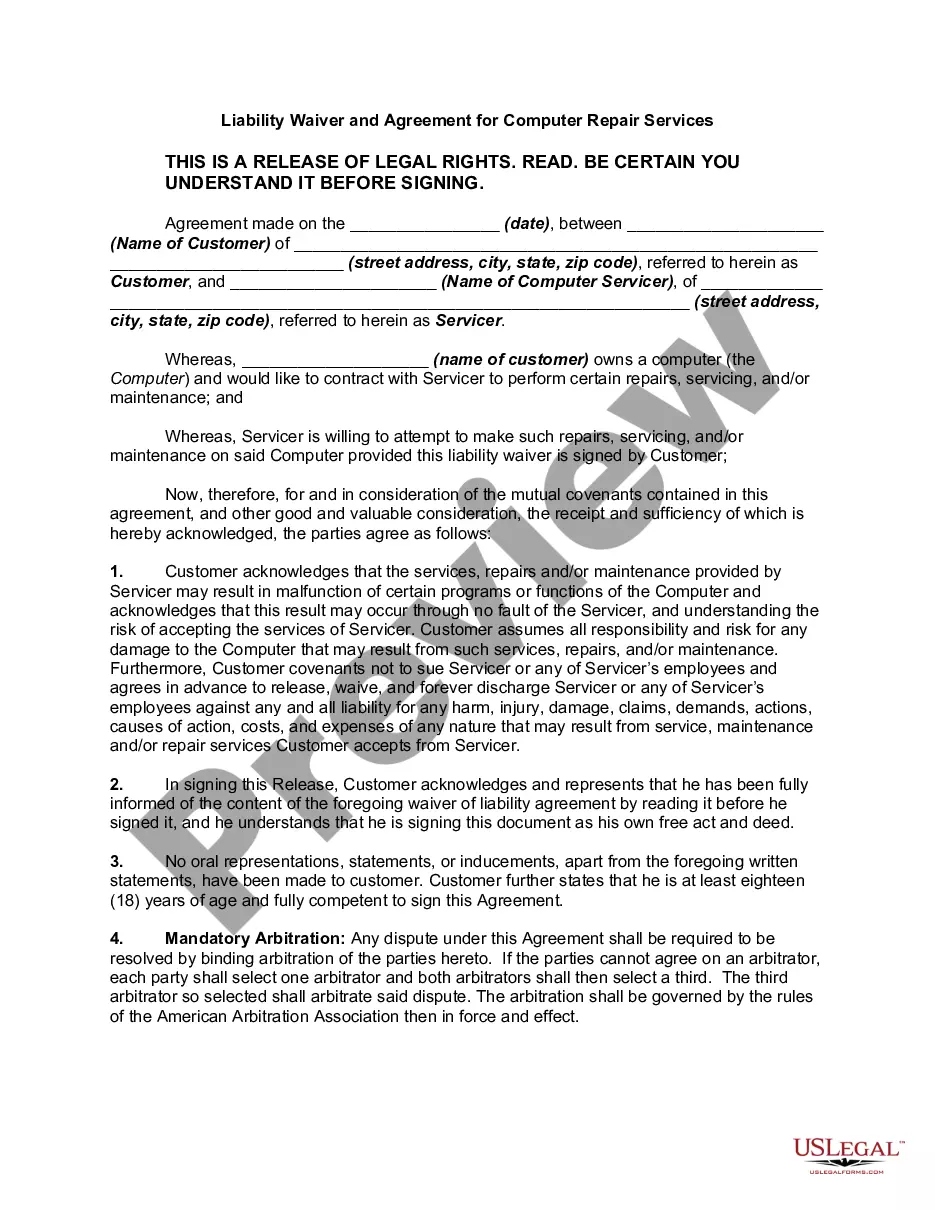
How to fill out Release And Waiver Of Liability And Personal Injury For Using Automotive Repair Shop?
Creating legal documents from the ground up can frequently feel somewhat daunting.
Certain cases may require extensive research and significant financial investment.
If you’re seeking a more direct and budget-friendly method for producing Damage For Cars or other forms without unnecessary complications, US Legal Forms is always available to assist you.
Our online repository of over 85,000 current legal forms covers nearly every aspect of your financial, legal, and personal affairs. With just a few clicks, you can swiftly obtain state- and county-compliant forms meticulously prepared for you by our legal experts.
Ensure the form you choose aligns with the rules and laws of your state and county. Select the appropriate subscription plan to acquire the Damage For Cars. Download the file, then complete, sign, and print it out. US Legal Forms holds an impeccable reputation and over 25 years of experience. Join us today and make document completion a straightforward and efficient process!
- Utilize our platform whenever you require trustworthy and dependable services to quickly seek and acquire the Damage For Cars.
- If you are a returning user who has previously established an account with us, just sign in to your account, find the template, and download it or access it again later in the My documents section.
- Not registered yet? No problem. Setting it up takes only minutes and you can browse the catalog.
- Before downloading the Damage For Cars directly, consider these tips: Review the document preview and descriptions to ensure you have located the right document.
Form popularity
FAQ
A common term used for a damaged car is a 'wreck'. This term captures the essence of a car that has undergone significant damages, such as from an accident. Recognizing damage for cars helps you communicate effectively about repair needs and potential resale considerations. Utilizing platforms like US Legal Forms can provide you with resources to address such issues efficiently.
The most common damage to cars includes minor scratches, dings, and windshield chips. Such damage often occurs from everyday activities, like parking or driving on rough roads. Recognizing common damage for cars can help you take preventive measures and keep your vehicle in top shape. Regular maintenance and care can significantly reduce these issues.
Grade 4 damage on a car typically indicates severe damage that may compromise the vehicle's integrity. This grade often includes significant structural issues or major collision impacts. Knowing about damage for cars at this level can inform your decisions regarding repair costs and potential safety risks. Seeking professional evaluations is always wise in such cases.
Damage to a car refers to any physical harm that affects the vehicle's structure or functionality. This can include dents, scratches, and broken components. Understanding damage for cars is essential for assessing repair needs and determining insurance claims. Regular inspections can help you identify and address issues before they escalate.
What You Should Not Say to Your Insurance Provider After a Car Accident Don't admit fault. Don't say you aren't injured. ... Don't sign any release to release your medical records without checking with your lawyer. Do not accept any sort of settlement without consulting with an attorney first!
You can induce fear by countering with the amount you will accept. To show that you mean business, a lawyer might write a letter that: States clearly that the settlement offer you received is unacceptable. Responds to any inaccurate statements in the insurance adjuster's correspondence to you.
A car insurance deductible is the amount of money you have to pay toward repairs before your insurance covers the rest.. For example, if you're in an accident that causes $3,000 worth of damage to your car and your deductible is $500, you will only have to pay $500 toward the repair.
Your car is worth less after a crash, even after it has been repaired. A diminished value claim pays you the difference between what your car was worth before the accident and what it's worth now.
Admitting fault: Using apologetic language is enough for the insurance adjuster to assume you're admitting fault and use that against you. Even if you feel you're at fault, wait for the official investigation to prove what actually happened. Don't say things like ?I'm sorry? or ?it was my fault.?