Opportunity Eeoc Statement For Job Description
Description
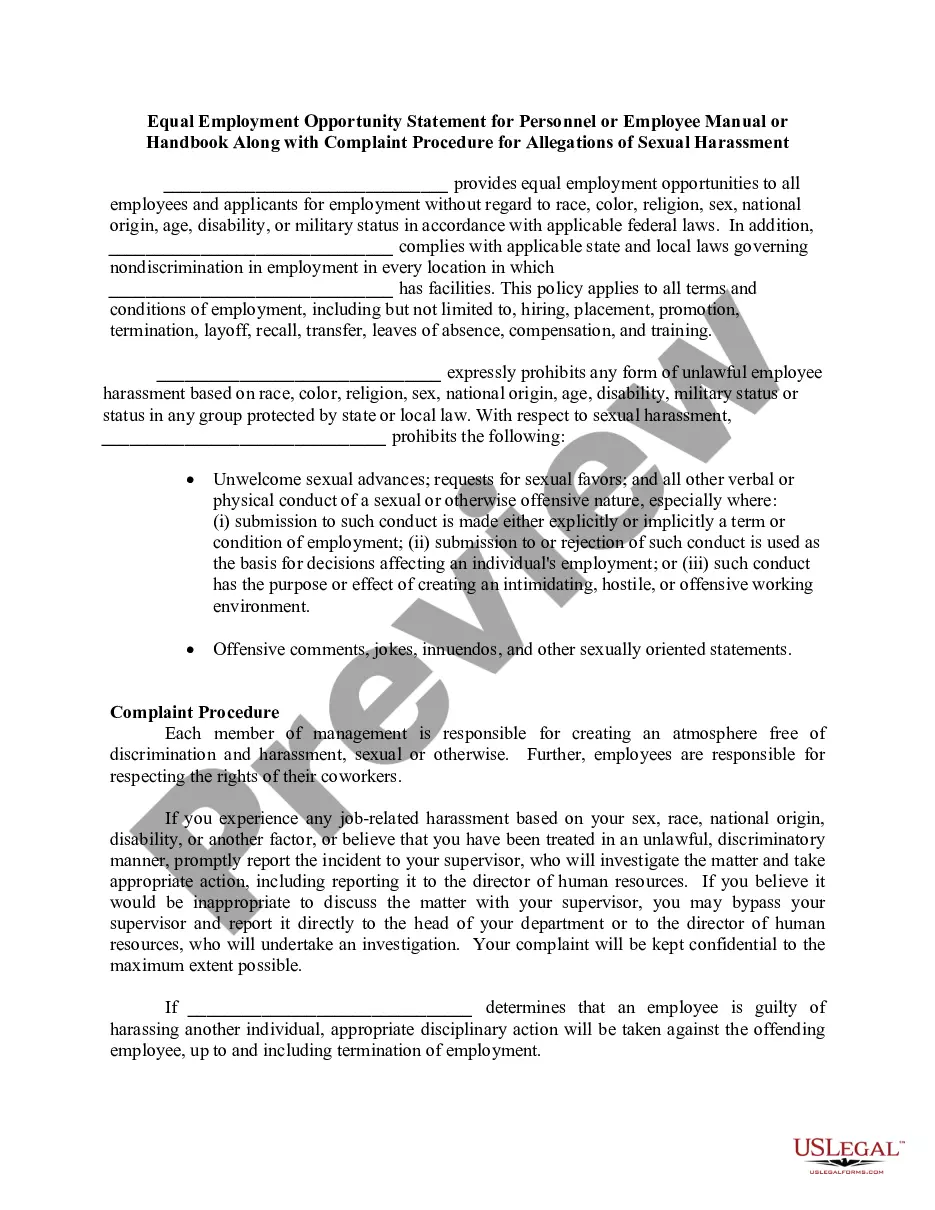
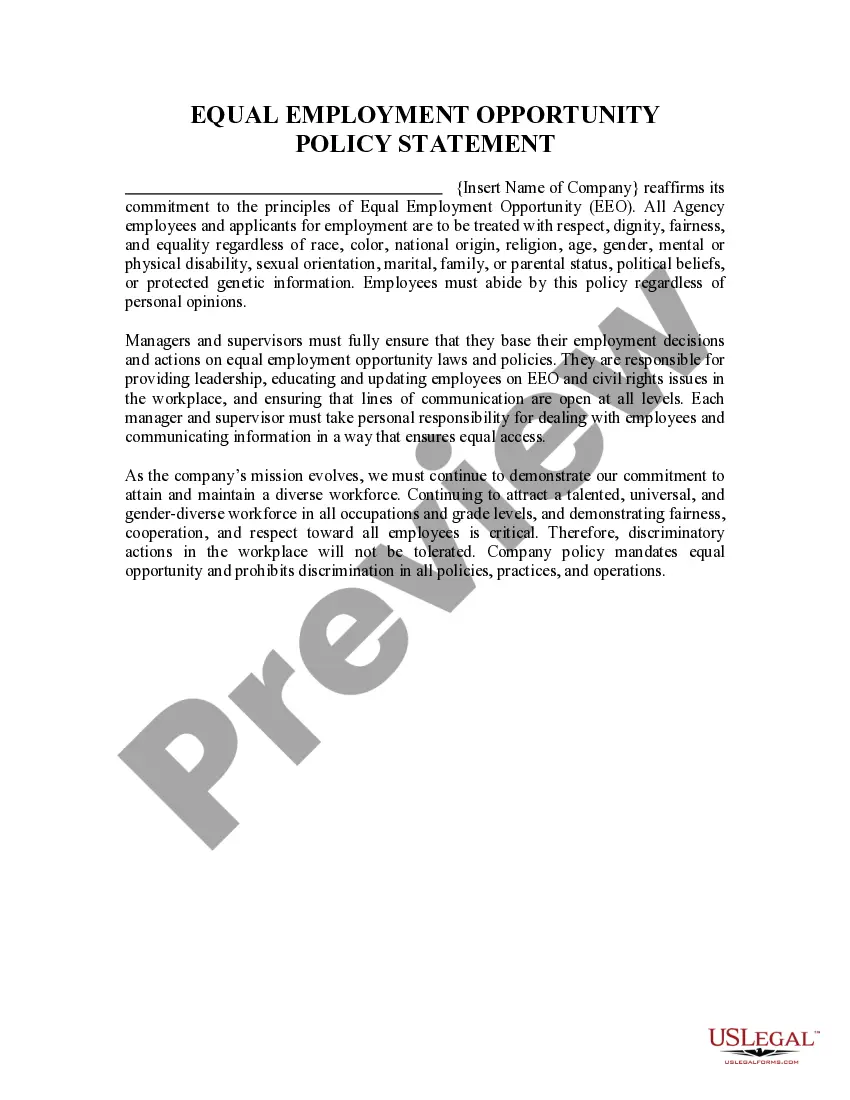
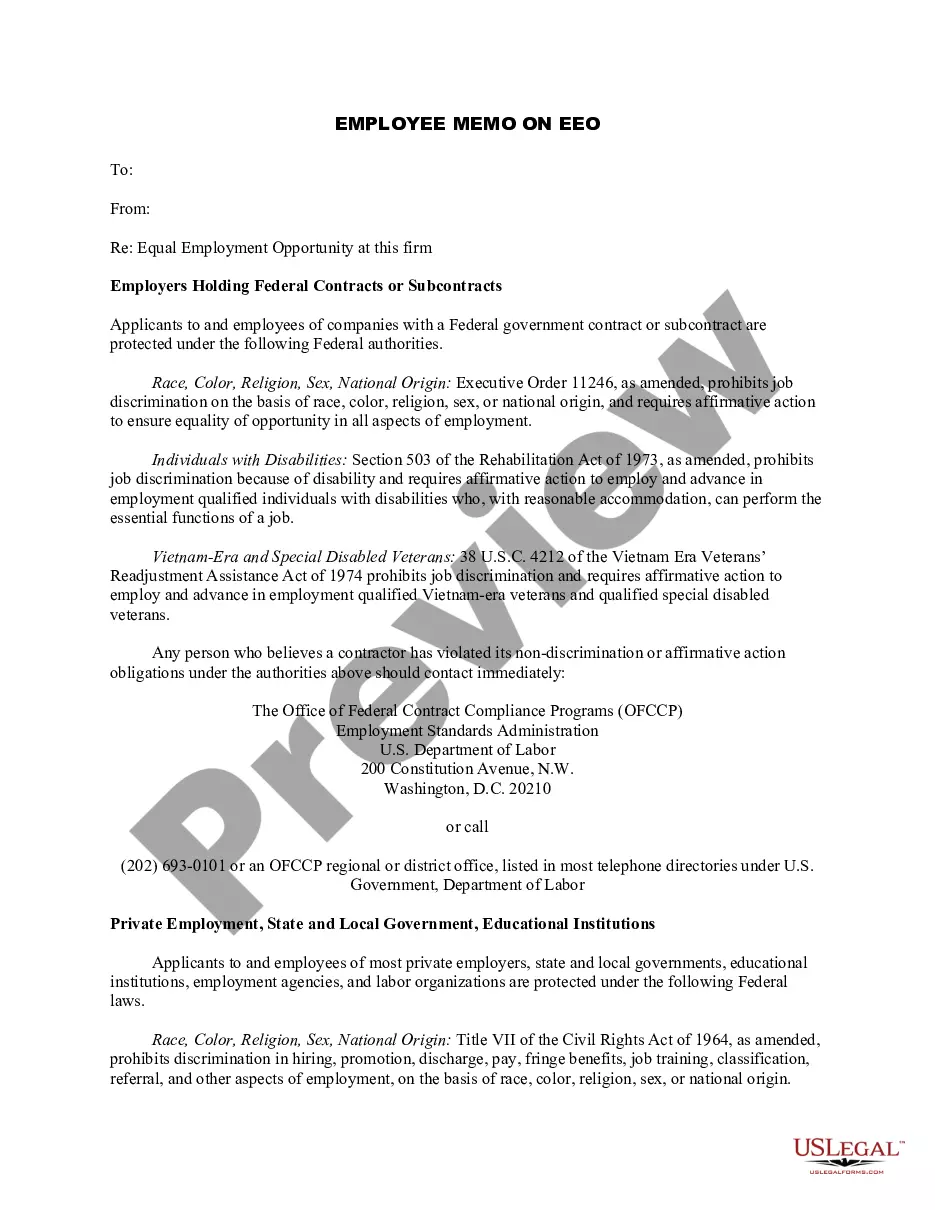




How to fill out Equal Employment Opportunity Statement For Personnel Or Employee Manual Or Handbook Regarding Employees With Disabilities - EEOC?
It’s no secret that you can’t become a legal professional immediately, nor can you learn how to quickly prepare Opportunity Eeoc Statement For Job Description without the need of a specialized set of skills. Putting together legal documents is a long process requiring a specific education and skills. So why not leave the creation of the Opportunity Eeoc Statement For Job Description to the professionals?
With US Legal Forms, one of the most comprehensive legal template libraries, you can find anything from court paperwork to templates for internal corporate communication. We know how important compliance and adherence to federal and local laws are. That’s why, on our platform, all forms are location specific and up to date.
Here’s how you can get started with our platform and get the document you need in mere minutes:
- Discover the form you need with the search bar at the top of the page.
- Preview it (if this option provided) and read the supporting description to figure out whether Opportunity Eeoc Statement For Job Description is what you’re searching for.
- Start your search over if you need a different template.
- Register for a free account and select a subscription option to purchase the template.
- Choose Buy now. As soon as the transaction is through, you can download the Opportunity Eeoc Statement For Job Description, complete it, print it, and send or send it by post to the designated individuals or organizations.
You can re-gain access to your forms from the My Forms tab at any time. If you’re an existing customer, you can simply log in, and locate and download the template from the same tab.
No matter the purpose of your paperwork-whether it’s financial and legal, or personal-our platform has you covered. Try US Legal Forms now!
Form popularity
FAQ
Are EEO statements required on job descriptions? There's no law requiring an equal opportunity employer statement in job posts or job descriptions, but it's still a good idea. For one thing, if you're committed to equal opportunity as an organization, you should highlight it to candidates!
Unless you are a federal contractor, you are not required to have an Equal Employment Opportunity (EEO) statement in your job postings.
An equal opportunity employer statement is a paragraph or two declaring a company's commitment to providing equal employment opportunities for all applicants and employees, regardless of race, religion, gender, national origin, age, disability, marital status, or veteran status.
An example of an equal opportunity employment issue is wages. Paying someone less because of discrimination is unacceptable. If someone is doing the same work just as well as another staff member, they should be getting paid the same for that work. That's regardless of gender, age, and other factors.
Writing your equality and diversity policy What are your aims? What does your group believe about equality and diversity? ... What will you do? What will you do to help you achieve your aim of making your group equally open to all? ... How should people behave? ... Reviewing your policy.