Liability For Parents
Description
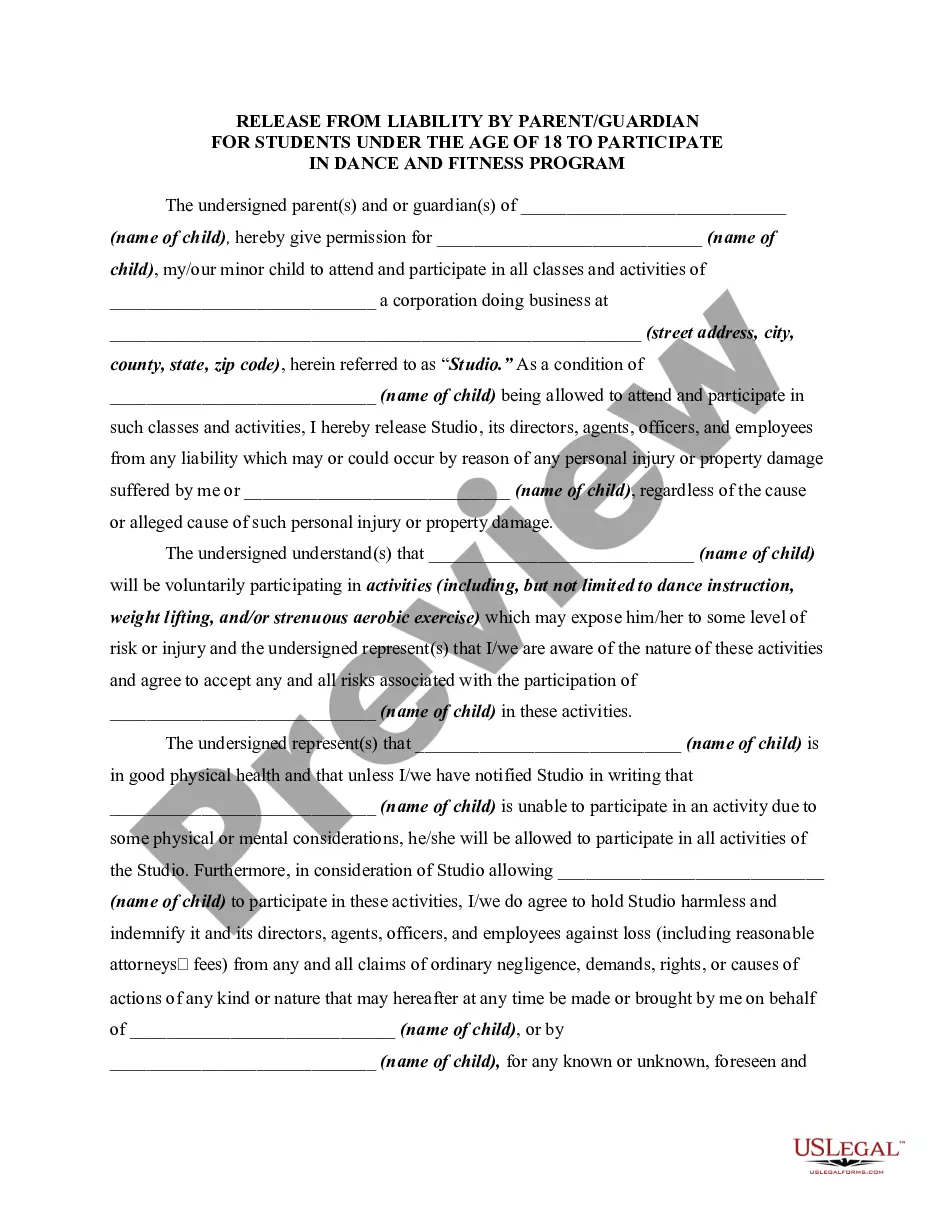
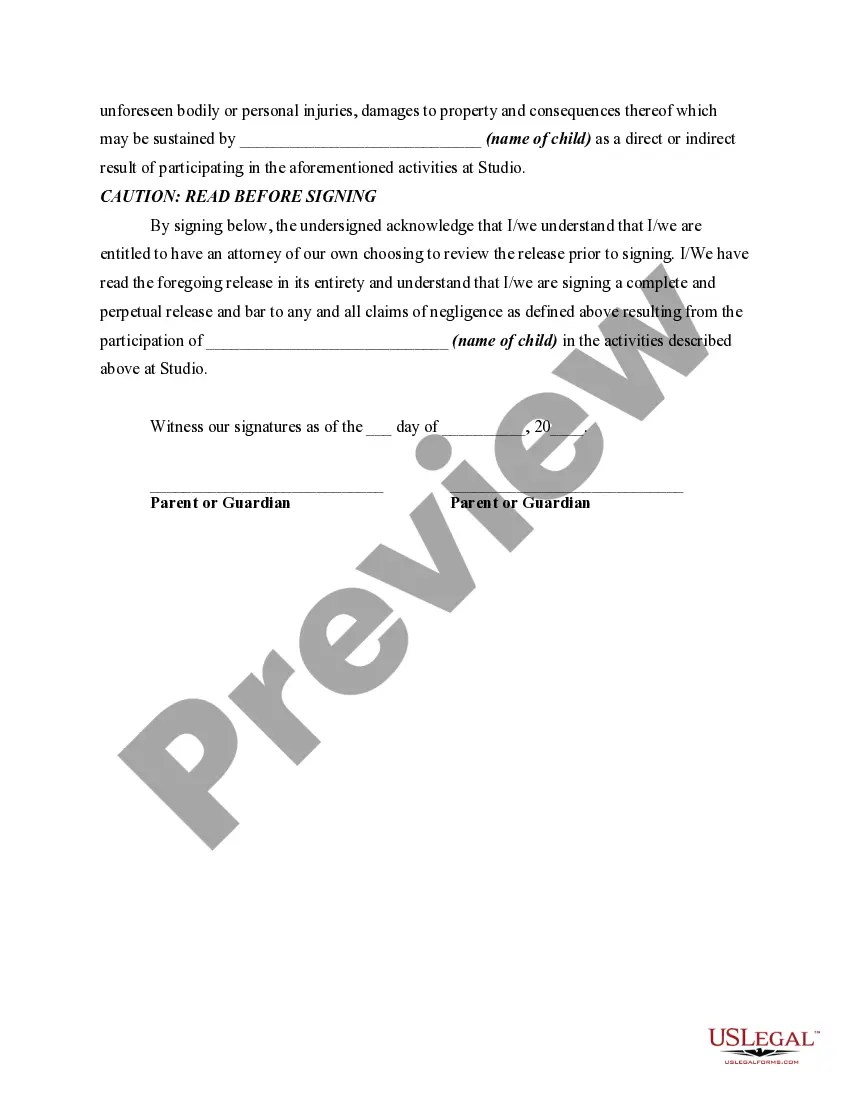
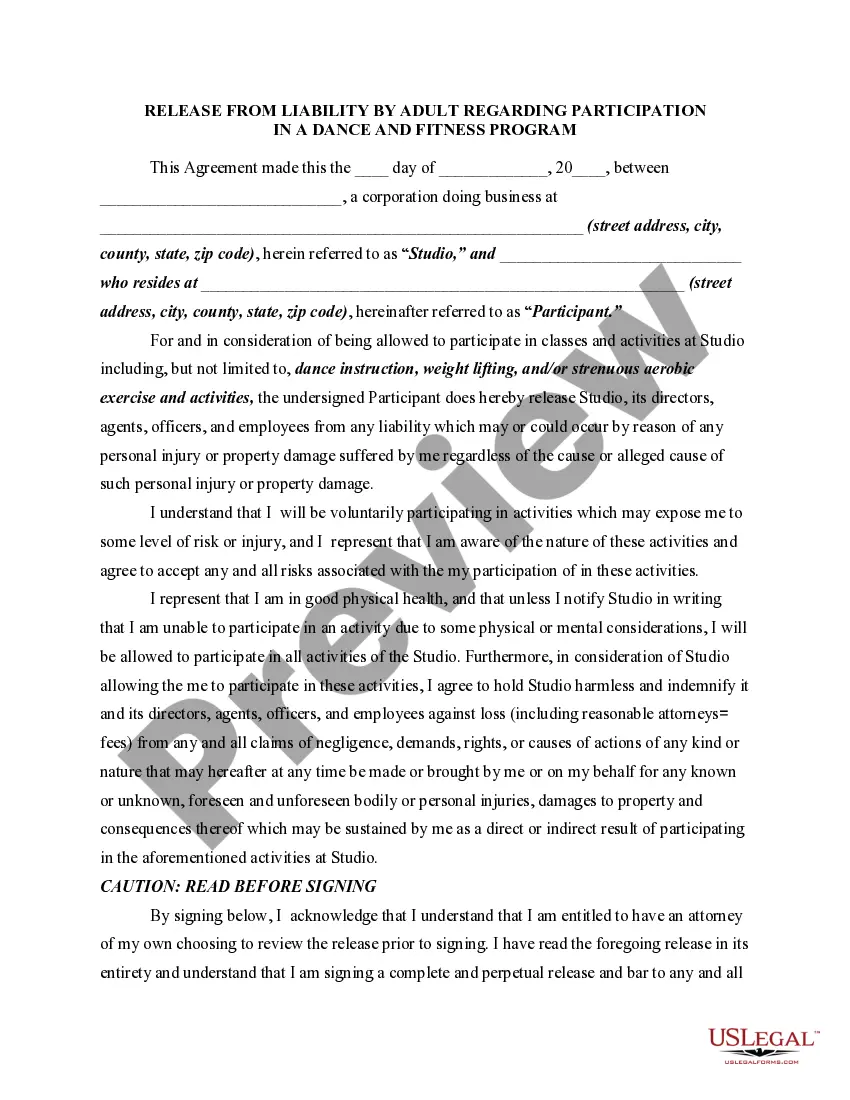
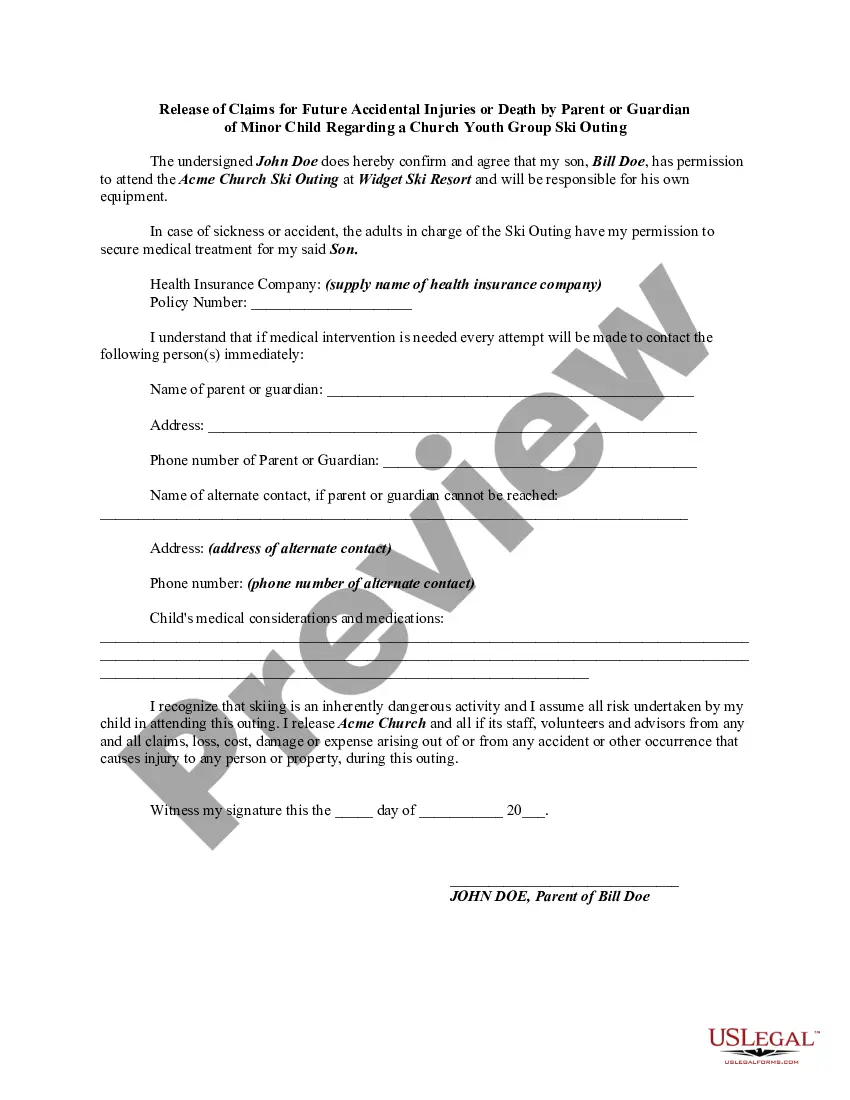
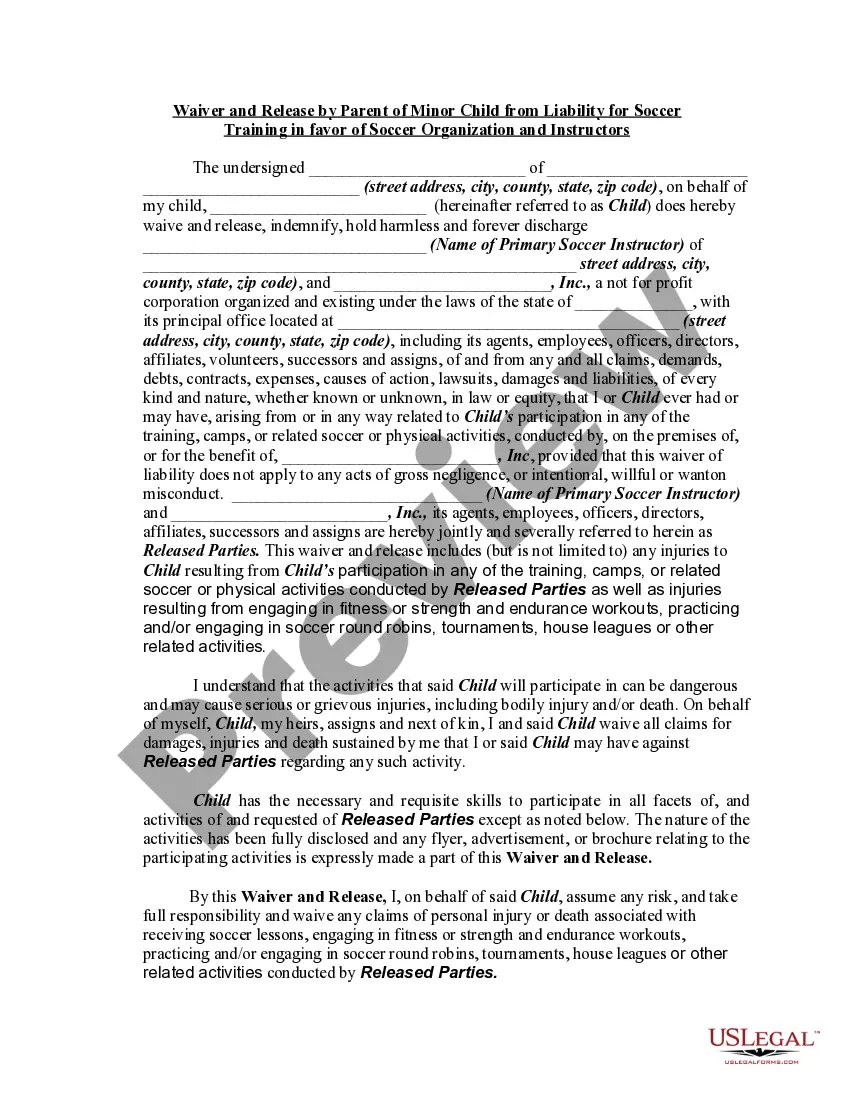
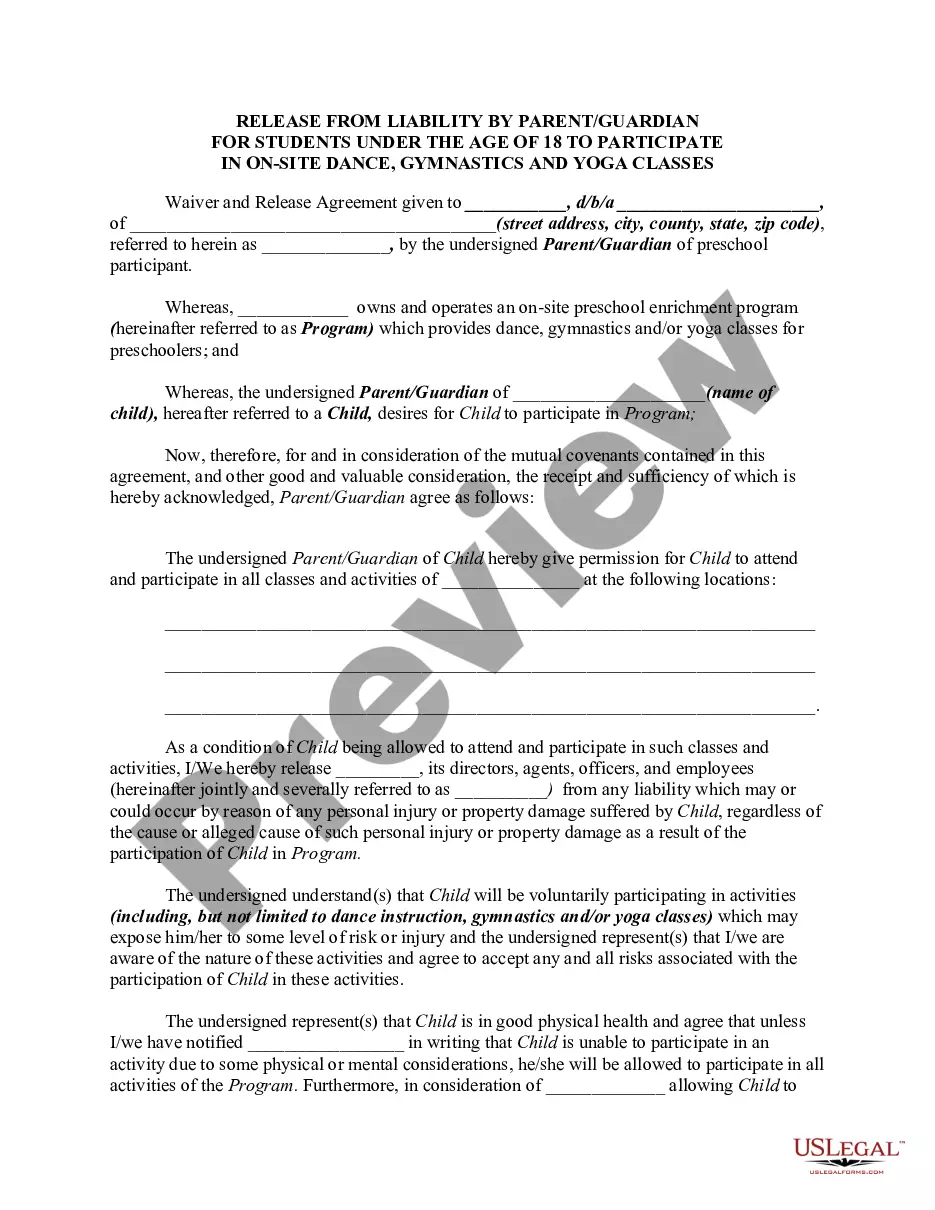
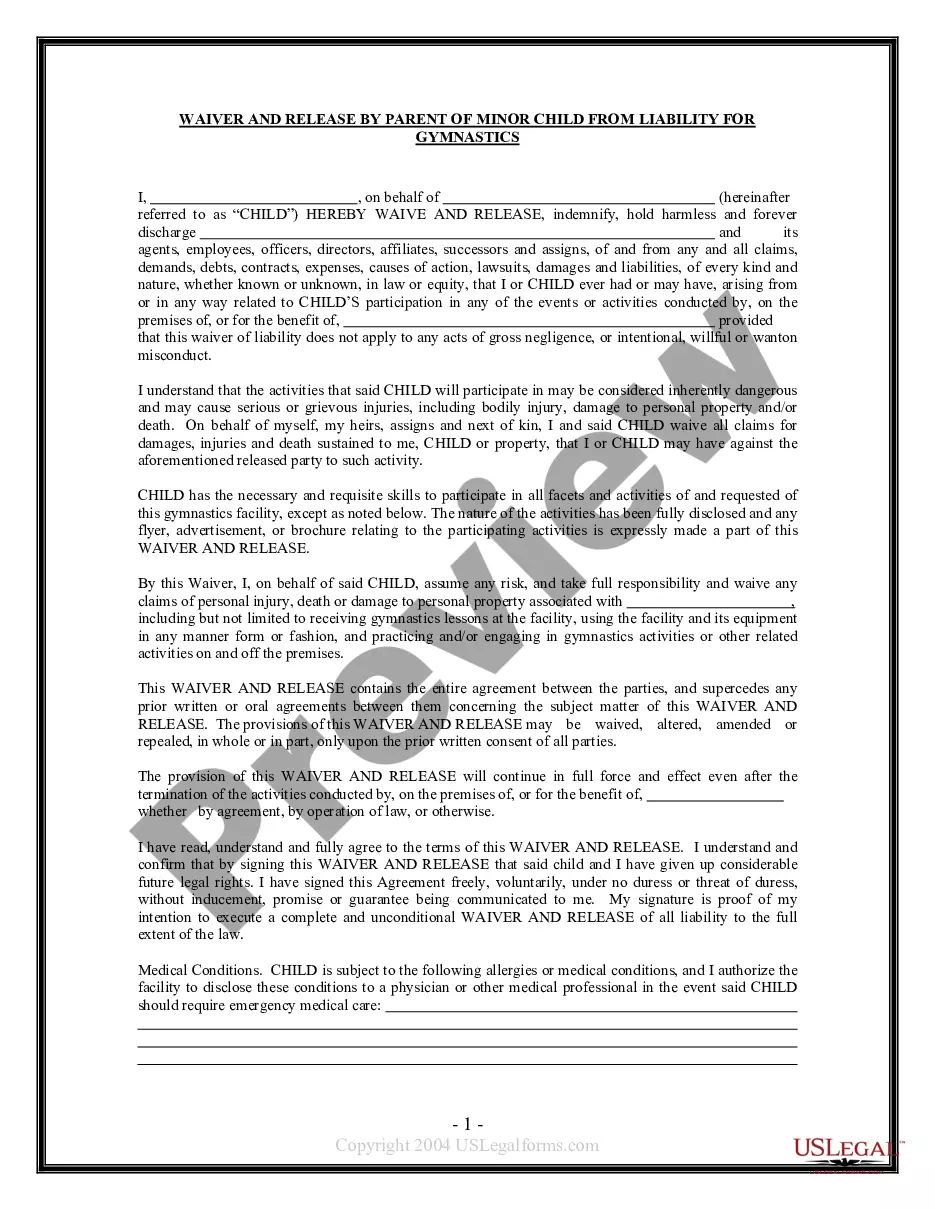

How to fill out Release From Personal Injury Liability By Parent / Guardian For Students Under The Age Of 18 To Participate In Dance And Fitness Program Or School?
Whether for commercial reasons or personal matters, everyone must handle legal scenarios at some point in their lives.
Completing legal documentation requires meticulous focus, starting with selecting the appropriate form template.
With an extensive US Legal Forms catalog available, you won't need to waste time searching for the correct template online. Utilize the library's user-friendly navigation to find the right document for any situation.
- Locate the template you require using the search bar or the catalog navigation.
- Review the form's description to ensure it fits your circumstances, state, and county.
- Click on the form's preview to examine it.
- If it is the wrong form, return to the search feature to find the Liability For Parents template you need.
- Download the template if it aligns with your specifications.
- If you have a US Legal Forms account, simply click Log in to access previously stored documents in My documents.
- If you haven't yet created an account, you can acquire the form by clicking Buy now.
- Select the correct pricing option.
- Fill out the account registration form.
- Choose your payment method: utilize a credit card or PayPal account.
- Select the document format you prefer and download the Liability For Parents.
- Once saved, you can complete the form using editing software or print it out and fill it in manually.
Form popularity
FAQ
A related but distinct arrangement is what is known as ?conservatorship.? While a guardian is legally responsible for the individual (called a ?ward?) and his or her physical well-being and physical care, a conservatorship only gives the conservator control and responsibility for the ward's money, property, and ...
A declaration of a guardianship is a document where you lay out who is to care for you in the event that you can no longer care for yourself. Or, it dictates who is to care for your children in the event that you are no longer able.
In order to file for Mississippi guardianships, you'll have to file a petition with the local court, undergo investigation from the court, testify in front of the court, and eventually be approved if a judge determines the guardianship is in the best interests of the ward.
Correlating with the SJ (sensing?judging) Myers?Briggs types, the Guardian temperament comprises the following role variants (listed with their correlating Myers?Briggs types): Inspector (ISTJ), Protector (ISFJ), Provider (ESFJ), and Supervisor (ESTJ).
The Benefits of Adult Guardianship Protection: The guardian can help protect the ward's health, safety, and general welfare by making important decisions on their behalf. Support: The guardian can provide emotional and practical support to the ward, helping them live a full, more independent life.
The petition must state the person for whom and the reason a guardianship/conservatorship is sought. It must also include the prescribed due process language to ensure the ward is aware of his/her rights. The petition must be served on the proposed ward at least seven days prior to the hearing along with the summons.
Guardians are legal representatives appointed by a court to take care of individuals who are unable to take care of themselves. The person for whom a guardian is appointed is referred to as the ward.
A guardian is an individual to whom a judge or a will gives the legal responsibility to care for a child or an adult who does not have the capacity for self-care. 1 The appointed individual is often responsible for both the care of the ward (the child or incapable adult) and that person's financial affairs.