Listing Agreement For Commercial Real Estate
Description
Get your form ready online
Our built-in tools help you complete, sign, share, and store your documents in one place.
Make edits, fill in missing information, and update formatting in US Legal Forms—just like you would in MS Word.
Download a copy, print it, send it by email, or mail it via USPS—whatever works best for your next step.
Sign and collect signatures with our SignNow integration. Send to multiple recipients, set reminders, and more. Go Premium to unlock E-Sign.
If this form requires notarization, complete it online through a secure video call—no need to meet a notary in person or wait for an appointment.
We protect your documents and personal data by following strict security and privacy standards.

Make edits, fill in missing information, and update formatting in US Legal Forms—just like you would in MS Word.

Download a copy, print it, send it by email, or mail it via USPS—whatever works best for your next step.

Sign and collect signatures with our SignNow integration. Send to multiple recipients, set reminders, and more. Go Premium to unlock E-Sign.

If this form requires notarization, complete it online through a secure video call—no need to meet a notary in person or wait for an appointment.

We protect your documents and personal data by following strict security and privacy standards.
Looking for another form?
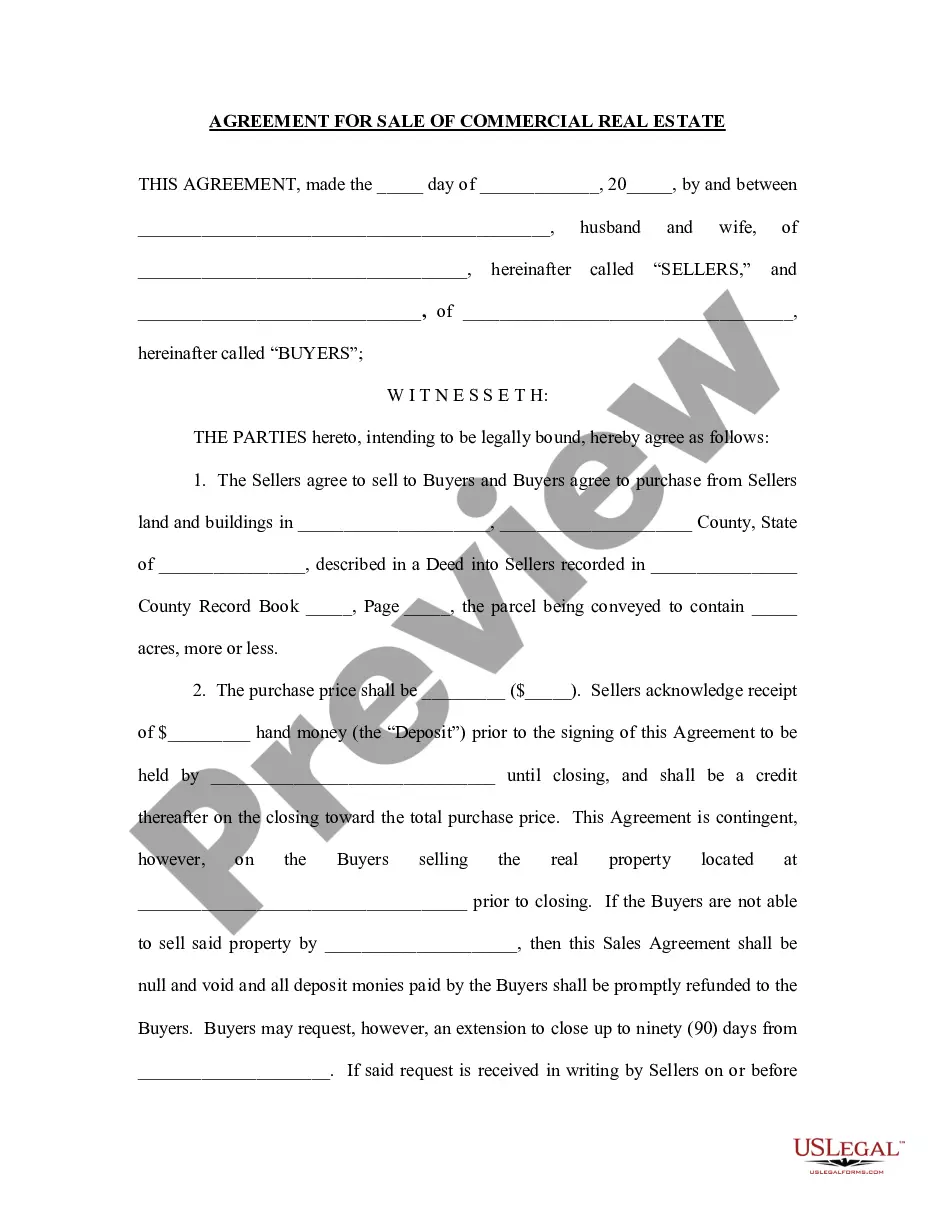
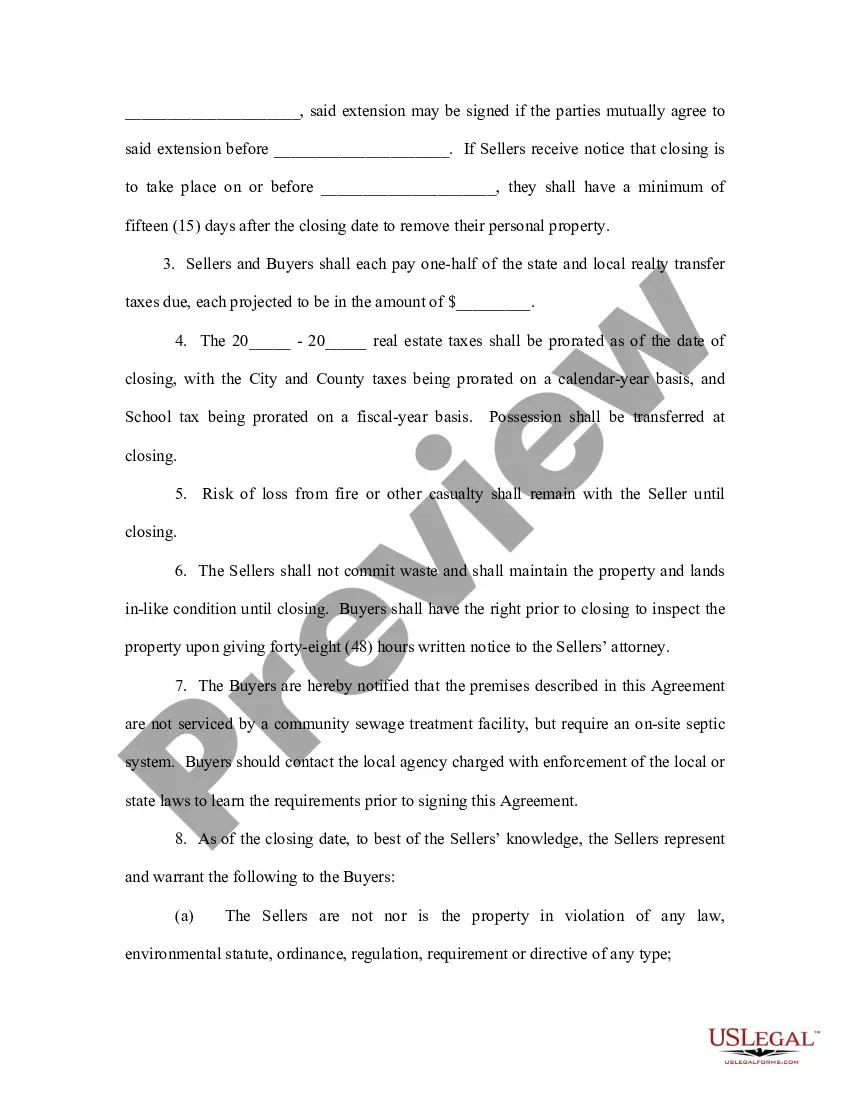
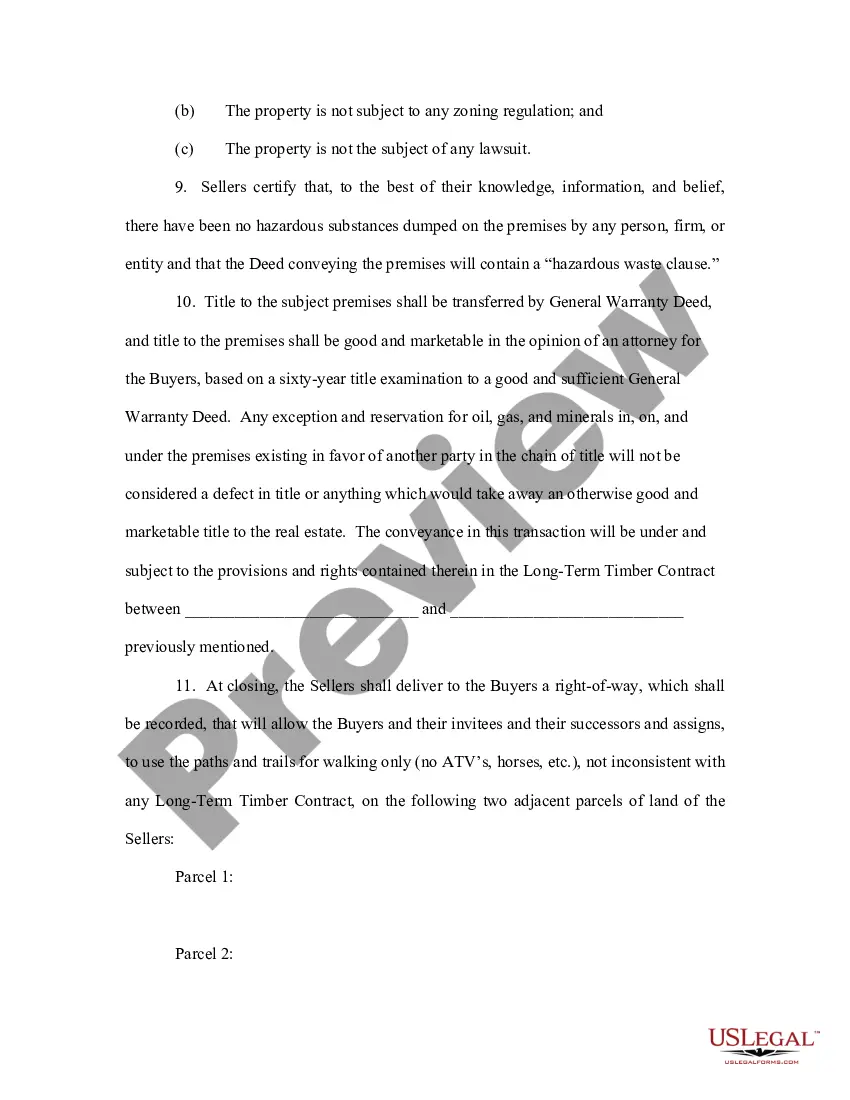
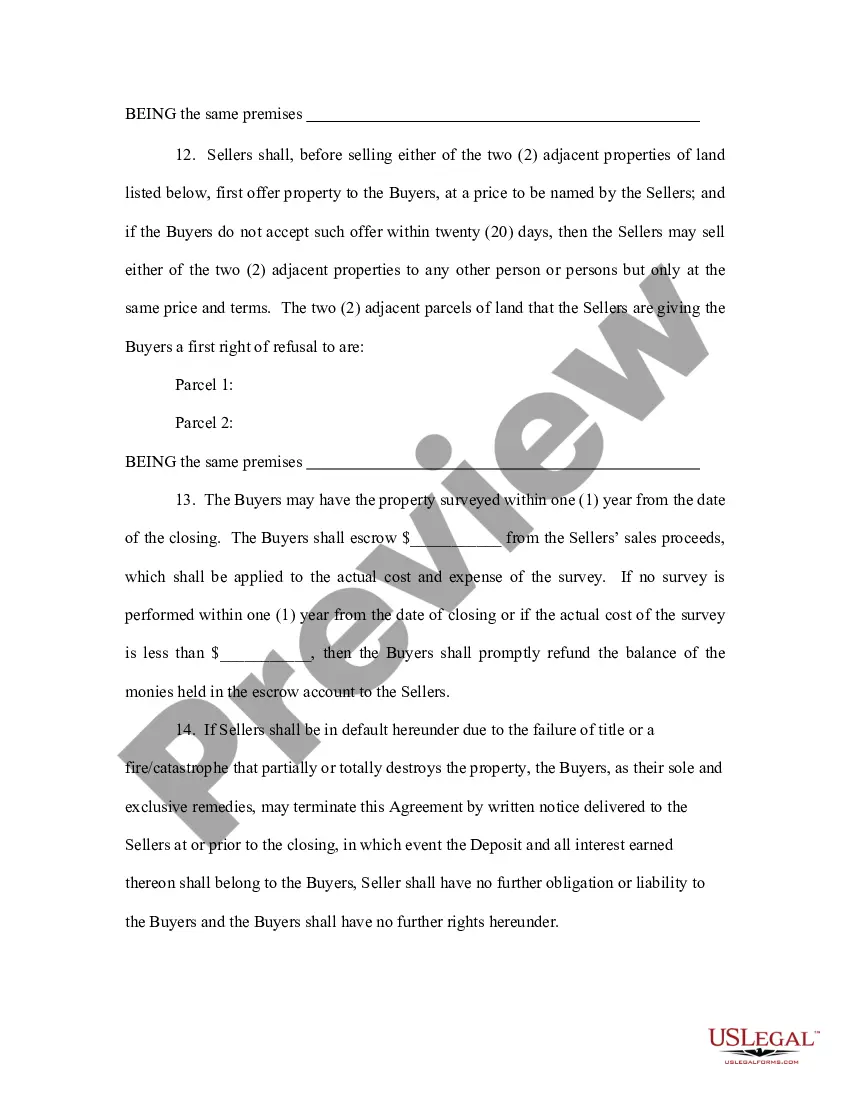
How to fill out Agreement For Sale Of Commercial Real Estate?
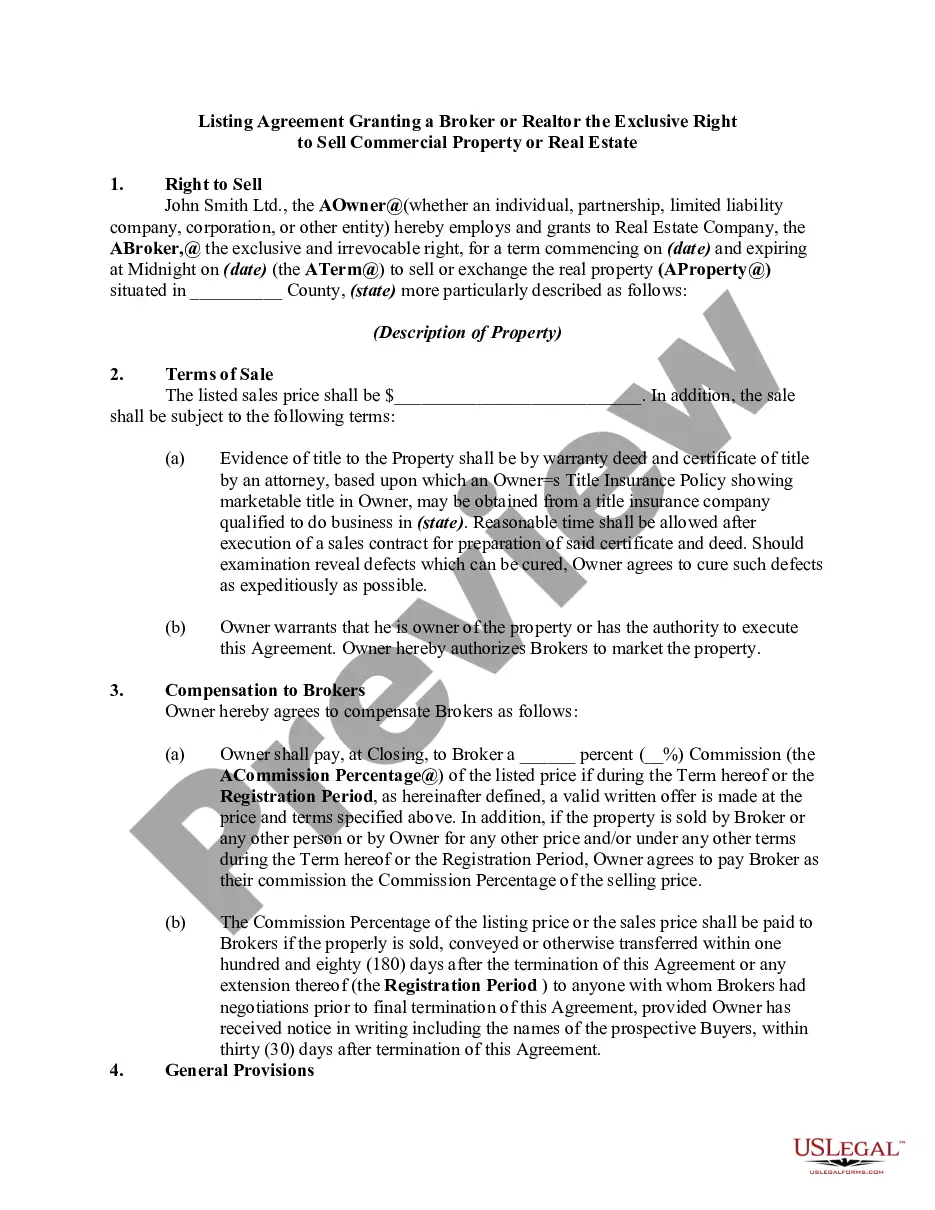
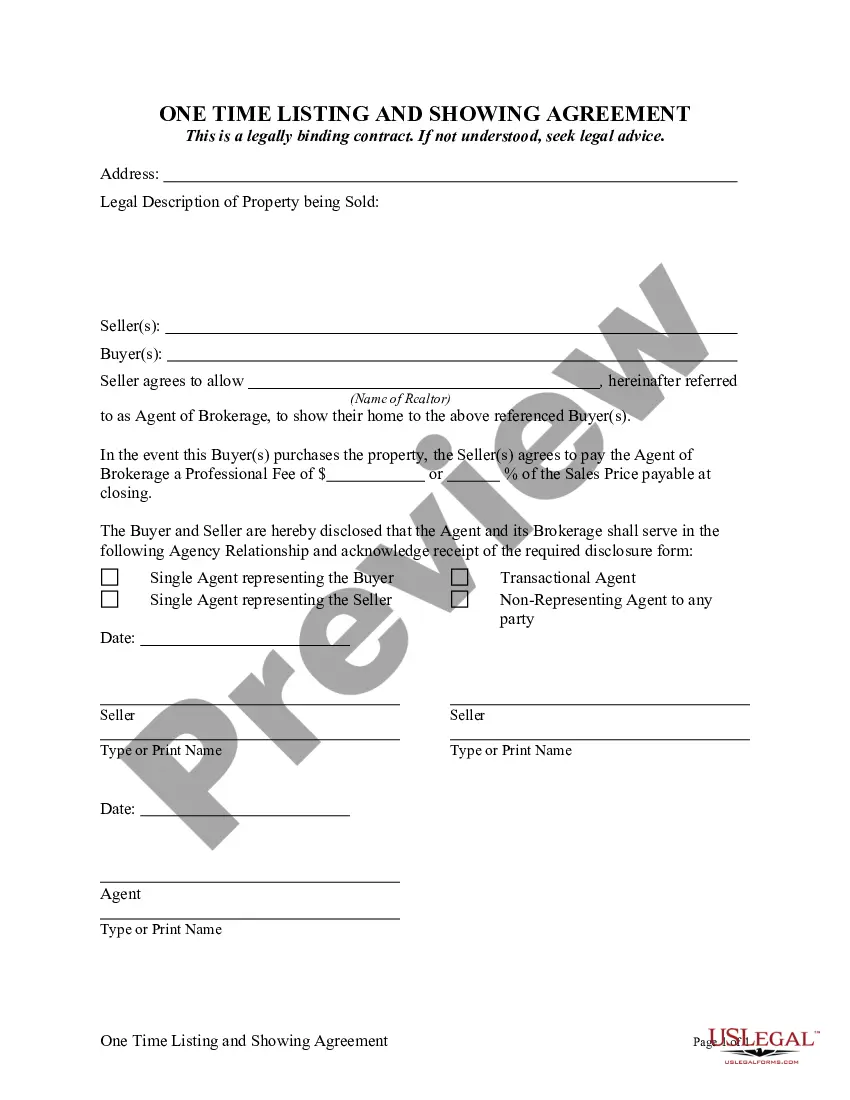
The Listing Agreement for Commercial Real Estate presented on this page is a versatile official template created by qualified attorneys in adherence to federal and local laws.
For over 25 years, US Legal Forms has supplied individuals, businesses, and lawyers with more than 85,000 authenticated, state-specific documents for various business and personal situations. It’s the fastest, most direct, and most dependable method to acquire the documentation you require, as the service ensures bank-level data protection and anti-malware safeguards.
Register with US Legal Forms to have authenticated legal templates for all of life's situations readily available.
- Search for the document you require and examine it.
- Go through the sample you found and preview it or check the form description to confirm it meets your needs. If not, use the search feature to find the appropriate one. Click Buy Now once you have located the template you are looking for.
- Register and Log In.
- Select the pricing option that works for you and create an account. Use PayPal or a credit card for a quick payment. If you already possess an account, Log In and review your subscription to proceed.
- Obtain the editable template.
- Choose the format you prefer for your Listing Agreement for Commercial Real Estate (PDF, Word, RTF) and download the sample to your device.
- Fill out and sign the documents.
- Print the template to complete it manually. Alternatively, use an online multifunctional PDF editor to efficiently and accurately fill out and sign your form with an electronic signature.
- Download your documents once more.
- Reuse the same document whenever necessary. Access the My documents tab in your profile to redownload any forms you have previously acquired.
Form popularity
FAQ
The most commonly used listing agreement in commercial real estate is the exclusive right to sell agreement. This agreement gives one broker the exclusive right to market and sell a property, ensuring full representation during transactions. It provides benefits like greater focus on the property and clearer communication of terms. When creating a listing agreement for commercial real estate, this type of agreement often serves as a solid framework for achieving successful sales.
Yes, there are platforms that function similarly to Zillow, but specifically for commercial real estate. Websites like LoopNet and CoStar allow users to search for properties, view listings, and connect with agents. These platforms often feature comprehensive listings, including commercial real estate listing agreements, which are essential for understanding the terms of property transactions. While Zillow focuses on residential real estate, these commercial platforms cater to business needs.
An example of a commercial agreement is a lease agreement for a retail space, which outlines the rental terms between a landlord and tenant. This document typically includes stipulations about rent payment schedules, maintenance responsibilities, and duration of the lease. Such agreements are central to any commercial real estate transaction, whether you are leasing or selling a property, thus highlighting the importance of a robust listing agreement for commercial real estate.
For a listing agreement, you generally need a standard commercial listing form that includes the property details, the seller's information, and any specific terms agreed upon. You may also require disclosures regarding the property’s condition and any applicable legal documents. These forms are crucial in establishing a clear and binding agreement, facilitating a smoother transaction process.
Writing a commercial listing agreement involves several key steps. Start by identifying the property details, including its location, size, and type. Then, outline the commission structure and duration of the agreement, carefully defining the rights and responsibilities of both parties. This comprehensive approach not only secures your interests but also enhances the effectiveness of your listing agreement for commercial real estate.
Yes, there are MLS systems specifically designed for commercial real estate listings. These databases allow real estate agents to list, search, and access properties that fall under commercial categories. Using a listing agreement for commercial real estate can help streamline the process of selling or leasing these properties, ensuring all legal aspects are covered. Platforms like US Legal Forms can provide you with the proper documentation to simplify your transactions.
Every listing agreement for commercial real estate should include a statement informing the property owner of their rights. This often entails a clause that addresses the brokerage’s commission, specifics about existing offers, and conditions under which the listing can be terminated. Including this statement can help property owners make informed decisions and understand the implications of the agreement.
For a listing agreement for commercial real estate to be valid, it should include essential details such as the signatures of all parties, a definite property description, and explicit commission terms. Additionally, it should outline the responsibilities of both the broker and the property owner. This ensures all parties are on the same page and legally protected.
A thorough listing agreement for commercial real estate should contain specific information to be effective. It must have the names of the involved parties, the complete address of the property, a detailed description, and clear terms regarding commissions and duration. This level of detail provides legal protection and helps both parties understand their obligations.
A listing agreement for commercial real estate must include several key elements outlined in Quizlet resources. These include the names of the parties involved, the property details, the terms of payment, and any conditions for termination. By including these components, both parties can protect their interests and avoid misunderstandings.