Leasehold
Description
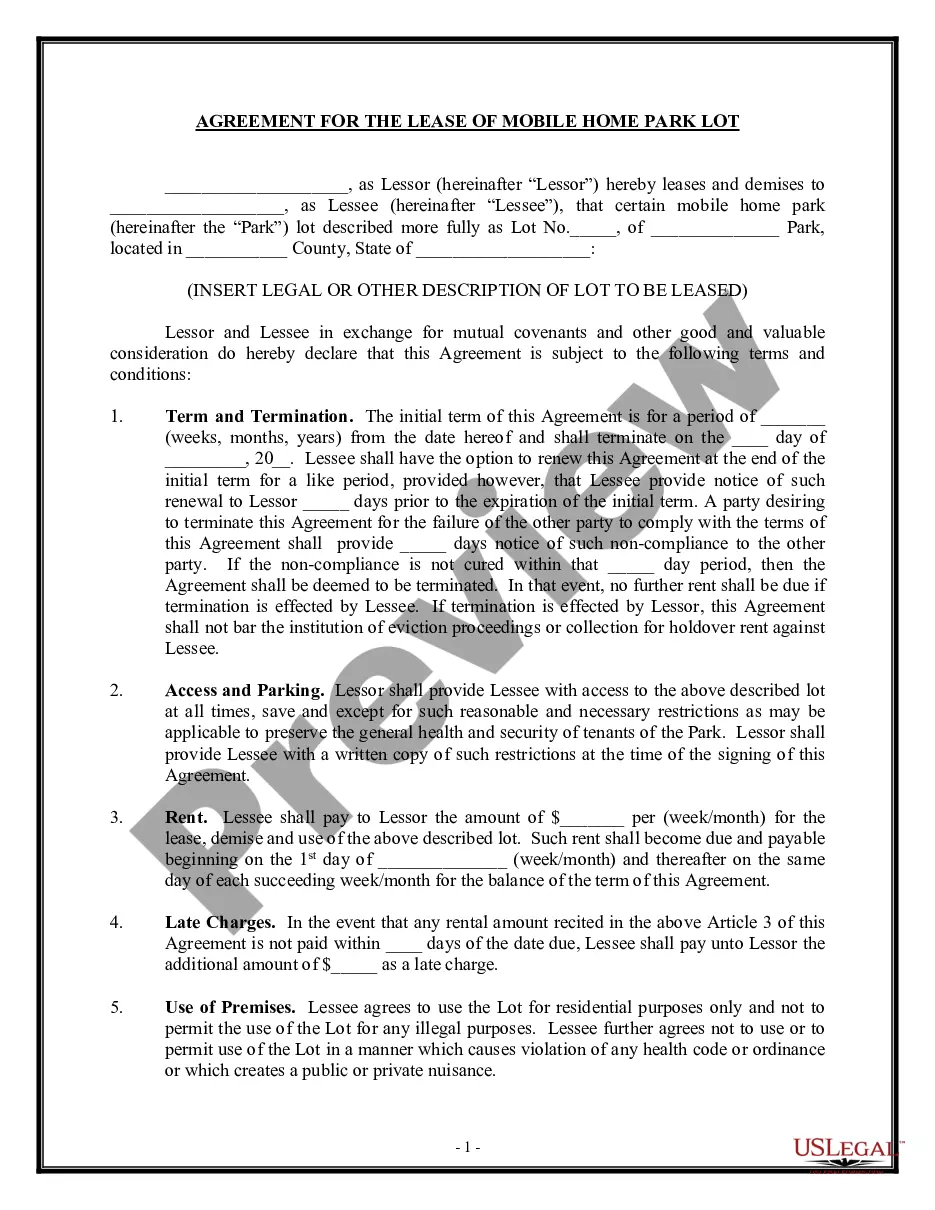
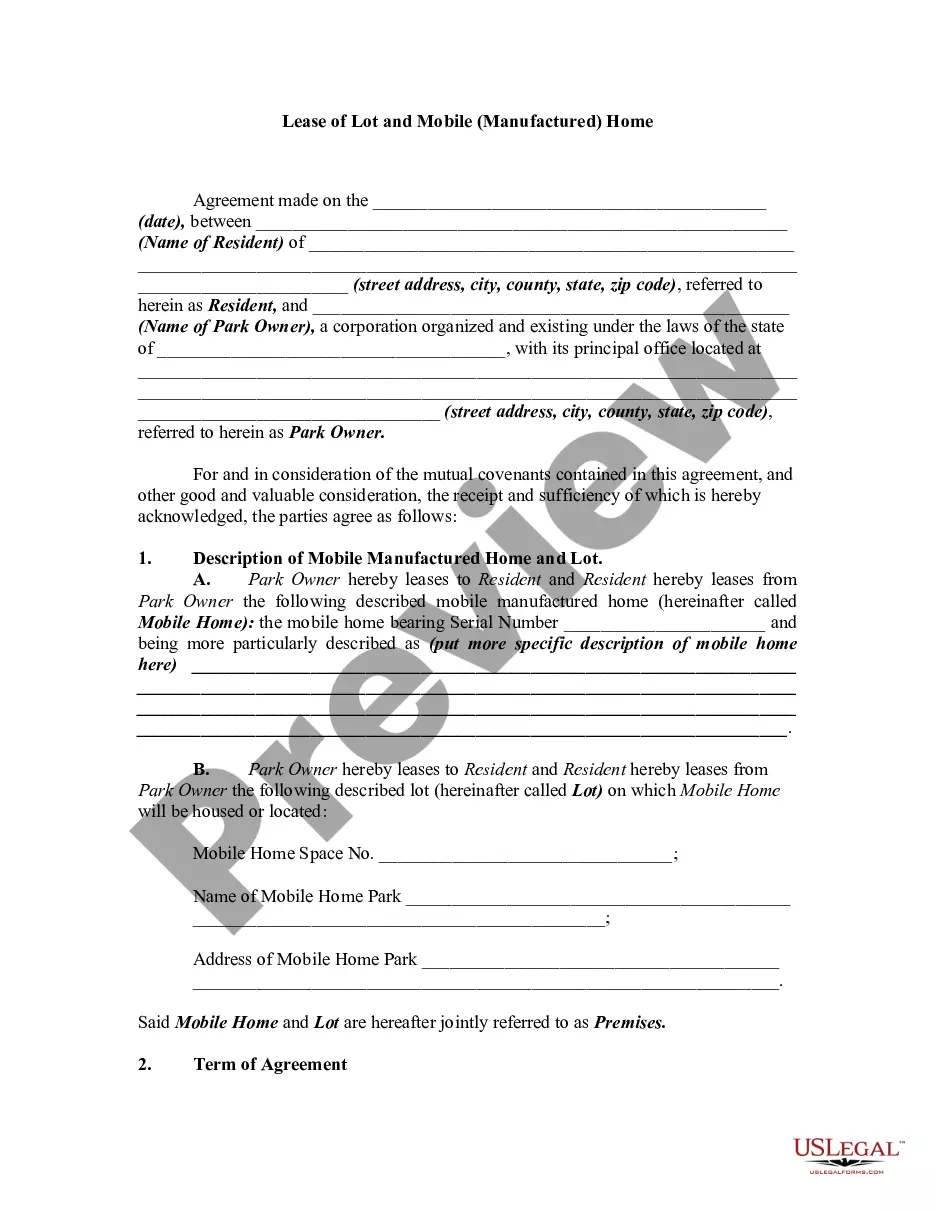
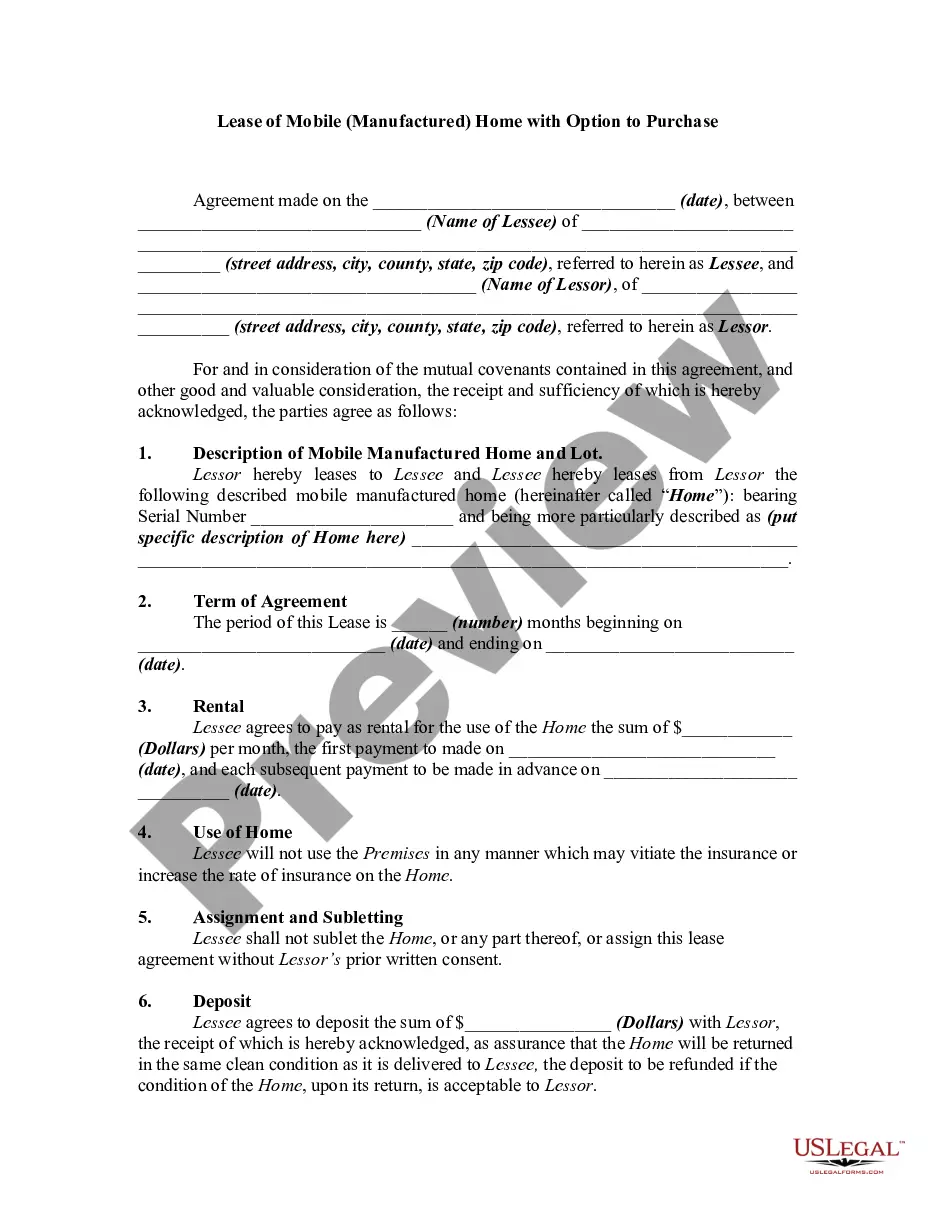
Get your form ready online
Our built-in tools help you complete, sign, share, and store your documents in one place.
Make edits, fill in missing information, and update formatting in US Legal Forms—just like you would in MS Word.
Download a copy, print it, send it by email, or mail it via USPS—whatever works best for your next step.
Sign and collect signatures with our SignNow integration. Send to multiple recipients, set reminders, and more. Go Premium to unlock E-Sign.
If this form requires notarization, complete it online through a secure video call—no need to meet a notary in person or wait for an appointment.
We protect your documents and personal data by following strict security and privacy standards.

Make edits, fill in missing information, and update formatting in US Legal Forms—just like you would in MS Word.

Download a copy, print it, send it by email, or mail it via USPS—whatever works best for your next step.

Sign and collect signatures with our SignNow integration. Send to multiple recipients, set reminders, and more. Go Premium to unlock E-Sign.

If this form requires notarization, complete it online through a secure video call—no need to meet a notary in person or wait for an appointment.

We protect your documents and personal data by following strict security and privacy standards.
Looking for another form?

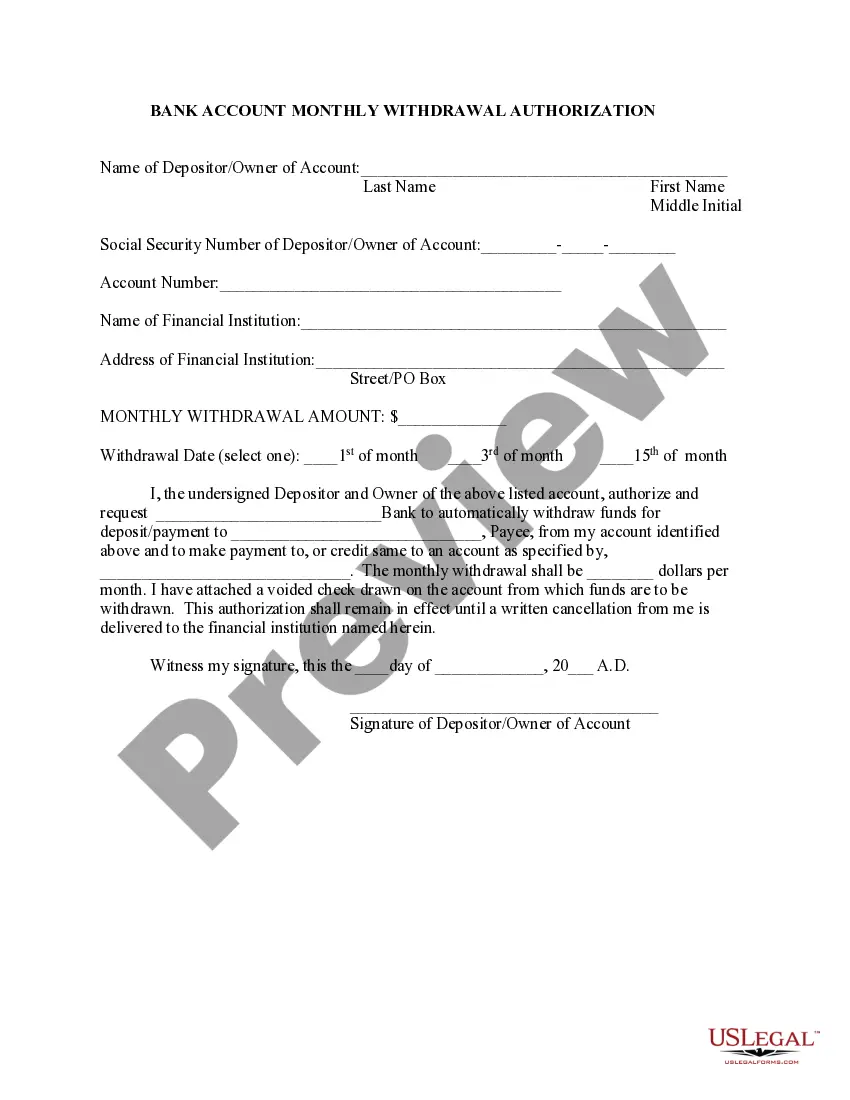




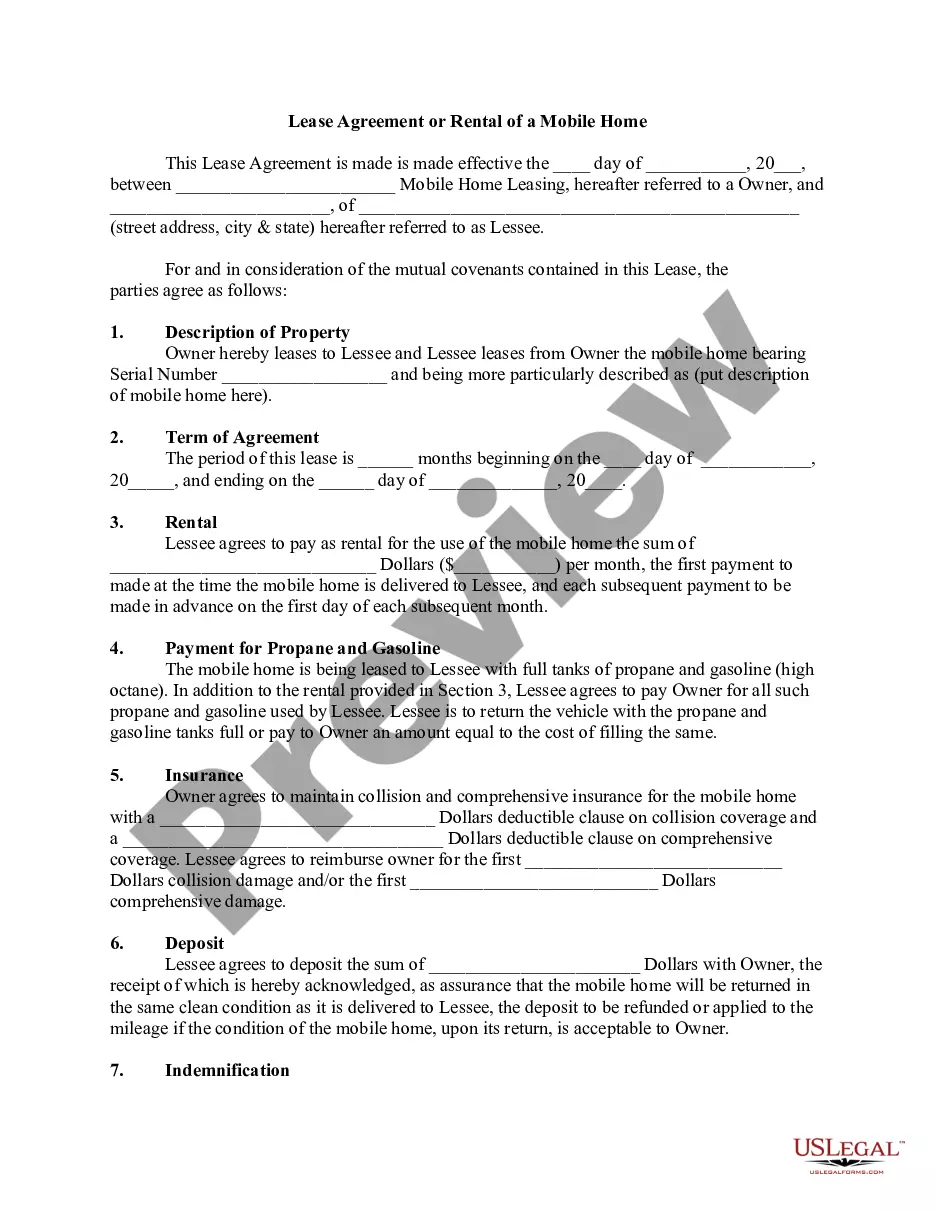
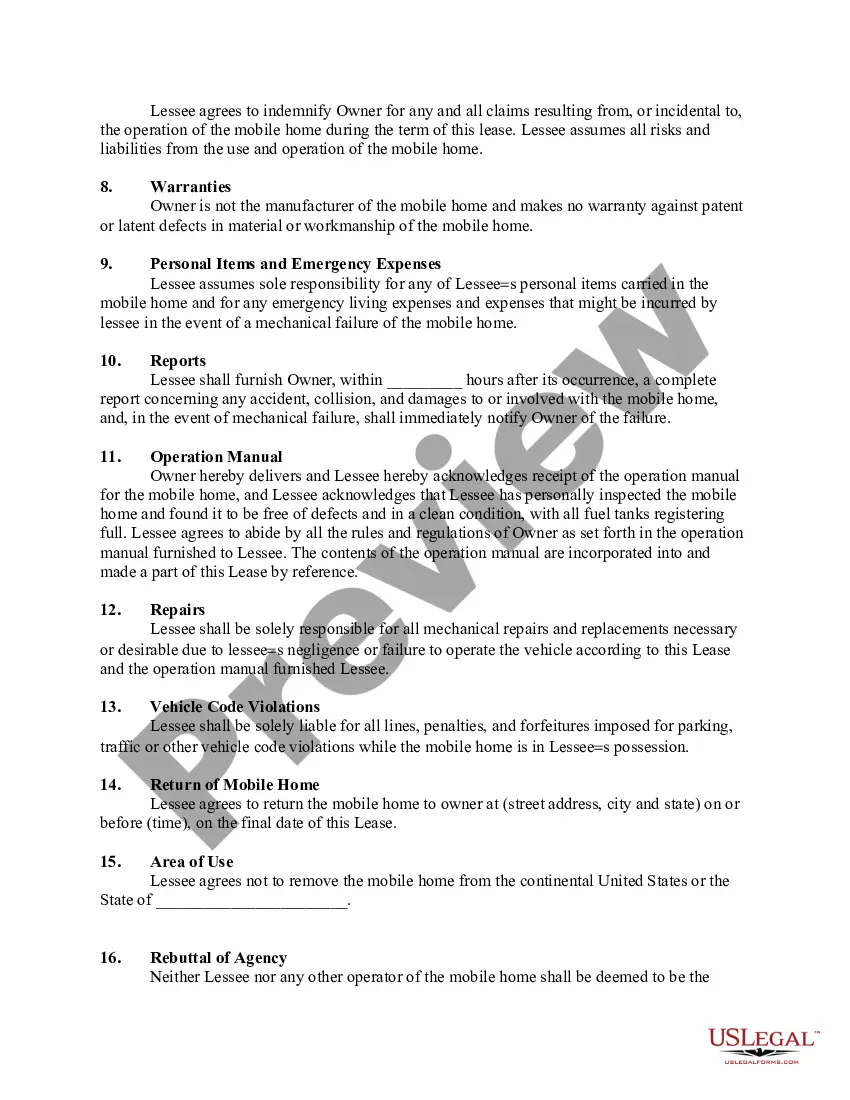
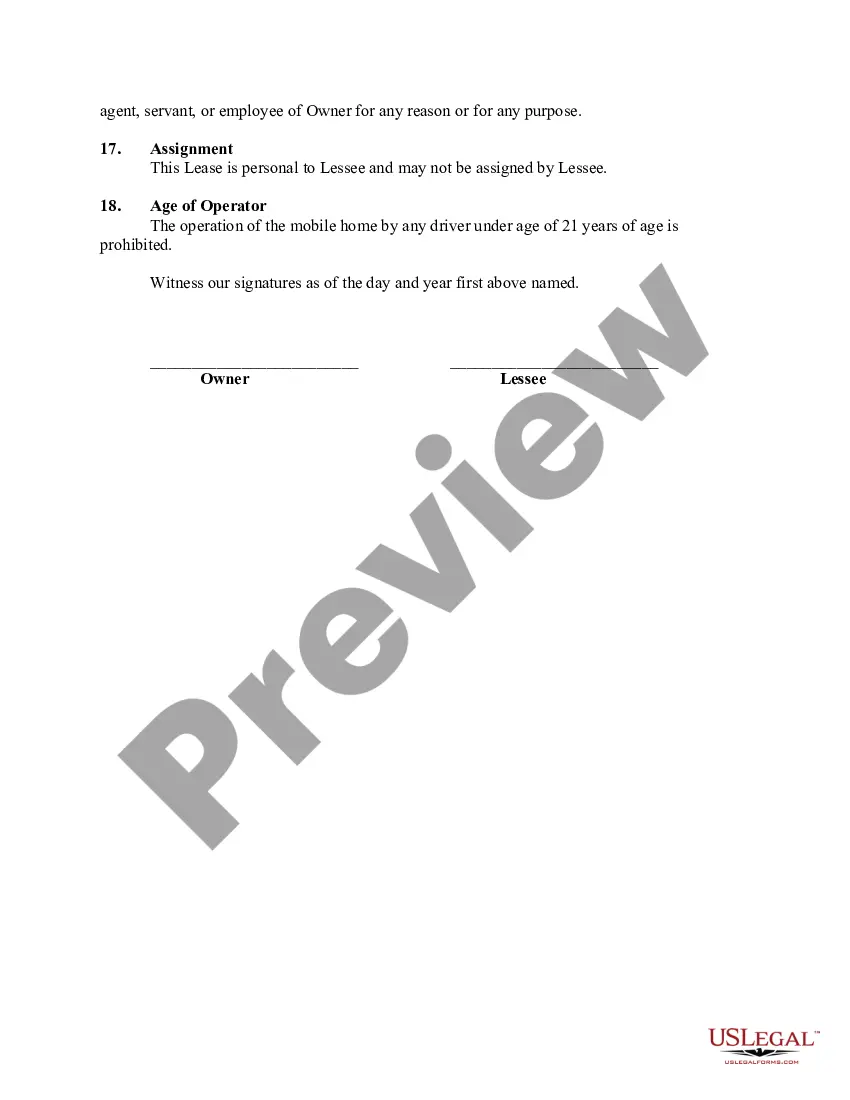
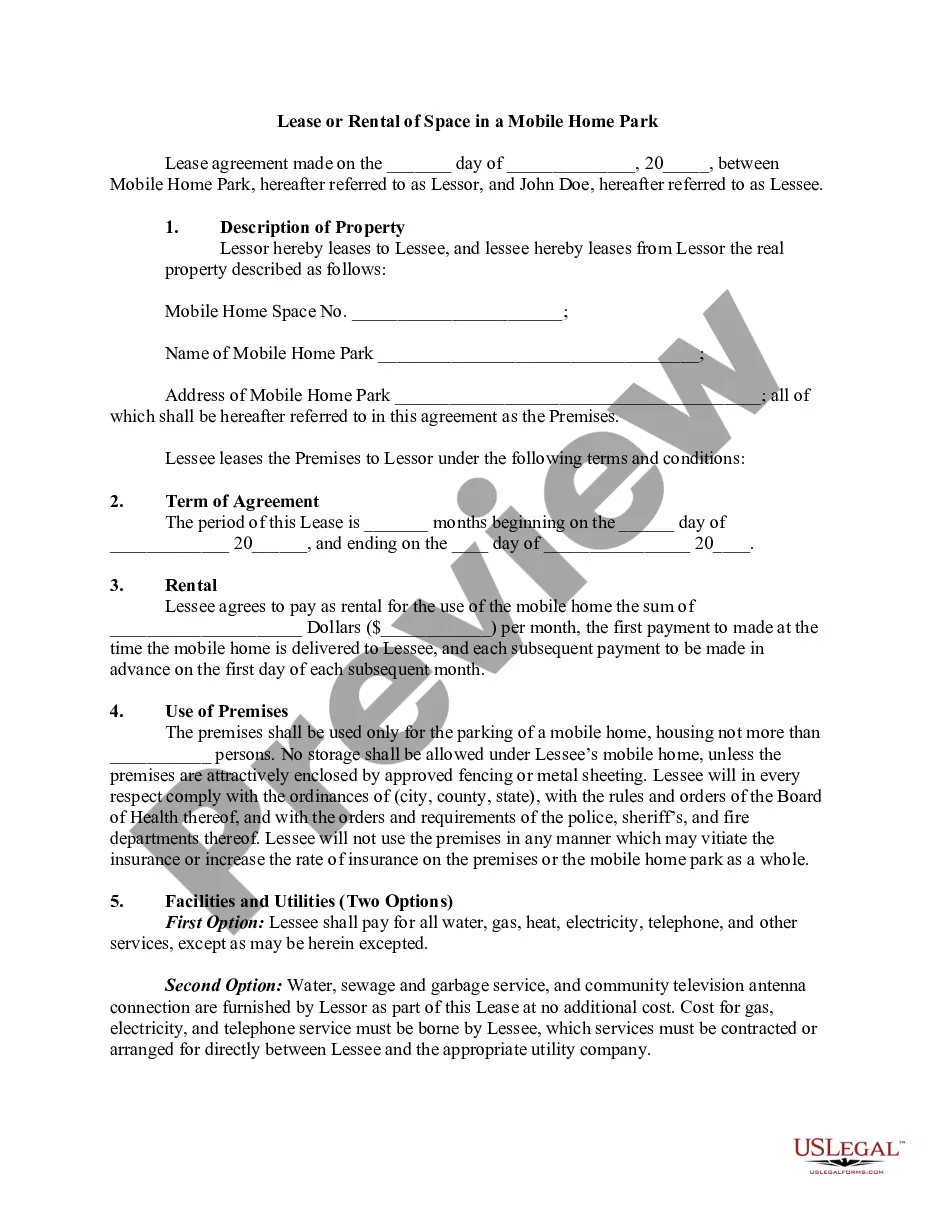
How to fill out Lease Agreement Or Rental Of A Mobile Home?
- For returning users, log in to your account and check your subscription status. If valid, easily download your required leasehold form by clicking the Download button.
- If you’re new to US Legal Forms, start by previewing the description of the leasehold form to verify it meets your needs and complies with local laws.
- Use the Search tab if the current form isn’t suitable. Find alternative templates that better align with your requirements.
- Select the appropriate document by clicking the Buy Now button, and choose your preferred subscription plan. You will need to create an account for full access.
- Complete your purchase by providing payment details via credit card or PayPal to secure your subscription.
- Once the transaction is finalized, download your leasehold form to your device for completion. You can also access it later in the My Forms section.
Utilizing US Legal Forms not only offers a robust selection of legal documents but also connects users with premium experts to assist with form completion. This ensures your leasehold agreements are accurate and legally sound.
Take the first step towards simplifying your legal documentation today. Visit US Legal Forms and start exploring our extensive library now!
Form popularity
FAQ
A lease and leasehold are related but not identical concepts. A lease refers to the legal contract between the landlord and tenant, outlining the terms of property use. On the other hand, leasehold pertains to the tenant's interest in the property during the lease term. Understanding the distinction can help you navigate your rights and responsibilities effectively.
Yes, financing options are available for leasehold properties, but they can vary by lender. Some lenders may impose specific criteria for leasehold financing, especially if the lease term is shorter. To explore financing solutions, consider using the US Legal Forms platform to review your options and find suitable agreements.
A leasehold property refers to a real estate arrangement in which an individual holds the right to use a specific property for a set period under a lease agreement. Unlike freehold property, where an owner has complete ownership, a leasehold is temporary and often subject to specific terms and conditions. Understanding the definition of leasehold property is crucial for making informed real estate decisions. It enables you to weigh options effectively, especially when exploring potential homes.
One significant disadvantage of a leasehold is the limited duration of ownership. Typically, when the lease term ends, you may need to vacate the property, often resulting in a loss of your investment. Additionally, leaseholders may face restrictions imposed by the property owner, which can limit renovation options. Understanding these challenges can help you decide if a leasehold investment aligns with your goals.
Accounting for a leasehold involves recognizing the lease agreement as a liability and an asset on your balance sheet. You report the leasehold interest as an intangible asset that represents your right to use the property, while the lease payments are recorded as liabilities. This process aligns with accounting principles and ensures clarity in financial statements. Accurate accounting can help you understand the financial implications of your leasehold investment.
To record leasehold improvements, the tenant should obtain the necessary permits and follow local regulations for construction. Once completed, accurately document the costs associated with these improvements for potential tax benefits and accounting purposes. Additionally, communicating with the landlord about these enhancements is important for clarity and compliance. We offer guidance on managing and documenting leasehold improvements to help you stay organized.
Typically, the tenant pays for leasehold improvements unless the lease specifies otherwise. These improvements can enhance the property's functionality and value, leading to a mutually beneficial situation for both parties. It is crucial for tenants to negotiate the terms clearly beforehand, ensuring they understand their financial responsibilities. Our platform provides essential insights for negotiating leasehold agreements effectively.
In the context of a leasehold, the tenant is considered the owner of the leasehold interest, not the physical property itself. They hold the rights granted by the lease and are responsible for adhering to its terms. Understanding the distinction between leasehold ownership and property ownership is vital for managing your rights effectively. Our resources can help clarify any uncertainties regarding leasehold arrangements.
A leasehold interest in a property is held by the tenant, also known as the lessee. This interest grants the tenant the right to use and occupy the property for a specified duration, as outlined in the lease agreement. While they hold these rights, the landlord still maintains ownership of the property. If you need detailed guidance on leaseholds, we can assist you in navigating these agreements.
At the end of a ground lease, ownership of the building typically reverts to the landowner. Although the tenant may have invested significantly in improvements, the landholder will own the land and any structures built during the lease term. Thus, it's crucial for tenants to consider these aspects when entering a ground lease. Consider our platform for tailored leasehold agreements that suit your needs.