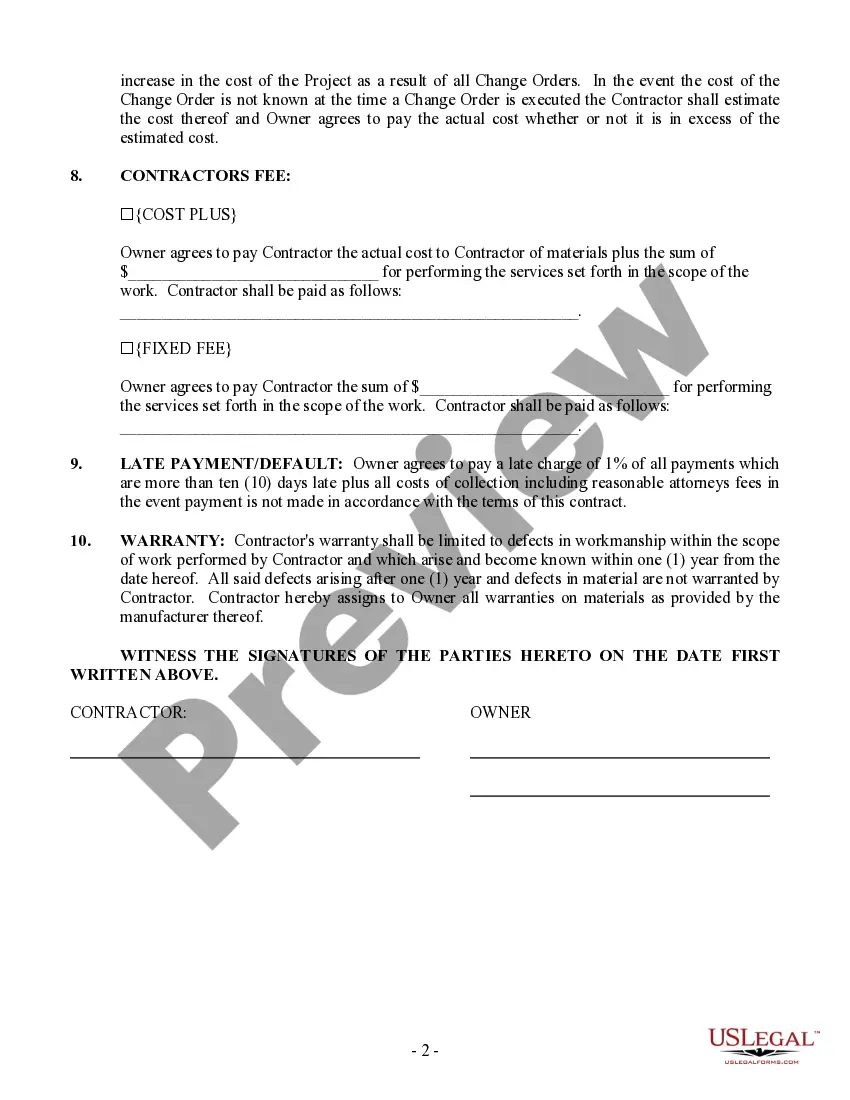
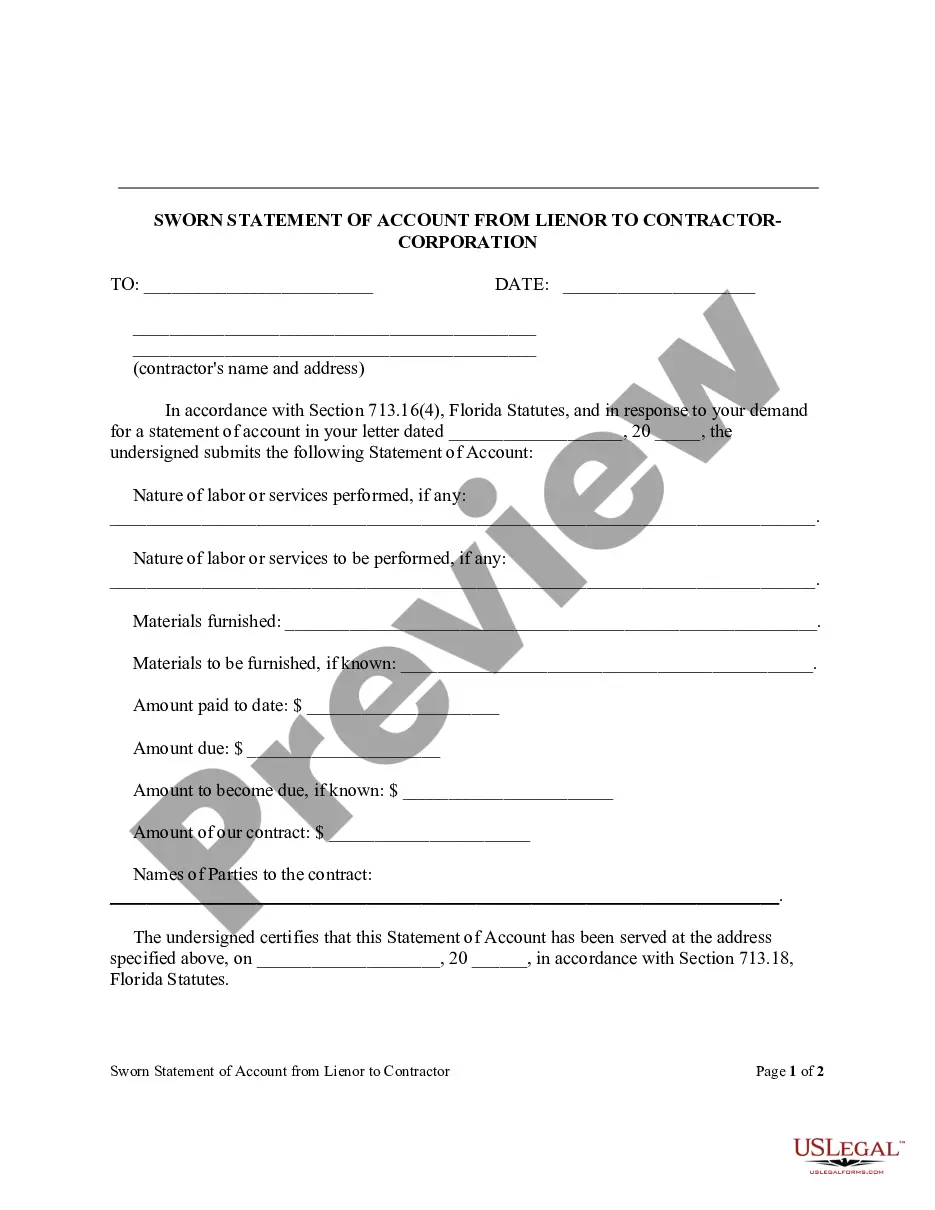
Construction Contract Form Download With Price In Virginia
Description

Get your form ready online
Our built-in tools help you complete, sign, share, and store your documents in one place.
Make edits, fill in missing information, and update formatting in US Legal Forms—just like you would in MS Word.
Download a copy, print it, send it by email, or mail it via USPS—whatever works best for your next step.
Sign and collect signatures with our SignNow integration. Send to multiple recipients, set reminders, and more. Go Premium to unlock E-Sign.
If this form requires notarization, complete it online through a secure video call—no need to meet a notary in person or wait for an appointment.
We protect your documents and personal data by following strict security and privacy standards.

Make edits, fill in missing information, and update formatting in US Legal Forms—just like you would in MS Word.

Download a copy, print it, send it by email, or mail it via USPS—whatever works best for your next step.

Sign and collect signatures with our SignNow integration. Send to multiple recipients, set reminders, and more. Go Premium to unlock E-Sign.

If this form requires notarization, complete it online through a secure video call—no need to meet a notary in person or wait for an appointment.

We protect your documents and personal data by following strict security and privacy standards.
Looking for another form?









Form popularity
FAQ
Virginia doesn't license individuals, only businesses. That means you must start a general contracting business to obtain a general contractor license in this state.
In the area of law, for a contract to be legally enforceable, several requirements must be met, including an offer; acceptance of that offer; mutual understanding of the agreement; capacity to agree; an item or service; consideration in exchange for the item or service; and legality of the contract itself, including ...
Licensed contractors are required by law to provide a written contract for residential work, signed by both parties. Don't rely on verbal agreements. Get all guarantees, warranties, and promises in writing. Limit your down payment or deposit.
A general contractor license is mandatory if your business offers construction-related services in Virginia. However, the type of license you'll need depends on the size and type of projects your business will perform.
A construction contract is a mutual or legally binding agreement between two parties based on policies and conditions recorded in document form. The two parties involved are one or more property owners and one or more contractors.
How To Write A Construction Contract With 7 Steps Step 1: Define the Parties Involved. Step 2: Outline the Scope of Work. Step 3: Establish the Timeline. Step 4: Determine the Payment Terms. Step 5: Include Necessary Legal Clauses. Step 6: Address Change Orders and Modifications. Step 7: Sign and Execute the Contract.
Under Virginia Code Section 54.1-1115, no one may contract for or bid upon the “construction, removal, repair, or improvements to or upon real property owned, controlled or leased by another person” without a license or the correct type of license.
Limit your down payment or deposit. A good rule of thumb is an initial deposit of no more than 10% down or $1,000, whichever is less. Unless the job requires custom-made items or special orders, in which case an initial down payment should be no more than 30% of the total value of the contract.
