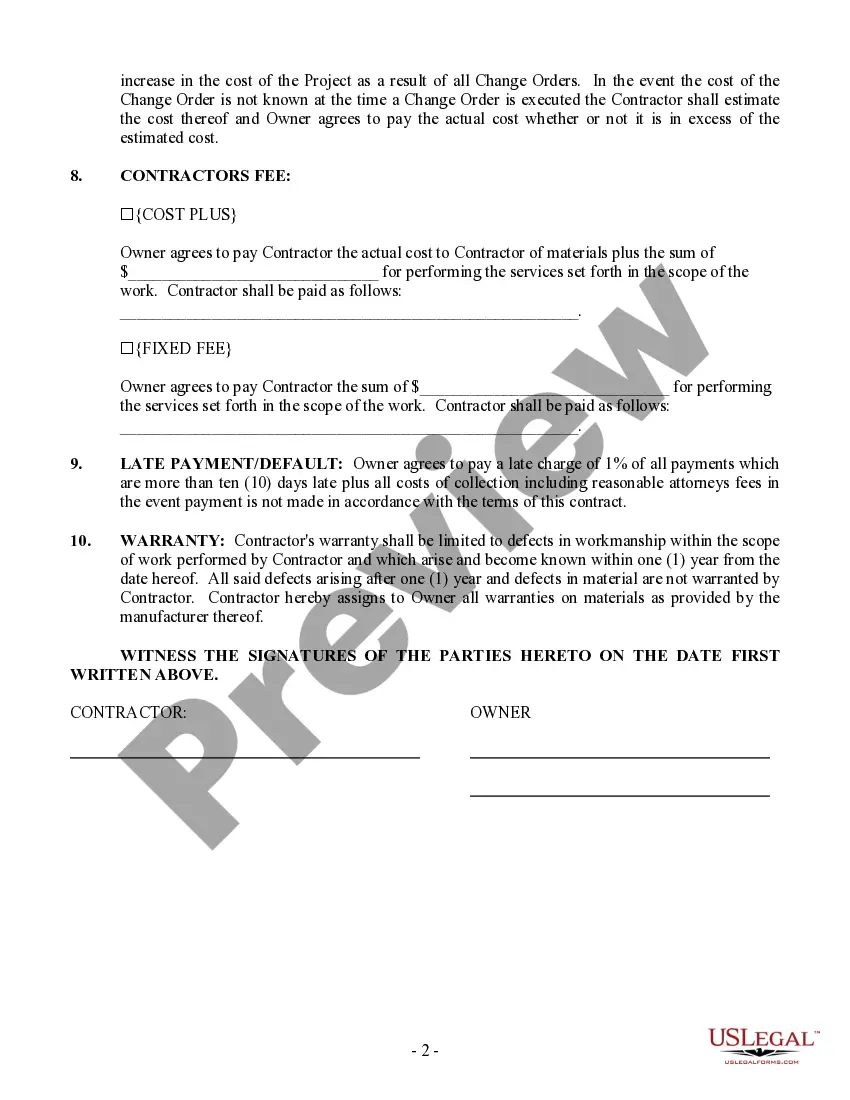
Construction Contract For Work In Michigan
Description

Get your form ready online
Our built-in tools help you complete, sign, share, and store your documents in one place.
Make edits, fill in missing information, and update formatting in US Legal Forms—just like you would in MS Word.
Download a copy, print it, send it by email, or mail it via USPS—whatever works best for your next step.
Sign and collect signatures with our SignNow integration. Send to multiple recipients, set reminders, and more. Go Premium to unlock E-Sign.
If this form requires notarization, complete it online through a secure video call—no need to meet a notary in person or wait for an appointment.
We protect your documents and personal data by following strict security and privacy standards.

Make edits, fill in missing information, and update formatting in US Legal Forms—just like you would in MS Word.

Download a copy, print it, send it by email, or mail it via USPS—whatever works best for your next step.

Sign and collect signatures with our SignNow integration. Send to multiple recipients, set reminders, and more. Go Premium to unlock E-Sign.

If this form requires notarization, complete it online through a secure video call—no need to meet a notary in person or wait for an appointment.

We protect your documents and personal data by following strict security and privacy standards.
Looking for another form?





Form popularity
FAQ
Michigan construction contract requirements Only residential construction contracts are regulated in Michigan. Such contracts must be in writing, include the contractor's license number (if a license is required), and cite the statute that requires the contractor to be licensed for their particular trade.
General contracting businesses working on projects valued at less than $600 do not require a license.
Michigan contractor license requirements All applicants must complete 60 hours of approved prelicensure courses. This must include at least six hours in each of the following subject areas: Business management, estimating and job costing. Contracts, liability and risk management.
Per contract law, a contract is only considered to be legally binding if it is mutually beneficial for all parties involved. This is also known as consideration. When one party does something without getting anything in return, the contract is typically considered unenforceable by the courts.
How To Write A Construction Contract With 7 Steps Step 1: Define the Parties Involved. Step 2: Outline the Scope of Work. Step 3: Establish the Timeline. Step 4: Determine the Payment Terms. Step 5: Include Necessary Legal Clauses. Step 6: Address Change Orders and Modifications. Step 7: Sign and Execute the Contract.
But before you can tap into this profitable industry, you'll need a professional license from the Michigan Department of Licensing and Regulatory Affairs (LARA). You must complete several steps to get this license, so we've put together a helpful guide to walk you through the process.
How To Write A Construction Contract With 7 Steps Step 1: Define the Parties Involved. Step 2: Outline the Scope of Work. Step 3: Establish the Timeline. Step 4: Determine the Payment Terms. Step 5: Include Necessary Legal Clauses. Step 6: Address Change Orders and Modifications. Step 7: Sign and Execute the Contract.
A contractor must hold a current Michigan residential builder's license or show evidence of ability to obtain a license within six months. A contractor must demonstrate a history of having performed work of the scope and type required for the development.
