Construction Contract For Subcontractor In Michigan
Description

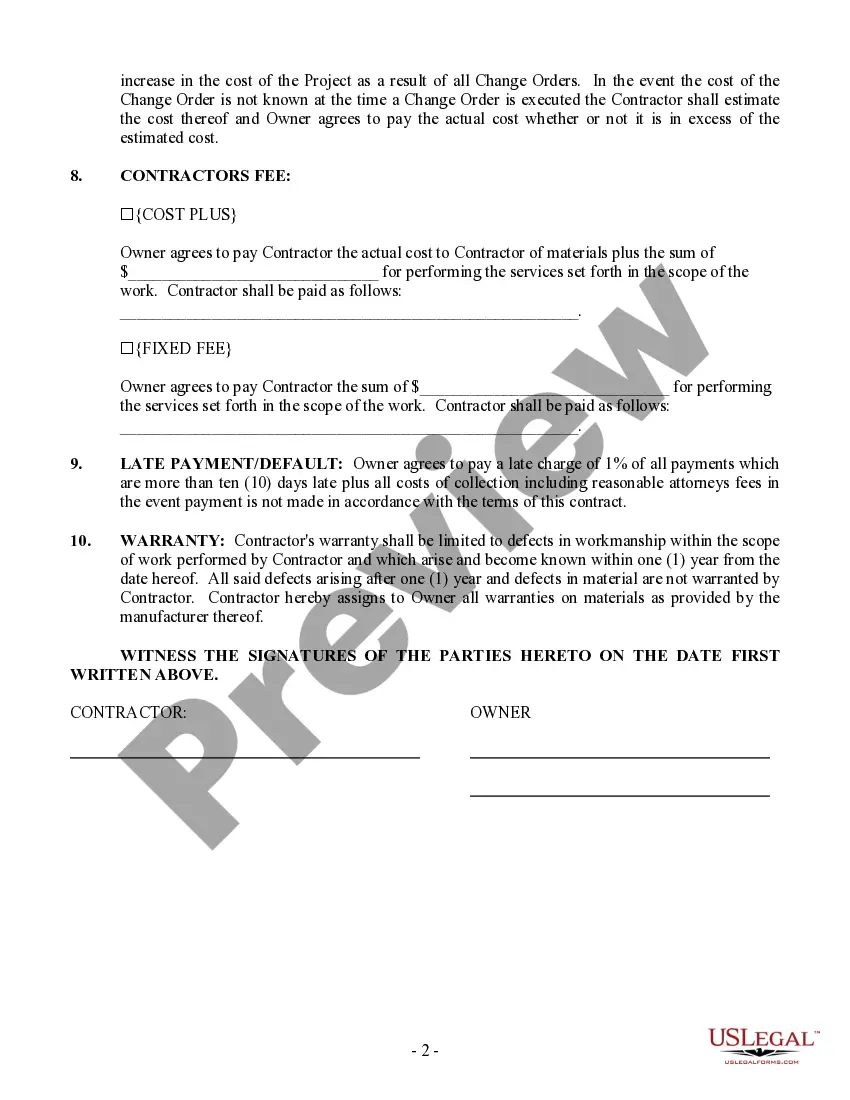
Get your form ready online
Our built-in tools help you complete, sign, share, and store your documents in one place.
Make edits, fill in missing information, and update formatting in US Legal Forms—just like you would in MS Word.
Download a copy, print it, send it by email, or mail it via USPS—whatever works best for your next step.
Sign and collect signatures with our SignNow integration. Send to multiple recipients, set reminders, and more. Go Premium to unlock E-Sign.
If this form requires notarization, complete it online through a secure video call—no need to meet a notary in person or wait for an appointment.
We protect your documents and personal data by following strict security and privacy standards.

Make edits, fill in missing information, and update formatting in US Legal Forms—just like you would in MS Word.

Download a copy, print it, send it by email, or mail it via USPS—whatever works best for your next step.

Sign and collect signatures with our SignNow integration. Send to multiple recipients, set reminders, and more. Go Premium to unlock E-Sign.

If this form requires notarization, complete it online through a secure video call—no need to meet a notary in person or wait for an appointment.

We protect your documents and personal data by following strict security and privacy standards.
Looking for another form?




Form popularity
FAQ
(1) The service provider may subcontract the performance of the service in whole or in part without the client's consent, unless personal performance is required by the contract. (2) Any subcontractor so engaged by the service provider must be of adequate competence.
12 Key Components of a Subcontractor Agreement Identification of Parties. Insurance and Licensing Requirements. Scope of Work. Payment Terms and Conditions. Project Schedule and Duration. Material and Equipment. Change Order Procedures. Quality Standards and Compliance.
Ensuring all parties know their responsibilities and obligations is important to any project. The subcontractor agreement helps everyone avoid confusion, arguments, and legal matters that may arise without a written contract.
When you are looking at supply chain procurement, there are three types of subcontractor: Domestic Subcontractors. Nominated Subcontractors. Named Subcontractors.
If you're starting a new construction business or looking to run one in Michigan for the first time, Michigan's licensing requirements are pretty stringent: Just about every contractor working within the state needs to carry a license or registration of some sort.
12 Key Components of a Subcontractor Agreement Identification of Parties. Insurance and Licensing Requirements. Scope of Work. Payment Terms and Conditions. Project Schedule and Duration. Material and Equipment. Change Order Procedures. Quality Standards and Compliance.
What to Include Identification – The names and addresses of the contractor and subcontractor. Scope of Work – The services that the subcontractor agrees to provide, as well as the work's proposed start and end date. Work Location – The address or a description of where the work is to be performed.
8 things a subcontractor agreement should include Business information. Include names, businesses names, and contact information for both the subcontractor and the hiring contractor. Scope of work. Payment terms. Change orders. Licensing and insurance coverage. Dispute resolution. Termination clause. Flow-down provisions.
Michigan construction contract requirements Only residential construction contracts are regulated in Michigan. Such contracts must be in writing, include the contractor's license number (if a license is required), and cite the statute that requires the contractor to be licensed for their particular trade.
