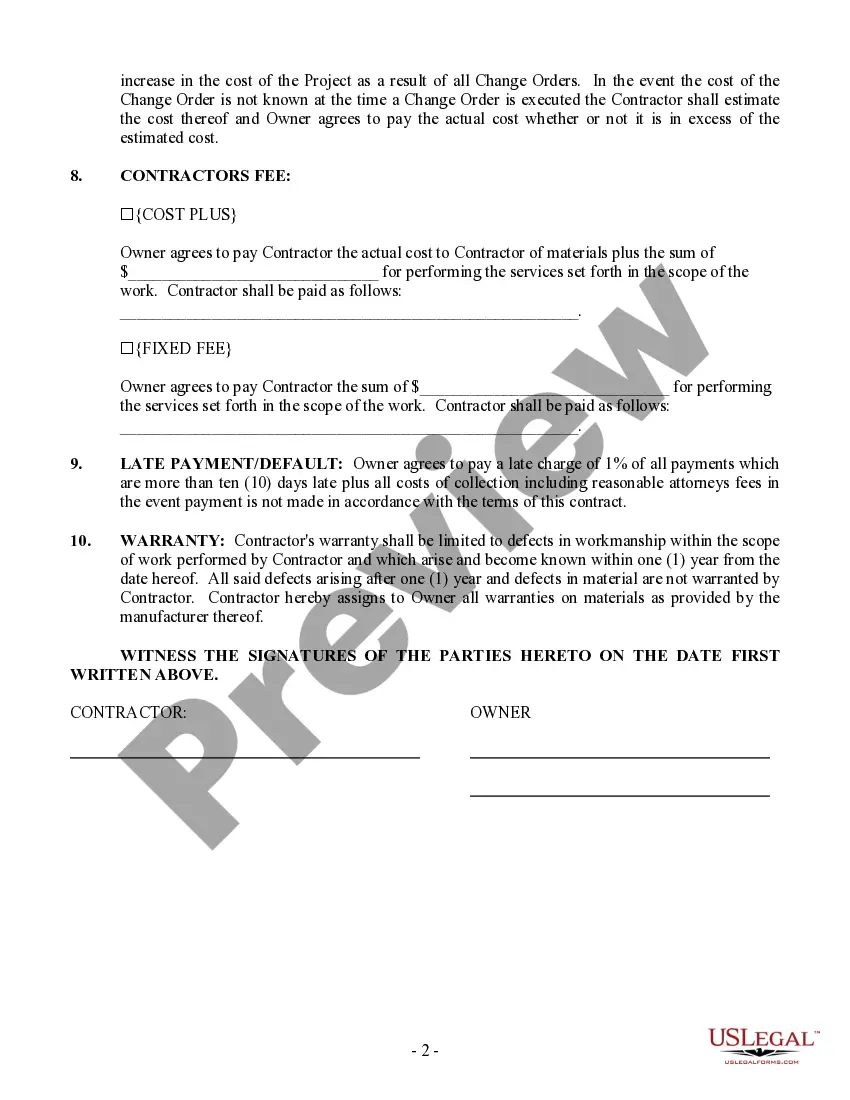
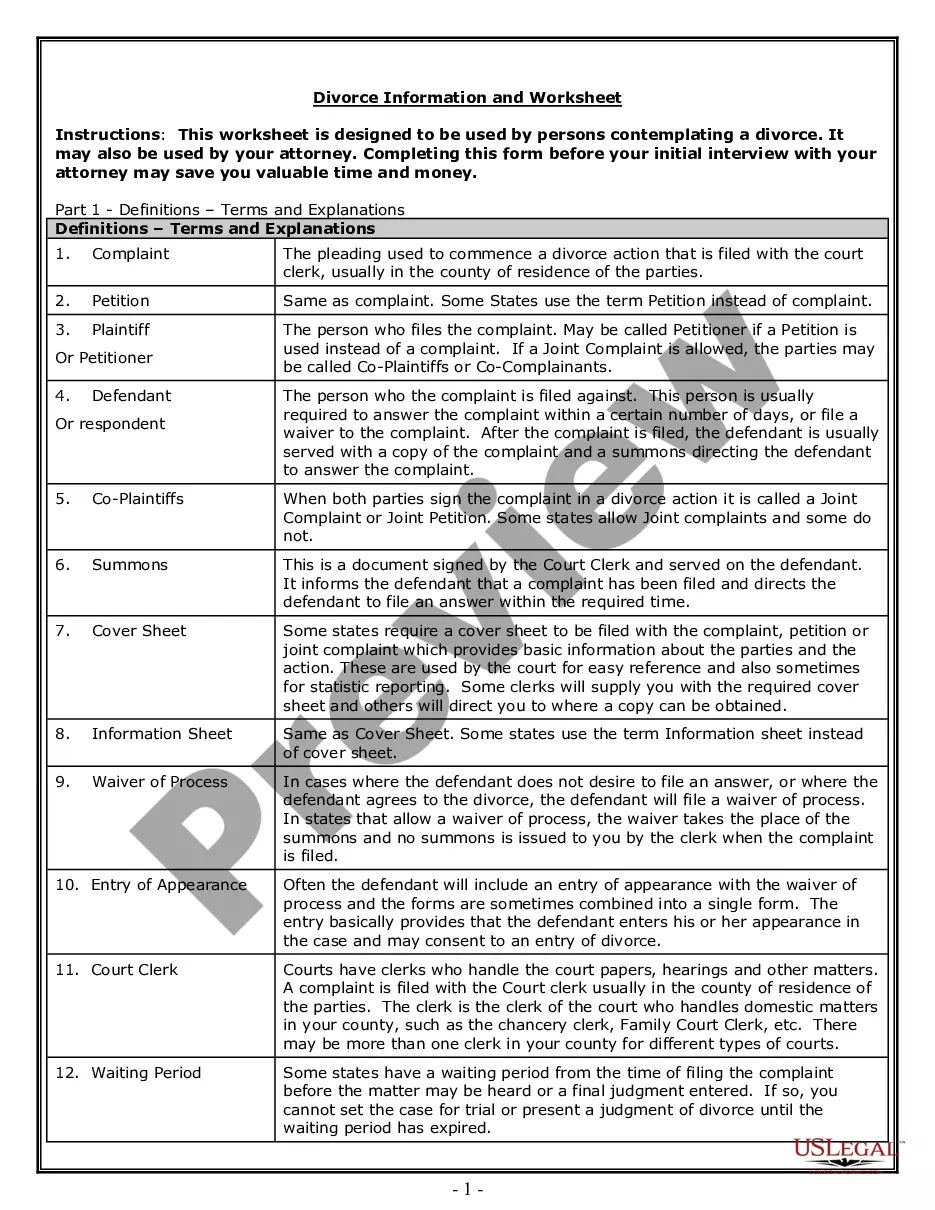
Building Contract For Work In Mecklenburg
Description

Get your form ready online
Our built-in tools help you complete, sign, share, and store your documents in one place.
Make edits, fill in missing information, and update formatting in US Legal Forms—just like you would in MS Word.
Download a copy, print it, send it by email, or mail it via USPS—whatever works best for your next step.
Sign and collect signatures with our SignNow integration. Send to multiple recipients, set reminders, and more. Go Premium to unlock E-Sign.
If this form requires notarization, complete it online through a secure video call—no need to meet a notary in person or wait for an appointment.
We protect your documents and personal data by following strict security and privacy standards.

Make edits, fill in missing information, and update formatting in US Legal Forms—just like you would in MS Word.

Download a copy, print it, send it by email, or mail it via USPS—whatever works best for your next step.

Sign and collect signatures with our SignNow integration. Send to multiple recipients, set reminders, and more. Go Premium to unlock E-Sign.

If this form requires notarization, complete it online through a secure video call—no need to meet a notary in person or wait for an appointment.

We protect your documents and personal data by following strict security and privacy standards.
Looking for another form?




Form popularity
FAQ
If the deck or porch is less than 12x12 (144 square feet) or if the deck does not contain post supports, then no building permit is required. Any deck, regardless of size or design, will require a zoning permit.
The following projects do not require a permit: Asphalt or gravel driveways. Awnings (wall mounted only) Exterior work under $15000 - Non Structural Only. Interior work under $15000 - Non Structural Only. Non-residential farm buildings. Non-structural slab (no footers for future building construction)
Yes, a Zoning Use Permit is required for structures 12 feet or less in any dimension. This permit assures that the structure is located far enough from property lines and other buildings/structures. A building permit is required for anything measuring over 12 feet in any dimension.
The North Carolina State Building Code states, "No person, firm or corporation shall , construct, enlarge, , alter, repair, move, improve, remove, convert or demolish any building, structure, or service system without first obtaining a permit for such from the Inspections Department having jurisdiction."
Teresa Rausch, - Procurement Director - Mecklenburg County | LinkedIn.
General Guidelines for Deck Permits Height Restrictions: Most municipalities allow decks that are less than 30 inches off the ground to be built without a permit. Size Limitations: In many areas, if your deck is smaller than a designated square footage—commonly around 200 square feet—you might not need a permit.
A storage shed, or an accessory building will need a building permit if any dimension is greater than 12 feet in any one dimension.
In North Carolina, you're required to have a building permit whenever your structure such as a deck is larger than 12 feet. No matter what structure or addition you're doing, if it exceeds the 12-foot limit, you'll have to obtain a building permit from your county.
Attics can be insulated using batts or blown-in insulation. Recommended R-values in North Carolina range from R-30 to R-60 (although our state spans a few climate zones, so check specifics at energystar. If you use your attic for storage, you can build a raised platform with room for insulation underneath.
Insulation (IECC Sections R303.1.4 and R402.2) The insulation for basement walls must be from the top of the wall down 10 feet below grade or to the basement floor, whichever is less. Basement wall insulation is not required in warm-humid locations as defined in IECC Figure R301.
