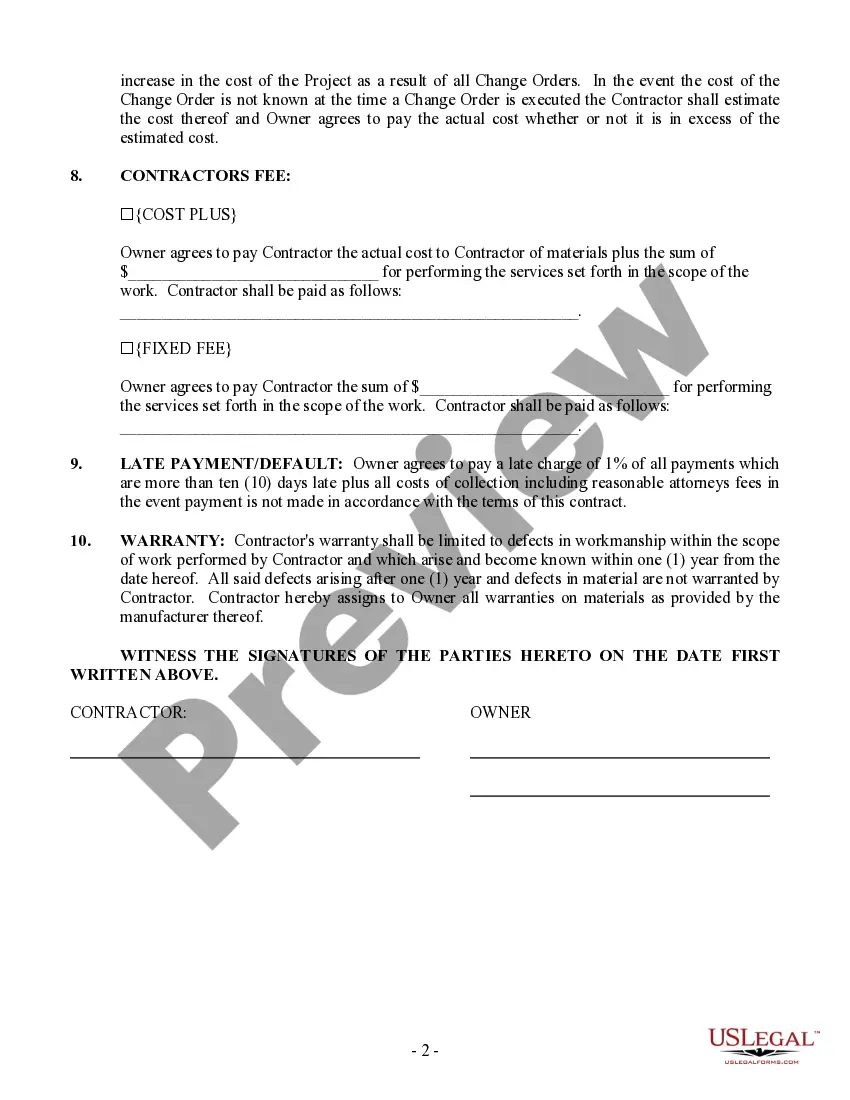
Agreement With Contractor For Construction Of Building In Hillsborough
Description

Get your form ready online
Our built-in tools help you complete, sign, share, and store your documents in one place.
Make edits, fill in missing information, and update formatting in US Legal Forms—just like you would in MS Word.
Download a copy, print it, send it by email, or mail it via USPS—whatever works best for your next step.
Sign and collect signatures with our SignNow integration. Send to multiple recipients, set reminders, and more. Go Premium to unlock E-Sign.
If this form requires notarization, complete it online through a secure video call—no need to meet a notary in person or wait for an appointment.
We protect your documents and personal data by following strict security and privacy standards.

Make edits, fill in missing information, and update formatting in US Legal Forms—just like you would in MS Word.

Download a copy, print it, send it by email, or mail it via USPS—whatever works best for your next step.

Sign and collect signatures with our SignNow integration. Send to multiple recipients, set reminders, and more. Go Premium to unlock E-Sign.

If this form requires notarization, complete it online through a secure video call—no need to meet a notary in person or wait for an appointment.

We protect your documents and personal data by following strict security and privacy standards.
Looking for another form?



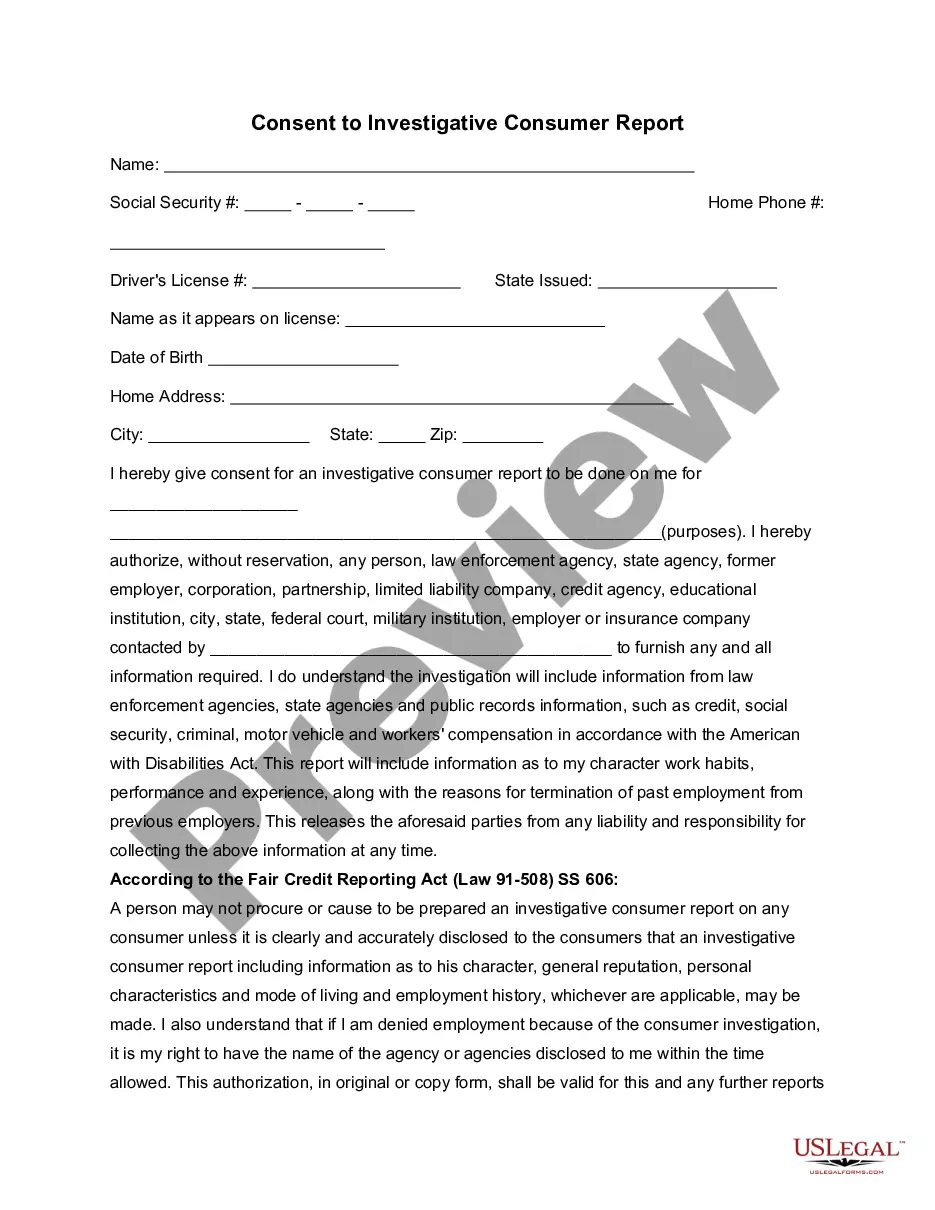


Form popularity
FAQ
Follow these steps to transfer an existing permit to a new contractor Sign in to HillsGovHub. Complete the appropriate form. Return to HillsGovHub. Upload the documents. Select 'Add' in the Attachment section to add required documents.
To get a Certified Contractor's License, the Florida Construction Industry Licensing Board requires that you are approved at the state level. There are two classifications for this licensing: Certified Contractor License – issued at the State level. Registered Contractor License – issued at the local level.
The Department of Highway Safety and Motor Vehicles issues the following classes of licenses: Class A, B, C, D, and E. Classes A, B, and C are for drivers of commercial motor vehicles such as large trucks and buses. Classes D and E are for drivers of non-commercial vehicles.
A construction contract agreement is a form that documents all of the work you will do for a customer. A contract is only valid once both parties ratify it by signing in agreement.
How To Write A Construction Contract With 7 Steps Step 1: Define the Parties Involved. Step 2: Outline the Scope of Work. Step 3: Establish the Timeline. Step 4: Determine the Payment Terms. Step 5: Include Necessary Legal Clauses. Step 6: Address Change Orders and Modifications. Step 7: Sign and Execute the Contract.
What are the different types of Florida Construction Licenses? Air Conditioning – HVACSpecialty – Building Demolition Electrical Specialty – Gas Line General Specialty – Glass and Glazing Mechanical Specialty – Industrial Facilities Plumbing Specialty – Irrigation7 more rows
Division 1 contractors must master project management, contract administration, as well as business and finance. A Division 2 contractor is licensed in specific trades such as plumbing, electrical, A/C, as well as roofing, swimming pools, and glass and glazing (windows and doors).
Construction Contractors Certified licenses are statewide and allow you to work as a contractor anywhere in Florida. Registered licenses are limited to certain local jurisdictions and only allow you to work in the cities or counties where you hold a certificate of competency.
If your project has a well-defined scope of work, a lump sum contract is a straightforward solution since contractors should be able to accurately estimate costs. If the project scope is unclear, contractors can bid with time and materials contracts to mitigate risk.
