Contractors For Construction Of Building In Dallas
Description

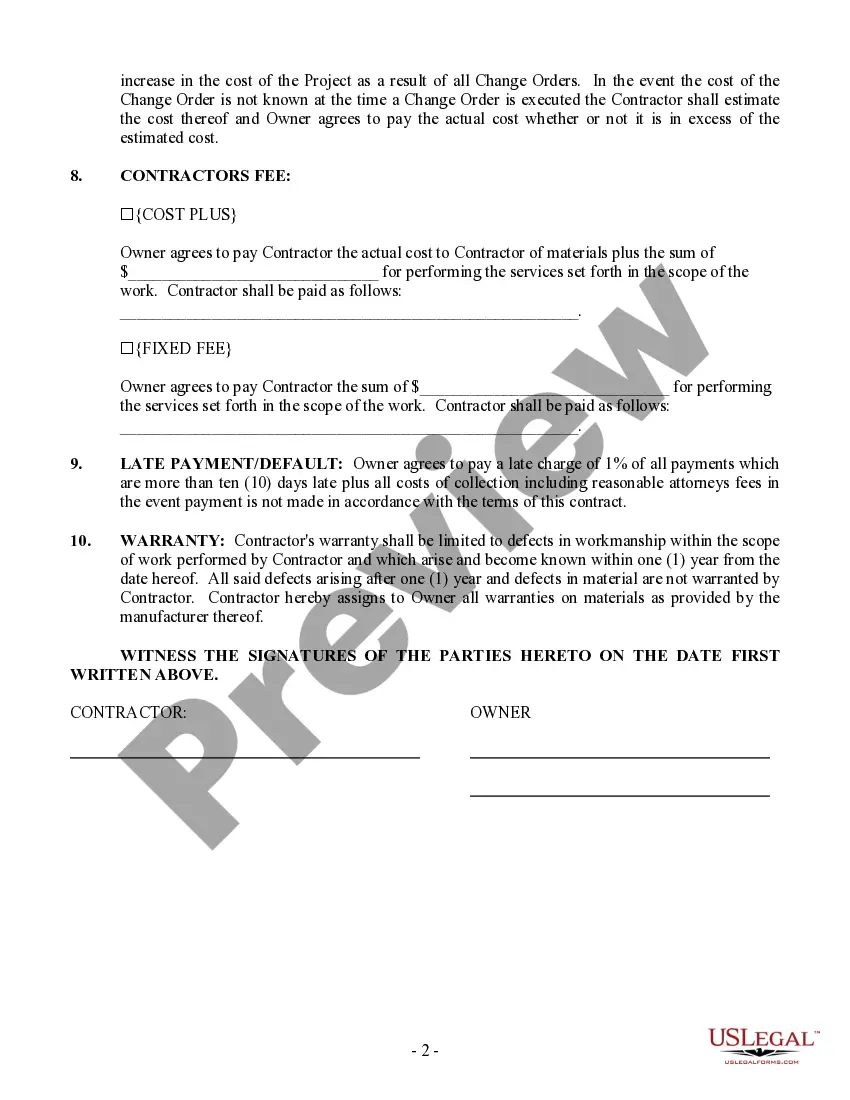
Get your form ready online
Our built-in tools help you complete, sign, share, and store your documents in one place.
Make edits, fill in missing information, and update formatting in US Legal Forms—just like you would in MS Word.
Download a copy, print it, send it by email, or mail it via USPS—whatever works best for your next step.
Sign and collect signatures with our SignNow integration. Send to multiple recipients, set reminders, and more. Go Premium to unlock E-Sign.
If this form requires notarization, complete it online through a secure video call—no need to meet a notary in person or wait for an appointment.
We protect your documents and personal data by following strict security and privacy standards.

Make edits, fill in missing information, and update formatting in US Legal Forms—just like you would in MS Word.

Download a copy, print it, send it by email, or mail it via USPS—whatever works best for your next step.

Sign and collect signatures with our SignNow integration. Send to multiple recipients, set reminders, and more. Go Premium to unlock E-Sign.

If this form requires notarization, complete it online through a secure video call—no need to meet a notary in person or wait for an appointment.

We protect your documents and personal data by following strict security and privacy standards.
Looking for another form?
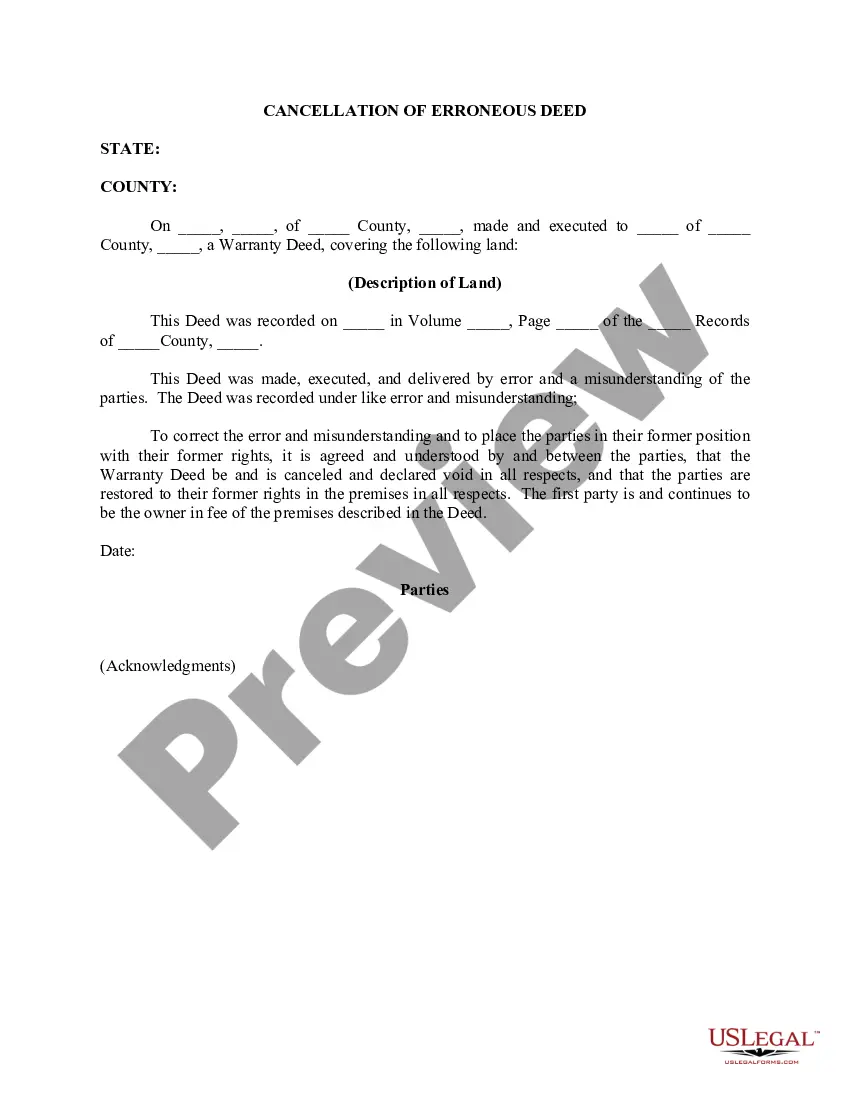

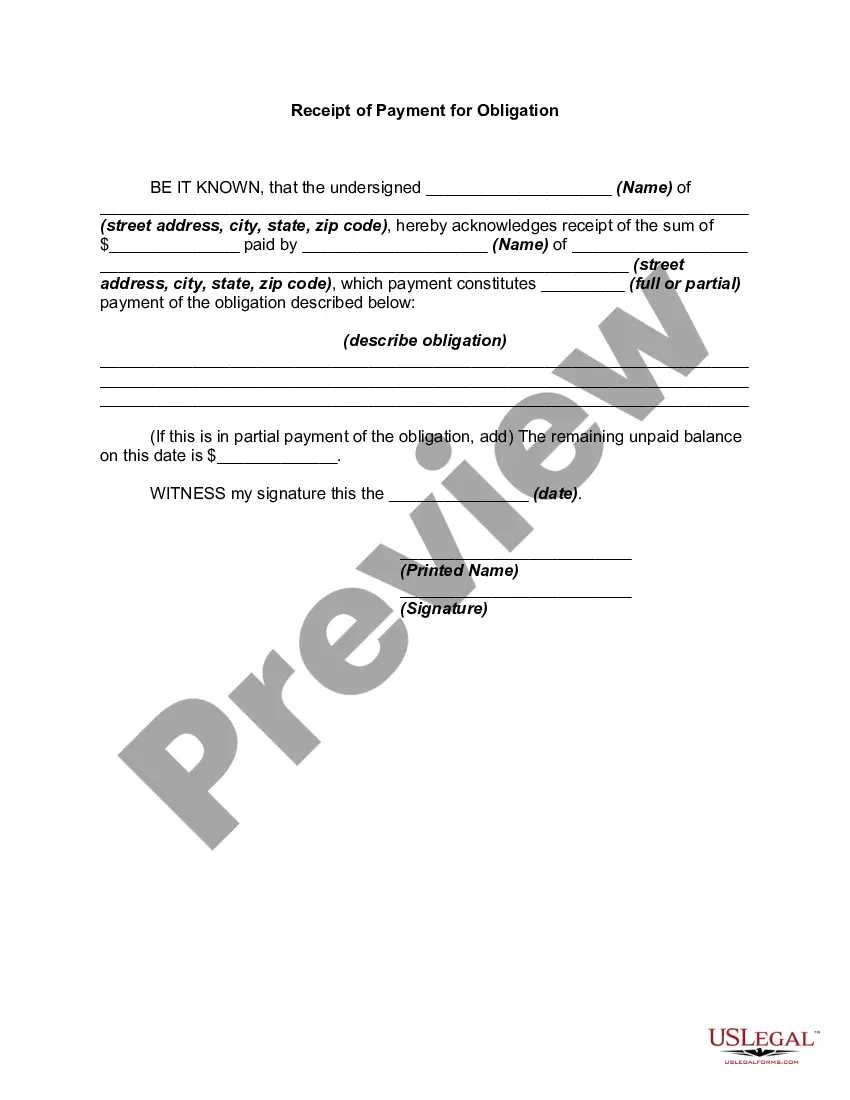
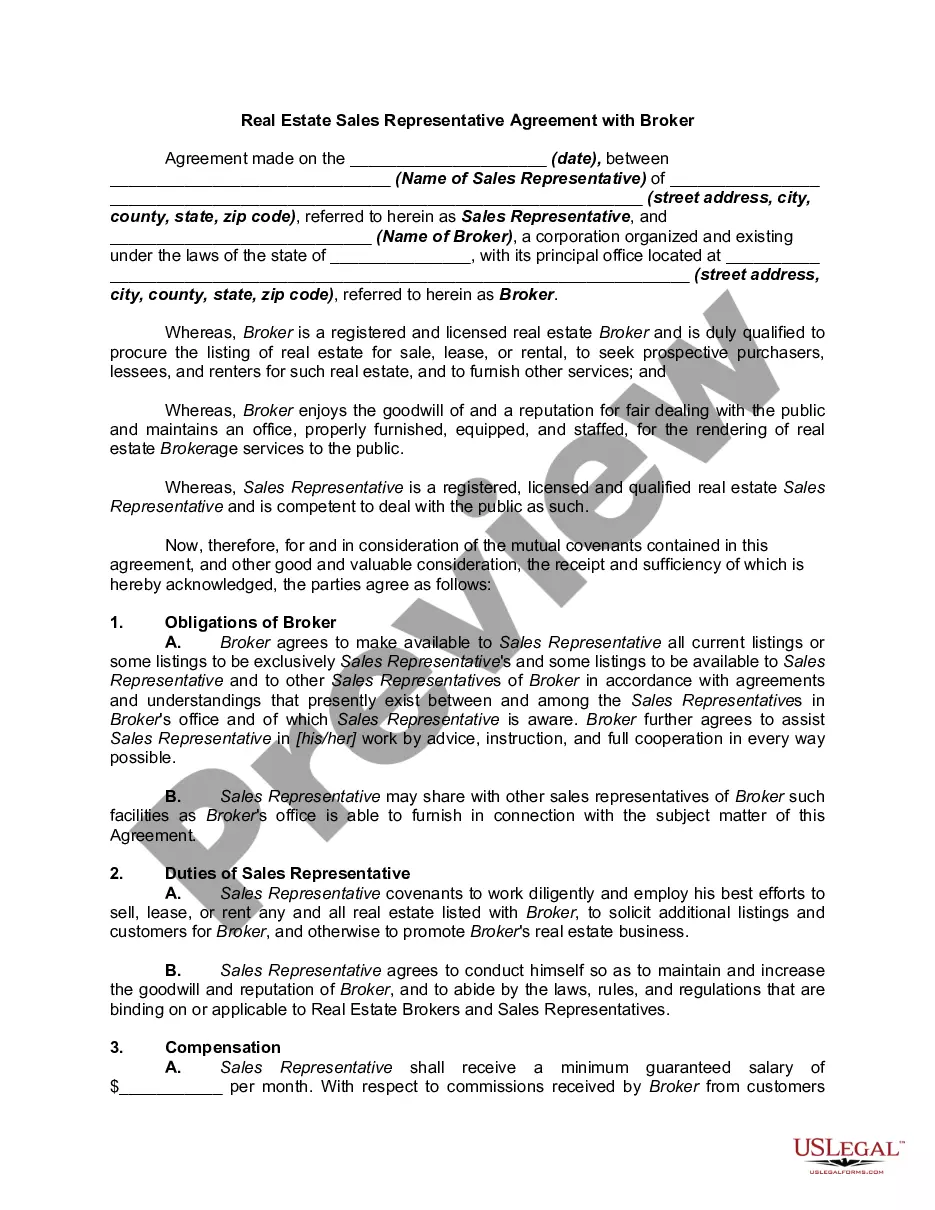
Form popularity
FAQ
Here are five steps that can help you become a contractor in Texas: Register a state business entity. Choose a contractor license type. Meet the basic requirements for your license. Obtain a Texas contractor license bond or insurance. Apply for your license.
Dallas. The City of Dallas requires you to file an application for contractor registration based on the license type you need. General contractor work includes residential and commercial general contracting, roofing, fencing, foundation, demolition, and pool contracting.
Unlike many states, Texas does not require a state license for general contractors. However, local requirements may apply depending on the city or county you plan to work in.
Texas Handyman Limitations Most states put a financial limit on what you can do without a contractor's license – usually limiting jobs to $500, $1,000, or even $3,000. However, in Texas, that isn't the case. There are currently no limits on job size for unlicensed contractors.
In the State of Texas, anyone can be a General Contractor, including homeowners, and a state license is not required.
You can register online or by submitting the necessary forms to the state tax authority. Register for local taxes: Depending on the city or county where your construction company is located, you may also have to register for local taxes.
Texas Department of Licensing and Regulation.
Many mortgage companies in the United States allow for individuals to get construction loans while being their own general contractor; as where the mortgage industry in Texas does not. They require that you utilize the services of an approved Builder of Record in order to obtain funding.
For telephone assistance, call 214-948-4480.
